• Post Reply Bookmark Topic Watch Topic
  • New Topic
permaculture forums growies critters building homesteading energy monies kitchen purity ungarbage community wilderness fiber arts art permaculture artisans regional education skip experiences global resources cider press projects digital market permies.com pie forums private forums all forums
this forum made possible by our volunteer staff, including ...
master stewards:
  • Carla Burke
  • Nancy Reading
  • r ransom
  • John F Dean
  • paul wheaton
  • Jay Angler
stewards:
  • Timothy Norton
  • Pearl Sutton
  • Tereza Okava
master gardeners:
  • Christopher Weeks
  • M Ljin
gardeners:
  • Jeremy VanGelder
  • Matt McSpadden
  • thomas rubino

4S '26: Stephen's Snowbirding & Sustainability Sojourn, February 2026

 
pollinator
Posts: 1493
Location: Wheaton Labs, Montana, USA
2968
11
home care trees books wofati food preservation bike bee building writing seed
  • Likes 12
  • Mark post as helpful
  • send pies
    Number of slices to send:
    Optional 'thank-you' note:
  • Quote
  • Report post to moderator
I had a wonderful time doing this in the previous winter. I want to do it again. To sum it up:

WHAT: a volunteer for 3 to 5 days
WHEN: February 2026, estimated dates below.
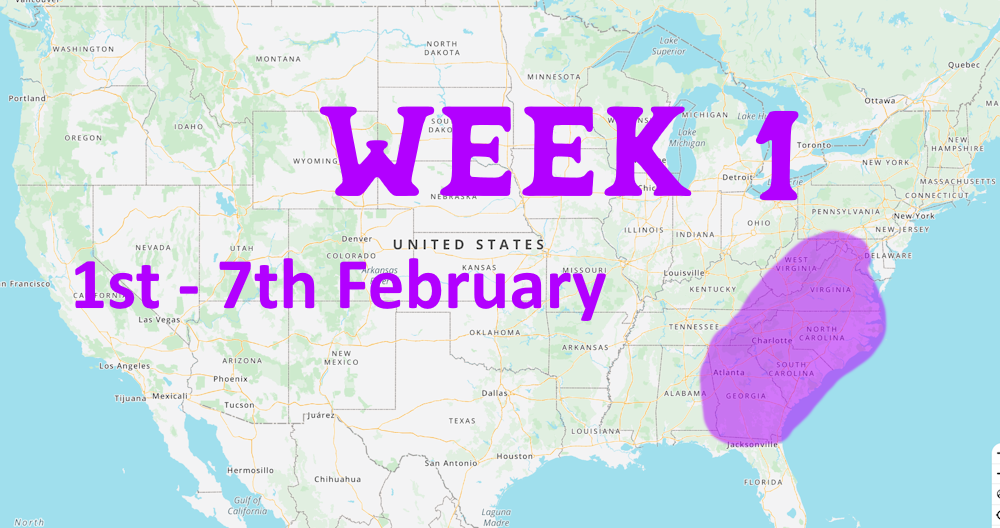
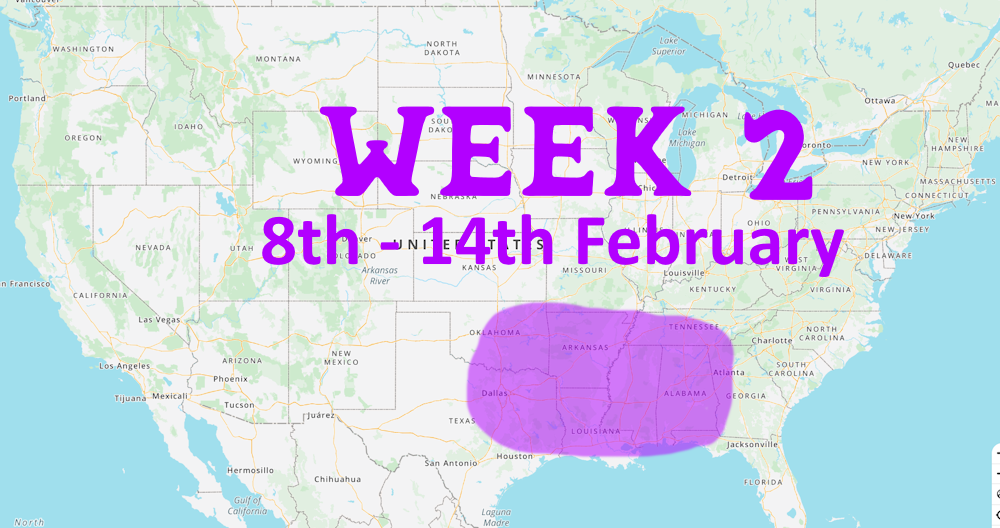
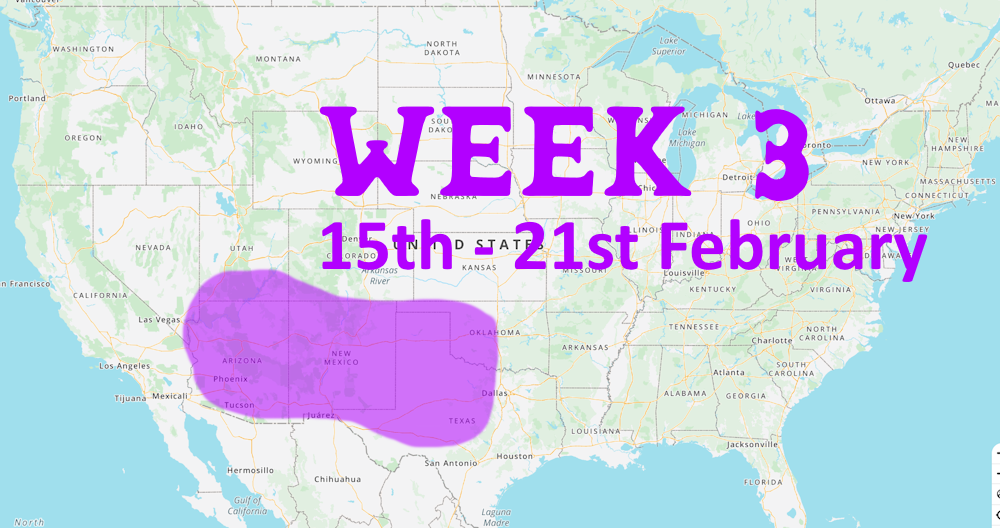
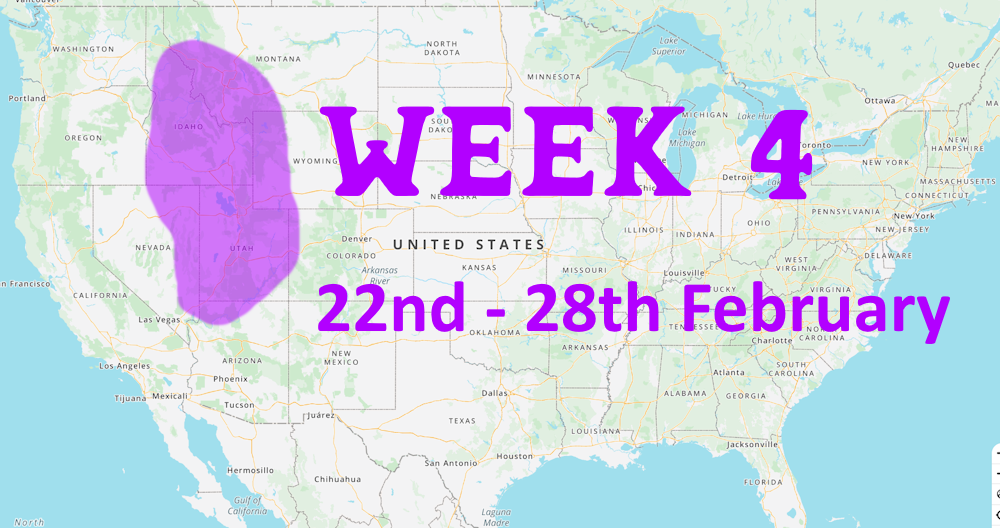
WHERE: see the maps below... The date listed on the map indicates when I will likely be in the shaded-purple area on that map.


More details noted after the map images. These are important.


(Week 3 is solidly booked! I may be able to visit other places in this area, depending on how the rest of the schedule works out. If you'd like some help, please send a PM.)


The Details and Important Notes:
- No, I can't be everywhere. I am "snowbirding" and don't have an all-terrain vehicle. That's why I'm avoiding generally-cold and snow-covered areas on this trip.
- No, unfortunately I can't accept every invite. Please don't take it personally.
- That being said: first come, first served.
- The only thing I request in exchange is a place to sleep (out of the precipitation) and vegetarian food to eat. Coffee will also be of tremendous help.
- I'm not some permaculture guru. I can make no promises. However, I am very willing to put in some hard work to help you with your existing or soon-to-be-existing homestead and permaculture projects. Maybe my BEL thread can clue you in to some of the things I've accomplished and helped with over the past couple years at Wheaton Labs. Click here to have a look. I also had a wonderful experience in 2025, and took some photos showing our projects.
- "Three is the magic number." I think three days at your site is what I can manage, though if my schedule turns out to be light, then I may be able to stay longer.
- It's unlikely I will be able to bring many tools with me on this trip. Please have what you need for me to do some tasks for you already on-site.
- This is not WWOOF or HelpX. I am not a Boot or the High Commander while at your place. This is a personal project. We will make our own rules and guidelines.

Please send me a PM if you think I can be of help to you when I'm in your area. Thanks for reading...!
 
steward and tree herder
Posts: 12628
Location: Isle of Skye, Scotland. Nearly 70 inches rain a year
6542
6
transportation dog forest garden foraging trees books food preservation woodworking wood heat rocket stoves ungarbage
  • Likes 8
  • Mark post as helpful
  • send pies
    Number of slices to send:
    Optional 'thank-you' note:
  • Quote
  • Report post to moderator
What a great way to spend your 'holidays'! I hope that you get to see how some of the projects you helped with last year turned out. Did the Adobe final coat stick to your manure/mud base coat? How did the Zai pits and swales do in their first year?
I think it would be lovely to see how different sites cope with different conditions and meet our lovely permies in person. Have fun!
 
gardener
Posts: 803
Location: 5,000' 35.24N zone 7b Albuquerque, NM
563
hugelkultur forest garden fungi foraging trees cooking food preservation building solar greening the desert homestead
  • Likes 11
  • Mark post as helpful
  • send pies
    Number of slices to send:
    Optional 'thank-you' note:
  • Quote
  • Report post to moderator
One of the best decisions that I made last year was to invite Stephen out for a few days of work on my acre homestead. I've never met anyone more willing to experiment with vernacular permaculture methods and learn about ancient techniques than Stephen. In addition to following the old ways, he's got plenty of new ideas and perspectives to contribute.
Sorry to those who are hoping for more time in week 3 but I'm looking forward to hosting Stephen again out here in New Mexico.
Thanks for all your commitment to the art and practice of permaculture, Stephen. Your dedication to the craft inspires me to continue.
 
Posts: 10094
Location: a temperate, clay/loam spot on planet earth, the universe
3294
4
  • Likes 8
  • Mark post as helpful
  • send pies
    Number of slices to send:
    Optional 'thank-you' note:
  • Quote
  • Report post to moderator
We're looking forward to Stephen's visit here in early february...hoping the winter weather is mild this year!
 
Stephen B. Thomas
pollinator
Posts: 1493
Location: Wheaton Labs, Montana, USA
2968
11
home care trees books wofati food preservation bike bee building writing seed
  • Likes 5
  • Mark post as helpful
  • send pies
    Number of slices to send:
    Optional 'thank-you' note:
  • Quote
  • Report post to moderator

Nancy Reading wrote:What a great way to spend your 'holidays'! I hope that you get to see how some of the projects you helped with last year turned out.


James, Amy, and Jen have all confirmed I can make a return visit this year, so I'll be able to report back.
 
Stephen B. Thomas
pollinator
Posts: 1493
Location: Wheaton Labs, Montana, USA
2968
11
home care trees books wofati food preservation bike bee building writing seed
  • Likes 6
  • Mark post as helpful
  • send pies
    Number of slices to send:
    Optional 'thank-you' note:
  • Quote
  • Report post to moderator

Amy Gardener wrote:One of the best decisions that I made last year was to invite Stephen out for a few days of work on my acre homestead.


You're very kind, Amy! And an excellent host. Stoked to return this coming February.
 
pollinator
Posts: 1407
Location: Milwaukie Oregon, USA zone 8b
164
  • Likes 1
  • Mark post as helpful
  • send pies
    Number of slices to send:
    Optional 'thank-you' note:
  • Quote
  • Report post to moderator
I'm glad you will get to do it again.  Wondering if Paul will run bootcamp for the month you're away?  I enjoy hearing you on the podcast episodes when you join Paul on them.
 
Stephen B. Thomas
pollinator
Posts: 1493
Location: Wheaton Labs, Montana, USA
2968
11
home care trees books wofati food preservation bike bee building writing seed
  • Likes 5
  • Mark post as helpful
  • send pies
    Number of slices to send:
    Optional 'thank-you' note:
  • Quote
  • Report post to moderator

Riona Abhainn wrote:I'm glad you will get to do it again.  Wondering if Paul will run bootcamp for the month you're away?  I enjoy hearing you on the podcast episodes when you join Paul on them.


Yep, I am grateful I have the chance (and the funds) to do this. I combine it with visiting family and old friends on the east coast, adding variety and skill-building to the return trip back home.

Bootcamp will still be running while I'm away (we have two excellent team members right now: Esteban and Molly), though Paul doesn't want to take in any new Boots while I'm off-site.

Pleased to hear you enjoy those few occasions when I can sit in with Paul on those podcasts...!
 
Stephen B. Thomas
pollinator
Posts: 1493
Location: Wheaton Labs, Montana, USA
2968
11
home care trees books wofati food preservation bike bee building writing seed
  • Likes 8
  • Mark post as helpful
  • send pies
    Number of slices to send:
    Optional 'thank-you' note:
  • Quote
  • Report post to moderator
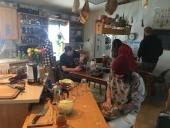
The 4S '26 is underway... Big thanks to Uncle Mud & Family for allowing me to stay in a lovely hand-built cottage while being snowed-in for a bit longer than expected. They even relented to my constant pleas to play one of my original tabletop game designs..!

For the next few weeks, I'll be visiting old friends and relatives on the east coast, then the February work tour begins.
january-cabin-mini.jpeg
[Thumbnail for january-cabin-mini.jpeg]
 
Stephen B. Thomas
pollinator
Posts: 1493
Location: Wheaton Labs, Montana, USA
2968
11
home care trees books wofati food preservation bike bee building writing seed
  • Likes 10
  • Mark post as helpful
  • send pies
    Number of slices to send:
    Optional 'thank-you' note:
  • Quote
  • Report post to moderator
I've received confirmations on sites and dates for this year's 4S.

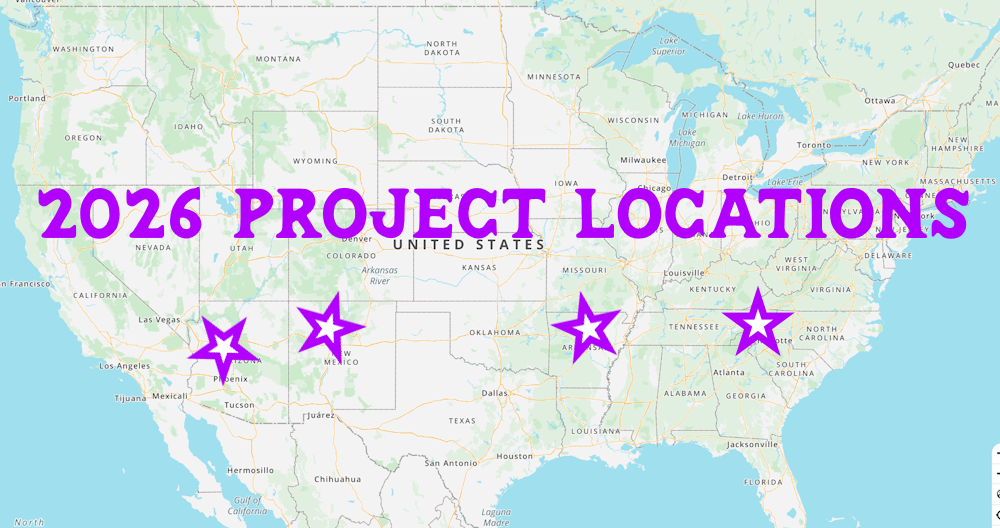
Western North Carolina with James. North-central Arkansas with Judith Browning. Central New Mexico with Amy Gardener. Central Arizona with Dr. Jen.

Currently visiting relatives in Pennsylvania, and I hit the road tomorrow. This is exciting...!!!

 
Judith Browning
Posts: 10094
Location: a temperate, clay/loam spot on planet earth, the universe
3294
4
  • Likes 8
  • Mark post as helpful
  • send pies
    Number of slices to send:
    Optional 'thank-you' note:
  • Quote
  • Report post to moderator
We're looking forward to your visit here!
It looks like there's a warm up that weekend and into the next week so should be nice even if the snow is not all gone yet.
 
Stephen B. Thomas
pollinator
Posts: 1493
Location: Wheaton Labs, Montana, USA
2968
11
home care trees books wofati food preservation bike bee building writing seed
  • Likes 15
  • Mark post as helpful
  • send pies
    Number of slices to send:
    Optional 'thank-you' note:
  • Quote
  • Report post to moderator
Update: Site #1, North Carolina

James invited me back again, asking me for help with projects at his homestead west of Asheville, North Carolina. I have a few photos of our projects, here.

Day One was pretty much snowed-out...! There was snow and ice all over everything, so we decided to visit several Little Free Libraries in the area and drop off some of Paul's books and DVDs. Later that afternoon however, things were sorted-out enough that we scouted around the property and picked some trees for felling the following day.

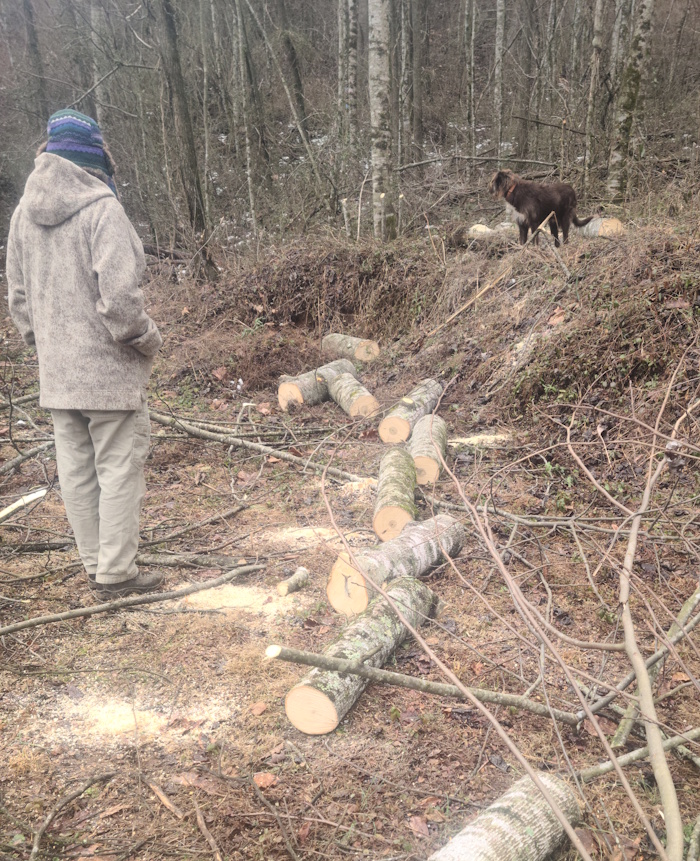
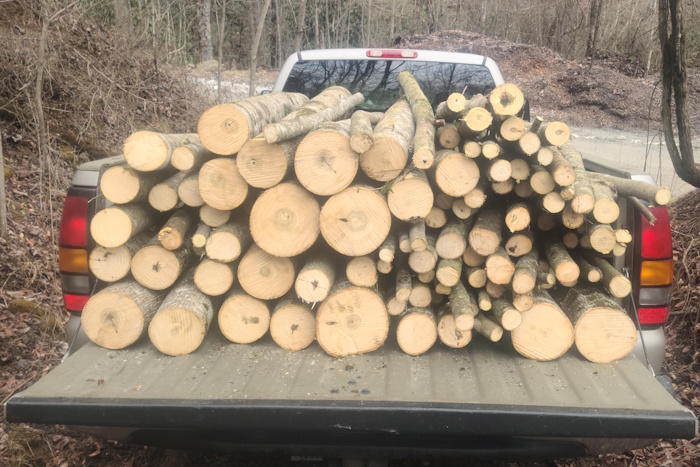
Day Two was much warmer, and by the afternoon, most of the ice and all of the snow was gone. We set to work felling a few poplar trees, stacking three-foot sections of the logs in the back of James' truck.

Pictured here are James in his winter gear, along with faithful four-legged companion Leroy.


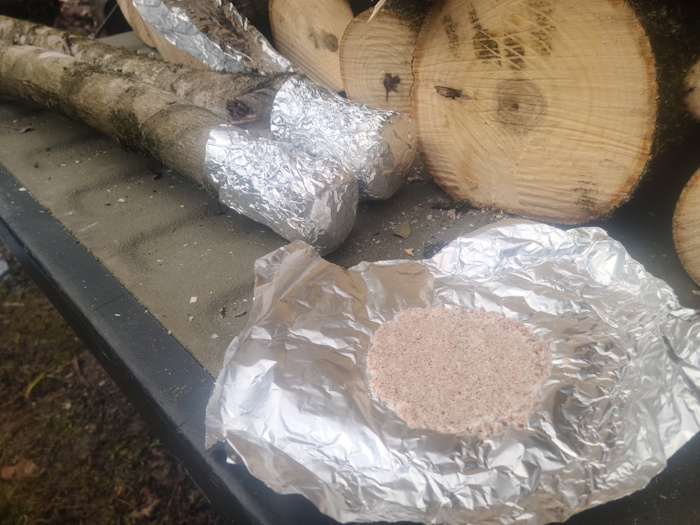
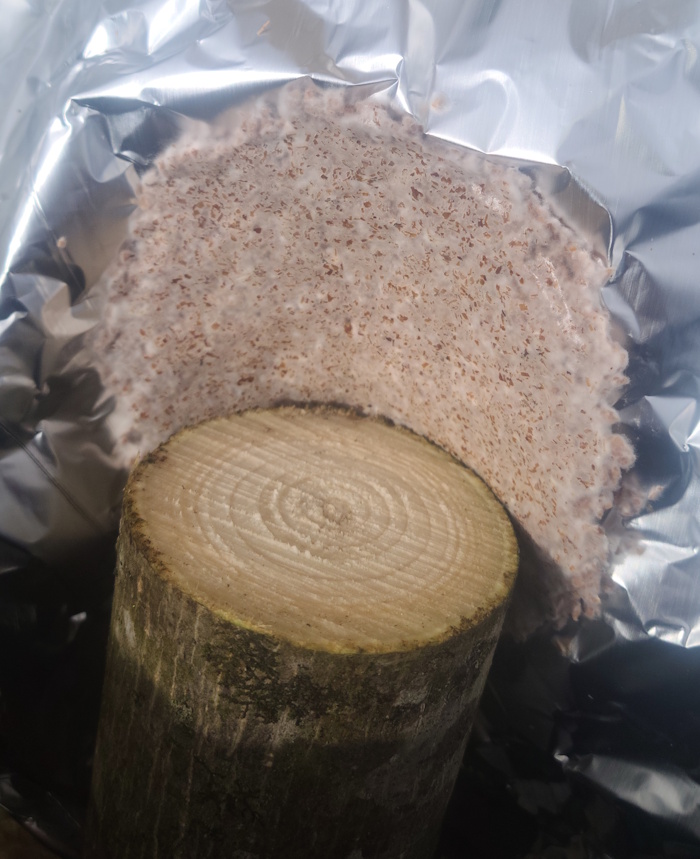
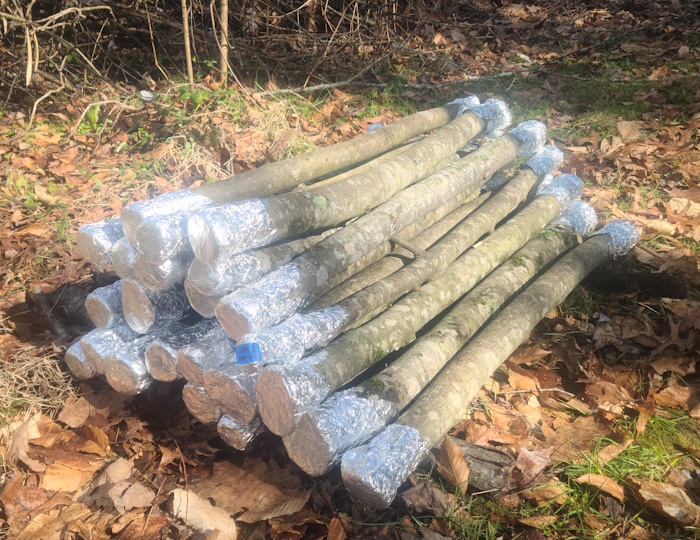
James then coached me through the process of using a relatively-unknown method of inoculating logs with shiitake and oyster mushrooms. Instead of the typical "drill and fill" method, he has opted for an end-capping method that cuts down on the time required to complete inoculation. To sum it up: instead of creating sawdust plugs that are stuffed into holes drilled into a log, you create pucks or "patties" of mycelium substrate, and press them into the ends of the log, covering them for a year with aluminum foil to hold them in place.


The end result was a stack of logs of several different diameters that we set in piles in the shade. It'll take anywhere from a couple months (for the oyster mushrooms) to about a year (for the shiitake) to permeate the logs, then they'll be stacked in much the same way as a "normal" mushroom growing operation.


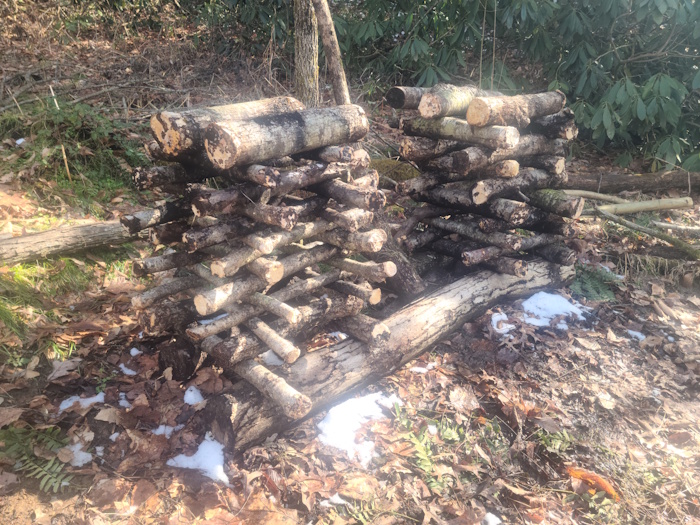
Here's a photo of one of James' previous mushroom harvesting log stacks:


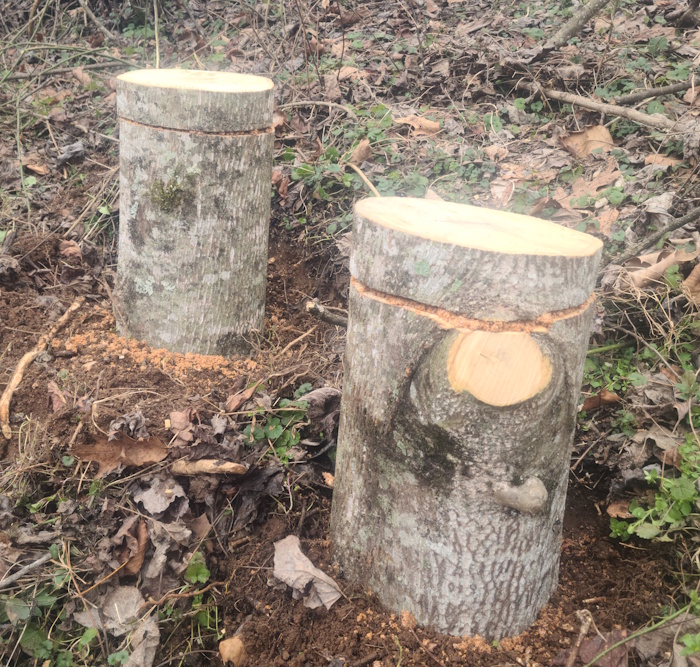
James had also seen some success with the "totem" style of mushroom cultivation, and we set up a few of the larger-diameter logs in this method. For this, you slice a log at a few different heights, then add mycelium patties in-between the layers. James was experimenting with a few Sepp Holzer-inspired variations to the process, including these totem logs set on the ground, with mycelium patties underneath them.


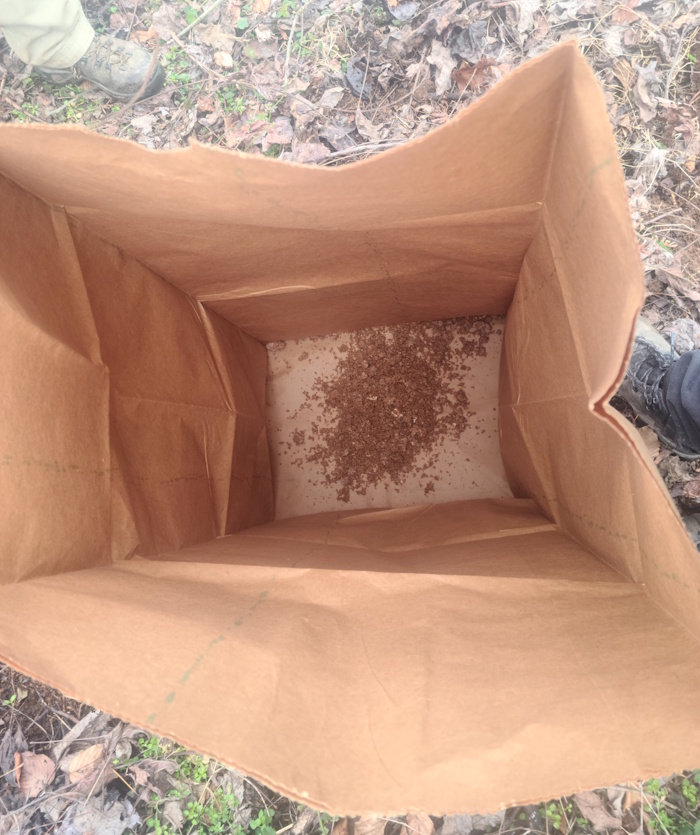
Another variation had totems stored in "lawn & leaf" bags, which will be sealed once the totems are stacked inside. The hope is that the bags will help the totems stay moist and further encourage the mycelium to colonize the entirety of the log.


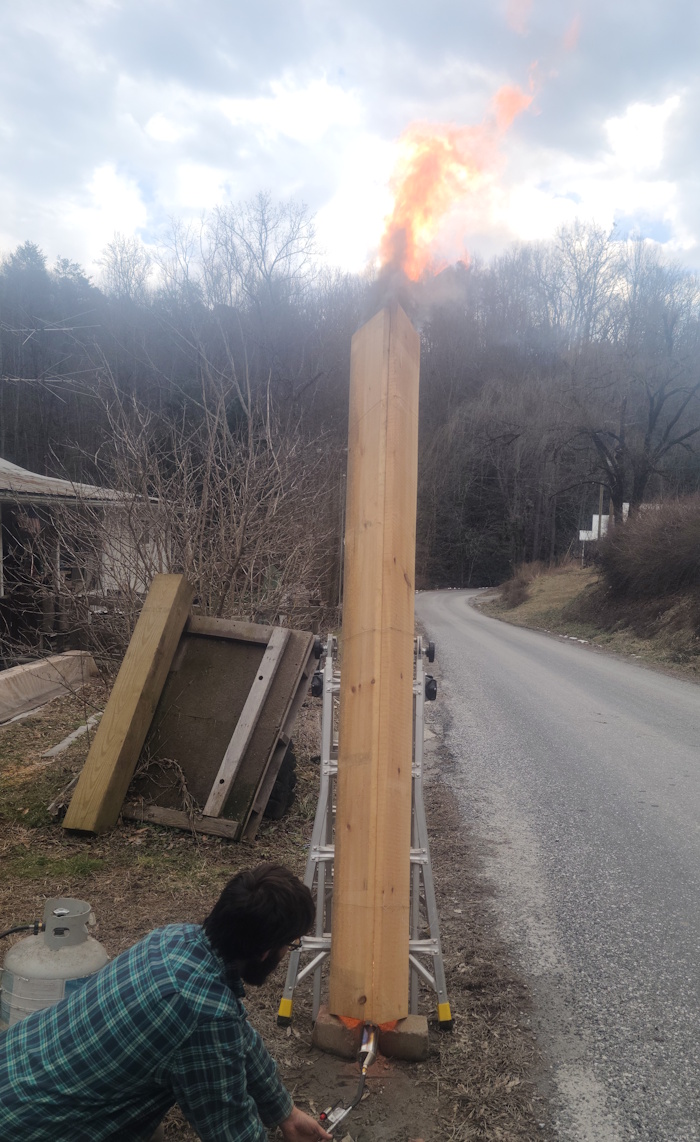
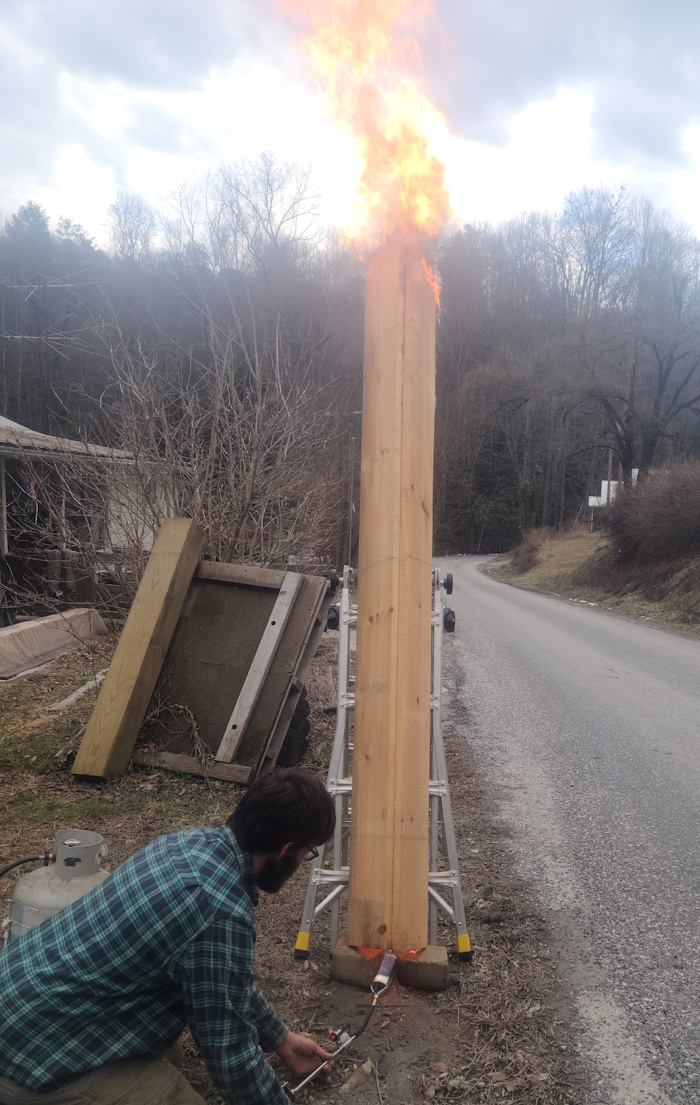
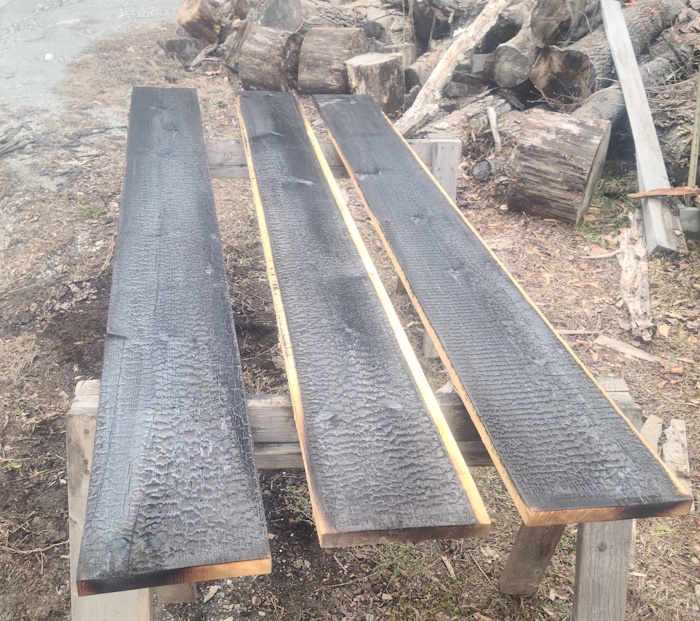
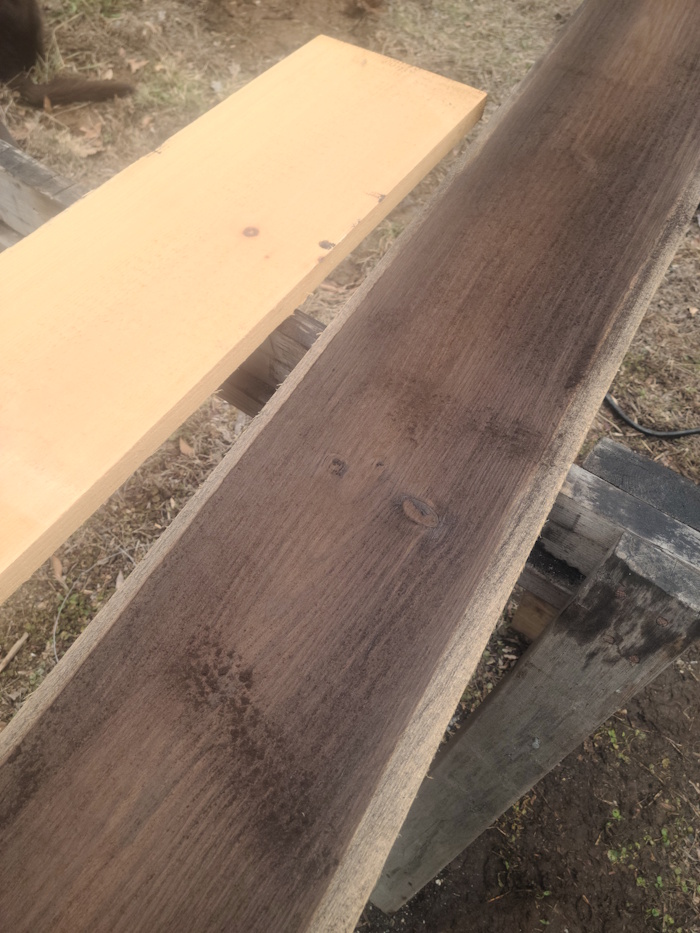
One of the final interesting projects we completed on Day Three was to apply a natural finish to pine boards intended for use on an exterior wall. James demonstrated how he created a "chimney" with the pine boards, arranging them into a prism shape and securing them together with wire. Then, we leaned the board-chimney against a step ladder, and then James blasted the inside of the chimney with a blowtorch. This was wild...! I thought the entire thing would burst into flames.


It certainly was a spectacle, though it turned out to be a rather brief pyrotechnics display. In fact, this is why James had opted to use this process: charring the planks one at a time would have used more fuel and would have taken much more time to complete. This way, he would be able to complete three boards in less time than it would take to char even a single board when using conventional methods.


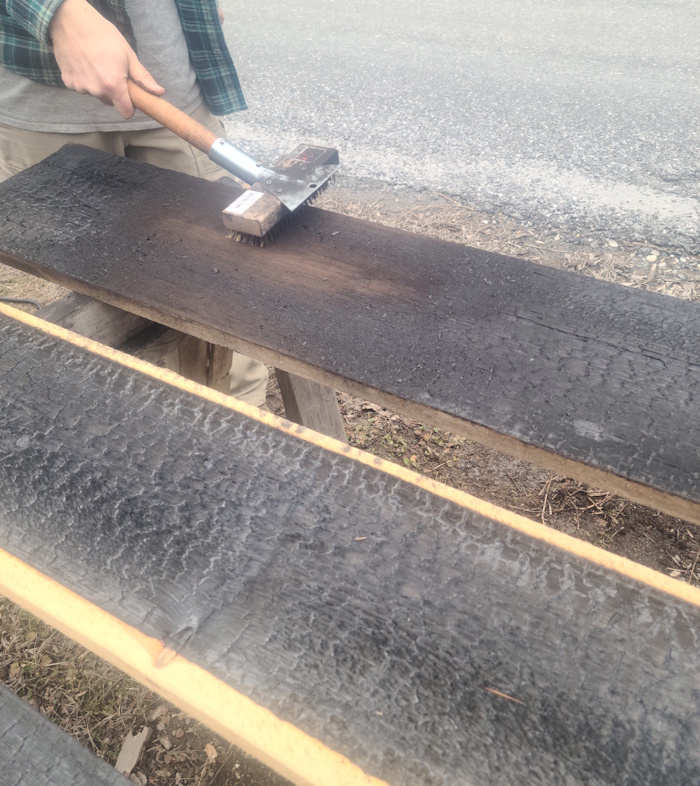
We then worked-over the charred wood with a wire brush until we cleared-off the most fragile charred bits.


The result was a truly beautiful, high contrast finish to the boards that was as weather-resistant as it was beautiful. James mentioned that the final step would be to apply some linseed oil finish, then affix it to the wall as part of a board-and-batten style exterior wall. I think this is a much nicer look than the plain pine boards...!


That's all for my trip to North Carolina...! BIG THANKS to James for hosting my first stop of this year's 4S. I hope to see him again next year. Next stop: Arkansas!
 
Stephen B. Thomas
pollinator
Posts: 1493
Location: Wheaton Labs, Montana, USA
2968
11
home care trees books wofati food preservation bike bee building writing seed
  • Likes 12
  • Mark post as helpful
  • send pies
    Number of slices to send:
    Optional 'thank-you' note:
  • Quote
  • Report post to moderator
Update: Site #2, Arkansas

Judith Browning and family invited me out to their home in the north-central part of the state. This was my first time I'd spent a significant length of time there, and I still thought it was too short...! I really enjoyed the vibe of their town, and my morning walks along the quiet streets to start my day were a special treat and put my head in the right place. It was an exceedingly pleasant stay, and they put me to work assisting with their garden prep. They also provided me with some excellent sight-seeing opportunities and visits to the extended family.

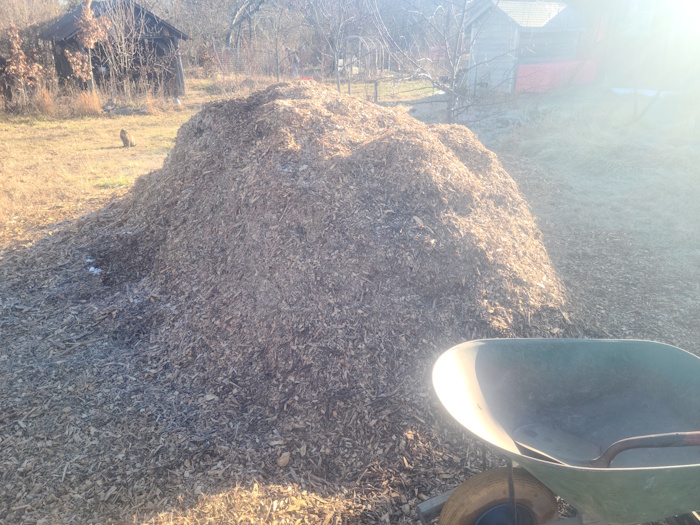
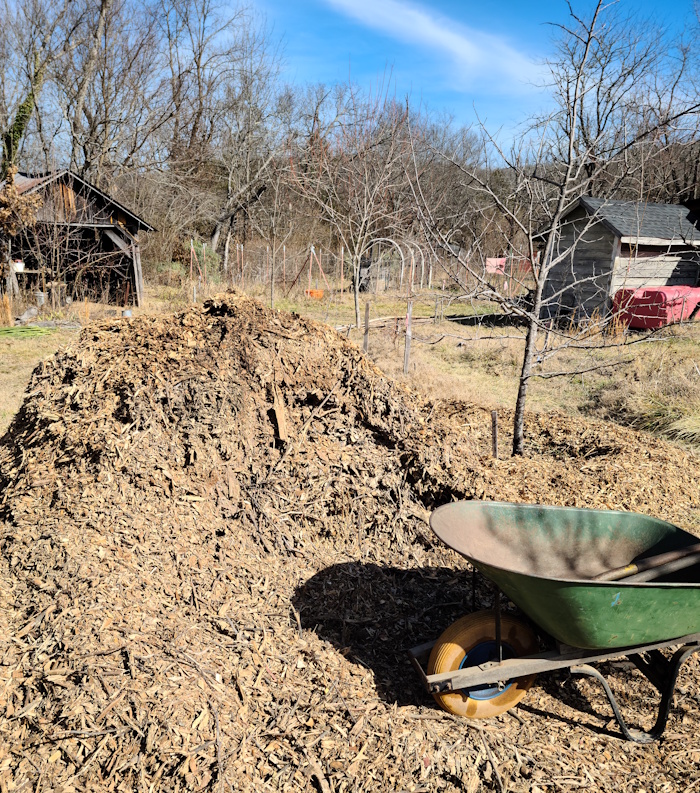
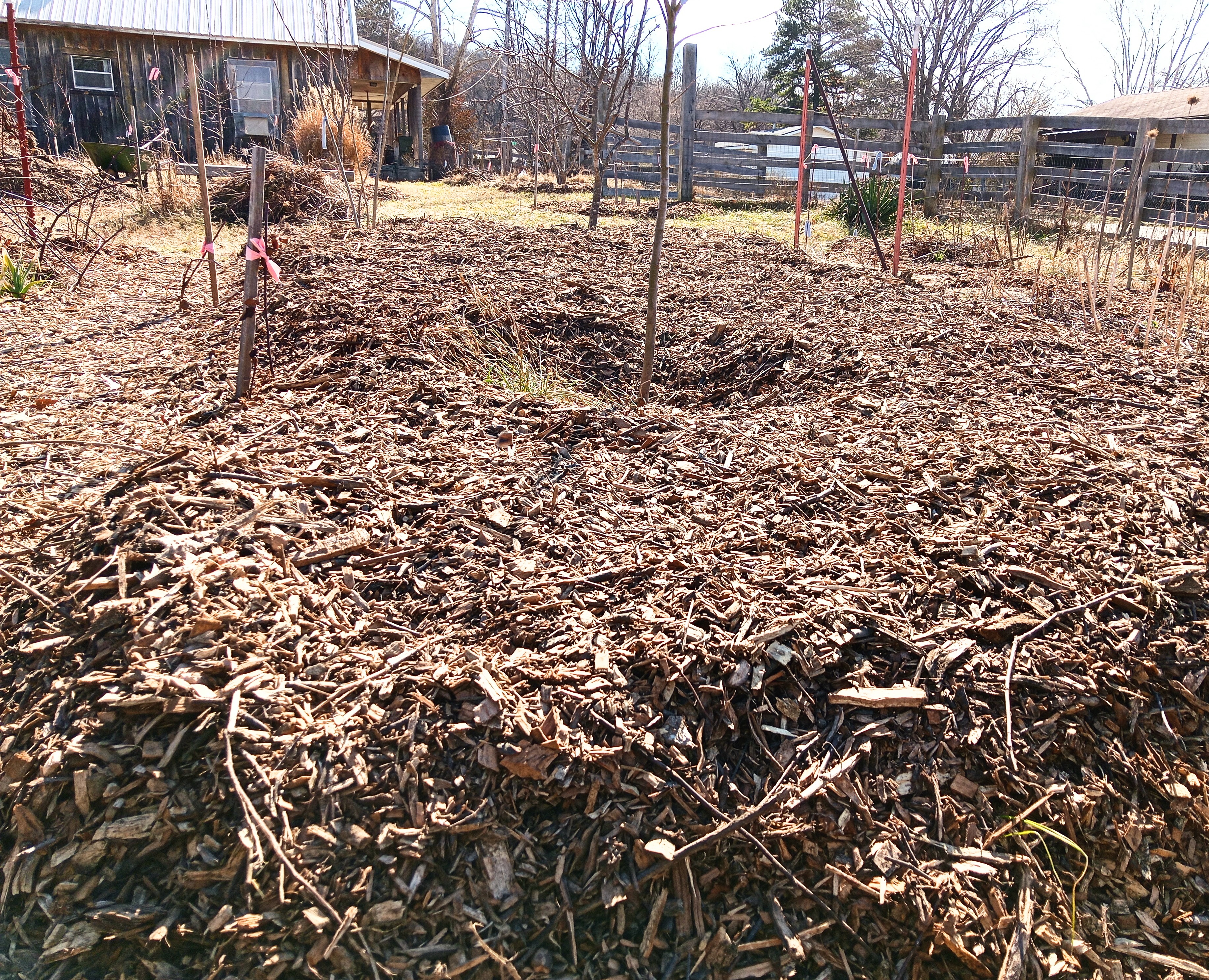
When I arrived, a dominant feature of the yard was a massive mulch pile, which I was all too happy to push around for them.


The main target was this area where several fruit trees were in place. Unfortunately, I neglected to snag a photo of the "after" but Judith did request that at least a foot of mulch be placed over the entire bed.


I did remember to grab a photo of the remainder of the mulch after I had put a bit of a dent in it. I love this stuff, really. A pitchfork can do wonders with moving it.


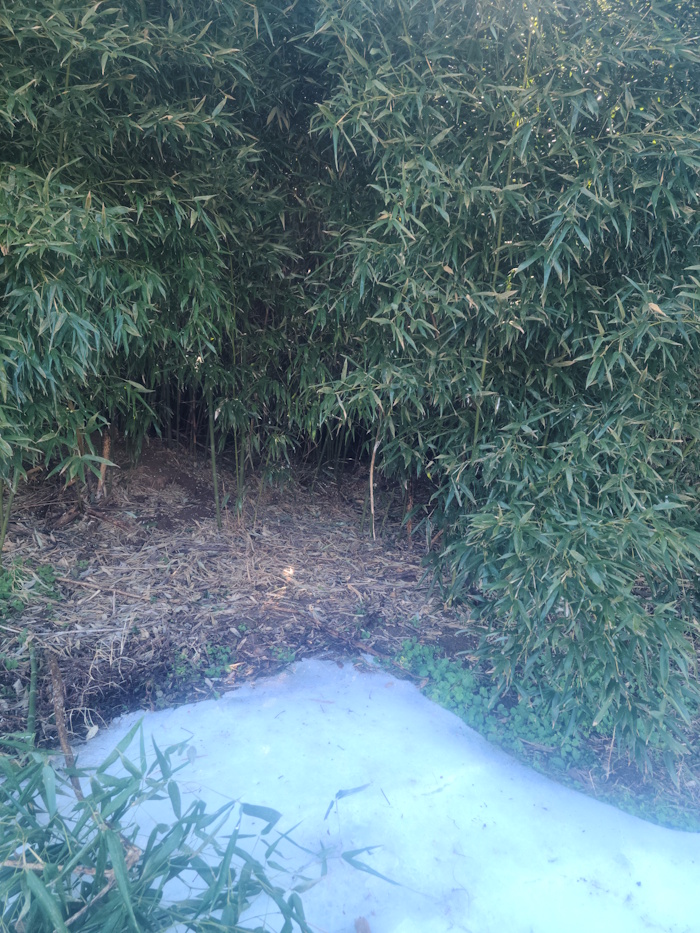
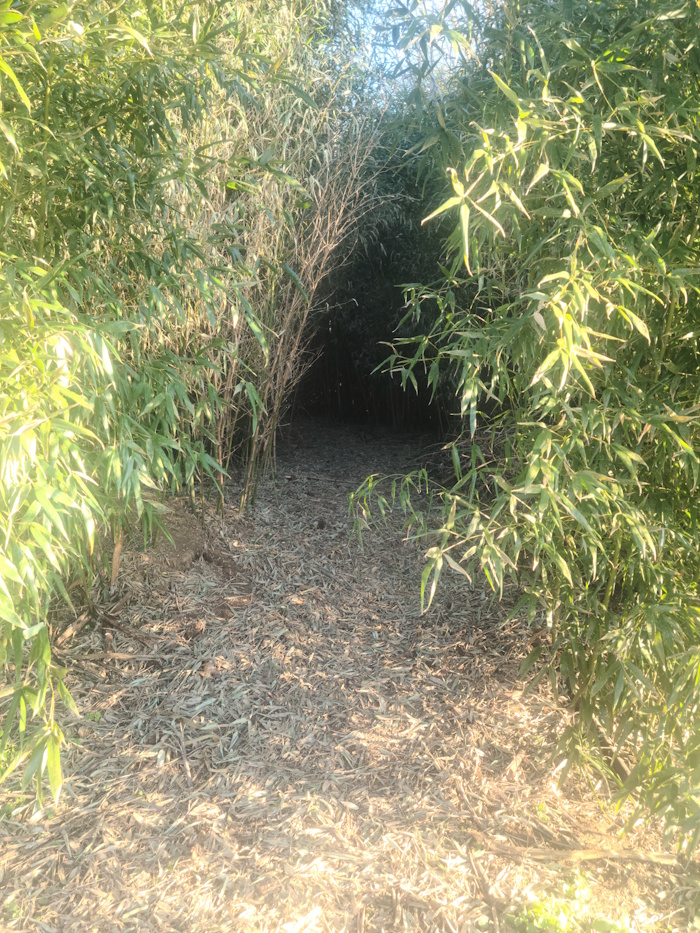
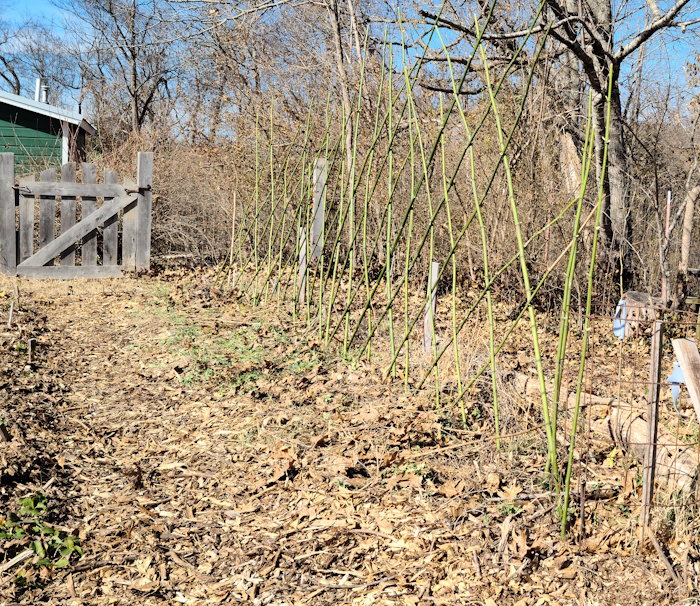
Across the street, there was a kind of "community bamboo patch." The best stalks were found deep in its interior, but the path had been overgrown since the last time they harvested any canes.


By the end of the day, not only had we cleared a wide-enough path for adequate harvesting, but most of the snow had melted as well.


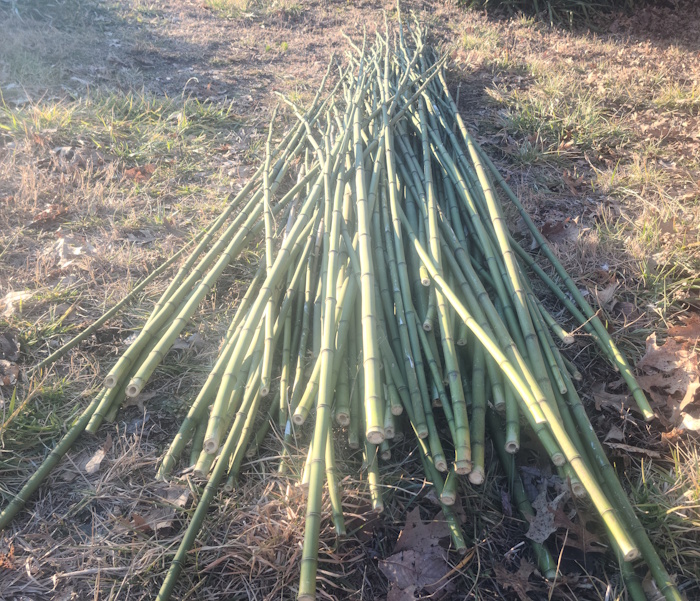
We cleaned the foliage off the canes we had removed when we cleared the path, and they looked more like the bamboo to which I was accustomed to seeing.


Judith demonstrated how to weave the canes together across a garden bed so that no fasteners were needed to keep it upright. It'll serve as a trellis for a wide variety of plants. I'll be sure to use this same technique back in Montana with our junk-pole trellises.


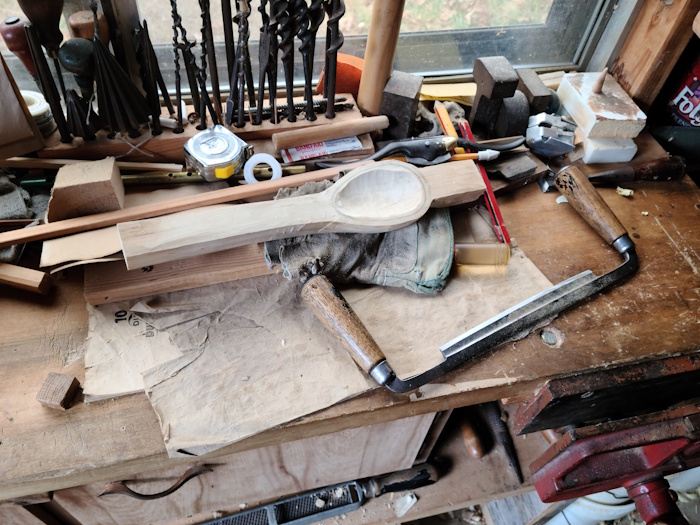
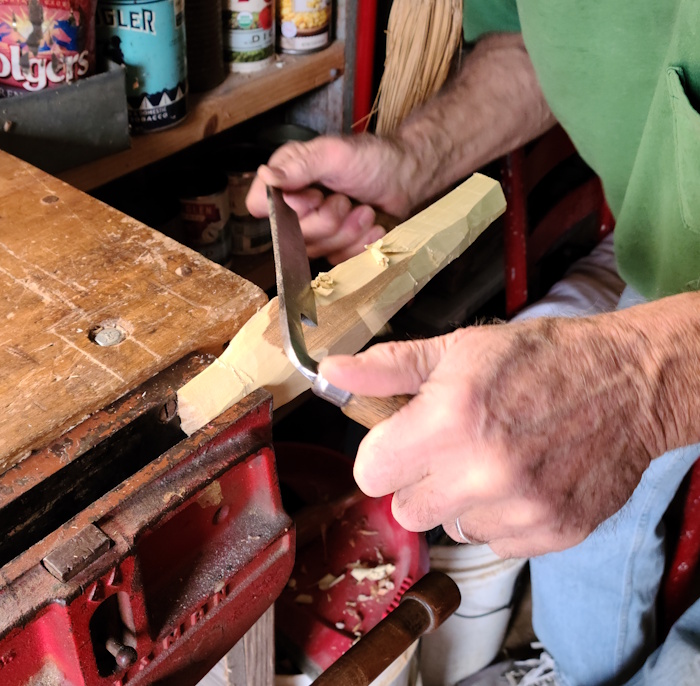
Oh, and Judith's husband has a fantastic woodshop! He's made a wide variety of wood items, and was happy to show me his current collection of spoons-in-process.


One of the things I learned was that if you keep a "nose" on your wooden spoons, then you can do all sorts of handy things with them, like secure them in the shop vise so you can use draw-knives and other two-handed tools to shape them. Again, this is another useful tip I'll be bringing back with me to Wheaton Labs.


This hand saw was a real treasure: an authentic late-1800s tool, including a monogram on the hand-carved handle, secured by rivets.


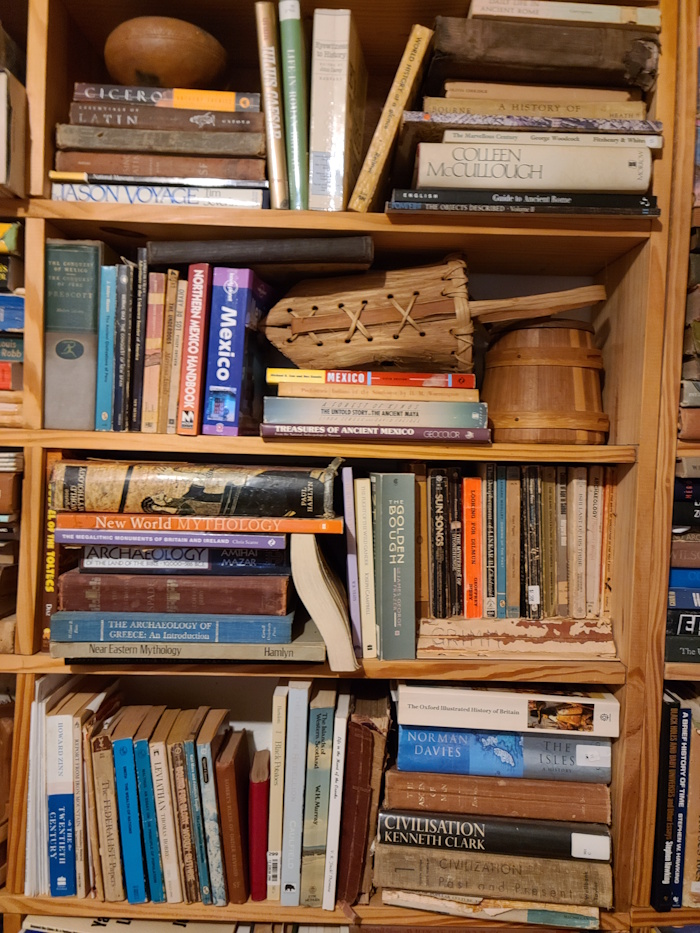
The room I stayed in had one of the loveliest home libraries I'd ever seen. A bookshelf stretched from wall to wall, floor to ceiling. Here's a sample of what I saw each morning when I opened my eyes after a night's rest.


Massive THANKS to Judith Browning for a wonderful stay, and likely the best introduction to small-town Arkansas a guy could have.

Next stop: New Mexico...!
 
Judith Browning
Posts: 10094
Location: a temperate, clay/loam spot on planet earth, the universe
3294
4
  • Likes 10
  • Mark post as helpful
  • send pies
    Number of slices to send:
    Optional 'thank-you' note:
  • Quote
  • Report post to moderator
Let me just say that Stephen was the most wonderful guest we could have imagined!

Besides all of the work he accomplished we had interesting conversations on a range of topics and for us it was a big bump in enthusiasm and motivation for our projects here.

We have dubbed Stephen 'Ambassador' of permaculture (and of Wheaton Labs of course).

The bamboo is exciting now that it is accessible back to the center...hoping enough folks will harvest it to revitalize the stand.
I'm planning to begin another thread with the type and uses of this particular bamboo.

I've attached the missing 'after' picture of the mulched bed Stephen mentions above.

Stephen, you are welcome back any time...hopefully we'll be on your route next year also😊
IMG_20260213_112443_928-2.jpg
woodchips!!!
woodchips!!!
 
pioneer
Posts: 89
Location: '23 USDA Zone 7b
26
purity forest garden fungi gear trees foraging hunting books medical herbs composting greening the desert
  • Likes 3
  • Mark post as helpful
  • send pies
    Number of slices to send:
    Optional 'thank-you' note:
  • Quote
  • Report post to moderator

Stephen B. Thomas wrote:Update: Site #1, North Carolina

James then coached me through the process of using a relatively-unknown method of inoculating logs with shiitake and oyster mushrooms. Instead of the typical "drill and fill" method, he has opted for an end-capping method that cuts down on the time required to complete inoculation. To sum it up: instead of creating sawdust plugs that are stuffed into holes drilled into a log, you create pucks or "patties" of mycelium substrate, and press them into the ends of the log, covering them for a year with aluminum foil to hold them in place.


VERY Clever! Appreciate seeing the images....

Best of luck with your trip and collaborations!
 
Stephen B. Thomas
pollinator
Posts: 1493
Location: Wheaton Labs, Montana, USA
2968
11
home care trees books wofati food preservation bike bee building writing seed
  • Likes 11
  • Mark post as helpful
  • send pies
    Number of slices to send:
    Optional 'thank-you' note:
  • Quote
  • Report post to moderator
Update 3: New Mexico

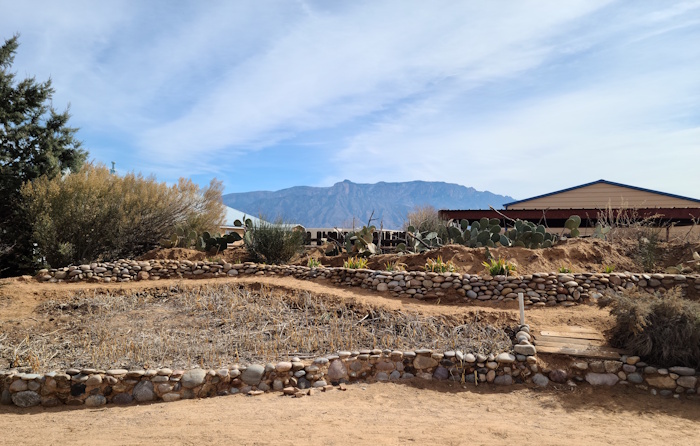
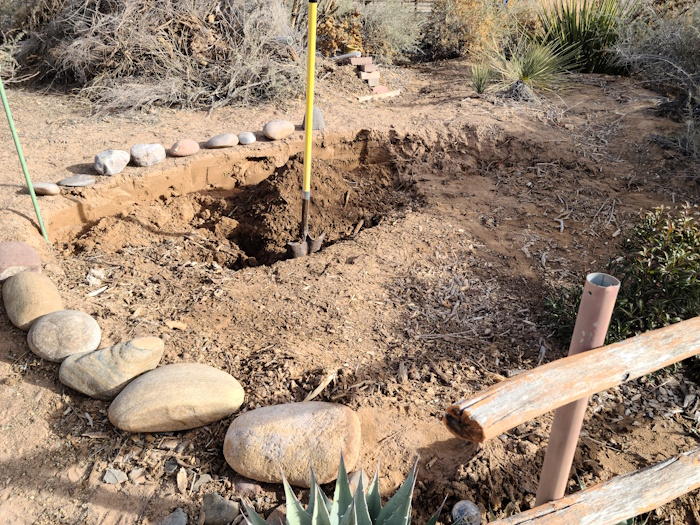
Permies staff member Amy Gardener invited me back again this year, and I was all too happy to stop by. I spent a few days assisting mostly with earthworks this time around. Amy wanted to build up a barrier between her yard and her neighbor's place, spurred on by an unsightly garage impeding her view of the nearby mountain range. What better natural solution could there be than a hefty berm, soon to be loaded with lovely desert plants?

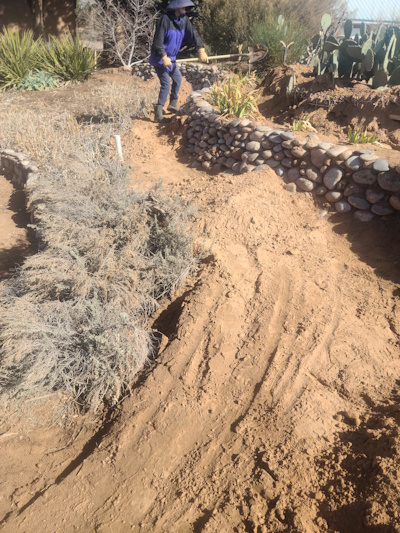
If there's one thing I know how to to, it's how to take dirt from over there, and bring it over here. So that's what I did in this spot.


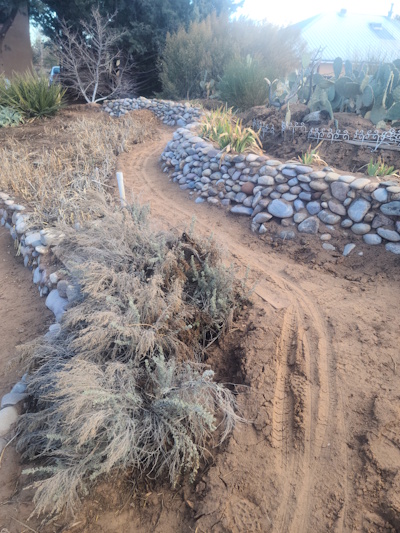
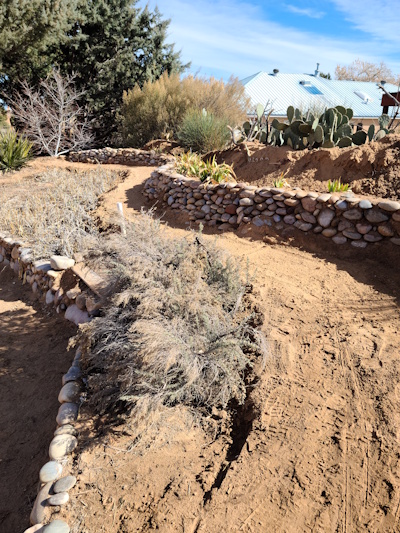
I would bring the wheelbarrow loads of dirt, while Amy would add them to the berm. There's a wire support fence-type thing that she wanted to cover with the earth. She was satisfied when those small fence bits were completely covered.


The berms were built up, as well as the path in front of the retaining wall. We both agreed that things turned out pretty great.


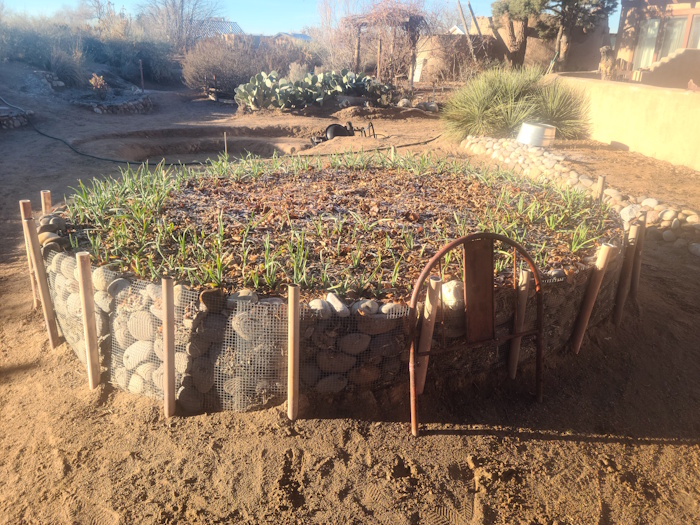
Here's Amy's excellent garlic raised bed:


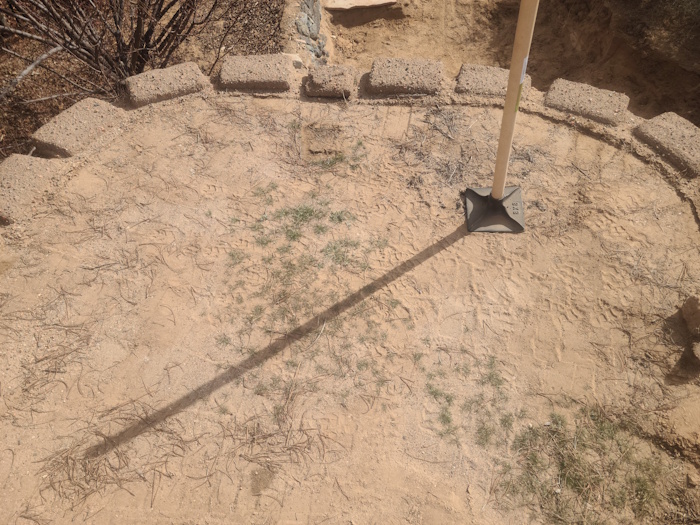
I paid a brief visit to last year's adobe structure project. No major renovations this year. Instead, I hopped up to the roof and did a bit of tamping of the soil on top, plucked out a few grasses that happened to move in, and in general just keep it tidy up there.


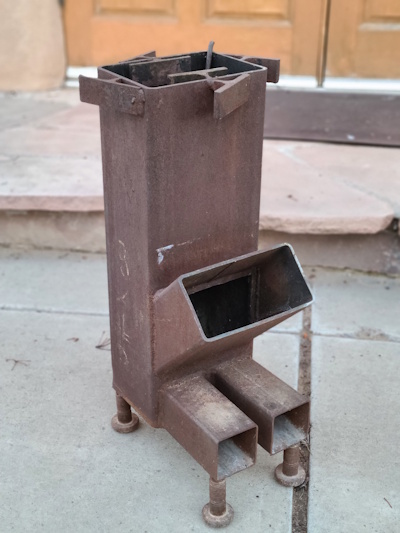
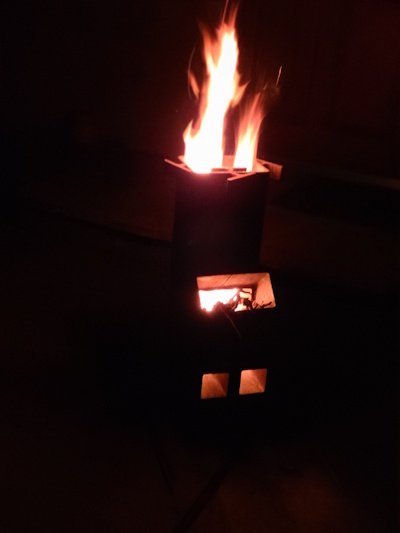
Amy had found a surprising bit of rocket-stove technology while visiting her local thrift store. Turns out people were using this as a trash can...!


I brought it out to the front porch for a closer look. Amy mentioned that it worked all right, so that evening I gave it a test-firing. All systems go.

It may not look too pretty, but it certainly is functional. Just like at Wheaton Labs, all rockety contraptions have their own little quirks and it was an interesting puzzle to make this one burst into flames.


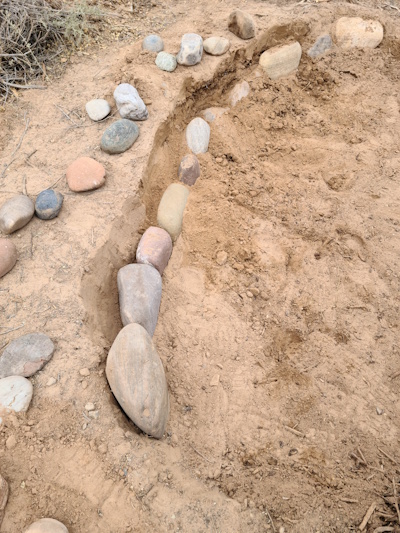
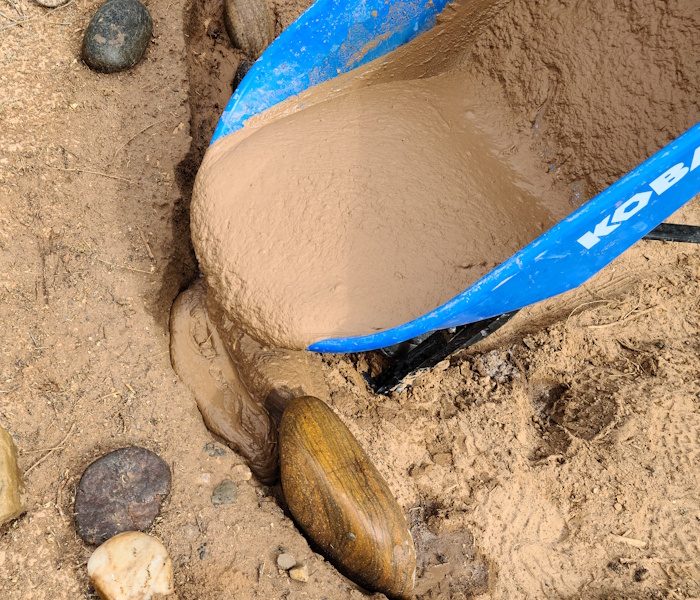
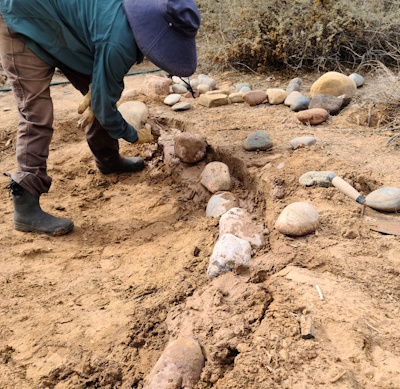
Amy also offered to give me a tutorial and demo on how to parge a rock wall. There's a location she wanted to transplant a tree to her yard for some friends of hers who are moving house soon. We picked up a bunch of river rock they'd collected over the years to decorate the location.


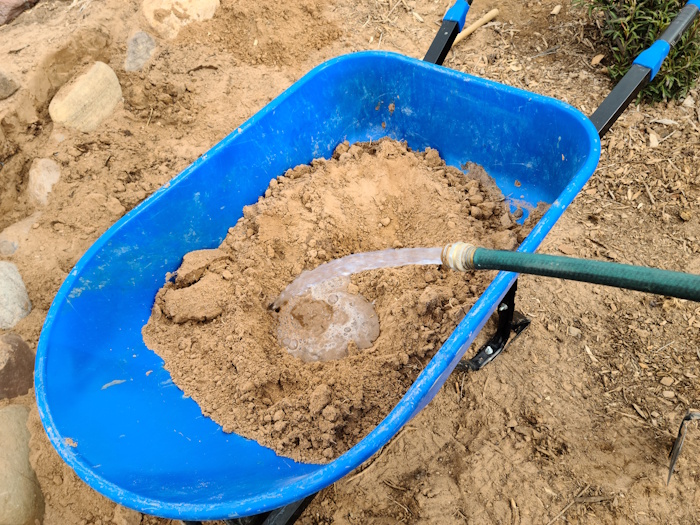
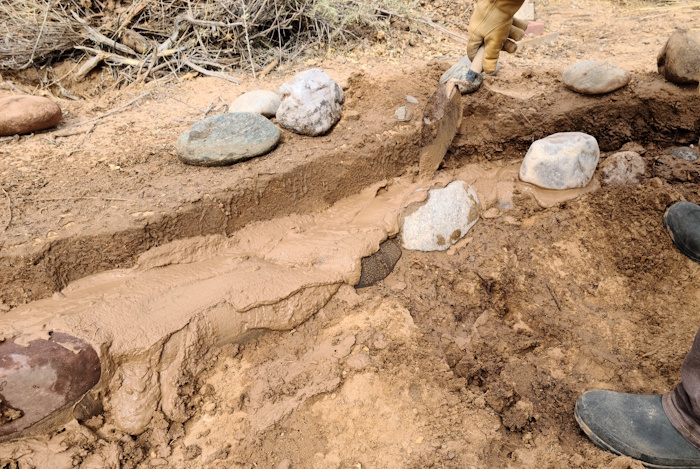
The easiest way to describe parging in terms that I understand well is, "It's like a dry-stack wall, while using adobe as mortar and foundation instead of gravel." It seems most useful for locations that won't have much rain. Amy explained that one of its major advantages is that since you're using mud, it all fuses together into one solid mass, holding things together with impressive stability, over time. And like most cob structures, you can easily add to it with more natural materials from the surrounding area, and a little bit of water.


Amy took care to work the mud into the nooks and crannies behind the river rocks. This would remove air bubbles and discourage burrowing by rodents.


On the back-side of the wall, scooping up the mud and slathering it against the rocks removes more air pockets and encourages the fusing of mud to rock.


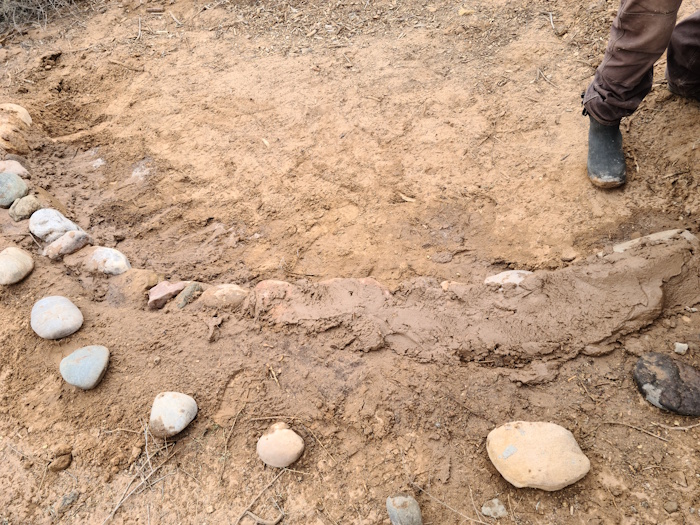
The next day, after most of the mud had dried and I took a second look. Initially, I was skeptical, but I think Amy's work is admirable and it will provide a handsome wall to both support the garden path and decorate the tree's new home. It's still in process, but even one afternoon hour seemed to make a lot of progress on that project.


BIG thanks once again to Amy Gardener and family for allowing me to stay! It was a blast.

...Currently snowed-in at Flagstaff, AZ, but I ought to be able to make it to the Sonoran Desert tomorrow for my fourth stop.
 
Stephen B. Thomas
pollinator
Posts: 1493
Location: Wheaton Labs, Montana, USA
2968
11
home care trees books wofati food preservation bike bee building writing seed
  • Likes 12
  • Mark post as helpful
  • send pies
    Number of slices to send:
    Optional 'thank-you' note:
  • Quote
  • Report post to moderator
Update 4: Arizona

More gardening in the American Southwest, this time in the Sonoran Desert of Arizona. Dr. Jen hosted me a second time, and this was another case of being able to see the work we'd done the year previous and how it performed and persisted since then. Jen had also taken in more chickens, turkeys, and even goats since my last visit. I was able to assist not just with the garden, but with animal care as well. It's a massive understatement to mention that I enjoyed every moment out there in the sands.

A big development for Jen's land: fewer wild burros...! The Bureau of Land Management had captured somewhere around 1,000 rudderless donkeys since my last visit, and while damage was still evident, it was encouraging to see the desert greenery was slowly being restored. We might have heard them braying a night or two, but during my visit we only encountered one, and Willow - Jen's trusty dog - ensured it kept its distance from us.

Meanwhile, here are a few photos of new developments, along with quick report-backs regarding last year's desert-greening projects.

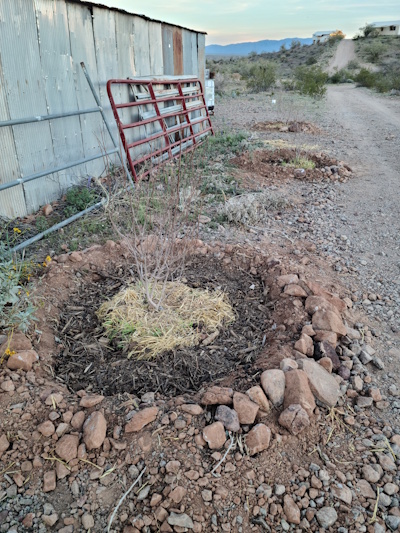
Amy Gardener had supplied me with a few goji berry starts from New Mexico, and a short time after arriving in Arizona I put them in the ground. The earth can be surprisingly rocky  beneath the sands and red dirt, but a pickaxe more or less makes short work of the task.


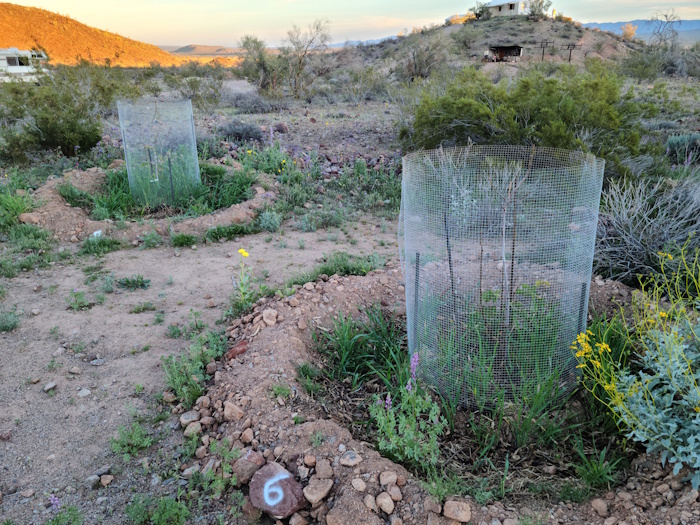
I dropped the gangly roots and stems in five separate spots on Jen's land. These starts might not look like much right now, but based on what I'd seen with the Orange Jubilee and other plants I'd either planted or transplanted last year, I have faith these will pick up soon.


The rocks taken out of the ground were used on the downward slope of the hill, preserving the mulch and contributed to preventing erosion of the landscape prior to the plants taking root. Amy testifies that, "Once they're established, you can't get rid of them!" Here's to hoping these little shrubs hang on and add more organic matter to the soil... and perhaps goji berries to someone's oatmeal breakfast.


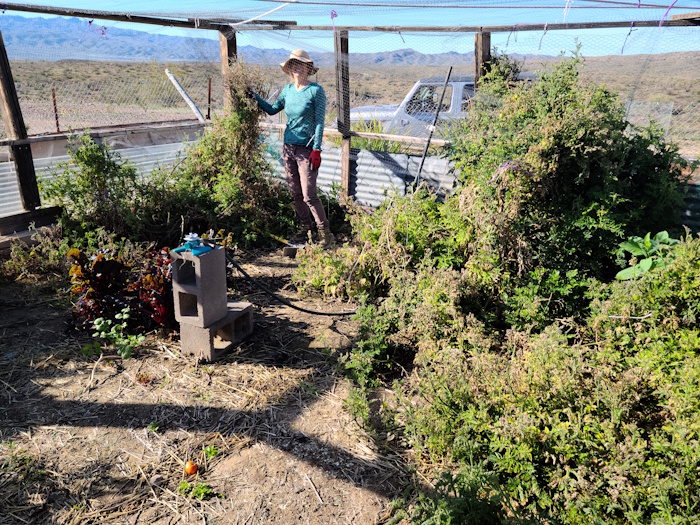
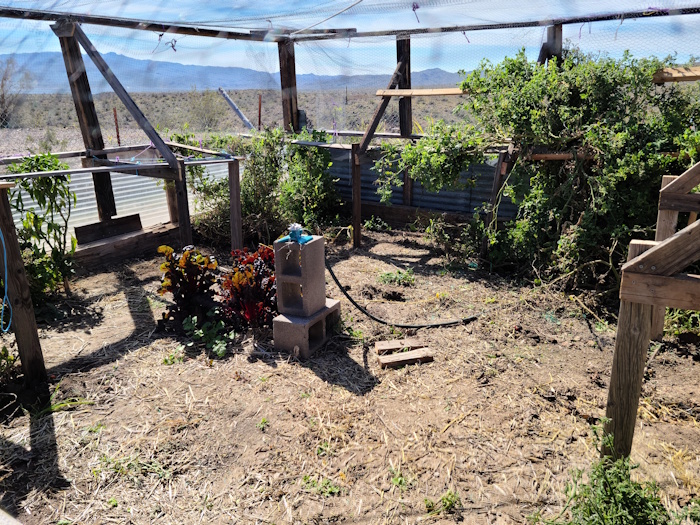
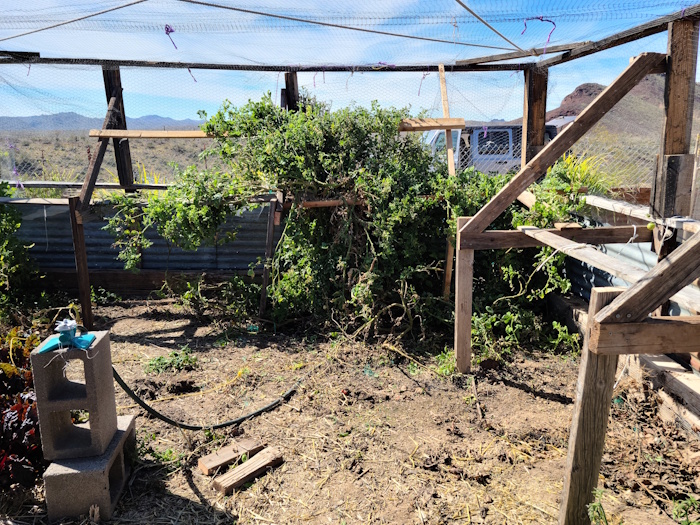
Another highlight from my visit was a massive overhaul of Jen's tomato garden. Due to intense pressure from various animals, the entire enclosure, roughly 20' x 20' x 6', is surrounded by wire mesh and bird netting. This is great, but the real problem at this stage was that the tomato plants were growing so well that they had sprawled and tangled themselves throughout the interior. Jen wanted to provide support and some order to the arrangement, allowing fruits to grow and then be harvested at all levels of the plants. Here's a "before" picture:


We gathered scrap wood from a few different locations - including lumber from the old mining structures - and did some arbitrary framing and sectioning-off of the tomato plants. Jen also set to work in guiding the tomato plants through the new frame so that the understory was visible and accessible. I used scraps of twine and other cordage to repair snagged bird netting and further secure it to the wire mesh.


Once we settled on the work and time we'd invested in it, it was plain to see there was significant improvement and now more potential for healthy tomato shrubs.


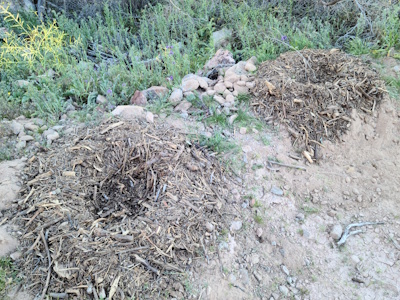
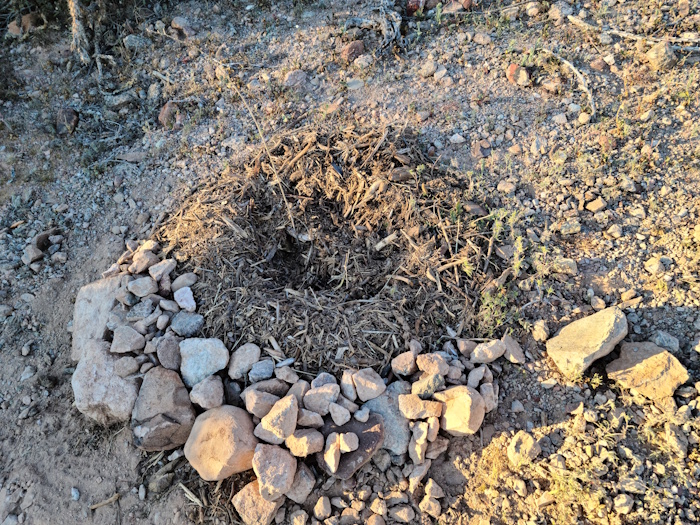
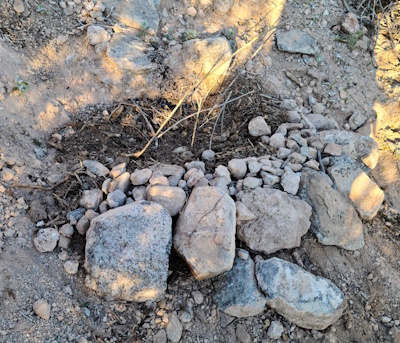
An individual task I'd tackled while on-site was broadening and deepening these "tree moats" so that their roots can be strengthened and more established. This consisted of digging close to a foot deep around the plant, beyond the roots' reach, then filling it in with compost, soil, and finally mulch. Again, rocks dug out of the earth were used to shore-up the boundaries of the tree moats and contribute to erosion-prevention.


I had a chance to see last year's projects and how they might have been useful. Thankfully, it all seemed to be good news. For one, last year's fig trees still seemed to be healthy and growing.


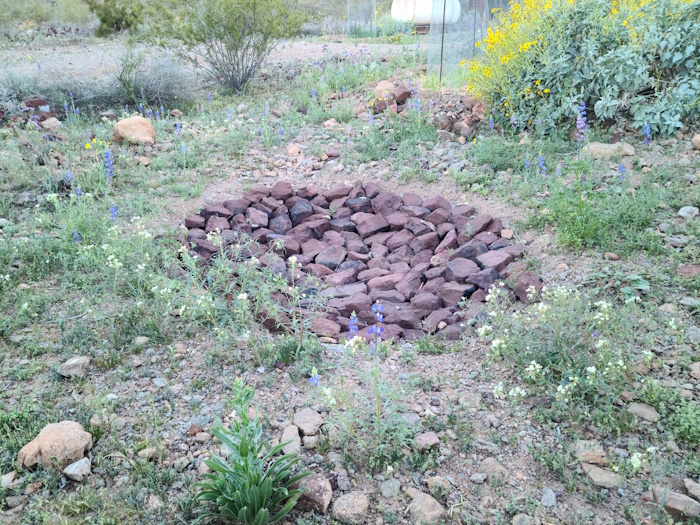
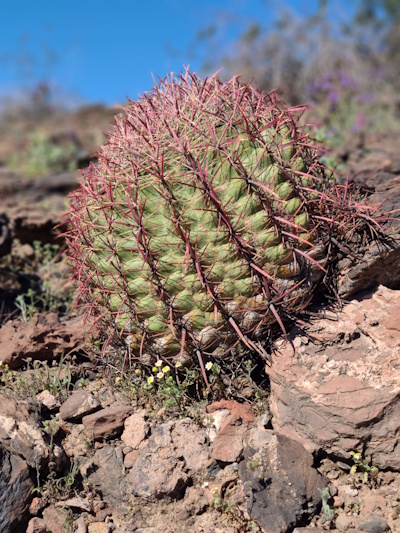
The zuni bowl I dug out last year had persisted. Greenery was crowding near, including some native lupine and other unidentified plants that weren't visible on other areas of Jen's land.


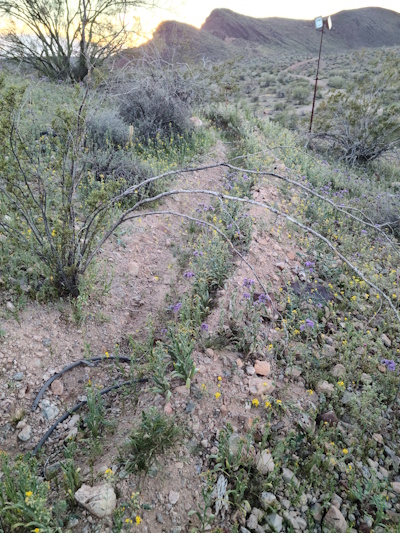
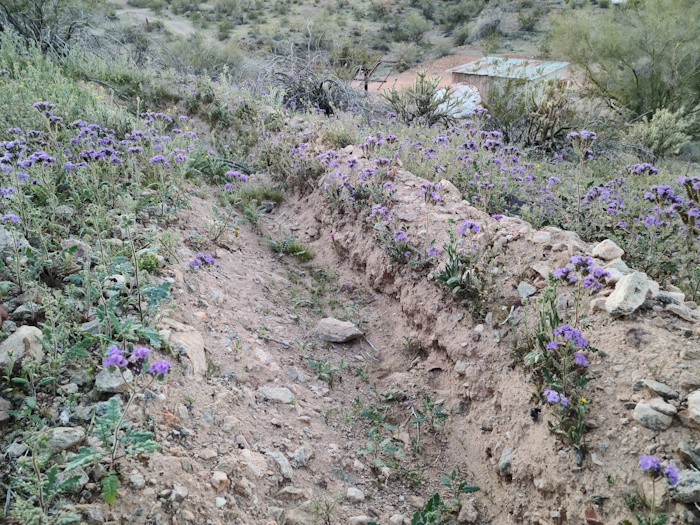
I don't feel like I can call them swales, but the trenches and terrace-ing that Leo and I had dug last year seemed to be doing their job: catching water before it runs off the hillside and providing needed irrigation to the surrounding plantlife with captured rainwater.


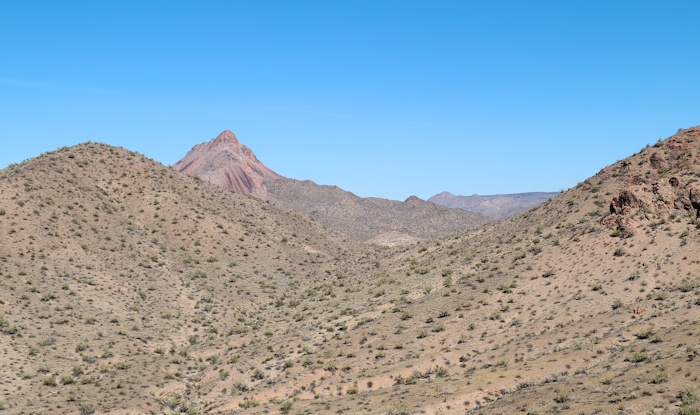
I feel drawn to this landscape, and while it could be seen as formidable and desolate to some, to me it's a comfort. Jen was a gracious host who made me feel at home while I was so far away from home. Big THANKS to Jen for her generous hospitality and providing me with some excellent experience in desert gardening.


That's a wrap for 4S 2026...! Now I'm headed back to Montana, and home. I certainly hope to do this again next year, as it was an immensely rewarding experience. Two for two, and I hope to make it a third in 2027.

Thanks for reading, and enjoy your day...!
 
Posts: 54
Location: Alamo Lake Arizona
12
  • Likes 10
  • Mark post as helpful
  • send pies
    Number of slices to send:
    Optional 'thank-you' note:
  • Quote
  • Report post to moderator
I had so much fun having Stephen as a guest. We built tomato scaffolding and played lots of board games!  I’m grateful to have gotten to know him. He has become a true friend.
 
She said size doesn't matter, so I showed her this tiny ad:
Back the BEL - Invest in Permaculture
https://permies.com/w/bel-fundraiser
reply
    Bookmark Topic Watch Topic
  • New Topic