• Post Reply Bookmark Topic Watch Topic
  • New Topic
permaculture forums growies critters building homesteading energy monies kitchen purity ungarbage community wilderness fiber arts art permaculture artisans regional education skip experiences global resources cider press projects digital market permies.com pie forums private forums all forums
this forum made possible by our volunteer staff, including ...
master stewards:
  • Nancy Reading
  • Carla Burke
  • John F Dean
  • Timothy Norton
  • r ransom
  • Jay Angler
  • Pearl Sutton
stewards:
  • Devaka Cooray
  • Leigh Tate
  • paul wheaton
master gardeners:
  • Christopher Weeks
gardeners:
  • M Ljin
  • thomas rubino
  • Megan Palmer

Is there a way to increase vitamins and minerals in produce?

 
gardener
Posts: 658
Location: Grow zone 10b. Southern California,close to the Mexican border
507
5
home care duck books urban chicken food preservation cooking medical herbs solar homestead greening the desert
  • Likes 12
  • Mark post as helpful
  • send pies
    Number of slices to send:
    Optional 'thank-you' note:
  • Quote
  • Report post to moderator
The treatment I get from my immune disorder eats up my vitamin and mineral deposits, and it’s hard to get them back up before the next treatment.
While I do take supplements, I was wondering if there is a way I can produce vegetables and or fruits, with a higher content of minerals and vitamins?
I already add compost and add minerals when needed to amend the soil, which gives me nice big vegetables, but does it also increase the content in the vegetables and fruits I grow?
90% of what I eat comes directly from our gardens and livestock, and the doctors says that it definitely has improved my health. I need more phosphate, folate, calcium, potassium and magnesium in order for my muscles to work better, and prevent osteoporosis. Right now I am on proscription supplements.
 
Posts: 45
11
  • Likes 9
  • Mark post as helpful
  • send pies
    Number of slices to send:
    Optional 'thank-you' note:
  • Quote
  • Report post to moderator
Feed the soil to feed the plant !! To this I think we could add, to feed the people or critters. This is what I read so many years ago in Acres USA. A soil that is low in nutrients will grow food that is also low in nutrients. Never thought of this before but it changed my thinking on soil, a great discovery. We really need to get more information on nutrient density for the foods we eat. Stands to reason the more biologically and nutrient diverse the soil is, the better the produce quality will be. We lack informational labeling on our food, by design I believe. Really great produce should taste good and store well.
 
steward
Posts: 18393
Location: USDA Zone 8a
4667
dog hunting food preservation cooking bee greening the desert
  • Likes 4
  • Mark post as helpful
  • send pies
    Number of slices to send:
    Optional 'thank-you' note:
  • Quote
  • Report post to moderator
Possibly as with the suggestion by Doug.

I feel it would be better to eat more of the vegetable that furnish what you need.

Green leafy vegetable furnish Vitamins A, C, K, plus B-vitamins.

Carrots, pumpkin and squash furnish beta-carotene in addition to the above mentioned vitamins.

 
Ulla Bisgaard
gardener
Posts: 658
Location: Grow zone 10b. Southern California,close to the Mexican border
507
5
home care duck books urban chicken food preservation cooking medical herbs solar homestead greening the desert
  • Likes 6
  • Mark post as helpful
  • send pies
    Number of slices to send:
    Optional 'thank-you' note:
  • Quote
  • Report post to moderator

Anne Miller wrote:Possibly as with the suggestion by Doug.

I feel it would be better to eat more of the vegetable that furnish what you need.

Green leafy vegetable furnish Vitamins A, C, K, plus B-vitamins.

Carrots, pumpkin and squash furnish beta-carotene in addition to the above mentioned vitamins.


I eat a lot of those and it works, I also get calcium from nettles, and potassium from our bananas. I am growing a cashew tree for phosphate, but it’s still too small. Long term that will be my source though. I am looking for another source to use at least short term.
I get vitamin C from oranges, lemons, tangerines, currants and rose hips. A K and B vitamins I am not sure of though I do eat a lot of organ meats. Carrots, pumpkins and squash is a stable in my diet too.
Vitamins and minerals was part of the equation when I decide what to plant.
 
gardener
Posts: 767
Location: Semi-nomadic, main place coastal mid-Norway, latitude 64 north
466
  • Likes 9
  • Mark post as helpful
  • send pies
    Number of slices to send:
    Optional 'thank-you' note:
  • Quote
  • Report post to moderator
How 'bout that seaweed? Do you live far from the sea, or is getting seaweeds feasible, either to feed your plants or to feed you directly? Don't know about vitamins, but seaweed contains all the minerals you list, especially potassium, with significant variations depending on species. Here is an interesting paper about the nutritional profile of three species.
 
Doug McEvers
Posts: 45
11
  • Likes 7
  • Mark post as helpful
  • send pies
    Number of slices to send:
    Optional 'thank-you' note:
  • Quote
  • Report post to moderator
This link will give you information on plant tissue testing normals.

https://agsci.psu.edu/aasl/plant-analysis/plant-tissue-total-analysis/interpretive-nutrient-levels-for-plant-analysis

Plant tissue testing is designed to tell us what is plant available from the soil. If it is in the plant tissue, the soil has made it available. I did a plant tissue test in 2024 on tillering volunteer oats, the test told me my soil was in quite good balance after the first season of our transition to biological farming. My former soil lab said I was short of nearly everything. A $22.00 test gave me peace of mind and a new path forward in understanding our soil here. Plant tissue testing is as much as is possible, a real time test, giving one the opportunity to make fertility corrections while the crop is still progressing.


Ulla Bisgaard
gardener
Posts: 658
Location: Grow zone 10b. Southern California,close to the Mexican border
507
5
home care duck books urban chicken food preservation cooking medical herbs solar homestead greening the desert
  • Likes 4
  • Mark post as helpful
  • send pies
    Number of slices to send:
    Optional 'thank-you' note:
  • Quote
  • Report post to moderator

Eino Kenttä wrote:How 'bout that seaweed? Do you live far from the sea, or is getting seaweeds feasible, either to feed your plants or to feed you directly? Don't know about vitamins, but seaweed contains all the minerals you list, especially potassium, with significant variations depending on species. Here is an interesting paper about the nutritional profile of three species.


I was actually thinking about that, after I read an article about it. We are southeast of San Diego, so we have access to beaches, but there is a lot of pollution so I don’t want to get it there. I should be able to buy it though, and we do have some at home we use in soups and similar dishes.
I have also been thinking about getting some to spread out in the garden
 
Ulla Bisgaard
gardener
Posts: 658
Location: Grow zone 10b. Southern California,close to the Mexican border
507
5
home care duck books urban chicken food preservation cooking medical herbs solar homestead greening the desert
  • Likes 4
  • Mark post as helpful
  • send pies
    Number of slices to send:
    Optional 'thank-you' note:
  • Quote
  • Report post to moderator

Doug McEvers wrote:This link will give you information on plant tissue testing normals.

https://agsci.psu.edu/aasl/plant-analysis/plant-tissue-total-analysis/interpretive-nutrient-levels-for-plant-analysis

Plant tissue testing is designed to tell us what is plant available from the soil. If it is in the plant tissue, the soil has made it available. I did a plant tissue test in 2024 on tillering volunteer oats, the test told me my soil was in quite good balance after the first season of our transition to biological farming. My former soil lab said I was short of nearly everything. A $22.00 test gave me peace of mind and a new path forward in understanding our soil here. Plant tissue testing is as much as is possible, a real time test, giving one the opportunity to make fertility corrections while the crop is still progressing.


I do test my soil. I used to do it twice a year, but the company I used went under, so I haven’t tested the garden the last two years. Right now I only test ph, temperature and humidity. I have never done testing on the plants, because they in general need more material for testing than what we have.
 
author & steward
Posts: 7453
Location: Cache Valley, zone 4b, Irrigated, 9" rain in badlands.
3701
  • Likes 16
  • Mark post as helpful
  • send pies
    Number of slices to send:
    Optional 'thank-you' note:
  • Quote
  • Report post to moderator
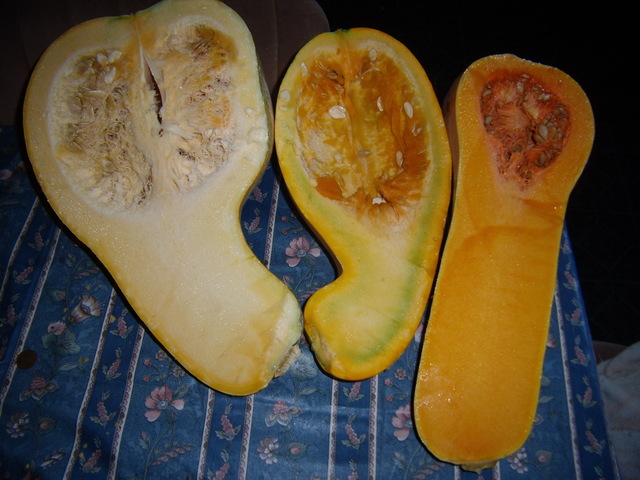
I experience that the genetics of the plant matter more than soil fertility. By planting crops known to produce higher nutrient density, we can expect to harvest crops containing more vitamins and minerals.

Plants that grow better in local conditions produce better tasting plants. I believe that better tasting strongly correlates with higher nutrition.

Best practice for me involves tasting every plant, every year, before saving seed from it.

mixta-hybrid-moschata.jpg
The more color the better tasting.
 
Ulla Bisgaard
gardener
Posts: 658
Location: Grow zone 10b. Southern California,close to the Mexican border
507
5
home care duck books urban chicken food preservation cooking medical herbs solar homestead greening the desert
  • Likes 6
  • Mark post as helpful
  • send pies
    Number of slices to send:
    Optional 'thank-you' note:
  • Quote
  • Report post to moderator

Joseph Lofthouse wrote:I experience that the genetics of the plant matter more than soil fertility. By planting crops known to produce higher nutrient density, we can expect to harvest crops containing more vitamins and minerals.

Plants that grow better in local conditions produce better tasting plants. I believe that better tasting strongly correlates with higher nutrition.

Best practice for me involves tasting every plant, every year, before saving seed from it.


I haven’t done a lot of seed saving yet, but I do get most of my seeds locally, and if a plant fail 2 years in a row, I stop planting it. For example delicata and Acorn squash. Those always get sick and don’t produce. In comparison crooked necked squash will produce 50 to 100 pounds pr plant in a season, and can be used a summer squash when young and winter if left to fully mature.
 
pollinator
Posts: 4236
Location: Tennessee 7b
352
  • Likes 4
  • Mark post as helpful
  • send pies
    Number of slices to send:
    Optional 'thank-you' note:
  • Quote
  • Report post to moderator
The best resource I know for learning about plant nutrition is John Kempf. He has a podcast, articles at aea.com, and been a guest at acres USA eco ag conference. Some of his talks are simple and easy to understand, some are phd level.  
 
pioneer
Posts: 75
Location: '23 USDA Zone 7b
27
purity forest garden fungi gear trees foraging hunting books medical herbs composting greening the desert
  • Likes 6
  • Mark post as helpful
  • send pies
    Number of slices to send:
    Optional 'thank-you' note:
  • Quote
  • Report post to moderator

Ulla Bisgaard wrote:The treatment I get from my immune disorder eats up my vitamin and mineral deposits, and it’s hard to get them back up before the next treatment.
While I do take supplements, I was wondering if there is a way I can produce vegetables and or fruits, with a higher content of minerals and vitamins?
I already add compost and add minerals when needed to amend the soil, which gives me nice big vegetables, but does it also increase the content in the vegetables and fruits I grow?
90% of what I eat comes directly from our gardens and livestock, and the doctors says that it definitely has improved my health. I need more phosphate, folate, calcium, potassium and magnesium in order for my muscles to work better, and prevent osteoporosis. Right now I am on proscription supplements.


There is a wonderful book written about this very topic.

It's called 'The Intelligent Gardener' by Steve Solomon    Steve's ongoing site

Here is a video with 'David the Good' on YT videoconferencing with Steve while amending the soil...

https://youtu.be/kvd6Z31pJOI?si=e1IdUeyOz-osq-2I&t=1002

Appreciate your curiosity and wishing you abundant, overflowing blessings on your health journey!
JP


Steve-Solomon-Web-conferencing.jpg
[Thumbnail for Steve-Solomon-Web-conferencing.jpg]
 
gardener
Posts: 926
Location: Ontario - Zone 6a or 4b, depending on the day
630
dog foraging trees tiny house books bike bee
  • Likes 7
  • Mark post as helpful
  • send pies
    Number of slices to send:
    Optional 'thank-you' note:
  • Quote
  • Report post to moderator
Depending on where you live in the world, your soil has different minerals.

Here in Ontario, for example, my soil is mostly 10 000 year old ground up rock dust, pulverized by glaciers and deposited in a lake bed. Very nutrient rich.

Much of the southern US is on soil that is from millions of years of rock decomposing insitu, which may be less rich. Unless you're in a river Valley, or a drained lake, or ....  It depends!

Over time, water can move soil nutrients lower, and wash them away - or crust them to the surface in excess. Once those nutrients are gone, it's hard to recover them even with the best compost and they might be absent in a large geographic area.

I don't know where you are, what your soil contains, and what types of minerals it was made of, but I have seen people amend with rock dust (glacial or volcanic), which I'd consider if I was worried about soil mineral content.

I would want to have a good idea of what's missing though, as I'm personally not a fan of amending without good reason. I would want to match the compositon of the rock dust (or other amendment) I chose, with the actual deficiencies in my local soil. For example, dolomitic limestone has magnesium, pure limestone has much less. Or volcanic rock would have a wider range of minerals... Etc. you may even want to combine a few amendments.

I'm someone who insists on mixing native subsoil into raised bed mixes, because I believe the minerals in the native soil are important.

You might not even need to pay for a soil test, if you can access local agriculture data (this is where I would personally start).

You may also consider adjusting the pH of the soil, as that can affect nutrient availability, particularly if overly alkaline.
 
Rusticator
Posts: 9529
Location: Missouri Ozarks
5175
7
personal care gear foraging hunting rabbit chicken cooking food preservation fiber arts medical herbs homestead
  • Likes 3
  • Mark post as helpful
  • send pies
    Number of slices to send:
    Optional 'thank-you' note:
  • Quote
  • Report post to moderator
Ulla, I'm pretty much useless at book reviews, BUT, in a case like this and other nutrient intake/ retention struggles,  I would highly recommend reading Eating on the Wild Side: the Missing Link to Optimum Health, by Jo Robinson. Jo explains about the differences between current produce and ancient versions, and how to reclaim (even from grocery store & home gardens) something closer to the high nutrient density, from previous times. Contrary to what most of us think, it's not just about the soil, but also about the plants, themselves.
 
Posts: 213
Location: South Central Virginia
37
  • Likes 4
  • Mark post as helpful
  • send pies
    Number of slices to send:
    Optional 'thank-you' note:
  • Quote
  • Report post to moderator

Ulla Bisgaard wrote:The treatment I get from my immune disorder eats up my vitamin and mineral deposits, and it’s hard to get them back up before the next treatment.
While I do take supplements, I was wondering if there is a way I can produce vegetables and or fruits, with a higher content of minerals and vitamins?
I already add compost and add minerals when needed to amend the soil, which gives me nice big vegetables, but does it also increase the content in the vegetables and fruits I grow?
90% of what I eat comes directly from our gardens and livestock, and the doctors says that it definitely has improved my health. I need more phosphate, folate, calcium, potassium and magnesium in order for my muscles to work better, and prevent osteoporosis. Right now I am on proscription supplements.


The more minerals in the soil the more the plants can gather just don't pass over to toxicity.  Also remember you can plant things to pull minerals and nutrients from deep down and be left to die or purposely killed off to redistribute at surface level. Where next years crops can use them.

Also it looks like Milk would hit a lot of the items on your list.

 
master steward
Posts: 14772
Location: Pacific Wet Coast
9097
duck books chicken cooking food preservation ungarbage
  • Likes 4
  • Mark post as helpful
  • send pies
    Number of slices to send:
    Optional 'thank-you' note:
  • Quote
  • Report post to moderator

Carla Burke wrote: Contrary to what most of us think, it's not just about the soil, but also about the plants, themselves.


In the past, I've read some "variety comparison" reports. Of course, I rarely could be sure that the different varieties studied where in fact, grown under identical conditions.

Two examples I have memories of:
1. Romaine lettuce had much higher calcium than leaf lettuce.
2. Kidney beans have much more iron than soybeans (not that it's bioavailable which is another whole issue!)

So  I would agree with Carla, and Joseph higher up thread, that it is very much about the plants, and even the variety of a plant such as "lettuce". I recall that Joseph's approach to beans is to grow a big mix of different bean gene pools and mix them all together at harvest, which is fine if you use the longest cooking time for whichever gene pool takes the longest to cook properly. This probably hedges his bets with weather weirding because some varieties will likely grow better or worse in a given season's weather, whereas a different variety will do better or worse the next year or the year after.
 
You get good luck from rubbing the belly of a tiny ad:
permaculture bootcamp - gardening gardeners; grow the food you eat and build your own home
https://permies.com/wiki/bootcamp
reply
    Bookmark Topic Watch Topic
  • New Topic