gift
PIP Magazine - Issue 19: Ideas and Inspiration for a Positive Future
will be released to subscribers in: soon!
  • Post Reply Bookmark Topic Watch Topic
  • New Topic
permaculture forums growies critters building homesteading energy monies kitchen purity ungarbage community wilderness fiber arts art permaculture artisans regional education skip experiences global resources cider press projects digital market permies.com pie forums private forums all forums
this forum made possible by our volunteer staff, including ...
master stewards:
  • Carla Burke
  • Nancy Reading
  • paul wheaton
  • John F Dean
  • r ransom
  • Jay Angler
stewards:
  • Timothy Norton
  • Tereza Okava
  • Pearl Sutton
master gardeners:
  • Christopher Weeks
  • M Ljin
gardeners:
  • Jeremy VanGelder
  • Megan Palmer
  • Thekla McDaniels

Soil Seed Bank - How important is understanding it?

 
Steward of piddlers
Posts: 7966
Location: Upstate New York, Zone 5b, 43 inch Avg. Rainfall
4603
monies home care dog fungi trees chicken food preservation cooking building composting homestead
  • Likes 9
  • Mark post as helpful
  • send pies
    Number of slices to send:
    Optional 'thank-you' note:
  • Quote
  • Report post to moderator
Recently in my scrolling, I have encountered the term "soil seed bank" in reference to the different seeds that might persist in the soil in a particular area. Annual seeds, perennial seed and exotic seeds can all last in the soil for a variety of time. Allegedly, there are a bunch of factors that can effect the viability of the seeds and I started to get more curious about how this might work into our permaculture mindset.

I don't know very much about soil seed banks... is this something I should explore more? Do you have some nuggets of wisdom about them that you have found valuable?

Thank you in advance, I hope to learn from you all!
 
master gardener
Posts: 6592
Location: Carlton County, Minnesota, USA: 3b; Dfb; sandy loam; in the woods
4012
8
forest garden trees books chicken food preservation cooking fiber arts seed woodworking homestead ungarbage
  • Likes 9
  • Mark post as helpful
  • send pies
    Number of slices to send:
    Optional 'thank-you' note:
  • Quote
  • Report post to moderator
I'd particularly like to know how this is actionable. I like seeing what comes up the next year when a big enough tree in my woods falls, or to turn over a 3x3' patch of soil off to the edge of the garden and just see what comes up before the grasses reinvade. But I don't know what to do with the information.
 
steward and tree herder
Posts: 13928
Location: Isle of Skye, Scotland. Nearly 70 inches rain a year
7623
6
transportation dog forest garden foraging trees books food preservation woodworking wood heat rocket stoves ungarbage
  • Likes 10
  • Mark post as helpful
  • send pies
    Number of slices to send:
    Optional 'thank-you' note:
  • Quote
  • Report post to moderator
I find that there are particular plants that come up when an area is cleared. As well as grass (my land was formerly sheep paddock) the most common plants to sprout are docken and buttercup, neither is particularly useful in a vegetable garden, although I am trying to learn to love docken.
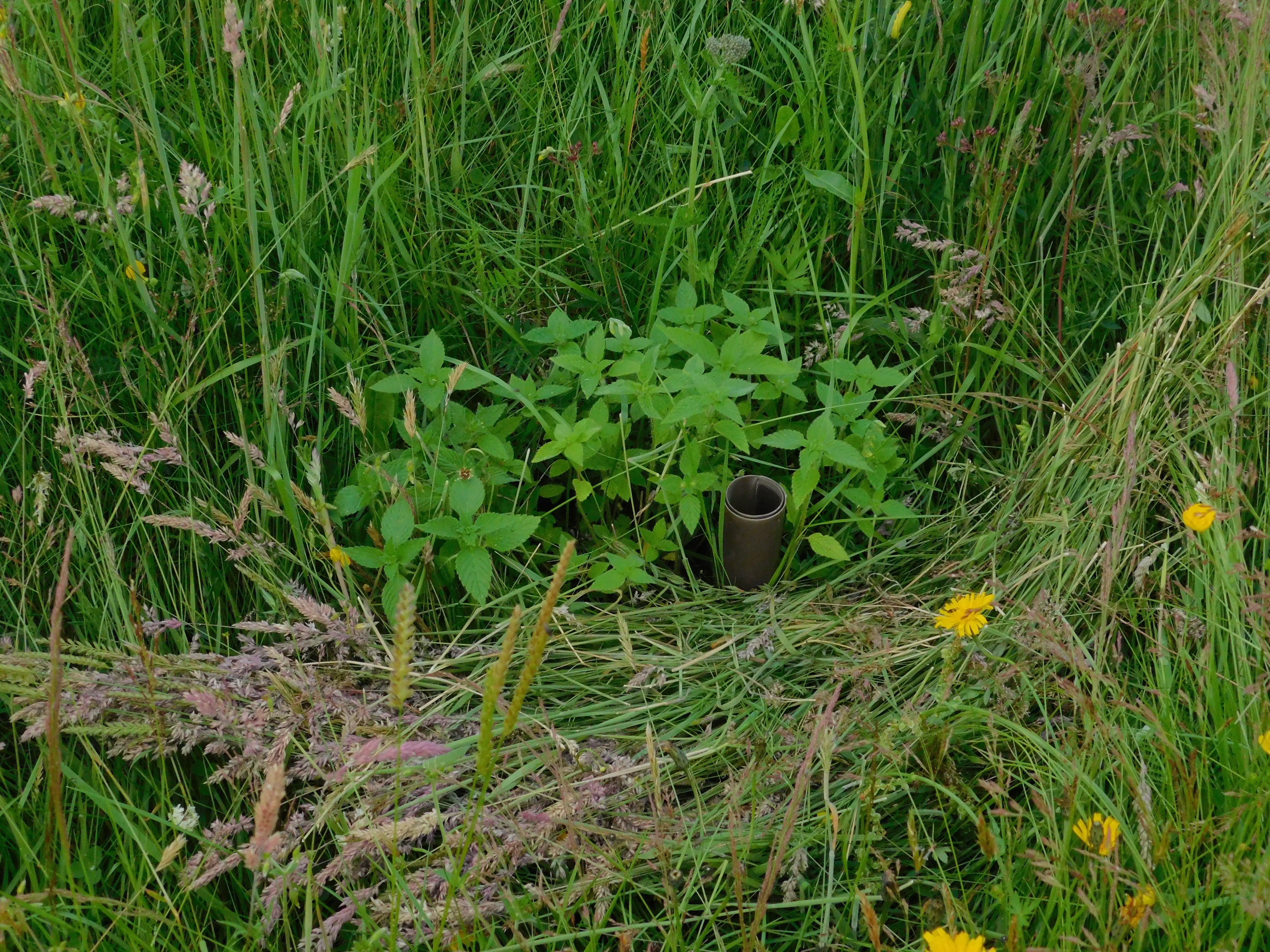
The other one that came up was common hemp nettle, and this was sort of useful as it acted as a marker for the disturbed soil where my trees had been planted. I knew where they roughly were, but by looking for the leaves and flowers of the hemp nettle I could spot them and find them more easily to mulch in the grass.
The interesting thing to me was that hemp nettle is an annual. It grows on disturbed soil. So for these to suddenly start to grow in an area that had been sheep grazed for (to my own knowledge) at least 10 years, is pretty eye opening.
hempnettle_treeshelter.JPG
annual hemp nettle marking new tree location
 
Timothy Norton
Steward of piddlers
Posts: 7966
Location: Upstate New York, Zone 5b, 43 inch Avg. Rainfall
4603
monies home care dog fungi trees chicken food preservation cooking building composting homestead
  • Likes 10
  • Mark post as helpful
  • send pies
    Number of slices to send:
    Optional 'thank-you' note:
  • Quote
  • Report post to moderator

Christopher Weeks wrote:I'd particularly like to know how this is actionable.


I am in the same boat. I feel with my initial understanding that it may be valuable in the realm of soil/land reclamation and plant succession in spaces. I have a mostly 'wild' area of my property that I'm trying to guide into being a more native pollinator friendly space. I was reading about Mullein and the fact that the seeds can remain viable in the soil seed bank for an average of five years which peaked my interest.

Currently my interest is a thought experiment around if I can 'load' the soil seed bank in an area with plants that I want that are known for having soil persistent seeds. I can chop and drop seedlings I do not desire, benefiting from the biomass that grows while leaving the desirables to fill the gaps. There is a bunch of literature about tarping and solarizing to remove the entire soil seed bank but I don't want that. I just wish to see if I can help tip the scales while letting nature do most of the work.

For example, Milkweed is known to persist in the soil for an average of 4-5 years and still remain viable. Evening Primrose apparently can last up to 40 years in the right conditions! I saw Black Eyed Susans pop up seemingly out of nowhere when I cleared a part of the area from overgrowth which is promising.

I'm sure there are reasons this may not work, but it is a rabbit hole I intend to explore.
 
master pollinator
Posts: 329
Location: UK
110
kids urban seed
  • Likes 12
  • Mark post as helpful
  • send pies
    Number of slices to send:
    Optional 'thank-you' note:
  • Quote
  • Report post to moderator
I think the most actionable part is just paying attention to what appears when you disturb ground. The volunteers tell you a lot about what stage the soil is at. I cleared a patch last autumn that had been under grass for years, and it came up absolutely covered in fat hen and chickweed by spring. Both are pioneer species that thrive on bare disturbed soil with decent nitrogen. Told me the soil was in reasonable shape and ready for something more permanent. If I had got mostly docks and thistles I would have read that differently. It is not something you control exactly, more something you observe and let inform your next move.
 
master steward
Posts: 15883
Location: Pacific Wet Coast
10321
duck books chicken cooking food preservation ungarbage
  • Likes 11
  • Mark post as helpful
  • send pies
    Number of slices to send:
    Optional 'thank-you' note:
  • Quote
  • Report post to moderator
Just because a plant shows up, doesn't mean necessarily, that the seed has been in the soil for a long time. Birds in my area are major seed spreaders.
 
gardener
Posts: 1258
Location: France, Burgundy, parc naturel Morvan
616
forest garden fish fungi trees food preservation cooking solar wood heat woodworking homestead
  • Likes 11
  • Mark post as helpful
  • send pies
    Number of slices to send:
    Optional 'thank-you' note:
  • Quote
  • Report post to moderator
I noticed that the soil seed bank provides a new favorite every new season. Usually when the rain starts after the summer, some herb pops up massively. I remember violets, fat hen, most i forgot sorry, represion in action. But i believe they play a major role in keeping the soil sane. I used to fight these things, now i just let them grow and use them as mulch if they get in the way of edibles. Some features are great like deep penetrating roots that leave plugs. Others are sublime at forming connections with the local microbiome, that's why they flourish.
I don't believe here i could strategize around them, it's very unpredictable and probably will remain a mystery for a long time.
I like to think i'm landracing my plants so effectively i am creating plants with seeds so resistant that they will become an edible part of the seed bank system and some theorize that a lot of the plants we consider pests are just escaped garden friends that used to be grown and have left into the wild to do their own thing. Therefore being kind of edible, but not so great that we want to grow them for consumption. A little addition to a salad or what have you. But the plants went their own way and adapted to what was positive for their proliferation in the wild instead to our taste buds.
When close enough related to plants we grow their genetics can be superfavorable to reintroduce into our crops because they've got that wild resistant ours have lost. looking for the right cross which is a resistant good tasting variety and saving seeds is part what a lot of more 'primitive' cultures used to do and are rapidly losing. Anyway, that's a whole different chapter, but i didn't see somebody write about it, so i thought to fill in.
 
Posts: 103
Location: West central Minnesota
41
  • Likes 7
  • Mark post as helpful
  • send pies
    Number of slices to send:
    Optional 'thank-you' note:
  • Quote
  • Report post to moderator
I have posted this before but for those interested in weeds.

https://savoursoilpermaculture.com/wp-content/uploads/2021/10/weeds_guardians_of_the_soil.pdf

Joeseph Cocannouer writes that weeds are pioneers in rebuilding degraded soils. His work came after the dust bowl where in areas the entire topsoil was lost due to wind and drought. He contends weeds should be cultivated to help start the process of making damaged soil productive. After reading his work I had a whole new take on weeds and the role they play. May sound odd but a healthy and diverse weed crop likely indicates a quality working soil. How to take advantage of nature's bounty?

Mainstream agriculture has done a fantastic job in the vilification of weeds. So many glossy ads showing uber clean fields, not a weed in sight. No biological diversity either. We are in our final year of organic transition and will be certified in August. The tillable acres on our farm were rented out for 40 years and swept up in the GMO revolution. To watch the weeds have their way these last 3 years is really a learning experience in the "soil weed seed bank". You would think after those many years of continual spraying for weeds the weed seed bank would be curtailed, that is not the case here at all. We have some areas where the crop is ok and the weeds are mainly in the background. In other areas the weeds dominate, what is going on? I believe the weeds are showing us where we have compaction and a poor soil air exchange. The transition to organic may be 3 years but the working soil transition is longer than 3 years in our case. Weather has everything to do with what you do and when. We have minimized soil disturbance (no-till this spring) with the longer term goal of building soil health. The weeds we are growing this year may be part of a good transition, the dense roots loosening the soil and extra organic matter added when we do a shallow incorporation.

We have the good fortune to have native prairie remnants on this farm along with a carefully restored prairie completed in 1993. This is my reference for how the native vegetation and our soil really work. Weeds are a non-issue on the prairie, the native vegetation is overwhelming. Winter grains this fall on our tillable acres will help turn the tide in our favor to growing healthy crops. We are working with my neighbor this year in grazing his cattle on our grassland. We moved his herd yesterday into the first larger paddock on the restored prairie, the quality of the grass right now is fabulous. All of this with a growing season of about 60% normal precipitation so far, resilience is showing itself. The cows are now belly deep in grass and the calves with just their back and head showing, fun to see. I took a grass sample yesterday, July 9, to see where we are in forage quality. Warm season native grass is quite nutritious in its vegetative state, the protein and relative feed value will start to decrease when it begins to set seed. We are trying to get the cattle to do a flash grazing on as many acres as possible to delay flowering. Take half and leave half is the order of the day.


Dinner will be steamed monkey heads with a side of tiny ads.
Homesteading and Permaculture Bundle - More than 35 Things
https://permies.com/w/235626/Homesteading-Permaculture-Bundle
reply
    Bookmark Topic Watch Topic
  • New Topic