• Post Reply Bookmark Topic Watch Topic
  • New Topic
permaculture forums growies critters building homesteading energy monies kitchen purity ungarbage community wilderness fiber arts art permaculture artisans regional education skip experiences global resources cider press projects digital market permies.com pie forums private forums all forums
this forum made possible by our volunteer staff, including ...
master stewards:
  • paul wheaton
  • Anne Miller
  • Carla Burke
  • Nancy Reading
  • John F Dean
  • Timothy Norton
  • Jay Angler
stewards:
  • r ransom
  • Pearl Sutton
  • Tereza Okava
master gardeners:
  • Christopher Weeks
gardeners:
  • M Ljin
  • Megan Palmer
  • Kate Downham

Why are my potatoes cracked?

 
steward and tree herder
Posts: 14719
Location: Isle of Skye, Scotland. Nearly 70 inches rain a year
8389
6
transportation dog forest garden foraging trees books food preservation woodworking wood heat rocket stoves ungarbage
  • Likes 21
  • Mark post as helpful
  • send pies
    Number of slices to send:
    Optional 'thank-you' note:
  • Quote
  • Report post to moderator
I had baked potatoes for dinner today and was disappointed to find they had big cracks inside. They looked perfect on the outside (and tasted fine!). I suspect that this will mean they won't store very well. What is likely to have caused this?
We had a fairly cool summer this year, maximum temperature about 22 celsius, (72 Fahrenheit) but usually quite a bit less, with no prolonged dry spells. Reasonably normal for my area. They were planted in a new growing area which turned out to be rather acidic with poor soil nutrients, but the potatoes got old sheep manure top dressing; some when planting, some a little later.
I've eaten the evidence, but will try and take a picture of some other tubers soon.
 
steward & author
Posts: 48524
Location: Left Coast Canada
20379
10
art trees books chicken cooking fiber arts
  • Likes 14
  • Mark post as helpful
  • send pies
    Number of slices to send:
    Optional 'thank-you' note:
  • Quote
  • Report post to moderator
Mine are horrible this year, cracks are so deep.  I'm told it's related to water at the wrong time - but no one has been able to tell me if it's too much or too little water and what time is right and what time is wrong?  
 
Posts: 28
Location: Zone 4b Northwest Wisconsin
10
dog fungi foraging trees bike woodworking
  • Likes 19
  • Mark post as helpful
  • send pies
    Number of slices to send:
    Optional 'thank-you' note:
  • Quote
  • Report post to moderator
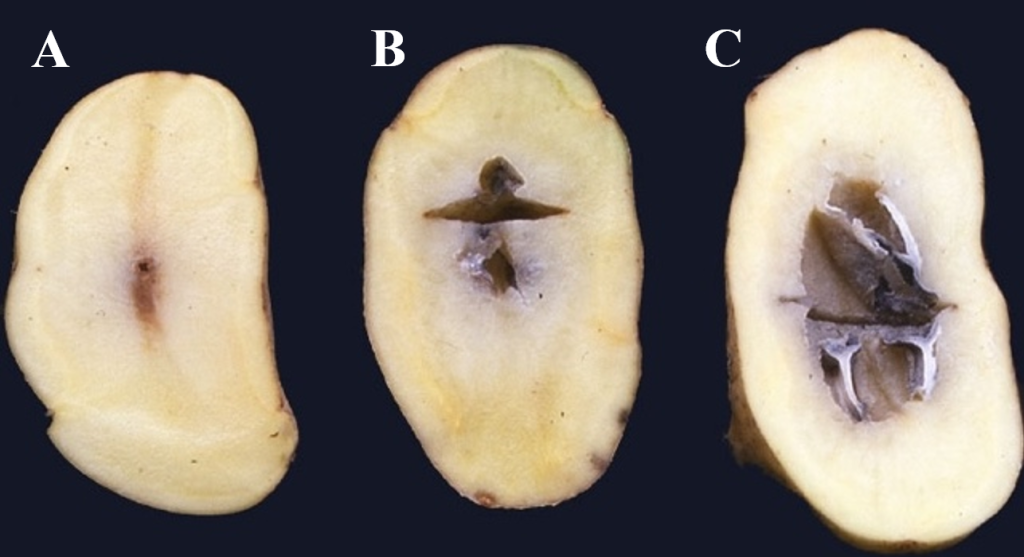
It sounds like hollow heart. Here's a little page with a photo.

https://vegpath.plantpath.wisc.edu/resources/articles/internal-potato-tuber-defects-hollow-heart-and-heat-necrosis/


Is that what you means by cracks?
 
pollinator
Posts: 510
Location: UK
184
kids urban seed
  • Likes 17
  • Mark post as helpful
  • send pies
    Number of slices to send:
    Optional 'thank-you' note:
  • Quote
  • Report post to moderator
Uneven watering is usually the culprit. A dry stretch followed by a wet spell makes them bulk up too fast and the inside cracks before the skin catches up. Mine did the same a few years back after a dry July and then we got hammered with rain in August.
 
Nancy Reading
steward and tree herder
Posts: 14719
Location: Isle of Skye, Scotland. Nearly 70 inches rain a year
8389
6
transportation dog forest garden foraging trees books food preservation woodworking wood heat rocket stoves ungarbage
  • Likes 10
  • Mark post as helpful
  • send pies
    Number of slices to send:
    Optional 'thank-you' note:
  • Quote
  • Report post to moderator

Sonny Root wrote:It sounds like hollow heart. Here's a little page with a photo.

https://vegpath.plantpath.wisc.edu/resources/articles/internal-potato-tuber-defects-hollow-heart-and-heat-necrosis/

Is that what you means by cracks?


Yes - they do look like that!

Soil temperatures below 55°F for 5 to 7 days during early tuber development can initiate brown center.

Available soil moisture levels above 80 to 85% during early tuber bulking can also increase the incidence of brown center, possibly due to the slower warming of wet soils.


55°F =  13°C Now that would not be at all unusual for me, or the wet soil. This area has much more organic material in the soil compared to my normal growing area though, so might tend to exacerbate this issue. We did get a pretty damp summer. I wonder what I can do to avoid the issue in future, since the weather isn't really outside what can be expected here?
 
pioneer
Posts: 550
155
cat trees urban
  • Likes 15
  • Mark post as helpful
  • send pies
    Number of slices to send:
    Optional 'thank-you' note:
  • Quote
  • Report post to moderator
My first thought is deep mulching, to try to even out variations in rainfall & temperature?
 
master gardener
Posts: 7025
Location: Carlton County, Minnesota, USA: 3b; Dfb; sandy loam; in the woods
4450
8
forest garden trees books chicken food preservation cooking fiber arts seed woodworking homestead ungarbage
  • Likes 9
  • Mark post as helpful
  • send pies
    Number of slices to send:
    Optional 'thank-you' note:
  • Quote
  • Report post to moderator
Maybe grow in more sand?
 
master pollinator
Posts: 3043
Location: RRV of da Nort, USA
1014
  • Likes 13
  • Mark post as helpful
  • send pies
    Number of slices to send:
    Optional 'thank-you' note:
  • Quote
  • Report post to moderator
Nancy,  This link probably will give information overload, but poking through this slide presentation may offer some varieties for your area that would exhibit lower levels of hollow heart (internal heat necrosis probably not a great concern in your region).  You might try compiling a short list from this slide presentation and then consult with some local producers over which varieties they have seen to have reduced hollow heart incidence, while stlll providing good disease resistance and storability.  Good luck in the search!

https://archive.sebs.rutgers.edu/wp-content/uploads/2011-Observations-Potato-Varieties-Presentation.pdf
 
pollinator
Posts: 133
Location: West central Minnesota
61
  • Likes 11
  • Mark post as helpful
  • send pies
    Number of slices to send:
    Optional 'thank-you' note:
  • Quote
  • Report post to moderator

John Weiland wrote:Nancy,  This link probably will give information overload, but poking through this slide presentation may offer some varieties for your area that would exhibit lower levels of hollow heart (internal heat necrosis probably not a great concern in your region).  You might try compiling a short list from this slide presentation and then consult with some local producers over which varieties they have seen to have reduced hollow heart incidence, while stlll providing good disease resistance and storability.  Good luck in the search!

https://archive.sebs.rutgers.edu/wp-content/uploads/2011-Observations-Potato-Varieties-Presentation.pdf


John,

This is very good information, many varieties I had not heard of. Much to do with chipping potatoes. Some of the older white potato varieties were more susceptible to hollow heart if I remember correctly, Cobbler and Kennebec. I like Red Norland here, very rarely is there any hollow heart, maybe one or two per hundred (usually jumbos) in an odd weather year. The last three years here have shown quite a variation in precipitation, 2024 and 2025 adequate to above and 2026 very dry. No hollow heart of any consequence in Red Norland for those 3 growing seasons.

This is a nice overview of red potatoes; Red Pontiac was widely grown in the Red River Valley.  https://gardenerspath.com/plants/vegetables/best-red-potato-varieties/
 
master steward
Posts: 19822
Location: USDA Zone 8a
4974
dog hunting food preservation cooking bee greening the desert
  • Likes 8
  • Mark post as helpful
  • send pies
    Number of slices to send:
    Optional 'thank-you' note:
  • Quote
  • Report post to moderator
I see this a lot when baking potatoes.  I have always thought it was because I store my potatoes in the fridge and sometimes they are really old.
 
John Weiland
master pollinator
Posts: 3043
Location: RRV of da Nort, USA
1014
  • Likes 7
  • Mark post as helpful
  • send pies
    Number of slices to send:
    Optional 'thank-you' note:
  • Quote
  • Report post to moderator

Doug McEvers wrote:....... I like Red Norland here, very rarely is there any hollow heart, maybe one or two per hundred (usually jumbos) in an odd weather year. The last three years here have shown quite a variation in precipitation, 2024 and 2025 adequate to above and 2026 very dry. No hollow heart of any consequence in Red Norland for those 3 growing seasons.

This is a nice overview of red potatoes; Red Pontiac was widely grown in the Red River Valley.  https://gardenerspath.com/plants/vegetables/best-red-potato-varieties/


Yes, although white chippers are pretty common as contracted for that industry, it does seem that local soils and conditions favor the reds.  Red Norland is a good one....can't recall if it was that one or a next stage variety that I planted this year.  Russets do well enough, but the western state of the US seem to do best with those for consistency and yield.  Below is some additional regional information to go with what was posted above.....many of these would be worth trying in any region just to see if they would do well for one's specific garden/storage/culinary needs.  We had a good year with spuds after several years of bad disease or flooding.  This year, drought....but was able to keep everything watered from an early stage and kept at it through the season.  Also planted deeper this year (5-6") than in the past which may have helped.
USnorthernPlainsSelections.jpg
[Thumbnail for USnorthernPlainsSelections.jpg]
 
Posts: 114
Location: Meriden, NH
32
5
chicken homestead
  • Likes 11
  • Mark post as helpful
  • send pies
    Number of slices to send:
    Optional 'thank-you' note:
  • Quote
  • Report post to moderator
I like to plant a variety of potatoes.  I find the baking/russet potatoes had the most difficulty with hollow heart.  Then I read somewhere that Boron shortages in the soil minerals will make hollow heart more likely.  This cured my problems.  Note I was already monitoring and adding Calcium to my garden every year.  Calcium shortages also can contribute to hollow heart.  I also now supplement water during dryspells to even out problems with going from dry to too wet, especially early in the summer.  Good luck.
 
gardener
Posts: 2334
Location: Zone 6b
1586
forest garden fungi books chicken fiber arts ungarbage
  • Likes 10
  • Mark post as helpful
  • send pies
    Number of slices to send:
    Optional 'thank-you' note:
  • Quote
  • Report post to moderator
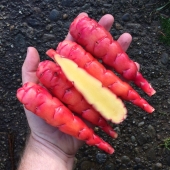
Many weather related issues are fundamentally nutritional ones. Calcium and boron are components of cell walls and also involve in transport of sugar, but they are not phloem mobile so constant supply in soil solution is very important. Too much water or too little water both adversely affect their assimilation. If the soil has higher and balanced level of both elements, plants can mitigate the fluctuations better. Otherwise, the gardener has to supplement them when needed.

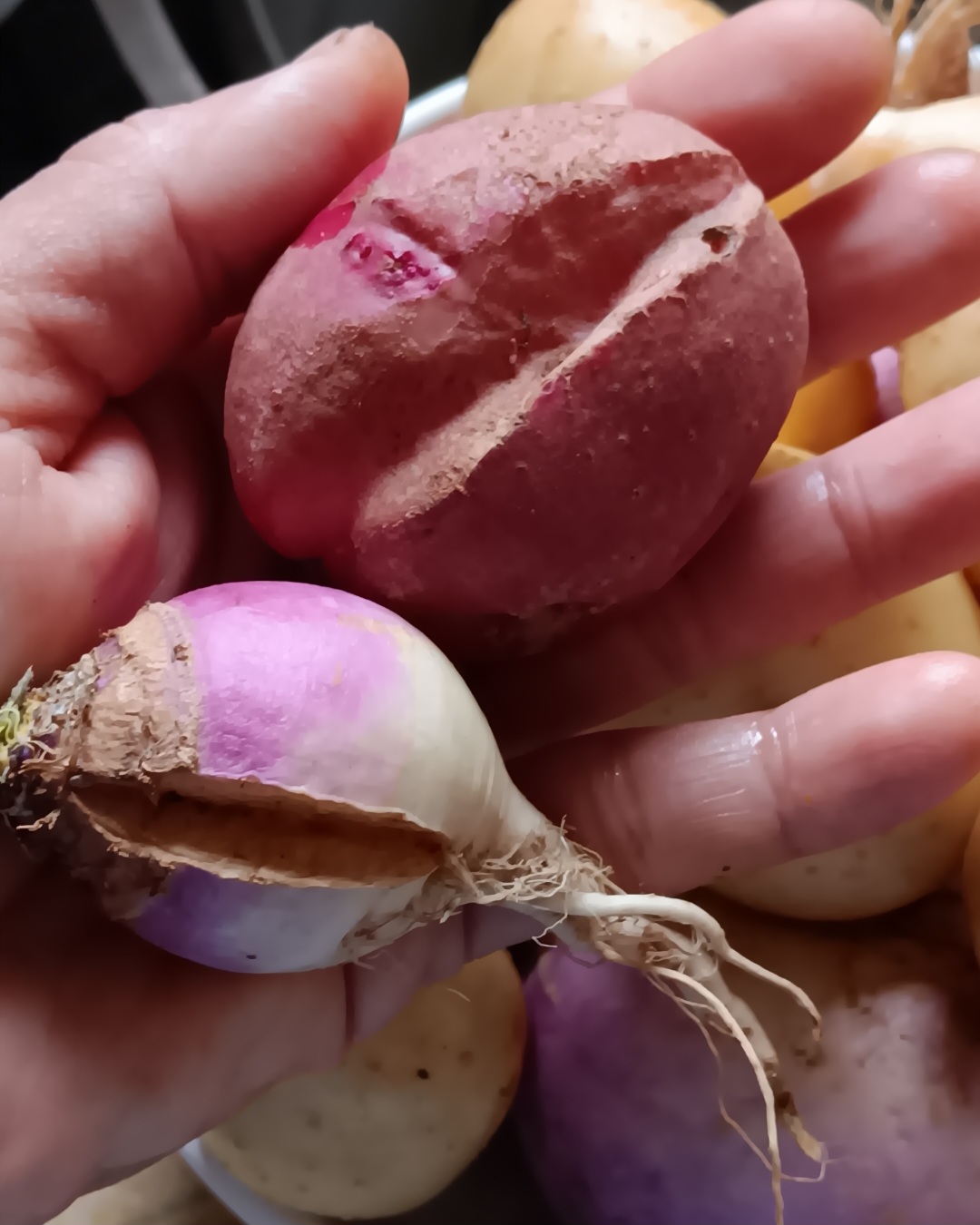
I don't have hollow heart with my potatoes, probably because I grow them early in the season, from March to June, while the soil has abundant calcium and boron from organic source of plant residues. Last year I had mild symptoms in one of the garden bed that produced heavily the previous year and probably was more exhausted. Some turnips and potatoes were cracked because of weak cell walls. The symptoms can be fixed easily with added minerals.

20250524_192722.jpg
Cracked
Cracked
 
These are not the droids you are looking for. Perhaps I can interest you in a tiny ad?
Come Visit Wheaton Labs!
https://permies.com/wiki/367505/Visit-Wheaton-Labs
reply
    Bookmark Topic Watch Topic
  • New Topic