• Post Reply Bookmark Topic Watch Topic
  • New Topic
permaculture forums growies critters building homesteading energy monies kitchen purity ungarbage community wilderness fiber arts art permaculture artisans regional education skip experiences global resources cider press projects digital market permies.com pie forums private forums all forums
this forum made possible by our volunteer staff, including ...
master stewards:
  • Carla Burke
  • John F Dean
  • Nancy Reading
  • r ransom
  • Jay Angler
  • Timothy Norton
stewards:
  • paul wheaton
  • Pearl Sutton
  • Anne Miller
master gardeners:
  • Christopher Weeks
  • M Ljin
gardeners:
  • Jim Garlits
  • thomas rubino
  • William Bronson

The Ugly Duckling Phase of Permaculture

 
steward
Posts: 1202
Location: Torrey, UT; 6,840'/2085m; 7.5" precip; 125 frost-free days
137
goat duck trees books chicken bee
  • Likes 14
  • Mark post as helpful
  • send pies
    Number of slices to send:
    Optional 'thank-you' note:
  • Quote
  • Report post to moderator
I just posted this on my blog. If you want to see a pretty picture of some geese as eye candy and follow the embedded links in our story, it's in the blog post, but I wanted to throw up the text here too for feedback.

The Ugly Duckling Phase of Permaculture

Nobody talks about the the ugly duckling phase of getting a permaculture system established, but I don’t think we can be the only ones who are fighting it. Or more properly, trying to grow out of it. When the bindweed is is the lushest thing in the future food forest. When the irrigation system takes months longer to figure out than planned and the watering by hand is getting really old. When a raccoon instructs you on the weaknesses in your chicken defense strategy.

And yet the trees are growing.

The books actually dance around this ugly duckling period by recommending that one start small and expand outward. Sound advice, unless you already have 300 custom grafts on order when you find a model (Miracle Farm in Quebec) that helps you figure out a way to permaculturate your orchard. (Yes, I made up that word, it sounded better than permculturize.) There is no starting small when the trees are coming regardless.

Some permaculture-crazy college-aged kids from permies.com dropped by this May as we were planting the last of the trees. I’m sure we did not make a good impression. A bunch of leafless 3 foot high trees is not what a food forest is supposed to look like. The fecund forests of many layers pictured in the books take years to mature; we haven’t gotten through the first one. We will need to propagate thousands of plants to do the intermediate plantings. Until we get our water situation sorted, our understory planting consists of alfalfa, wild asparagus and weeds. We have made plenty of mistakes (I should have dumped a hundred pounds of clover seed down last winter at least), even so the framework is in the ground.

Nevertheless, the trees are growing.

Because of our naive belief that we could easily find guidance on how to switch over to a modern irrigation system, the stop-gap measure is me watering the Bluebird orchard from a 275 gallon IBC on a trailer. The result is that three months later, I spend about 25 hours a week pouring water out of a hose. The month of June is our hottest, driest month and it seemed I couldn’t keep up. I said to someone that if I hadn’t overcommitted, I wouldn’t know where my limits are. I have pushed up against them so many times this summer, they have stretched me and sometimes bounced me back on my butt. Don’t overthink it. Fill the tank, empty the tank, weed around the trees, listen to podcasts and audiobooks. Try not to think about the failures too much.

Despite ourselves, the trees are growing.

The July day the monsoons started was when I knew we could make it and not lose the trees. Of course, not everything has survived. The mainframe of the system is doing shockingly well, but we lost half of the plants in the fedge. That will get replanted when we can get it on the irrigation system. The 30 grape vines are down to 28, a satisfactory survival rate as far as I am concerned for varieties that haven’t been tested here.

We had to declare an amnesty on the annual garden. I just haven’t had the energy to keep up and it was drowning in weeds and sunflowers. The corn we grew last year is barely half the height it should be. Last weekend R went in with loppers and assaulted the larger weeds, to the delight of the geese, who devour entire sunflower plants. But we are going to have to do the farmers’ market walk of shame and buy tomatoes to put up for winter.

Every day, the trees are growing.

This summer is only going to happen once in my life, one in which I have time to count native bees and butterflies while I water. I saw the ladybugs appear on the alfalfa in May and the hawk moths arrive this week. Goldfinches are all over the place now. I noticed the cottontails squeezing through the deer fence and hiding in the alfalfa. I keep looking but haven’t seen a snake yet. Thunderstorms build up over Boulder Mountain and it starts to get hot. Wild sunflowers burst onto the scene all at once. My neighbors wave as they drive by. Sometimes they even stop to chat.

Yesterday we irrigated the Kingbird orchard. I haven’t spent much time there observing this summer like I should. Holy cow, there are trees out there that are 10′ tall! Two years ago those trees looked like the puny things I am watering every day in the other parcel. The bird life in the established orchard is already changing-this year we’ve seen woodland species like orioles and tanagers and grosbeaks moving through, displacing the meadowlarks and goldfinches. And we ate our first homegrown apple this week, a variety called Pristine. It was awesome. We have a few Redfields and one Calville de Blanc coming along too. After the late freeze this year, we are grateful to have any fruit at all.

I know that by Halloween, this drama of the establishment year will be over. The Torrey irrigation canal will shut down for winter, we will cut the alfalfa alleys one last time and overseed it with something for early spring soil building. Next year the new trees will really take off. We can spend some time shaping the understory. We will have tomatoes next year. The spreading limbs of mature trees will change the ecology in due time. The ugly duckling stage won’t last forever. Let’s just not pretend that all permaculture systems start out as swans.

Get the trees in the ground, where they can start to grow.
 
gardener
Posts: 3545
Location: Central Oklahoma (zone 7a)
1280
forest garden trees woodworking
  • Likes 1
  • Mark post as helpful
  • send pies
    Number of slices to send:
    Optional 'thank-you' note:
  • Quote
  • Report post to moderator
"Every day, the trees are growing. "

Thank you for this!

If you went out and looked at the half-dozen areas of overgrown former pasture that I concentrated on planting things in this year, you could barely distinguish them from the untouched areas. I think the only crop I got out of my woods was mustard greens (though I got, and am still getting, a lot of those; and the sun chokes are looking very promising). The weeds mostly won; they shocked me with their explosive growth and tenacious competition. In terms of seeds planted versus harvests or thriving perennial plantings, my failures vastly outnumber my successes. An ugly duckling, indeed!

But as you say, every day the trees are growing. Mostly seedlings, in my case, but I did manage to buy nine trees in the spring and six of them made it so far. I also transplanted some native fruit trees in the spring, and they are mostly thriving.

When you start from seed, mix in a lack of experience, and add challenging growing conditions, the casualty list gets real ugly real fast. Even the list of tree species I tried to germinate from seed without any germination success is long enough to justify a bout of drinking, were a person so inclined. But:

"Every day, the trees are growing." I just have to keep reminding myself!
 
pollinator
Posts: 2392
107
  • Likes 3
  • Mark post as helpful
  • send pies
    Number of slices to send:
    Optional 'thank-you' note:
  • Quote
  • Report post to moderator
I guess at 5 years on, I'm past this phase. Maybe I'm in the "yes, I can see that it is coming together" phase.

I no longer grow an entire crop of one vegetable just for the bugs. A few of the collards have been attacked by harlequin bugs, but others are holding up well. Well enough so that I can go to the plants that are infested, shake the bugs into a cup, and toss them in the chicken tractor. And I still have collard leaves I can harvest for myself.

I can see how some veggies are getting naturalized in my garden. Where some of the leek blooms have keeled over, there are lots of new little leeks sprouting up. And the mustard, that's almost naturalized as well. Dill and cilantro are already naturalized and come up in various places, they were easy to establish.

I see a lot fewer grasshoppers this year than I used to. Must have to do with all the toads, skinks, and lizards I keep coming across. Maybe I need to show them what a harlequin bug is though....

I'm gradually changing the way I fix dinner. Now, in the mornings I go out with my pruning scissors and see what there is to snip. Today it was lemongrass, onions, turmeric leaves, ginger leaves, a couple hot peppers, and the collards. That got tossed into the crockpot with some peas from last winter's harvest. It turned out quite well.

And when I look up and take the long view of the garden, I too, notice that the trees are growing.
 
Posts: 1947
Location: Southern New England, seaside, avg yearly rainfall 41.91 in, zone 6b
86
forest garden fungi trees books chicken bee
  • Likes 1
  • Mark post as helpful
  • send pies
    Number of slices to send:
    Optional 'thank-you' note:
  • Quote
  • Report post to moderator
Lovely. This is the first year I feel like I'm seeing more of my design in reality than on paper/in my head. We're even making a tiny little bit of money along with all the goodwill and benefits of participating in the gift economy.

I always figure the mistakes and losses are just part of the cost of my education! I'm learning so much.
 
Ann Torrence
steward
Posts: 1202
Location: Torrey, UT; 6,840'/2085m; 7.5" precip; 125 frost-free days
137
goat duck trees books chicken bee
  • Likes 1
  • Mark post as helpful
  • send pies
    Number of slices to send:
    Optional 'thank-you' note:
  • Quote
  • Report post to moderator
Thanks guys. I felt better for getting it written.

Part of the inspiration for the post was a couple of Paul and Jocelyn's discussions on the podcast about tempering people's expectations of what a food forest looks like in the beginning. It wasn't just me! Infrastructure and the start of tree planting isn't sexy like guilding, but it is the necessary first step.

That's great Matu that it's coming together so quickly. I'm hoping, if the weather gods cooperate, that we will have our first apple crop next year. Froze out this year, and probably a blessing in disguise.
 
Matu Collins
Posts: 1947
Location: Southern New England, seaside, avg yearly rainfall 41.91 in, zone 6b
86
forest garden fungi trees books chicken bee
  • Likes 1
  • Mark post as helpful
  • send pies
    Number of slices to send:
    Optional 'thank-you' note:
  • Quote
  • Report post to moderator
It doesn't feel quick! It's been seven years now that I've been working on this permaculture-the-farm project.

There were mature trees when I got here, in varying states of neglect. And not always where I would have planted them! Saving them from the invasives has been satisfying.

Real working farms pretty much always have more tasks than anyone can get to.
 
pollinator
Posts: 686
Location: northwest Missouri, USA
103
  • Likes 2
  • Mark post as helpful
  • send pies
    Number of slices to send:
    Optional 'thank-you' note:
  • Quote
  • Report post to moderator
I really value this discussion. I posted in another thread about wanting to hear more of peoples' failures and lessons learned and less about what worked according to plan. I, too, am in the early stages of development of my restorative permaculture regenerative, etc., farm. Deer and rabbits ate all my veg garden (I don't live on the property yet). Still have way too much poison ivy in places that won't be available to our future goat herd. I have come to realize that the pasture of my farm is less productive than I first thought. I have ideas on how to deal with that, but this is another one of those early realizations that sort of feel like a failure. My in-laws are all traditional agriculture people and they think I'm some crazy guy doing some strange thing they don't understand like it's some hobby or something. One neighbor complemented me on my "terraces" I made, which he doesn't understand are swales. I gave up trying to explain their function. I've come to realize that most folks who haven't been reading or hearing permaculture information aren't going to get it until the system is closer to fully functioning and productive in nearly all its components. But, I know now that's okay. Weeds are everywhere around/on our swales and I remind myself they are biomass and I keep chopping and dropping knowing that is future soil health. I still haven't got my comfrey ordered and planted and know they will help this issue with the weeds/grasses on the swales. So, another of my failures this year is way over estimating what I can get done in a season since I have a full-time career off the farm. I always feel as if I have way more to do than I can get done and I don't have any ready help. Birds got the grape crop again and my old Ford 8N tractor is leaking oil around the governor. My pitman shaft broke on my sickle-bar mower. So, I have two machinery repair jobs to do, as well as tend to the trees and build two more swales. Much to do, much to learn, but I keep pluggin' away knowing the more I do the more I learn and the closer I get to the vision in my head. Our plan is to build our house next summer and once we're living there, I think progress will accelerate for our farm.

 
Posts: 184
Location: Zone 4 MN USA
14
  • Likes 1
  • Mark post as helpful
  • send pies
    Number of slices to send:
    Optional 'thank-you' note:
  • Quote
  • Report post to moderator
I'm definitely there.
My enlightenment to permiculture happened about a two years ago, after I had already planted quite a few trees and such.
The biggest issue for me is this is the 4th season of my first fruit trees and still I haven't hit a point where I get apples, pears, plums, cherries, or other fruits. It's hard to convince people I'm not just crazy building hugels, no tilling, no spraying, and planting companion plants in my annual beds.

I can see progress, and see next steps that will improve things drastically next year.
Another fall/winter/spring of mulch should do a good job of fighting the weeds I've grown on my year 1 hugels.
My log round sheet mulch is seriously working, I need to revisit that in another thread, it should be another tool for permies to discuss. Adding more this fall will help remove grass around the orchard.
I'm learning where certain annual things grow better in my garden, the area that couldn't grow tomatoes is perfect for cabbage, etc.
The saving grace of all this ugly duckling ness is the raspberries and blueberries have been producing and that's something I can point to as a success.
And as was already stated, the trees continue to grow, incredibly fast in some cases.
 
pollinator
Posts: 1612
Location: Root, New York
334
forest garden foraging trees fiber arts building medical herbs
  • Likes 2
  • Mark post as helpful
  • send pies
    Number of slices to send:
    Optional 'thank-you' note:
  • Quote
  • Report post to moderator
yep, totally. i like this post.

because of my circumstances, and i have had to keep moving i've been through the ugly duckling stage quite a few times.
actually it seems just when i start to get close to the swan phase i usually have to move for one reason or another. maybe it is part of my path, i have wondered, if in some way i am drawn to spaces that need serious help, once i spend the year or five in a spot doing the work then life points me to a new space to start again. hard to explain, and not what i think i want, but thats been how it is for me. although every time i have to start again it is easier and faster. and because of my always thinking about it being able to maintain without my help eventually, a lot of the gardens and spaces i worked with are going to keep on even after i leave.

it would be one thing to be starting from a blank slate, usually instead i am working in spaces that have been neglected and theres a lot of work just to get to the point of starting again....and generally years of accumulated junk, old cabins badly in need of repair, that weird inertia and neglect feeling these places get.....and older plantings that maybe werent well thought out or designed. or especially out here, so many blackberries to be cleared to even start!

even though so many people wouldnt neccessarily understand, i think this is a blessing in some ways, that i have learned how to do that, that i can see the value in it enough to keep at it. and theres something very unexpectedly cool that can come about through the limitation, the power of limits, and the weird barely recognizable blessings one can find....its quite different than buying some clean slate land and going and buying a bunch of things to make it look all glam and good right from the get go...then to have limitations about not being able to buy things and have it all set up just so, its like a necessity in the mother of invention kind of hidden blessing.

plus it takes a lot of patience and faith....it takes a greater genuis to be able to take something neglected and messed up and turn it into a place of beauty and abundance, especially when you have to do it on a shoestring budget. and thats one of my strengths, whatever one might call that...to be able to see the value of a work in progress, and stick with it and do all the slow work that takes ten times longer than you think it will.... to pull that off....

but yeah this isnt the sort of thing many people get, at least not here in the first world, or could see the value of, unfortunately, but whatever...it really doesnt matter to me that it shows. i think that the birds and lady bugs that have started flocking to your land are a clear sign it is working =) the birds are the sorts who can see more clearly the value of that kind of thing =)
 
Posts: 60
Location: Devon, UK
5
  • Likes 4
  • Mark post as helpful
  • send pies
    Number of slices to send:
    Optional 'thank-you' note:
  • Quote
  • Report post to moderator
The community garden I'm involved with is basically in its second year. The first saw a patch of land ploughed up, some trees plants and a couple of sheds put up. Now in the second year those of us regularly working there just see all the work that needs to be done but this month we've started to get compliments about all we've managed to achieve.

We're installing a hugelbeet which when it's finished will be in a horseshoe shape 20m across (that's the kind of thing which happens when you have an idea and someone else rolls with it and then hands it back to you) and in a couple of weeks I need to give a talk about it to interested people. I was dwelling on the thought of how to present what I want to say and hit upon the idea of explaining hugelkultur by talking about the benefits it creates for the community (since it's a community garden) such as raising interest in the garden project as a whole, making direct and observable use of garden waste, bringing in new volunteers and expertise, the visual impact of the mound once it's completed, we've got a lot of interest from people so construction will be a real communal effort, not to mention the use of materials on site. Anyway, thinking the project through like that has helped me focus on the benefits SO FAR, let alone the finished project.

 
gardener
Posts: 697
Location: Mount Shasta, CA Zone 8a Mediterranean climate
157
hugelkultur duck forest garden trees books chicken woodworking greening the desert
  • Likes 4
  • Mark post as helpful
  • send pies
    Number of slices to send:
    Optional 'thank-you' note:
  • Quote
  • Report post to moderator
It's funny how much a little thing like validation and reassurance during this phase can go a long ways to helping you see the progress you are making, even when if feels like so little compared to what you have in your head.

I've noticed very often I'll be walking around the property focused on what I want/need to do but every time somebody comes by that hasn't been there for a little while gives me kudos on how much I've improved the property. Makes me step back and remember to appreciate what is happening, especially the fact that a lot of the early work is infrastructure work that once finished only requires maintenance.

And yes, the trees are growing (or teaching me some kind of lesson by not making it where I put it)
 
pollinator
Posts: 2916
Location: Zone 5 Wyoming
523
kids duck forest garden chicken pig bee greening the desert homestead
  • Likes 7
  • Mark post as helpful
  • send pies
    Number of slices to send:
    Optional 'thank-you' note:
  • Quote
  • Report post to moderator
We had a freak thunderstorm that promised hail come through. I begged my mother in law to go cover my foundling grape plants. When describing where they were I told her to follow the fruit tree line. She said, "What, all those sticks." /sigh Yes, the sticks. lol
 
steward and tree herder
Posts: 13697
Location: Isle of Skye, Scotland. Nearly 70 inches rain a year
7445
6
transportation dog forest garden foraging trees books food preservation woodworking wood heat rocket stoves ungarbage
  • Likes 7
  • Mark post as helpful
  • send pies
    Number of slices to send:
    Optional 'thank-you' note:
  • Quote
  • Report post to moderator
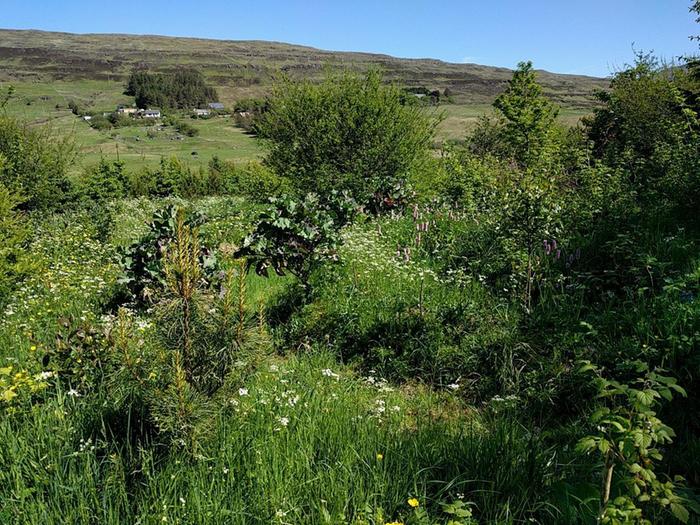
I've always got bits of my land going through the ugly ducking stage. I'm pretty good at wearing my four dimensional rose tinted specacles and seeing how things might be in future. But I also find that going back through old project threads reminds me of how far I've come.


There might be a long way yet to go, but the trees are still growing (or at least some of them!) That's a Korean pine in the foreground - maybe edible pinons in a few more years....


Steward of piddlers
Posts: 7910
Location: Upstate New York, Zone 5b, 43 inch Avg. Rainfall
4541
monies home care dog fungi trees chicken food preservation cooking building composting homestead
  • Likes 9
  • Mark post as helpful
  • send pies
    Number of slices to send:
    Optional 'thank-you' note:
  • Quote
  • Report post to moderator
I find it is really easy to see the work that still needs to be done over the achievements that I have accomplished in my growing spaces. It was just very recently that I saw photos of my outdoor spaces when I took over my property that I could compare to what I have now.

A green, overgrown, underused plot is now vibrant with diversity that increases every year. Hours of planning and implementing solutions to unique spaces eventually start mostly self sustaining so my focus can drift to new areas.

I'm growing to appreciate the ugly ducking stage of projects. It helps train my eye to see the future beauty of what looks to be an uncontrolled, untamed mess. To be able to better see the potential of an area. Who doesn't love instant gratification? I don't know about you, but eating a peach that you have watched grow over the year always seems just that much sweeter than the one you grab from the market.
 
pollinator
Posts: 71
Location: Belgium, alkaline clay along the Escaut river. Becoming USDA 8b.
46
forest garden foraging cooking
  • Likes 9
  • Mark post as helpful
  • send pies
    Number of slices to send:
    Optional 'thank-you' note:
  • Quote
  • Report post to moderator
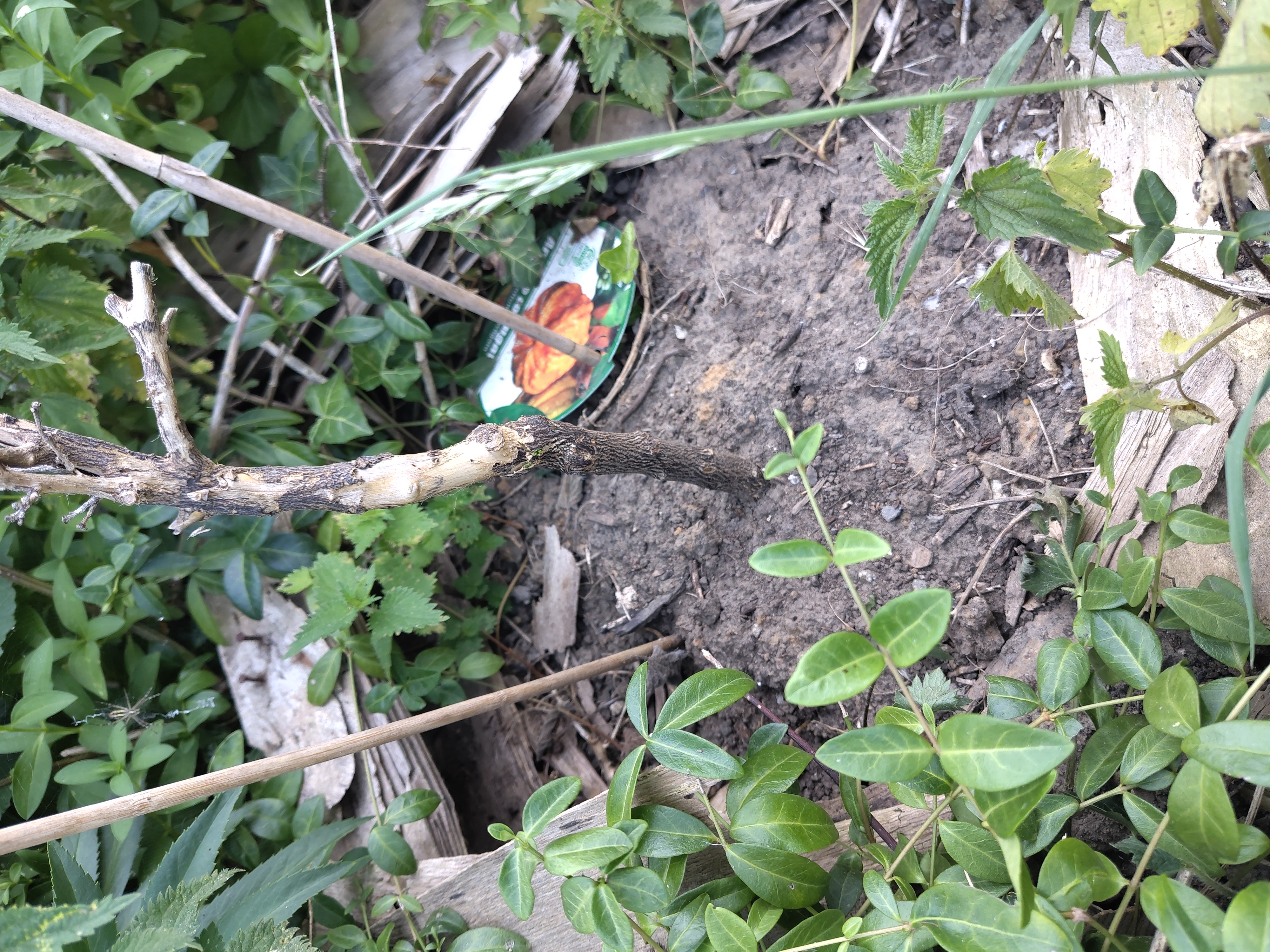
Even on scorched earth some trees are growing ... Like an orange tree in Belgium ... Evolving from pines and dead cypresses to a small patch of Mediterranean maquis.
Plans had to be changed, from the usual orchard to wilder and drier conditions. Still looking for a resilient water pumping tree. Two Japanese walnuts have just sprouted under the heat dome, maybe worth a try ?

The gaze of visiting people also changes with time. From mockery to a quiet silence when they realize there is nowhere else in the neighbourhood where you have to battle butterflies and bumblebees to walk down a path and brambles bear more fruit than spines.

The land is a teacher.

Have a nice evening,
Oliver

IMG_20260707_182226.jpg
Orange tree resprouting after winter frosts and 'some' slug and heat damage.
 
All of the following truths are shameless lies. But what about this tiny ad:
It's like being on a deserted island - only with gardens and natural buildings in Montana
https://wheaton-labs.com/bootcamp
reply
    Bookmark Topic Watch Topic
  • New Topic