gift
Clean With Cleaners You Can Eat by Raven Ranson
will be released to subscribers in: soon!
  • Post Reply Bookmark Topic Watch Topic
  • New Topic
permaculture forums growies critters building homesteading energy monies kitchen purity ungarbage community wilderness fiber arts art permaculture artisans regional education skip experiences global resources cider press projects digital market permies.com pie forums private forums all forums
this forum made possible by our volunteer staff, including ...
master stewards:
  • Carla Burke
  • John F Dean
  • r ransom
  • Nancy Reading
  • Timothy Norton
  • Jay Angler
stewards:
  • paul wheaton
  • Pearl Sutton
  • Eric Hanson
master gardeners:
  • Christopher Weeks
  • M Ljin
gardeners:
  • thomas rubino
  • Megan Palmer
  • Benjamin Dinkel
  • Likes 2
  • Mark post as helpful
  • send pies
    Number of slices to send:
    Optional 'thank-you' note:
  • Quote
  • Report post to moderator
We all come from all around the world here on Permies and that means vast differences in soil.

What I am here asking today is what is the 'base' soil that you are working with on your homestead?


Reply to this thread about what this means for you and how you manage with it in order to achieve your different goals. Can you grow in it? Do you have to amend it in a certain way? Are you forced to try and build topsoil? Let us know!

COMMENTS:
 
Steward of piddlers
Posts: 6979
Location: Upstate New York, Zone 5b, 43 inch Avg. Rainfall
3642
monies home care dog fungi trees chicken food preservation cooking building composting homestead
  • Likes 1
  • Mark post as helpful
  • send pies
    Number of slices to send:
    Optional 'thank-you' note:
  • Quote
  • Report post to moderator
When I filter out the big rocks, I have pretty okay soil for the majority of my property. Loam with some pockets of sandier or a bit higher clay content but mostly well balanced.
 
gardener
Posts: 1427
Location: Tennessee
942
homeschooling kids urban books writing homestead
  • Likes 4
  • Mark post as helpful
  • send pies
    Number of slices to send:
    Optional 'thank-you' note:
  • Quote
  • Report post to moderator

Timothy Norton wrote:When I filter out the big rocks, I have pretty okay soil for the majority of my property. Loam with some pockets of sandier or a bit higher clay content but mostly well balanced.


!!!

Anyone with loamy, well-balanced soil has to pay a tax of  mailing a bag of it to me.

Here at the very outside edge of southern Appalachia, it is pure straight up clay. My yard is so much wet clay fire ants can't even build in my yard (pluses and minuses!).

I have to import soil in order to grow anything here. Bit by bit I am doing so.
 
master gardener
Posts: 5523
Location: Carlton County, Minnesota, USA: 3b; Dfb; sandy loam; in the woods
3078
7
forest garden trees books chicken food preservation cooking fiber arts seed woodworking homestead ungarbage
  • Likes 6
  • Mark post as helpful
  • send pies
    Number of slices to send:
    Optional 'thank-you' note:
  • Quote
  • Report post to moderator
I figure if a question is worth answering, it's worth answering to death! (I selected 'sandy' on the poll because I think that's the way my land contrasts most with most people.)

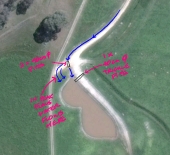
My 20 acres looks like this:


I don't know how to interpret all these data, but this is what I get when I look those soil types up:

Omega loamy sand - ~4%
Setting:
- Landform: Outwash plains
- Landform position (two-dimensional): Shoulder, backslope
- Down-slope shape: Linear
- Across-slope shape: Linear
- Parent material: Sandy outwash
Typical profile:
- A - 0 to 1 inches: loamy sand
- E,Bhs,Bs,C - 1 to 60 inches: sand
Properties and qualities:
- Slope: 12 to 25 percent
- Depth to restrictive feature: More than 80 inches
- Drainage class: Somewhat excessively drained
- Capacity of the most limiting layer to transmit water (Ksat): High to very high (5.95 to 19.98 in/hr)
- Depth to water table: More than 80 inches
- Frequency of flooding: None
- Frequency of ponding: None
- Available water supply, 0 to 60 inches: Low (about 3.6 inches)

Cromwell sandy loam - ~90%
Setting:
- Landform: Outwash plains
- Landform position (two-dimensional): Summit, backslope
- Down-slope shape: Linear
- Across-slope shape: Linear
- Parent material: Sandy outwash
Typical profile:
- A,E,Bw - 0 to 15 inches: sandy loam
- 2Bw,2C - 15 to 69 inches: coarse sand
Properties and qualities:
- Slope: 2 to 6 percent
- Depth to restrictive feature: More than 80 inches
- Drainage class: Somewhat excessively drained
- Capacity of the most limiting layer to transmit water (Ksat): Moderately high to high (0.57 to 1.98 in/hr)
- Depth to water table: More than 80 inches
- Frequency of flooding: None
- Frequency of ponding: None
- Available water supply, 0 to 60 inches: Low (about 5.2 inches)

Mooselake mucky peat - ~6%
Setting:
- Landform: Swamps
- Down-slope shape: Concave
- Across-slope shape: Concave
- Parent material: Herbaceous organic material
Typical profile:
- Oa - 0 to 6 inches: muck
- Oe - 6 to 72 inches: mucky peat
Properties and qualities:
- Slope: 0 to 1 percent
- Depth to restrictive feature: More than 80 inches
- Drainage class: Very poorly drained
- Capacity of the most limiting layer to transmit water (Ksat): Moderately high to high (0.60 to 6.00 in/hr)
- Depth to water table: About 0 inches
- Frequency of flooding: None
- Frequency of ponding: Frequent
- Available water supply, 0 to 60 inches: Very high (about 26.6 inches)
 
steward
Posts: 18192
Location: USDA Zone 8a
4627
dog hunting food preservation cooking bee greening the desert
  • Likes 2
  • Mark post as helpful
  • send pies
    Number of slices to send:
    Optional 'thank-you' note:
  • Quote
  • Report post to moderator
None of the above. From my profile:

Soil is alkaline consisting of caliche and clay.


My dirt, I don't have soil, is caliche which is ground up limestone.  It is definitely not clay or clay loam as in the below link.

I ask Mr. Google because he is so smart:

Most of the Edwards Plateau contains mottled yellowish clay to clay loam surface soil which quickly turns into rocky clay or solid limestone rock layers beneath the surface. Erosion has left most of the region with very shallow soils of less than 10 inches.


http://texastreeid.tamu.edu/content/texasEcoRegions/EdwardsPlateau/

More like this:

defined by its bedrock: very thick, mostly flat layers of rock composed primarily of hard early Cretaceous limestone


http://www.sbs.utexas.edu/fowler/linkeddocs/epveg/epgeol.htm
 
steward and tree herder
Posts: 11869
Location: Isle of Skye, Scotland. Nearly 70 inches rain a year
5991
5
transportation dog forest garden foraging trees books food preservation woodworking wood heat rocket stoves ungarbage
  • Likes 3
  • Mark post as helpful
  • send pies
    Number of slices to send:
    Optional 'thank-you' note:
  • Quote
  • Report post to moderator
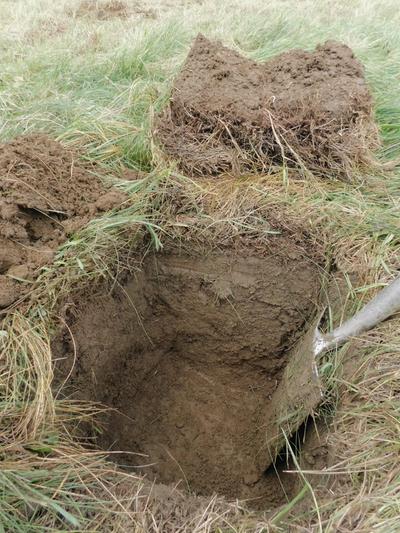
My soil is silty. Between 0 and maybe 2ft over basalt rock.

digging a test pit


It looks a bit clayey here, but it was just sticky wet. I expect a thousand years ago there may have been a fair amount of peat in it, but the organic matter has disappeared over the centuries. I'm starting to get a bit coming back in the top inch....
 
pollinator
Posts: 210
Location: Middle of South Dakota, 4a
59
hugelkultur fungi chicken
  • Likes 2
  • Mark post as helpful
  • send pies
    Number of slices to send:
    Optional 'thank-you' note:
  • Quote
  • Report post to moderator
Soil here is a mix of clay and silt, I voted clay because it's found in large patches whenever I did any depth. There was quite a bit in the "topsoil" I had brought in as well. I'm pretty sure there would be more if the land hadn't been gardened for so long. This was also a flood plain before they dammed a local creek about fifty years ago.

When we first got here we planted lots of daikon to break up the soil. Otherwise just adding leafy mulch and compost as often as possible.
 
gardener
Posts: 803
Location: 4200 ft elevation, zone 8a desert, high of 118F, lows in teens
539
8
dog duck forest garden fish fungi chicken cooking bee greening the desert
  • Likes 8
  • Mark post as helpful
  • send pies
    Number of slices to send:
    Optional 'thank-you' note:
  • Quote
  • Report post to moderator
I grew up at a property with solid clay at the edge of a bog. That was where I first learned to garden. It took years and years to make topsoil, but it happened finally.  I learned a great deal in the process, including things I wouldn't want to repeat.  

My main thing I never want to repeat is using ruminant manure on virgin ground.  The reason is that virgin ground usually has few "weed" seeds (weeds meaning particularly challenging plants like quack grass), and ruminant manure tends to introduce those plants in spades.

Then my husband and I moved to the desert SW. The first property had almost pure sand. I learned a lot there, starting with the cool discovery that hugels still work in sand.

Then we moved to a different location in the arid SW.  It's been so surprising to see how different soil can be from one property to the next. We have friends on solid clay, others on almost solid rock, others on solid caliche, and we have two properties with totally different soils!

One has an alluvial round rock silty soil that has about 10" of rocky topsoil and then is 90% rock beneath that. The rocks are from boulder size, done to large gravel, but most are fist-sized. The topsoil at this property feels like flour.

The house we live at currently and are developing the property using permaculture- this is also where all my garden posts from 2020 to now come from- that soil is very sandy, a little bit of silt, and a tiny bit of clay.

That mix above makes an almost perfect adobe brick, which is what this soil feels like dry.  You can't stick a survey flag in the ground far enough to hold!

Fortunately when it's wet, it becomes malleable and dig-able.

We decided to use the zai pit method, modified like a desert hugel.  We dug deep beds, filled them with all the plant matter that we could find on the property plus kitchen scraps, then topped off with the plain dirt. We made these beds sunken so they collect water.

It's a lot of work initially, but has had a great payoff.  These beds were used for annual crops to help build soil and make fast food in the first year, and since have been transitioned to a full poly culture of perennials, reseeding annuals, and then interplanted high value annuals (like tomatoes, peppers, squash, beans and cukes).

Most people who came out here and saw what we were doing shook their heads, and were internally commenting on how their new neighbors were nuts.

We heard a lot of clucking sounds, "you might want to add some compost" and "good luck with that!" Haha.

It took off faster than I expected, the plants and the soil creation. That was nice.

So we did have to create soil from dirt, and to do so we used plants and fed and developed the soil biome.

The ground here does not have worms naturally, so instead ants, termites, cockroaches, and crickets were the first transformers of plant material. Fungus grew into beautiful webs underground as well. And now we have soil that is becoming better each year.

This winter we finally had grown enough plant material to start mulching all the pathways. I can't wait to see the shift that makes. It will keep the ground cooler.
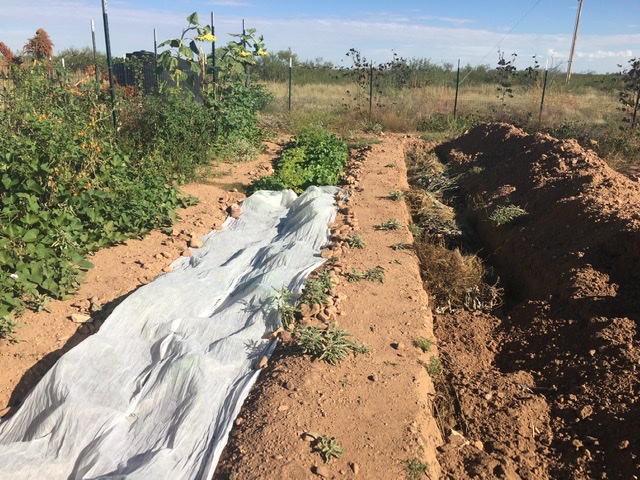
EF389D5C-67C8-45DE-A742-1895BC4B8DAE.jpeg
Bed being dug on right, beds on left being used for the first annuals
1E88B004-E271-4335-B041-63C4D69B4275.jpeg
Finalized sunken zai pit hugel beds
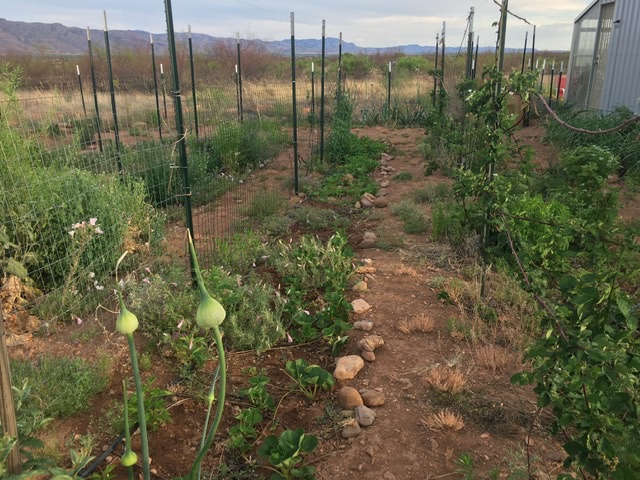
5EFABFCE-4183-416D-B6AB-FD1BCD40C815.jpeg
Perennial polyculture garden in 2nd year
 
Posts: 188
Location: South Central Virginia
35
  • Likes 4
  • Mark post as helpful
  • send pies
    Number of slices to send:
    Optional 'thank-you' note:
  • Quote
  • Report post to moderator
The clay here in southern Va is relentless. I started off with less than 1.5% organic matter and a good infusion of rocks to mini boulders. I have worked my butt off trying to improve it and it's come a long way. By the time I leave this earth someone should have a decent place to work with in the future. I have added many truckloads of compost and planted stuff purely for improving the ground.
 
Steward and Man of Many Mushrooms
Posts: 5992
Location: Southern Illinois
1831
transportation cat dog fungi trees building writing rocket stoves woodworking
  • Likes 9
  • Mark post as helpful
  • send pies
    Number of slices to send:
    Optional 'thank-you' note:
  • Quote
  • Report post to moderator
Anne,

Out of curiosity, just how does one grow a more-or-less traditional garden in caliche?  My grandmother retired from Minnesota to Arizona and had a nice house with no vegetation.  I tried to dig a hole to plant a tree, but I couldn’t do any more than break off a few flecks of dirt.  

When I got done, I thought it would be easier to dig in pure rock than caliche.  Rock shatters, but caliche, despite being extremely hard somehow gives way *JUST* enough that it won’t break up.

Any difficulty I ever thought I had with trying to dig in my own hard clay pales in comparison to what you have to work with.  My complements to you for making any headway whatsoever.


Eric
 
Eric Hanson
Steward and Man of Many Mushrooms
Posts: 5992
Location: Southern Illinois
1831
transportation cat dog fungi trees building writing rocket stoves woodworking
  • Likes 8
  • Mark post as helpful
  • send pies
    Number of slices to send:
    Optional 'thank-you' note:
  • Quote
  • Report post to moderator
I have dense, brown clay.  When wet, it turns slick, sticky and generally a pain to work with.  It sticks to tools, and is heavy working.  

When dry, my clay turns into something bulletproof.  It is absolutely rock solid, fiercely resisting the penetration of any shovel or pick.  It’s not quite caliche, but it’s not a bad stand-in.

Last week, we buried our dog Gracie.  When digging her grave, the clay was initially wet and sticky, making tools excessively heavy and contributing to my back problems.  Then, about 2 feet under, we we hit a bone-dry section and that was virtually impossible to dig through with hand tools.  I had to jump on the spade from the 2’ high edge, hoping to power it into the dry soil and break it up.  But no—it yielded nothing!  Eventually my neighbor borrowed a small backhoe to get the job done.

My garden beds are different though.  I pile wood chips over a new garden plot and then use Wine Cap mushrooms to break down the wood and invite in the worms.  After a year, the clay and wood chips and fungal leftovers merge together into something more like a combo of peat and loam.


Eric
 
pollinator
Posts: 1324
Location: Milwaukie Oregon, USA zone 8b
152
  • Likes 5
  • Mark post as helpful
  • send pies
    Number of slices to send:
    Optional 'thank-you' note:
  • Quote
  • Report post to moderator
Rocky and crappy, has been hidden under grass for too long.  That's why I'm mostly doing containers still and intend to get some raised beds going, one at a time, over time.  The only things that seem to grow out of it naturally are dandylions (yay!), mallows (good for sauteying) sorrel (yummy sour to nibble on), clover (nibbling the petals after leaving them to feed bees for a while)and south down thistle (I like the downy flowers and fluff.)  I planted mint in a patch and I hope it will take over the yard someday, it seems okay with the crappy soil.  I also planted a walking onion start into it by piling some compost and putting it overtop of the start, and hoping that with that protection and nutrients it would be able to be okay and spread as its hearty, and spread under my crappy soil and manage in the harshness.  I won't know until springtime though I guess.  Landlord likes grass so I can't kill it off with landscape tarps, but if other things take over and cover it up little by little I'm hoping they'll come around to my way of thinking.
 
Anne Miller
steward
Posts: 18192
Location: USDA Zone 8a
4627
dog hunting food preservation cooking bee greening the desert
  • Likes 5
  • Mark post as helpful
  • send pies
    Number of slices to send:
    Optional 'thank-you' note:
  • Quote
  • Report post to moderator

Eric Hanson wrote:Anne,

Out of curiosity, just how does one grow a more-or-less traditional garden in caliche?  My grandmother retired from Minnesota to Arizona and had a nice house with no vegetation.  I tried to dig a hole to plant a tree, but I couldn’t do any more than break off a few flecks of dirt.  

When I got done, I thought it would be easier to dig in pure rock than caliche.  Rock shatters, but caliche, despite being extremely hard somehow gives way *JUST* enough that it won’t break up.  


Sorry to be so late with a reply.

We did raised beds with a mix of clay we found on our property, leaf mold we found on the property under oak trees, and purchased bags of soil and well aged manure.

There is so much limestone rock that it is impossible to dig a hole.
 
roses are red, violets are blue. Some poems rhyme and some are a tiny ad:
Learn Permaculture through a little hard work
https://wheaton-labs.com/bootcamp
reply
    Bookmark Topic Watch Topic
  • New Topic