• Post Reply Bookmark Topic Watch Topic
  • New Topic
permaculture forums growies critters building homesteading energy monies kitchen purity ungarbage community wilderness fiber arts art permaculture artisans regional education skip experiences global resources cider press projects digital market permies.com pie forums private forums all forums
this forum made possible by our volunteer staff, including ...
master stewards:
  • Carla Burke
  • Nancy Reading
  • John F Dean
  • r ransom
  • paul wheaton
  • Jay Angler
  • Timothy Norton
stewards:
  • Pearl Sutton
  • Tereza Okava
  • Nicole Alderman
master gardeners:
  • Christopher Weeks
gardeners:
  • M Ljin
  • Megan Palmer
  • Pete Podurgiel

Planting Timber for Future Generations

 
gardener
Posts: 1180
Location: Western Washington
343
duck forest garden personal care rabbit bee homestead
  • Likes 5
  • Mark post as helpful
  • send pies
    Number of slices to send:
    Optional 'thank-you' note:
  • Quote
  • Report post to moderator
Hello everyone,

One thing that has become abundantly clear to me these past few years of living out here is that the quality of a lot of materials (manufactured and otherwise) is going down. I won’t go into why that is right now, but an example that concerns me is timber. As many are aware, a lot of the world used to be covered with quality timber trees, and indeed, trees that served all sorts of purposes. I’m not an expert on timber and woodworking trees, but I’d like to learn more. I’ve been on a kick of trying to make things better in my area for future generations. Up until now, that’s revolved mostly around planting food trees. And that aspect of my work will definitely continue.

But, I might be acquiring more acreage soon, and I’d like to include some timber trees for future generations, including any children that I might adopt, or their future children. I know it would be a drop in the bucket but I’d like to at least try.

I’m located in the Pacific Northwest, Again, I don’t know much about what makes for good timber, but here are some trees that I have thought about planting:

Oak (unsure of what kind)
Mazzard cherry (a rootstock that I’m betting could work for this. Hopefully in the meantime it provides food for birds and bees)
Empress tree (for crafts and in the meantime, feeding insects)
Black walnut
Persian walnut
American persimmon seedlings? (I hear that it eventually creates a true ebony heartwood)
Chestnut
Red alder?
Hickory?

What are your thoughts, tips, and advice on this?

Thanks!
 
James Landreth
gardener
Posts: 1180
Location: Western Washington
343
duck forest garden personal care rabbit bee homestead
  • Likes 3
  • Mark post as helpful
  • send pies
    Number of slices to send:
    Optional 'thank-you' note:
  • Quote
  • Report post to moderator
I forgot to ask:

What sort of scale would be reasonably useful, i.e. for house construction? I honestly don't know what wood is used for what or how many finished timber trees would be needed for a house, or other projects
 
pollinator
Posts: 181
Location: Zone 7a, 42", Fairfax VA Piedmont (clay, acidic, shady)
36
forest garden fungi urban chicken woodworking homestead
  • Likes 7
  • Mark post as helpful
  • send pies
    Number of slices to send:
    Optional 'thank-you' note:
  • Quote
  • Report post to moderator
I don't know how well hardwoods do in the PNW with the long dry summers.  Here in the East, I'd plant burr oak and Dunham chestnuts, spaced pretty close to allow for straight growth with minimum pruning needed.  The space underneath could be used for animals and camping, and I'd use a separate coppiced woodlot for my firewood.  You can increase the spacing of the trees to allow for more grass production for grazing.  Timber bamboo groves can also be commercially useful.
 
pollinator
Posts: 1004
Location: Central Ontario
212
kids dog books chicken earthworks cooking solar wood heat woodworking homestead
  • Likes 7
  • Mark post as helpful
  • send pies
    Number of slices to send:
    Optional 'thank-you' note:
  • Quote
  • Report post to moderator

James Landreth wrote:Hello everyone,

One thing that has become abundantly clear to me these past few years of living out here is that the quality of a lot of materials (manufactured and otherwise) is going down. I won’t go into why that is right now, but an example that concerns me is timber. As many are aware, a lot of the world used to be covered with quality timber trees, and indeed, trees that served all sorts of purposes. I’m not an expert on timber and woodworking trees, but I’d like to learn more. I’ve been on a kick of trying to make things better in my area for future generations. Up until now, that’s revolved mostly around planting food trees. And that aspect of my work will definitely continue.

But, I might be acquiring more acreage soon, and I’d like to include some timber trees for future generations, including any children that I might adopt, or their future children. I know it would be a drop in the bucket but I’d like to at least try.

I’m located in the Pacific Northwest, Again, I don’t know much about what makes for good timber, but here are some trees that I have thought about planting:

Oak (unsure of what kind)
Mazzard cherry (a rootstock that I’m betting could work for this. Hopefully in the meantime it provides food for birds and bees)
Empress tree (for crafts and in the meantime, feeding insects)
Black walnut
Persian walnut
American persimmon seedlings? (I hear that it eventually creates a true ebony heartwood)
Chestnut
Red alder?
Hickory?

What are your thoughts, tips, and advice on this?

Thanks!

The question I would ask is what do you want to use the wood for? All the hardwood trees you mentioned I would consider trim flooring and cabinet wood. for structural wood used for framing, sheathing etc you can't beat fir and pine for speed of growth and structural strength. Yes when building on pristine old growth you come across hardwood timbers in old buildings but its much slower growing and mostly unnecessary. All personal opinion but I've been a wood butcher for over 20 years now.
 
gardener
Posts: 6836
Location: Arkansas - Zone 7B/8A stoney, sandy loam soil pH 6.5
1778
hugelkultur dog forest garden duck fish fungi hunting books chicken writing homestead
  • Likes 8
  • Mark post as helpful
  • send pies
    Number of slices to send:
    Optional 'thank-you' note:
  • Quote
  • Report post to moderator
First off you need to realize that the lumber from yesteryear came from trees at least 200 years old or up to 2 thousand years old and older in the case of redwoods and some of the spruces.

That means that any tree you plant now will need about 5 generations before it is worthy of being old growth wood. (tight grain is the easy way to tell lumber that was old growth wood)

In the PNW you want to plant the trees that like it there; Spruces, Firs, Redwoods, True Cedars, Yellow Cedars, those are the species of the area historically and those are the species that will do best there.

All those are timber trees, now if you want fruit trees, Apples, Cherries, Chestnut would be the thriving trees.
Marginal trees would be Fig, Plum, Persimmon (related to the Ebony but not a true Ebony, it's main use was Golf drivers and Mallets, today it is mostly mallets that are made from the heart wood of the persimmon (but it makes good finger boards on guitars))

 
James Landreth
gardener
Posts: 1180
Location: Western Washington
343
duck forest garden personal care rabbit bee homestead
  • Likes 2
  • Mark post as helpful
  • send pies
    Number of slices to send:
    Optional 'thank-you' note:
  • Quote
  • Report post to moderator
Thanks Bryant. In addition to those, we actually have a few native hardwoods. Oak trees actually grow extensively here and down through the Willamette Valley of Oregon. Red Alder is native, and there are some non native hardwoods that really thrive (all the walnuts, and many chestnuts). We also have some large native maples (Big Leaf maple) but I'm not sure if it's a good wood.

People commonly grow black walnut and some varieties of chestnut for timber in a few decades (20-40 years), right? What is that wood usually used for?
 
James Landreth
gardener
Posts: 1180
Location: Western Washington
343
duck forest garden personal care rabbit bee homestead
  • Likes 2
  • Mark post as helpful
  • send pies
    Number of slices to send:
    Optional 'thank-you' note:
  • Quote
  • Report post to moderator

Josh Garbo wrote:I don't know how well hardwoods do in the PNW with the long dry summers.  Here in the East, I'd plant burr oak and Dunham chestnuts, spaced pretty close to allow for straight growth with minimum pruning needed.  The space underneath could be used for animals and camping, and I'd use a separate coppiced woodlot for my firewood.  You can increase the spacing of the trees to allow for more grass production for grazing.  Timber bamboo groves can also be commercially useful.


Timber bamboo is definitely something to consider. I have one plant so far that I put in in the fall, but planting more is probably a good idea. I hear it takes years before it's producing well enough to harvest consistently from. It doesn't spread so aggressively here due to the dry summers. In fact, we can pretty well control exactly where we want it to grow by watering just that area
 
James Landreth
gardener
Posts: 1180
Location: Western Washington
343
duck forest garden personal care rabbit bee homestead
  • Likes 1
  • Mark post as helpful
  • send pies
    Number of slices to send:
    Optional 'thank-you' note:
  • Quote
  • Report post to moderator

David Baillie wrote:
The question I would ask is what do you want to use the wood for? All the hardwood trees you mentioned I would consider trim flooring and cabinet wood. for structural wood used for framing, sheathing etc you can't beat fir and pine for speed of growth and structural strength. Yes when building on pristine old growth you come across hardwood timbers in old buildings but its much slower growing and mostly unnecessary. All personal opinion but I've been a wood butcher for over 20 years now.


I'm not sure exactly what the wood would be for. I know that sounds silly. I would just like future generations to have it accessible. I'd like for them to be able to have nice furniture and cabinetry, and to build houses and tools that will last. Do you think that pine and fir last a long time in construction? My impression was that it was the "wood of last resort" originally, at least when hardwoods were available, but my impression could be wrong or that preference could have been unnecessary
 
Rocket Scientist
Posts: 4795
Location: Upstate NY, zone 5
751
5
  • Likes 6
  • Mark post as helpful
  • send pies
    Number of slices to send:
    Optional 'thank-you' note:
  • Quote
  • Report post to moderator
English (and possibly other European) settlers came from a tradition of using oak for building, and early frames may have been primarily of that wood, but I expect they fairly soon realized that excellent white pine was abundant, easy to work, and worked very well if protected from weather. Much 19th century timber framing in the northeast (at least) was (old growth) pine or hemlock.
For log cabins, hardwoods would last much longer in the humid atmosphere.

To get the tight growth rings of old growth wood, you would need to plant very close, and thin only as needed to keep the best trees healthy. It would be a generational process to keep a woodlot managed for quality timber production without harvesting so much that the trees spread out and get soft... maybe one tree per acre per every two to five years, after they are into the mature stage.

Researchers in England have determined that most of the trees felled to make building frames in the medieval period (which survive to today) were 20 to 50 year old oak, not old growth at all. They can tell by dendrochronology, if sapwood is present on a log, what year it was felled in.
 
Bryant RedHawk
gardener
Posts: 6836
Location: Arkansas - Zone 7B/8A stoney, sandy loam soil pH 6.5
1778
hugelkultur dog forest garden duck fish fungi hunting books chicken writing homestead
  • Likes 6
  • Mark post as helpful
  • send pies
    Number of slices to send:
    Optional 'thank-you' note:
  • Quote
  • Report post to moderator
hau James, great to know you have many species to choose from.

I would plant the trees that you know grow well.  (Big leaf Maple is indeed a very valuable wood when it is old enough, that is what violins and carved guitars are made of (back and sides))
Once you have good stands of those known good growers, then you could do some experimenting with marginal species and see how they do.

(I have always had a dream of planting a new giant redwood forest, but I don't live where they will thrive now, but I'm still going to order some seedlings and give them the chance to stake out new territory)

Redhawk
 
David Baillie
pollinator
Posts: 1004
Location: Central Ontario
212
kids dog books chicken earthworks cooking solar wood heat woodworking homestead
  • Likes 2
  • Mark post as helpful
  • send pies
    Number of slices to send:
    Optional 'thank-you' note:
  • Quote
  • Report post to moderator
I live in an area that was first exploited by the english for white pine as the best material for ship masts and for superior hand hewn beams for timber framing. Loaded into hulls and shipped back to the motherland which was awash in oak...
A mix of local hardwoods, fir and spruce would be my choice in your position.
 
Posts: 44
10
  • Likes 6
  • Mark post as helpful
  • send pies
    Number of slices to send:
    Optional 'thank-you' note:
  • Quote
  • Report post to moderator
The indigenous cultures here in the PNW called the red cedar "the tree of life". They  built their houses and clothing out of cedar. The coast range used to be filled with old growth cedars. If you look you can still find really old trees that have the scars of bark harvesting from 200 years ago.  The only reason that the coast mountains are mostly Douglas fir and western hemlock now are because they reach a harvestable size sooner more reliably than any other tree in this environment.  Western hemlock is the most shade tolerant timber species for this environment so it can be planted closer together and  in the shade of existing trees so it is more profitable per acre on tree plantations which is what all of Oregon's coastal mountain state land is now.  Hemlock is not the most quality building material that can be grown here just the most profitable in the current economic system. My goal at my homestead is to plant as much perennial food as possible especially trees. Everywhere on my property that is out of my ability to pay close attention to I plant cedars. Cedars were here before me and before the first settlers and are still the most useful and valuable building material you can grow here in my opinion. Plant western hemlock if you want a guaranteed profit in 35-40 years, Doug fir for a balance of 35-40 year profit and long term valuable trees, and cedar for long term value or quality homescale lumber at any age. Just my opinion.
 
James Landreth
gardener
Posts: 1180
Location: Western Washington
343
duck forest garden personal care rabbit bee homestead
  • Mark post as helpful
  • send pies
    Number of slices to send:
    Optional 'thank-you' note:
  • Quote
  • Report post to moderator

Jenn Bertrand wrote:The indigenous cultures here in the PNW called the red cedar "the tree of life". They  built their houses and clothing out of cedar. The coast range used to be filled with old growth cedars. If you look you can still find really old trees that have the scars of bark harvesting from 200 years ago.  The only reason that the coast mountains are mostly Douglas fir and western hemlock now are because they reach a harvestable size sooner more reliably than any other tree in this environment.  Western hemlock is the most shade tolerant timber species for this environment so it can be planted closer together and  in the shade of existing trees so it is more profitable per acre on tree plantations which is what all of Oregon's coastal mountain state land is now.  Hemlock is not the most quality building material that can be grown here just the most profitable in the current economic system. My goal at my homestead is to plant as much perennial food as possible especially trees. Everywhere on my property that is out of my ability to pay close attention to I plant cedars. Cedars were here before me and before the first settlers and are still the most useful and valuable building material you can grow here in my opinion. Plant western hemlock if you want a guaranteed profit in 35-40 years, Doug fir for a balance of 35-40 year profit and long term valuable trees, and cedar for long term value or quality homescale lumber at any age. Just my opinion.


Hi Jenn, that's a lot of really great and detailed information. My understanding is that a lot of red cedars are struggling with our more intense summer droughts. Has that been something you've observed? I would plant it if I was sure that it would live. I've planted incense cedar in the hopes that it would thrive in the dry summers, but so far it's had a very hard time. As to douglas fir, I probably won't plant it, personally, just due to the fact that it's EVERYWHERE here, as you know and as you mentioned :/ Not that it's a bad tree. It's just that it's like the GMO Corn of the west; I see it all over the place as the only timber crop everrrr. I share your goal of perennial food, but as my food orchard is pretty extensive, I'm starting to think also about building materials, among other things
 
pollinator
Posts: 4958
1211
transportation duck trees rabbit tiny house chicken earthworks building woodworking
  • Likes 2
  • Mark post as helpful
  • send pies
    Number of slices to send:
    Optional 'thank-you' note:
  • Quote
  • Report post to moderator
Our attempts at planting trees have been really disappointing.

When my father was only a few years old planted several acres of field into White Pine, almost 80 years ago. Those trees ended up with White Pine Blister Rust and ended up having no value for anything except now what could have been tillable fields, must be cleared and stumped so that I can farm it.

In restocking a few acres that I had logged, I replanted with black spruce that I had obtained, and while some have grown, the moose in that area of my woodlot pretty much decimated the trees during a really hard winter one year.

In 1994 I planted 10 acres in High-Bred Hackmack that was supposed to achieve 30 cords to the acre, in 12 years time. It did that, but also sustained a bark beetle infestation confirmed by the Maine Forest Service Tree Pathologist. I was losing 3-4 trees per acre per year. Not horrendous, but then the forest products market changed, and hackmatack had no commercial value except be burned to make electricity. What would have paid $120 a cord, yielded $30 per cord, hardly enough to be worth cutting, and ultimately left stumps where I could have had tilled farmland.

Our best method in the end for producing forest products for future generations has been in just plain good old fashioned forestry. Everytime I cut the right trees, particularly when the mast crop is doing well that year (it cycles every few years), and the logging scarifies the ground and allows those seeds to land on bare soil and not forest duff, I get amazing regrowth. To wit, I have been logging commercially ever since I was 15 years old, and I am now 44 years old. Some places I have selectively logged three times.

Here in Maine, growth is figured at 1 cord of wood, per acre, per year. That means I can sustainably harvest 1 cord per acre of forest yearly without worry of overdoing it. I do not come anywhere close to that. I might cut more than that in a given area, but that just means it will be more years until I can return, and in the meantime, the other areas of my forest I am not logging, are growing. In that respect, we have been here since 1746, and last year was the first time we 100% of our forest had been logged. I do not mean 100% of it in that year, but rather since sections were so hard to reach, it was the first time we we able to log in those areas.

Everytime I fell a tree; with its seeds, I am planting thousands of seedlings. I am happy with that.
 
Travis Johnson
pollinator
Posts: 4958
1211
transportation duck trees rabbit tiny house chicken earthworks building woodworking
  • Likes 2
  • Mark post as helpful
  • send pies
    Number of slices to send:
    Optional 'thank-you' note:
  • Quote
  • Report post to moderator

Jenn Bertrand wrote:The indigenous cultures here in the PNW called the red cedar "the tree of life". They  built their houses and clothing out of cedar. The coast range used to be filled with old growth cedars. If you look you can still find really old trees that have the scars of bark harvesting from 200 years ago.  The only reason that the coast mountains are mostly Douglas fir and western hemlock now are because they reach a harvestable size sooner more reliably than any other tree in this environment.  Western hemlock is the most shade tolerant timber species for this environment so it can be planted closer together and  in the shade of existing trees so it is more profitable per acre on tree plantations which is what all of Oregon's coastal mountain state land is now.  Hemlock is not the most quality building material that can be grown here just the most profitable in the current economic system. My goal at my homestead is to plant as much perennial food as possible especially trees. Everywhere on my property that is out of my ability to pay close attention to I plant cedars. Cedars were here before me and before the first settlers and are still the most useful and valuable building material you can grow here in my opinion. Plant western hemlock if you want a guaranteed profit in 35-40 years, Doug fir for a balance of 35-40 year profit and long term valuable trees, and cedar for long term value or quality homescale lumber at any age. Just my opinion.


I am not so sure this is accurate.

Cedar has a lot of great benefits, longevity being one of them as they are rot resistant, but they are very brittle and have very little strength. That is why most building codes require tested lumber which is: SPF or Spruce, Pine and Fir. Here in the Northeast they are looking to add Hackmatack, but Eastern Hemlock (due to shake) and cedar (due to having no strength) will never be able to acheive certification as structural lumber.

Spruce and takes an incredibly long time to grow, and yet Maine has about 11 million acres planted in such wood. It is not planted because of how fast growing it is, it is planted because its long fibers make great paper, and have strength as framing lumber. Cedar is not planted even though it pays twice as much per board foot, because more lumber is consumed for structural puposes then non-structural lumber.
 
Jenn Bertrand
Posts: 44
10
  • Likes 6
  • Mark post as helpful
  • send pies
    Number of slices to send:
    Optional 'thank-you' note:
  • Quote
  • Report post to moderator
Travis,  you are right that cedar is not the best structural lumber but as James said there are fir trees Everywhere here in the PNW the state forest near my house is basically the tree version of a giant corn field with western hemlock and Douglas fir planted in rows and poison sprayed on their competition I even came across acres and acres of  trees perfectly spaced in a grid each one with a unique barcode stapled to it.  I don't know what that was about  probably just a research plot of some kind but it was very eerie to walk into a  barcode forest while foraging for mushrooms.  I think  the main reason cedar is not planted is because it is a much slower growing tree so even though the lumber is worth more it takes too long to get paid.
James, I have noticed a lot of mature cedar trees really struggling and some dying so you're probably right about the drier longer summers being problematic for them.  I noticed one property near me where they logged almost all the trees but left about a dozen big cedars spaced out and now a few years later more than half of them are standing dead, my guess is they dried out because there was no longer any shade to protect the soil from drying out. They do like more moisture than a lot of other trees I think that's why they used to be so prevalent in the coastal mountains here. My property is at the bottom of a big hill and bordered by a river, the water table here is fairly high so things tend to do ok even if it doesn't rain for months. I also get coastal fog a lot here which helps too. If you have places that are borderline marshy or on a north slope or if you notice places with other plants that  like more water like red alder, willow, skunk cabbage or coltsfoot those might be good places to plant cedars. I admit I'm  biased in favor of cedar because it lasts even with no treatment, its light and soft and easy to split making it easy to work with hand tools and I love the smell. Also my cabin was built entirely of cedar, it was built before modern building codes and wouldn't pass even the most lenient ones now but its still structurally sound.
 
Josh Garbo
pollinator
Posts: 181
Location: Zone 7a, 42", Fairfax VA Piedmont (clay, acidic, shady)
36
forest garden fungi urban chicken woodworking homestead
  • Mark post as helpful
  • send pies
    Number of slices to send:
    Optional 'thank-you' note:
  • Quote
  • Report post to moderator
James, I read this book, which is targeted for your climate, and the folks at Bamboo Garden in Oregon would probably know more about the commercial market for timber bamboo.

https://www.amazon.com/Farming-Bamboo-Daphne-Lewis/dp/1435701313/ref=pd_lpo_sbs_14_t_1?_encoding=UTF8&psc=1&refRID=T7JY7WFNTBSDFBWSP43X
 
James Landreth
gardener
Posts: 1180
Location: Western Washington
343
duck forest garden personal care rabbit bee homestead
  • Mark post as helpful
  • send pies
    Number of slices to send:
    Optional 'thank-you' note:
  • Quote
  • Report post to moderator
Thanks Josh, I'll definitely look into it.


One thing I will say (since we're on the topic of growing fir trees in the PNW) is that I am really shocked by how many trees actually do grow very well here in the PNW. I am shocked because I feel that we have so much more potential for producing useful wood than we currently utilize. That is part of why I posted this thread, to learn more about the different possibilities.

For example, locust trees do extremely well here. As do maple, alder, and as mentioned, some nut trees and much timber bamboo. Why aren't these grown, and instead just fir?
 
master steward
Posts: 16107
Location: Pacific Wet Coast
10562
duck books chicken cooking food preservation ungarbage
  • Likes 8
  • Mark post as helpful
  • send pies
    Number of slices to send:
    Optional 'thank-you' note:
  • Quote
  • Report post to moderator
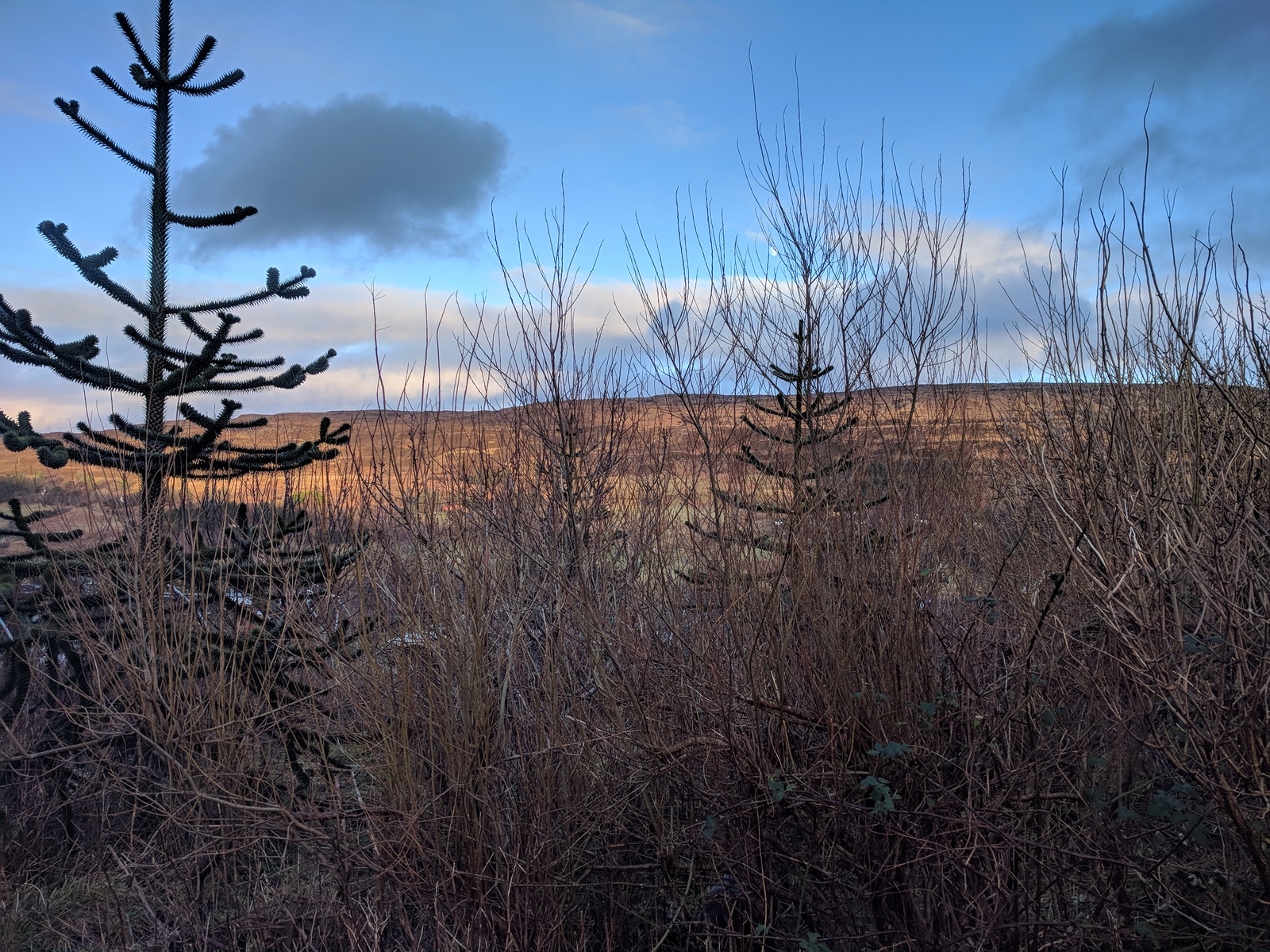
I have heard that the Monkey Puzzle tree (Araucaria auracana) is considered a timber tree in some places. I understand that it is *really* slow to get started, but judging by all the locals that plant it as a lawn ornament, it must tolerate that sort of thing. And the deer haven't touched it, which is more than I can say about just everything I've planted the last two years! And it produces edible seeds eventually... so it stacks functions.

https://en.wikipedia.org/wiki/Araucaria_araucana
 
steward and tree herder
Posts: 14275
Location: Isle of Skye, Scotland. Nearly 70 inches rain a year
7941
6
transportation dog forest garden foraging trees books food preservation woodworking wood heat rocket stoves ungarbage
  • Likes 10
  • Mark post as helpful
  • send pies
    Number of slices to send:
    Optional 'thank-you' note:
  • Quote
  • Report post to moderator
I've planted a few monkey puzzle trees here - I love the way they grow straight up in my windy climate!

One thought I have is that mine are mainly for nut production. Of course I may not be the one that benefits in 15-20 years when they start to fruit. Since they have male and female flowers on different trees, and since I won't know until they flower which sex I have, potentially at that point I will have 30-40 year old male trees surplus to requirements. One male can pollinate several female trees for the edible pinons, the extras could potentially be harvested for timber.

Apparently hungry deer can munch on the branches, although I've not had a problem here I have seen trees in cornwall that apparently needed protection. Also be aware that the scale-like leaves are wicked sharp and if you do plant them make sure they are well away from where you want to walk. I keep having to relocate my paths!
IMG_20251231_150605.jpg
Straight trunks on young monkey puzzle trees
 
Posts: 217
Location: Payson, Utah, US of A - Zone6B/High Desert/4500' /14" Rainfall
126
  • Likes 6
  • Mark post as helpful
  • send pies
    Number of slices to send:
    Optional 'thank-you' note:
  • Quote
  • Report post to moderator

Bryant RedHawk wrote:hau James, great to know you have many species to choose from.

I would plant the trees that you know grow well.  (Big leaf Maple is indeed a very valuable wood when it is old enough, that is what violins and carved guitars are made of (back and sides))
Once you have good stands of those known good growers, then you could do some experimenting with marginal species and see how they do.

(I have always had a dream of planting a new giant redwood forest, but I don't live where they will thrive now, but I'm still going to order some seedlings and give them the chance to stake out new territory)

Redhawk


You're speaking my language, Redhawk. I too dream of a redwood forest. I'm going to see about creating one in Utah. Also not their preferred environment, but there are pockets where we could make it work.

Imagine the wonder of future generations. Makes me smile.
 
Posts: 404
Location: rural West Virginia
92
  • Likes 4
  • Mark post as helpful
  • send pies
    Number of slices to send:
    Optional 'thank-you' note:
  • Quote
  • Report post to moderator
As I live in West Virginia, which is a very different climate, I wouldn't presume to suggest tree species, except that when you mention "American persimmon" you likely mean Diospyros virginiana which is native here, rarely makes really big trees (though they grow tall in woods) and can bear hundreds of golf-ball-size fruits full of seeds. Most of the trees I have have been grafted, and these yield considerably bigger fruits with few or no seeds. I've read that this is because D. v, was crossed with D texensis, and they don't have the same number of chromosomes. But for fruit, these are definitely superior. I don't know how either would do in your climate.
I also wonder why you want to plant trees. Is this cleared ground you want to revert to woods? Otherwise, why  not just let nature take its course? Trees are perfectly capable of planting themselves, and the natives know best. Although I can see wanting to skew the inventory some, in favor of varieties that yield useful food or fiber.
 
Chance Lunceford
Posts: 217
Location: Payson, Utah, US of A - Zone6B/High Desert/4500' /14" Rainfall
126
  • Likes 4
  • Mark post as helpful
  • send pies
    Number of slices to send:
    Optional 'thank-you' note:
  • Quote
  • Report post to moderator
Also, since this popped up, I'll post my thoughts from several days ago which I posted to my Garden Everything ™️ Forum Blog:

Here's an idea I've been pondering over for awhile now.

It's a combination of a perpetual lumber system, a breeding program which can be directed in multiple directions simultaneously, a generational wealth sustainer, a teacher of long-term thinking and patience, and some other stuff.

Here's what I'm thinking, in a loose outline:

- Plant a shit-ton of seedlings of a given species, interspersed with grafted varieties, and heavily over plant in an area large enough that you can plan out a harvesting schedule that runs for between 10-50 years (depending on species, goals, ecosystem, etc). Ideally, sowing an outrageous amount of seed and thinning from there.
- It's s successional thinning process that will set the stage for what's to come. Here's how:
    - First year is a brutal year, you're looking to thin something that is still overcrowded, but there's no room for laggards, wimps, disease succumbers, insect magnets, or any other 1st stage criterion you're selecting for
    - Second year is also brutal, because you're thinning now to something that is merely very crowded, rather than overcrowded, and because you're also being ruthless about undesirable traits in the context of your system.
    - Years 3-5 get more fun, because now that you've cleared out the stuff that was obviously outside your needs, you get to start paying closer attention to the individual trees, even if you're going to be removing almost all of them eventually. Thin any more obviously poor candidates during this time, and you're also likely to begin the next phase.
    - For fruit trees, for the most part, you're now getting fruit and 5 years of growth will tell you a large part of the vigor/disease) pest story too, even if you've still a lot to learn. Make sure to keep track of blooming times, ripening times, and other features you want to select for in your fruit. Also keep track of which specimens are displaying the best timber traits, and keep those around. For nut trees, you're still going to be a ways off from any kind of real production, but if you have a precocious specimen, make sure to take note of it. You'll also be able to make a lot of determinations about vigor/disease/pest management at this point.
- For the next couple of years, also, we're ready to begin creating coppice specimens for harvesting stick fuel, and for creating rootstock for grafting the promising specimens for growing out elsewhere. These coppiced trees can keep this cycle going for a long, long time. There isn't a ton of economic gain in this phase, quite yet, but the right species can also be used for weaving, and a good bunch of the fruit and nut varieties could also be peeled and chipped to create fuel for smoking meat, and you can of course create char. All of those things are either marketable or usable at home.
- Okay, now we're really getting into things, because by year ten, we need to have thinned down to our (semi)permanent spacing. This means giving what remains the room to grow to maturity. Not all (or, necessarily, any) will grow to full maturity, but we're giving space to do so right now.
- By now you should have also recognized your cornerstone specimens for the fruit trees, and the early nut trees will be giving you an idea of where to take them as well, plus the timber lines should be emerging more clearly now. These cornerstones are the best ones you've selected, and they'll stay in place to serve as genetic anchors via seed stock, scion stock, and root stock. They'll be the basis of your now growing nursery business. Depending on the quality of the fruit, you can take that to market for high dollar as "heirloom" or "specialty" produce. If it's crappy, you can sell it or use it as fodder. By now, you should have put in place, or be working towards putting into place, a silvopasture system (or at least a paddock-shift system in the autumn to finish pigs and waterfowl and give them that fruity/nutty flavor people pay 5x for, and you can even set up a deal with a local rancher and butcher, then split the profits as you will). The nuts you are getting will only increase from this point forward, and they'll begin to emerge as a profitable market option and/or a massive caloric addition to your family and community.
- From this point forward, you'll also be harvesting increasingly valuable lumber. But, here's the catch, you're only going to be doing so according to your full, 15-50 year harvesting schedule. This means, take the number of trees you have growing in the system, divide that by the number of years you're planning on running the cycle, and that's how many trees you're removing each year now. This is a critical component. So, let me say it again:
- You're only harvesting at replacement rates from now on.
- At some point, you'll find your cornerstone nut specimens as well.
- Using companion planting at the base of the trees with vegetables, bush/shrub/vine fruit, herbs, and cut flowers that ripen/bloom in synchrony with the trees will help improve market options and personal/community sustenance.
- Obviously, for the nut trees and to a limited extent the fruit trees, the longer you allow the system to extend, the more valuable both the lumber and the orchard will be, but you've got to decide what works for you and you're generations.
- You'll have the following options (not exhaustive) for income streams:
    - Firewood
    - Smoker wood (at a premium vs firewood)
    - Orchard harvests, either via traditional methods or U-Pick
    - Premium quality, millable lumber for furniture and flooring (this is the money maker)
    - A nursery business, with a special connection to local orchardists and home growers due to market connections and regional suitability, which can also be an online nursery when ready (at a premium for online, because of specialty/exclusive breeding work).
    - There are many more I have in my notes, but what would you add?
- It should be mentioned here that, as you've probably guessed, you're going to be replacing your trees with your own homegrown specimens, for the most part. This will include grafts and seedlings from the cornerstone trees as well as promising new specimens that deserve further trialling. This is how you'll ensure your stock never sucks. You'll want to bring in occasional new specimens from outside your gene pool so you can keep things fresh and explore new possibilities.
- Importantly, this is where you teach your descendants how to manage this system. With a decent parcel, say 5-15 acres, you could make a living which would sustain your family if you were attentive to your finances and lived within your means, and managed the system with diligence and intelligence. It could also be the most powerful wealth builder you could ask for, on top of a career elsewhere. With something larger, you could bring in hundreds of thousands of dollars per year in lumber alone, and do it in a way which could be sustained perpetually. Your family could, from that point forward, never have to work for anybody else ever again.
- Obviously, as you progress, you can leverage your existing system into attaining more land to build out a larger or supplemental system until you're operating a large enough system to sustain your family and more.

That's the basic outline. Obviously, you can get into the deep with this, considering site, species, circumstance, etc...

What say you about this?
 
pollinator
Posts: 233
Location: SF bay area zone 10a
97
2
forest garden fungi trees foraging fiber arts medical herbs
  • Likes 6
  • Mark post as helpful
  • send pies
    Number of slices to send:
    Optional 'thank-you' note:
  • Quote
  • Report post to moderator
My personal redwood grove fanstasy:
I was on the island of Hawai'i, and saw overgrown, seemingly abandoned eucalyptus stands.
I wanted to plant redwoods in the interstices of the thicket of blue gum and see if they could grow up tall in all that rain and shade and finally overtop and shade out the eucalypts.
 
Posts: 147
Location: Nuevo Mexico, Alta California, upland New York, aiming Andalucia
26
forest garden trees greening the desert
  • Likes 6
  • Mark post as helpful
  • send pies
    Number of slices to send:
    Optional 'thank-you' note:
  • Quote
  • Report post to moderator
Hello Chance, I sure like your proposition, though it seems to be starting from scratch (compare with Miyawaki & Greek almond/ apricot seeders also mentioned here).  I've been doing something broadly similar though starting with degraded & declining mixed north-central Appalachian forest.  The way private forests are there, many are going to white pine because quality hardwoods aren't regenerating without active management, while current financials result in the same overall income.  However, climate changes favour the return of fire & oak-hickory.  I myself am heavily thinning pine, interfering with & suppressing deer predation of hardwood seedlings, & planting in climate-change adapted native species/ select hardwoods genetics, fruit/ nut/ berry propagates, forage edibles, etc.  We have a subsistence amount of decent standing timber for selection harvest to the custom large beam & furniture/ slab market, not to mention paying the taxes just from fuelwood scraps.  But I'm ¼ century in, only half-way done thinning, don't have first dibs on the tax-relief for my forest management to fund everything, suddenly the chainsaw vacations aren't impossible because I'm raising a young son but challenging because I'm over 60 & the timeline has stretched over the horizon.  And I'm no longer sure who the family land is going to.
 
Hey! Wanna see my flashlight? It looks like this tiny ad:
12 Better World books +12 SKIP books +12 Cob Style DVDs
https://permies.com/wiki/380865/World-books-SKIP-books-Cob
reply
    Bookmark Topic Watch Topic
  • New Topic