Sometimes you do something or find something really cool and want to share it but today I am documenting the saga of me struggling with learning something new. I am hoping someone will be willing and able to tell me if I am doing something wrong and once I finally figure it out I am hoping that this saga will help others know what to watch out for before doing the same things I did.
So last spring I decided to learn how to process my own wool and I found a guy across town that raises sheep that was willing to give me some wool. He had several giant bags (more like bales) of sheep's wool in his barn that he told me he's been saving up because the wool mills have stopped buying wool. He has thousands of pounds of the stuff just sitting there from just a couple years' worth of sheep shearing. He said I could have as much as I wanted and I said I would start with just a bin full so I could learn how to process it. He gave me a bin and insisted on giving me a sackfull, too. The sack of wool came in handy in the early spring to help me insulate a the chicken brooder I built out of scrap when we had a cold spell.
The first thing that I did with my wool was wash a small batch of it and I carded it into fluff that I used to
make a wonderbag. That worked pretty well. The carding was a bit time consuming and not all of the grass bits came out but it was good enough for what I needed it for. So after doing my test batch I decided to wash the bin of wool all at once.
Washing a large amount of wool outside
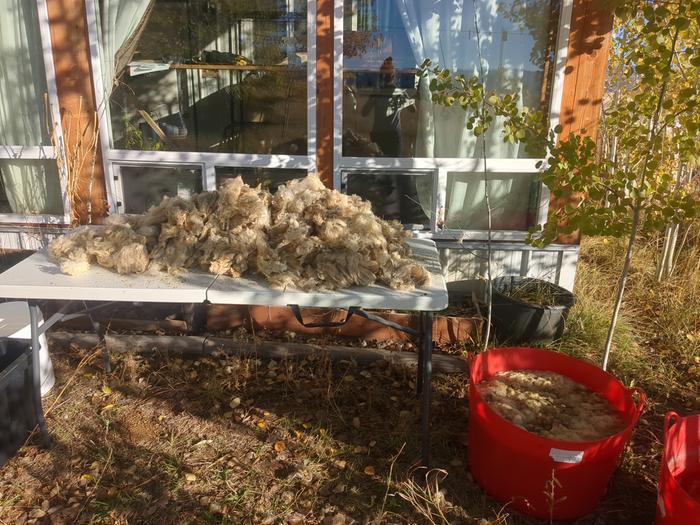
So I set up all of my equipment outside. I had a skirting table, two bins, the bin full of raw wool, a couple of 5 gallon buckets, some greywater-friendly soap, and some sunshine. I wished that I had done this in the summer because the wool would have dried faster, but this was a pretty nice fall day.


Here is the wool before processing.

I laid everything out on the skirting table and tried to pick off chunks that I didn't want. I picked off poop and big pieces of plant matter, but the entire thing was caked in massive amounts of tiny pieces of plant matter and grass and if I tried to pick those out by hand it would probably have taken me years. I figured these tiny pieces would probably come out during processing so I focused on the big pieces. I also realized that I needed to wash this in two loads. It ended up taking me 8 hours to give each load 3 washes and I think 5 rinses. I did this outside so I was able to just tip the buckets over to let the water out instead of ruining the plumbing inside the house.


 First challenge: heating the water
The first major challenge I had was trying to heat up enough water fast enough for the tubs. Each tub load soaked for at least 30 minutes. I tried several methods of heating up the water. Because the tubs were so large, I dumped a couple 5 gallon buckets of water in that I filled up at the spigot (cold water) and then heated up with hot water to try and warm it up.
I tried heating up water on my little camping stove and on the death ray. This took too long and didn't give me enough hot water. Even when I had both going at once.


I then started a fire in the fire pit and heated up both my pots over the fire which worked better but still took too long and required a massive amount of wood and time to maintain the fire.

I eventually resorted to having two giant pots of water always heating up on the stove inside the house, but this required a ton of hauling water back and forth.

In the end, I don't think that I actually got the water hot enough to properly clean the wool and the reason I think this is because the wool was still super sticky, but I didn't realize that until I started trying to spin it.
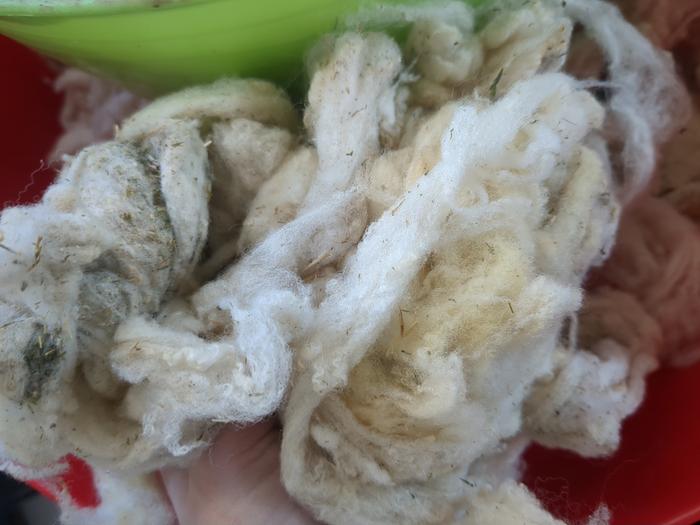
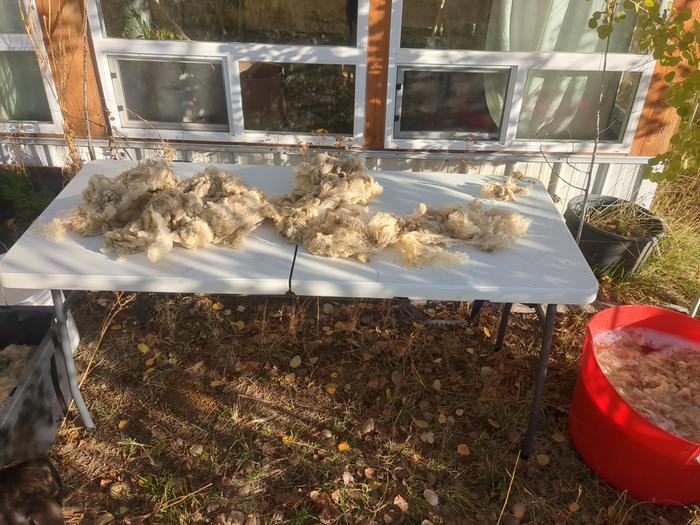
So after I finished washing everything, I gathered it up and laid it on some wire shelves in the greenhouse to air dry. It took maybe a week to dry and I went in periodically and flipped it around. You can see in this first picture that there is still a ton of green grass in the wool, but the color is way whiter than the dirty yellow it was in the beginning.


Here it is all dried.
 Next challenge: carding and spinning
So I have never spun wool before and if I could go back and give myself any advice it would be to buy some already processed wool for spinning and learn how to do that first so I know what the wool is supposed to feel like and look like. I cobbled together a drop spindle with some sticks and then I tried spinning some wool that I carded into fluff just like I had done earlier with the wool for my wonderbag. This did not go well at all.
Here is my makeshift drop spindle.


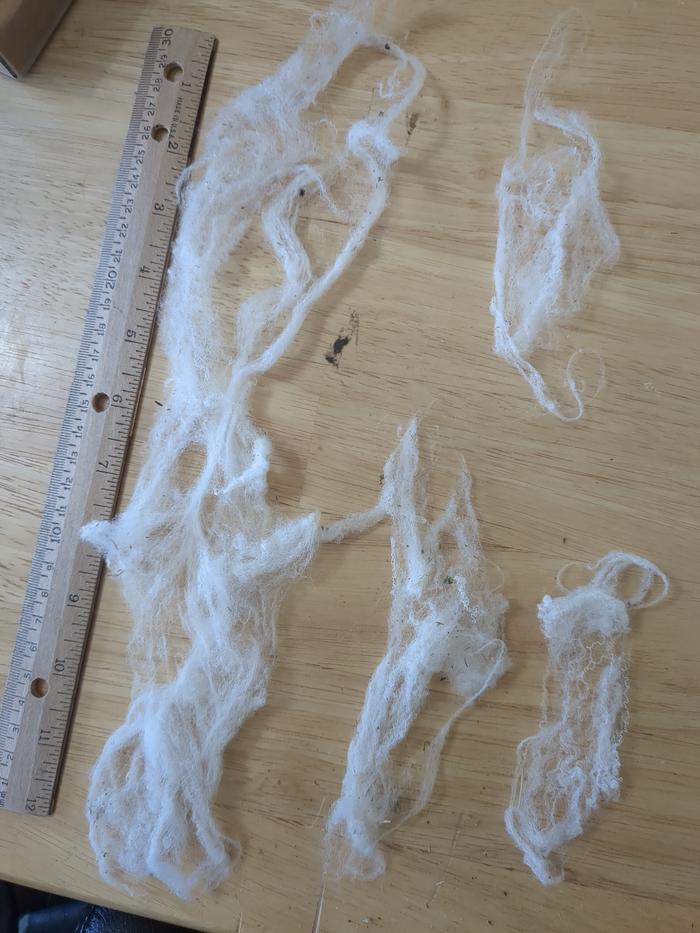
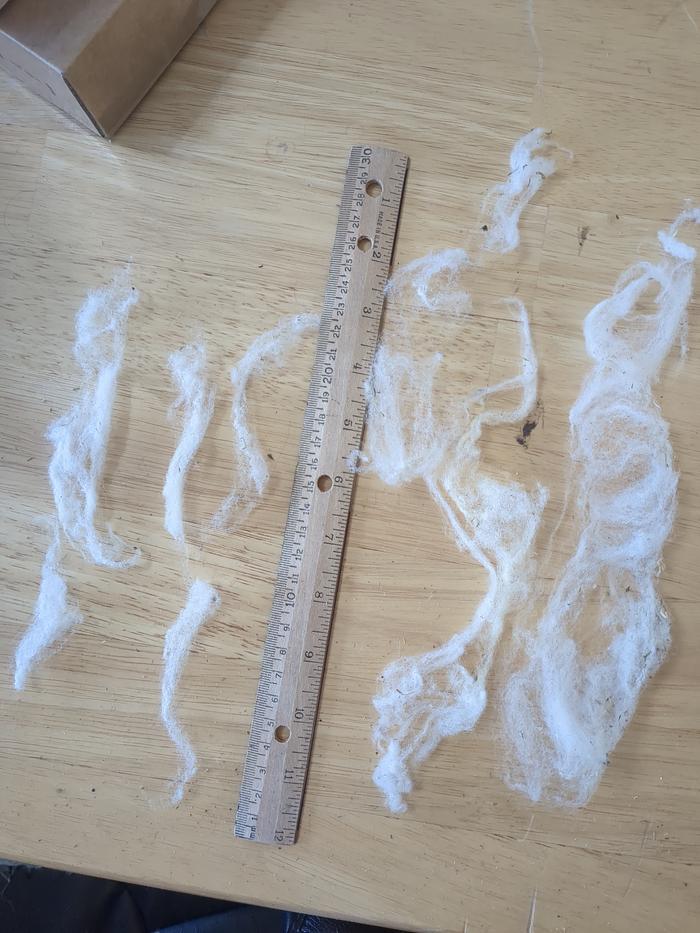
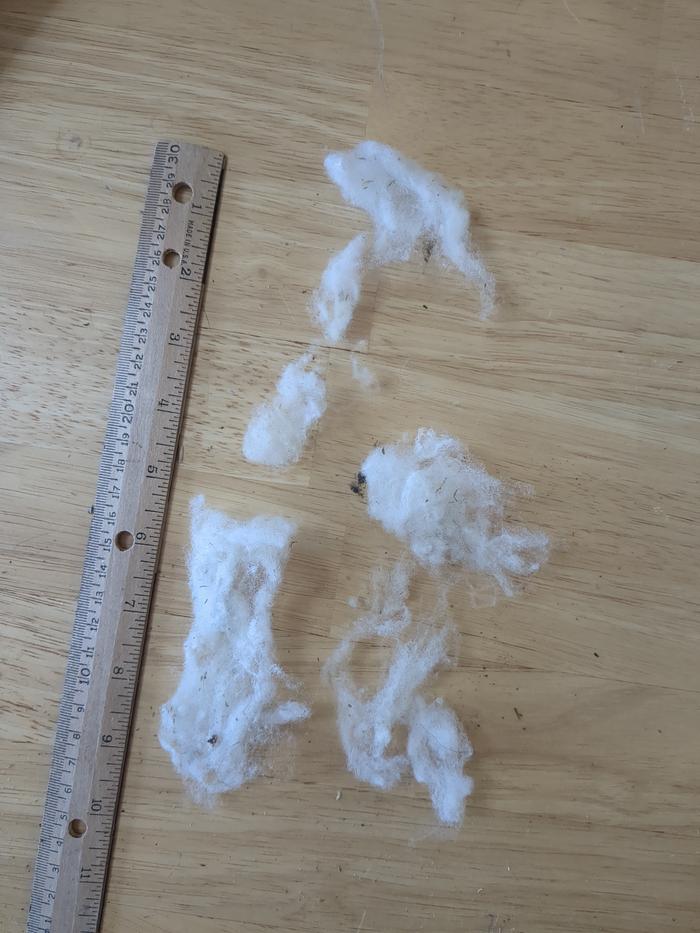
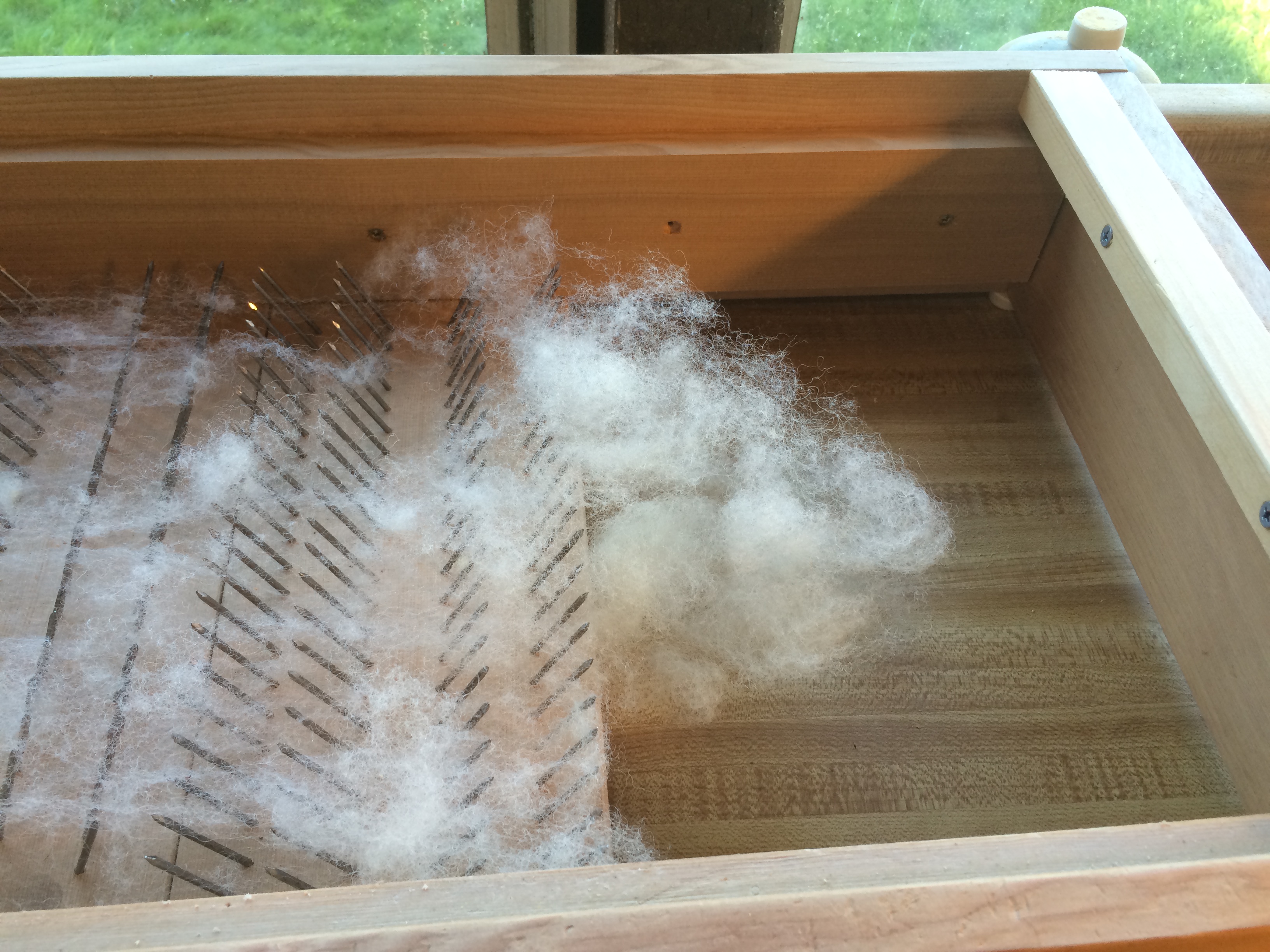
Here is the wool I attempted to card. It is still pretty dirty and honestly very sticky. I did not know what I was doing and I later did a bunch of research and discovered that my technique was totally off. I needed to be carefully aligning the fibers into "rolags." Also all of the tutorials I found online were using some big curved hand carders that I could only find on specialty online stores for a ton of money. I got mine for cheap on Amazon and I am still not sure if they are going to work or not. At the very least I found that they are excellent for grooming my dog.

I tried spinning this sticky fluff and it was super lumpy and kept breaking.

Being unsure if the issue was my wool or the drop spindle, I ended up purchasing a drop spindle online (these were easier to find than the hand carders) and the same thing happened when I tried to spin with it, so I knew that there was something wrong with my wool.
Washing smaller batches of wool inside
So now that I knew that something was wrong with my wool, I decided to experiment. Because it was still super sticky and had a bunch of organic matter still stuck in it that wasn't coming out when I was carding it (incorrectly, I might add), I thought that maybe I hadn't gotten the water hot enough to properly clean the wool the first time. So I decided to wash smaller batches inside in the hot shower with more hot water from the stove to try and get more lanolin off. My hypothesis was that a lot of the grass was stuck on because of the lanolin (which is what I'm thinking is causing the stickiness).
I took a small bag of the wool and washed it in the shower.

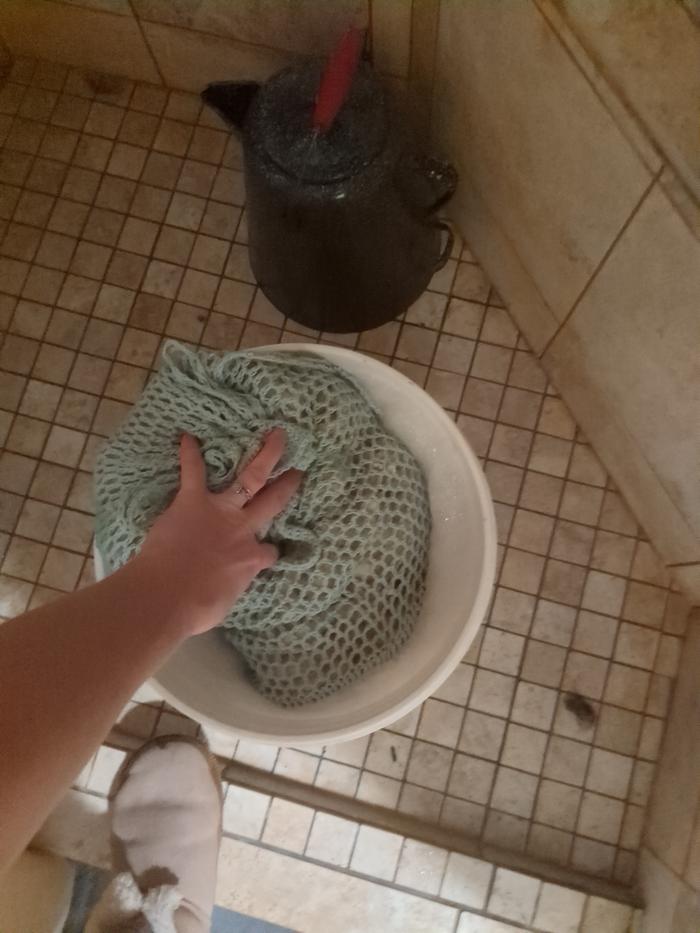
I tested out heating up water on the electric stove and heating up water on the rocket stove. The electric stove heated up faster, which surprised me.

After I washed the wool, I didn't have anywhere to dry it since it was now getting into winter and the greenhouse (which isn't insulated) was frozen, so I just hung the bag up behind the stove. This was a bad idea and took maybe a month to dry out.

As an experiment after washing it, since it was still pretty dirty and sticky, I tried carding the whole thing (by trying to separate the fibers into fluff and see if that would help the grass fall out...again, I still didn't understand carding at this point because I did not understand spinning yet). After carding it, I washed it again.

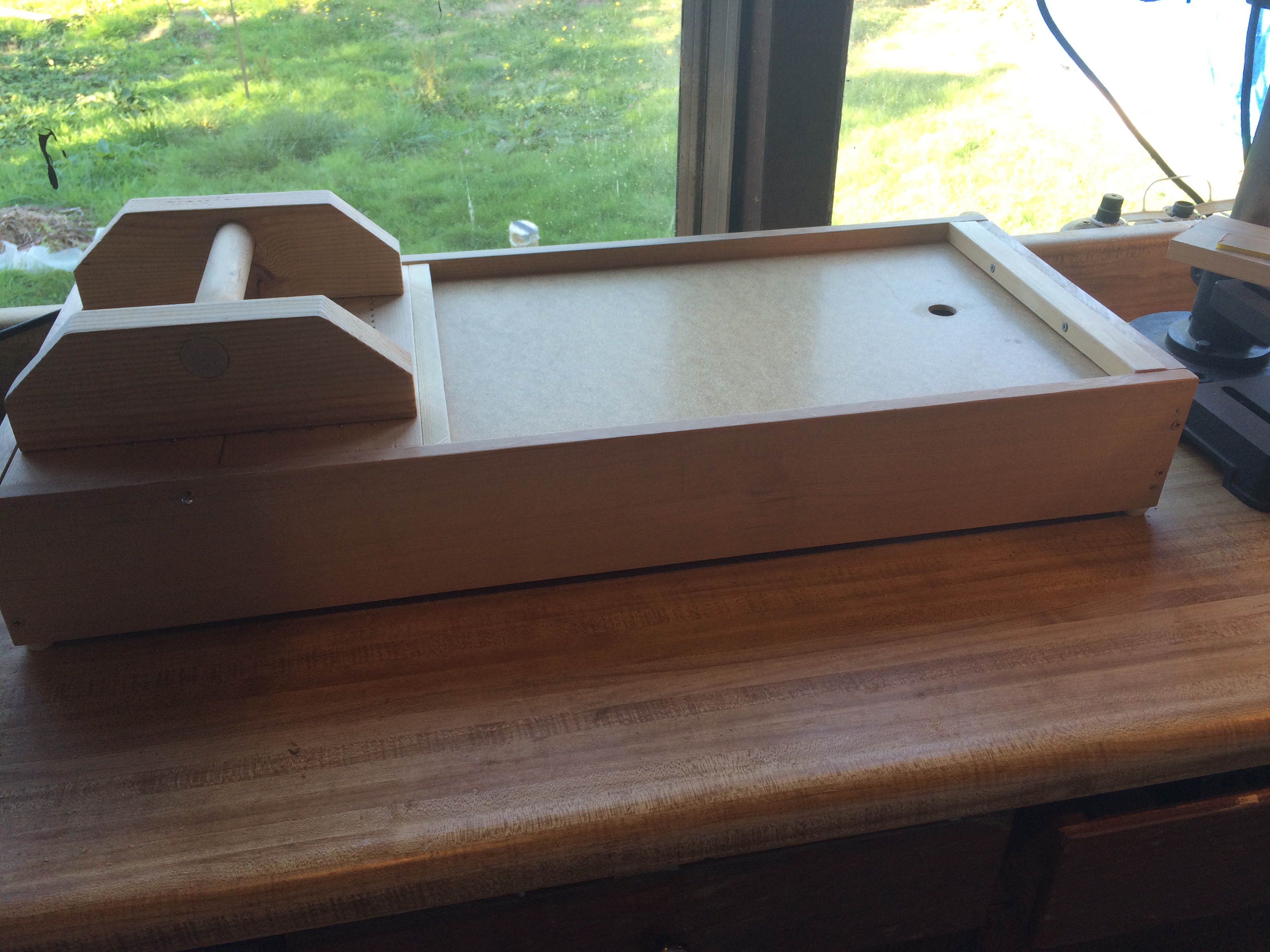
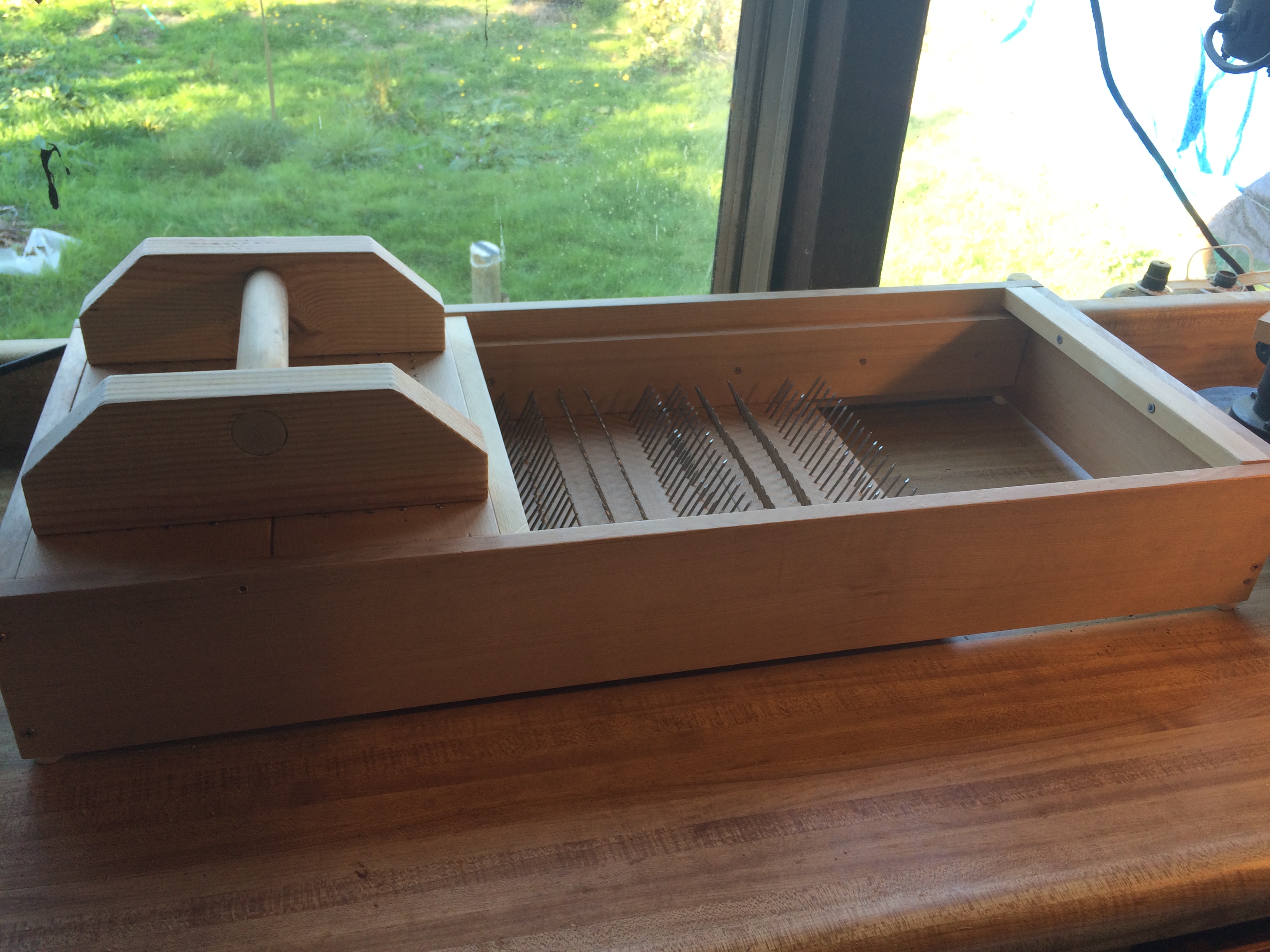
I ended up building a little drying rack with some junk wood and stainless steel screen material and hanging it from the mantle so I could lay out the wool to dry. This was a much better idea.


After the wool was washed and dried, it looked quite a bit cleaner.

After this stuff dried, I tried to spin it again on my new drop spindle and ended up watching many videos on spinning and carding and I just could not get it to work. I learned that I had been carding improperly and was worried that I had ruined the wool. I also knew that the large amount of wool that I had previously washed still needed to be washed again because of how sticky it was but I started avoiding the whole thing because it stressed me out and I was worried about ruining everything (even though the wool was free, I had still put a lot of time and effort into this process).
Washing a large amount of wool inside
I finally built up the courage to wash half of the remaining wool in the shower (in the middle of winter) this morning and I discovered that it definitely needed more washing and the hotter water was definitely getting more dirt off. When I had previously washed this wool outside, I got it to the point where the water was running clear. But this time the water was definitely pretty dirty. I gave it two washes and two rinses.
Here is my wool before washing. I had two tubs and I only washed one tub-worth today. Although I did need the second tub so I had to dump half of the wool on the ground so I could use the tub.

Here is all of the wool and the tub in the shower getting ready for the first wash.
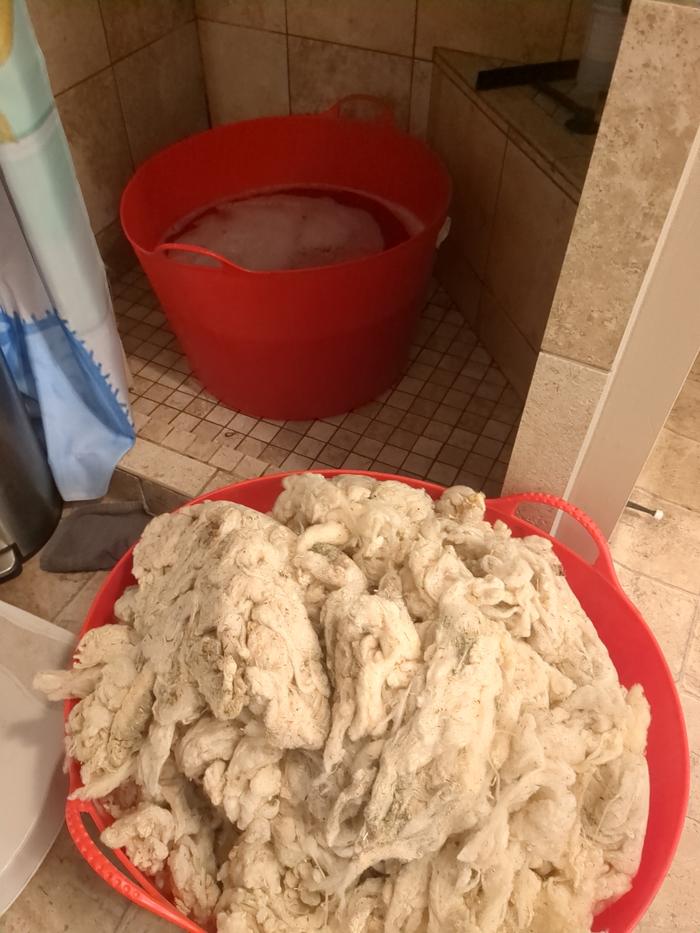
I was able to fit both tubs in the shower so I could transfer the wool between wash and rinse (or second wash).

After half a day of washes and rinses, the wool that I washed (in the tub) still looks exactly the same as the wool that I did not wash today (on the floor). It is also still very sticky. If it weren't for the dirt in the water, I would not be sure that I actually did anything.

This ended up being too much wool to dry effectively in this small space. I've got the stove running and a dehumidifier going but we'll see how long it takes for everything to dry. I also need to watch the dogs carefully to make sure they don't eat any of it.
 Remaining questions and struggles
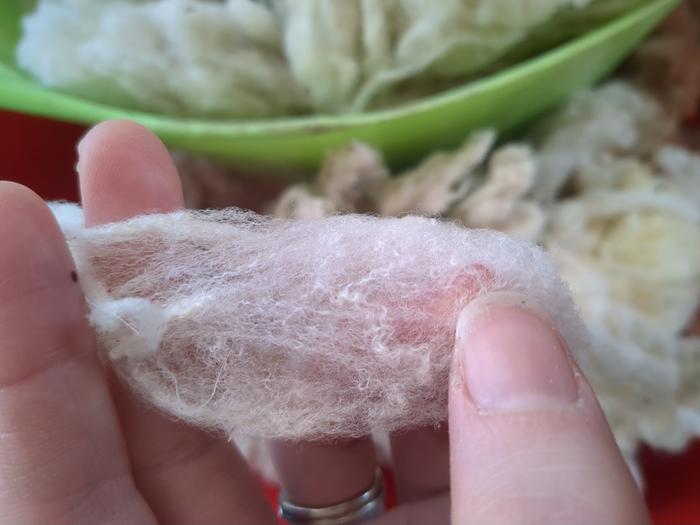
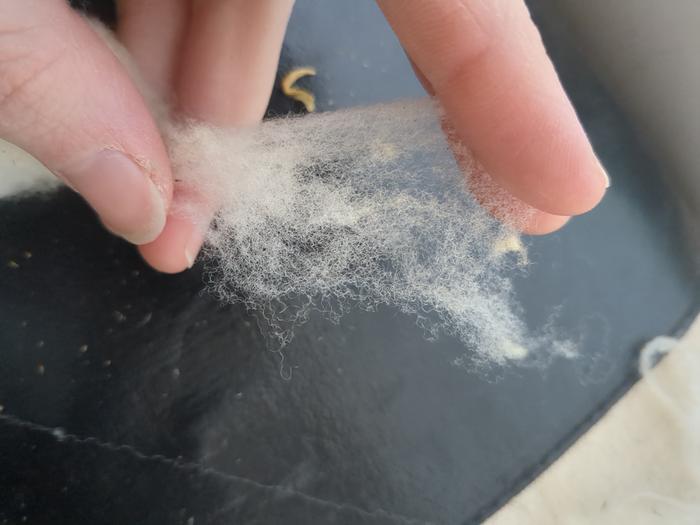
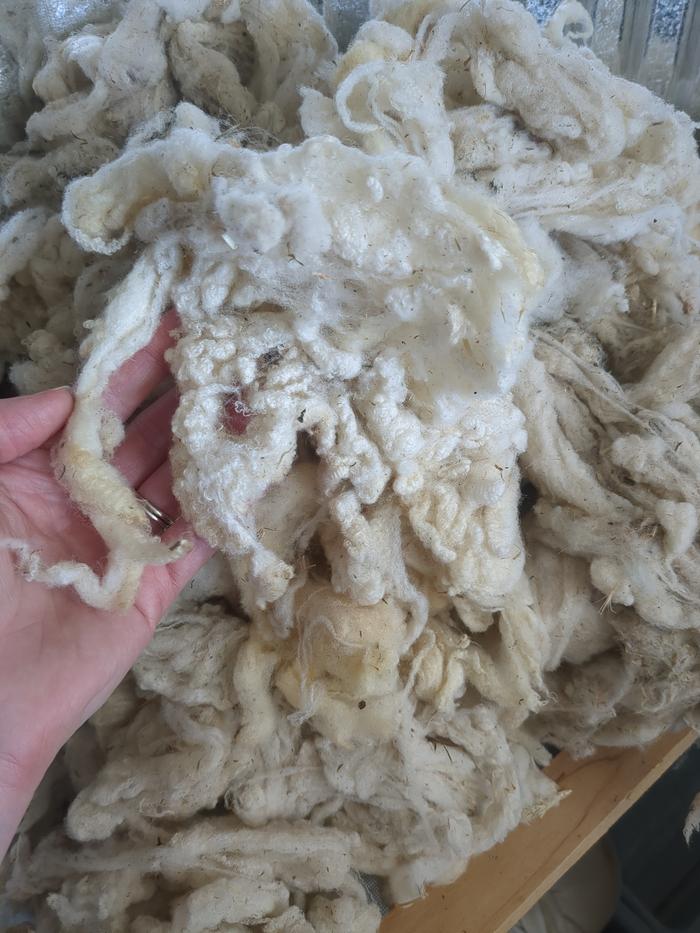
Here is what the wet fiber looks like close up. You can see there is still a ton of organic matter in it. One thing that everyone on the internet kept warning about is making sure your fibers don't felt...but then they don't really explain to you how you know if your fibers are felted. Is there any way someone could look at this and tell me if I accidentally felted my fibers? Would that account for why the organic matter is not coming out? Will the organic matter come out when I card the wool properly? Why is it still so sticky? Can I still spin it if it's sticky?

If you have sat through this entire thread, thank you for reading. And I would greatly appreciate any and all comments, suggestions, observations, tips, etc.! I'm honestly so frustrated at this point and I don't know how much more effort is needed to get this wool to be usable or if I should give up and go get another batch.




 19
19