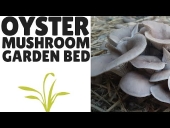

Earlier this summer, I covered the soil in my garden with layers of charcoal about 5 centimeters. I was amazed when wild mushrooms started growing in this place in the fall. If you interesting it i will add video about it.
Very interested in a video Vladien, thank you. A local mushroom grower has asked me to mass produce biochar for him but I haven't been able to devote the time to the volume he needs yet, but I'm very curious about this. Do you know if Stropharia rugosoannulata (wine cap mushroom) is benefited from the addition of charcoal to the hardwood chips it likes to grow in? I may need to experiment.
This is facinating Vladlen, thanks. Can you tell us more about the set up? Was the charcoal innoculated (with compost tea or whatever?). I can see ground cover plants: strawberry, dandelion, possibly chenopodium(?) as well as the radish with lovely roots. Were these sown as seeds, planted as little plugs or made their own way there? Again with the mushrooms: did you innoculate with spawn or have they come of their own accord? The roots and mushrooms definitely seem to be using the charcoal for resources. Lovely!
Nancy Reading wrote:This is facinating Vladlen, thanks. Can you tell us more about the set up? Was the charcoal innoculated (with compost tea or whatever?). I can see ground cover plants: strawberry, dandelion, possibly chenopodium(?) as well as the radish with lovely roots. Were these sown as seeds, planted as little plugs or made their own way there? Again with the mushrooms: did you innoculate with spawn or have they come of their own accord? The roots and mushrooms definitely seem to be using the charcoal for resources. Lovely!
I had an idea whether it is possible to save the permafrost from melting if it is covered with biochar which will serve as a heat insulator. At the beginning of the summer, I decided to conduct a simple experiment. Compare the temperature of bare soil and soil under biochar. Biochar i made from Prúnus spinósa.
Nancy biochar was not charged. Nature knows better than we do how to charge biochar. Just give nature time. A month later, I once urinated on charcoal to simulate the presence of animals. The wild grass seeds grew themselves. I didn't plant radish seeds on purpose most likely they fell out of my pocket. Spores of fungi independently arrived from the forest.
What if you cover the pasture with a layer of 5-10 centimeters. Give the grass time to grow, then release the animals there, which will give urine and manure. Charcoal will collect this. This should speed up the growth of the grass. You can use chickens and a small plot of land. People let's do experiments. I don't want people to forget about biochar.
Well, I do pee on my biochar when it is in the garden. That is what naturally occurs. Large mammals are part of nature. Since we have wiped out all of the other large mammals in most places, we have to fill the role. The point is that nature may eventually inoculate the char with nutrition, but maybe you don't want to wait 2 years for it to help. Mine was inoculated and helped the very next year. Nature doesn't care. She thinks in terms of thousands of years. We will all be dead then, or course.
This Siberian cedar was made famous in a series of books about Anastasia, a nature loving mystic who lives in Siberia, who has explained some interesting ideas about plants, nature, and humans. The series is called "The Ringing Cedars" series. I am not financially involved. I just like the books.
Thanks Vladlen, the second video gives the context well.
The temperature difference is interesting, and perhaps encouraging for you. Presumably it would be even greater if the biochar was itself then covered, since the black must absorb heat better than pale colours.
Wine caps from my experience are pretty darn easy to cultivate without biochar, in a variety of soil conditions. On our property we have had many types of wood chips, alder, maple, and mainly conifer, seasoning for at least ten years, and never seen a single Morel (over quite an area). Last year I mixed biochar under woodchips amongst compost in just one of long beds, and we've gotten four large morels so far this year, over not too large an area. Again, first year adding biochar, possibly more coming, just found a new one today, large too. Definitely seems like has potential for commercial exploration, or at least good way of increasing chances and benefitting plants at same time.
While cultivating mushrooms, it's semi-common to treat the substrate with lime to increase the pH, as Trichoderma (a common fungus that eats other fungi like mushrooms) can't handle an alkaline pH, while mushroom mycellium is largely unaffected by high pH. Wonder if that's what's going on here, the extra ash from the biochar raising the pH into a favorable pH for the mushroom growth.
Nick Williams wrote:While cultivating mushrooms, it's semi-common to treat the substrate with lime to increase the pH, as Trichoderma (a common fungus that eats other fungi like mushrooms) can't handle an alkaline pH, while mushroom mycellium is largely unaffected by high pH. Wonder if that's what's going on here, the extra ash from the biochar raising the pH into a favorable pH for the mushroom growth.
Okay, this is new to me. Except I had a neighbour who bought a fancy mushroom kit, and it said "need to add biochar." I learned of this after the fact, so too late to hook him up. But the dots connect. Is this really a thing -- can anybody chime in on this?
Edit: Nick, thanks for raising this. Very interesting! Where did you learn about this?
Nick Williams wrote:While cultivating mushrooms, it's semi-common to treat the substrate with lime to increase the pH, as Trichoderma (a common fungus that eats other fungi like mushrooms) can't handle an alkaline pH, while mushroom mycellium is largely unaffected by high pH. Wonder if that's what's going on here, the extra ash from the biochar raising the pH into a favorable pH for the mushroom growth.
Okay, this is new to me. Except I had a neighbour who bought a fancy mushroom kit, and it said "need to add biochar." I learned of this after the fact, so too late to hook him up. But the dots connect. Is this really a thing -- can anybody chime in on this?
Edit: Nick, thanks for raising this. Very interesting! Where did you learn about this?
Couldn't really tell you where I came across it exactly. Was getting into oyster mushroom cultivation a few years back, and lime pasteurization is a very common method for preparing straw for oysters. Reckon that was probably where I started unraveling that particular thread.
Oysters, winecaps and lions mane (the three mushrooms I was growing) can all take a fairly high pH with as near as I could tell from my experiments, no negative side effects, and dramatically reduced contamination. Wasn't doing a full lime pasteurization myself, was growing on rehydrated hardwood pellets. Adding a bit of lime to the water used for rehydration stopped contamination totally (not that I was doing a full experimental setup or anything, n= around 10 samples maybe?).
And it makes sense too, Trichoderma is the most common contaminant when you're growing mushrooms, and some quick googling says it thrives in a pH of 4.6-6.8, far below the 9, 10 range hydrated lime will get sawdust to.
This is great information. I've had tons of trichoderma contamination here and we tend naturally toward quite acidic soils. Lime will also add calcium, obviously, which may also help.
John Suavecito wrote:Vladlen,
Since you're in Siberia, do you know what Anastasia would say about this? PLant them near the Ringing Cedars?
John S
PDX OR
I have heard about this book, but have not read it. I prefer scientific literature, not fantasy. I grow some Siberian cedars and will be experimenting with biochar + siberian cedar. I also try to introduce pinus coreaane to Western Siberia. I also try to introduce carya ovata.
Greg Martin wrote:Very interested in a video Vladien, thank you. A local mushroom grower has asked me to mass produce biochar for him but I haven't been able to devote the time to the volume he needs yet, but I'm very curious about this. Do you know if Stropharia rugosoannulata (wine cap mushroom) is benefited from the addition of charcoal to the hardwood chips it likes to grow in? I may need to experiment.
I have some Stropharia rugosoannulata (wine cap mushroom) mycelium growing in wood chips in the box, so I am also wondering, if it would like biochar? Have you found out?
Joy-
I haven't seen the actual experiment, but there is very good reason to think that biochar in soil could be a great addition to the substrate, especially for mushrooms like wine cap/garden giant/King stropharia. Electricity can flow through biochar, and it makes a great pathway for mycelium. I would love to see the results if you post them.