• Post Reply Bookmark Topic Watch Topic
  • New Topic
permaculture forums growies critters building homesteading energy monies kitchen purity ungarbage community wilderness fiber arts art permaculture artisans regional education skip experiences global resources cider press projects digital market permies.com pie forums private forums all forums
this forum made possible by our volunteer staff, including ...
master stewards:
  • Carla Burke
  • Nancy Reading
  • r ransom
  • John F Dean
  • paul wheaton
  • Jay Angler
stewards:
  • Timothy Norton
  • Pearl Sutton
  • Tereza Okava
master gardeners:
  • Christopher Weeks
  • M Ljin
gardeners:
  • Jeremy VanGelder
  • Matt McSpadden
  • thomas rubino

Did your coop design change after you got chickens?

 
Posts: 3
  • Likes 10
  • Mark post as helpful
  • send pies
    Number of slices to send:
    Optional 'thank-you' note:
  • Quote
  • Report post to moderator
hey guys,I don't have chickens yet, and I haven't built a coop. I'm still in the planning phase and wondering if I might be overthinking this.

Most advice says to build the coop first, then bring birds home. But I've also heard that once you actually raise chickens, your understanding of space, airflow, cleaning, and predator protection changes a lot.

I've looked at ready made coops from brands like Omlet,  SnapLock Formex, OverEZ, and even some budget options on Garvee just to study layout ideas. They all look thoughtfully designed, but I'm curious how they perform after months of weather, cleaning, and daily chores.

So I'm curious:

Is it better to design carefully before getting birds, or start small and adapt after observing them?Did your first setup end up being very different from what you thought you needed?Any advice would be appreciated!
 
pollinator
Posts: 664
Location: Zone 8A
145
homeschooling kids rabbit tiny house books chicken composting toilet medical herbs composting homestead
  • Likes 11
  • Mark post as helpful
  • send pies
    Number of slices to send:
    Optional 'thank-you' note:
  • Quote
  • Report post to moderator
I'd recommend getting some local advice.

We came up with a plan and then drove our immediate area and talked to everyone we saw or had seen in the past that kept chickens. I received one invaluable piece of feedback. If we had not taken that advice, we would have made a moderate change to the design that we didn't need to, that was climate specific, after it was built.  

We have not needed to make any changes since we sought local advice and implemented what we received. I have found that folks are eager to share with their neighbors/community.
 
master steward
Posts: 14984
Location: Pacific Wet Coast
9317
duck books chicken cooking food preservation ungarbage
  • Likes 11
  • Mark post as helpful
  • send pies
    Number of slices to send:
    Optional 'thank-you' note:
  • Quote
  • Report post to moderator
You've come to the right place to find all sorts of suggestions!

First, I will agree with Jackson - find out what works well in your ecosystem. Here on permies, giving us your grow zone, your typical highs and lows, and general storm patterns, will help us give ideas that are applicable. That applies to breed of chicken too. There are some breeds I'd never raise on my Wet Coast Farm, that I *know* are recommended to people who face very cold temperatures (which we don't get.)

Second, I can't recommend enough that nest boxes and perches be removable for cleaning. It's a lot easier to give them a really good scrub if you can tip them this way and that, and then dry them in the sun to disinfect them. Definitely think cleaning while designing.

Third, you may have never seen _____ (insert predator name) on your farm before, but get chickens and they'll show up to check out how easy it is to break in. I'd never seen an owl, but when a friend of a friend gave us some starter chickens, the owl showed up the very next day. So please research local critters that are attracted to chickens, and build to protect your birds.

Forth, rats and mice will absolutely show up and get into any feed that's not protected. I hang my chicken feeders above my perches to make it harder - simple, cheap and amazingly effective. Extra feed is in a closed bucket inside a garbage can.

Fifth, quality housing is expensive. We no longer by "chicken wire". 1/2" Hardware cloth (the welded square stuff - different names in different ecosystems) will keep many more wild creatures out, but it's much more expensive. It's cheaper by the 50 Ft roll, and it takes a far amount if you find you need multiple secure runs. I am a great fan of upcycling, but only if the results will be safe.

Sixth, have a back-up plan for emergencies. People give us dog crates they no longer need, and they can be used to quarantine a sick or new bird for short periods, but not for very long. I try to always have at least a 4'x4' secure cube in case an injured bird needs recovery time.

Lastly, enjoy the journey. "Chicken TV" is a thing... For many permies, Chickens are "pets with benefits". They get you fresh air, exercise, and entertainment. They eat your weeds and bugs. And they give you awesome eggs and useful manure. Often they don't save you money, because Industrial eggs from chickens in huge barns are too cheap, but on a nutritional level, bug and weed eating chickens lay healthier eggs.
 
Steward of piddlers
Posts: 7440
Location: Upstate New York, Zone 5b, 43 inch Avg. Rainfall
4079
monies home care dog fungi trees chicken food preservation cooking building composting homestead
  • Likes 9
  • Mark post as helpful
  • send pies
    Number of slices to send:
    Optional 'thank-you' note:
  • Quote
  • Report post to moderator
I went down the route of building my chicken coop and run before I got my chickens. I did not want to build two coops so I took quite a while to design the coop before building it. Even with all of my research, there are a couple of things that I would tweak BUT the coop functions well as is.

I am not a builder and my chicken coop was my first BIG construction project. I did not buy plans but I did end up watching a bunch of videos and looked at free design plans to get a feel on how I wanted my coop to work.

My recommendation is to not build to minimal standards but rather plan to build a place for the number you are thinking of. I don't know if you have heard of chicken math before but by golly is it true!

The things that I would recommend not to lose sight of are the location and amount of ventilation you will have in your coop, what kind of bedding system you are going to use (Deep bedding will need some depth built in but poop boards would avoid the need) and having sufficient perch space.

I'm sure if you posted your ideas and asked for feedback, a bunch of folks here would assist you in your planning so you can just build once.
 
steward
Posts: 18547
Location: USDA Zone 8a
4697
dog hunting food preservation cooking bee greening the desert
  • Likes 6
  • Mark post as helpful
  • send pies
    Number of slices to send:
    Optional 'thank-you' note:
  • Quote
  • Report post to moderator
In my lifetime we have had only two coops at two different locations.

The first one reminded me of a outhouse in height and width.

Slanted raised roof to allow ventilation.  Perch at recommended height, nest boxes below.  At least that is what I remember.

Second one is where our daughter now lives.  We first had a carport installed for lawn equipment, etc. We built the coop inside the carport. Square box for the chickens with perches and nest boxes.

I know for sure that our daughter has rebuilt that coop. Her design included an automatic door and automatic watering system because she is gone a lot.

Since you are doing research you have lot of information at hand that we never had.

As Jay and Jackson suggest there are a lot of factors to consider like your areas temperatures, free range, etc.

Best wishes for your success.
 
Posts: 7
Location: Maryland Piedmont, Zone 7
2
7
  • Likes 10
  • Mark post as helpful
  • send pies
    Number of slices to send:
    Optional 'thank-you' note:
  • Quote
  • Report post to moderator
von Moltke the Elder said: "No plan survives first contact with the enemy."

If you're building your own coop, you'll need to customize it. It won't be a once and done coop, more like a slow-running project.
I've built two coops for my chickens. The first was very basic and I knew it had flaws. As it was breaking apart about 18 months in, I built a second coop and improved the run it was attached to. Since then, we've steadily fixed and improved it.

Side note about predators, we didn't think much of a squirrel who found a way into the run. Until a racoon got through the same gap.
 
Zalman Kuperman
Posts: 7
Location: Maryland Piedmont, Zone 7
2
7
  • Likes 6
  • Mark post as helpful
  • send pies
    Number of slices to send:
    Optional 'thank-you' note:
  • Quote
  • Report post to moderator
Also, you might want to check out Carolina Coops on Youtube. He's got videos about why he builds his coops a certain way. I found it very helpful when designing my coop and run.
 
Posts: 798
184
  • Likes 9
  • Mark post as helpful
  • send pies
    Number of slices to send:
    Optional 'thank-you' note:
  • Quote
  • Report post to moderator
Yes!

The first was really nice, looked good, a split two room place for both ducks and chickens with a center area so that there was no real way for the chickens to escape...

And it was tough to shovel out so we seldom did it.

Our next coop... it was bigger, had more light and was more simple in construction. It was WAYY easier to shovel out. It also had lights, outlets and an enclosed outside run.

The three absolutes I would never be without:

Concrete floor: It is hard to shovel a dirt floor coop
Full door: It really sucks to have to duck down to get inside the coop and for eggs etc. We got inside our a lot more than we thought we ever would.
Lights: It gets dark quick and long in the winter. Having a light you can just snap on is more than a luxury
 
Posts: 401
154
4
  • Likes 7
  • Mark post as helpful
  • send pies
    Number of slices to send:
    Optional 'thank-you' note:
  • Quote
  • Report post to moderator
Make sure the coop dimensions allow you to reach all parts of the coop. We have a raised rectangular coop with doors at only one end. Naturally, several chickens have decided to shun the nesting boxes and lay on the far corner, where I have to fish them out with a fruit picker. It was a bought set of plans too, apparently not designed by someone who actually keeps chickens…
 
pollinator
Posts: 1604
Location: Zone 6b
225
goat forest garden foraging chicken writing wood heat
  • Likes 7
  • Mark post as helpful
  • send pies
    Number of slices to send:
    Optional 'thank-you' note:
  • Quote
  • Report post to moderator
I've had chickens for most of the last fifty years, and have had quite a few different coops - and several kinds of chicken tractors. My recommendation is a chicken tractor. A small one if you only plan to have a few birds, and possibly one of the bigger ones made like an A-frame or a hoop-coop if you plan to have a larger flock.

There is a caveat: if your land is very uneven or steep, tractors probably won't work. Birds can escape under the sides of the tractor with even a small unevenness that creates a dip (and predators can get in the same way, although leaving a 'skirt' of wire laying on the ground around the perimeter of the tractor will help with both escapes and predators).

Tractors have both pros and cons. One of the biggest cons is that they need to be moved regularly, with daily moves being ideal. They need to be built to be easy to move, or soon they won't be getting moved. If you will be moving yours by hand, it needs to be light enough for the smallest person moving them to handle easily - my first attempts functioned well, but were hard for me to move without help. My best small tractor for moving by hand turned out to be built out of 'rabbit wire,' the welded wire used for constructing rabbit cages. My tractors had no bottom, but the wire is stiff enough to hold it's shape without the bottom and even without any other frame, as long as you don't make the cages too large. I put the doors on the top; if you build one of these, make sure you can reach clear to each end from your door, so you can reach all of the chickens in residence. And I added tow ropes to each tractor - much easier on my back than trying to move them while bent over. If you do want a frame, use metal electrical conduit - it will last much longer, and be lighter, than wood. Plastic pipe, if it's UV resistant, will also work, but the wire will outlast it.

I had three of these tractors, 3' wide and 6' long, and kept three or four hens in each (or up to twelve juveniles), which was plenty for us. To protect the hens from heat and rain, there were scraps of loose plywood laid on top of each tractor; removing this made them very light to move. It may sound inconvenient to have to remove the 'roof' each time you move the tractor, but I found out the hard way that an attached roof turned such a light-weight tractor into a sailboat in high winds - several tractors flipped over taught that lesson. And the plywood scraps were quick and easy to remove and replace.

I had intended to add a bucket nest box to the end of each of my tractors; we moved here before that got done, and since we learned how sensitive my daughter is to eggs, we no longer have chickens. But a light-weight nest box, accessible from outside the tractor, would make it easier to collect the eggs, and would keep the eggs cleaner (and less likely to get trampled and broken, which leads to egg-eating).

My tractors never had roosts in them; they were only 18"-24" high. The chickens didn't seem to suffer for that. Ideally, your waterer should be attached to the outside of the tractor, like the waterers on a rabbit cage. There are similar waterers that have cups for chickens to drink from. And for feeding, while I had feeders inside of each cage - which had to be removed and replaced each time I moved the tractors - now, I think I would just move them, dump their day's feed on the ground, and replace the plywood top to protect the feed from rain. The chickens are scratching around in the ground anyway, so there's no harm to the birds, and they aren't likely to lose much of their feed, either. If, when you go to move the tractor the next day, there's still visible feed left, either you've given them too much, or they are eating well from foraging inside the tractor (though it's too small a space for them to get much of their diet from it), or it could be an indication of a health problem, in which case you are ahead in recognizing it early.

I have had a stray dog tear into a chicken tractor made of chicken wire, but never one of these made from rabbit wire - it's much sturdier stuff. The only predator loss of birds inside one of these tractors I ever had was when I had positioned them too close to a hedge, and something, probably racoons, managed to reach through and kill several young birds. You do want to keep them away from any brush that gives good cover to predators. My three rabbit wire tractors lasted for close to fifteen years before we moved here, and should have been good for quite a few years more. The only real damage they took was one winter when a loose goat decided to stand on them (they were unoccupied at the time). And even that was fairly easily bent back into shape.

Probably the biggest pro was that my birds had clean ground every day, and I had no chicken coop to clean out, at least during the warmer months - where we were living at the time, we got quite a bit of snow in the winter, so the hens did spend the snowy months in a coop. Here, in southern KY, I would just keep them in the tractor year-round. It only took maybe five minutes per tractor to move them each day and get everything set back up (you do have to watch out for the birds as you move the tractor - they can get their feet caught if you go too fast, and may escape if you lift it too much).

One useful thing you can do with my light-weight rabbit wire tractors is use them to keep the paths in your garden clean. You can go down to as narrow as 30" wide tractors, if you are going to do this, so the tractors will fit between your garden beds.

If you decide to go with tractors for a larger flock, and have a tractor or an ATV to use to move them, that would work just as well. There are plans online for the larger ones.
 
Jay Angler
master steward
Posts: 14984
Location: Pacific Wet Coast
9317
duck books chicken cooking food preservation ungarbage
  • Likes 7
  • Mark post as helpful
  • send pies
    Number of slices to send:
    Optional 'thank-you' note:
  • Quote
  • Report post to moderator

Kathleen Sanderson wrote:My recommendation is a chicken tractor. ...possibly one of the bigger ones made like an A-frame or a hoop-coop if you plan to have a larger flock.


I use tractors all the time. The hoop shaped, or knee-wall with an A roof seem to use space more efficiently.

... if your land is very uneven or steep, tractors probably won't work. Birds can escape under the sides of the tractor with even a small unevenness that creates a dip


This is less of an issue if you use a wide support to hold the wire at the bottom. Our big 10'x12' ones have electric fencing on the outside due to extreme predator pressure in our area. Luckily we haven't had a bear or cougar test it...
We also have some scrap plastic pipe we rescued and can put it beside the bottom of a shelter to block holes. I often use my small shelters for Moms with babies, so blocking holes is crucial.

One of the biggest cons is that they need to be moved regularly, with daily moves being ideal. They need to be built to be easy to move, or soon they won't be getting moved. If you will be moving yours by hand, it needs to be light enough for the smallest person moving them to handle easily


Yes!!! I can't reliably move our large ones despite Hubby trying very hard to keep them as light at possible. I have met way too many "portable" shelters that turned stationary unless owned by very large men (rather than this 115 lb senior.)

I put the doors on the top; if you build one of these, make sure you can reach clear to each end from your door, so you can reach all of the chickens in residence.


My shelters are quite different than yours. However, I had one that had design difficulties which I was trying to fix. It's a 4'x8' pipe structure with an 18" knee wall at the front. I only had material for a single door at the front. Yesterday I had to climb in to treat the girls for leg mites. Not fun! (Very treatable problem and they will be better soon.)

... but I found out the hard way that an attached roof turned such a light-weight tractor into a sailboat in high winds - several tractors flipped over taught that lesson.


We have had the wind blow over our large 10x12 shelters, so yes, this is a problem. We use giant nails 12" long to stake the big shelters down. My little ones are normally tucked away in the winter, but I have a bunch of dog X-pen sections and I will wrap a small shelter and stick water buckets around it to keep it from blowing if I've had babies hatch late in the season.

I had intended to add a bucket nest box... But a light-weight nest box, accessible from outside the tractor, would make it easier to collect the eggs, and would keep the eggs cleaner...


I have had no luck with the bucket nest box concept. I found the girls didn't like the curve and didn't like the slippery plastic. I gave a set to a friend, and her birds rejected them too.
I have learned to make very light weight nest boxes out of wood, and the girls love them.

Chicken tractors are more often used for meat birds than layers for reasons - like the age of the birds, the need for nest boxes etc. Layers are more commonly free ranged from a "portable coop" on sturdy wheels and pulled by something much stronger than me. But we have found ways to do this. It took a lot of experimentation and determination. As Kathleen says, the birds love the concept - fresh grass and bugs every day!
 
Posts: 132
Location: Australia, Tasmania, Coastal, sandy, windy and temperate.
27
goat dog fish trees books chicken food preservation cooking bee seed wood heat
  • Likes 8
  • Mark post as helpful
  • send pies
    Number of slices to send:
    Optional 'thank-you' note:
  • Quote
  • Report post to moderator
I live in the land where everything wants to eat chickens! ( Australia)We created our own coop with a solid concrete floor and have extended it and what I’ve learnt is that we should’ve made it higher so you can stand up without banging your head. I’ve also found that even if you provide two roosting spots, the chickens will typically only choose one. I’ve also found that nesting boxes will end up with at least four chickens in it even though they’ve got plenty of spaces in the others I have 20 chickens and four nesting boxes. What has been a godsend is an automatic water feeder. I actually use a trough feeder. They seem to prefer it and I used 2 water butts to supply the water to the chickens. I occasionally put vinegar into the actual trough just to keep it pH balanced… Also I put a large piece of copper piping into the water butts to stop algae. It actually works. I also have an automatic door so I don’t have to worry about letting them in and out and I have put corrugated on around the base of the coop to stop wind. The rest is all netted with very fine netting and very strong.  I have noticed that it is useful to have hanging points in in the coup if I have to to keep the chickens in there for any time that way I can hang veggie from the ceiling which allows them to pack upwards. Giving them entertainment.. I’ve also found that mirrors don’t work and nor do musical instruments. Well, I’ve got silly one day.. or I’ve got dumb chickens. … oh my feeding system is actually an old children’s collapsible rubber bath. I’ve tried every food feeding system going and oddly enough they love this one. It lasts about two weeks for food and really easy system..
Hope this helps.
 
Kathleen Sanderson
pollinator
Posts: 1604
Location: Zone 6b
225
goat forest garden foraging chicken writing wood heat
  • Likes 7
  • Mark post as helpful
  • send pies
    Number of slices to send:
    Optional 'thank-you' note:
  • Quote
  • Report post to moderator
That's good to know about the bucket nest boxes. If I ever have chickens again, I will remember that. (While I hope that my daughter will outlive me, in reality, that's unlikely, due to her many health problems. If she predeceases me, I probably will get a few chickens, just a handful. Eggs are good food. And I like chickens.)

 
Posts: 376
Location: rural West Virginia
85
  • Likes 7
  • Mark post as helpful
  • send pies
    Number of slices to send:
    Optional 'thank-you' note:
  • Quote
  • Report post to moderator
We had free range chickens for decades, but in recent years he predator problem got to be too much so we built an enclosure. A fence almost five feet high has worked very well--in part because the orchard is within their run so there are lots of hiding places from overhead predators. We close them in the coop at night. The thing we changed is that we built a box within the coop we  call Chickland, for a hen sitting on eggs so the other hens can't mix their younger eggs in, and to keep the hen and eggs safer; the hatched chicks stay there for about ten days. It works, but if we had planned it from the start it would be easier to clean and less dark. A plan for setting hens and young chicks is a good idea unless you're going to use an incubator. For us, we have off-grid solar and avoid constant electricity draws; but also, if you use an incubator you have to continue to warm and tend the checks for weeks after they hatch. If you let the hens do it, they know what to do and take care of it all.
 
Posts: 9
Location: Pacific Northwest USA
6
  • Likes 7
  • Mark post as helpful
  • send pies
    Number of slices to send:
    Optional 'thank-you' note:
  • Quote
  • Report post to moderator
I had a number of different coops over the years of living with chickens.

The first was totally unplanned. We had just moved on to a new place. One of my (then) husband's sheeps shearing customers brought us a flock of 9 chickens which had survived a fox attack. It took a couple of days to build the coop from recycled materials. In the meanwhile, the chickens all roosted in the trees at night. Every morning was an easter egg hunt...even after I built nesting boxes. As building infrastructure progressed, so did the chicken coops.

The best coop I had was a gutted out caravan (camping trailer) that was a "gift" from one of the was-band's sheep shearing customers. The chickens seemed to love it. And it could be moved from field to field. The cupboards, mounted up high, became perches and nesting boxes. The double kitchen sinks (lined with junk wool) became a favorite nesting box. The chickens took readily to these. Windows could be opened or closed depending on the time of year. During hawk attacks, the chickens would run to hide under the caravan. I covered the floor with thick layers of straw and forked out daily poop every morning when I fed and watered the birds. One watering can was assigned to the caravan. Another water can set outside in the "yard". One rested under the caravan. The caravan had electrical hook-up equipment, which permitted a light for nighttime. At the time, I had around 90 chickens. The heat generated by the chickens at night kept the place warm. With the door closed at night, predators were unable to find a way in.
 
Posts: 15
Location: Madison, WI
1
  • Likes 7
  • Mark post as helpful
  • send pies
    Number of slices to send:
    Optional 'thank-you' note:
  • Quote
  • Report post to moderator
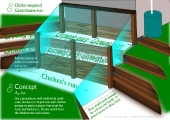
My first coop was built out of straw bales and located inside my garage. Later I built a coop inside the hoop house (not sure I would do that again - makes the hoop house super dusty, but also has advantages) I built it primarily out of found materials: an old kids playset listed on Freecycle, used tidy cat buckets for nest boxes, curb shopped windows and wooden crates. I had to by some roofing and some material for the poop hammock. The hammock is over the food and entry to the nest boxes, and under the roosts; it is slanted so the poop slides down to the bottom. Over the linoleum flooring  (from the "restore") are rabbit cage trays that can be easily pulled out and dumped when it is time to clean the coop. the Roosts are a unit, so they can easily be pulled out during cleaning also. The coop opens to a an enclosed run under the greenhouse tables. Under the coop there is an exit to an outdoor run built from welded wire zip tied to arched 20-foot pieces of 1/2" sticks of rebar place 4'apart. The end walls are each assembled from three prefab shelf system end walls form the home depot type store, connected to each other with a 2x4 on the top and bottom . . .

Screenshot-2026-03-04-at-5.30.07-PM.png
[Thumbnail for Screenshot-2026-03-04-at-5.30.07-PM.png]
20210228_154918.jpg
[Thumbnail for 20210228_154918.jpg]
 
pollinator
Posts: 1611
Location: zone 4b, sandy, Continental D
434
  • Likes 6
  • Mark post as helpful
  • send pies
    Number of slices to send:
    Optional 'thank-you' note:
  • Quote
  • Report post to moderator
Well, Rowan, first, welcome to Permies. Yep, it's smart to ask others ahead of you on that path what they would have done different.
Not knowing exactly what your goals are or how cold your winters get, I can only give generalities:
1- don't put your coop too far away from the garden or from the house: I have an extension cord so I can put a ceramic heater on the wall. If it was much further, the extension cord would be a real problem to keep them warm or prevent their water from freezing.
2- close to the garden, so it's not too much of a chore to bring them grass, crops grubs, whatever.
3- make it as tight as you can against rodents: technically, rodents could still walk in through the trap door, but once  they are in there, there is no clutter, nowhere  to hide so roosters and hens can kill them.
4- If it gets quite cold where you live, insulate the building: Insulation is cheap. Cold chickens (or hot chickens as they are even more sensitive to the heat) eat more.
5- I used to have my perches lean against the wall. No more: You always have some chickens that get pooped on. I built a set of 3 big wide shelves in the center  of the room, covered with an easy cleaning PVC sheet (Like the make shower walls with) about 6" above those, is where I have my perches. They are 2X4 and slanted so they can grip them better. By making 3 shelves in the middle of the coop, I can walk all around for the cleanup, have more perches and  I have seriously multiplied their roosting space. I clean the 3 shelves scrupulously once a week and the pure manure can be placed anywhere I want for aging, laying on mulch etc.
5- I have a "winter run". It's a hoop house attached to the main building with just a trap door allowing them to come and go. They are warm and comfy at night, but during rainy/ snowy days, it's handy to have an area just a bit bigger than the coop, with no floor (It's very sandy here) where they can stretch, dustbathe while I can change their litter. I offer some food in there too as well as grit and oyster shells. Gutters work well so they can all eat at the same time: I had round feeders and once I increased the number of birds, it just wasn't adequate. The winter run is opened every morning and closed every night so they can forage outside, weather permitting, under all the fruit trees. I recover the water from the roof and have a number of bowls that fill up in the rain or that I fill up from a barrel attached to the coop.
I have 40 birds in there, and I wish I had a larger coop yet so I could place their feed inside. There is an attic, but it's dusty and I don't care to crawl up there: It's more of a crawl space. (at 77, I'm not going up there!) I only put my 2 incubators there and some transport cages and extra stuff that I use very rarely.
I had built a shelter  for my bees about 20 ft away, and now, that's where I put my chicken stuff, but it would have been better inside.
Do you plan on egg layers or meat chickens?
If you choose Cornish cross, which grow very fast, they should be butchered around 8 weeks, so they will not need laying boxes.  If you keep other chickens long enough that they will lay, you may want to choose your warmest wall to hang the laying boxes, with a narrow (PVC) perch in front: They can jump up to see if the nest is occupied rather than land on the edge of the box and scare a laying hen, but I don't want it to be too comfortable that they might sleep there and poop. There's about 3 ft between the shelves/perches and the laying boxes, so they often get up on the shelves and from there, get in the laying boxes. (serendipity: I had not planned it but it works slick this way.)
I hope this will get you to think a little deeper on specific details of your operation. Keep asking: that's the only way you will know before you make a costly mistake. Let us know how you are coming along with that project. This is just to get you thinking. You will get other ideas as you start.
Oh, When I purchase some chicks, I usually wait until late in the season: Tractor supply will have a sale and let them go after keeping them  (and feeding them) for almost a month. I prefer having those young ones in the coop for the winter: I can keep them warm and toasty and away from any predator in stead of getting them at the same time as everyone and taking them outside when they are still tiny.
Good luck, Rowan...
 
Zalman Kuperman
Posts: 7
Location: Maryland Piedmont, Zone 7
2
7
  • Likes 7
  • Mark post as helpful
  • send pies
    Number of slices to send:
    Optional 'thank-you' note:
  • Quote
  • Report post to moderator

Lina Joana wrote:Make sure the coop dimensions allow you to reach all parts of the coop. We have a raised rectangular coop with doors at only one end. Naturally, several chickens have decided to shun the nesting boxes and lay on the far corner, where I have to fish them out with a fruit picker. It was a bought set of plans too, apparently not designed by someone who actually keeps chickens…


Lina, I had the exact same problem!
We have a net that we used to scoop them out of the far corner of the coop.
It was a coop I designed, so I have only myself to blame. At least it was only a 4' reach to the back of the coop.
My sister solved the problem when she made some small changes to the nesting boxes and all of a sudden the chickens love them.
 
pollinator
Posts: 952
Location: 10 miles NW of Helena Montana
552
hugelkultur chicken seed homestead
  • Likes 6
  • Mark post as helpful
  • send pies
    Number of slices to send:
    Optional 'thank-you' note:
  • Quote
  • Report post to moderator
When I started my current homestead I purchased several 10' x 10' portable car shelters from Harbor Freight to store stuff while building.
My neighbor was moving so gave me a dozen chickens.  I got a few bales of straw and lined the inside  4 rows up.  Grabbed a branch for perch and let them out each morning.
Worked great as I was building.
Then new neighbor asked if I wanted an old coop.  Sure, thinking this would be better.  Not really as the previous owner had built it with 3 add-ons and it was horrible to clean.  I added on to it with one of my HF shelters, but sided it with wood instead of the plastic cover.  Finally had enough of fighting to clean it and last summer I removed the coop I got from him and added another HF shelter frame to the other one.   Now have a 20 x 10 coop with good roosting bars, windows, easy cleaning, (full size man door), bulk feeder, large water barrel, storage area and 4 really nice nesting boxes for my 20 birds.
My girls are not impressed with my nesting boxes tho.  Most of the time they lay in a corner of the coop or outside in my lean-to where I store my straw.  lol.
That all happened over 6 years.
Build big.  You can always block off part if it is to much, but the chicken math does come into play at some point.
 
Cécile Stelzer Johnson
pollinator
Posts: 1611
Location: zone 4b, sandy, Continental D
434
  • Likes 8
  • Mark post as helpful
  • send pies
    Number of slices to send:
    Optional 'thank-you' note:
  • Quote
  • Report post to moderator
I'll second Dennis B. on that one: "Build big.  You can always block off part if it is too much, but the chicken math does come into play at some point."

Yep: when you have only 10 birds or so, you may question the wisdom (and expense) of building for 50 birds, but then you realize that it would be nice to store all the feed, hay, straw, charcoal, grit, calcium, extra feeders/ waterers, buckets, hoses, incubators and sled (to travel the water to the coop if it's too far) and you will think:  
"Why did I build so small? Now, I will need to build another coop", so the savings just evaporated... It is usually  more expensive to build 2 structures than one larger one.

In a larger building, you may eventually choose to raise other critters too: In the overhang that I used for honey bees (that keep dying with the neighbors spraying) I can now store other stuff... Repurpose...
 
Posts: 20
6
  • Likes 6
  • Mark post as helpful
  • send pies
    Number of slices to send:
    Optional 'thank-you' note:
  • Quote
  • Report post to moderator
I have a summer “tractor style” coop made out of an old horse trailer. Dolly wheels on the front allow me to pull it with the four wheeler easily to fresh grass daily, and for this summer I intend to make a mobile chicken yard out of electric net fencing mounted onto a drain tile footprint. This will be attached to the back of the trailer and dragged along with the trailer during moves. I have honestly not had any issues with hawks or owls, just the occasional raccoon, but I find that if I let them free range completely in the summer I lose too many eggs to the tree rows or haystacks. This is, after all, a business.
For the winter I am currently getting by with the old coop that was in the corner of the barn on my property. I appreciate living with it for a coupe of winters before building what I want, as I’ve done some trial and error to find out what works for me.
I wish I had thought of this sooner, but if I was starting over I would buy an old junky school bus that still runs and drives. Gut all the seats out of it and wall off the driver area so the chickens can’t poop all over it. Then mount roosts and nest boxes, an ibc tote for water. The slick floor could easily be scraped clean during daily chores. The windows, I would cover with chicken wire so they could be opened in summer to allow lots of ventilation. Probably some shade cloths over them that could be rolled up in winter, so you don’t get too much of a greenhouse effect in summer but all that sunshine in winter. Automatic coop door mounted off the back emergency exit with a ramp. Then in summer I would move it around as needed so keep the girls on fresh grass, in winter I would park next to the garden and set big round haybales against it for some insulation. This of course would be for a large flock.
 
Jay Angler
master steward
Posts: 14984
Location: Pacific Wet Coast
9317
duck books chicken cooking food preservation ungarbage
  • Likes 7
  • Mark post as helpful
  • send pies
    Number of slices to send:
    Optional 'thank-you' note:
  • Quote
  • Report post to moderator

Linda Johansson wrote: The windows, I would cover with chicken wire so they could be opened in summer to allow lots of ventilation.


I have sworn off chicken wire and use what we call "hardware cloth" which is the welded square stuff in different sizes. I use 1/2" squares. We had too many coon failures with chicken wire, but they can't get through the 1/2" hardware cloth.

Big benefit of an upcycled wheeled vehicle (I've seen this done with vans for smaller flocks) is that birds can run and hide under it, if aerial predators do become an issue.  We happen to be in rat country, so we appreciate the good that the hawks and owls do in keeping them in check. One of my fondest memories was watching a *very* excited Owlet hop from foot to foot on a branch, as Dad Owl pulled bite-sized pieces of meat off a rat. I try to plan my infrastructure so the wildlife stay wild and my domesticated birds, stay safe.
 
Linda Johansson
Posts: 20
6
  • Likes 7
  • Mark post as helpful
  • send pies
    Number of slices to send:
    Optional 'thank-you' note:
  • Quote
  • Report post to moderator
I find it so interesting that everyone loves the feature of the birds hiding under the coop…that has been my biggest complaint with my trailer. They hang out under it, lay eggs under it instead of in the nest boxes, and the birds at the bottom of the pecking order tend to roost under the coop instead of inside for the night where it is safe. When I build my mobile yard I intend to make some changes such  that the birds no longer have access underneath the trailer.
 
Timothy Norton
Steward of piddlers
Posts: 7440
Location: Upstate New York, Zone 5b, 43 inch Avg. Rainfall
4079
monies home care dog fungi trees chicken food preservation cooking building composting homestead
  • Likes 6
  • Mark post as helpful
  • send pies
    Number of slices to send:
    Optional 'thank-you' note:
  • Quote
  • Report post to moderator
A considerable influence on my design plans involved analyzing what probable predators might be in the area.

I figured the smallest predator to worry about would most likely be mink/pole cats so I needed to watch out for any small gaps.

I figured the strongest predator may be either a large dog or a racoon.

I knew I had skunks and other digging animals so I needed to think about those as well.

I ended up utilizing a lot of hardware cloth, multiple fastener types (hog rings, metal strapping with nails, and stainless wire), and getting creative with layering to be safe. Instead of digging a hardware skirt down around the coop/run I placed it on the ground and covered it with mulch.

I'm happy to report that my building has repelled MULTIPLE bird hunting dogs who wanted nothing more than to eat my birds.
 
Cécile Stelzer Johnson
pollinator
Posts: 1611
Location: zone 4b, sandy, Continental D
434
  • Likes 6
  • Mark post as helpful
  • send pies
    Number of slices to send:
    Optional 'thank-you' note:
  • Quote
  • Report post to moderator

Linda Johansson wrote:I have honestly not had any issues with hawks or owls, just the occasional raccoon, but I find that if I let them free range completely in the summer I lose too many eggs to the tree rows or haystacks. This is, after all, a business..


Have you tried releasing them a little later in the day? I let them out around 10:00am. That gives me enough time to prepare their troughs and see if there's another chore I'll have to attend to that day, like cleaning the poop boards.
I got this great information from Chicken Guard:
" Although they will lay less often in the winter, when there is not enough light to trigger egg production, when there is enough light to trigger the process, the time to make the egg will be the same length it is in summer, about 26 hours.

If they are very cold in the winter, they will also stop laying in order to conserve energy. Laying an egg takes a lot of energy and nutrients. A poor diet is another reason that hens sometimes stop laying or lay less frequently.

Will hens lay eggs during the night? (mine do sometime!)
If the egg is completed during the night, the hen will not lay until morning. Chickens are busy sleeping at night, and they will not wake up to lay an egg, but gather the strength and energy they need to lay the egg first thing in the morning.

With an average production cycle of 26 hours, you can see that your hen will not lay at the exact same time from one day to the next. In fact, they will lay a few hours later each day. Since their reproductive cycle is triggered by light, they will eventually lay late enough in the day that it will not be light enough to trigger a new cycle to start. In this case, the next egg will not start to form until the following morning. Which means there will be no egg laid until the following day.
 
Linda Johansson
Posts: 20
6
  • Likes 7
  • Mark post as helpful
  • send pies
    Number of slices to send:
    Optional 'thank-you' note:
  • Quote
  • Report post to moderator
Cecile—I have kept them locked in until later so that I can move the set up while they’re still inside. I don’t care to do that because I keep it basically as full of chickens as I realistically can, so they really need as much outside time as possible so they don’t get crabby and stop laying. Also historically the water has been located outside because the waterer I had, they would roost on top of it and poop in the water. I now have a different water system where that won’t be an issue.
Even in the deep cold of winter (-40 F at times), my first winter my chickens continued to lay nearly an egg a day. This winter there was slightly less but again, I was getting by for the winter with a coop that was a bit small, so when it got super cold and they wouldn’t go outside they felt a bit crowded. Next winter I will have a much more spacious coop which should help with that issue. Interestingly, I find that my chickens are consistently done laying by 2 pm every day, as during those extreme cold snaps I have to collect twice daily to keep eggs from freezing. If I collect at about 8 am and 2 pm, I get all the eggs without the first ones freezing before I can get to them.
 
Jay Angler
master steward
Posts: 14984
Location: Pacific Wet Coast
9317
duck books chicken cooking food preservation ungarbage
  • Likes 5
  • Mark post as helpful
  • send pies
    Number of slices to send:
    Optional 'thank-you' note:
  • Quote
  • Report post to moderator

Linda Johansson wrote:I find it so interesting that everyone loves the feature of the birds hiding under the coop…that has been my biggest complaint with my trailer. They hang out under it, lay eggs under it instead of in the nest boxes, and the birds at the bottom of the pecking order tend to roost under the coop instead of inside for the night where it is safe. When I build my mobile yard I intend to make some changes such  that the birds no longer have access underneath the trailer.


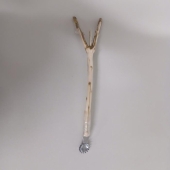
Egg fishing - we took a second hand, plastic serving spoon and taped it to a stick with hockey tape (great stuff and copes outside for a couple of years).

Not going to bed - that's what hockey sticks are for. They're a great way to increase your reach and guide the birds the right direction. Bribery can also be considered. My chickens like to get a taste of the Khaki C Ducks soaked wheat ration. That would bribe them inside in a heart beat.  Although some of this problem could be the density, or the possibility that you've got a couple of nasty hens causing trouble and setting a bad example. Once a pecking order is set, there shouldn't be a lot of "pecking" unless there's some other issue irritating the birds.
 
Linda Johansson
Posts: 20
6
  • Likes 5
  • Mark post as helpful
  • send pies
    Number of slices to send:
    Optional 'thank-you' note:
  • Quote
  • Report post to moderator
I had an old broom laying around and used that. But I’m not wasting my time every single night of my life chasing chickens out of there. I bought an automatic coop door for a reason.
I have considered my chicken keeping a great success so far, much better than I expected. But I farm by the “if the animal doesn’t fit my system, it doesn’t belong on my farm” philosophy. If the chickens don’t have enough instinct to go in the coop with everyone else, natural selection is going to take its course and I’m ok with that. I’ll do a certain amount of modifying my system as I learn, but I don’t have time to be screwing around with chasing chickens out from under the trailer daily. As for the eggs, I can retrieve when I move the trailer, but they get extra dirty under there which makes washing annoying, so I’d just prefer to not deal with it.
 
Cécile Stelzer Johnson
pollinator
Posts: 1611
Location: zone 4b, sandy, Continental D
434
  • Likes 4
  • Mark post as helpful
  • send pies
    Number of slices to send:
    Optional 'thank-you' note:
  • Quote
  • Report post to moderator

Linda Johansson wrote:Cecile—I have kept them locked in until later so that I can move the set up while they’re still inside. I don’t care to do that because I keep it basically as full of chickens as I realistically can, so they really need as much outside time as possible so they don’t get crabby and stop laying. Also historically the water has been located outside because the waterer I had, they would roost on top of it and poop in the water. I now have a different water system where that won’t be an issue.
Even in the deep cold of winter (-40 F at times), my first winter my chickens continued to lay nearly an egg a day. This winter there was slightly less but again, I was getting by for the winter with a coop that was a bit small, so when it got super cold and they wouldn’t go outside they felt a bit crowded. Next winter I will have a much more spacious coop which should help with that issue. Interestingly, I find that my chickens are consistently done laying by 2 pm every day, as during those extreme cold snaps I have to collect twice daily to keep eggs from freezing. If I collect at about 8 am and 2 pm, I get all the eggs without the first ones freezing before I can get to them.


Yep: I pick eggs twice too. We don't always get -40F, and with a well insulated coop, frozen eggs are not too much of a problem.
You seem to have figured out that perhaps they are a bit cramped? You said: "I keep it basically as full of chickens as I realistically can,". The "more specious coop" you are planning will take care of any problem, I think.
My 40 birds drink industrial quantities of water, even in the winter. (I had another breed, that would actually eat snow. Not that I'd encourage that ). It's a bit more messy to have a bowl, yes, so I have 2 rubber bowls and I let one go down then change the water, then the other one, inside the coop.
I have noticed that they do not poop in the water that is outside, in shallow metal or plastic pans and get filled once in a while with rain. I have a theory that chickens will perch on the edge of their water bowl if it is too high for them to reach the water from the ground. Mine are indeed too tall, so you gave me a great idea: (Thank you) I'll make a bench, or perhaps sink them into a piece of furniture, a bench or something. so their feet are already close to the level of the water. That should cut down on poop in water...
 
Posts: 17
Location: Lynnwood, WA
7
hugelkultur urban food preservation
  • Likes 7
  • Mark post as helpful
  • send pies
    Number of slices to send:
    Optional 'thank-you' note:
  • Quote
  • Report post to moderator
A couple of ideas I used for my urban (Seattle) chickens (wet mild winters):

I made a light weight chicken tractor out of PVC pipe and chicken wire. I put 2 ft skirt of chicken wire around the bottom edge to keep predators from digging under. This also allowed me to use ground stakes or weights to keep it from blowing over in the wind. I used zip ties to attach the chicken wire to the PVC pipe.  I made a hinged top with a corrugated plastic roof. I ran an electric wire attached to an electric fence charger around the bottom about 6 in off the ground attached to the PVC pipe with electric fence stand off insulators. You can get battery or solar powered chargers. I used motorcycle batteries that I recharged.

I used PVC cross pieces across the top for reinforcement and to hang roosts, feeders, and waterers from. We attached a wooden frame to the top and for the roof to attach the hinges too. I forget how we secured the top and how we propped it open for feeding, watering, etc. We had a shelf for nest boxes at one end.

I made my chicken tractor the width of a raised bed and used my chickens to build beds for growing vegetables. I just kept throwing in dried leaves, straw, etc. until I thought it was time to move the tractor. I used the tractor on a slope to terrace the slope for vegetable beds. The chickens would scratch the material down hill. Eventually there was enough to level the bed.

I got some used Venetian blinds from Goodwill to put on the outside of the tractor. I could pull them down at night or in cold weather for added protection.

Before I put my chickens in the tractor, I tested it for predator safety  by putting some racoon food inside and leaving it for a few days. When racoon bait stayed undisturbed, I figured the tractor would be safe for the chickens.

The main issue I had was making sure it was well-secured to the ground and that the top was well secured so it wouldn't blow over in the wind.
  • Likes 4
  • Mark post as helpful
  • send pies
    Number of slices to send:
    Optional 'thank-you' note:
  • Quote
  • Report post to moderator
Something nobody ever mentioned to me, but which has been very useful on several occasions, is to have a secondary pen/holding area nearby - so, an area for ill/injured birds and plan an area next to the birds you already have for 'new' additions.  I have found that over the years birds die and you want to build up your stock - but when you introduce new birds to your original flock, they can be aggressive, so time spent next to each other, but with a fence between, can help the old birds get used to the new birds. After about a week or so, they usually have got used to the newcomers and can join without getting pecked on.
 
Cécile Stelzer Johnson
pollinator
Posts: 1611
Location: zone 4b, sandy, Continental D
434
  • Mark post as helpful
  • send pies
    Number of slices to send:
    Optional 'thank-you' note:
  • Quote
  • Report post to moderator

Genevieve Lisa Pearson Coleman wrote:Something nobody ever mentioned to me, but which has been very useful on several occasions, is to have a secondary pen/holding area nearby - so, an area for ill/injured birds and plan an area next to the birds you already have for 'new' additions.  I have found that over the years birds die and you want to build up your stock - but when you introduce new birds to your original flock, they can be aggressive, so time spent next to each other, but with a fence between, can help the old birds get used to the new birds. After about a week or so, they usually have got used to the newcomers and can join without getting pecked on.


That's a very good point. I thought I mentioned at least having a "winter run" so they can step out of the coop but in a secure area while I'm cleaning the coop, but I did that before their first winter, so I didn't think of it as a correction.
But yes, and that is something I did later. I didn't do it exactly as a correction, but first, as I had a brooding hen, I built a small enclosure, covered, inside the coop where she could tend to her new babies while still being in sight of her friends. Moving a broody hen is always tricky and you risk her abandoning the clutch. Sometimes it works, sometimes it doesn't; that's why I bought a brooder to finish the job if she quits.
But I also built another coop, in the second orchard and with a common fence because I wanted some ducks. Well, ducks are a pain to clean, but now that the secure coop is built, I used it to place the new chickens that I incubated, knowing that it might be hard to mix them later.
The 2 enclosures do, however, have a common fence, and while I was nervous opening that fence, it turns out my fears were unjustified: They had just a couple of days of mild "tiffs" to figure out the new pecking order when I first put them together (after about a week of looking at each other through that fence).
 
We all live in a yellow submarine. Me, this cat and this tiny ad:
rocket mass heater jamboree 2026
https://permies.com/t/369866/rocket-mass-heater-jamboree
reply
    Bookmark Topic Watch Topic
  • New Topic