• Post Reply Bookmark Topic Watch Topic
  • New Topic
permaculture forums growies critters building homesteading energy monies kitchen purity ungarbage community wilderness fiber arts art permaculture artisans regional education skip experiences global resources cider press projects digital market permies.com pie forums private forums all forums
this forum made possible by our volunteer staff, including ...
master stewards:
  • Carla Burke
  • Nancy Reading
  • John F Dean
  • r ransom
  • paul wheaton
  • Jay Angler
  • Timothy Norton
stewards:
  • Pearl Sutton
  • Tereza Okava
  • Nicole Alderman
master gardeners:
  • Christopher Weeks
gardeners:
  • M Ljin
  • Megan Palmer
  • Pete Podurgiel

Blight

 
Posts: 1
1
  • Likes 11
  • Mark post as helpful
  • send pies
    Number of slices to send:
    Optional 'thank-you' note:
  • Quote
  • Report post to moderator
I’m so frustrated. Blight has hit my garden this season. Wiped out all of my indeterminate tomatoes and all of my potatoes. It killed my little moringa tree and damaged my rhubarb. I did use copper fungicide as a preventative.

I collected meager potato harvest. I then dumped the soil and straw from the 15 grow bags onto a tarp, spread it out to about four inches thick, watered it and covered it completely in clear 3 mil plastic.

I approach gardening from a permaculture perspective incorporating a couple of hugelkutur mounds and interplanting. What can I do for the rest of the garden to minimize this disease? I’d rather not take a year off to spread plastic over the whole garden, but it seems that may be my only choice.
 
master pollinator
Posts: 2197
Location: Ashhurst New Zealand (Cfb - oceanic temperate)
780
duck forest garden fungi trees chicken cooking solar sheep wood heat woodworking rocket stoves
  • Likes 8
  • Mark post as helpful
  • send pies
    Number of slices to send:
    Optional 'thank-you' note:
  • Quote
  • Report post to moderator
I feel your pain. Practically every summer I start off with big healthy tomato plants, and then just as the fruit starts to ripen the leaves start to yellow and droop. I recently found out that they really don't like water on the foliage, especially in cooler climates like this one. So next summer I'm going to try some sort of canopy to keep the rain off. Where are you located?

Potatoes can be touchy with blights and many gardeners are adamant that you never grow them in the same bed from year to year. I always miss lots of small ones and have them sprout later, and some of those do as well as the ones I plant from "certified" seed potatoes. I would say to try in a new spot next year and hope they don't get stricken.

Moringa has been hard for me to get to flourish outside the glasshouse, so I don't really have any tips there. And the only thing that stops my rhubarb is drought or winter dormancy...but it's doing well right now (still winter) and we have had several nights down to -3 or more in the past couple of weeks. The plants are somewhat sheltered by the feijoas, so maybe that's why they're happy.
 
steward and tree herder
Posts: 14278
Location: Isle of Skye, Scotland. Nearly 70 inches rain a year
7948
6
transportation dog forest garden foraging trees books food preservation woodworking wood heat rocket stoves ungarbage
  • Likes 8
  • Mark post as helpful
  • send pies
    Number of slices to send:
    Optional 'thank-you' note:
  • Quote
  • Report post to moderator
It sounds like you're doing the right things Julien. Interplanting and growing sturdy plants is a good start.

Julien Moreau wrote:It killed my little moringa tree and damaged my rhubarb.


i suspect that will be a different mould, as far as I know blight is specific to the potato/tomato family of plants. What area are you growing in? It sounds like you have a challenging warm/humid climate.

As well as moving plants to a different location (difficult with a polyculture sometimes) you could try a mulch under the tomatoes at least. That might stop some earth splash while watering or rainfall, which can be one means of the spores getting on to the leaves - the canopy as Phil suggested would also help with that. You can get blight on tomatoes undercover (ask me how I know!) so that isn't 100%.
 
steward & manure connoisseur
Posts: 5376
Location: South of Capricorn
3383
dog rabbit urban cooking writing homestead ungarbage
  • Likes 12
  • Mark post as helpful
  • send pies
    Number of slices to send:
    Optional 'thank-you' note:
  • Quote
  • Report post to moderator
This year I am doing exactly what Phil suggests- growing my tomatoes under cover. I made a real sketchy greenhouse- a roof surrounded by plastic sheeting I can remove when the weather is dry. I probably should leave it all the time, but I don't.
And I have entirely stopped even trying tomatoes in summer due to pest pressure- where I live they can only grow inside enclosed greenhouses, between the insects and the fungus. A few years ago I tried growing cherry tomatoes in winter and it went okay, so that's my new normal -- they take forever, but it's better than losing them all to the insects.

(and even well covered and watering only the soil-- my tomatoes still have powdery mildew. I go through every week and snip off the worst leaves.)

(in zone 9b in South America, possibly the wettest and cloudiest place on the southern half of the continent. See a little spot of blue on on the weather map, where it's raining while the rest of the place has sun? That's where I live)
 
Steward of piddlers
Posts: 8165
Location: Upstate New York, Zone 5b, 43 inch Avg. Rainfall
4790
monies home care dog fungi trees chicken food preservation cooking building composting homestead
  • Likes 15
  • Mark post as helpful
  • send pies
    Number of slices to send:
    Optional 'thank-you' note:
  • Quote
  • Report post to moderator
I'm not sure if the blight is a constant presence in your growing area or not but it may be worth trying to grow/develop cultivars that are naturally resistant to blight. You may still have some losses but you will be more likely to still obtain a yield.

I have not had to deal with blight, but powdery mildew is a constant in the area that I garden. After a few growing seasons, I have identified a few types of each veggie that I like that resist the mildew and grow them now.

If you can't go over it, and you can't go under it, you might as well go through it.
 
gardener
Posts: 785
Location: Suffolk County, Long Island NY, Zone: 7b (new 2023 map)
435
7
forest garden foraging food preservation cooking writing seed ungarbage
  • Likes 13
  • Mark post as helpful
  • send pies
    Number of slices to send:
    Optional 'thank-you' note:
  • Quote
  • Report post to moderator
Welcome to permies, Julien!  And I'm right there with you!
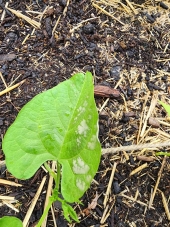
    First I'd like to say that despite my frustration, I'd rather have the rain than drought.  Here (east coast USA zone 7b) it's been rain/heat/humidity this year. My tomato plants are too close, I'm afraid, although the ones I transplanted to pots to create some space got the sickest and died the fastest.  I get many volunteer tomatoes, and they will be relocated to new beds next year.  I've had some success keeping whatever creeping crud this is (see pics below) at bay with neem oil.
    I'm harvesting all tomatoes early, as soon as the begin to redden, and allowing then to ripen fully indoors.
    After years of my "no till" efforts resulted in densely compacted soil (I'm sure it's "my bad", not the method) I
added amendments to improve drainage, inoculated with Mycorrhizal Fungi, and planted basil and peppers along with some tomato seeds (I also have many tomato volunteers).  The tomatoes grew so fast  I had to relocate most of the basil and peppers.  I should have thinned the tomatoes and trimmed the suckers.
    What I KNOW I did wrong:  suckers.  I thought suckers were the spare leaves on stalks, not the extra stalks themselves.  Should I prune the suckers now to improve airflow, give the open "wounds" a spritz of neem oil or copper fungicide, or will that just spread disease at this point?  If I do prune, do I have to sanitize my snippers between each cut, and if so, what do I use?  Also (humiliations galore) I did not mulch.  I just don't now what to use that won't cost a ton of money.  I don't own a wood chipper. I've used free hay before, and improvised with dead leaves.  
    I don't know how to make my pictures smaller for this site (even when they're small, they post big), sorry!
   
1786449128578.jpg
[Thumbnail for 1786449128578.jpg]
1786449186686.jpg
[Thumbnail for 1786449186686.jpg]
1786449192690.jpg
[Thumbnail for 1786449192690.jpg]
 
Nancy Reading
steward and tree herder
Posts: 14278
Location: Isle of Skye, Scotland. Nearly 70 inches rain a year
7948
6
transportation dog forest garden foraging trees books food preservation woodworking wood heat rocket stoves ungarbage
  • Likes 7
  • Mark post as helpful
  • send pies
    Number of slices to send:
    Optional 'thank-you' note:
  • Quote
  • Report post to moderator

Susan Mené wrote:     What I KNOW I did wrong:  suckers.  I thought suckers were the spare leaves on stalks, not the extra stalks themselves.  Should I prune the suckers now to improve airflow, give the open "wounds" a spritz of neem oil or copper fungicide, or will that just spread disease at this point?  If I do prune, do I have to sanitize my snippers between each cut, and if so, what do I use?  Also (humiliations galore) I did not mulch.  I just don't now what to use that won't cost a ton of money.  I don't own a wood chipper. I've used free hay before, and improvised with dead leaves.  


We've got a thread on pruning tomatoes here . Yes if they've got that big to need pruners, and disease is an issue with you, then dipping the blade in alcohol between plants would be prudent.
As for mulch, you want something that doesn't splash back ... If you don't mind paper, then shredded paper might be an option.
 
master steward
Posts: 16108
Location: Pacific Wet Coast
10562
duck books chicken cooking food preservation ungarbage
  • Likes 11
  • Mark post as helpful
  • send pies
    Number of slices to send:
    Optional 'thank-you' note:
  • Quote
  • Report post to moderator

Nancy Reading wrote:... Yes if they've got that big to need pruners, and disease is an issue with you, then dipping the blade in alcohol between plants would be prudent...


Crazy Idea Alert - My DiL had root rot on her baby Monstera plant. When I googled my options, one said to cut it off above the sick area, dab the open cut with unpasteurized honey*, and then put it in water and root it. It worked a treat!

So if you're having to cut tomatoes, and you know you're having trouble with blight, it would be an interesting experiment to try. Honey is supposed to be a natural antibiotic. Blight is definitely a different microbe than the one I was dealing with.

I will back the people who say that blight is out there and keeping your leaves dry and mulching so that water doesn't splash up onto the plants would are really good ideas.  Every ecosystem is different, so if one idea doesn't work, try something different the next time!

*yes, I'm very lucky, as I have a friend who has pet honey bees, so getting unpasteurized honey is easy for me.
 
Susan Mené
gardener
Posts: 785
Location: Suffolk County, Long Island NY, Zone: 7b (new 2023 map)
435
7
forest garden foraging food preservation cooking writing seed ungarbage
  • Likes 11
  • Mark post as helpful
  • send pies
    Number of slices to send:
    Optional 'thank-you' note:
  • Quote
  • Report post to moderator

Jay Angler wrote:

Nancy Reading wrote:... Yes if they've got that big to need pruners, and disease is an issue with you, then dipping the blade in alcohol between plants would be prudent...


Crazy Idea Alert - My DiL had root rot on her baby Monstera plant. When I googled my options, one said to cut it off above the sick area, dab the open cut with unpasteurized honey*, and then put it in water and root it. It worked a treat!

So if you're having to cut tomatoes, and you know you're having trouble with blight, it would be an interesting experiment to try. Honey is supposed to be a natural antibiotic. Blight is definitely a different microbe than the one I was dealing with.

I will back the people who say that blight is out there and keeping your leaves dry and mulching so that water doesn't splash up onto the plants would are really good ideas.  Every ecosystem is different, so if one idea doesn't work, try something different the next time!

*yes, I'm very lucky, as I have a friend who has pet honey bees, so getting unpasteurized honey is easy for me.


    I am so on this! I willdocument and let you all know!
 
Posts: 1607
137
  • Likes 12
  • Mark post as helpful
  • send pies
    Number of slices to send:
    Optional 'thank-you' note:
  • Quote
  • Report post to moderator
not sure if is blight or not but something wiped out my 6' tall sunflowers and all my zucchini , yellow squash and green beans. we had flash flooding a couple weeks ago. but I dont treat my garden with anything, no chemicals or fungicides allowed,  except in spring plowed in what I clean out from chicken coop floor all winter. but that is where the butternut and pumpkins are and they are still growing like crazy. I need to take picture of the sad sunflowers with there heads hanging dow all bent over.
 
pollinator
Posts: 130
Location: Western NC, zone 6B/7A
47
  • Likes 10
  • Mark post as helpful
  • send pies
    Number of slices to send:
    Optional 'thank-you' note:
  • Quote
  • Report post to moderator
We had a terrible year with early blight (tomatoes and potatoes). It has been an incredibly rainy July (and now August). In fact, it has rained every day except 2 at our house for the past 45 days. Next year, I am sticking with early blight tolerant varieties for both. The only potatoes that survived were Masquerade which I hear are more tolerant - that says a lot. I have been following all of the environmental measures like mulching, but you can only do so much when your garden is pure mud and it pours every day. And it is not possible to spray either. Unfortunately, too much rain is hard to fix. We did have terrible drought this spring (when it should have rained) and it was almost as bad.

On the bright side, good mushroom year here.

As far as your rhubarb, are you sure this is not normal? Our dies down around this time of the year and comes back reliably. Unless you are growing it as an annual which is usually done in cooler months (?) I thought.

Just keep working on picking varieties that work for you locally. Better yet, make your own (landrace) if you can.

 
Nancy Reading
steward and tree herder
Posts: 14278
Location: Isle of Skye, Scotland. Nearly 70 inches rain a year
7948
6
transportation dog forest garden foraging trees books food preservation woodworking wood heat rocket stoves ungarbage
  • Likes 8
  • Mark post as helpful
  • send pies
    Number of slices to send:
    Optional 'thank-you' note:
  • Quote
  • Report post to moderator
I'm sorry to hear you lost plants Bruce. It might be the roots rotted in the damp. Was it just the butternut and pumpkins that had the added chicken coop goodness? Did they also get flooded?
 
master pollinator
Posts: 408
Location: UK
152
kids urban seed
  • Likes 7
  • Mark post as helpful
  • send pies
    Number of slices to send:
    Optional 'thank-you' note:
  • Quote
  • Report post to moderator
Yeah blight in a wet year is brutal, nothing you can really do once it's in. The keeping tomatoes dry approach Phil mentioned is the main thing that's actually made a difference for me too. Growing them under some kind of cover changed everything. Bruce, losing squash and beans to the flooding sounds less like blight and more like the roots just suffocating in waterlogged soil, different problem same rubbish result.
 
pollinator
Posts: 243
81
2
  • Likes 6
  • Mark post as helpful
  • send pies
    Number of slices to send:
    Optional 'thank-you' note:
  • Quote
  • Report post to moderator

Timothy Norton wrote:powdery mildew is a constant in the area that I garden. After a few growing seasons, I have identified a few types of each veggie that I like that resist the mildew and grow them now.


Can you share which varieties have worked for you with the mildew?  It's a big problem for those in the tropics.
 
Timothy Norton
Steward of piddlers
Posts: 8165
Location: Upstate New York, Zone 5b, 43 inch Avg. Rainfall
4790
monies home care dog fungi trees chicken food preservation cooking building composting homestead
  • Likes 7
  • Mark post as helpful
  • send pies
    Number of slices to send:
    Optional 'thank-you' note:
  • Quote
  • Report post to moderator
Surely!

For example, I have been rather impressed with Rouge vif d'Étampes pumpkins this year. Not only have they been vigorous, but they have no signs of mildew while a nearby gourd has been rather beat by it.

Marketmore 76 cucumbers is a common heirloom strain in my area and for good reason. It performs well in both drought and wet years.
 
Posts: 15
3
2
  • Likes 6
  • Mark post as helpful
  • send pies
    Number of slices to send:
    Optional 'thank-you' note:
  • Quote
  • Report post to moderator
I'm with you here in western NC.  6a and 6b.  Rain, rain, higher than usual temps when dry then some more rain, and everything is drooping.  Tomato horn worms, too.  I cut them in half with my scissors and let their guts drip down and fertilize the soil-- or is that a bad idea-- the guts part. But first, I have to find them before they decimate the whole plant.  What a year.  Apple and pear crops much lower than usual too despite some really beautiful blooms during the spring.  A local prolific grower here told me a few years ago that growing tomatoes in Ashe County, NC is a sport.
 
Posts: 404
Location: rural West Virginia
92
  • Likes 6
  • Mark post as helpful
  • send pies
    Number of slices to send:
    Optional 'thank-you' note:
  • Quote
  • Report post to moderator
Okay. First off, I'm in West Virginia, zone 6B--really I think it's 7A now. Been gardening in the same place for 18 years. I've never had a serious problem with blight on my potatoes, but this year many of them did poorly--the ones I'd saved myself in a root cellar. The ones I bought from Tractor Supply did okay--possibly because they went in first. It might have been the lateness that caused uneven sprouting and poor yield in the home-raised ones. And I've had trouble with blights on peppers a couple years but I don't think it's the same ones that affect tomatoes. The tomato blights I get every year, and there are three of them: early blight, late blight, and septoria blight. I don't know if the cages I reuse spread the disease or if it's just present in the soil or the air, but I reliably get it just as the first load of fruit is ripening. All three start low on the plant and climb up. So one thing I do is remove any leaves within three inches of the ground (or run them through the cage bars at a higher level) when the plants are about 16' tall, then do it again with any within maybe a foot of the ground when they're three of four feet tall, and I do mulch. And of course I rotate crops; I have three gardens a couple hundred feet apart so tomatoes take turns in these. But these measures at best slow the spread. I tried a caterpillar tunnel one year, but it didn't help much, and then I had to keep watering the plants, and I had worse bugs that year than any other. Insects are not much of a problem for me; with tomatoes it's only the hornworms and only a couple per year.
The main way I get enough tomatoes is to buy the pricey seed for the blight-resistant hybrids--Defiant and Stellar are the ones that have worked for me--and to plant several different varieties. Defiant is early, then Stellar and Persimmon pick up the slack when is slows. This year I planted Chocolate Stripes in its own bed, but they're all close together. This is one of the especially tasty, dark red and green striped tomatoes, and produces abundantly early, then slackens and usually produces some more late. But it seems to get late blight. For two years it seemed it didn't really hurt production or spread to other plants, but this year the blight knocked out three of my four beds almost completely--because August has been so wet I guess--so maybe I won't plant it next year. And I'll fork over whatever outrageous price they want for a few Defiant seeds, because Stellar alone is not going to give me enough canned sauce.
Oh, I did try copper once, till I read that it can build up and become toxic in the soil, and to be effective you have to hit the plants before there is any sign of blight, and then again after any rain. Okay, forget THAT.
 
Posts: 44
41
  • Likes 4
  • Mark post as helpful
  • send pies
    Number of slices to send:
    Optional 'thank-you' note:
  • Quote
  • Report post to moderator
It can be helpful to figure out what specific disease(s) you're dealing with. There are various things called "blight," as Mary pointed out, and they behave differently. Fortunately, there's lots of info out there because everyone has problems with these diseases, including large growers. Not all the management information will be appealing (potatoes, for example, are often sprayed repeatedly through the season), but there are lots of pictures that help with diagnosis and some cultural practices that are easy to implement.

Without double checking, here's what I took away from my reading on late blight (phytophthera infestans) in potatoes after we got hit badly a few years ago.

Volunteers:
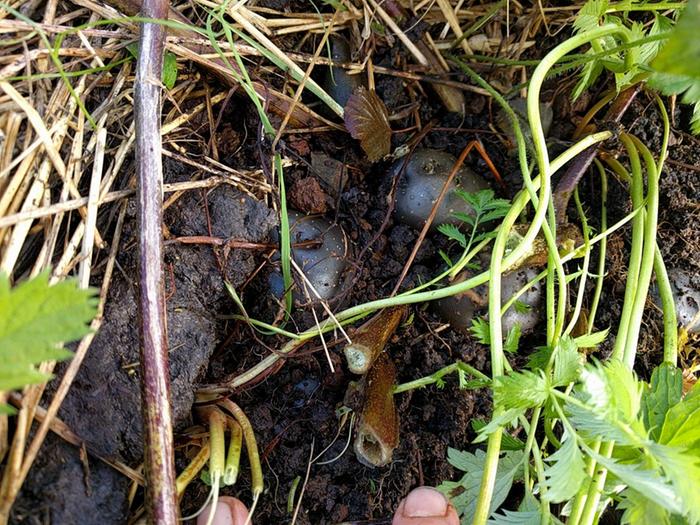
In Ontario, it only lives on living plant tissue, not in the soil over winter. Some places two differing strains that can mate and produce oospores that do overwinter on their own, so maybe check that. In this climate, tomatoes fully die on their own over winter, so potatoes are the concern - the tubers can be infected and, when shoot in the spring, can infect your new planting. For that reason, it's recommended to dig any volunteers and get rid of them (compost or bury very deep). In the fall when digging, do the same with any tubers you're not eating (damaged or diseased), or leave them fully on the surface so they can freeze and die that way.
When planting, I prefer to use tuber pieces that are big enough that they need to be cut at least once. This lets me see if there are signs of disease within the tuber. Otherwise you could be planting blight that you yourself kindly overwintered in optimal conditions.

Moisture:
Late blight usually gets into your garden by traveling on wind, so you can't keep it away if it's in your area. You can limit your plants' susceptibility by keeping them as dry as possible. The main tool for that is keeping foliage density a little lower so that plants can dry promptly after rain. For tomatoes, that means pruning all suckers on indeterminate varieties for a while, and for both tomatoes and potatoes it means planting far enough apart (you need to determine what that is in your conditions) and removing weeds. I don't like plastic, so I don't do this, but I have friends who have had success with the mini-greenhouse idea, so that you can keep the leaves entirely dry and water at ground level.

Infected plants:
If it's still just a few, remove them promptly and hot compost fully covered or bury deep. If possible, do this on a dry day to limit spreading spores. This probably won't stop the infection, but may slow it down.
For potatoes, a key understanding is that the top gets infected first, then spores from the top wash down through the soil in the next rain to infect the tubers. So once you identify infected tops, remove them immediately (before the next rain), and you can likely still harvest clean tubers. I like a sickle. Wait a few weeks to dig, to allow any spores surviving on the surface to hopefully die.
Varieties:
Good genetics go a long way with disease resistance, although blight is also constantly evolving new strains, so we lose resistance again. For potatoes, I've had some success with Sarpo Mira surviving in the presence of infected neighbours. For tomatoes, LYC 859 El Salvador and Bosu seem to have good late blight resistance (these are OPs, so seeds are as cheap as your labour!). When looking for seeds, google lists of resistant varieties and see if your favourite seed company has anything on the list.
If you prioritize disease resistance, it might mean letting go of focusing on your preference for colour/texture/flavour. It's a tradeoff.
 
Embrace the glorious mess that you are. - Elizabeth Gilbert / tiny ad
hands on gardening and natural building
https://wheaton-labs.com/bootcamp
reply
    Bookmark Topic Watch Topic
  • New Topic