gift
100th Issue of Permaculture Magazine
will be released to subscribers in: soon!

  • Post Reply Bookmark Topic Watch Topic
  • New Topic
permaculture forums growies critters building homesteading energy monies kitchen purity ungarbage community wilderness fiber arts art permaculture artisans regional education skip experiences global resources cider press projects digital market permies.com pie forums private forums all forums
this forum made possible by our volunteer staff, including ...
master stewards:
  • Carla Burke
  • Anne Miller
  • Nancy Reading
  • John F Dean
  • r ransom
  • paul wheaton
  • Timothy Norton
stewards:
  • Jay Angler
  • Pearl Sutton
  • Andrés Bernal
master gardeners:
  • Christopher Weeks
gardeners:
  • M Ljin
  • Thekla McDaniels
  • May Lotito

Starting a windbreak in an extremely windy area

 
pollinator
Posts: 212
Location: Spain
20
forest garden fungi urban
  • Likes 8
  • Mark post as helpful
  • send pies
    Number of slices to send:
    Optional 'thank-you' note:
  • Quote
  • Report post to moderator
Hi
I'd like to get some tips on how to start a windbreak in an extremely windy area.
Meaning that if the actual windbreak plants are planted when still small they can get stunted and have very poor slow growth if there are under constant strong winds almost all the time
On the other hand, if they are planted bigger, I fear, they can be overthrown.

The context I am talking about is the island of Lanzarote, off the cost of Morocco (Canary islands), where inhabitants have resorted to build stone walls in order to protect fruit trees, which on the other hand have the problem of becoming very hot places during warm/hot months.
Also, stone walls have the problem of creating turbulence on the lee-ward side of the walls.

My idea is to instead start developing vegetation based windbreaks, trees and shrubs that is, but I am unsure how to go about it and would like to hear from people living in very windy areas how did they develop their tree-based windbreaks without compromising the windbreak trees as well.

One Idea I was having is to actually protect the young windbreak tree plantings using fast growing annual grasses, as barrier sheltering the young trees/shrubs, which can grow taller enough, 2m or something and somehow protect the tree "children" until they grow larger and stronger.... grasses such as vetiver or miscanthus, for example (which have other uses as well)
Any thoughts on this last idea as well?
 
master steward
Posts: 9023
Location: southern Illinois, USA
3956
goat cat dog chicken composting toilet food preservation pig solar wood heat homestead composting
  • Likes 5
  • Mark post as helpful
  • send pies
    Number of slices to send:
    Optional 'thank-you' note:
  • Quote
  • Report post to moderator
From my perspective, any effort to protect the newly planted trees is better than none. Grasses might help. I would also look at mounds of dirt, rock, wood and any other available material.
 
Antonio Scotti
pollinator
Posts: 212
Location: Spain
20
forest garden fungi urban
  • Likes 4
  • Mark post as helpful
  • send pies
    Number of slices to send:
    Optional 'thank-you' note:
  • Quote
  • Report post to moderator

John F Dean wrote:From my perspective, any effort to protect the newly planted trees is better than none. Grasses might help. I would also look at mounds of dirt, rock, wood and any other available material.


Ah ha! Nice idea, Creating a mound, say 30 or 40 cm tall, and then sowing the grasses on top of the mound could probably do a better job, because the grasses would grow even taller...and could protect the mound at the same time.
 
Antonio Scotti
pollinator
Posts: 212
Location: Spain
20
forest garden fungi urban
  • Likes 4
  • Mark post as helpful
  • send pies
    Number of slices to send:
    Optional 'thank-you' note:
  • Quote
  • Report post to moderator
...and may be, using cilindrical tree guards could also help...(?)
 
master gardener
Posts: 7116
Location: Carlton County, Minnesota, USA: 3b; Dfb; sandy loam; in the woods
4562
8
forest garden trees books chicken food preservation cooking fiber arts seed woodworking homestead ungarbage
  • Likes 9
  • Mark post as helpful
  • send pies
    Number of slices to send:
    Optional 'thank-you' note:
  • Quote
  • Report post to moderator
Maybe a temporary, mobile wall made from wooden slats that let half the wind through but disrupt the unrelenting blast that prevents the trees from thriving? Leave it there for five years and move it to the next planting.
 
John F Dean
master steward
Posts: 9023
Location: southern Illinois, USA
3956
goat cat dog chicken composting toilet food preservation pig solar wood heat homestead composting
  • Likes 5
  • Mark post as helpful
  • send pies
    Number of slices to send:
    Optional 'thank-you' note:
  • Quote
  • Report post to moderator
Here is a thread about a similar project:    https://permies.com/t/210793/permaculture/Tree-field-Skye#1767083
 
steward
Posts: 16536
Location: Pacific Wet Coast
11100
duck books chicken cooking food preservation ungarbage
  • Likes 10
  • Mark post as helpful
  • send pies
    Number of slices to send:
    Optional 'thank-you' note:
  • Quote
  • Report post to moderator
I've observed this sort of issue in coastal areas, and yes, Mother Nature normally starts with tall grasses, then shrubs, then shrubby deformed trees, then healthier small trees and shrubs.

It sounds as if you're not only dealing with wind, but specifically salty wind, so I would consider salt tolerant species already available in your ecosystem.

The deformities were explained to me as thus: the salt/sand laden wind, kills the growing points on the side of the plants hit first by the wind, but the growing points in the lee of the trunk, survive. Thus you get trees with most of the branches on the side away from the wind. Not only is the wind pushing the tree over - the unbalanced weight is helping with that push.

If you have enough land to work with, I would work with nature. I have also read that a windbreak that has gaps, and depth, such as rows of trees and shrubs, works better than a solid wall for the reasons you mention. Even a berm that guides the wind up an artificial slope, will create turbulence down-wind, based on diagrams I've studied related to inland high-wind event. A windbreak that allows some wind through, is supposed to actually slow the wind, and disperse it, as well as divert some of it.

Would tall sunflower varieties grow in your ecosystem?
 
steward and tree herder
Posts: 15085
Location: Isle of Skye, Scotland. Nearly 70 inches rain a year
8683
6
transportation dog forest garden foraging trees books food preservation woodworking wood heat rocket stoves ungarbage
  • Likes 10
  • Mark post as helpful
  • send pies
    Number of slices to send:
    Optional 'thank-you' note:
  • Quote
  • Report post to moderator

John F Dean wrote:Here is a thread about a similar project:    https://permies.com/t/210793/permaculture/Tree-field-Skye#1767083


Hi Antonio - that's my thread! Planting trees on the Isle of Skye, so similar (sea salt laden strong winds) but different (cool wet climate) to yourself. I'm very happy with my windbreaks now, but they did take several years to become effective.

My suggestions are:

Think long term. If you protect the windbreak trees too much they may not stand up by themselves when the protection is removed. So I personally don't recommend windbreak fabric or temporary fences.

Start with small windbreak plants. That way they have a chance to get their roots into the ground before the wind topples them over. Otherwise you have to stake them, and I don't think they will ever be as strong

In a really windy area multi layer windbreaks can be effective - the first layer protects the next layer and so on.

Think about succession and plant density - some tree are pioneers and will grow quickly, but may be shaded out. Others might be slower, but more shubby so provide protection at lower levels. Finally slow growing trees will fill out and take over from the pioneer species.

I do think it might be worth considering a shrubby or quick growing herbacious plant as initial protection for the trees. A tall clumping grass might be appropriate. In my area pampass grass grows really well, but it would have looked odd in my tree field so I just relied on the trees.

I suggest too that having a variety of trees forms a system that is more robust. If one species suffers from a pest or disease the rest of the plans will hopefully make up for it. I planted several plants with wild life in mind - fruit and flowers. You may even be able to harvest some yourselves. My hazels for example are now doing pretty well.
 
Nancy Reading
steward and tree herder
Posts: 15085
Location: Isle of Skye, Scotland. Nearly 70 inches rain a year
8683
6
transportation dog forest garden foraging trees books food preservation woodworking wood heat rocket stoves ungarbage
  • Likes 13
  • Mark post as helpful
  • send pies
    Number of slices to send:
    Optional 'thank-you' note:
  • Quote
  • Report post to moderator
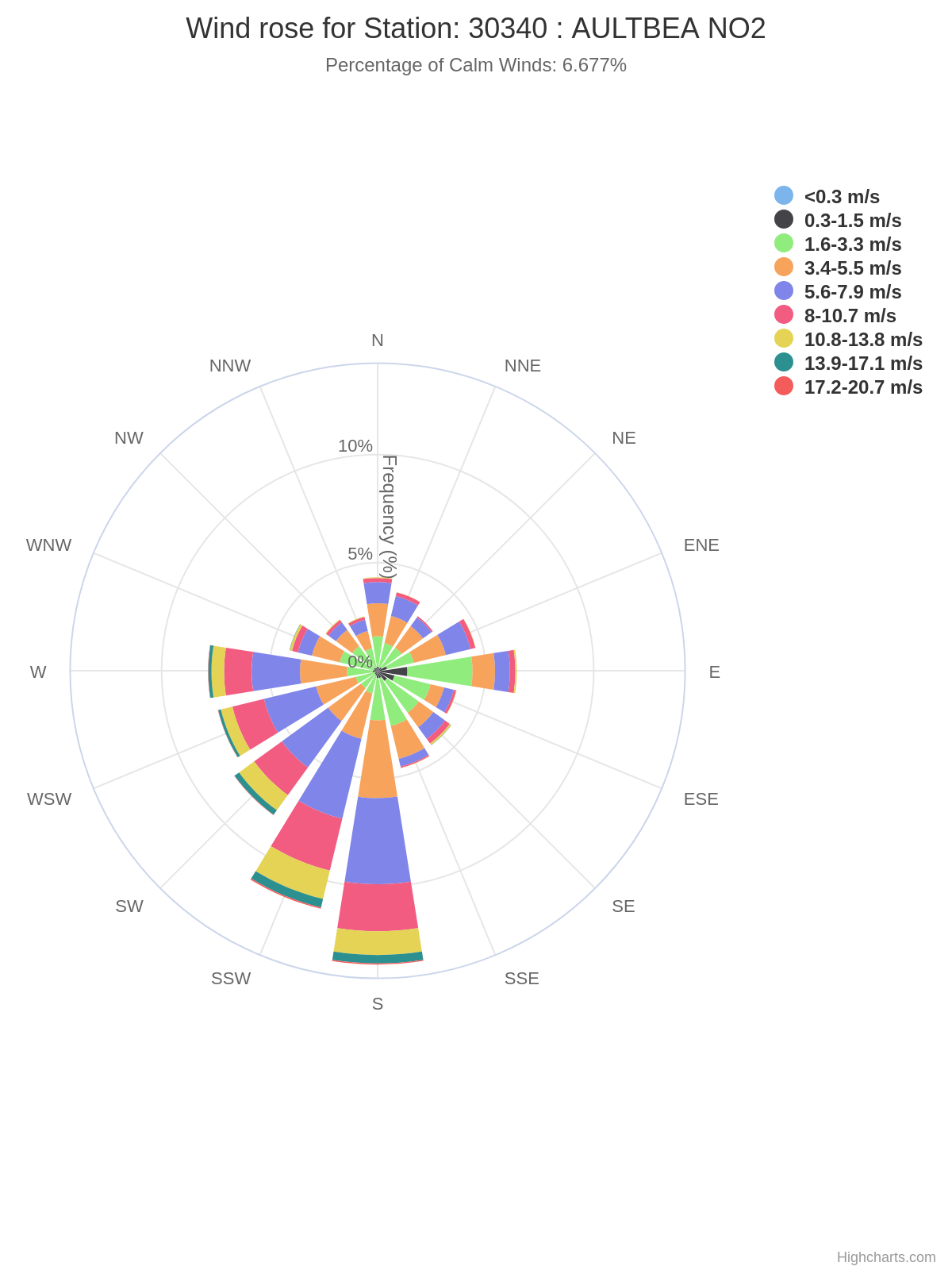
Another thought: check your wind rose - which direction is your prevailing wind and which direction is the most likely for gales. A windbreak at the wrong orientation could concentrate the wind if at an angle, and actually result in it getting stronger.
wind-rose-for-station-30.png
Example wind rose for West Scotland
 
Jay Angler
steward
Posts: 16536
Location: Pacific Wet Coast
11100
duck books chicken cooking food preservation ungarbage
  • Likes 9
  • Mark post as helpful
  • send pies
    Number of slices to send:
    Optional 'thank-you' note:
  • Quote
  • Report post to moderator

Nancy Reading wrote:Another thought: check your wind rose - which direction is your prevailing wind and which direction is the most likely for gales. A windbreak at the wrong orientation could concentrate the wind if at an angle, and actually result in it getting stronger.


I agree with the check, but also consider that with weather weirding, things may change in the next decade. The more variety, flexibility, and options you give Mother Nature, the more likely you can avoid disaster.
 
pollinator
Posts: 586
Location: UK
196
kids urban seed
  • Likes 9
  • Mark post as helpful
  • send pies
    Number of slices to send:
    Optional 'thank-you' note:
  • Quote
  • Report post to moderator
Yeah the wind rose check is the one I'd prioritise before committing to placement. Prevailing wind and worst gale direction often aren't the same, and getting that wrong can make it actively worse. Nancy's point about building up in stages with pioneers first seems like the most reliable approach even if it adds years to the timeline.
 
Nancy Reading
steward and tree herder
Posts: 15085
Location: Isle of Skye, Scotland. Nearly 70 inches rain a year
8683
6
transportation dog forest garden foraging trees books food preservation woodworking wood heat rocket stoves ungarbage
  • Likes 8
  • Mark post as helpful
  • send pies
    Number of slices to send:
    Optional 'thank-you' note:
  • Quote
  • Report post to moderator

Joao Winckler wrote:Nancy's point about building up in stages with pioneers first seems like the most reliable approach even if it adds years to the timeline.


You can plant them at the same time (slow, fast and shrubby) they will just grow at different rates. Unless you need a more uniform appearance for aesthetic reasons - like a pretty hedge around a garden, in which case maybe three different hedges adjacent to each other?
 
Antonio Scotti
pollinator
Posts: 212
Location: Spain
20
forest garden fungi urban
  • Likes 11
  • Mark post as helpful
  • send pies
    Number of slices to send:
    Optional 'thank-you' note:
  • Quote
  • Report post to moderator
Wow! thanks so much for all your inputs and tips @Nancy Reading and others!!!
I think it is a very wise (permie that is ) strategy to go slowly and allow the first line of lower shrubby plants to establish maybe even with some protection from grasses. Small & slow solutions usually wins and 'accelerating succession' must probably taken relatively here, that is accelerating it but not too much at once, maybe...
I am a bit afraid that taller plants, such as Tamarix (which is considered a native tree adapted to this kind of environment), might grow stunted because of the strong winds. At least so I was told by several people living on the island (not been there yet).
This plant, which can grow up to 8 m. tall in normal conditions, only grows, in most unsheltered places, up to 2m tall....
 
Jay Angler
steward
Posts: 16536
Location: Pacific Wet Coast
11100
duck books chicken cooking food preservation ungarbage
  • Likes 8
  • Mark post as helpful
  • send pies
    Number of slices to send:
    Optional 'thank-you' note:
  • Quote
  • Report post to moderator

Antonio Scotti wrote: ...I am a bit afraid that taller plants, such as Tamarix (which is considered a native tree adapted to this kind of environment), might grow stunted because of the strong winds. This plant, which can grow up to 8 m. tall in normal conditions, only grows, in most unsheltered places, up to 2m tall....


Plants are smarter than we give them credit for. They may respond to their growing conditions because "dead plants don't provide seeds for the future", but there are researchers who have found evidence that those responses do show "learned behavior".

Ex. STUN for plants can be seen as teaching plants that "drought happens" while the plant is small/young enough to learn how to protect itself and how not to grow so fast that a drought kills it, rather than just slowing it down. Humans can think of this learning totally from a "chemical" perspective, because we all know that plants don't have "brains". However, I think that's a Human-centric approach to it, and who's to say that Human brain action that we call "thinking" isn't just a chemical reaction... (maybe electrical - where's the fine line between chemical and electrical in a human brain?)
 
Nancy Reading
steward and tree herder
Posts: 15085
Location: Isle of Skye, Scotland. Nearly 70 inches rain a year
8683
6
transportation dog forest garden foraging trees books food preservation woodworking wood heat rocket stoves ungarbage
  • Likes 5
  • Mark post as helpful
  • send pies
    Number of slices to send:
    Optional 'thank-you' note:
  • Quote
  • Report post to moderator

Antonio Scotti wrote:This plant, which can grow up to 8 m. tall in normal conditions, only grows, in most unsheltered places, up to 2m tall....


2m can still provide good shelter for 6m, and some shelter for 20m....
 
Posts: 55
Location: SE Australia
4
2
  • Likes 13
  • Mark post as helpful
  • send pies
    Number of slices to send:
    Optional 'thank-you' note:
  • Quote
  • Report post to moderator
I don't know how Tagasastes go with salt spray, we are 4km in from the coast to the N-NW, on a slope facing west in the 'roaring forties' ; they have been very successful, where they get too much wind before their trunks thicken, they do develop in a lean, but they still do their job, and are so useful in being able to be heavily pruned (for animals, or biomass) - I pretty much am able to prune them year round, doesn't seem to harm them, we get some frosts but nothing much below 0 C generally,  and they are very drought hardy too.  
I was walking into an area yesterday i think I must have pruned them somewhat several weeks ago (we're in spring of course) and was so surprised at how much more they have grown already.  The area - where I have a few cherries & plums, and had planted tagasastes & a couple of evergreen alders in between them maybe only 3 yrs ago, and then a year? ago planted another sparse row of tagasastes next to it, is now growing such lush grass & is turning into quite the little woodland area that I think I'll be planting shade loving medicinal herbs there now.  

Also found, since I have access to 200L food grade plastic drums cheaply which we've been using for a number of things, we've also used them as guards for a few trees like oaks, and with thick mulch & little watering last summer they did fantastically, guess it keeps the ground shaded & cooler, and of course protects from wind.  I get the concern about them not growing hardy against the wind tho..... I am planting tagasastes next to them as well.  
(Edit - oh, the drums were actually more for protection from animals rather than wind!)
 
Antonio Scotti
pollinator
Posts: 212
Location: Spain
20
forest garden fungi urban
  • Likes 3
  • Mark post as helpful
  • send pies
    Number of slices to send:
    Optional 'thank-you' note:
  • Quote
  • Report post to moderator
Jonie, so you cut the bottom of the barrel in order to use them this way, right?
 
Posts: 7
  • Likes 3
  • Mark post as helpful
  • send pies
    Number of slices to send:
    Optional 'thank-you' note:
  • Quote
  • Report post to moderator
How about installing a 6ft high fence, with 2 mesh panels, one on the sides of the posts. This could slow the wind (while reducing turbulence?), but allow enough wind passage to not weaken either the young orchard, or the fence posts? As the trees grew sturdier, the double mesh could be reduced to single mesh, allowing the trees to become sturdier.
 
Jonie Hill
Posts: 55
Location: SE Australia
4
2
  • Likes 1
  • Mark post as helpful
  • send pies
    Number of slices to send:
    Optional 'thank-you' note:
  • Quote
  • Report post to moderator
Antonio - yeah
 
Posts: 49
Location: U.S.A.
3
2
  • Likes 7
  • Mark post as helpful
  • send pies
    Number of slices to send:
    Optional 'thank-you' note:
  • Quote
  • Report post to moderator
Do you have any strawbales available? I double stack two bales in a V around each fruit tree or make a double stacked row on the windy side of the smaller windbreak row plants. By the second year, the straw has broken down enough you can use it as mulch. If you do this, leave at least a foot between the strawbales and the plants or mice eat the bark off the plants and can hide from the flying predators.
 
pollinator
Posts: 1704
Location: zone 4b, sandy, Continental D
470
  • Likes 4
  • Mark post as helpful
  • send pies
    Number of slices to send:
    Optional 'thank-you' note:
  • Quote
  • Report post to moderator

Antonio Scotti wrote:Hi
I'd like to get some tips on how to start a windbreak in an extremely windy area.
Meaning that if the actual windbreak plants are planted when still small they can get stunted and have very poor slow growth if there are under constant strong winds almost all the time
On the other hand, if they are planted bigger, I fear, they can be overthrown.

The context I am talking about is the island of Lanzarote, off the cost of Morocco (Canary islands), where inhabitants have resorted to build stone walls in order to protect fruit trees, which on the other hand have the problem of becoming very hot places during warm/hot months.
Also, stone walls have the problem of creating turbulence on the lee-ward side of the walls.

My idea is to instead start developing vegetation based windbreaks, trees and shrubs that is, but I am unsure how to go about it and would like to hear from people living in very windy areas how did they develop their tree-based windbreaks without compromising the windbreak trees as well.

One Idea I was having is to actually protect the young windbreak tree plantings using fast growing annual grasses, as barrier sheltering the young trees/shrubs, which can grow taller enough, 2m or something and somehow protect the tree "children" until they grow larger and stronger.... grasses such as vetiver or miscanthus, for example (which have other uses as well)
Any thoughts on this last idea as well?


As you are located so near Morocco, you have a couple of problem besides the wind: lack of rainfall and abundance of wind. If that wasn't enough, I'm told that "crevices in the Montañas del Fuego (Fire Mountains) still emit sufficient heat to fry eggs".
I'm not sure if you live close enough to this volcano to be affected by this additional heat, but these are pretty severe problems in the aggregate.
Because the island was formed from volcanoes, the soil is an "andisol". Although it's packed with beneficial minerals such as potassium, magnesium, calcium, sodium, and iron, it lacks carbon and nitrogen. There's also this "picón" that dry croppers use to their advantage. could that work for you?
https://www.fao.org/newsroom/story/lanzarotes-volcanic-miracle/en
I must say that their opening picture with all that dark, dark soil, I thought: there's no way anyone can grow anything there, as black creates a heat trap  to boot. But they did manage to take advantage of the soil they have, and those sweet potatoes! That's incredible.
OK. so you main problem, on your property, is wind. To stop it *today*, or before the next crop, your work is cut out for you. Your wind barriers may first have to be built from fences, but then look at what the successful farmers do, and copy it.
Depending on your ability to keep chickens, if you could keep chickens, their manure is a great source of nitrogen, although I don't know how they would fare in this furnace that is your island.
By the way, a strong wind is also a form of wealth if you exploit it, especially if it is steady. A windfarm could create a lot of electricity for you and your neighbors, in particular, if you are close to some sort of water (even salt water, as it can be desalinized.)
The following article would be way above my resources, but a few neighbors sharing the same problem can be incredibly resourceful. food for thought:
https://www.tandfonline.com/doi/full/10.1080/14786451.2024.2441844#d1e195
Good luck to you. That one's a toughie!
 
Posts: 101
Location: Cranbourne, Victoria, AUSTRALIA
7
forest garden urban chicken
  • Likes 7
  • Mark post as helpful
  • send pies
    Number of slices to send:
    Optional 'thank-you' note:
  • Quote
  • Report post to moderator
Geoff Lawton has recommended clumping bamboo as a windbreak, a flood mitigation tool, timber source and as livestock fodder. I understand that there is a bamboo species suited to just about any climate.
In my case I have a stand of Oldham's bamboo (Bamboo Oldhamii) which originates from Formosa and suits my soil and climate. I routinely cut 4 metre stems and less for trellises and staking.


This from a quick Internet search


Top Salt-Tolerant Clumping Bamboos

• Seabreeze Bamboo (Bambusa malingensis / Seashore Bamboo):
• Height: 6 to 10 metres (20–35 feet)
• Features: Specifically famous for coastal resilience, handling salty winds and seaside environments better than most other bamboos. It forms a dense, fast-growing privacy screen.
• Slender Weaver Bamboo (Bambusa textilis var. gracilis):
• Height: 6 to 8 metres
• Features: One of the most popular screening bamboos in Australia. It is known to tolerate general coastal and garden conditions while forming a very tight, upright clump.
• Ghost Bamboo (Dendrocalamus minor 'Amoenus'):
• Height: 8 to 12 metres
• Features: A large ornamental clumping bamboo with powdery white-grey culms that is noted for being drought-tolerant and salt-tolerant.
• Murray Island Bamboo (Schizostachyum sp. 'Murray Island'):
• Height: 6 to 10 metres
• Features: Native to northern Australia, it adapts well to coastal climates, sandy soils, and exposure to salt-laden winds.
 
Posts: 2
  • Likes 1
  • Mark post as helpful
  • send pies
    Number of slices to send:
    Optional 'thank-you' note:
  • Quote
  • Report post to moderator
How about straw bales?
 
pollinator
Posts: 1668
Location: NW California, 1500-1800ft,
544
2
hugelkultur dog forest garden solar wood heat homestead
  • Likes 4
  • Mark post as helpful
  • send pies
    Number of slices to send:
    Optional 'thank-you' note:
  • Quote
  • Report post to moderator
Wind is better deflected and dissected than attempting to block it directly, as the OP seems to appreciate. I would aim for defense in depth, with many layers. Any given layer blocks at most 60% of the wind, with many diffuse corridors diverting and bifurcating it with each layer. Making air turn 90deg reduces its velocity by 1/2, and its ability to carry sediments and dessicate or erode land is exponential relative to velocity, much like with water. A forest dissipates wind through this diversion and bifurcation, and can reduce wind and dust to a tiny fraction in a 100m of depth. I would aim to replicate this, using earthworks and stone in the first layers if necessary and plausible.
 
Posts: 2
  • Mark post as helpful
  • send pies
    Number of slices to send:
    Optional 'thank-you' note:
  • Quote
  • Report post to moderator
I needed a windbreak for my bee hives so I made a dead hedge and have plants planted around it. I used T posts qnd chicken wire to make the shape of the form.which curved a bit at the ends for the purposes I needed it. Ive been working on it for 2 years now. Broken branches, old tomato.ppsnts,.broken bamboo stalks, anything large and compostable i use in it, stuff that doesn't quickly break down, which i use for my garden compost, but will eventually break down. Mine is abiut 6 ft high. The weight and texture of the compostable pieces may make it sage lower but you can either just pile higher or make another higher layer of chicken wire. So now its a windbreak, self feeding / composting trellis wall essentially. Whats olanted below it is constantly fed whether perennial or annual. It has many functions. It cuts the wind just like i need it to. It also created habitat in my food forest, in an area that never gets mowed or really disturbed. It created habitat for things i dont want sometimes too like mice, voles, and wasps. The wasps left on their own thankfully. I went down in my bee suit to try to figure out how to get them out and they had left, not sure why but very grateful they did cuz how do you get them out of a caged compst wall? Lighting it on fire wasn't an option being so close to my beehives. Thankfully I didn't have to figure that out yet, but eventually probably will have to. Anyway, thats what i did for my very specific needs and its been working great. Good luck!
 
That is a really big piece of pie for such a tiny ad:
better than composting toilets
https://www.richsoil.com/willow
reply
    Bookmark Topic Watch Topic
  • New Topic