• Post Reply Bookmark Topic Watch Topic
  • New Topic
permaculture forums growies critters building homesteading energy monies kitchen purity ungarbage community wilderness fiber arts art permaculture artisans regional education skip experiences global resources cider press projects digital market permies.com pie forums private forums all forums
this forum made possible by our volunteer staff, including ...
master stewards:
  • Carla Burke
  • John F Dean
  • Nancy Reading
  • r ransom
  • Jay Angler
  • Timothy Norton
stewards:
  • paul wheaton
  • Pearl Sutton
  • Anne Miller
master gardeners:
  • Christopher Weeks
  • M Ljin
gardeners:
  • Jim Garlits
  • thomas rubino
  • William Bronson

Tips to protect your home during forest fires

 
gardener
Posts: 1257
Location: France, Burgundy, parc naturel Morvan
614
forest garden fish fungi trees food preservation cooking solar wood heat woodworking homestead
  • Likes 13
  • Mark post as helpful
  • send pies
    Number of slices to send:
    Optional 'thank-you' note:
  • Quote
  • Report post to moderator
We're experiencing serious drought and heat domes that are pretty shocking in European standards in France. The area where i live normally doesn't get affected much by forest fires, but the second heat wave is arriving, the brush is really dry, the leaves in the forest are still green so far, but it's only beginning of july so if serious rains do not come we're seriously at risk.
As i said we're ill prepared here. In the village where i live we have no water for the fire brigade. They come with a minute of water worth and have to go and get it in a village closeby. And then they have two storage trucks going making sure there is water to work with...But what if there is fire in 3 villages?
But i live next to a big forest and i start to be worried about it. I wrote to the old people living in the village to come and meet up to discuss, but it would be good for me to hear of things people do in other places where they're used to living with forest fire phenomena what they do and have done. Because one tip can already save a house and change a life big time for the better.
 
steward & author
Posts: 47501
Location: Left Coast Canada
19483
10
art trees books chicken cooking fiber arts
  • Likes 14
  • Mark post as helpful
  • send pies
    Number of slices to send:
    Optional 'thank-you' note:
  • Quote
  • Report post to moderator
We have a long history of wildfires where i live. Second only to California in intensity and land lost, year over year.  We have surprisingly few homes lost because there is so much expierence of increasingly worse wildfire over the last 50 years.

Here is what the government (in conjunction with insurance guys) recommend
https://firesmartbc.ca/prepare/

This year they are focusing on things we can do now, like mowing the lawn BEFORE it dries (after can risk sparks), moving stuff away from the home, cleaning gutters....

Usually the focus is more on landscaping and the zones upto 100m around the home.  Get rid of easy path for forest fires (because that's one small category of the wildfires we get, but most risk to housing) to travel to the house.  Trees near the house are best if they are juicy and don't burn easily alive like short fruit trees to help clean the air.  Just knowing some plants catch fire easily while green (or even burst alight in hot weather) and some resist burning.

Permaculture techniques that hold water in the earth, like berms and rain gardens are another part of it.  Fire can travel through soil very quickly if dry.

Anyway, each location has different fire risks, but as our coastal climate is much like southern europe, it's a good starting place on how to minimize risks if wildfire comes too close.

For us, wildfire isn't a matter of if, it's when.  It's good to have something we can do about it.
 
pollinator
Posts: 225
Location: Colorado Plateau, New Mexico
54
fungi foraging composting toilet building solar greening the desert
  • Likes 15
  • Mark post as helpful
  • send pies
    Number of slices to send:
    Optional 'thank-you' note:
  • Quote
  • Report post to moderator
Here's a "Ready, Set, Go" guide for New Mexico with similar tips for prevention, planning, preparation, and evacuation. I recommend your community searches for this type of resource from various places around the world, and find the tips that make sense in your particular area. From there you can construct a guide that makes sense where you are. Good luck!

https://www.emnrd.nm.gov/sfd/wp-content/uploads/sites/4/FINAL-new-mexico-RSG-guide-2017_000.pdf
 
pollinator
Posts: 527
Location: Klumbis Oh Hah, Zone 6
236
  • Likes 11
  • Mark post as helpful
  • send pies
    Number of slices to send:
    Optional 'thank-you' note:
  • Quote
  • Report post to moderator
I saw a video once about a compound (a few houses and other buildings all part of one property) which survived a terrible wildfire even though all the neighbors' properties were wiped out. The survival of the compound was attributed to several things, including a lot of the stuff that is recommended in the links shared above.

One other thing that stood out to me was that part of the property itself, as well as some of the individual buildings, had masonry walls with ceramic tiles embedded in them for decoration, and it turned out this worked just like the heat shield on the Space Shuttle. The ceramic tiles absorbed the heat and did not let it pass beyond.

I think building such a fence or wall around the property, especially on the sides most likely to experience drafting--so, the downslope and windward sides, I think?--would be a wise investment in a fire-prone area. I'm thinking of a wall made of stone or brick, maybe covered in cob, and festooned with ceramic tiles on the outward-facing side. Would be beautiful as well as useful.
 
Posts: 146
Location: Klamath-Siskiyou CA
33
monies trees tiny house
  • Likes 9
  • Mark post as helpful
  • send pies
    Number of slices to send:
    Optional 'thank-you' note:
  • Quote
  • Report post to moderator
I would add that it's helpful to be clear and distinct about your fire prevention/suppression goals, since they will mean different strategies for different features and 'zones' in and around your landscape. One step beyond that, it can be important to think through a few different scenarios about how fire might arrive - is it a fast low wind driven grass fire? is it a big intense forest canopy fire? is it a chaotic "WUI" (wildland-urban interface, where much of what's burning is neighboring structures and landscape features) fire?

If the goal is to protect nearby public (?) forest woodland, that is obviously a larger and more involved project with a range of possible long term management protocols. If concerned about your own property features, there's a lot you can do such as already suggested/linked above. If you are primarily concerned with preserving your home dwelling, there's a bunch more technical research and adaptations to make, with one of the big ones being just making sure there are NO gaps where wind blown embers can find there way inside the building envelope (passive roof ventilation is often a big liability here) or for example into a nest of leaves or say wood decking, lattice etc that can ignite close to the main structure. Finally, having a clear plan of action to secure what you can and quickly evacuate is a big plus!
 
gardener
Posts: 1856
Location: Proebstel, Washington, USDA Zone 6B
1244
4
wheelbarrows and trailers kids trees earthworks woodworking
  • Likes 6
  • Mark post as helpful
  • send pies
    Number of slices to send:
    Optional 'thank-you' note:
  • Quote
  • Report post to moderator
Thanks for the reminder, Hugo! It came at just the right time. During the cool months I keep a lot of firewood and other burnables under the eaves of my house. It is time to change that.
 
rocket scientist
Posts: 530
Location: in the Middle Earth of France (18), zone 8a-8b
321
2
hugelkultur dog tiny house chicken composting toilet cooking building sheep rocket stoves homestead composting
  • Likes 8
  • Mark post as helpful
  • send pies
    Number of slices to send:
    Optional 'thank-you' note:
  • Quote
  • Report post to moderator
Hello Hugo,
I checked with my friend who lives in Portugal (and has to deal with wild fire prevention every year), this is what she said:

"Wild fires is a “normal” thing here … 
We need to cut down every spring all grasses so that if the fire cones it doesn’t spread and we have installed sprinklers around the houses ... 
Else there is not much you can do."

 
out to pasture
Posts: 13336
Location: Portugal
4490
goat dog duck forest garden books wofati bee solar rocket stoves greening the desert
  • Likes 12
  • Mark post as helpful
  • send pies
    Number of slices to send:
    Optional 'thank-you' note:
  • Quote
  • Report post to moderator

Nina Surya wrote:
"Wild fires is a “normal” thing here … 
We need to cut down every spring all grasses so that if the fire cones it doesn’t spread and we have installed sprinklers around the houses ... 
Else there is not much you can do."


I'm going to share some of the official recommendations for protecting homes from fire in Portugal.


The deadline for land clearing 50 meters around houses and 100 meters around settlements is May 31st 2025.

FUEL MANAGEMENT DOES NOT MEAN ELIMINATING ALL VEGETATION. The aim is to prevent rural fires, as well as prevent their spread.

For your family, for your home, for your village, for you, for everyone comply with the fuel management rules!

Fuel management - is the reduction of vegetable and woody materials to make it difficult for fire to spread vertically (from the herbaceous layer to the shrub layer and, in turn, to the crown) and horizontally (throughout the various layers).

A tree, provided it is pruned and there is a distance of 4 metres between its canopy and that of other trees, and more than 5 metres from the house, does not need to be cut down.
Fuel management is mandatory and must be carried out within a range of 50m around buildings or facilities (houses, yards, warehouses, workshops, factories and other structures) located in rural areas.

This fuel break (strip of land cleared of combustibles) is measured from the exterior wall of a building or structure.

In the case of population clusters (10 or more houses) the fuel break must be widened to 100 metres.

All owners, tenants, users and entities with land in the list of parishes, even if they are not the owners of the buildings, must perform fuel management.

After the aforementioned deadline, city councils will be entitled to clean scrublands in lieu of the owners, who will be obligated to provide access to their land and to pay any expenses incurred by the city council.

The entities responsible for road, rail, electric and other networks, as well as the managers of industrial areas, campsites, logistics centres and other infrastructures, are also required to perform fuel management.

 
Hugo Morvan
gardener
Posts: 1257
Location: France, Burgundy, parc naturel Morvan
614
forest garden fish fungi trees food preservation cooking solar wood heat woodworking homestead
  • Likes 9
  • Mark post as helpful
  • send pies
    Number of slices to send:
    Optional 'thank-you' note:
  • Quote
  • Report post to moderator
Thank you for your replies people. Left me feeling a bit  down to be honest. I have to undo all my permaculture plantings, making use off the south facing walls to grow rosemary up to doesn't seem to have been a smart idea in this light. My fig tree can hopefully stay. Keeping grass long to protect the soil from drying... Nope, that was stupid, i should have used citywater and keep it green. Ten meters of gravel and cement all around my house, doesn't sound very cheerful to me. But some people might love it.
 
I can also do do things ,clean gutters, take foliage of the roof, arrange pressure pump to wet the rafters and wooden barn door with stored water if fire might occur, lay all citywater hosepipes ready to be able to go everywhere around the house.. Remove mulched areas away from the house, remove fire wood, wood  and gas tanks, check that i have enough buckets, buy sand, there is a under roof layer, to keep water out, i took a bit inside to see if it would burn, it is very dangerous, i need to cut that back. There are nests of birds that might not have young in them there as well i can remove. Get masks and goggles ready, make important stuff bags to take away if it gets too dangerous. Oh the youtubes i've seen!

I'm even thinking of blocking the downpipes with tape of the gutter so that water will stay in it when i wet the roof and flying debris from the forest landing on the roof gets extinguished immediately. But if i do it too soon then i might have a problem with rain.

It's all little bits i can try to get done, and speak to my community.

It's so crazy, we've gone from having a dam keeping the land wet in summer with a million liters of water to a situation where that's almost made impossible by a government claiming to care for us and now we do not even have a proper fire van filling point or balloon that was promised. All that in a matter of a generation or two.
 
Jeremy VanGelder
gardener
Posts: 1856
Location: Proebstel, Washington, USDA Zone 6B
1244
4
wheelbarrows and trailers kids trees earthworks woodworking
  • Likes 9
  • Mark post as helpful
  • send pies
    Number of slices to send:
    Optional 'thank-you' note:
  • Quote
  • Report post to moderator
The FireWise resources list a bunch of good ideas and best practices for when it is dry. What they don't do is take into consideration ways to slow and sink water so that your entire landscape is wetter. That is where permaculture comes in! I know that Paul has stated that he hopes that any embers that fall on his land will just be extinguished by his lush vegetation. There are also guides which recommend certain plants which will throw up a cloud of dense smoke when a fire approaches. Which will help shield your buildings from heat.
 
pollinator
Posts: 140
53
  • Likes 13
  • Mark post as helpful
  • send pies
    Number of slices to send:
    Optional 'thank-you' note:
  • Quote
  • Report post to moderator
I worked on Southern California wildfires during a particularly large outbreak.  Here are some things I found out.
Wildfires produce infrared heat that can ignite flammable materials out to roughly 130 meters.  Good idea to remove wood stacked next to structures for winter.
A major issue is what are called "ladder fuels". These are small shrubs or vines next to larger trees. Once they ignite, the fire can climb the ladder into the top of the larger tree.
Remove all dainty and lace curtains from windows as the heat from wildfires can penetrate the glass and ignite such tinder.
Maintain a buffer zone of at least 120 meters around structures if possible.
Heat from wildfires can penetrate window glass.  Study by an American codes agency found that vinyl window frames will tend to soften in the heat and drop the glass out of the window readily.  Best fire resistance for windows can be shutters with commercial aluminum wrapped around the shutter and then lock it so the wind cannot open the shutter and blow the aluminum away.
Sparks from wildfire were found to penetrate even screen as small as 1/4 inch squares over vents.  Suggest use no larger than 1/8 inch screen over vents.
There are various types of fire resistant materials, some long term, some short term.  A Florida fireman developed a spray that uses the same absorbant material in diapers by spraying it over the exterior of fuel tanks and structures.  Fire temperature resistant to around 3,000 degrees F.  See url: https://firegel.com/
There are special roof underlays that allow a metal or concrete shingle roof to hold a class A fire rating (1,200 degrees F for at least 2 hours).
There are special intumescent paints that provide a class A or better fire rating. https://www.firefree.com/firefree-88-technical/
If your area defaults to asphalt roads, remember that fires can soften the road topping when fire equipment attempts to travel over it.
Wildfire will climb a steep slope much faster due to preheating/drying of material up the hill.  Homes placed on the edge of a steep slope will see fire speeds in excess of a mile per minute.

Remember that wildfires live on oxygen the same as people and animals but at much lower concentrations.  Even vehicle engines can suffocate if wildfire is on both sides of a road.  Leave early if evacuation warnings are sent.

Ensure you have all vital papers and Rx (including glasses)in a container that everyone in the home knows has to go during any evacuation.

Set up special codes and contacts for all family members, preferably outside any impact area to allow family and friends to keep track of one another.
 
r ransom
steward & author
Posts: 47501
Location: Left Coast Canada
19483
10
art trees books chicken cooking fiber arts
  • Likes 11
  • Mark post as helpful
  • send pies
    Number of slices to send:
    Optional 'thank-you' note:
  • Quote
  • Report post to moderator
Oneof the nifty things about wildfire prevention and protection is there is a massive difference of opinions depending on who is talking.

The thing is, we are all correct.   But also, we live in different environments, different weather, vegetation, etc.  This influences risk and method of spread.  Ask someone in California, and most would say sparks by wind is the biggest risk, so focus on the roof.  In more northern canada, soil fires are most common.  Where i live, the five main methods of fire spread are equally likely (air sparks, canopy, brush and mid level growth in forest, grass, and soil).  

Go with the advise of your local authorities and insurance company first.  Do their suggestions first as it's going to apply to the local conditions where you live.

Then look to more long term so look solutions like storing moisture in the plants and soil.  And also evaluate some of the ones in this thread to see how they match your local conditions.  

Short grass is lovely, but once wildfire season has arrived, a lot of places near us, ban lawnmowing.  The chance of a spark from a blade hitting a rock starting a fire is far more risk than leaving the grass long.  Here we mow with a high setting on the mower to keep the grass greener another month and avoid hitting rocks.

Same with roof watering.  It takes water away from wildfire fighting and often needs electricity which may not work in a wildfire.  It's often reserved for more urban centers like the jasper two years ago.  The loca advise is to keep the roof clean and upgrade to metal when we can.  But in California, the situation is different and I'm told this is very helpful.
 
pollinator
Posts: 1636
Location: Zone 6b
244
goat forest garden foraging chicken writing wood heat
  • Likes 10
  • Mark post as helpful
  • send pies
    Number of slices to send:
    Optional 'thank-you' note:
  • Quote
  • Report post to moderator
The tips on making your property fire-resistant are good; some could be made into a permanent part of the property, and others might be done in case of need (like removing curtains from the windows). I've lived in a couple of environments where wildfires were common, and where we were threatened by them several times. It's important to keep in mind that even if you've taken all of the precautions, if fire is heading in your direction, buckle the house up and GET OUT OF THERE! Do it well ahead of time, just like leaving coastal property ahead of time if it looks like a hurricane may hit your area. Don't wait until the flames are at your property line - a wildfire in a dry environment, especially if you have high winds, can move extremely fast, and you could be trapped. People have died because they delayed too long and either couldn't get out (blocked roads), or couldn't even leave their house. Even if your house survives the fire, if it's surrounded by flames, you may not survive inside of it, because of the hot air, smoke, and because the fire can burn up all the oxygen in the middle of itself.

If you have wildfires in the area, keep VERY close track of them. Here, we have websites that track wildfires (especially in the western states most prone to fires), and are updated twice or three times every day during active fires. If you don't have access to that for your area, one of the satellite weather apps may be helpful.

Any time you have a wildfire within several miles of your home, keep your vehicle loaded and ready to go at five seconds notice, because you may not get much more warning than that. And figure out - well ahead of time - as many different alternate escape routes as you can possibly find. (Don't plan on using a 4WD route, though, unless your vehicle has 4WD, or you may get yourself into even worse trouble.) Have some place that you can go to already arranged in advance. Keep your children or anyone else who will be riding with you close, so you can grab them quickly. Keep your pets (or any animals you may need to evacuate with you) up close where you can get them quickly, too, and have a means to haul them. I can think of at least three times that my vehicle sat, loaded for evacuation, for three or four days before we knew for sure we weren't going to get burned out (this is extremely stressful - can give you PTSD). I actually bought an old horse trailer that wasn't even registered, just so I'd have a way to get my goats out if we had to leave because of a fire. (I sold that place to my next-door neighbor eight years ago - we've stayed in touch, and twice since we left, wildfires have burned right up to the property line. I am so glad we weren't still there.)

To repeat, do everything you can to safeguard your property. But you still need to be prepared to evacuate if a fire is coming at you.

Editing to add: it doesn't matter what direction the wind is blowing when you find out about the fire. The wind can blow steady in one direction for several days, and then all of a sudden, with no warning, switch around and blow in a different direction. I have seen it happen. In one case, that was to our benefit, because wind had been pushing a large fire towards us for several days, then suddenly stopped and started blowing the fire back into the burned area, which saved an entire town (in Alaska) and allowed the firefighters to finally get control of it. But it could be blowing the fire off to one side of you, then suddenly switch and start blowing it right at you. Hurricanes are prone to this kind of behavior, too. Pay attention, and be more cautious than you think you need to be!
 
Posts: 33
8
  • Likes 11
  • Mark post as helpful
  • send pies
    Number of slices to send:
    Optional 'thank-you' note:
  • Quote
  • Report post to moderator

Hugo Morvan wrote: I have to undo all my permaculture plantings, making use off the south facing walls to grow rosemary up to doesn't seem to have been a smart idea in this light. My fig tree can hopefully stay. Keeping grass long to protect the soil from drying... Nope, that was stupid, i should have used citywater and keep it green. Ten meters of gravel and cement all around my house, doesn't sound very cheerful to me. But some people might love it.


Hugh, I do not recommend this extremity of fire safe-ing, and I am in an area that has seen incredibly destructive wildfires. (Okanagan/ shuswap bc) Cut your grass, but high enough to protect the soil from drying out. Plants around the house are ok, just not the ones that explode with a spark. Permaculture is fine unless you're growing pinyon pines or something. It is generally the conifers you have to worry about, not the deciduous plants. Further away from the house, trimming the trees to thin the understory is a good idea, not cutting them entirely. Dead conifers, btw, are not that much of a risk once the needles fall off.

Think about it this way: under most circumstances if there is a wildfire next to you, your house is going to burn. Perhaps not if you have a metal roof, stucco walls, and concrete everywhere, but weigh the risk of a direct burn with the risk (including mental health) of destroying your yard and your peace. Generally what you want to protect yourself from instead is that of an ember coming from meters or miles (yes, plural miles) away, landing on that cedar privacy hedge and poof the neighborhood is gone. Get rid of conifer trees and shrubs near the house and keep the soil & plants healthy, preferably without high water usage, which often means xeriscaping with indigenous plants like yarrow instead of grass (in bc anyway).  Indigenous ground cover instead of grass is a good place to start if you're rethinking landscaping as a whole, not cutting down permaculture trees & shrubs.
 
pollinator
Posts: 214
145
  • Likes 15
  • Mark post as helpful
  • send pies
    Number of slices to send:
    Optional 'thank-you' note:
  • Quote
  • Report post to moderator
Re: using indigenous plants.
Know what kind of ecosystem you're in. California, where I live, and much of the Mediterranean are fire-dependent or fire-climax ecosystems. That means they evolved over millennia with fire as the main disturbance or regenerator of the landscape.

That means the plants have evolved to use fire to regenerate their species. Sometimes that means surviving fire, but more often it means burning very rapidly, with seeds that require high temperatures for dispersal (like pines with their cones closed tight until fire opens them and releases the seeds.) Or with roots that resprout readily after fire, or with seeds that require alkaline ash to germinate. The maquis of France, the chapparal of California, and the cork oak woodlands of Spain are such fire-adapted ecosystems. So while cork oaks and redwoods grow fire-resistant bark to protect themselves, smaller, shorter-lived species like rosemary, manzanita, and sage explode into flame, fed by the resins and oils in their leaves. Most broadleaf evergreens in dry-summer climates burn readily. The same waxes and oils that protect them from losing water to evaporation in a dry landscape act as fuel for the flames.

As someone else said, decidulous small trees are much more  resistant. I remember in the fire that burned large parts of Santa Rosa, California a few years ago, deciduous street trees often survived. It was an eerie sight to see a Trader Joe's store burnt into a mass of twisted steel and crumbled masonry while next to it a tree was putting out new greenery to replace what the fire had scorched.
 
Posts: 85
Location: Isle of Lewis, NW UK
14
  • Likes 9
  • Mark post as helpful
  • send pies
    Number of slices to send:
    Optional 'thank-you' note:
  • Quote
  • Report post to moderator
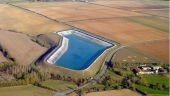
Depending on the water restriction level at the moment where you are you maybe could buy an above ground swimming pool to give the fire brigsde a top up? Where I used to live people often dug fireponds just for that purpose because there were no hydrants.
We have restrictions on water use at the moment but if you have a pool and kids you can still top it up, and you can keep watering your veg :)
 
pollinator
Posts: 1838
Location: southern Illinois, USA
383
  • Likes 10
  • Mark post as helpful
  • send pies
    Number of slices to send:
    Optional 'thank-you' note:
  • Quote
  • Report post to moderator
Plant selection matters in a positive way too....not only avoid the flammable things like conifers, eucalypts, and other aromatics, but do plant "wet" plants.  One time I saw a homestead in California where a hedgerow of prickly pear and agave along a property line stopped a windblown grass fire in it's tracks. These plants and others like them are succulents, they store a lot of water and all that water has to boil away before the plants can burn.
 
pollinator
Posts: 758
Location: South West France
289
  • Likes 10
  • Mark post as helpful
  • send pies
    Number of slices to send:
    Optional 'thank-you' note:
  • Quote
  • Report post to moderator

Re: using indigenous plants. Know what kind of ecosystem you're in. California, where I live, and much of the Mediterranean are fire-dependent or fire-climax ecosystems. That means they evolved over millennia with fire as the main disturbance or regenerator of the landscape.


It is indeed true, but where Hugo lives in Burgundy, and where I live in Dordogne, these are known to be green and pleasant lands, not used to this level of scorching.  It is indeed a good strategy for the future, if the future will continue to resemble the present. However, I think Hugo and myself are extremely concerned about the here and now, and how this green and pleasant land has turned into a dry, African safari landscape and a tinder box in such a short time.

It is not something we are used to in this country, and of course services are not prepared for it, neither are we.  Mediterranean ecosystems may have evolve for millenia to survive, but us poor little human beings, used to the green lushness of a temperate climate, have started to feel the stress and anxiety.  And maybe a slight panic too.   Twice in 10 days I've had fires started about 2.5 km away as the crow fly.  One to the west started by a tractor collecting his dry grass and the other to the East, by some idiot flying a model airplane in 42C heat (107.6F) and hitting a power line.  Both fires were so close that I'd already gathered all the cats and dogs, and yes, a go bag.

I was so complacent in my Permaculture course about the fire risk on the land. I thought it's an Australian thing, how can it possibly happen here in my green little paradise?!!  So I am very grateful for some of the good advice given on this thread from those of you who have experienced these disasters before. Thank you!!
 
Richard Henry
pollinator
Posts: 140
53
  • Likes 7
  • Mark post as helpful
  • send pies
    Number of slices to send:
    Optional 'thank-you' note:
  • Quote
  • Report post to moderator
Olga:  I am so sorry you and Hugo have had to learn the vagaries of the climate of Earth so quickly.  I am a geologist with over 55 years of practice and another 20 years of life to draw from.  Where I live, in the rural hills of Central NY, we also have a verdant and green area.  However, in my life I have seen even this area scorched by intense drought.  Few people now are aware that could even happen.  I have worked in disaster response, so am far too familiar with those places that ceased to be safe for too many reasons.  Due to that, and the fact I have studied ancient climates, I am all too aware that things can change very quickly.  Even with extremely few and limited wildfires locally, I have taken the lessons from California fires and maintain no small shrubs or wild grasslands around my farm buildings.  I maintain a large pond (constructed during that last major drought) that will provide fire crews with resources if needed.  I grow short, green lawns far larger than I need because they are also fire breaks.  I have transitioned asphalt roofing on my home to metal.  Each new project is reviewed for future potential.  

I do want to add to my previous fire prevention tips, a consideration of the opposite.  Floods. After an area has been exposed to wildfire, it can become subject to much more frequent and deadly floods.  When I worked the wildfires in Southern California, I also was part of a team that studied and provided enhanced flood risks (the pilot for many since).  Arid and semi-arid areas are lands of extremes and the floods can be horrible.  We found some flood risk zones that dropped from a 100-year to an 18-year return period.  Please remember to review any flood risk information or just take a close look around at potential flood risks.  Remember that stronger floods may damage or remove bridges and debris can choke a stream, causing the flood to jump its bed and run amok among areas normally safe from the water.  

Alas, we all are finding that Earth is not as kindly and slow to reach as we once knew.  Even more of a reason to engage in permie thinking and not that of the crowd.
 
Nina Surya
rocket scientist
Posts: 530
Location: in the Middle Earth of France (18), zone 8a-8b
321
2
hugelkultur dog tiny house chicken composting toilet cooking building sheep rocket stoves homestead composting
  • Likes 8
  • Mark post as helpful
  • send pies
    Number of slices to send:
    Optional 'thank-you' note:
  • Quote
  • Report post to moderator
Here in the Cher of France (smack in the middle of this country), the drought and heat are tough, too.
Like Olga mentioned, these areas used to be lush and green. Gradually the dry period has extended from two weeks in July/August, to this sudden and incredible longer-than-two-months now. The temperatures have been 27 - 37 degrees Celsius, and there's no real rain. Sometimes, like today, there's a hot wind that I've never experienced before in my life.

We made two ponds, initially to catch the surplus rain water in the winter for watering the veggie garden "in the two weeks of drought", but they now prove to be literally vital as an oasis for animals.
I can imagine they could work as an emergency water source for the fire brigade.
The idea of wild fires is super scary. My mind doesn't want to go in that direction at all, even though I do realise I "should".

I'm trying to keep the veggie garden and fruit trees alive, but am not expecting much of a harvest - the plants seem to have stopped all growth and production due to the heat.

Hoping for a relief, for all.
 
Olga Booker
pollinator
Posts: 758
Location: South West France
289
  • Likes 8
  • Mark post as helpful
  • send pies
    Number of slices to send:
    Optional 'thank-you' note:
  • Quote
  • Report post to moderator
Thank you Richard for your kind words and advice.  Of course, I do not know Hugo personally. I just know Burgundy where he lives.  Maybe I am projecting my own concerns and worries.  All I know is that in my area there is definitely an element of worry that is slowly turning into an unspoken fear.

So far, France has had more than 8,000 fires started and more than 25,000 hectares of land destroyed.  It probably doesn't sound like much to some, but France would probably fit in one of your states with room to spare, and this unprecedented set of events has put incredible strain on the fire and other services.  Added to that, there is no awareness or preparation in place for such happenings.  The fire services are overwhelmed and exhausted and the local authorities are running around like headless chickens !  No sign of the heat wave relenting anytime soon either.

Changing a roof is again something for the future and sounds like a rather expensive proposal.  The roof of most houses in France have terracotta tiles, in few areas it is slate, does it need changing? Isn't a metal roof generating too much heat inside the house?

I like the idea of a large pond, again for the future and provided you have the space to do so.  I do have the space so it will be on my list of to do.

I think the problem for the French people at this point in time is: what do I do right now when I can smell the smoke, I can see the smoke in the not so far off distance, and nowhere at any time in my life have I been prepared for such eventuality and I've been caught with my pants down !


Olga Booker
pollinator
Posts: 758
Location: South West France
289
  • Likes 3
  • Mark post as helpful
  • send pies
    Number of slices to send:
    Optional 'thank-you' note:
  • Quote
  • Report post to moderator
Nina, I hear you !  I could read my own story in your words right now.
 
Olga Booker
pollinator
Posts: 758
Location: South West France
289
  • Likes 4
  • Mark post as helpful
  • send pies
    Number of slices to send:
    Optional 'thank-you' note:
  • Quote
  • Report post to moderator
Kathleen Sanderson:

I have just re-read your post and I thank you for the practical advice coming from your experience.  I have an old horse box, and I did not think of using it to transport the animals.  We no longer have horses.  I think your brain goes to mush when you panic !

I did, however, think of getting the cats' transport carriers near and ready.  I'm not sure what to do about the chickens and ducks though.  I can only think of opening the gate and hoping that they can survive.  Water of course is ready also , along with the appropriate vessels for the animals.

We've arranged a network of friends that keep an eye on the news and the skyline.  Also agreeing to provide shelter if need be.

I never thought about removing curtains so that was a good suggestion.  Thank you to whoever else suggested it.

Now, the content of the grab and go bag remains a heated discussion with hubby.  Open to suggestions!


Alder Burns:

The planting of succulent is  a great idea.  Do you know of any that would survive our cold winters?  Prickly pear and agave do well in our summers, but die in the winter. Well, in my neck of the woods anyway.  Last winter for a few days the temperature went down to -10C (14F), my prickly pear went down with it.

 
Hugo Morvan
gardener
Posts: 1257
Location: France, Burgundy, parc naturel Morvan
614
forest garden fish fungi trees food preservation cooking solar wood heat woodworking homestead
  • Likes 8
  • Mark post as helpful
  • send pies
    Number of slices to send:
    Optional 'thank-you' note:
  • Quote
  • Report post to moderator
Hello folk. Wow Olga, take care! That must be really stressful having to deal with animals.
I've organised a village meeting. The subjects were , brief history of fires here and in general. A story of how it goes if a fire is happening for real. What we can do ourselves now and what we can do as a community in future.
People were pretty eager to speak and listen and meet. Everybody takes it serious now, and the neighbor who's house is touching mine has changed her tone a lot. She had mentioned i was approaching it 'angry' and that the fire brigade and community will handle it. She is now   pro-active, so that is a big stressrelief.

We are not used to wildfire risk, that is the biggest problem. There is a lot to burn that would not even be around in places that live for years with wildfires. If i were prepared like most people replying here, i would install an American sprinkler system on the roof, block the gutters and be done with it. But i'm not there at all, i even deem it not realistic to strife for at this moment.
I've been getting up an hourbefore sunlight to avoid most of the heat and get rid of mulch, wood debris, wood stored close to the house, plastic planting containers moved into the garden away from the house. I've since found that removing the climbing plants was a good move, because if it sits there for years it collects so much dead wood. I tested an electrical well pump to see if it would still work and spray the roof construction, bought garden hoses and mouth pieces, ordered IBC's and an e friend borrowed a gas powered generator in case the electric drops. So a lot of stuff while trying to stay calm, pray, do breathing exercises and keep healthy, gather seeds for next season, juggle work outdoors and rest as well. And still so much to do... Easy does it. I sit in my hallway were temperatures are not too bad and the swallows have young and fly in and out over my head to feed them. I hope i can laugh about it all in a year's time. But now the risk albeit small remains serious.

The following text are tips i gathered from you guys and gals, thanks immensely for showing what a great global community we are. I've somewhat adapted it to our local situation and send it out in 3 languages to who ever wanted to hear in my small network. I'm sure it helps, awareness is a great start to get things moving reducing risks.

Things we can do ourselves and recommend.  
Scrape moss off the roof and clear leaves from the gutters all around. Remove plastic gutters. This is because a wildfire causes a shower of burning debris that lands on the roof, collects in the gutter, and penetrates the roof structure.  
Make sure you have enough garden hose to reach the entire front of the house and garden, and that it has a nozzle attached so the underside of the roof structure near the gutter can be sprayed regularly. It’s most practical to have a separate garden hose system set up at the back. Getting tangled up while running the hose in a stressful situation is not recommended.  
Have enough water on hand to be able to spray the area yourself using an electric pump in case of a loss of water pressure. In the event that the above-ground power line burns out, it is advisable to power this electric pump with a gasoline or diesel generator. - Prune back or remove highly flammable or dried-out trees, shrubs, and vines that are touching the house.  
Keep firewood and plastic furniture away from the house.  
For larger trees, remove side branches up to a height of 2 meters so that burning grass cannot ignite the tree.  
There is some controversy surrounding these recommendations because creating a dry grassy yard where the wind and sun have free rein actually results in a parched savanna every year, which in turn poses a fire hazard.
Meanwhile, a balanced garden with trees and shrubs nourishes the soil, which helps retain moisture in biomass and prevents ground fires.  
These recommendations are therefore based on guidelines from areas where fires are a recurring phenomenon. The intention is not to cause panic. The fire department has managed to bring all fires under control so far, but the reality remains that we live in a forested area and that the small risk of an actual fire can indeed lead to catastrophic consequences and must therefore be taken seriously. We are not accustomed to living with the threat of wildfires and are adapting as best we can. Help one another wherever possible—many hands make light work—and remain vigilant and actively engaged with the community.
 
Richard Henry
pollinator
Posts: 140
53
  • Likes 7
  • Mark post as helpful
  • send pies
    Number of slices to send:
    Optional 'thank-you' note:
  • Quote
  • Report post to moderator
I just checked how widely distributed palm trees are in France.  It appears palms are found fairly widely albeit more frequently in the southern portion of the country. Why?  Palm trees are found along the California coast and in other warmer areas of the United States and have some often forgotten maintenance requirements, especially in fire weather.  Most palms grow by setting new leaves on the upper part of the canopy while the lower fronds die and tend to remain on the underside of the canopy.  These palm fronds need to be removed when they die because they are tinder on the wind.  I have seen video of flaming palm fronds being sucked into areas beneath roof eaves.  They will tend to remain beneath an eave burning merrily and attempting to set the home on fire.

Olga, I hear you regarding the terra-cotta tile roofs.  While they have strengths, they also display a fire vulnerability.  Unless there are bird stops installed along the tile edge, sparks have been shown to travel up under the tiles and set fires to the underlying wood support, especially in old wood that has dried from heat in attic areas.https://nvlpubs.nist.gov/nistpubs/TechnicalNotes/NIST.TN.1794.pdf

Terra-cotta roof tiles have been found to be subject to cracking or breakage due to errors in construction methods.  If powered nailers or even hand operated hammers drive fasteners too far, damage can readily occur.  This could allow penetration of the tile by firebrand sparks and. during high wind events, can cause tiles to break and pull away from the roof.  In this instance of high wind damage, additional damage can occur as pieces of broken tile are carried along the roof with additional tiles receiving damage.  Although not likely in an area such as France, in areas subject to high winds, the tiles themselves can become dangerous.  I know of one instance where a couple had installed plywood shutters over their windows to protect from a hurricane and its wind-blown debris.  The wife was seated on a couch and a piece of tile debris penetrated the plywood shutter and embedded itself into the wall next to her head.  The source of the tile was later determined to be about a quarter mile from the impact site.
 
r ransom
steward & author
Posts: 47501
Location: Left Coast Canada
19483
10
art trees books chicken cooking fiber arts
  • Likes 9
  • Mark post as helpful
  • send pies
    Number of slices to send:
    Optional 'thank-you' note:
  • Quote
  • Report post to moderator
Small ponds and swimming pools are great for something small like one or two house fires but would be used up in seconds if needed for a wildfire.  One of the problems with these is the equipment needs to be cleaned before it can be used again.  

Storing the water in the soil and the plants is often a better use to defend against wildfires.  Green plants (of the right type - think juicy ones) don't catch fire as fast as dry ones and will often self-extinguish.  Rain gardens are good for storing water from roof runoff in the winter.  This is the design most popular where I live. https://www.crd.ca/media/file/buildingaraingardencrdpdf

On a normal year, we have ZERO rainfall from April 30th to October 13th.  We have no mountains for whatever snow does to make soil moist.  So all the water we have needs to be collected and stored during the winter.  

a swimming pool or pond could be used to set up some sort of solar powered (because remember mains electricity might not be a thing during wildfire) gutter or roof watering system.  Bonus points if you catch the runoff and put it back into the system.   If a fire is that close, you probably won't want to be in that area - human lives are priority and if you stay to "water your house", it can mean they stop fighting the fire to try to get you out and dramatically increase the chance of your house burning down than if you evacuated on time.

Also, please don't rely on city water as this is often low pressure or not available if a wildfire gets close to homes.  It takes almost as much water to clean the firefighters and their equipment at the end of their shift as it does to fight the fire.  
 
master pollinator
Posts: 2175
Location: Ashhurst New Zealand (Cfb - oceanic temperate)
762
duck forest garden fungi trees chicken cooking solar sheep wood heat woodworking rocket stoves
  • Likes 6
  • Mark post as helpful
  • send pies
    Number of slices to send:
    Optional 'thank-you' note:
  • Quote
  • Report post to moderator
I just watched a PBS documentary on the January 2025 fires in LA, looking at the response a year later and doing some deep analysis of what could have been done to protect the communities that burned. The biggest bang for the buck, stressed again and again, was fireproofing the properties and structures, pretty much along the lines of all the good advice that's been coming out in this thread. There were a few major points that might not have been intuitive to those of us that haven't been through a massive wildfire:

It's much, MUCH harder to fight a fire once it has transitioned from wildland to the built environment. One house in an urban setting takes 10-15 people and 2-3 appliances to successfully extinguish...if the winds are high or water unavailable, they can't be expected to save it. And if the houses around it don't have a fully hardened perimeter, they are even more likely to catch. and now the equipment and people requirement is multiplied by the number of houses involved.

In high wind events, all bets are off. Wind-blown embers can travel hundreds of metres ahead of the flame front, and they get driven into all sorts of places that allow them to kindle new fires. Vents, gutters, shutters, any sort of gap that leads to fuel is a hazard.

Even if there's an ample water supply and hydrants, as soon as a lot of houses have burned then each one of them will have its supply connection running full blast because the internal plumbing is destroyed. Add those together and you get a significant pressure drop, coupled with the loss of supply that's now just running down the streets.

 
Olga Booker
pollinator
Posts: 758
Location: South West France
289
  • Likes 7
  • Mark post as helpful
  • send pies
    Number of slices to send:
    Optional 'thank-you' note:
  • Quote
  • Report post to moderator
Thank you R, Ranson for a very concise explanation, clear and to the point. well deserving another apple !.

Phil, this is a very good documentary that brought tears to my eyes.  I remember watching the fires on the news at the time and being so overwhelmed and sad.  Good advice at the end that echoes some of the advice already given  here.

It is worth noting that I live in a stand alone property in the middle of the woods.  Not an urban setting, so maybe a large pond would be useful?

There is one exit track going North/South and one going West.  Our prevailing winds are westerly winds and usually moderate to occasionally strong, but as Nina mentioned in a post above, we've had some extremely and unusually hot, strong winds lately, never seen before.  Coupled with, again, unusually hot temperature and no rain for weeks, we feel terribly unprepared.  I know what my next priority will be for next year, as I am sure we can expect this kind of weather event to become the norm .  What I can do right now, which I did not take into consideration is blocking the air vents, cleaning the gutters and the debris around the house, as well as moving the garden furniture.  It's ironic for us, since cleaning the gutters was always something you did at the end of autumn, freeing it from dead leaves and debris to let the free flow of rain water !

Trees here are also losing their leaves early and get blown against the house by the strong winds mentioned.  Raking and sweeping has become a daily chore that I try to complete before the mid morning temperature reaches 35C.  Like the little humming bird in the story trying to extinguish the jungle fire, I'm doing the best that I can.  And thank you for everyone's help and input !
 
r ransom
steward & author
Posts: 47501
Location: Left Coast Canada
19483
10
art trees books chicken cooking fiber arts
  • Likes 9
  • Mark post as helpful
  • send pies
    Number of slices to send:
    Optional 'thank-you' note:
  • Quote
  • Report post to moderator

Olga Booker wrote:

It is worth noting that I live in a stand alone property in the middle of the woods.  Not an urban setting, so maybe a large pond would be useful?


Is it big enough for a flying boat to land or other style of air tanker?  Clear enough for helicopter bucket drop?

When we are away from villages and other urban centers, that's the main method of getting water to a fire where I live.  Pumper trucks have limited capacity and are surprisingly fussy about the water as it can damage the truck.  But sometimes it can be used.  They need something like 1k gallons a min or something like that here.  Ground crews are mostly dealing with fuel removal here and trying to create fire breaks.  Less related to water the further away from villages and towns.

Notice how I keep specifying "here".  

BC has a few elements not found elsewhere (except California for some of them).

Really large areas between urban habitat.

A lot of expierence with wildfires of all kinds.  We measure our wildfires in thosuands of hectare with easily topping a million hectare lost on a mild year.

Because of this we have a strong air defense but once a fire gets above about 5 ha, we don't bother trying to put it out - that's a fast way to loose lives and homes.  Rather the focus is to build breaks (areas without fuel) to stop expansion, especially towards homes.  If that's done, it can burn itself out or if a bit close to a city, they might try to put it out.  

I understand most places in the world new to major wildfires size still focus on extinguish tactics which take resources away from stopping expansion.  In this case, maybe small ponds could be useful...if they can spare the time to clean and repair the pumpertrucks each day.


Where ponds shine is their ability to add water to the soil and attract the right kind of vegetation.

With wildfires, it's much better to think about prevention and starving it of fuel than putting it out.  In the winter here, it's common for gangs to remove fuel from forest edges and have a deep burn so that come summer and wildfire season, there is no fuel.  Creating fire breaks in the winter is far more useful.

During wildfire season, there is very little we can do that doesn't have risk of starting a fire.

For now, focus on cleaning roof and gutters, removing dead vegetation and other flammable from near the home.  Later, when rain returns, get out the chainsaw and digger and landscapes away.  
 
Olga Booker
pollinator
Posts: 758
Location: South West France
289
  • Likes 2
  • Mark post as helpful
  • send pies
    Number of slices to send:
    Optional 'thank-you' note:
  • Quote
  • Report post to moderator


For now, focus on cleaning roof and gutters, removing dead vegetation and other flammable from near the home.  Later, when rain returns, get out the chainsaw and digger and landscapes away.  


My intention exactly !  And yes it is large enough for air tankers.

Once again thank you for your input,.  Us, wild fires novices are just a bit anxious these days and grateful for all you experts.  If not experts, at least, seen that, been there, done that.

Sorry, already gave you my apple of the day !!
 
jason holdstock
Posts: 85
Location: Isle of Lewis, NW UK
14
  • Likes 5
  • Mark post as helpful
  • send pies
    Number of slices to send:
    Optional 'thank-you' note:
  • Quote
  • Report post to moderator
The 2022 fires in the Gironde "shocked" France apparently. Translated from The Gironde Dept. website

"In the summer of 2022, wildfires of unprecedented scale and duration broke out in the Landes de Gascogne mountain range, destroying more than 30,000 hectares of forest in Gironde (notably in La Teste de Buch, Landiras, Landiras St. Magne, Saumos, and Arès).
The speed at which the fires spread forced the prefecture to carry out a precautionary evacuation of nearly 50,000 people.
An exceptional situation calls for an exceptional response. Unprecedented measures were implemented to avert disaster. Despite the scale of the fires, the crisis management system proved effective and functional.
A positive outcome despite the scale of the crisis
Although described by Emmanuel Macron as “the largest fires in our history,” these fires resulted in no loss of life.
Less than 1% of all built structures were destroyed—approximately 30 buildings and five campgrounds, out of more than 4,000 buildings at risk (including nearly 600 located in the burned area).
The risk of the fire spreading to the entire Landes de Gascogne mountain range was averted.
Sensitive sites, including a high-threshold Seveso site and several non-Seveso ICPE facilities, were protected.
Risks related to gas have been eliminated (industrial storage, pipelines, etc.).
This positive outcome was made possible by the implementation of an exceptional and innovative crisis management system, as well as by the outpouring of local, national, and European solidarity that supported the firefighters’ efforts.
An extraordinary crisis management system"

Hardly any building loss, no loss of life.

I visited the man made forests  behind the Dune de Pyla in 1992 and remember being shocked myself at the extent of dry fallen debris and mountains of dead pine needles just left, with firebreaks often not exactly cleared, that forest being all pines planted to dry out a massive marshy area. That summer it was certainly dry. If that burnt I don't see how anyone can have been shocked.

Meteo France has a forest risk page  which says today, and a few days ago when I last looked, minimal risk.  

https://meteofrance.com/meteo-des-forets

Forests in France are often quite old, mixed not many evergreens but not maintained leaving much dead underbrush. The rural depopulation that produces cheap, characterful old houses for expats like me to buy also gives increased fire risk because there isn't a young population to care for everything like it used to be.

As I said above, where I used to live in Scotland fireponds were the norm. A rural fire truck will only carry maybe 2-4000 litres of water so the average family temporary swimming pool would give one fill. Previously, sucking water from ditches, ponds and even the sea might be done because that's the only source away from a slow mains fill at the station. The sea would certainly damage the equipment but even then they would and have if needed.
Up there as now in France, the main cause of fires starting seems to be humans unfortunately.

 
Posts: 1
2
  • Likes 6
  • Mark post as helpful
  • send pies
    Number of slices to send:
    Optional 'thank-you' note:
  • Quote
  • Report post to moderator
I have some first hand experience here, having had the 2024 Park Fire burn through my six acre property and successfully defended the house:

https://photos.app.goo.gl/BHjW6BRPxpX1Py8u9

This is at 2300 feet (700M) elevation with dense brush that has had fire suppressed for ~ 100 years. It is about 10 miles due north of the Camp Fire that burnt down ~12,000 houses in 2018 (same elevation).

There were a number of factors that made me believe I could defend my house, mostly because I had a large field in front of my house (~ 60 M x 60 M) that was mowed down, an 11,000 gallon above-ground pool and a $200 Harbor Freight gas-powered water pump (that I ran and tested every few months). The side of the house most exposed to brush (~25M away) had the bottom wrapped with 36" tall reflective bubble wrap temporarily stapled, and the year of the fire I had just finished replacing my wooden back stairs with metal utility stairs. We did lose power before the fire (as expected) so having water pressure means having an alternative energy source.

I thought all that was overkill before the fire came. It was not. It was an extremely hot ground fire that burnt through my property in 10 minutes. I sat in my car in the middle of my field, engine running, AC on, wearing a N95 mask, and watched the wood siding of my booster pump housing, about 3 M from my house, spontanteously ignite from the heat even though there was nothing but bare dirt in front of it for 25M. So I lost my 1000 gallon water storage tank and booster pump system, but the house was saved. I had wet down the entire field and deck around my house, and I was surprised how effective that was in dampening the intensity of the fire.  And I think both the reflective wrap and the metal stairs were key in preventing my house from igniting.

100 foot clearances may seem extreme, but they are realistic. As people above have mentioned, this does not mean bare earth, it just means reduced fuel. But even with all my prep, I am not sure if I had evacuated if the house would have survived. Wetting down around the house made a large impact, but it would have to be done just before the fire. If I tried to evacuate 3 hours before the fire and wet everything down at that time? Maybe 50/50 my house would survive? I suppose if you had water pressure and a perimeter of large sprinklers and you gauged your water supply and the fire onset right, you'd run out of water just as the fire arrived. Or you do all that with remote control, webcams, Starlink internet, backup power source, etc. It is possible.

Oh, here is the crazy thing about my situation (and was a factor in me staying on the property). There was only one paved exit from the ridge we are on, and it was cut-off on the first day of the fire. This was a well-known issue and the county government 'solution' was a dirt backroad escape route. However, I had taken a dirt bike that spring down that road, and it has not been maintained by the county for ~ 20 years (too remote, no money), and had degenerated to an extreme 4WD only obstacle course with giant (3-4' deep) ruts and gullies. 4WD trucks would go down this road in pairs. I dropped my dirt bike 4-5 times. I have a Toyota Prius! It turns out there was a group of people who evacuated out on this road, but some people had to leave their cars behind (and the entire convoy was risking getting stuck in the fire). Those people went down that road blindly, trusting their government was going to protect them, but I had seen what the road looked like. I was safer on my property, and the firefighter who turned me back from the roadblock (the main paved access out) agreed with me, I'd be safer on my property.

Another big emphasis based on California wildfire danger is the 0-5 foot zone around your house. This is based on evidence from recent fires that houses ignite due to fire starting next to the house (like a deck or fence) and that is what eventually burns down the house.  

I have had 20+ years of planning, having been evacuated in 1999, driving down my driveway in tears with a fire on the ridge 500 feet away, certain my house would burn. The amount of time and effort I put in every year to maintain fire safety, it was not hypothetical from about 2016 on with huge fires being the norm. So every spring/summer is a very mindful preparation for fire, and I probably spend half my weekends in those season just maintaining or trying to improve my fire safety.

But I love my place. Two years since the fire, and the undergrowth under the now-burnt canopy has regenerated and created a new fire hazard; the brush is thin but dense and chest-high. I need to get a tractor or figure out how to deal with it. I am considering a walk-behind brush mower (DR brush mower). I want to be able to selectively mark and protect trees and manage regrowth, and just paying a contractor to clear it just is not going to work.
 
r ransom
steward & author
Posts: 47501
Location: Left Coast Canada
19483
10
art trees books chicken cooking fiber arts
  • Likes 5
  • Mark post as helpful
  • send pies
    Number of slices to send:
    Optional 'thank-you' note:
  • Quote
  • Report post to moderator
Salt water is almost never used to fight fires due to the deadly chlorine gas produced in that situation.  It's very much a last resort and not done near people.

This is also why burning debris after a tsunami is a bad idea.  Sometimes this kills more people than the tsunami.

Salt water is less effective at putting out fires, by a significant amount....apparently. it's also bad to use near electricity.

And salt water pretty much destroys the equipment if it's not designed for that.  Putting the aircraft out of action for weeks or months when it's needed the most.

Also, it reduces the ability for the ecosystem to recover after the blaze.  In some cases, making it more likely to burn again.  But lack of studies in this area mean we have much to learn.

More info
https://www.theweathernetwork.com/en/news/science/explainers/why-california-crews-arent-relying-on-the-ocean-to-douse-wildfires-los-angeles-palisades-eaton
 
jason holdstock
Posts: 85
Location: Isle of Lewis, NW UK
14
  • Likes 2
  • Mark post as helpful
  • send pies
    Number of slices to send:
    Optional 'thank-you' note:
  • Quote
  • Report post to moderator
It was my ex-firechief neighbour in Scotland who told me about them using sea water. Maybe he was talking nonsense.
 
r ransom
steward & author
Posts: 47501
Location: Left Coast Canada
19483
10
art trees books chicken cooking fiber arts
  • Likes 4
  • Mark post as helpful
  • send pies
    Number of slices to send:
    Optional 'thank-you' note:
  • Quote
  • Report post to moderator

jason holdstock wrote:It was my ex-firechief neighbour in Scotland who told me about them using sea water. Maybe he was talking nonsense.


Google tells me there are 8million hectares of land in scotland.  In 2023, British Columbia lost nearly 3 million ha to wildfire (something like 2.84mil which is like 35% the landmass of scotland), with an average of 1.5mill lost per year.  

I hate to be that person, but from what the bbc reports about "exciting new technology and techniques " the scottish fire fighters are 'discovering' to fight fires over the last 10 years, I have a sad opinion of their expierence level and skill at dealing with significant wildfires.  Seawater takes some pretty tricky stuff to get right and if they officially claim this is an option, this lowers my opinion even more.  Maybe they mean loch water which might have less salt?  I don't know much about lochs, so maybe there is something there.

More likely your guy is an expert at fighting small fires of less than a couple of ha.  Building fires are very different than wildfire and I'm told the expierence doesn't cross over well.  Think more firestorms of Coventry or Dresden vs fire from blitz bombs in london.  Very different tactics needed.

They are doing their best with what they know, but often it feels like each country in europe is reinventing the wheel when it comes to wildfire fighting.   Yes, techniques need to be adapted to conditions,  but for some reason, they seem to be starting from scratch instead of learning from the mistakes of others... or their own past.

But, i also feel the same way about most of the rest of canada.  They lack expierence and prideful, each province needs to reinvent the wheel instead of using tried and true tactics.   A lot of homes and damage last year came from lack of budget and planning.
 
jason holdstock
Posts: 85
Location: Isle of Lewis, NW UK
14
  • Likes 3
  • Mark post as helpful
  • send pies
    Number of slices to send:
    Optional 'thank-you' note:
  • Quote
  • Report post to moderator
I think you'll find the difference between a fresh water loch and sea water is fairly well known.
Also, since his family has been there generations, the fact he was the fire chief just officialises the muir burning experience people like him have in spades.
If putting sea water on a massive burn is a bad idea, it is possible they used it to dampen the heather before the fire reached it. I didn't question him on specifics I'm afraid.
 
r ransom
steward & author
Posts: 47501
Location: Left Coast Canada
19483
10
art trees books chicken cooking fiber arts
  • Likes 4
  • Mark post as helpful
  • send pies
    Number of slices to send:
    Optional 'thank-you' note:
  • Quote
  • Report post to moderator
It depends if the vegetarian can withstand salting the earth with seawater.  I know some of the small isles off the northern edge of scotland can.  I don't know enough about mainland Scotland vegetation to know if it will thrive on salty soil, or be more like our coastal vegetation and turn into brittle fuel for future fires when the ground is salted.

And the fire plus salt problem remains.  Possibly more concentrated as it takes repeat application if the soil is friable from heat.  And the other issues listed above.  

Salt water is usually a last resort for wildfire fighting. Maybe when lakes and lochs run dry... but hopefully, a long way off.  Or when technology improves, which would be lovely if soon.


The only universal I've seen with wildfires is that focusing on extinguishing is a shiny distraction from what actually stops them.  Prevention and containment.  Most of this is permaculture techniques that help trap moisture in the soil when times are good, so that there is less fuel and less dry vegetation to get the fires going strong.

 
I agree. Here's the link: http://stoves2.com
reply
    Bookmark Topic Watch Topic
  • New Topic