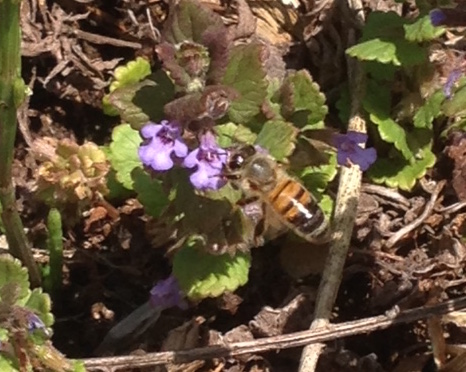
Ground ivy (Glechoma hederacea) grows abundantly around my house, more common than dandelions; it's the first plant to colonize the pine shaving clean-outs from the chicken coop - even before the material has broken down. But it stays low, and never really gets in my way. Honey bees and bumblebees love the flowers, and it blooms for a long time. It was once used medicinally for all kinds ailments, and I find that the leaves, in moderation, are a tasty addition to salads. The culinary possibilities go beyond that; I've never cooked it myself, but others have done some interesting things. Here's a recipe I stumbled across that shows further possibilities: lesser celandine and ground ivy stew
I've read it can be toxic to horses and cattle in large amounts, so it's probably not worth introducing into new places. But for those of us already surrounded by it, maybe we can learn to appreciate why early European settlers brought it with them to the New World. We may be missing an abundance beneath our feet.
I love me some Creeping Charlie. It has taken over about half my backyard and has begun to take over the front. The day its conquest is complete is the day I list my f*&king lawnmower on Craigslist.
I also love this plant!
It stays green year round and was evidently used to bitter beer before hops became popular.
This, clover and plantain are my favourite lawn greens.
Creeping Charlie is starting to grow one me. (Not literally)
I use a lot of wood chip in my gardening, and creeping charlie doesn't mind growing over the wood chips. I have found this to happen also with chicken coop litter that is composting in place. I have found that if the patch gets too big, I can just 'roll' up the plant matter with the chips it is clinging to into a sort of log and place it wherever I need it.
So far, there hasn't been any regrowth. I did try this right before winter and it is now spring.
As a lawn replacement it is great! We use it in cooking frequently.
Just keep it out of your garden beds. It appears to have some allopathic effects. One year I decided to leave it to use as a ground cover under squash. I cleared a space of 8 inches of so and put in my seeds. They sprouted. Two out of ten plants survived. These two plants never grew vines longer than three feet. They flowered, but fruit aborted.
It seems to be fine as pulled and dried mulch.
I've read here on Permies of someone using it for paths. I am not attentive enough to keep it in it's place, so it's not allowed in my garden. Or rather, I am always trying to evict it. I do however much prefer it to Bermuda grass!
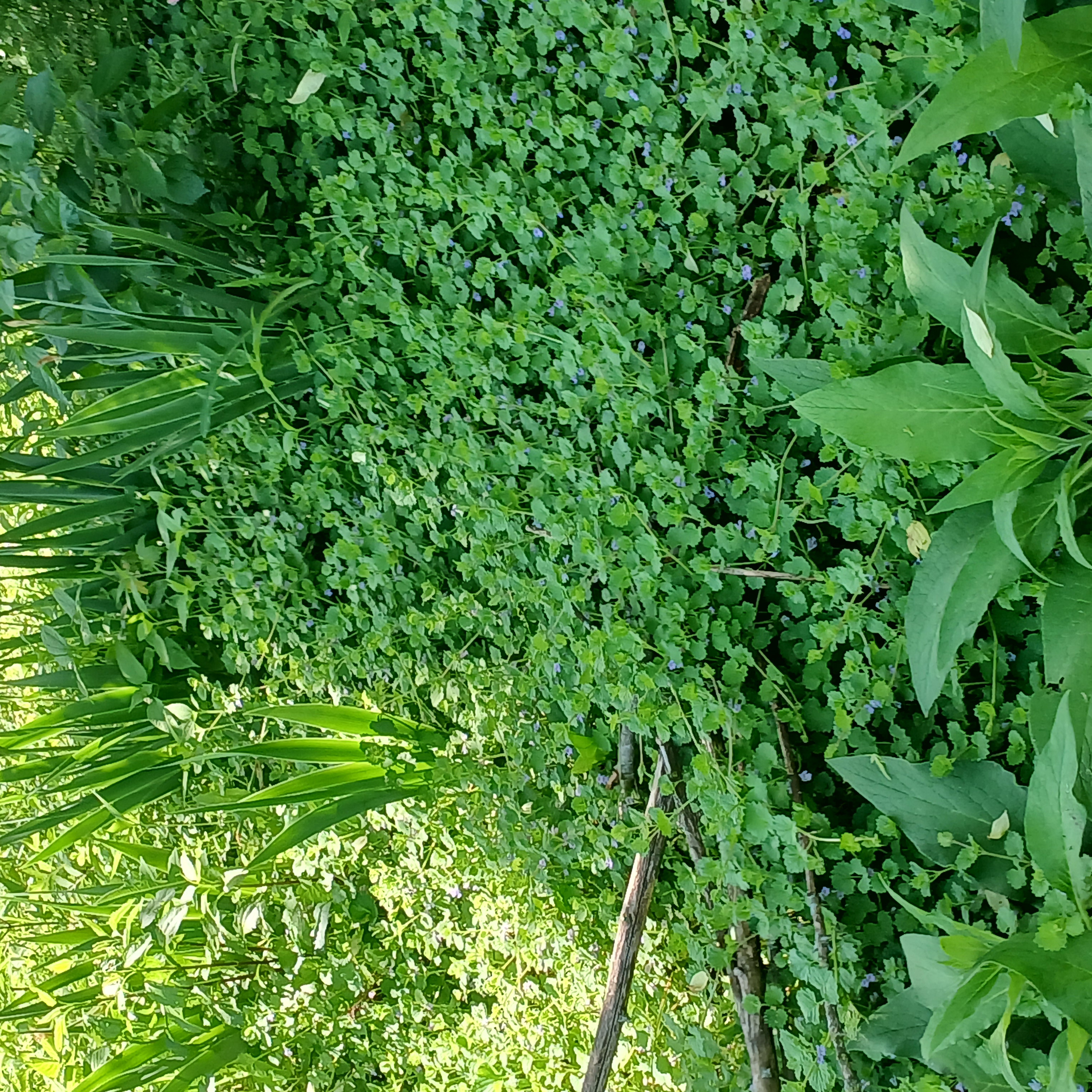
Here it is where it does not get mown, trying to overwhelm my irises. And comfrey. I'm behind in my charlie patrols.
Thanks for the warning Joylynn! We don't have it on our land, but I had been playing with the idea of planting some on our future turf roof, because it's pretty and resilient and is happily growing on one turf-roofed builing I know of. However, I don't feel like planting anything that's allelopathic enough to kill squash and powerful enough to overwhelm comfrey, unless it's extremely useful...
I didn't know the English name(s) of this plant. But it is very, very common here (in Dutch we call it 'hondsdraf', probably meaning it's like a running dog). I know it's edible, but I don't like the smell, so I won't eat it or drink tea of it.
Because it tries to cover the soil and then most other plants don't grow there anymore, weeding is needed. It isn't suitable for 'chop and drop', so all of it goes to the compost heap. Strangely enough it doesn't go on growing in the compost.
Ground Ivy makes a good ground cover amongst raspberries and asparagus, as well as general garden paths. It can be a bit agressive but is easily pulled back and/or mowed. Bumblebees like the flowers in the spring when not much else is blooming.
I have not found it to be allopathic where I have it growing. In amongst it are salal, broom, buttercup, daylily, rue, carolina cranesbill, fireweed, chicory, English plantain and feverfew.
It grows here. Which means it grows everywhere it can. It's not strong enough to really do me any good -- taking over from the grass, for instance, would be wonderful. It's inoffensive enough. I keep its colonization efforts limited in my veggie beds, but I usually have better weeds to pull or hoe...usually grass. It doesn't even vaguely outcompete my comfrey. I've eaten it a little, but don't really love it.
Toxic to horses? This website -- https://www.invasive.org/alien/pubs/midatlantic/glhe.htm -- says: "It is toxic to many vertebrates, including horses, if eaten in large quantities either fresh or in hay." Large quantities would be quite a bit for a horse, I suppose.
Post by:autobot
Gravity is a harsh mistress. But this tiny ad is pretty easy to deal with: