• Post Reply Bookmark Topic Watch Topic
  • New Topic
permaculture forums growies critters building homesteading energy monies kitchen purity ungarbage community wilderness fiber arts art permaculture artisans regional education skip experiences global resources cider press projects digital market permies.com pie forums private forums all forums
this forum made possible by our volunteer staff, including ...
master stewards:
  • Carla Burke
  • Anne Miller
  • Nancy Reading
  • John F Dean
  • r ransom
  • paul wheaton
  • Timothy Norton
stewards:
  • Jay Angler
  • Pearl Sutton
  • Andrés Bernal
master gardeners:
  • Christopher Weeks
gardeners:
  • M Ljin
  • Thekla McDaniels
  • May Lotito

Any trees *bad* for coppicing?

 
pollinator
Posts: 267
Location: Central Virginia, Zone 7.
82
trees chicken food preservation bee solar composting
  • Likes 7
  • Mark post as helpful
  • send pies
    Number of slices to send:
    Optional 'thank-you' note:
  • Quote
  • Report post to moderator
There are many posts here listing trees that coppice well ... are there trees that do not coppice at all?  
 
Steward and Man of Many Mushrooms
Posts: 6249
Location: Southern Illinois
2008
transportation cat dog fungi trees building writing rocket stoves woodworking
  • Likes 4
  • Mark post as helpful
  • send pies
    Number of slices to send:
    Optional 'thank-you' note:
  • Quote
  • Report post to moderator
Hmmmm,

Silver Maple certainly will grow fast and actually coppice well, but the wood quality is among the worst.  It has a low heating value, a high water content and therefore takes a long time to dry out.  The wood itself is weak and subject to rotting quickly.  The seeds are generally a nuisance (though they will quickly reproduce so there is that).  They are a fast growing shade tree and are probably best for that single application.  But I would not use them for coppicing unless I had no other alternative.

Eric
 
pollinator
Posts: 3950
Location: Kent, UK - Zone 8
757
books composting toilet bee rocket stoves wood heat homestead
  • Likes 12
  • Mark post as helpful
  • send pies
    Number of slices to send:
    Optional 'thank-you' note:
  • Quote
  • Report post to moderator
Generally conifers will not coppice at all, while most deciduous broadleaf trees will.

But they need to be coppiced at an appropriate point in their growth cycle (not too old) or they may not resprout at all.

One of the big factors with long term coppice viability is what happens to the stool over the period of a few coppice cycles. Chestnut and hazel do really; they resprout vigorously from the stool. Others can succumb to stool root, and while they may coppice and regrow a couple of times, the stool may collapse after a few cyles.

Chestnut and hazel stools will coppice essentially indefinitely. In our woods we are managing coppice stools that are at least 400 years old, and potentially are contemporary with the roman presence in Britain. The Romans were the first to bring sweet chestnut to the UK.
 
pollinator
Posts: 1206
Location: Boston, Massachusetts
535
6
urban books building solar rocket stoves ungarbage
  • Likes 6
  • Mark post as helpful
  • send pies
    Number of slices to send:
    Optional 'thank-you' note:
  • Quote
  • Report post to moderator
Michael, I think that I have a different experience (or definition?) of coppicing with regards to conifers.

When damaged at the top, a pine (white pine/pinus strobus, in my area) will turn one remaining upper branch (or more) upward to become a new leader. I've also seen it with blue spruce and some sorts of Christmas tree fir.
There was a local man with a cut-your-own Christmas tree farm who would let you cut whatever tree, wherever you wanted. So, if you liked the top of a 14 foot tree, you could cut it 5 feet off the ground and leave the "stump" behind.
One year when buying a 16 foot tree from him, we found just such a tree over 20 feet tall, that had sent three equal leaders up from a stool 4 feet tall. We cut it and left a 2 foot stool behind...

My question for Mark would be: Could this a viable business model for a Christmas tree farm, versus the clear-cutting and succession planting model? Considering the size of the remaining rootstock, would a replacement leader grow to a market-sized tree more quickly than a seedling?
Not to mention the potential for pruning back some of the competing branches for other decorative uses...
 
steward
Posts: 16509
Location: Pacific Wet Coast
11071
duck books chicken cooking food preservation ungarbage
  • Likes 1
  • Mark post as helpful
  • send pies
    Number of slices to send:
    Optional 'thank-you' note:
  • Quote
  • Report post to moderator

Kenneth Elwell wrote:
My question for Mark would be: Could this a viable business model for a Christmas tree farm, versus the clear-cutting and succession planting model? Considering the size of the remaining rootstock, would a replacement leader grow to a market-sized tree more quickly than a seedling?
Not to mention the potential for pruning back some of the competing branches for other decorative uses...


There's a Christmas tree operation in my province, (British Columbia, Canada), that does essentially that. I don't think it's considered "true coppicing", because you have to leave branches below your cut point - the one you cut at 2 feet off the ground may not regrow a third time. Mark's book does have some info about the few evergreens that this works for. This might be a good small side business for a farm that's close to an urban area, as they could get a bit of winter income on a very local cycle. Offer to take the tree back after New Years and turn it into firewood and mulch!
 
master steward
Posts: 19951
Location: USDA Zone 8a
5001
dog hunting food preservation cooking bee greening the desert
  • Likes 2
  • Mark post as helpful
  • send pies
    Number of slices to send:
    Optional 'thank-you' note:
  • Quote
  • Report post to moderator
Several years ago there were several threads about how Christmas trees have the tops cut out.  I did some research and found out that procedure is called "Crowning".

I am also very interested in both coppice and pollard so I looked that up.

Here is what Wikipedia had to say:

Coppicing is a traditional method of woodland management which exploits the capacity of many species of trees to put out new shoots from their stump or roots if cut down. In a coppiced wood, which is called a copse, young tree stems are repeatedly cut down to near ground level, resulting in a stool.


Pollarding is a similar process carried out at a higher level on the tree in order to prevent grazing animals from eating new shoots.


https://en.wikipedia.org/wiki/Coppicing

The question asked are there "trees that do not coppice at all?"
All I have been able to find are which trees are best.

From experience, I would say Junipers and Cedars are not good candidates. Cut them at ground level and these trees do not come back.  
 
gardener
Posts: 3132
2114
  • Likes 4
  • Mark post as helpful
  • send pies
    Number of slices to send:
    Optional 'thank-you' note:
  • Quote
  • Report post to moderator
I've been fascinated by the fascination with coppicing here on permies. I'd never heard of coppicing (or pollarding) before spending time here. It just isn't a thing where I live in Kentucky. I've seen a lot of trees, from small to huge, cut off at the ground. Many just die, while some may put out new growth. I've noticed the new growth is almost always quite stunted, and often only lasts a few years at most before dying. Perhaps the timing, size, etc. just isn't right for them to survive, but I suspect it's the environment as well. We tend to have heavy clay soil, which is not particularly conducive to growing a lot of stuff anyway, and tend to have a lot of fungi and bacteria and high humidity. I suspect the rot happens faster than the plant can regrow and sustain its roots. So while I don't have specific species that would be poor choices, I would venture a guess that any species that are particularly susceptible to rot in your area, or maybe even soil borne diseases in general may be a poor choice. Maybe slow-growing ones may also be more susceptible to failure, but this is just conjecture on my part.
 
Jay Angler
steward
Posts: 16509
Location: Pacific Wet Coast
11071
duck books chicken cooking food preservation ungarbage
  • Likes 3
  • Mark post as helpful
  • send pies
    Number of slices to send:
    Optional 'thank-you' note:
  • Quote
  • Report post to moderator
I've read that trees over a certain age are not good candidates. I don't remember it as being like an "off switch", but for some reason 35 years of age or older are much less likely to resprout is floating in my brain. The problem is that there are sooo... many different tree species and this could be affected by growing conditions where the tree is, that even if one were to experiment on some trees on their land, it wouldn't necessarily apply to a similar tree in a much different eco-system. Coppiced oak trees are sometimes cut on a 50 year rotation, but they are established as coppiced trees and the article didn't say when the first cut was done or whether they tried to coppice 50 trees for the first time at 50 years of age and only some survived.

Due to the availability of cheaper materials than coppiced wood for the last 70+ years, much of this sort of knowledge is lost. Unfortunately, there may be a certain need for "reinventing the wheel"!
 
J. Graham
gardener
Posts: 3132
2114
  • Likes 4
  • Mark post as helpful
  • send pies
    Number of slices to send:
    Optional 'thank-you' note:
  • Quote
  • Report post to moderator

Jay Angler wrote:I've read that trees over a certain age are not good candidates. I don't remember it as being like an "off switch", but for some reason 35 years of age or older are much less likely to resprout is floating in my brain.


The first thing that comes to my mind is that it takes buds to form new shoots. An older tree with thick bark is less likely to have buds so low to the ground. I would say pollarding would have a better chance of success on older trees.

Also, if a tree is old and big, it will have an appropriately sized root system. A few small shoots growing over a few years would likely not have the photosynthesizing power to support such a massive root system, which would likely start rotting away. That gets back to my perceived issue, rot outpacing the tree's ability to resist it and grow.
 
pollinator
Posts: 137
Location: Zone 9a
70
  • Likes 4
  • Mark post as helpful
  • send pies
    Number of slices to send:
    Optional 'thank-you' note:
  • Quote
  • Report post to moderator

Jay Angler wrote:I've read that trees over a certain age are not good candidates. I don't remember it as being like an "off switch", but for some reason 35 years of age or older are much less likely to resprout is floating in my brain. The problem is that there are sooo... many different tree species and this could be affected by growing conditions where the tree is, that even if one were to experiment on some trees on their land, it wouldn't necessarily apply to a similar tree in a much different eco-system.


It does seem to vary a lot.  The redwoods around here that were 500+ years old and were cut send up new suckers that become trees, and many of these are now over 100ft tall - usually a cluster of five or ten or twenty trunks all together.  None of these anywhere have reached old age yet however, so we don't really know how they will fare in the long term.
 
Jay Angler
steward
Posts: 16509
Location: Pacific Wet Coast
11071
duck books chicken cooking food preservation ungarbage
  • Likes 2
  • Mark post as helpful
  • send pies
    Number of slices to send:
    Optional 'thank-you' note:
  • Quote
  • Report post to moderator

Philip McGarvey wrote:It does seem to vary a lot.  The redwoods around here that were 500+ years old and were cut send up new suckers that become trees, and many of these are now over 100ft tall - usually a cluster of five or ten or twenty trunks all together.  None of these anywhere have reached old age yet however, so we don't really know how they will fare in the long term.

I'd heard that about redwoods! I wonder what will happen as the trunks expand and run into each other. I expect they'll mold together, but will there remain weak points and spots where disease will enter or will their base be wider and therefor the combined trees stronger than a single seed?  Do you know how the spacing works for the redwoods?

However, you use the word "sucker" - I'm thinking my recollection is that they formed from the roots, rather than the trunk, so technically not "coppicing". This tendency of some plants to put up new trees from existing roots - Seaberry (Hippophae rhamnoides) for example - can be both an asset and a curse. With coppicing from an open field, the planner gets to choose which trees and where they go, to provide spacing both for optimal growth of the sort desired, and ease of harvest. With suckering, Mother Nature does much of the "choosing"!
 
author
Posts: 55
21
  • Likes 2
  • Mark post as helpful
  • send pies
    Number of slices to send:
    Optional 'thank-you' note:
  • Quote
  • Report post to moderator

Gary Numan wrote:There are many posts here listing trees that coppice well ... are there trees that do not coppice at all?  


Hi Gary
Your question has largely been answered in a very general way here by a number of people. Basically most broadleaf (deciduous) species will sprout when cut (assuming they aren't too old and also get good sunlight), whereas few conifers will coppice in the true sense.

The big variable with conifers lies in how much you leave after cutting because as a few people brought up, there's a technique called 'stump culture' management that's used with many conifers that allows you to manage an existing conifer by cutting all but the lower 2-3 whorls of branches (or at least leaving some low branches) in place. I'll write a bit more on that in response to someone else's comment on the thread.
 
Mark Krawczyk
author
Posts: 55
21
  • Likes 11
  • Mark post as helpful
  • send pies
    Number of slices to send:
    Optional 'thank-you' note:
  • Quote
  • Report post to moderator

Kenneth Elwell wrote:Michael, I think that I have a different experience (or definition?) of coppicing with regards to conifers.

When damaged at the top, a pine (white pine/pinus strobus, in my area) will turn one remaining upper branch (or more) upward to become a new leader. I've also seen it with blue spruce and some sorts of Christmas tree fir.
There was a local man with a cut-your-own Christmas tree farm who would let you cut whatever tree, wherever you wanted. So, if you liked the top of a 14 foot tree, you could cut it 5 feet off the ground and leave the "stump" behind.
One year when buying a 16 foot tree from him, we found just such a tree over 20 feet tall, that had sent three equal leaders up from a stool 4 feet tall. We cut it and left a 2 foot stool behind...

My question for Mark would be: Could this a viable business model for a Christmas tree farm, versus the clear-cutting and succession planting model? Considering the size of the remaining rootstock, would a replacement leader grow to a market-sized tree more quickly than a seedling?
Not to mention the potential for pruning back some of the competing branches for other decorative uses...


l
Dang! I just wrote a long response and then accidentally left this tab. Ok, second try...

So yes, Kenneth - you're absolutely right. Again, this is what I know of as stump culture. And I've seen it many times in white pines following a damaged top/weevil damage.

And yes, this is an actual model for a Christmas tree farm that has precedent. In my book, I profile Emmet van Drieshe and the Pieropan Christmas tree farm in Massachusetts where they use stump culture to continue to produce Christmas trees and wreath making materials from trees originally planted over 60 years ago. https://www.pieropantrees.com/

Emmet seemed to think there isn't any reason why any conifer wouldn't respond positively to this management (assuming they're not too old, in relatively good health and get good sunlight).

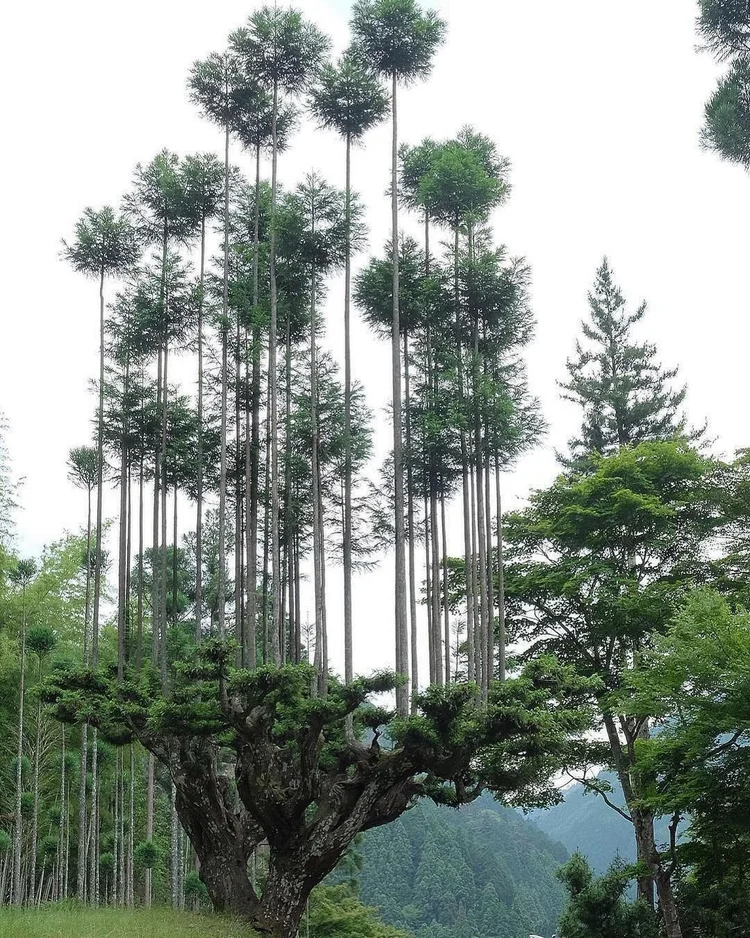
Also, if you'd like your minds blown - check out the ancient Japanese technique used for a type of cypress/cedar trees called daisugi - https://en.wikipedia.org/wiki/Daisugi

Sooo cool!
 
Kenneth Elwell
pollinator
Posts: 1206
Location: Boston, Massachusetts
535
6
urban books building solar rocket stoves ungarbage
  • Likes 5
  • Mark post as helpful
  • send pies
    Number of slices to send:
    Optional 'thank-you' note:
  • Quote
  • Report post to moderator

Mark Krawczyk wrote:
Dang! I just wrote a long response and then accidentally left this tab. Ok, second try...

So yes, Kenneth - you're absolutely right. Again, this is what I know of as stump culture. And I've seen it many times in white pines following a damaged top/weevil damage.

And yes, this is an actual model for a Christmas tree farm that has precedent. In my book, I profile Emmet van Drieshe and the Pieropan Christmas tree farm in Massachusetts where they use stump culture to continue to produce Christmas trees and wreath making materials from trees originally planted over 60 years ago. https://www.pieropantrees.com/

Emmet seemed to think there isn't any reason why any conifer wouldn't respond positively to this management (assuming they're not too old, in relatively good health and get good sunlight).

Also, if you'd like your minds blown - check out the ancient Japanese technique used for a type of cypress/cedar trees called daisugi - https://en.wikipedia.org/wiki/Daisugi

Sooo cool!


Thank you Mark! My mind blown just by the first part of your reply... Incredible that they are near enough to me for a day trip (I'm in Eastern Massachusetts) and with nearly the same growing conditions, I'll be reaching out to them for sure!
Now my Christmas book list has grown even longer, your book, Emmet's books...
 
Posts: 60
Location: North Central Indiana. USDA Zone 6, Clay Loam soil.
16
  • Likes 1
  • Mark post as helpful
  • send pies
    Number of slices to send:
    Optional 'thank-you' note:
  • Quote
  • Report post to moderator

Jordan Holland wrote:I've been fascinated by the fascination with coppicing here on permies. I'd never heard of coppicing (or pollarding) before spending time here. It just isn't a thing where I live in Kentucky. I've seen a lot of trees, from small to huge, cut off at the ground. Many just die, while some may put out new growth. I've noticed the new growth is almost always quite stunted, and often only lasts a few years at most before dying. Perhaps the timing, size, etc. just isn't right for them to survive, but I suspect it's the environment as well. We tend to have heavy clay soil, which is not particularly conducive to growing a lot of stuff anyway, and tend to have a lot of fungi and bacteria and high humidity. I suspect the rot happens faster than the plant can regrow and sustain its roots. So while I don't have specific species that would be poor choices, I would venture a guess that any species that are particularly susceptible to rot in your area, or maybe even soil borne diseases in general may be a poor choice. Maybe slow-growing ones may also be more susceptible to failure, but this is just conjecture on my part.


Might these "stunted" trees be stunted because deer are eating them?
 
steward
Posts: 3595
Location: Maine, zone 5
2253
9
hugelkultur dog forest garden trees foraging food preservation cooking solar seed wood heat homestead
  • Likes 16
  • Mark post as helpful
  • send pies
    Number of slices to send:
    Optional 'thank-you' note:
  • Quote
  • Report post to moderator

Mark Krawczyk wrote:
Also, if you'd like your minds blown - check out the ancient Japanese technique used for a type of cypress/cedar trees called daisugi - https://en.wikipedia.org/wiki/Daisugi


Sooo cool!


Mind blown!  Also blown by how is this not how we grow and harvest wood all over the world today?  Seems like it produces superior wood with superior yields and allows the forest to be maintained fairly nicely.  What am I missing?
 
author
Posts: 55
Location: Devon, UK
64
forest garden trees medical herbs
  • Likes 5
  • Mark post as helpful
  • send pies
    Number of slices to send:
    Optional 'thank-you' note:
  • Quote
  • Report post to moderator
I have long been interested in coppicing for medicinal trees in order to gain sustainable supplies. So I have found it strange that there is no 'measure' of coppicability that could tell us whether a tree is suited or not. I wrote a couple of posts about coppicing  back in September (https://annestobart.substack.com/p/coppicing-trees-for-herbal-medicine-part1) and this is what I suggested about such a 'measure" in Part 2:
"What is coppicability and could it be useful as a measure?
Coppicability is a forestry and agroforestry term that refers to a tree or plant’s ability to successfully regenerate new shoots from its stump or roots after being cut down to ground level. It could indicate the capacity of a plant species to undergo repeat harvesting and being allowed to regrow. More research is needed to widen knowledge of the coppicability of medicinal species and we should look at ways to determine productivity, survival and vigour. Perhaps the following factors could be identified for each species and grouped in some way as an index of coppicability?
Shoots: This relates to the number of epicormic buds and number of usable shoots produced per stump.
Yield: This relates to the harvestable material generated by the regrowth, and the length of cycles between cutting.
Survival rate: This relates to tolerance for pruning and the percentage of harvested stumps that successfully stay alive and sprout rather than rotting or dying.
Vigour: This relates to speed of growth and how quickly and healthily the new shoots grow back."

I am hoping someone will take up the challenge! If anyone would like to know some species suitable to coppice for medicinal purposes there is a table of 20 trees at the end of each post.
 
Ian Thompson
Posts: 60
Location: North Central Indiana. USDA Zone 6, Clay Loam soil.
16
  • Likes 5
  • Mark post as helpful
  • send pies
    Number of slices to send:
    Optional 'thank-you' note:
  • Quote
  • Report post to moderator
I am surprised slippery elm is not in your list.

Looking at your list, I would say that most all of them will coppice.  Assuming that they are growing in sunny areas with adequate fertility it seems like all of those plants should thrive under coppicing, assuming they not subject herbivory.  Among broad leaved woody plants suitability for coppicing is the rule rather than the exception.  Anything that will pollard will coppice, but some, of course, are not suitable for pollard (plants such as elder, which naturally grow as multi-stemmed shrubs).
 
Jay Angler
steward
Posts: 16509
Location: Pacific Wet Coast
11071
duck books chicken cooking food preservation ungarbage
  • Likes 6
  • Mark post as helpful
  • send pies
    Number of slices to send:
    Optional 'thank-you' note:
  • Quote
  • Report post to moderator

Anne Stobart wrote:... I have found it strange that there is no 'measure' of coppicability that could tell us whether a tree is suited or not.


There are a lot of factors involved, but one that's not obvious on your list, is that I have noticed some plants putting our huge numbers of shoots after being cut to the ground, creating an unsustainable situation, and other trees putting out only a few, which allows the tree better odds of getting those few sprouts through our summer drought. Variety of tree, micro-ecosystem, and weather can influence what actually happens to a specific tree, and makes it quite difficult to make a measure that will be meaningful without many caveats.
 
Posts: 23
Location: Central VA
9
2
kids foraging building
  • Likes 8
  • Mark post as helpful
  • send pies
    Number of slices to send:
    Optional 'thank-you' note:
  • Quote
  • Report post to moderator

Philip Doherty wrote:It does seem to vary a lot.  The redwoods around here that were 500+ years old and were cut send up new suckers that become trees, and many of these are now over 100ft tall - usually a cluster of five or ten or twenty trunks all together.  None of these anywhere have reached old age yet however, so we don't really know how they will fare in the long term.


Is this a property of the individual redwood, or is it the property of an intact redwood community? I ask because I have read that neighboring trees will supply nutrients through their roots to another tree that is suffering, perhaps giving those redwoods the boost they need to get back to photosynthesizing for themselves. Maybe the areas of Kentucky where coppicing is less popular are more of the savannah type, with trees growing in a higher degree of isolation. I'm guessing on that, of course; but I do suspect that there are many more variables than only species when it comes to the viability of coppicing.

As for the mention of silver maple early on in this thread, isn't is possible that species like that are ideal for coppicing if the goal isn't lumber or firewood? Like, if I wanted stock for growing mushroom logs that could later become the basis for hugelkultur. It seems to me that what makes wood deficient for one use makes it ideal for another.

That daisugi method is incredible. It reminds me of the Pacific Northwest peoples' habit of taking boards out of living cedars without killing them - a method that is tailored to one particular species. It's the kind of idea that could only come from a very long relationship between a particular people and their particular place. Who knows what might be possible, with that degree of noticing, with whatever species are already around wherever one might be. Which trees are good and bad for coppicing is an interesting question; a complimentary one might be, "What is the proper way for me to relate to the trees and forest communities prevalent in my home place?"
 
Anne Stobart
author
Posts: 55
Location: Devon, UK
64
forest garden trees medical herbs
  • Likes 8
  • Mark post as helpful
  • send pies
    Number of slices to send:
    Optional 'thank-you' note:
  • Quote
  • Report post to moderator
Thanks for comments, the point about the purpose of coppicing is so important. I put together the lists mentioned for information because they are medicinal species I have worked with in the UK (some native and some introduced) and I found that they can be productively coppiced or pollarded. Past traditional uses of coppicing for timber of different sizes and for animal tree forage in Europe have not necessarily told us how to achieve harvests best suited for medicinal purposes. So we are still in a kind of 'trial and error' stage. Many shoots from a coppiced stump may be desirable as resulting in a lot of stems with fresh young medicinal bark. Of course this does vary according to species and other factors such as age of the tree. In my experience, for example willow species, it is important to manage coppicing from an early age and on a regular cycle in order to make it sustainable. The reason slippery elm is not included is because wild populations are in decline and harvesting for the inner bark is discouraged so I prefer to encourage alternatives.
 
Ian Thompson
Posts: 60
Location: North Central Indiana. USDA Zone 6, Clay Loam soil.
16
  • Likes 5
  • Mark post as helpful
  • send pies
    Number of slices to send:
    Optional 'thank-you' note:
  • Quote
  • Report post to moderator
Right, but managing slippery elm as a coppice gets around the unsustainability of the harvest techniques currently practiced in the wild, especially in a forest garden type setting as discussed in your publication.
 
Ian Thompson
Posts: 60
Location: North Central Indiana. USDA Zone 6, Clay Loam soil.
16
  • Likes 4
  • Mark post as helpful
  • send pies
    Number of slices to send:
    Optional 'thank-you' note:
  • Quote
  • Report post to moderator

Anne Stobart wrote:In my experience, for example willow species, it is important to manage coppicing from an early age and on a regular cycle in order to make it sustainable.


Can you describe what you mean by "sustainable" here?
 
pollinator
Posts: 254
87
2
  • Likes 7
  • Mark post as helpful
  • send pies
    Number of slices to send:
    Optional 'thank-you' note:
  • Quote
  • Report post to moderator
Papaya is not a good candidate.  Some people are able to cut the top of it off and get theirs to branch out, but when I've tried this, or the top got damaged, the tree has always died.

I wish I knew the secret, because you can multiply your fruiting on multiple branches.  But even putting a can over the top of it, so the exposed trunk doesn't rot, did not work for me.

By the same token, coconut (and I assume other palms) don't appreciate this.  I've never seen a branched coconut palm.
 
I agree. Here's the link: http://stoves2.com
reply
    Bookmark Topic Watch Topic
  • New Topic