There’s been a quiet shift in how I’ve been moving through my days here at Wheaton Labs.
At first, it was simple—show up, work hard, learn what I could. But somewhere along the way, something deeper started to take root. It’s hard to explain exactly when it happened, but now it feels like every day out here is part of something bigger… like I’m slowly shaping the kind of life I’ve been looking for.
There’s a certain kind of rhythm here.
Mornings don’t always go as planned—and that’s part of it too.
This morning, I slept in a bit. No rush, just easing into the day. I had planned to head to the Abbey to feed the cats, but when I got into Roy, I noticed he was sitting at about half a tank. So before anything else, I added fuel to the work rig—small things like that just become second nature out here.
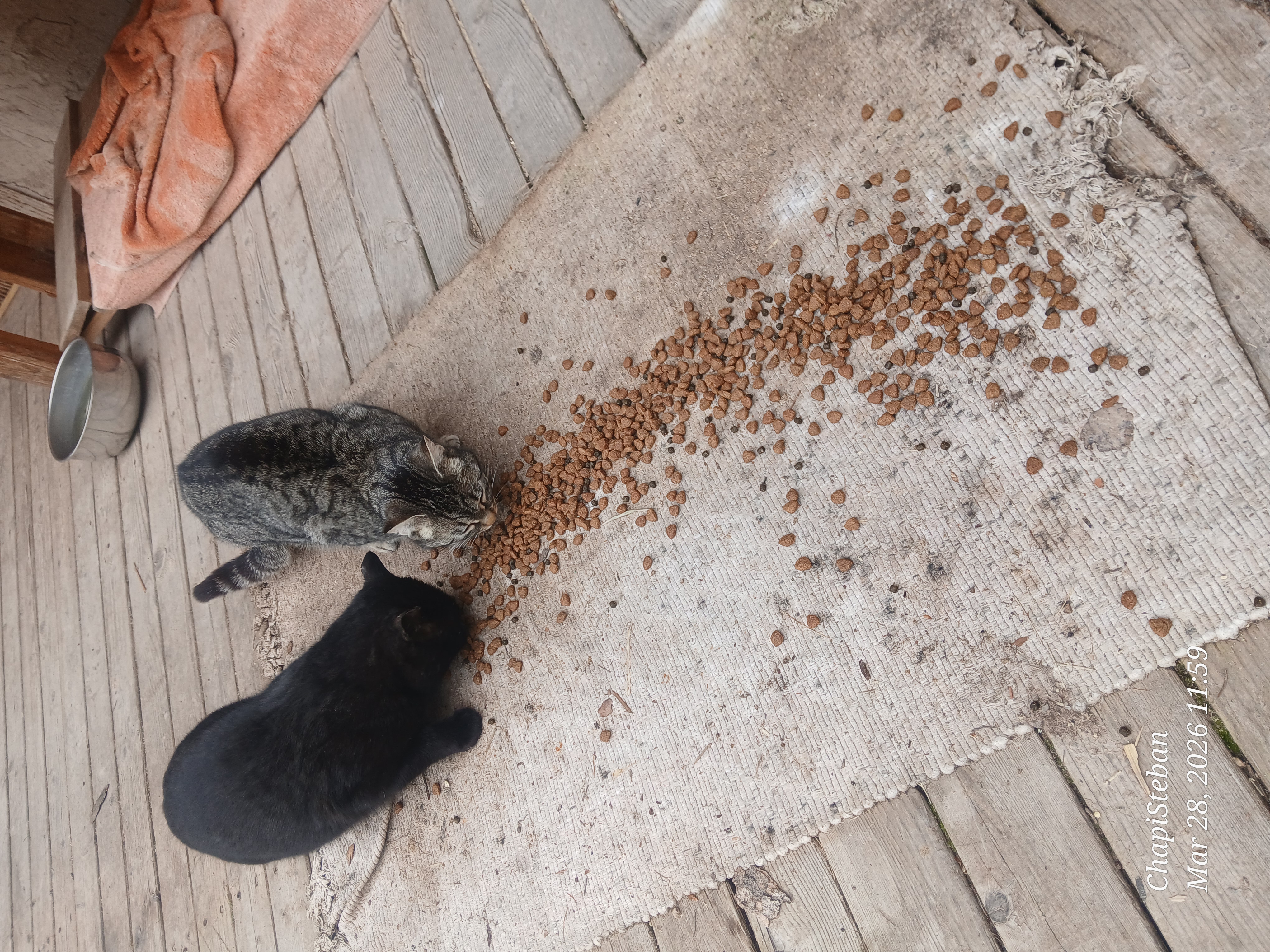
From there, I stopped by the lab to feed the cats, then made my way over to Dances with the Pigs. I spent some time with Chapo, letting him run free—just watching him move, happy and full of energy. Moments like that… they stick with you.
After that, I headed back to basecamp and got into the work.
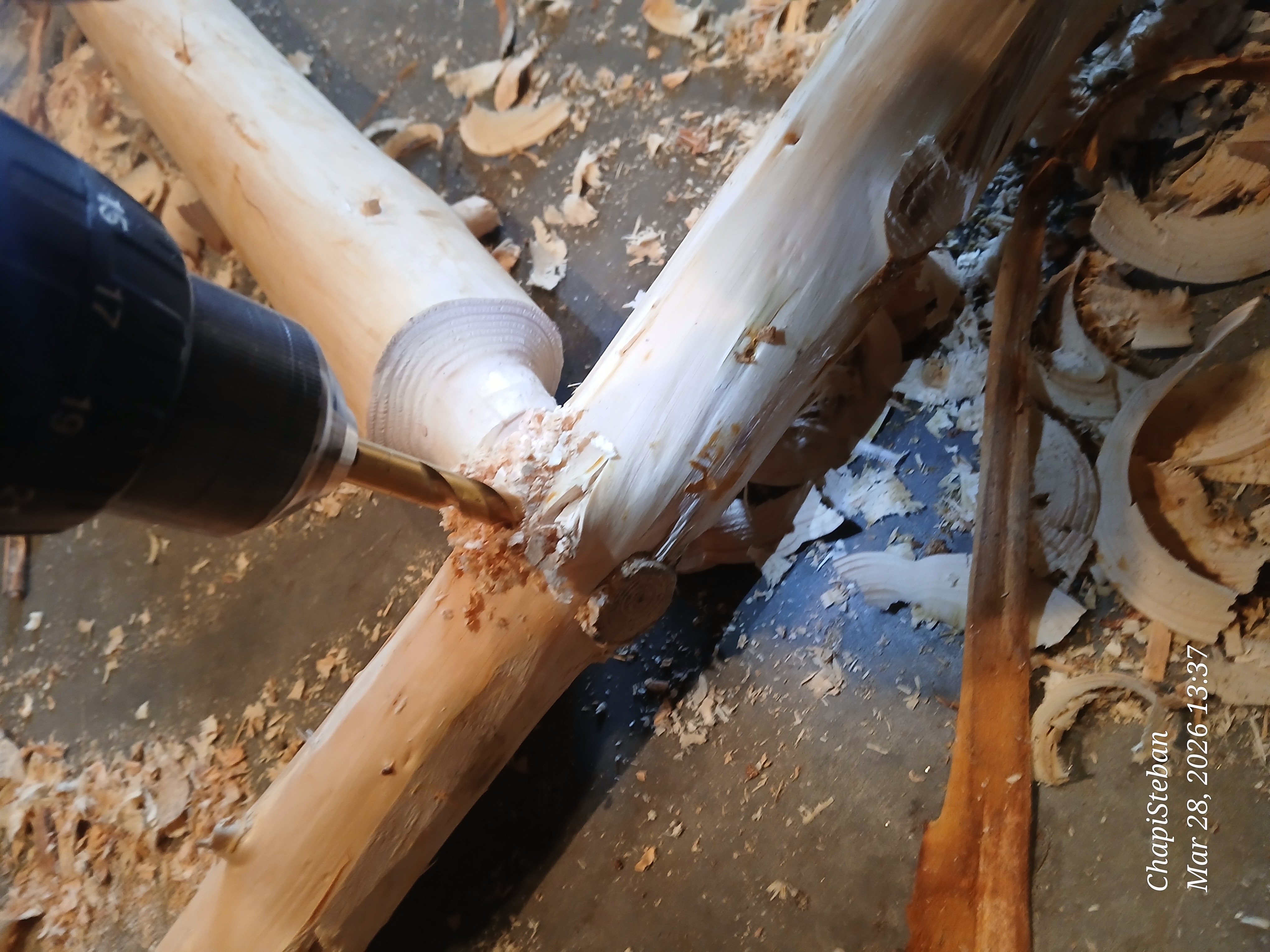
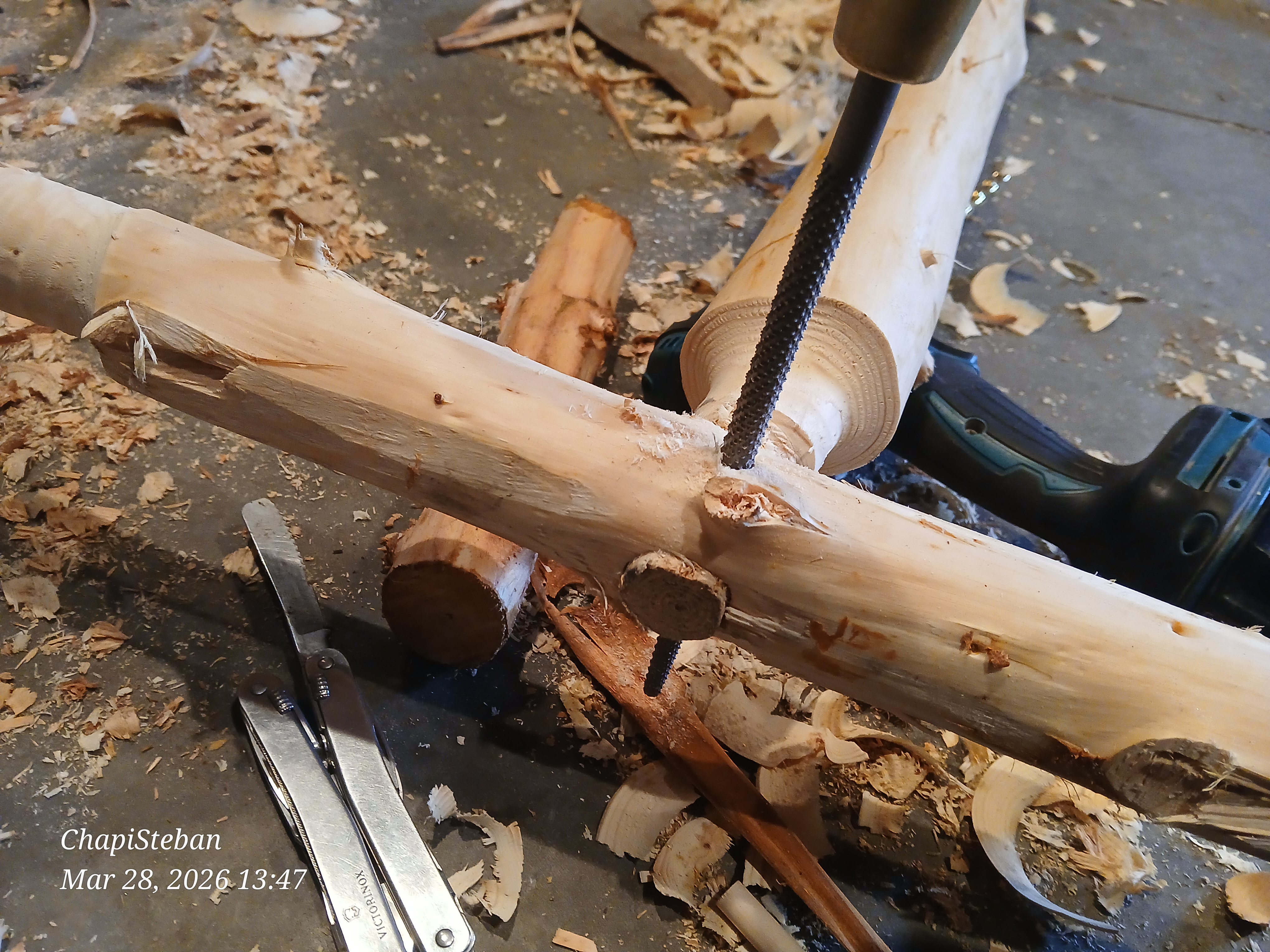
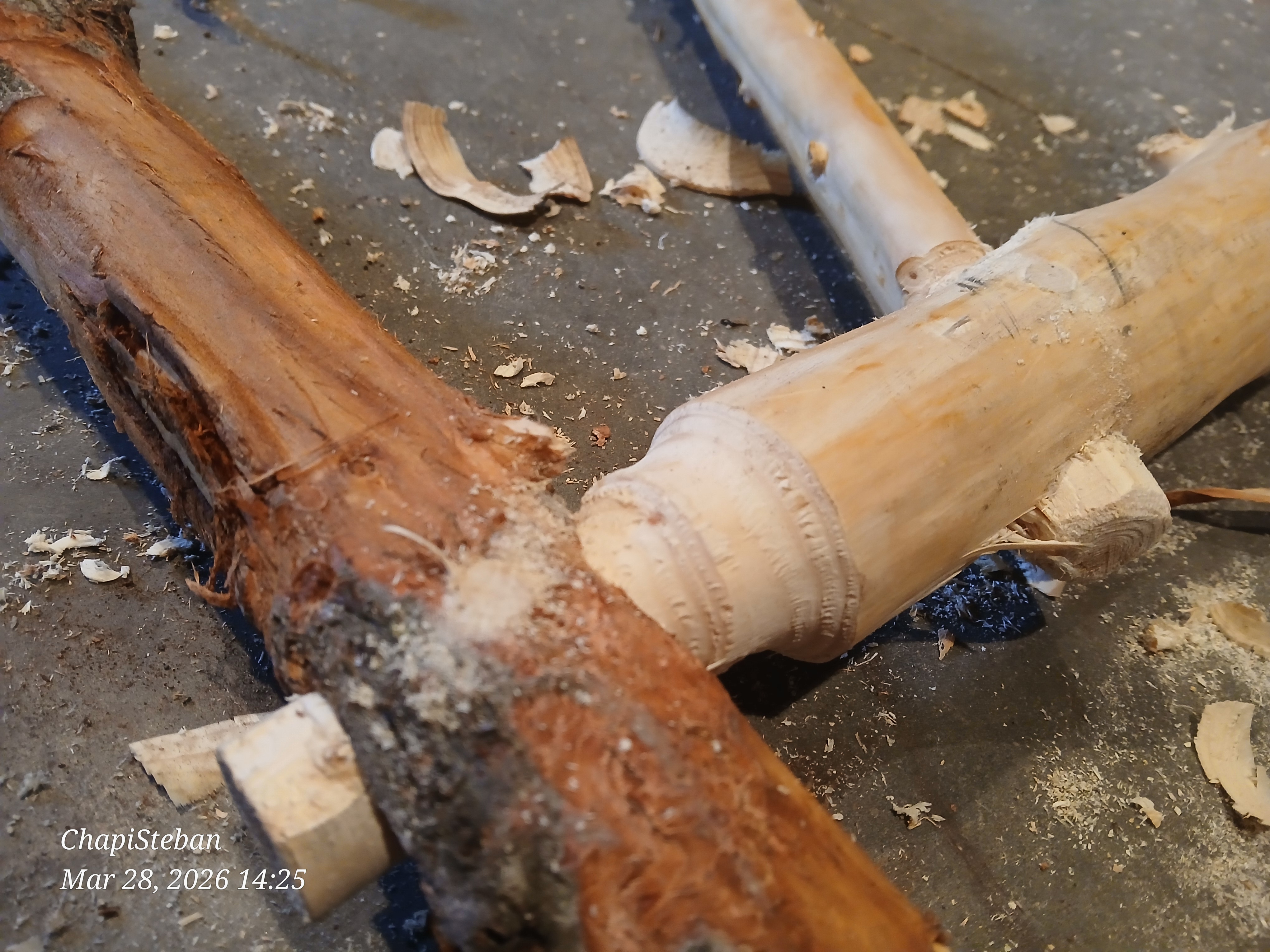
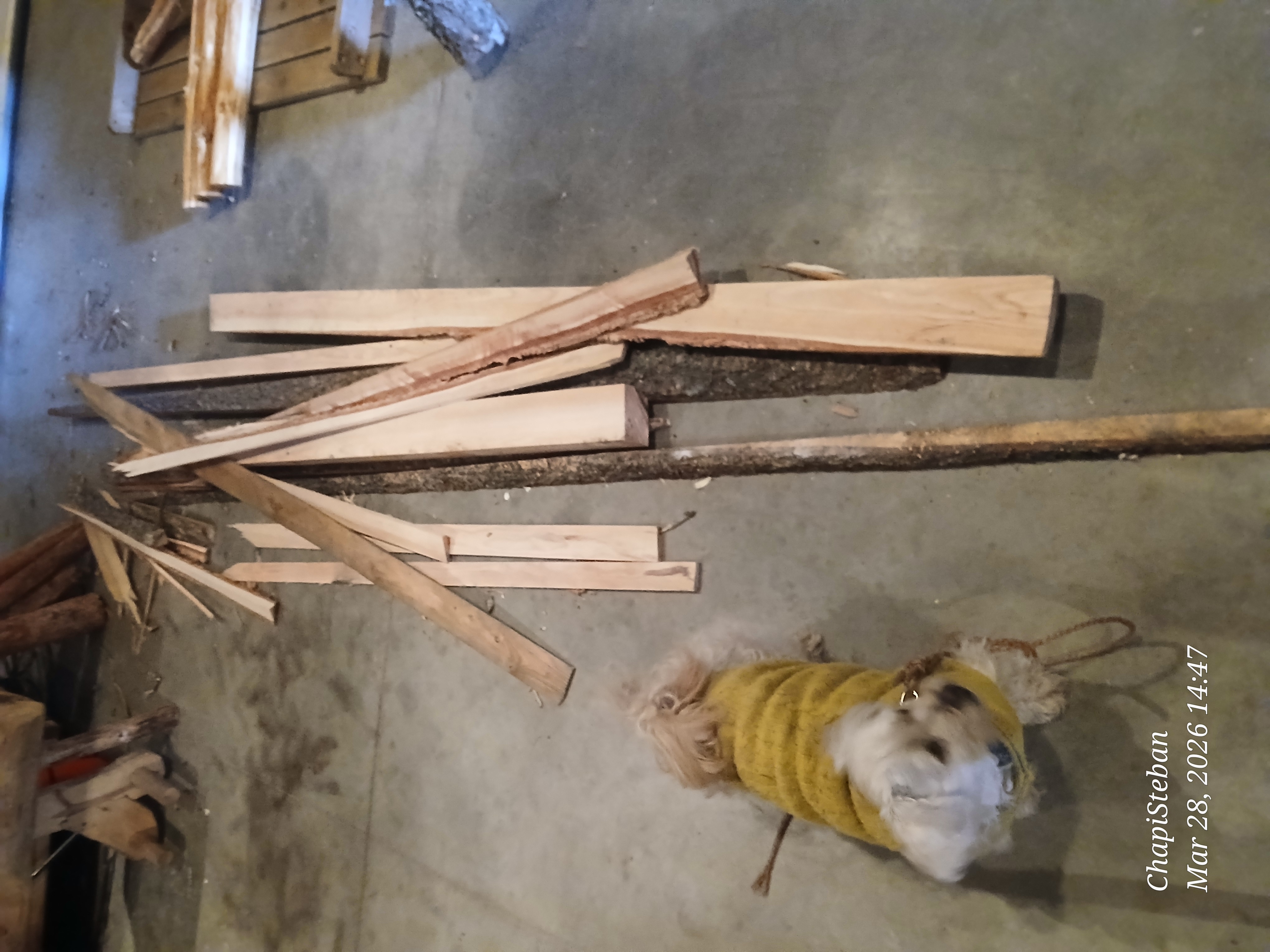
I decided to go back over the wooden gate and drawbore every connection point—tightening things up, making it stronger, more solid. Then I cut down and stacked scrap wood that had been brought over from the sawmill site, and finished up by sweeping the classroom.
Simple tasks, but they add up. They always do.
The rest of the day, I spent a good bit of time just relaxing with Chapito before shifting into this weekend’s personal project.
Lately, I’ve been giving myself a challenge: every weekend, I take on a project and document it from start to finish. Not just the polished result, but the full story—
* the intention behind it
* where the materials came from
* the process (including the mistakes)
* and what I learn once it’s actually put to use
Because out here, the real value isn’t just in building something—it’s in understanding why it works, and how to do it better next time.
This weekend, I decided to build a small coffee table for the Solarium.
Not just for myself—but for future Boots.
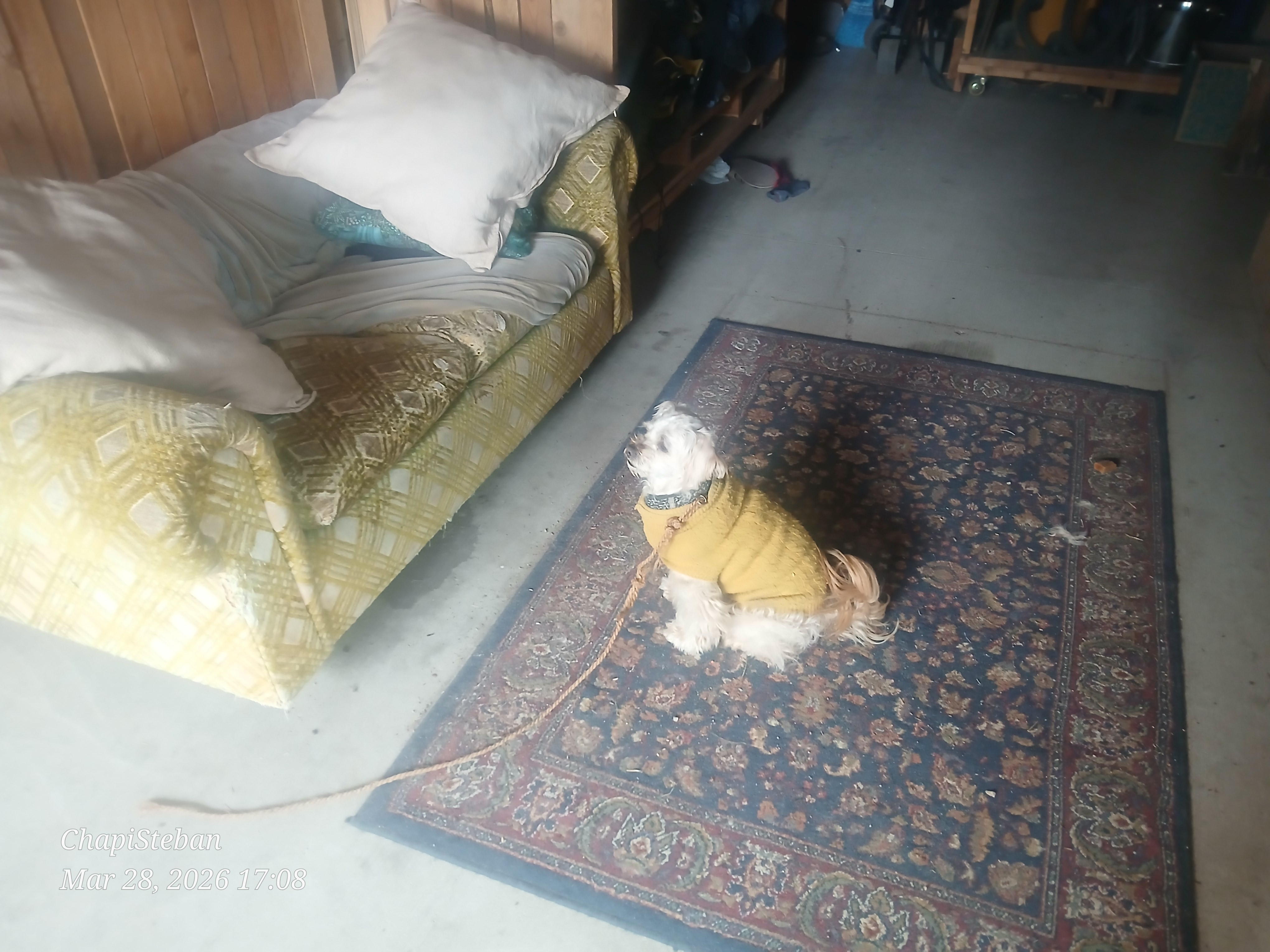
I can already picture it… a couple people gathered around the couch, talking, laughing, maybe with a drink or some food in hand—but no real place to set anything down except the floor, the arm of the couch, or the top of the RMH. This felt like something small, but meaningful to build.
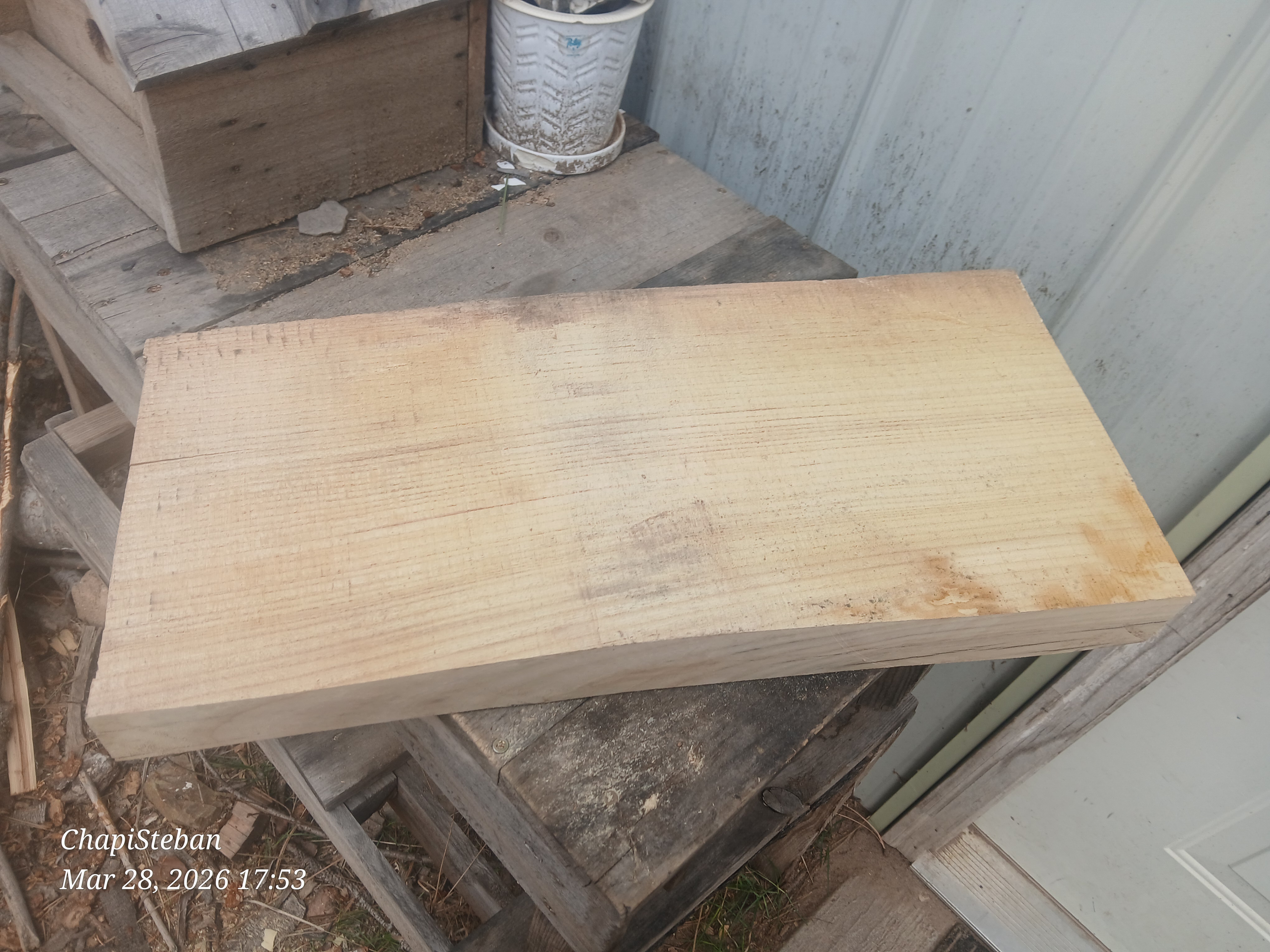
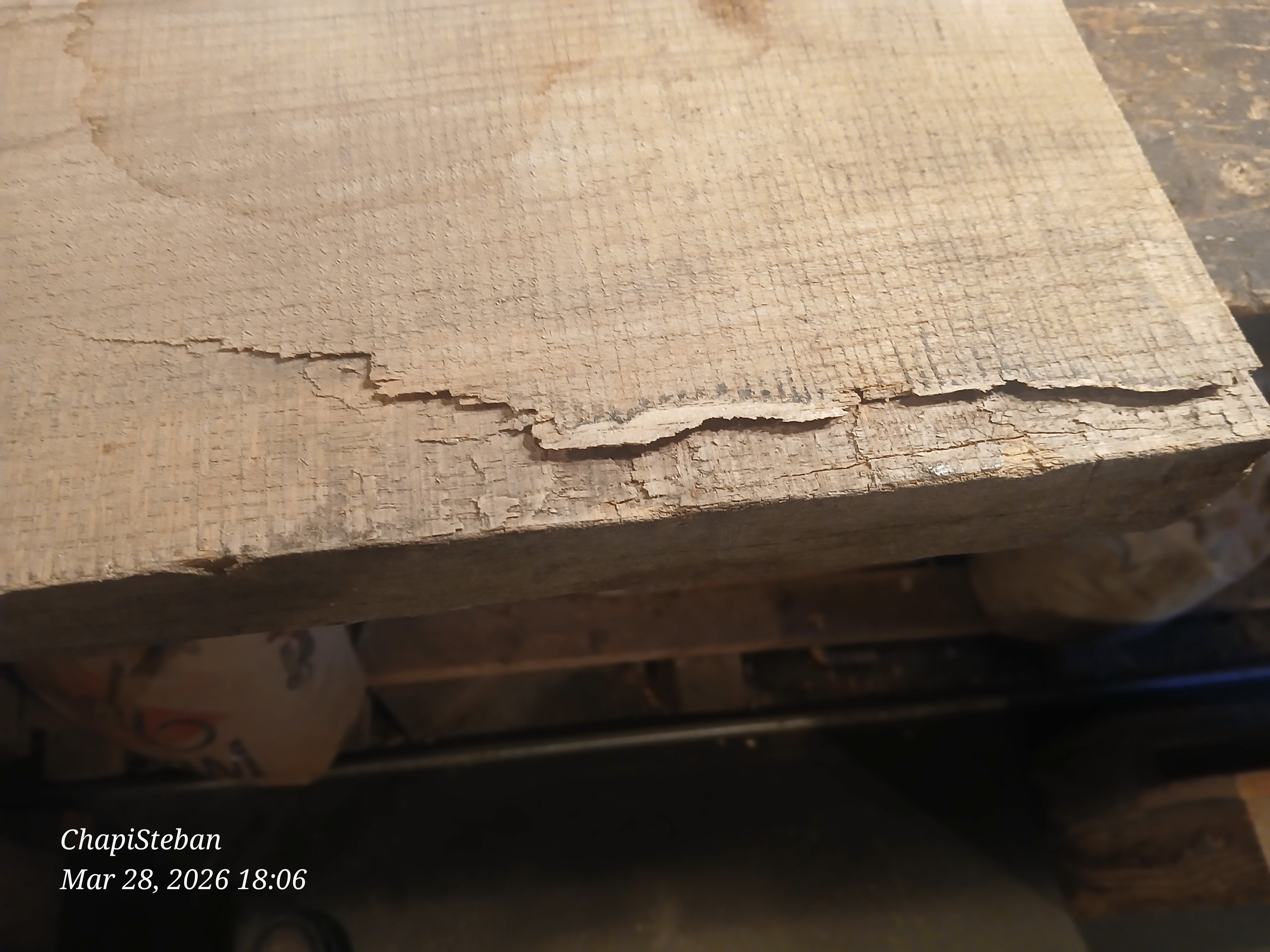
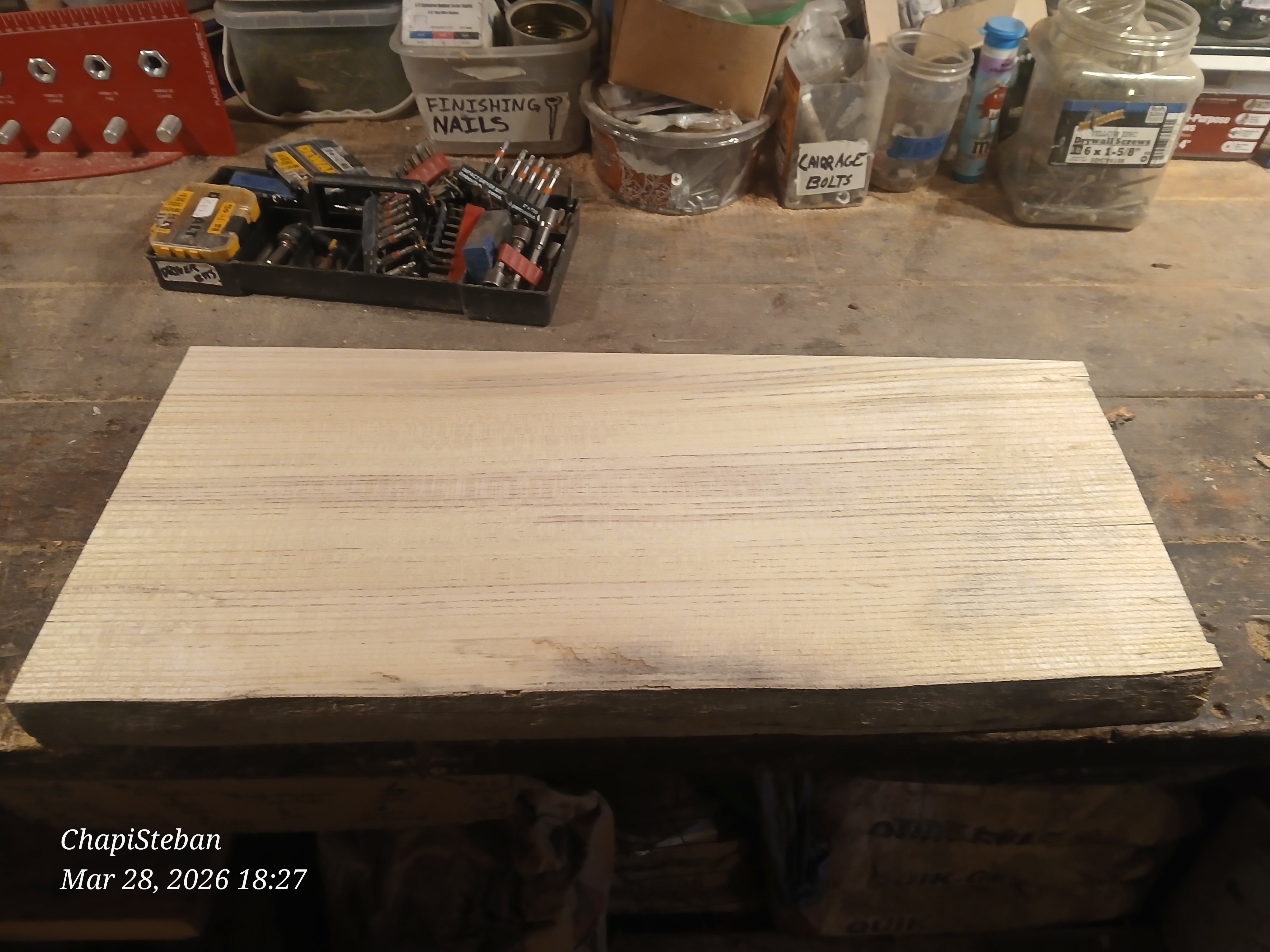
So I headed over to the berm shed and found a slab that felt right. The top side was a bit checked (if that’s the right term), which I didn’t care for. Normally I’d go at it with a hand planer for the soul building experience—or even an orbital sander in certain cases—but this time I went with the electric planer.
It doesn’t have the same soul… but I wanted the experience with the tool.
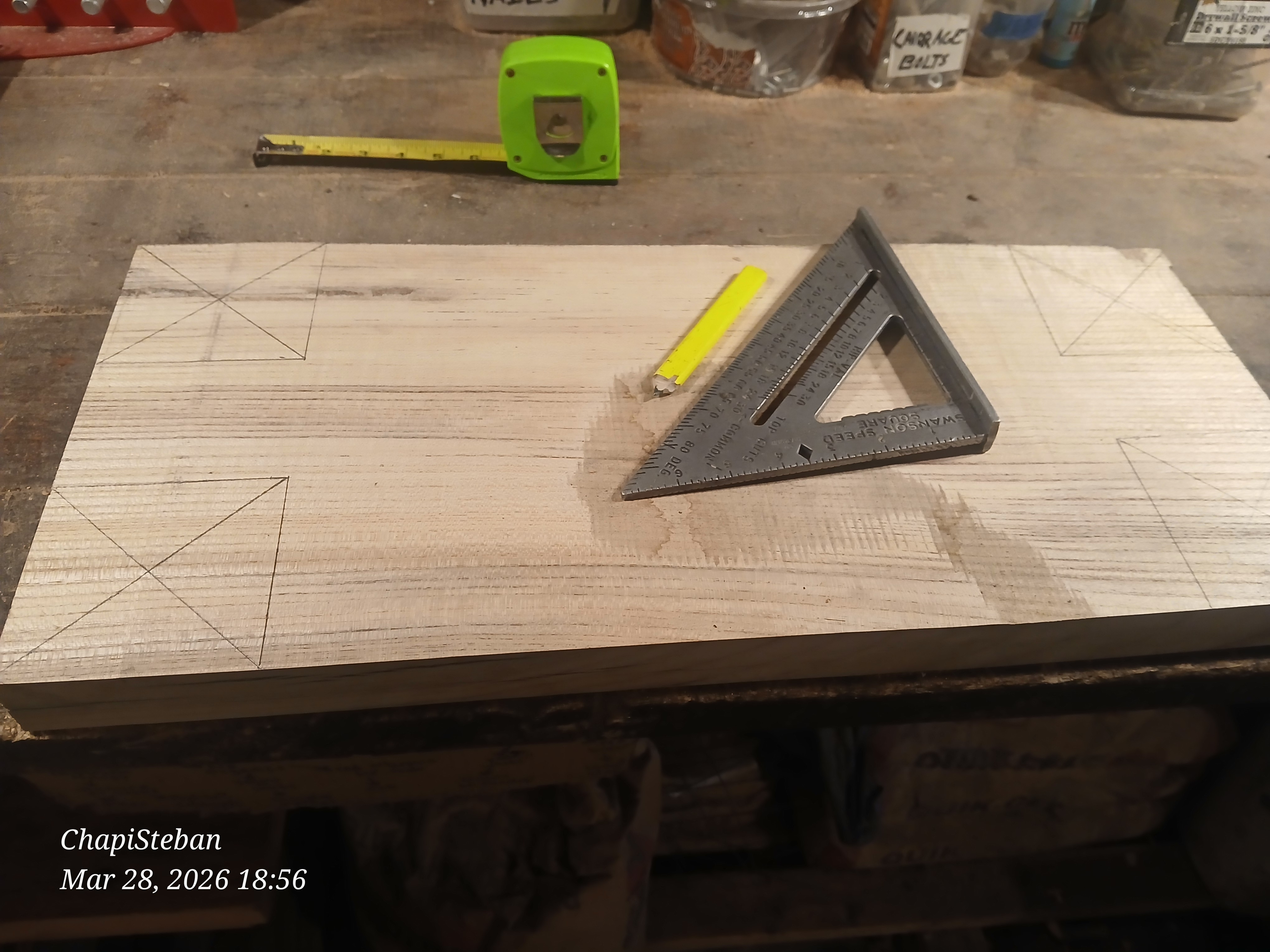
After planing it down and removing those cracked layers, I marked out 4" x 4" squares on each corner, then found center using a speed square. From there, I used a 1.5" drill bit to create the mortises.
That’s where I wrapped up for the evening.
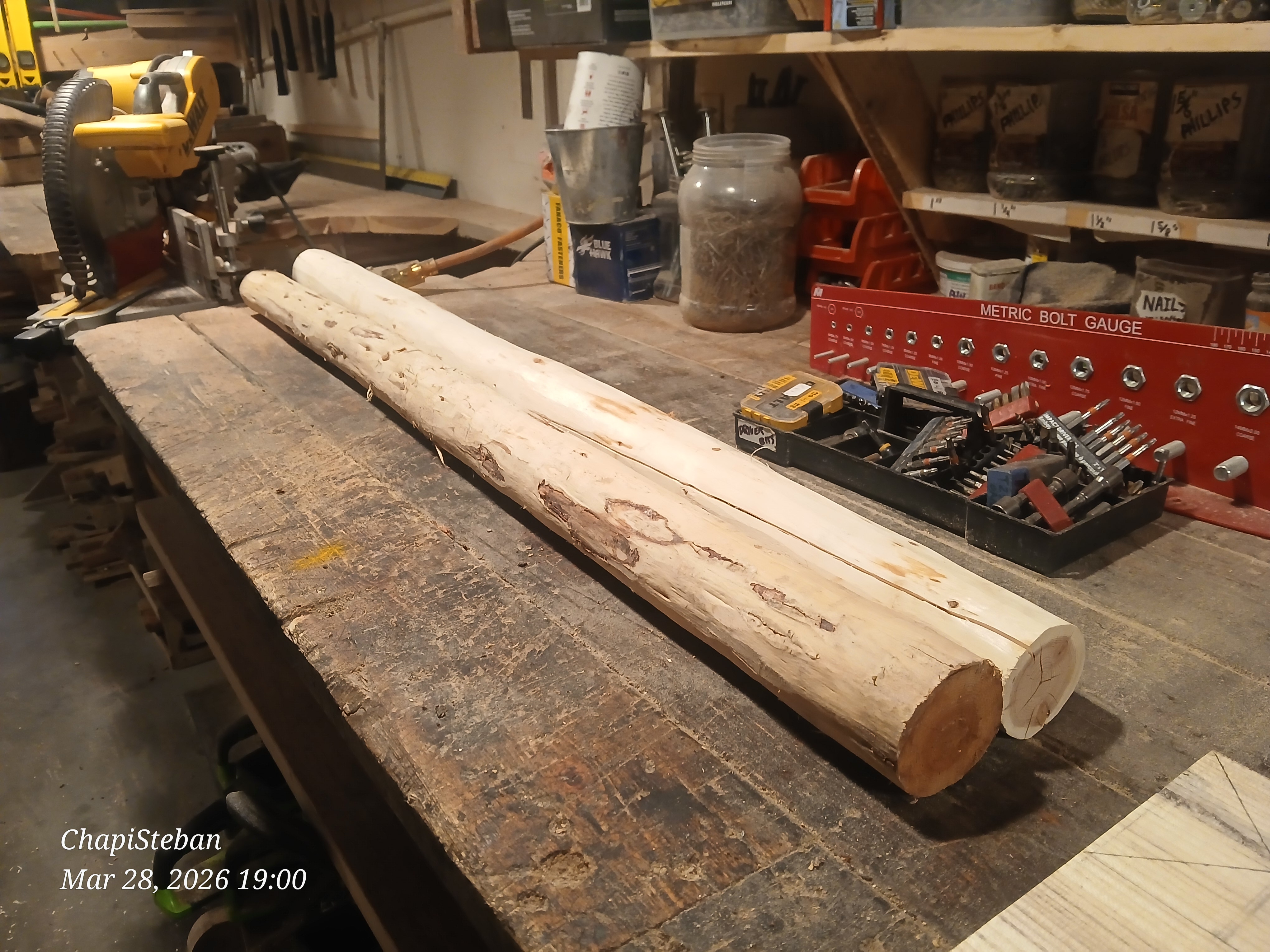
Tomorrow, I’ll come back to it—routing in my name, Chapito’s name, and the year, then burning it in with a hand torch before sanding it clean. After that, I’ll move on to shaping the legs and figuring out the supports.
Reflecting on the other projects I’ve completed so far:
The roundwood stool was built for the library with two intentions. First, I wanted a stool at the perfect height so if there’s an extra person, they can easily pull it up and sit comfortably at the library dock table. Second, I wanted it to be sturdy enough so people can safely use it to reach higher shelves and cubbies.
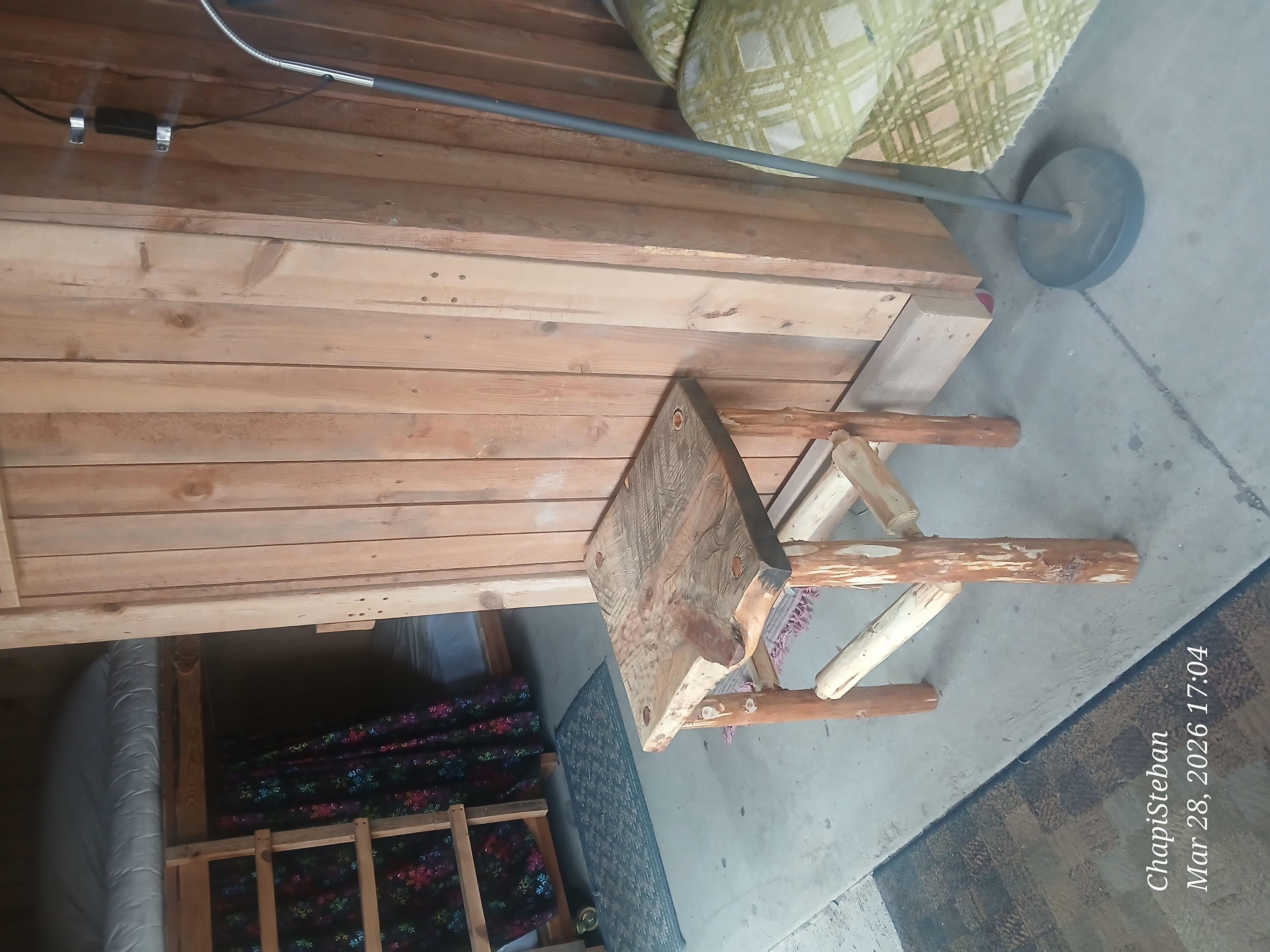
The end table was initially tasked by Stephen, but I found a home for it in the Solarium between the two sliding glass doors. My goal was to create a spot where people can lay their belongings when going in and out, giving the space more utility and comfort.
Alongside these hands-on projects, I’m also setting my sights on building a strong foundation of certifications and practical training while I’m here. Things like welding, tractor operation, chainsaw safety, tree climbing and pruning, first aid/CPR, water systems, and soil biology are all areas I intend to grow into.
To me, those aren’t just boxes to check—they’re tools. Each one adds another layer of capability. Welding means I can repair and build in ways wood alone can’t. Tractor operation means I can move earth, manage land, and work more efficiently on a larger scale. Chainsaw safety, tree climbing, and pruning build confidence, awareness, and responsibility in the woods, while helping me better understand tree health and long-term care. First aid means I can take care of myself and others when it matters most.
All of it together starts to shape someone who isn’t just skilled in one area, but adaptable—someone who can step into a wide range of situations and be useful.
That’s the bigger goal for me. Not just to gain skills for a resume, but to become a stronger, more capable person over time—someone who can contribute meaningfully wherever I go.
And being here gives me the space to do that.
There’s an energy when a group of Boots gets working on something. Ideas get passed around, different perspectives come into play, and before you know it, something starts taking shape that none of us would’ve built quite the same way alone.
It’s not just work—it’s shared progress.
So far, I’ve completed a roundwood stool and an end table, and more recently, worked alongside fellow Boots to build a garden gate from trees we harvested ourselves—using mortise and tenon joinery, drawboring, no metal fasteners, and no glue.
What stood out most wasn’t just the gate itself, but the experience of building it together.
That’s something you can’t really get from a book or a video. You have to be in it.
I've also been helping building/repairing a natural paddock system using junkpoles and rock jacks, working toward containing chickens. It’s one of those projects that really captures what makes this place special—working with what’s available, solving real problems, and building something that actually matters.
That’s the direction I want to keep moving in:
* building things that serve a real purpose
* working with natural, local materials
* understanding how soil, water, and plants all connect
* and becoming someone who can step into a place and genuinely contribute
Over time, I want these projects to tell a story:
From tree… to tool… to structure… to system.
And being here gives me the space to do that. To try, to mess up, to learn, and to improve—without needing everything to be perfect the first time.
For anyone thinking about coming out here as a Boot, I’ll say this:
If you’re willing to show up, stay curious, and put in the work, this place will change you—in the best way.
You won’t just be watching or helping out on the sidelines. You’ll be building real things, solving real problems, and learning alongside people who are on the same path.
There’s something special about that.
So if you’ve been thinking about it… take the step. Come out, get your hands dirty, and see what you’re capable of.
I know I’m just getting started (approaching my 6 month mark) —and I’m looking forward to everything that’s still ahead.
If anyone has advice, critiques, or comments, I’m always open to learning more.
20260328_115933.jpg
Fed the Abbey cats
20260328_133722.jpg
Time to drawbore all the connection points of the gate
20260328_134429.jpg
20260328_134758.jpg
Another action shot
20260328_140106.jpg
20260328_142246.jpg
20260328_142531.jpg
Nice and flush
20260328_144727.jpg
Time to cut to length then stack on classroom fire rack
20260328_144734.jpg
20260328_145054.jpg
20260328_151349.jpg
20260328_170402.jpg
End table that I built in the Solarium
20260328_170805.jpg
Will be placing my current coffee table build in front of that couch
20260328_175302.jpg
Slab that I'm working with
20260328_180657.jpg
The cracked/checked pieces
20260328_180643.jpg
20260328_182733.jpg
Finally got it all nice and smooth ... I'm certainly happy with it
John Weiland wrote:Much thanks for this explanation, Esteban!....This answers years of questions from Stihl gas saws to my current 20V/60V Dewalt electric cordless units. Right now, it's a small 20V Dewalt that is acting up. I already used a small wire just to make sure the hole and tube going back into the reservoir are clear....now as you note, I highly suspect a groove packed with find sawdust to be the culprit....especially as that dust looks quite dry. I was getting by lately just manually oiling the chain externally and keeping run times on that saw very low. Hope now with your advice to get it back into proper shape. Thanks again!.....
Hey John,
I really appreciate you taking the time to share that—and I’m glad the explanation helped connect some dots after all those years working with different saws.
It definitely sounds like you’re on the right track. If the hole and line are already clear, a packed groove is a very likely culprit, especially with that fine, dry sawdust you mentioned. That stuff has a way of really settling in and blocking oil flow more than you’d expect. Giving the bar groove a thorough cleaning (sometimes even running a thin pick or tool all the way around) should make a noticeable difference.
Also, good call keeping the chain lightly oiled manually in the meantime—that probably saved you from extra wear while troubleshooting.
Hope it clears up smoothly and gets that Dewalt back to running the way it should. Let me know how it goes—I’d be curious to hear what you find once you get in there.
Esteban Ademovski wrote:Then after you put it back together, a quick check is to run the saw and point the tip at a log—you should see a light line or mist of oil coming off. If you don’t, something’s still blocked.
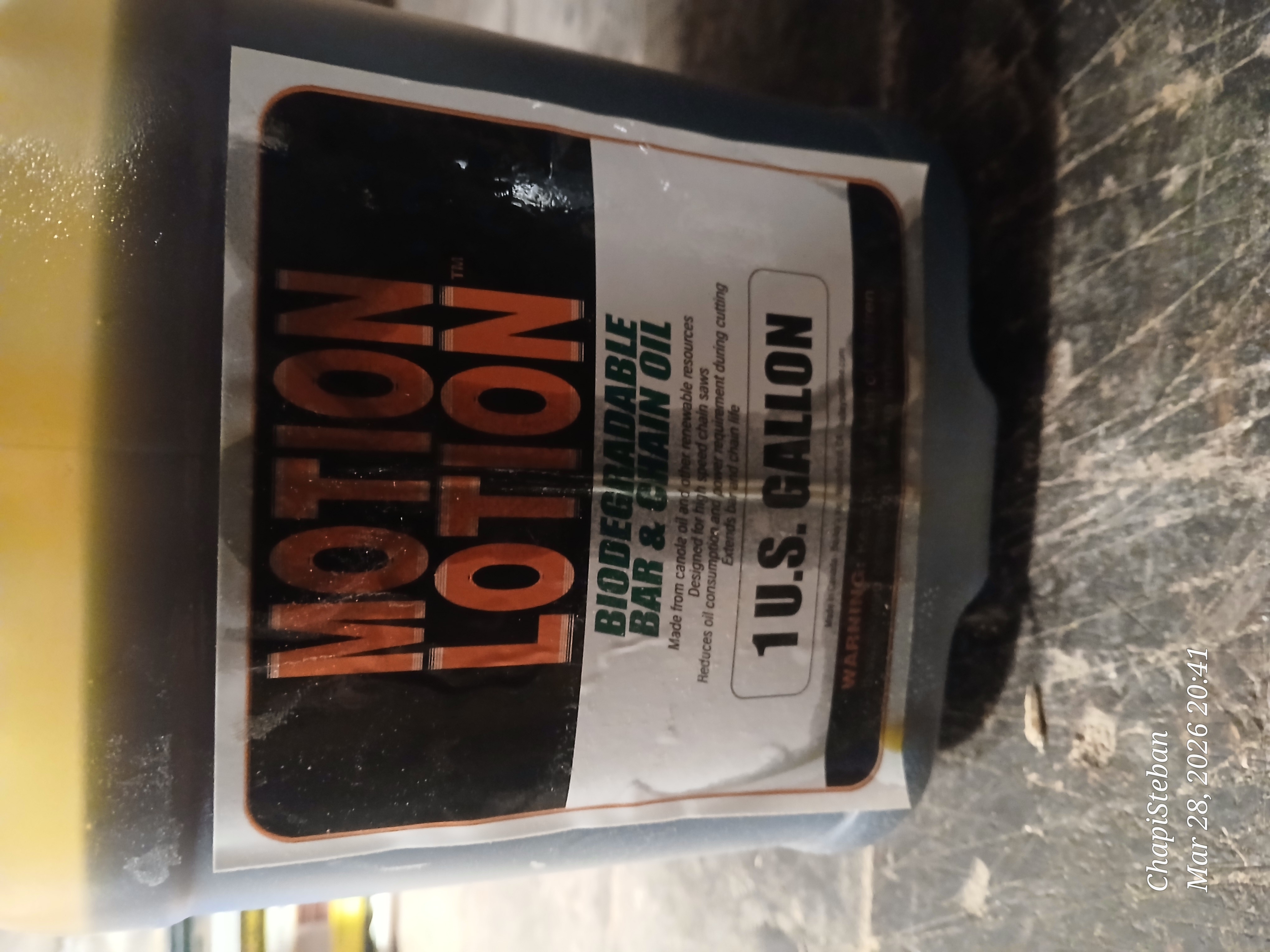
I can't remember- what does the lab run through the chainsaws for oil? After reading a thread here on bar oil, I started using vegetable oil to prevent flinging petroleum all over the forest. Haven't noticed a problem with my Ryobi electric in the last couple years, but I've only done my long cutting sessions in the cold in that time.
Hey Coydon,
That’s a great question—and I like where your head’s at with trying to keep things a bit cleaner out in the woods.
Here at Wheaton Labs, we’ve been using what’s called “motion lotion” for bar oil. It’s a plant-based oil, so it lines up pretty well with that same goal of not flinging petroleum around the landscape. It’s worked reliably for us across all the greenworks saws here, and it holds up well enough even with longer cutting sessions.
Your experience with vegetable oil makes sense too, especially in colder conditions where it stays a bit thicker. The main thing to watch (as you’ve probably already considered) is how it behaves in warmer temps—it can get pretty thin and might not cling to the chain as well, which can lead to faster wear if you’re running longer or harder.
Sounds like you’ve found something that’s been working for your setup, though, which is half the battle. Always interesting hearing what others are experimenting with in the field.
Tina Wolf wrote:OMG...Chapo looks like an Ewok Teddy Bear! What a cuteness! I'm certain he'll protect you with his charm! Lol
Haha I love that—“Ewok teddy bear” might be the most accurate description of Chapo yet 😄
He definitely leans more into charm than intimidation… his strategy is basically to win hearts first and ask questions later. But hey, if overwhelming cuteness counts as protection, I’d say I’m pretty well covered.
I’ll let him know he’s got a new fan—he’ll be very proud of himself 🐾



.png)

.png)



 4
4


![[Thumbnail for 20260328_134429.jpg]](/t/361444/a/286472/20260328_134429.jpg "Filename: 20260328_134429.jpg
Description:")
![[Thumbnail for 20260328_140106.jpg]](/t/361444/a/286474/20260328_140106.jpg "Filename: 20260328_140106.jpg
Description:")
![[Thumbnail for 20260328_142246.jpg]](/t/361444/a/286475/20260328_142246.jpg "Filename: 20260328_142246.jpg
Description:")
![[Thumbnail for 20260328_144734.jpg]](/t/361444/a/286478/20260328_144734.jpg "Filename: 20260328_144734.jpg
Description:")
![[Thumbnail for 20260328_145054.jpg]](/t/361444/a/286479/20260328_145054.jpg "Filename: 20260328_145054.jpg
Description:")
![[Thumbnail for 20260328_151349.jpg]](/t/361444/a/286480/20260328_151349.jpg "Filename: 20260328_151349.jpg
Description:")
![[Thumbnail for 20260328_180643.jpg]](/t/361444/a/286485/20260328_180643.jpg "Filename: 20260328_180643.jpg
Description:")
![[Thumbnail for 20260328_190331.jpg]](/t/361444/a/286489/20260328_190331.jpg "Filename: 20260328_190331.jpg
Description:")
![[Thumbnail for 20260328_190340.jpg]](/t/361444/a/286490/20260328_190340.jpg "Filename: 20260328_190340.jpg
Description:")
![[Thumbnail for 20260328_191018.jpg]](/t/361444/a/286491/20260328_191018.jpg "Filename: 20260328_191018.jpg
Description:")
![[Thumbnail for 20260328_195426.jpg]](/t/361444/a/286492/20260328_195426.jpg "Filename: 20260328_195426.jpg
Description:")


![[Thumbnail for IMG_20230531_201114.jpg]](/t/361444/a/286494/IMG_20230531_201114.jpg "Filename: IMG_20230531_201114.jpg
Description:")



