
• Post Reply Bookmark Topic Watch Topic
  • New Topic
permaculture forums growies critters building homesteading energy monies kitchen purity ungarbage community wilderness fiber arts art permaculture artisans regional education skip experiences global resources cider press projects digital market permies.com pie forums private forums all forums
this forum made possible by our volunteer staff, including ...
master stewards:
  • Carla Burke
  • Nancy Reading
  • John F Dean
  • r ransom
  • Jay Angler
  • Timothy Norton
stewards:
  • paul wheaton
  • Tereza Okava
  • Nicole Alderman
master gardeners:
  • M Ljin
  • Christopher Weeks
gardeners:
  • Jeremy VanGelder
  • thomas rubino
  • Megan Palmer

Buy it Once

 
steward & bricolagier
Posts: 16064
Location: SW Missouri
12289
2
goat cat fungi books chicken earthworks food preservation cooking building homestead ungarbage
  • Likes 20
  • Mark post as helpful
  • send pies
    Number of slices to send:
    Optional 'thank-you' note:
  • Quote
  • Report post to moderator
One of my favorite pipe dreams is a company I’ll call Buy it Once. Feel free to start that company and get rich, I will happily buy from you.

The idea is they make things like appliances. And design them to not need replacing for a long time. Made to be easy to clean and maintain, easy to work on, easy to get parts. An example: refrigerators. They come in various sizes, various configurations (including totally configurable by the owner.) All of the fridges they make use the same compressor. The same door switch. The same fan. So if you need parts all you need to say to get what you need is “fridge compressor” no model or year, they all use the same one. And it doesn’t change.  Doesn’t become hard to find. When you open the back it’s obvious how to replace it, no odd tools. Easy and quick. Do it yourself, or your neighbor can, or your niece.

I envision an industry that fixes things. You call and say fridge, they send out whoever is up next with a fridge kit, that has all the parts, not like there’s a lot, and they swap out parts. People can sign up whenever they have time. Think door dash for repairs. Some college kid shows up and does it cheap if you don’t want to.

Business makes more sales not by making their previous things obsolete but by adding more appliances (washing machines!) or more options (double size fridges!) But they all use the same parts, the same clear design, are easy to maintain, easy to clean.


I think someone who does this would get rich. I want to buy from a company like that.
 
steward and tree herder
Posts: 13135
Location: Isle of Skye, Scotland. Nearly 70 inches rain a year
6996
6
transportation dog forest garden foraging trees books food preservation woodworking wood heat rocket stoves ungarbage
  • Likes 11
  • Mark post as helpful
  • send pies
    Number of slices to send:
    Optional 'thank-you' note:
  • Quote
  • Report post to moderator
I'd buy from a company like that!

Open source designs so you can get parts remade more easily
Designed for disassembly so you can get it apart for fixing/replacing (toasters I'm looking at you!)

I think it would be nice for the basic components to be upgradable too, so as technology moves on new motors/screens can replace the obsolete/broken one without needing to ditch the whole appliance.
 
Steward of piddlers
Posts: 7663
Location: Upstate New York, Zone 5b, 43 inch Avg. Rainfall
4275
monies home care dog fungi trees chicken food preservation cooking building composting homestead
  • Likes 17
  • Mark post as helpful
  • send pies
    Number of slices to send:
    Optional 'thank-you' note:
  • Quote
  • Report post to moderator
I work in an industry with machines and parts that can be dated to the 1800s. There is something satisfying with the ability to rebuild a piece of equipment time and time again and getting reproducible results.

Yes, some of the equipment requires custom fabrication these days because the parts don't sit on the shelves at stores anymore. It still however has been economical, from the companies standpoint, to keep using this kind of equipment.

You know it is funny, I just helped my grandfather a year or two ago rebuild the innards of his washer and dryer. The appliances are older than I am, but they still work!
 
gardener
Posts: 3180
Location: Central Maine (Zone 5a)
1729
homeschooling kids trees chicken food preservation building woodworking homestead
  • Likes 13
  • Mark post as helpful
  • send pies
    Number of slices to send:
    Optional 'thank-you' note:
  • Quote
  • Report post to moderator
Count me in!

There are 4 customers right here :)

Even things more complicated than a refrigerator or toaster could be built better. Not just quality, but the ability to easily replace parts and fix it. And re-using the same parts across models would be fantastic. I remember a company a while back that was making some household items with this mentality. Built to last and easily fixable. They made stuff like irons and brooms and whatnot. I wonder if they are still around.
 
Nancy Reading
steward and tree herder
Posts: 13135
Location: Isle of Skye, Scotland. Nearly 70 inches rain a year
6996
6
transportation dog forest garden foraging trees books food preservation woodworking wood heat rocket stoves ungarbage
  • Likes 12
  • Mark post as helpful
  • send pies
    Number of slices to send:
    Optional 'thank-you' note:
  • Quote
  • Report post to moderator

Matt McSpadden wrote:Re-using the same parts across models would be fantastic. I remember a company a while back that was making some household items with this mentality. Built to last and easily fixable. They made stuff like irons and brooms and whatnot. I wonder if they are still around.


Speaking as a former engineer, making the same components common across models can also make the products cheaper to manufacture - think just one set of tools jigs, economies of scale....It was surprising (and annoying) to us when my husband was working on fixing other cars for a bit, how few manufacturers seem to take advantage of this, even sometimes on the same model!.
 
master steward
Posts: 8501
Location: southern Illinois, USA
3393
goat cat dog chicken composting toilet food preservation pig solar wood heat homestead composting
  • Likes 15
  • Mark post as helpful
  • send pies
    Number of slices to send:
    Optional 'thank-you' note:
  • Quote
  • Report post to moderator
Hi Nancy,

Interesting. In the early 70s my 65 Doge Dart broke down in nowhere Illinois …population 2000.  It was the water pump. I pulled into the first gas station I could find (back then, gas stations did repairs).  The mechanic found out it would take a week for a new water pump to be delivered.   He pulled a water pump off a Ford Maverick, and it fit perfectly.  It was clear the pump had multiple extra mounting holes so it could fit a variety of engines.
 
master steward
Posts: 15261
Location: Pacific Wet Coast
9605
duck books chicken cooking food preservation ungarbage
  • Likes 14
  • Mark post as helpful
  • send pies
    Number of slices to send:
    Optional 'thank-you' note:
  • Quote
  • Report post to moderator
Hubby *loves* his electric frying pan. The plug-in temperature dial melted down one day after a couple of years of use. So he called the company, and no, even though this was a simple plug in part, for a pan that had all the data on the bottom, they could not send him a replacement piece. He had to buy a whole new pan*.

So, yeah, Ms Sutton gets my business too! Maybe reality isn't likely to be quite as long as her pipe dream, but we've gone way too far in the "cheap and disposable direction". All the "electronic, computerized" parts in modern equipment which too often are unavailable after even a year, are getting harder to avoid, so we keep patching up our old stuff in the hope we don't have to buy much new!

*If only he'd learn to use my big cast iron pan - no moving parts!
 
Nancy Reading
steward and tree herder
Posts: 13135
Location: Isle of Skye, Scotland. Nearly 70 inches rain a year
6996
6
transportation dog forest garden foraging trees books food preservation woodworking wood heat rocket stoves ungarbage
  • Likes 9
  • Mark post as helpful
  • send pies
    Number of slices to send:
    Optional 'thank-you' note:
  • Quote
  • Report post to moderator
OK then!

Let's take on the challenge....What's the first consumer appliance we can make better?
 
John F Dean
master steward
Posts: 8501
Location: southern Illinois, USA
3393
goat cat dog chicken composting toilet food preservation pig solar wood heat homestead composting
  • Likes 8
  • Mark post as helpful
  • send pies
    Number of slices to send:
    Optional 'thank-you' note:
  • Quote
  • Report post to moderator
I’ll bite. Universal power cords.  I know, this is not an appliance per se, but it is a source of frustration for me. My study presently has its floor covered with dozens of  power cords that I am trying to figure out where they go & if they can be used.
 
Matt McSpadden
gardener
Posts: 3180
Location: Central Maine (Zone 5a)
1729
homeschooling kids trees chicken food preservation building woodworking homestead
  • Likes 12
  • Mark post as helpful
  • send pies
    Number of slices to send:
    Optional 'thank-you' note:
  • Quote
  • Report post to moderator

John F Dean wrote:I’ll bite. Universal power cords.  I know, this is not an appliance per se, but it is a source of frustration for me. My study presently has its floor covered with dozens of  power cords that I am trying to figure out where they go & if they can be used.


There are a lot of electronics that all share a standard power cord... it would be nice if more things did.

I think refrigerators and freezers are the low hanging fruit. Not really any moving parts, and they are already fairly long lasting. Most households have at least one.
 
Nancy Reading
steward and tree herder
Posts: 13135
Location: Isle of Skye, Scotland. Nearly 70 inches rain a year
6996
6
transportation dog forest garden foraging trees books food preservation woodworking wood heat rocket stoves ungarbage
  • Likes 9
  • Mark post as helpful
  • send pies
    Number of slices to send:
    Optional 'thank-you' note:
  • Quote
  • Report post to moderator

John F Dean wrote:Universal power cords.


A little beyond my expertise (I was mech eng rather than elec eng...) however....

So powercords have two ends and a middle.
Function to carry the electric smoke from the mains socket to the appliance
Different flow rating for different appliances
May have transformer to change voltage for specific application (computer, hairdrier, desk fan)

Does that sound a starting point?
 
Matt McSpadden
gardener
Posts: 3180
Location: Central Maine (Zone 5a)
1729
homeschooling kids trees chicken food preservation building woodworking homestead
  • Likes 9
  • Mark post as helpful
  • send pies
    Number of slices to send:
    Optional 'thank-you' note:
  • Quote
  • Report post to moderator

Nancy Reading wrote:A little beyond my expertise (I was mech eng rather than elec eng...) however....

So powercords have two ends and a middle.
Function to carry the electric smoke from the mains socket to the appliance
Different flow rating for different appliances
May have transformer to change voltage for specific application (computer, hairdrier, desk fan)

Does that sound a starting point?


Countries are already fairly standard on one end of the power cord. The in between just needs to be different gauge wires to handle the different flow rates. It is the end attached to the device that needs to be standardized.
 
Pearl Sutton
steward & bricolagier
Posts: 16064
Location: SW Missouri
12289
2
goat cat fungi books chicken earthworks food preservation cooking building homestead ungarbage
  • Likes 11
  • Mark post as helpful
  • send pies
    Number of slices to send:
    Optional 'thank-you' note:
  • Quote
  • Report post to moderator
I'm with Matt. Refrigerators and washing machines are what annoy me most.

 
Nancy Reading
steward and tree herder
Posts: 13135
Location: Isle of Skye, Scotland. Nearly 70 inches rain a year
6996
6
transportation dog forest garden foraging trees books food preservation woodworking wood heat rocket stoves ungarbage
  • Likes 10
  • Mark post as helpful
  • send pies
    Number of slices to send:
    Optional 'thank-you' note:
  • Quote
  • Report post to moderator
Assuming we're going for a US market, what specifications would we need? Can we combine elements of these sort of white goods? What functions do you want/need in them? Can we multi-funtion them in a permie style?
 
Timothy Norton
Steward of piddlers
Posts: 7663
Location: Upstate New York, Zone 5b, 43 inch Avg. Rainfall
4275
monies home care dog fungi trees chicken food preservation cooking building composting homestead
  • Likes 13
  • Mark post as helpful
  • send pies
    Number of slices to send:
    Optional 'thank-you' note:
  • Quote
  • Report post to moderator
If someone sold a lower-tech (no touch screens or fancy AI) appliance with 'guts' that are above minimum standards and are serviceable, I'd be a very happy man.

For washer dryers, I'd want something like  Huebsch or Speed Queen in terms of reliability/quality. They are commercial units, but could last forever in a home.
 
Jay Angler
master steward
Posts: 15261
Location: Pacific Wet Coast
9605
duck books chicken cooking food preservation ungarbage
  • Likes 14
  • Mark post as helpful
  • send pies
    Number of slices to send:
    Optional 'thank-you' note:
  • Quote
  • Report post to moderator

John F Dean wrote:I’ll bite. Universal power cords.  I know, this is not an appliance per se, but it is a source of frustration for me. My study presently has its floor covered with dozens of  power cords that I am trying to figure out where they go & if they can be used.


Simple upgrade - have a long lasting sticker that in Plain English, states the electronic device the thing came with.

I've started putting that on with tape.

So long as there's enough info, many of them can be reused for other applications.
 
Nancy Reading
steward and tree herder
Posts: 13135
Location: Isle of Skye, Scotland. Nearly 70 inches rain a year
6996
6
transportation dog forest garden foraging trees books food preservation woodworking wood heat rocket stoves ungarbage
  • Likes 9
  • Mark post as helpful
  • send pies
    Number of slices to send:
    Optional 'thank-you' note:
  • Quote
  • Report post to moderator

Matt McSpadden wrote:Countries are already fairly standard on one end of the power cord. The in between just needs to be different gauge wires to handle the different flow rates. It is the end attached to the device that needs to be standardized.


Hmm - many mains appliances tend to be wired in here. I'm not sure what makes things like monitors have plugs at both ends rather than be hard wired.

Some have 'kettle plugs'

I've always assumed that was down to the current requirement for higher power devices. Are these the same in US?

Smaller devices seem to have standardised on usb sockets - data and power in one.

I think USB A and C are the most common I see these days.

Probably in between these extremes is a whole raft of complexity....but is it needed?
 
John F Dean
master steward
Posts: 8501
Location: southern Illinois, USA
3393
goat cat dog chicken composting toilet food preservation pig solar wood heat homestead composting
  • Likes 8
  • Mark post as helpful
  • send pies
    Number of slices to send:
    Optional 'thank-you' note:
  • Quote
  • Report post to moderator
Yes, computers and printers have pretty standard power cords.  It would be nice is electric skillets, coffee pots, etc could be added to that list.  I could add more than a few other appliances, but we have a starting point.
 
Posts: 887
Location: Sierra Nevada foothills, 350 m, USDA 8b, sunset zone 7
210
  • Likes 12
  • Mark post as helpful
  • send pies
    Number of slices to send:
    Optional 'thank-you' note:
  • Quote
  • Report post to moderator
I was thinking about the same. It would not have any electronics - just rotate at different speeds and centrifugal speed. Either using reduction gears or some simple speed control  Such washing machines existed in the past. People got convinced that they need more automation.
It would not be cheap being built from good components. Everything would have to be over-engineered. Maybe even using the word 'over engineering" is already a problem in the society. I would rather call it "engineering" and all the junk wold be "under-engineering". So everything would be thicker, better alloys and all materials, etc. It would be expensive. It could be made cheaper by economy of scale and local manufacturing.
The question is who would like to buy it except wealthier permies? Most people are conditioned to use less and less brain. They surely would like a product that lasts but not at the cost of losing any convenience or using more effort. I wish to be wrong.

My Sundanzer direct solar fridge is almost completely satisfying me. I keep it outside in the elements and it kept foods cold for us for the last 11 years. The only negative is, that being a top loader, it gets filthy very quickly. Also, no sun = no cold.
 
John F Dean
master steward
Posts: 8501
Location: southern Illinois, USA
3393
goat cat dog chicken composting toilet food preservation pig solar wood heat homestead composting
  • Likes 7
  • Mark post as helpful
  • send pies
    Number of slices to send:
    Optional 'thank-you' note:
  • Quote
  • Report post to moderator
Hi Nancy,

On my study floor are everything shown. I  understand that we will be adopting the”European” C, but I have no idea as the the accuracy of that prediction.
 
Nancy Reading
steward and tree herder
Posts: 13135
Location: Isle of Skye, Scotland. Nearly 70 inches rain a year
6996
6
transportation dog forest garden foraging trees books food preservation woodworking wood heat rocket stoves ungarbage
  • Likes 9
  • Mark post as helpful
  • send pies
    Number of slices to send:
    Optional 'thank-you' note:
  • Quote
  • Report post to moderator
In my crystal ball I see that microtech - small appliances will remain the fastest moving area for changing technology and sockets....maybe C tomorrow, but I wouldn't put much money on it remaining that way.

I'm pretty sure that 'buy it once' would want to stick to long term devices. In my house bread-toasters (I think that's different to a US toaster oven though?) and kettles aren't about to go out of fashion quickly, fridge, freezer, washing machine and (guilty pleasure) magic washing-up machine. I'm not sure if air-friers and multi-cook pots/pressure cookers are here to stay or not? I have neither as yet, but may consider one if my microwave (aged 30 years) dies a death.

Other devices such as power tools - basic wood working like drill, power sander, circular saw? My husband has chosen a range of battery tools that all use the same battery as that tends to be the expensive part....


Posts: 68
27
  • Likes 10
  • Mark post as helpful
  • send pies
    Number of slices to send:
    Optional 'thank-you' note:
  • Quote
  • Report post to moderator
This is right up my alley. The company I work for designs and builds pine furniture that is simple and long lasting and I often reuse other entire components when designing new pieces. This end table end will now be the end for a storage bench, and my coffee table top also doubles as a desk top etc. I've always been a fan of the "buy once, cry once" mentality, but I think in today's economy and so many different things begging for your dollars, we would have a heard time convincing enough people to spend the extra money (think much much extra) to make this a reasonable venture. There is a reason that we live in a throw away economy, and I believe it's what the market demands. We have our choice of shopping with the local hardware store and paying a little more for a higher quality product or going to the big box store and picking up what we need, plus some groceries, and a new belt, kit-kat on the way out. Clearly most choose the later (I know this crowd on here may be the exception). The problem with manufacturing anything like this would be being able to source and secure parts for build and repairs on an ongoing basis when you are a tiny tiny fish in the pond. If you choose a motor currently in production, there is no guarantee that the same motor will be in production in five years or five months if the main user or manufacturer of it does a design change.  I don't like being the fly in the ointment, and I'd be the first in line if someone figures it out, but in my humble opinion, this would be dead on arrival.  
 
Jay Angler
master steward
Posts: 15261
Location: Pacific Wet Coast
9605
duck books chicken cooking food preservation ungarbage
  • Likes 10
  • Mark post as helpful
  • send pies
    Number of slices to send:
    Optional 'thank-you' note:
  • Quote
  • Report post to moderator

Timothy Norton wrote:If someone sold a lower-tech (no touch screens or fancy AI) appliance with 'guts' that are above minimum standards and are serviceable, I'd be a very happy man.


Exactly this - touch screens and fancy AI drive Hubby and I up the wall. Me when I turn it into a brick because I'm a Dinosaur with bad magnetic resonance, and Hubby because he gets stuck fixing them.

There is a clock on the dining table that even with the instructions, I can't set. It's on my list to ask my DiL to as it seems to play nice with her, but it lost it's marbles when I tried to plug my phone charging cord into it. Why can't clocks have simple knobs to adjust?

Nancy Reading wrote: Hmm - many mains appliances tend to be wired in here. I'm not sure what makes things like monitors have plugs at both ends rather than be hard wired.

My kettle has had a fault in its cord at least three times in its life of over 30 years. The cord is getting almost too short to be of use... sigh... The "kettle plugs" you pictured would be great if they were reasonably universal and easy to simply buy a new one of the correct type.
 
gardener
Posts: 1079
Location: SW Missouri • zone 6 • ~1400' elevation
498
2
fish trees chicken sheep seed woodworking
  • Likes 10
  • Mark post as helpful
  • send pies
    Number of slices to send:
    Optional 'thank-you' note:
  • Quote
  • Report post to moderator
Framework. It's a company trying to bring this idea to computers. Most internal components have a QR code that will fetch instructions with videos. Lots of input/ output (I/O) options that you can swap out. They're built into little modules that slide into little bays. They plug into USB-C ports inside the computer, but on the outside they can be USB-A, USB-C, HDMI, Display port, Headphone/ microphone jack, SD or microSD card slots, removable storage drives, maybe a few other things I forgot.

In the video, Linus removes the 2 spacers flanking the keyboard, moves the keyboard to one side and adds a numpad.

They look to be all about right-to-repair, upgradability and generally not having to throw away good components when one part breaks. They are kinda pricey, which is why I don't own one, but they seem to be competitive with high end brands.

 
Nancy Reading
steward and tree herder
Posts: 13135
Location: Isle of Skye, Scotland. Nearly 70 inches rain a year
6996
6
transportation dog forest garden foraging trees books food preservation woodworking wood heat rocket stoves ungarbage
  • Likes 8
  • Mark post as helpful
  • send pies
    Number of slices to send:
    Optional 'thank-you' note:
  • Quote
  • Report post to moderator
Oh that's good! I wouldn't fancy trying to design consumer electronics....Maybe we can go back to clockwork and knobs - like on my Dualit toaster and make the appliances a bit more robust/fixable that way.
 
Jay Angler
master steward
Posts: 15261
Location: Pacific Wet Coast
9605
duck books chicken cooking food preservation ungarbage
  • Likes 14
  • Mark post as helpful
  • send pies
    Number of slices to send:
    Optional 'thank-you' note:
  • Quote
  • Report post to moderator

Nancy Reading wrote:...Maybe we can go back to clockwork and knobs


I read somewhere, some time ago, that the reason touch screens were invented was because some famous person (I believe related to Apple Computers) had a phobia of pushing buttons.

There's a good chance that rumor is any of: exaggeration, urban legend, false news, someone's idea of a joke, or add your own idea, but I've also read that companies are finally getting push-back and hopefully that's accurate.

Ergonomics is a thing, as is touch typing (which doesn't work on a touch screen). We are way overdue for that pushback and greatly in need of simple, robust connections that don't require a computer to operate. We are starting to see that pushback in cars where people are discovering that when that fancy tail-light burns out a single LED, they have to replace the entire unit at hundreds of dollars cost - assuming the part is even available - instead of grabbing a new bulb at a local hardware store and installing it themselves.
 
Posts: 82
38
  • Likes 10
  • Mark post as helpful
  • send pies
    Number of slices to send:
    Optional 'thank-you' note:
  • Quote
  • Report post to moderator

Pearl Sutton wrote:I'm with Matt. Refrigerators and washing machines are what annoy me most.


Apparently Speedqueen washers, and i think dryers are made to be repaired and they last. I found this out too late after I bought my last washing machine.  So if I need another washing machine, I am going to get a speed queen.
Speed Queens are what they often use in laundry mats so it makes sense that they would last a long time and be easy to repair.    

I am haven't done the research on refrigerators so I can't help much there.
 
Posts: 156
Location: South Florida
7
  • Likes 10
  • Mark post as helpful
  • send pies
    Number of slices to send:
    Optional 'thank-you' note:
  • Quote
  • Report post to moderator
We're sick of appliances breaking down! We ALWAYS get the extended warranty & have ALWAYS needed it. In a rental house there's a Maytag top-loader with turn knobs; it was old when we bought the house in 2002 & it still works. We don't like how much water it uses, but have, in our own house, gone through MULTIPLE front loaders in that time. The stupid touch-pad & the complicated electronics don't do well in humid weather.

As far as the refrigerator & freezers, our repair man said keep them as long as you can because what they're building now is even crappier. We recently bought ‡ installed new seals & put an aluminum piece over the rusted chest freezer.

Speed Queens are not basic and the bad thing for us is we'd not be able to pour collected rainwater  in for the washes.

Fed up with planned obsolescence!!
 
gardener
Posts: 620
Location: New England
276
cat monies home care books cooking writing seed wood heat ungarbage
  • Likes 10
  • Mark post as helpful
  • send pies
    Number of slices to send:
    Optional 'thank-you' note:
  • Quote
  • Report post to moderator
Slightly off topic? A very short story...

When I worked for Sears (briefly) repairing washing machines in the 70s, there was a thing called a rebuild kit for the mixing valve that mixes water to the right temp. If you were a warranty service customer, we installed one of those. If however, you were NOT a warranty customer, we sold you an entire new valve.

I learned my lesson... when a service company tells me I "need" a new framistat, I always ask if there's a rebuilt kit option available? Usually there isn't, but every now and then, there is.

Also, here is another company that tries to do the buy it once idea. I haven't read all the posts here, so it may not be new to the thread.

https://buymeonce.com/
 
Pearl Sutton
steward & bricolagier
Posts: 16064
Location: SW Missouri
12289
2
goat cat fungi books chicken earthworks food preservation cooking building homestead ungarbage
  • Likes 17
  • Mark post as helpful
  • send pies
    Number of slices to send:
    Optional 'thank-you' note:
  • Quote
  • Report post to moderator
.
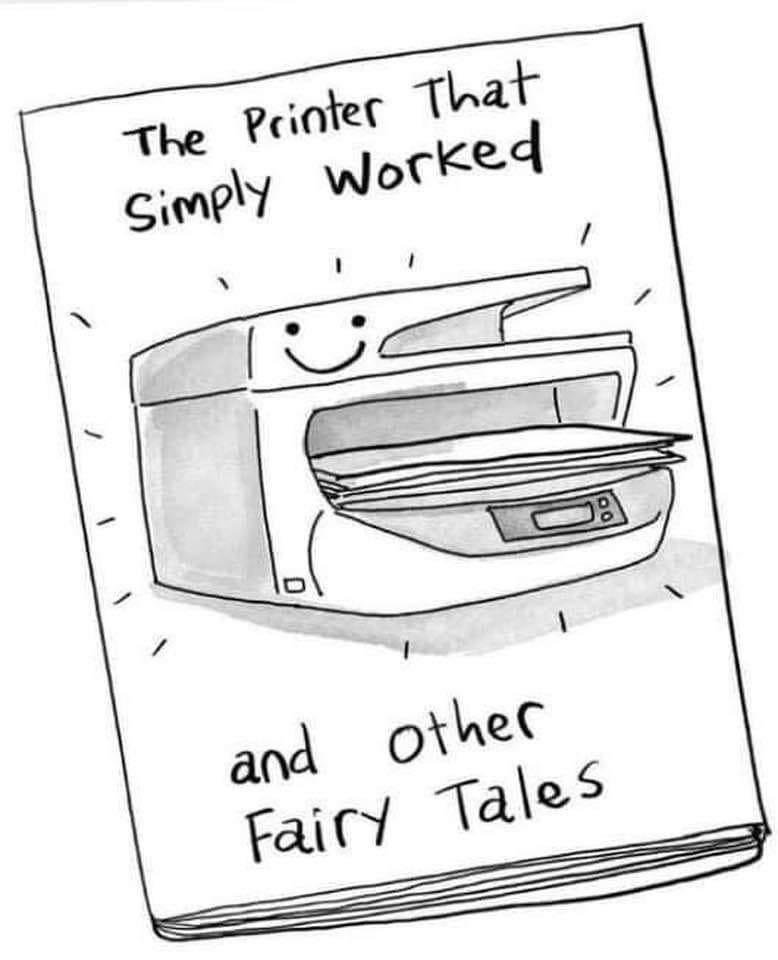
Printer-that-worked.jpg
The printer that simply worked and other fairy tales
 
Posts: 321
18
9
  • Likes 5
  • Mark post as helpful
  • send pies
    Number of slices to send:
    Optional 'thank-you' note:
  • Quote
  • Report post to moderator

Pearl Sutton wrote:  I want to buy from a company like that.


Likewise. Here are some I've stumbled upon:


Posts: 8
Location: Australia
9
  • Likes 4
  • Mark post as helpful
  • send pies
    Number of slices to send:
    Optional 'thank-you' note:
  • Quote
  • Report post to moderator
Hi Everyone,

When I lived on a farm (admittedly a few years ago now) in rural Australia, we had a simple set of rules:

1. Buy one type of something that works well so you can swap them out wherever needed.
2. Buy Buy one type of something that is ubiquitous, with available parts, and self-serviceable.
3. Buy as many of those as you need, then add at least two more for spares.
4. Buy enough belts, oil, piston rings, spark plugs and fuel to run them all, 24 hours a day, for a solid month on top of your usual operations.
5. Buy the tools you need to fix as much as you can yourself. Even if they're expensive, they'll save you more money in the long run in lost time, and labour.

So we bought lots of those little Honda diesel engines, that ran augers, generators for the old tombstone welders, water pumps for fire fighting, etc. We also bought an old mechanic's toolbox when they retired. Those were great tools.

That was more important than we knew...

One of my earliest memories was the flood that happened on our farm. Unfortunately being on a river's edge and on top of an artesian spring meant the house on the hill needed to be even further up the hill than usual. The entire state had received over 6 months worth of rain in less than a week, and the dams were pretty full already. So, the tractor had been used to make embankments around the main house and we'd moved the diesel tanks next to the garage. Every engine was being used to pump water 24 hours a day until the water subsided... and every day, one of the spares was on the bench being serviced in rotation... we saved the main house but the "granny flat" slightly down the hill was knee deep in water and mud.

What the pumps couldn't do was stop the rodents seeking higher ground. So 18 months later, when we had a drought, the farm turned into a tinder box due to water restrictions, we found out the hard way, that the rodents seeking refuge had eaten the wiring in the aforementioned "granny flat" the year before.... so that caught on fire.... and the ensuing inferno threatened both the home and our crops. So the pumps came out again, this time mounted on trucks, and along the key fire breaks/dam locations.

This is why I don't understand why people allow farming machinery manufacturers to make things ever-less serviceable, with all manner of proprietary parts, technician hardware that restricts equipment operation after simple maintenance has been performed by someone not on the manufacturer's payroll. Unfortunately, that's the way things are going.

Is there anything we can do?

How handy are you?

My friend bought himself a kit "hot rod" car... and it didn't include an engine, he could just buy any number of parts, and bolt it in. My first 3D printer was a Prusa kit. I really like those because I assembled it from a kit, and I can disassemble/service it as needed. It's still going today, because I can service it myself. Fortunately for the Prusa, most of those parts are ubiquitous, or even self-printable (if you have another printer). When I was reviewing other, pre-assembled branded 3D printers, the parts were proprietary.. and then the company ceased all support! I (with the help of other trail-blazers) managed to modify them so they work with more conventional and freely-available parts, but there's a limit of what I can do if core parts fail.

That said....

There is a movement toward localised manufacturing, (3D printers, CNC mills/routers), and never has it been easier to design and make a project yourself, then either send a model off to get printed at an online fabrication company, or doing it yourself "in house". Buying a cheap printer is often cheaper than getting a few modest prints done professionally!

Coming back to household appliances....

One of the things I've been doing recently is restoring a pair of Hi-Fi subwoofers that run both a proprietary subwoofer speaker, and more importantly, a proprietary amplifier. The amplifier is extremely unreliable over the long-term, impossible to repair in a cost-effective way due to lack of parts, but the sub speakers/cabinets themselves are just too nice to end up as landfill.

The right to repair....

Many manufacturers are making things intentionally difficult to repair to increase sales and cut labour/part storage costs. However, what's often less-discussed is the increasing availability/affordability of informal education, test equipment, tools, and the rise of kit manufacturers in various fields. Whether that's homes, personal aeroplanes, cars, printers, and in some cases, even diagnostic equipment/tools.

You can buy a decent multimeter, a temperature controlled soldering iron, and a decent desoldering tool (you often have to take parts out of the board in order to test them), and a part identifier (like a Peak-branded unit) for well under $1000 Australian. I learned to use this stuff by borrowing books from the library as a kid and building small projects, and in more recent years, reading more advanced books and watching a lot of YouTube.

How things have changed in 30-odd years....

When I was in college, I (perhaps grudgingly) helped out with the live events, DJs/concerts, that sort of thing. As the "technical guy, who was volunteered for this inauspicious role" I was presented with a key to room full of aged live event equipment in various states of repair, (and saturation in the sticky residues of various alcoholic beverages).  At the start, I had no idea what worked, what didn't, or how to test it properly with the equipment of that time, and no one from "years gone by" to contact about it. In short, I didn't have a clue, and was expected to "figure it out" without help.

So I slowly "muddled my way through", working strategically by organizing the room into "working"/"not-working" piles, then slowly cannibalising two broken speakers to make one good one.... but while I didn't have any fancy test equipment back then, I had makes/models clearly labelled. I could email manufacturers and they'd send me technical spec sheets. That helped a lot!

Fast forward to these subs in 2026.... Proprietary speakers in a proprietary case, all made exclusively for their own company's products. Forget publicly-available tech specs, forget impedance curves or SPL graphs.... beyond a basic DC check and the fact that the promotional material dated back in 2009 for these subs, stated that they used 1700W amplifiers... I had nothing. Customer service to loyal customers? What's that?!

Two great sources for repairing proprietary hardware

Go to the DIY forums. In this case, I was poking around on the DIY speaker building communities because let's face it, they need to source, build, and operate the same types of hardware. I was on a forum called (unoriginally enough) DIY Audio, and they pointed me in the direction of a piece of test equipment that one of their suppliers had "cooked up".

So I read about the Dayton Audio Test System (DATS version 3... or the DATS V3 for short). It combined a signal generator, LCR meter (a specific type of multimeter that works well in this case), a speaker tester, and using some creative mathematics and knowledge of physics, can figure out how easy the speaker is to drive, and various key aspects that I would never have been able to figure out accurately without this gear. Plug it into a Windows PC, calibrate the unit, connect your speaker and run the tests. It plots graphs and tells you everything you'd need to know about any speaker you have.

Ok, so the DATS V3 was $273 (Australian) delivered, but it would tell me what sort of amplifier this sub needed. It sounds like a lot, but if you buy the wrong amp and blow it up, it'll cost a lot more than that. If you install, test or restore speakers, I highly recommend this kit, even if you can find manufacturer test specs for your speaker. You'll know the exact specs/condition of your speaker, and it can certainly save a ton of time trying to diagnose the issues if you find them.

The second place to overcome proprietary speakers is pro audio..

1700W amplifiers (even if that's highly idealised for marketing purposes) is not the usual realm of consumer hi-fi wattages. Just as a ute/pickup is built with domestic use in mind, semi-trailers are built to a fundamentally different specification, even if the numbers on paper might imply a vaguely similar amount of horsepower. Live events often hire their equipment and as such, that gear needs to be adaptable, powerful, and widely compatible to be useful from one event to another. So my odds of success go up by seeking pro audio solutions than bespoke consumer manufacturers...

Armed with all my test data, impedance curves, and other key specs of sub speaker, I reached out to a pro audio engineer and asked.... "I'm thinking about replacing the unreliable amp with a pro model. I'm on a budget, so which one would you recommend?"

I was pointed not only in the right direction, but the tech came up with a way to drive both of my subs from the one amp. Unsurprisingly, I've done that!

Now, I've only converted one of my subs so far but it works well. The unreliable amp stuck in a sealed box, has now been replaced with an external amp that can breathe and be kept cooler. If there's a problem I can tweak the settings on the pro amp, or simply unplug it and swap it out, and replace it entirely

While agree that modular/standardised construction would help immensely, and reduce waste. There is a call for ever-more-efficient hardware... which can be difficult to balance that with retrospective support.

One of the companies that does do modular builds and has great support is a little hi-fi company called Schiit (yes, every poop joke has been made) but I bought some of their gear for a friend some years ago, and he's since upgraded the internal circuitry with a newer model and he simply undid some screws, then unplugged the old board from the unit, plugged the new board in and screwed the case closed once again.

Supporting companies that already do this sort of thing is probably a good idea too. They're not as cheap as the hi-fi rubbish found in most stores these days,but it's built to last decades at the very least... it's also excellent value if you like good sound.

Miele as an appliance brand.... seems (to me at least), to have lost a lot it's shine because the warranties are no longer than cheaper brands. Vitamix blenders at least has a 10 year warranty here in Australia... but you pay for it. That said, high price is no guarantee. Dyson is also expensive but also has limited warranty. Festool tools (yes I know there's a lot of fan boys/girls) has a guarantee that parts will be available for 10 years from the date of initial model manufacture, and has a concierge pickup/drop off courier service in many countries... They're expensive, granted, but at least it's better than constant e-waste rubbish that the bottom-tier tools create over multiple replacements. I particularly enjoy the Homemade Tools forums... some of those are simply amazing.

So if even the expensive brands are pulling out of the supported/repairable habit. If the repair guys are prohibitively expensive or just can't get parts... we can either do it ourselves, learn to fix it ourselves, or build better gear... ourselves.

Now I know that "lets build a buisiness" is a great idea.. but perhaps designing open-source fridges, using affordable/standardised off-the-shelf parts, is a great starting point.

One of my childhood friends went to Vietnam, and came home with a broken Vulcan mini gattling canon that was salvaged from a downed U.S. helicopter. When the 1960s-era washing machine broke in the early 90s, he took the motor from the gun, welded up a mounting plate for the motor and transformer, and linked the washing machine drum with a couple of pulleys and a belt. Let's just say the first spin cycle was.... an experience... and so he had to adjust it with a much lower ratio on the belts.  

I'm just glad something good came out of it.

Anyway, I'd love to hear what projects others are doing to reduce waste and restore functionality!

Hamish.


Posts: 76
16
gear fiber arts building
  • Likes 6
  • Mark post as helpful
  • send pies
    Number of slices to send:
    Optional 'thank-you' note:
  • Quote
  • Report post to moderator
I too would be a customer of this company.

While I admire Hamish's dedication to DIY appliances, I don't think it's realistic that people fabricate their own machine parts on a wide scale, regular basis. Repairing our own things, yes.  But if we all had to do metal fabrication for every appliance we owned and to build bracketing and such for every motor replacement it would be too much for people with a job to handle.

I think this kind of company would be best suited to a small community not looking to make money but looking for any kind of income.

You would have to keep the manufacturing simple, because you would be selling low volume, so complex stuff like injection moulding wouldnt be worth doing if you did one a year and then forgot how you did it.
 
Shiny ad:
Permaculture Adventure Bundle - 43 digital goods for freaky cheap!
https://permies.com/w/permaculture-adventure
reply
    Bookmark Topic Watch Topic
  • New Topic