|

|
|
|
|

|

|

|

|
-B.png)
|


 11
11


How Permies works: https://permies.com/wiki/34193/permies-works-links-threads
My projects on Skye: The tree field, Growing and landracing, perennial polycultures, "Don't dream it - be it! "
22


 4
4
Invasive plants are Earth's way of insisting we notice her medicines. Stephen Herrod Buhner
Everyone learns what works by learning what doesn't work. Stephen Herrod Buhner
8
r ranson wrote:Feild peas and beans grow as a bush. Usually less than two feet high these days. Three or four feet high seemed more likely pre industrial revolution.
How Permies works: https://permies.com/wiki/34193/permies-works-links-threads
My projects on Skye: The tree field, Growing and landracing, perennial polycultures, "Don't dream it - be it! "
12
--
"Whitewashed Hope: A Message from 10+ Indigenous Leaders and Organizations"
https://www.culturalsurvival.org/news/whitewashed-hope-message-10-indigenous-leaders-and-organizations
21
13
Creating edible biodiversity and embracing everlasting abundance.
13
15
How Permies works: https://permies.com/wiki/34193/permies-works-links-threads
My projects on Skye: The tree field, Growing and landracing, perennial polycultures, "Don't dream it - be it! "
9
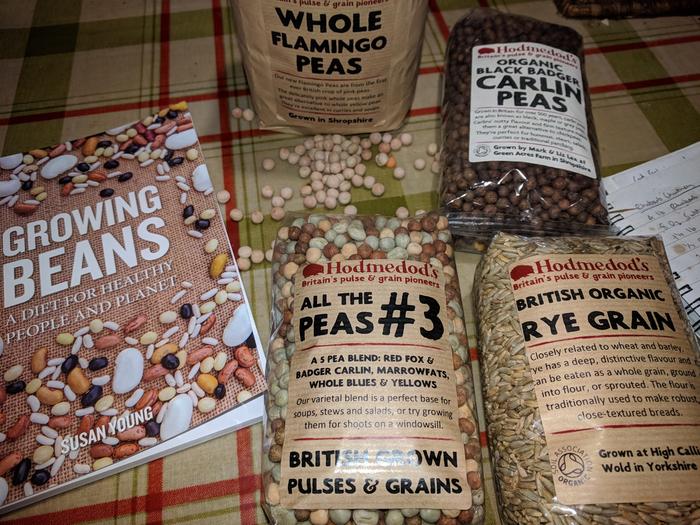
Nancy Reading wrote:Ooh look! Hodmedod's do a ready mix for me - a mix of five UK grown peas!
--
"Whitewashed Hope: A Message from 10+ Indigenous Leaders and Organizations"
https://www.culturalsurvival.org/news/whitewashed-hope-message-10-indigenous-leaders-and-organizations
14

Moderator, Treatment Free Beekeepers group on Facebook.
https://www.facebook.com/groups/treatmentfreebeekeepers/


 10
10
Michael Cox wrote:Actually I think they probably did it exactly as you describe.
Here in the UK many of our ancient woodlands were actively managed as coppice - hazel, hornbeam and chestnut are the most common species. A common product was bundles of pea sticks made with the brash from trimming other more valuable products.
How Permies works: https://permies.com/wiki/34193/permies-works-links-threads
My projects on Skye: The tree field, Growing and landracing, perennial polycultures, "Don't dream it - be it! "
12

Moderator, Treatment Free Beekeepers group on Facebook.
https://www.facebook.com/groups/treatmentfreebeekeepers/
15
9
The seed is broadcast uniformly, some landing on top of the ridges, some landing in the furrows. This made agriculture more sustainable against poor weather as on dry years, the furrowed grain grew and on wet years the ridge grain grew best.
--
"Whitewashed Hope: A Message from 10+ Indigenous Leaders and Organizations"
https://www.culturalsurvival.org/news/whitewashed-hope-message-10-indigenous-leaders-and-organizations
9
15
16
6
--
"Whitewashed Hope: A Message from 10+ Indigenous Leaders and Organizations"
https://www.culturalsurvival.org/news/whitewashed-hope-message-10-indigenous-leaders-and-organizations
10
Nancy Reading wrote:The simple three field rotation of grains, followed by legumes, followed by fallow (animal grazing) was pretty standard in much of Europe in the medieval period I understand. I find it difficult to believe though, that people stuck loads of pea stick in the fields for their peas and beans to grow on and then took them off again the following year - it just sounds like rather too much work on a field sized system!
How did they manage it? I experimented this year with not supporting most of my peas. I interplanted some with my fava beans and some were just by themselves, but (as you might expect!) the results were less than satisfactory - the pea vines scrambled over the ground, and the slugs and mice had most of the peas produced (despite a good growing year for me generally). I don't think shorter peas (which are one obvious solution) were available till about the 19th century this article has some background reading on peas...) so that wouldn't be the medieval solution.
So my questions are - did they use pea sticks or another method? What do you think might work with less labour on a larger scale?
10
Tim Springston wrote:The problem with no trellis/supports is that the tall peas flop all over the place and lots of seed is ruined before harvest, and it is a PITA to harvest them. Easiest is to cut the entire mass and haul it someplace under a roof to dry down completely and then thresh the whole thing.

How Permies works: https://permies.com/wiki/34193/permies-works-links-threads
My projects on Skye: The tree field, Growing and landracing, perennial polycultures, "Don't dream it - be it! "
8
5
Marieke De Jong wrote:
Hi everyone,
Interesting question Nancy, and I never seem to manage enough or fully functional pea sticks no matter how I vow to do it!
Anyway, I just happened to come across a Dutch website on rare seeds and they listed a pea that's been saved by one if their farmer - seed growers and they described their technique of growing the peas together with wheat (or some grain, but I think they said wheat). I'll try this one of these years once I get grain going in my garden. I can see it work even if you wanted some fresh peas, as long as you leave space you can just walk along the rows and pick some.
15
--
"Whitewashed Hope: A Message from 10+ Indigenous Leaders and Organizations"
https://www.culturalsurvival.org/news/whitewashed-hope-message-10-indigenous-leaders-and-organizations
8
Nancy Reading wrote:
r ranson wrote:Feild peas and beans grow as a bush. Usually less than two feet high these days. Three or four feet high seemed more likely pre industrial revolution.
Interesting, I haven't found any sources for drying type bush peas, so I guess I'll have to take another look for 'field peas' and 'cover crop peas'. All the older traditional drying peas (like carlin peas) I've found are taller varieties - 5 to 6 feet, but maybe I'm looking in the wrong place!
Sourdough Without Fail Natural Small Batch Cheesemaking A Year in an Off-Grid Kitchen Backyard Dairy Goats My blog


 9
9
Nancy Reading wrote:
Tim Springston wrote:
One other thing I have heard is that pease were (and are?) also grown as a polyculture with grain crops so that you harvest, thresh and eat the whole crop together. I'm not sure how this might work, but you'd get a nutritious porrage I suppose. It may also have been fed entire as an animal food with the stalks as well
Weeds are just plants with enough surplus will to live to withstand normal levels of gardening!--Alexandra Petri


 10
15
10
15
How Permies works: https://permies.com/wiki/34193/permies-works-links-threads
My projects on Skye: The tree field, Growing and landracing, perennial polycultures, "Don't dream it - be it! "
4
7
Blake Lenoir wrote: Are there any plants in this modern time that would pull off the restoration of an historic and ancient European garden today?
How Permies works: https://permies.com/wiki/34193/permies-works-links-threads
My projects on Skye: The tree field, Growing and landracing, perennial polycultures, "Don't dream it - be it! "


 7
7
"Also, just as you want men to do to you, do the same way to them" (Luke 6:31)


 4
4
Inge Leonora-den Ouden wrote:Is this only about peas, or also about other legumes?
How Permies works: https://permies.com/wiki/34193/permies-works-links-threads
My projects on Skye: The tree field, Growing and landracing, perennial polycultures, "Don't dream it - be it! "

|
Morning came much too soon and it brought along a friend named Margarita Hangover, and a tiny ad.
better than composting toilets
https://www.richsoil.com/willow
|