• Post Reply Bookmark Topic Watch Topic
  • New Topic
permaculture forums growies critters building homesteading energy monies kitchen purity ungarbage community wilderness fiber arts art permaculture artisans regional education skip experiences global resources cider press projects digital market permies.com pie forums private forums all forums
this forum made possible by our volunteer staff, including ...
master stewards:
  • Carla Burke
  • Nancy Reading
  • paul wheaton
  • John F Dean
  • r ransom
  • Jay Angler
stewards:
  • Timothy Norton
  • Tereza Okava
  • Pearl Sutton
master gardeners:
  • Christopher Weeks
  • M Ljin
gardeners:
  • Jeremy VanGelder
  • Megan Palmer
  • Thekla McDaniels

Yellowjacket year?

 
master gardener
Posts: 6642
Location: Carlton County, Minnesota, USA: 3b; Dfb; sandy loam; in the woods
4052
8
forest garden trees books chicken food preservation cooking fiber arts seed woodworking homestead ungarbage
  • Likes 2
  • Mark post as helpful
  • send pies
    Number of slices to send:
    Optional 'thank-you' note:
  • Quote
  • Report post to moderator
I like referring to our seasons based on the insect pests: https://permies.com/forums/posts/preList/249159/2315003

But this year we have -way- more yellow jackets than usual. It's the time of year when they're kind of cuddly for murder-flies, but come fall, this is going to be a nightmare.

We've been on this property since 2020 and I've had to deal with two nests, one by the fire-pit where they stung my daughter's foot and one in a hugelish garden bed that I set up around a stump (but that one feels like I invited them). But I know of two in the ground this year and there must be more that I don't know about.

Do you have years like that? Anyone know what causes it? We had a pretty mild winter. And our mosquito load was light this year with the dragonflies out before I even noticed the mosquitoes -- so that's another bit of weird.
 
pollinator
Posts: 798
Location: SE Indiana
469
dog fish trees writing
  • Likes 6
  • Mark post as helpful
  • send pies
    Number of slices to send:
    Optional 'thank-you' note:
  • Quote
  • Report post to moderator
I don't know if there are more or less this year, but I am definitely on alert for them because I encountered a nest in my garden just a few days ago. I'm fairly tolerant of them in general and much more tolerant of their venom than most people. Had it just been me I might have tagged the spot and let them be, but the girl here is allergic, and the cat likes to stick his foot in holes, so they had to go.  

Your saying "they're kind of cuddly for murder-flies" is interesting because these were less aggressive than normal, I never thought about it being a time of year thing.

Maybe there are different strains of them because these were small, I thought at first they were hover flies attracted to where I had spilled water and even walked through them a couple times before they attacked. I'm tolerant anyway of bee venom but theirs was particularly mild, I don't know how many times they got me because they didn't enough of a swelling to count the individual spots. The pain lasted a minute or two and the itch, a couple of hours.

What to do when a yellow jacket nest is in your sweet potato patch? Pour gasoline or spray poison in the hole, ABSOLUTELY not! Shop vac can work, if your tolerant of a few stings, which I am but no extension cord long enough so I went in and got a big pot of water boiling, it worked a charm.  Next day I dug to make sure I got them, rather than causing them to move and I found the nest and a much larger one which I guess is the queen. Now just the karmic debt for murdering the poor things in such an awful way.
 
pollinator
Posts: 1567
Location: Wheaton Labs, Montana, USA
3105
11
home care trees books wofati food preservation bike bee building writing seed
  • Likes 6
  • Mark post as helpful
  • send pies
    Number of slices to send:
    Optional 'thank-you' note:
  • Quote
  • Report post to moderator
I do think a mild winter has something to do with it. Our winter was book-ended with big snows, but apart from a late frost it was much shorter, and with less precipitation, than typical. We then had a very, very rainy June, and I think the abundance of water in those infrequently-moist locations may also have something to do with it.

I've relocated several nests this year already. One tried to set up shop in my tent, and I let them know I wasn't interested in a roommate (though this has happened in past years, as well). [EDIT: This was also the first year I've seen a yellow jacket nest in a Little Free Library in Missoula...!]

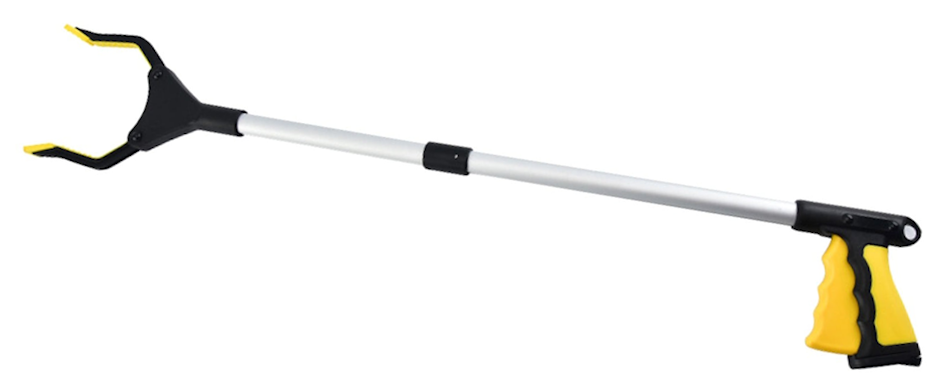
One bit of info I wanted to pass along on this subject is that these extended claw-grabber tools are invaluable for folks who wish to move nests instead of destroy them. It reduced my personal anxiety factor considerably. If you relocate nests, do it early in the morning while it's still relatively cool and the "murder flies" are more sluggish.

It seems best to move them out before the extremely dry times of the year, as they become protective (AKA aggressive) when there's less water around. Good luck to you all...!
the-claw.png
One of the best tools to relocate yellow jacket nests.
 
Christopher Weeks
master gardener
Posts: 6642
Location: Carlton County, Minnesota, USA: 3b; Dfb; sandy loam; in the woods
4052
8
forest garden trees books chicken food preservation cooking fiber arts seed woodworking homestead ungarbage
  • Likes 4
  • Mark post as helpful
  • send pies
    Number of slices to send:
    Optional 'thank-you' note:
  • Quote
  • Report post to moderator
Oh, that's interesting, Reed! Mine are smaller than I'm used to, but I was assuming it's early and the season and they haven't fattened up -- but I honestly don't know anything about their lifecycle or whether that's reasonable. I had to wait and see one land on a raspberry before I could positively identify them as yellowjackets. And I got a single sting in the raspberry patch two days ago -- I didn't see what got me, but one of these guys flew away from the area right after it happened. I rubbed it with plantain immediately and it stung for an hour, but so little that I question whether it was really a yellowjacket that got me, and only raised a tiny white welt, with no itching to follow. My wife is also allergic (or was before therapy, she's supposed to be immune now, but we haven't tested it) so we take them a little more seriously than we might otherwise.

They definitely get aggressive in the autumn.
 
Christopher Weeks
master gardener
Posts: 6642
Location: Carlton County, Minnesota, USA: 3b; Dfb; sandy loam; in the woods
4052
8
forest garden trees books chicken food preservation cooking fiber arts seed woodworking homestead ungarbage
  • Likes 4
  • Mark post as helpful
  • send pies
    Number of slices to send:
    Optional 'thank-you' note:
  • Quote
  • Report post to moderator
Stephen, are yours underground? How do you move them?
 
steward
Posts: 19347
Location: USDA Zone 8a
4881
dog hunting food preservation cooking bee greening the desert
  • Likes 5
  • Mark post as helpful
  • send pies
    Number of slices to send:
    Optional 'thank-you' note:
  • Quote
  • Report post to moderator
I have been seeing more yellow jackets this year, too.

In  another topic, I mentioned we are seeing very few bees so I wonder if there is a connection?
 
Stephen B. Thomas
pollinator
Posts: 1567
Location: Wheaton Labs, Montana, USA
3105
11
home care trees books wofati food preservation bike bee building writing seed
  • Likes 6
  • Mark post as helpful
  • send pies
    Number of slices to send:
    Optional 'thank-you' note:
  • Quote
  • Report post to moderator

Christopher Weeks wrote:Stephen, are yours underground? How do you move them?


We did have one underground - and that was the largest one I'd seen, to date. We ended up moving it in the winter, when there was snow and the threat of being stung was gone. It was larger in diameter than a softball.

Most of the time, they're under eaves of roofs, or within the folds of a tarp that's bunched-up over a pile of wood or something. Those are the ones I can move while we're in-season and the bugs are active.

How I Move Them:
You need a claw tool, a jar, and a piece of wood or the jar's lid or something to keep things inside. You'll want to do this in the morning or whatever's the coolest part of the day for you.
I set the jar near the nest, use the claw grabber at the furthest distance I can manage, gently grab the nest with the claw, then drop it in the jar. I put down the claw as quickly as I can and cover the jar with the cardboard, so nobody escapes while I carry it. Then I walk a decent distance from any of our buildings, usually to the foot of a bunch of shrubbery or whatever, and "pour" the nest onto the ground. Then I run away.
 
Christopher Weeks
master gardener
Posts: 6642
Location: Carlton County, Minnesota, USA: 3b; Dfb; sandy loam; in the woods
4052
8
forest garden trees books chicken food preservation cooking fiber arts seed woodworking homestead ungarbage
  • Likes 4
  • Mark post as helpful
  • send pies
    Number of slices to send:
    Optional 'thank-you' note:
  • Quote
  • Report post to moderator

Stephen B. Thomas wrote:Most of the time, they're under eaves of roofs, or within the folds of a tarp that's bunched-up over a pile of wood or something. Those are the ones I can move while we're in-season and the bugs are active.


Where I live, the ones that create grey, spherical paper nests on branches or eaves -- we call those hornets and they are black and white(ish). The ones that burrow underground are black and yellow and we call them yellowjackets. (I understand that both groups are just different hornets to an entomologist.)

I was wondering how you glued them to a new tree branch after moving. :-)
 
Stephen B. Thomas
pollinator
Posts: 1567
Location: Wheaton Labs, Montana, USA
3105
11
home care trees books wofati food preservation bike bee building writing seed
  • Likes 6
  • Mark post as helpful
  • send pies
    Number of slices to send:
    Optional 'thank-you' note:
  • Quote
  • Report post to moderator

Christopher Weeks wrote:I was wondering how you glued them to a new tree branch after moving.


Hahaha! I confess that while I do like bugs, I don't like them that much.

I at least say, "Sorry, y'all. It's moving day." But that's the extent of it, really.

Regarding hornets vs yellowjackets: I really haven't noted the different colour of the bugs, but I have moved a couple different types of nests. Most common around here are the ones whose hexagonal-shaped combs - like cells in a beehive - are open to the air. I've moved a few round paper wasps nests (for hornets, I presume) in my time, but they're less frequent (with the exception of those who want to move into my tent).
 
Christopher Weeks
master gardener
Posts: 6642
Location: Carlton County, Minnesota, USA: 3b; Dfb; sandy loam; in the woods
4052
8
forest garden trees books chicken food preservation cooking fiber arts seed woodworking homestead ungarbage
  • Likes 8
  • Mark post as helpful
  • send pies
    Number of slices to send:
    Optional 'thank-you' note:
  • Quote
  • Report post to moderator
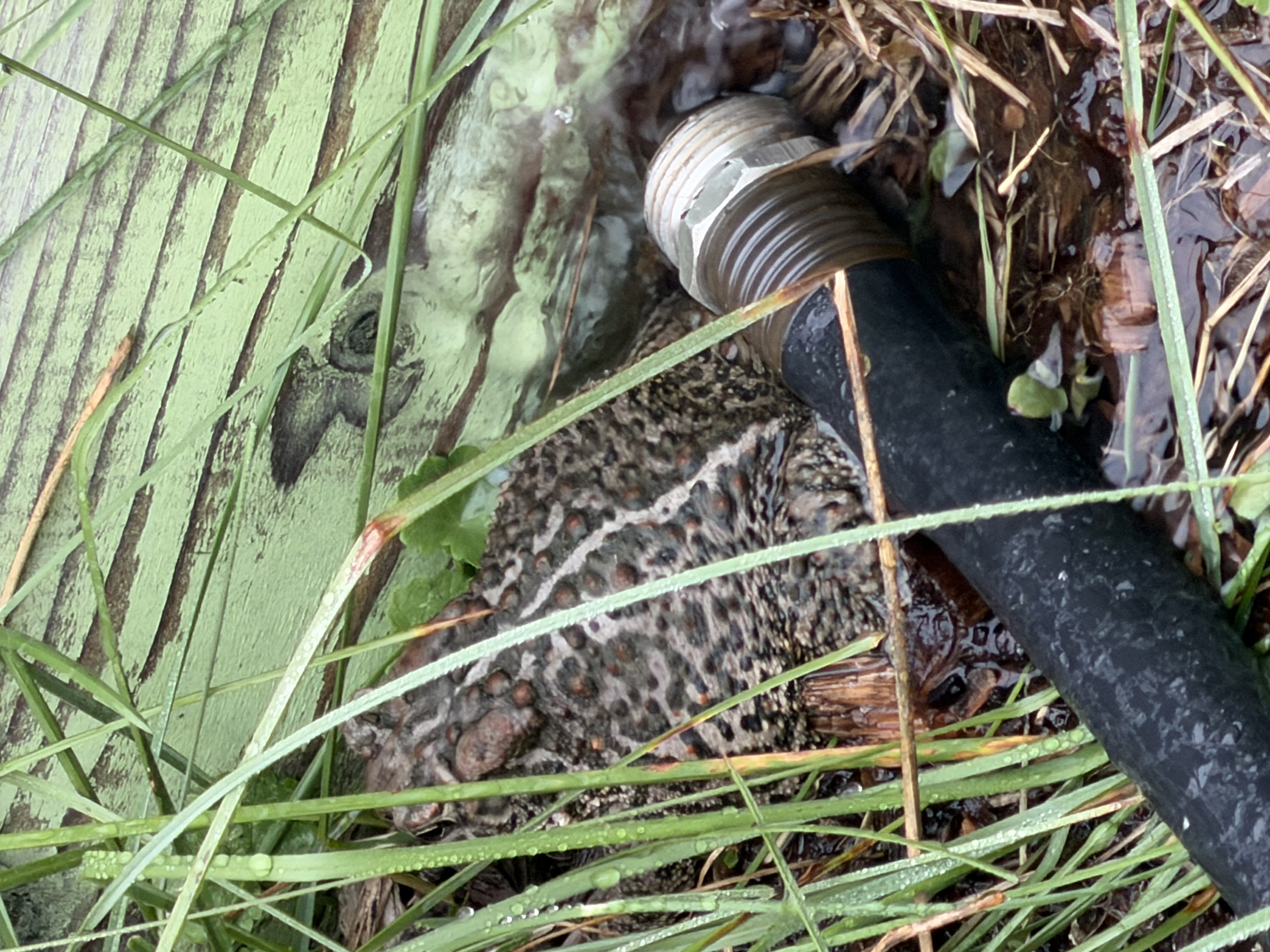
The yellowjackets have started arguing with us when we go to pick raspberries -- which we need to do every morning for the next two weeks or so. So, I got a hose, and shoved it almost into the mouth of their nearby nest that I know about, and turned it on. Boy-howdy do they not like that! It's been running for about 24 hours now. I went out an hour ago to check on it and there's a fat toad sitting in the streaming cold (~42F/6C) water and eating the bugs the come to it. I coined the name yellowsnackets for the toad.
IMG_6148.jpeg
Toad living its best life
 
master steward
Posts: 15959
Location: Pacific Wet Coast
10402
duck books chicken cooking food preservation ungarbage
  • Likes 5
  • Mark post as helpful
  • send pies
    Number of slices to send:
    Optional 'thank-you' note:
  • Quote
  • Report post to moderator
Interesting. In my ecosystem, the numbers are way down. Down to the point I'm finding Cabbage Butterfly caterpillars on my Kale. Normally the wasps harvest all the caterpillars before they do any damage.

There are way more different versions of wasps and bees than I can imagine. We have some ground dwelling ones but their nests don't overwinter. We have some paper wasp type nests and some "mud" type nests.

As best I can, I live and let live due to them being an important part of my organic pest management system. (Read, I'd rather they eat my caterpillars than me have to squish them...) Many can learn to recognize people, so I talk to them and tell them that if they leave me alone, I'll leave them alone. That seems to work better if you find the nest early in the season before they get the September Crazies.
 
Doe, a deer, a female deer. Ray, a pocketful of sun. Me, a name, I call my tiny ad ...
try homesteading without buying a homestead
https://wheaton-labs.com/bootcamp
reply
    Bookmark Topic Watch Topic
  • New Topic