• Post Reply Bookmark Topic Watch Topic
  • New Topic
permaculture forums growies critters building homesteading energy monies kitchen purity ungarbage community wilderness fiber arts art permaculture artisans regional education skip experiences global resources cider press projects digital market permies.com pie forums private forums all forums
this forum made possible by our volunteer staff, including ...
master stewards:
  • paul wheaton
  • Anne Miller
  • Carla Burke
  • Nancy Reading
  • John F Dean
  • Timothy Norton
  • Jay Angler
stewards:
  • r ransom
  • Pearl Sutton
  • Tereza Okava
master gardeners:
  • Christopher Weeks
gardeners:
  • M Ljin
  • Megan Palmer
  • Kate Downham

Souring on Sourdough

 
Posts: 19
Location: Central-ish NC
9
  • Likes 14
  • Mark post as helpful
  • send pies
    Number of slices to send:
    Optional 'thank-you' note:
  • Quote
  • Report post to moderator
As noted elsewhere, although I refuse to believe pioneers on the frontier had graduated borosilicate cylinders, proofing boxes, climate-controlled log cabins, or digital wristwatches so they could stop milking cows and rush inside to feed their starters for perfect sourdough, it's also true that I've gone through two long spells (months each) of trial-and-error, look-and-feel, numerous approaches and recipes without once producing a loaf that really hit the spot.

Experimentation a la Sandor-Katz-Wild-Fermentation:
I successfully generated my own starter, focused first on rye, pumpernickel, and multigrain (use up your leftovers) bread. Pretty much everything I baked in this iteration was pretty tasty but very dense. My starter was healthy and smelled great, although I don't think it ever doubled as quickly as later reading told me it should do. Loaves also went brick-like very quickly. I really liked these breads but they were too dense for others in the household (who did like the taste). After putting several half-loaves in the freezer and spacing out the next loaves longer and longer, I finally let this effort die.

Experimentation a la Sourdough-Advice-Real-&-Online:
All the church ladies make incredible bread. One of my friends insisted I could do it too, giving me some of her starter, which she originally got from one of the other ladies. This time I fed it with whole wheat and bread flour instead of rye &c the 'wild' experiment. It stayed alive but not lively, so to speak. I thought our kitchen was too cold and tried different locations and sometimes a (plant) seedling warming mat to encourage it. Reading more and watching videos specifically on sourdough, I tried lifting and coiling and other techniques, tried to figure out what the dough should look like and respond at different stages, struggled with timing, tried a range of oven approaches, never got above "meh" results and was not having fun anymore.

I did at least figure out that my oven temp needs to be set higher (actual temp in the oven is not as high as the setting) and a few things about the baking itself for getting a decent crust.

I'd appreciate tips generally and especially from
  1. others who may have struggled through learning how to assess and manage their starters (especially from scratch), and
  2. others who want a LOAF not a boule.
My personal goal is tomato sandwiches, and I hate the boule with every slice a different size. Sorry, no offense; I realize I'm just weird!

Thanks for any suggestions, including "maybe sourdough is just not for you"...
 
steward & author
Posts: 48474
Location: Left Coast Canada
20323
10
art trees books chicken cooking fiber arts
  • Likes 12
  • Mark post as helpful
  • send pies
    Number of slices to send:
    Optional 'thank-you' note:
  • Quote
  • Report post to moderator
I've always been mean to my sourdough, demanding it change to fit my lifestyle.  Neglect, too cold, too hot... all the things.  

If I want it to rise faster, like an hour or two, I put it somewhere warm.  If I'm going to be away for 10 hours, it can go somewhere cool to rise. The house is seldom climate uniform, so there are always cooler or warmer spots.  

That's why i go sourdough when I bake bread, it can do what I want, unlike commercial yeast that has about 4 min window when I have to do the next step.

Punch it down, shape it, I usually use a bread tin as the family likes "bread shape".  Make sure the oven is well preheated so I usually put it on when I punch the dough and as it's one of those new ovens that takes 45min to come up to temperature because it saves money or somethingsomething, I can put the bread on top of the oven to rise and they will be ready to bake at the same time.  

I also cook a lot of other things in the oven at the same time, as I'm too miserly to heat such a big space as an oven just to bake two loaves of bread.  They are usually in there before the bread, so it seems to hold the heat better when the bread goes in.


I've never noticed sourdough to care what shape it is cooked.  Although each shape has its own ideal temperature and time, and each oven has a unique personality.  You have permission to observe and experiment to see what works for you.
 
master gardener
Posts: 7008
Location: Carlton County, Minnesota, USA: 3b; Dfb; sandy loam; in the woods
4440
8
forest garden trees books chicken food preservation cooking fiber arts seed woodworking homestead ungarbage
  • Likes 10
  • Mark post as helpful
  • send pies
    Number of slices to send:
    Optional 'thank-you' note:
  • Quote
  • Report post to moderator
I don't particularly have a shape preference myself, but the loaf shape is important to my wife so we bought some cast-iron loaf pans that we can use in place of a dutch oven for any procedure that calls for that.
 
pollinator
Posts: 155
Location: Mason County, WA USA:Ha; Harstine gravel ashy sandy loam
116
duck rabbit chicken medical herbs bee solar wood heat rocket stoves
  • Likes 15
  • Mark post as helpful
  • send pies
    Number of slices to send:
    Optional 'thank-you' note:
  • Quote
  • Report post to moderator
Hey Sea - golly I have walked much the same path.  Both water kefir and sourdough starter have been uphill roads with many detours.

I have come to the conclusion that sourdough can be something to gradually sidle up to.... just getting the starter to be consistently happy, but not so exhuberant that it overflows, has been more like managing a bipolar lab creature than working with a reliable and welcome kitchen ingredient.  When it is unhappy, I end up refreshing it more often in my bumbling attempts to improve, and then I have sourdough discard, which can go to the chickens mixed in their fermented grains, but I like to make productive use of it.

My favorite use of the discard is to make crumpets  (here is an example https://www.scotchandscones.com/sourdough-crumpets/ )  especially currently, while I am glamping with very limited baking options while tiny home is in construction. Until I get the RMH oven finished and functional, I am really appreciating the capacity to make some version of bread on a cast iron skillet.

and in all honestly, as someone who lives solo, a perfect loaf is very seldom my objective.  It takes a while for one person to get through a full loaf of bread... honestly longer than it stays wonderful, and freezing then thawing does NOT provide the same eating experience.  

So maybe I am in sourdough kindergarten.... taking little steps!
Sourdough-Discard-Raisin-Crumpets.jpeg
[Thumbnail for Sourdough-Discard-Raisin-Crumpets.jpeg]
Crumpets.jpeg
[Thumbnail for Crumpets.jpeg]
 
master steward
Posts: 19781
Location: USDA Zone 8a
4967
dog hunting food preservation cooking bee greening the desert
  • Likes 5
  • Mark post as helpful
  • send pies
    Number of slices to send:
    Optional 'thank-you' note:
  • Quote
  • Report post to moderator
As far as I know, pioneers had a bowl and a dutch oven to make their bread.

If they wanted a loaf of bread, like modern bread then they might have had a loaf pan the fit into the dutch oven or maybe a wooden box that fit into the dutch oven.

If you do not like a boule then a form is needed to make the bread into something sandwich like.

A loaf pan or wooden box might work.

I was not a pioneer so I was not there.
 
steward & manure connoisseur
Posts: 5467
Location: South of Capricorn
3516
dog rabbit urban cooking writing homestead ungarbage
  • Likes 6
  • Mark post as helpful
  • send pies
    Number of slices to send:
    Optional 'thank-you' note:
  • Quote
  • Report post to moderator
keep on trying. i killed so many starters.... now i'm pretty good as starting them and keeping them alive. They can't be little princesses, they get fed rarely (sometimes it passes a month) and live in the fridge for most of the year as our temps are really high.

I find with sourdough, like with beermaking, it is possible to get hyperfocused on details until it stops being fun. You can calculate the heck out of temps and PH and salt and etc, but in the end the starter is a LIVING thing and just like any other living thing, there are limits to what you can make it do. I find that's one of its charms, actually.
Not everyone likes a super heavy whole grain and not everyone likes sour. You're allowed to like your own and go for it. You're also allowed to give it a timeout. Around pandemic time I was getting frustrated with it too, and decided to back off. You can always revive a starter later (or start a new one).

Personally, after trying all sorts of crazy things, my favorite sourdough is a half-whole-wheat tiny boule to make in the air fryer!! sometimes I screw it up (it gets baked in a 7 inch cake pan with a stainless steel bowl upturned over it, and often it ends up a bit too suntanned).... but it's always good.

(and one time I screwed up and used the wrong recipe-- doubled the flour quantity but not the starter. I said what the hell and made sourdough pretzels out of them, and let me tell you, that was the best mistake ever!!!)
Have fun, before all else.
 
Rusticator
Posts: 10114
Location: Missouri Ozarks
5641
7
personal care gear foraging hunting rabbit chicken cooking food preservation fiber arts medical herbs homestead
  • Likes 3
  • Mark post as helpful
  • send pies
    Number of slices to send:
    Optional 'thank-you' note:
  • Quote
  • Report post to moderator
As a huge fan of both sourdough and tomato sandwiches, I understand the desire for a standard loaf, as opposed to a boulé. Like r.ranson, I'm abusive to my sourdough starters. Mine lives mostly in the fridge, because we try to stick to keto,90% of the time. In order to remind it how to do what it's supposed to, I'll take it out occasionally (once a month? 2 months?) remove some for 'discard', feed it the base, and stick it back in the fridge. Then the discard gets used for things I can freeze to use another time (I have 2 batches of sourdough puff pastry in the freezer, now), make bread for a friend, or to donate for a funeral luncheon, at church. So, that's the majority of the abuse/ neglect.

This is my favorite recipe - and I only use it for the amounts. I do my own thing, for how it gets kneaded (I use stretch & fold), I don't use flour on the work surface, because I prefer using butter, or olive or avocado oil. I make a double batch, and loaf pans, instead of making a boulé - unless I want a different shape - or rolls - or pizza dough...

Honestly, I can't help wondering if you may be over thinking it.
 
Kara Ann
pollinator
Posts: 155
Location: Mason County, WA USA:Ha; Harstine gravel ashy sandy loam
116
duck rabbit chicken medical herbs bee solar wood heat rocket stoves
  • Likes 5
  • Mark post as helpful
  • send pies
    Number of slices to send:
    Optional 'thank-you' note:
  • Quote
  • Report post to moderator
Wow Tereza - LOVE your joie de vivre  and go-with-it approach to sourdough - thanks so much for sharing that!
Rose4.png
[Thumbnail for Rose4.png]
 
Carla Burke
Rusticator
Posts: 10114
Location: Missouri Ozarks
5641
7
personal care gear foraging hunting rabbit chicken cooking food preservation fiber arts medical herbs homestead
  • Likes 2
  • Mark post as helpful
  • send pies
    Number of slices to send:
    Optional 'thank-you' note:
  • Quote
  • Report post to moderator
Oops! I forgot to include the recipe (source included at the bottom),  I don't bother with the parchment, either.  I really just use it for quantities and rough times...

Prep Time: 5 mins
Cook Time:45mins
Sourdough yield: 1 loaf/12 slices Author: Lucy Parissi | Supergolden Bakes

150 g (½ cup + 1 tbsp) sourdough starter or discard, room temperature
300 g (1 ¼ cups) water, lukewarm (or beer* Carla's note)
480 g (4 cups) bread flour
2 tsp rapid rise yeast
2 tsp salt
2 tsp sugar
olive oil spray for the bowl

Measure the starter to a large bowl and pour in the water. Stir well to combine – I use a dough hook.
Add the flour and yeast. Stir again to combine and make sure there are no dry pockets of flour.
Sugar and salt go in next – continue mixing with your dough hook or you can use your hands. Your dough will be very sticky and shaggy.
Spray the bowl with olive oil, cover the bowl with a clean towel and place somewhere warm to rise. I usually place it in the microwave or the oven with a pot of boiling water. The steam will speed up the process.
Check the dough has doubled in size. This should take only an hour but if your room or ingredients are cold it can take up to 90 minutes.
Mist your countertop with olive oil and scrape the dough on it. Use an oiled bench spaper to fold the edges over towards the centre to create a round loaf. Oil a square of parchment paper and transfer the loaf onto it.
Lift the paper by the edges and place in a bowl to rise for a further 30 minutes. Meanwhile, place your cast iron pot in the oven and preheat to 220°C (420°F).
Lift the bread out of the bowl using the baking paper and carefully drop into the pot (be careful it will be very hot). Score the top using a knife (if the dough is very sticky then you can skip the scoring). Cover the pot and bake for 30 minutes.
Uncover and bake for 15 more minutes. Carefully remove the bread from the pot – it should sound hollow if tapped on the underside. Cool completely on a wire rack before slicing.
Notes
Can I make this with whole wheat flour? You can use a combo of whole wheat and white bread flour at a 30/70 ratio. Whole wheat flour creates a denser, crustier loaf. (Take a look at my Easy Wholemeal Bread Recipe).
Can I make this using a stand mixer? Yes, simply add all the ingredients into the mixer and use the dough hook to mix together until the ingredients combine to form a soft dough. You don’t need to knead the dough.
I usually place the dough in the microwave or the oven with a pot of boiling water. The steam will speed up the proofing process.
If the dough is very soft it will be difficult to score. Don’t worry about scoring – the bread will simply open in the oven by itself. The softer the dough and higher water content the softer the crumb. A denser dough can be shaped the way you would shape a traditional sourdough loaf.
Nutrition
Calories: 158kcal | Carbohydrates: 32g | Protein: 5g | Fat: 1g | Saturated Fat: 1g | Polyunsaturated Fat: 1g | Monounsaturated Fat: 1g | Sodium: 390mg | Potassium: 40mg | Fiber: 1g | Sugar: 1g | Vitamin A: 1IU | Calcium: 7mg | Iron: 1mg
www.supergoldenbakes.com
 
Sea Skinley
Posts: 19
Location: Central-ish NC
9
  • Likes 6
  • Mark post as helpful
  • send pies
    Number of slices to send:
    Optional 'thank-you' note:
  • Quote
  • Report post to moderator

r ransom wrote:I've always been mean to my sourdough, demanding it change to fit my lifestyle.
[...] usually use a bread tin as the family likes "bread shape".  Make sure the oven is well preheated so I usually put it on when I punch the dough and as it's one of those new ovens that takes 45min to come up to temperature because it saves money or somethingsomething, I can put the bread on top of the oven to rise and they will be ready to bake at the same time.  
I also cook a lot of other things in the oven at the same time, as I'm too miserly to heat such a big space as an oven just to bake two loaves of bread.  They are usually in there before the bread, so it seems to hold the heat better when the bread goes in.
[...]You have permission to observe and experiment to see what works for you.


A person after my own heart, here; thanks! Neglectful was my first approach (and my natural style) so that's encouraging. We had to get a new fridge and it doesn't get warm on top the way other (probably inefficient) fridges have always seemed to do. I was using a seedling warmer mat thing under a spacer the last go-round until I gave up, and begrudged its size since I only needed that one small patch under the jar! I have two different ideas for localized warmth when I try again.

The second time I did splurge on a cast-iron loaf pan (but it's not big enough) and did the stove-top final rise while the oven preheated, and covered it with the (glass) loaf pan while cooking, all of which seemed to improve the crusts without really getting the overall outcome to be satisfactory. I'd do the rise on parchment in glass on top while the cast-iron heated with the oven, yeah about 45 mins I would say. So maybe all of that was on the right track!

Thanks for the tips and don't worry, experimentation is the only way I cook. The downside is I can never make exactly the same concoction twice, but we'll see if I can't get a little more consistent... Third time's the charm, right? Or is it the 33rd?
 
Sea Skinley
Posts: 19
Location: Central-ish NC
9
  • Likes 4
  • Mark post as helpful
  • send pies
    Number of slices to send:
    Optional 'thank-you' note:
  • Quote
  • Report post to moderator

Kara Ann wrote:Hey Sea - golly I have walked much the same path.  Both water kefir and sourdough starter have been uphill roads with many detours.
I have come to the conclusion that sourdough can be something to gradually sidle up to.... just getting the starter to be consistently happy, but not so exhuberant that it overflows, has been more like managing a bipolar lab creature than working with a reliable and welcome kitchen ingredient.  When it is unhappy, I end up refreshing it more often in my bumbling attempts to improve, and then I have sourdough discard, which can go to the chickens mixed in their fermented grains, but I like to make productive use of it.
My favorite use of the discard is to make crumpets  (here is an example https://www.scotchandscones.com/sourdough-crumpets/ )


Wow, thanks, and I appreciate the links & pictures! Those crumpets look terrific. And I need to start my chicken adventures soon too!

Good luck with your tiny home, truly I can't imagine but some days it sounds amazing (like yesterday when I was clearing out a corner of a barn for more productive use...).
 
Sea Skinley
Posts: 19
Location: Central-ish NC
9
  • Likes 4
  • Mark post as helpful
  • send pies
    Number of slices to send:
    Optional 'thank-you' note:
  • Quote
  • Report post to moderator

Tereza Okava wrote:keep on trying. [...]
I find with sourdough, like with beermaking, it is possible to get hyperfocused on details until it stops being fun. [...]
Personally, after trying all sorts of crazy things, my favorite sourdough is a half-whole-wheat tiny boule to make in the air fryer!! sometimes I screw it up (it gets baked in a 7 inch cake pan with a stainless steel bowl upturned over it, and often it ends up a bit too suntanned).... but it's always good.


Thanks! I think I overestimated the ease of sourdough at first, because I used to make beer and it was amazing if I do say so myself. My best beer was dark and hoppy with a small piece of habañero in each bottle... yum yum yum. Turned out a lot of the secret of My Great Beer was in the water where I lived at the time, or that's my guess since I've never been able to replicate anywhere else. You can't imagine how sad I was when I had the last bottle of existing stock.

Anyway, the air fryer idea is incredible and I will definitely be trying that!
 
Sea Skinley
Posts: 19
Location: Central-ish NC
9
  • Likes 4
  • Mark post as helpful
  • send pies
    Number of slices to send:
    Optional 'thank-you' note:
  • Quote
  • Report post to moderator

Carla Burke wrote:As a huge fan of both sourdough and tomato sandwiches, I understand the desire for a standard loaf, as opposed to a boulé.
This is my favorite recipe - and I only use it for the amounts. I do my own thing, for how it gets kneaded (I use stretch & fold), I don't use flour on the work surface, because I prefer using butter, or olive or avocado oil. I make a double batch, and loaf pans, instead of making a boulé - unless I want a different shape - or rolls - or pizza dough...
Honestly, I can't help wondering if you may be over thinking it.


Of course I'm overthinking it, you are absolutely right about that. I'm also mostly keto but my better half loves sandwiches, and loves really good bread. I never really *want* bread except when the tomatoes are rolling in, baconnaise in the fridge & spicy mustard at hand... the quest continues. Maybe by next year!

Thanks for the idea of butter/oil on the work surface, which hadn't occurred to me but I'll definitely be adopting, and for the recipe!
 
gardener
Posts: 2578
Location: Ladakh, Indian Himalayas at 10,500 feet, zone 5
923
trees food preservation solar greening the desert
  • Likes 8
  • Mark post as helpful
  • send pies
    Number of slices to send:
    Optional 'thank-you' note:
  • Quote
  • Report post to moderator
When my sourdough isn't giving the rising results that I want, I add a tiny bit of commercial yeast. Like 1/8 teaspoon. It makes a big difference in rising but takes long enough that the sourdough still has time to develop the flavor and everything.

I use a probe thermometer to make sure the inside of the loaf gets hot enough. This makes a huge difference in the quality of the loaf. I like to make it almost 100% whole grain, or at least 75%, and I find that getting the inside of the loaf up to 210F or more (the boiling point of water here at sea level) makes a good loaf, not gummy.

The no-knead method has changed my life. I still am unable to make myself measure, but the method is great. I have learned that a good size of a loaf starts with 250 to 300ml of liquid, usually water, sometimes part yogurt whey. Add about 1 Tbs starter, a smidgen of dry yeast (maybe 1/8 tsp), and 1 tsp salt. Then I mix flour in, starting with the whole grain part, and stir a lot till it's not lumpy. Let it rest a few minutes, then mix in any seeds wanted, and enough flour to make a dough. Stir as long as I can so that I don't have to go in with my hands and get sticky. Then I let the dough rest, and do lift and fold (or lift and roll) every half hour or every two hours for the rest of the day. Approx. Letting the final shaping rise enough before baking in a preheated cast-iron pan is very very important to avoiding a brick.

To avoid gumminess, I've learned not to go for maximum hydration as I was taught by the no-knead method. I get better bread if the dough is a little firm.

Also, I don't start in a super-hot oven as recommended by the no-knead method. A 350F oven with the top on for 15 min, and top off for 15-25 min bakes the interior well without burning the bottom.
 
gardener & author
Posts: 3727
Location: Tasmania
2377
9
homeschooling goat forest garden fungi foraging trees cooking food preservation pig wood heat homestead
  • Likes 10
  • Mark post as helpful
  • send pies
    Number of slices to send:
    Optional 'thank-you' note:
  • Quote
  • Report post to moderator
I think a lot of the modern approach to sourdough is from people who have a lot of time and cash on their hands and wonder “how do I spend my time and money to make perfect artisan bread?” whereas the pioneers were more focused on “how do I feed people?”.

Maybe if someone does all this finicky stuff and has all this expensive gear, they’ll get slightly better bread. But honestly, I don’t do any of this stuff, I sold my bread at markets, and I was getting comments from chefs that my bread is the best they’ve ever tasted.

Today I just had someone tell me that charging US$18/loaf for bread from home-milled flour is justified because home milled flour requires a very expensive mixer and a bunch of extra time and expertise…Other times I see people saying that you can only get good bread when you feed your starter with white supermarket flour… So many opinionated people out there who insist that you have to do things in an exact way, and in the meantime, I’m in the forest with my goats, ignoring the internet, and just getting on with baking delicious bread and feeding people.

So to make bread, probably just ignore the internet (except for Permies), focus on treating your starter well, figure out a schedule that works for you, and try bread at different hydrations and figure out what you like.

My process for feeding people with home-milled flour is:

Feed up the starter or build a pre-ferment (levain)
I use more seed starter (old starter) when weather is cold or when I want it to be ready sooner, less when it’s warm. Warm water in cold weather, cold water in hot weather.

Remove starter, mix final dough
Set aside some starter for the next day, then add all the dough ingredients and mix until *just* combined. I use 100% whole grain home-milled flour and keep it quite high in hydration - high hydration = better rise in non-perfect proofing temps and better flavour.

Rest, then stretch and fold
I rest it for 10 minutes to an hour, then do a typical stretch and fold, there are photos of it on my blog here: https://thenourishinghearthfire.com/2026/05/04/fresh-milled-flour-sourdough-beginners/

Ferment, maybe do more stretch and folds if you have time
Only that earlier set of stretch and folds is the essential one. You can optionally do a another 3 rounds of resting, stretching, and folding within the fermentation time, but if you aren’t going to be around the house you can skip it.

This fermentation time depends on how much starter or pre-ferment you are using. I adjust this amount through the year depending on the room temperatures I’m working with, and the timing that I want to fit into my life. I’ve put instructions in my book for how to adjust things around, and different recipes that work well in different seasons.

You can do this fermentation overnight in the fridge, if that is what works for your schedule.

Shape and proof
Grease your loaf tin or flour a tea towel in a bowl. Shape into whatever shape you want, and put it in there for a while - in warm room temperatures it might be ready to bake in an hour or two, in cold temperatures you can leave it several hours (or even overnight).

Bake
Pre-heat oven. If you’re using a dutch oven, pre-heat that in the oven. I like to bake whole grain bread at around 220ºC (430ºF), for white flour bread, you can bake it a bit higher.

If you want the best rise, you can figure out a way to steam the oven. For pan loaves, I’ll sometimes put a cookie sheet over the top (or you can use a second loaf pan if your loaf is high). For dutch oven breads, the dutch oven does this. For any bread, you can also pre-heat a cast iron skillet with the oven, and throw some ice cubes or water into it when you add your bread (or slightly before).
 
pollinator
Posts: 501
Location: UK
180
kids urban seed
  • Likes 11
  • Mark post as helpful
  • send pies
    Number of slices to send:
    Optional 'thank-you' note:
  • Quote
  • Report post to moderator
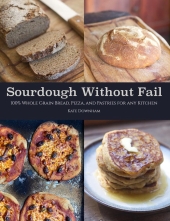
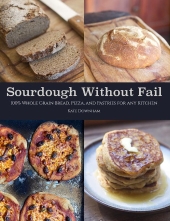
Kate's point about pioneers just feeding people is exactly it. I got sucked into the whole hydration percentage, scoring pattern, crumb structure rabbit hole for a while and it made baking genuinely stressful. Dropped all of it, now I just mix it, leave it overnight somewhere vaguely warm, bake it in the morning. Not winning any Instagram prizes but it tastes fine and I actually do it regularly instead of treating it like a project.
 
pioneer
Posts: 544
154
cat trees urban
  • Likes 9
  • Mark post as helpful
  • send pies
    Number of slices to send:
    Optional 'thank-you' note:
  • Quote
  • Report post to moderator
I'm another neglectful sourdough maker.  I haven't bought any new equipment, I use inherited double-skin loaf pans if I want a loaf, I do an overnight cold fermentation because I need my sourdough culture to thoroughly digest the fructans.

I dried a successful starter in a hot week on a muslin cloth.  So if I have starter trouble, I just begin again with a tiny bit of that rehydrated & fed.
 
Did you have a mustache before? This tiny ad says it's new.
a new overhaul of the freeheat page - need feedbacks for world domination
https://permies.com/t/389799/overhaul-freeheat-page-feedbacks-world
reply
    Bookmark Topic Watch Topic
  • New Topic