• Post Reply Bookmark Topic Watch Topic
  • New Topic
permaculture forums growies critters building homesteading energy monies kitchen purity ungarbage community wilderness fiber arts art permaculture artisans regional education skip experiences global resources cider press projects digital market permies.com pie forums private forums all forums
this forum made possible by our volunteer staff, including ...
master stewards:
  • Carla Burke
  • Anne Miller
  • Nancy Reading
  • John F Dean
  • r ransom
  • paul wheaton
  • Timothy Norton
stewards:
  • Jay Angler
  • Pearl Sutton
  • Andrés Bernal
master gardeners:
  • Christopher Weeks
gardeners:
  • M Ljin
  • Thekla McDaniels
  • May Lotito

What to do with damaged and diseased potatoes?

 
steward and tree herder
Posts: 15021
Location: Isle of Skye, Scotland. Nearly 70 inches rain a year
8637
6
transportation dog forest garden foraging trees books food preservation woodworking wood heat rocket stoves ungarbage
  • Likes 11
  • Mark post as helpful
  • send pies
    Number of slices to send:
    Optional 'thank-you' note:
  • Quote
  • Report post to moderator
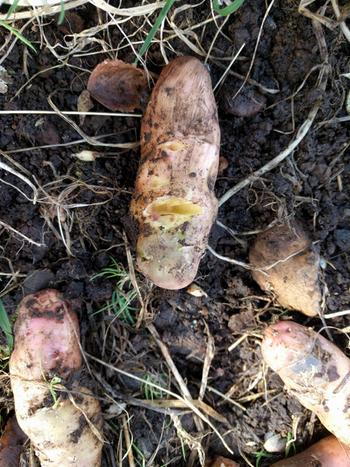
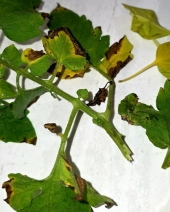
I've had a really good harvest of potatoes this year! However, the season has been cool and damp, and I have rather a lot of spoilt potatoes. Some have blight (even though I cut the tops off in good time) some have slug damage, some have hollow heart, some seem to have tiny thread worms on them and some have now been pecked by birds!

how to dispose of bad potatoes
bird damage on potatoes


I can cut the bad bits of some of the potatoes and eat them - The good bits can all be eaten fresh, the 'floury' ones could be mashed and made into cakes and tatty scones, so hopefully I won't waste too much potential food. What I'm concerned about is disease carrying through to next year and the tendency of potatoes to regrow from bits of tuber. I have a very mild climate usually without hard winter frosts, and even on the soil surface I'm worried they may somehow survive and I'll end up with disease ridden volunteer plants everywhere!

What's the best way of killing the tubers and making use of them safely?
 
master gardener
Posts: 7100
Location: Carlton County, Minnesota, USA: 3b; Dfb; sandy loam; in the woods
4548
8
forest garden trees books chicken food preservation cooking fiber arts seed woodworking homestead ungarbage
  • Likes 8
  • Mark post as helpful
  • send pies
    Number of slices to send:
    Optional 'thank-you' note:
  • Quote
  • Report post to moderator
I assume you don't maintain a hot compost pile? I'm sure that would fry the pathogens.

What's your volume? Could you bake them in an oven? pile them up and build a fire over them? It's probably too late in the year to solarize them under clear plastic.

I wonder if a red-wiggler bin would contain and destroy the pathogens while you wait for the tubers to run out of energy. Potatoes in my worm bins send up long sprouts, but even when they find their way out one of the air holes, there isn't enough light in the basement for them to go anywhere and they get broken off when I open the bin.

(My potato harvest is the worst ever this year, but at least the only damage to the tubers is caused by digging them with a fork.)
 
pollinator
Posts: 146
Location: West central Minnesota
70
  • Likes 17
  • Mark post as helpful
  • send pies
    Number of slices to send:
    Optional 'thank-you' note:
  • Quote
  • Report post to moderator
I get slugs in potatoes when the soil condition is too wet. Last year I flooded the garden because it had become dry and then came 9" of rain in about a month and a lot of slugs. It was so wet in the lowest area some of the deeper potatoes rotted in the ground, this is rare here. I use 48" rows and hill very high so the hills can drain well most years. Dry this year and no slugs and a very mediocre potato crop. I used some overwintered potato seed (dark red norland from last years crop) this year, green sprouted them and that row did well except for some pocket gopher competition. My other 3 rows were planted with seed purchased from a local and long-time potato farmer, same variety but those rows were not as productive, they were not green sprouted, however. I have been using an oat cover crop in the garden the last 2 years and I really like the results. This fall I have seeded some winter rye and will seed oats next spring in the areas too late for rye. I use a soil penetrometer to test for soil hardness and the extra watering in the garden really shows up this year in terms of a much lower psi reading. The one thing that really stood out was how little resistance there was below the topsoil. After the first 8 or so inches the penetrometer went down very easily to the max 36" depth. I can't do this anywhere else on the farm this season. This garden has been managed organically for the last 8 years with soil health given top billing using mulch, cover crops, minimal tillage. I was amazed when I checked the garden with the penetrometer the other day, this is the type of topsoil and subsoil connection we want to replicate with our newly organic farm fields. I have learned this very dry year our fine textured soil gets hard without enough moisture, this will improve when we get our soil organic matter in better shape. The garden is the leading indicator.
 
master pollinator
Posts: 6111
Location: Canadian Prairies - Zone 3b
1892
  • Likes 15
  • Mark post as helpful
  • send pies
    Number of slices to send:
    Optional 'thank-you' note:
  • Quote
  • Report post to moderator
In the past I have boiled huge pots of sketchy potatoes before tossing them in the compost. I have scrounged a number of those enamel canning pots for such tasks.

The boil is dual purpose -- to kill potential pathogens and to break down the starch so it feeds my composting microorganisms.

I do this during a char burn or when cleaning up junk branches/dry weeds, so I'm utilizing heat that would otherwise be wasted.
 
pollinator
Posts: 580
Location: UK
196
kids urban seed
  • Likes 6
  • Mark post as helpful
  • send pies
    Number of slices to send:
    Optional 'thank-you' note:
  • Quote
  • Report post to moderator
The boiling idea is good. I've done similar with blight-hit tops before burning them, just to be sure nothing survives into the compost. For the slug-damaged ones, anything that's only partially hit is fine to eat fresh, and floury varieties mash well even if they look a bit rough. The ones with hollow heart I'd just chuck rather than trying to store them, they tend to go off faster.
 
gardener
Posts: 880
Location: Semi-nomadic, main place coastal mid-Norway, latitude 64 north
635
  • Likes 11
  • Mark post as helpful
  • send pies
    Number of slices to send:
    Optional 'thank-you' note:
  • Quote
  • Report post to moderator
One more vote for boiling. I did it this year, when I wanted to compost potato scraps in situ, in a bed meant to grow potatoes the same season. I boiled two rounds in a 10-litre pot, not only the potatoes but all the other kitchen scraps we had available too. As an extra plus on top of rendering it sterile, it also breaks down super fast in the soil. By the end of summer, the only still-recognizable food scraps I noticed in those beds were bits of egg shell and one or two avocado stones...
 
Nancy Reading
steward and tree herder
Posts: 15021
Location: Isle of Skye, Scotland. Nearly 70 inches rain a year
8637
6
transportation dog forest garden foraging trees books food preservation woodworking wood heat rocket stoves ungarbage
  • Likes 7
  • Mark post as helpful
  • send pies
    Number of slices to send:
    Optional 'thank-you' note:
  • Quote
  • Report post to moderator
No Christopher. My composting is definitely a cool pile, and solarisation not an option here, probably even in summer (unless I try some sort of lensing).
Interesting there are so many votes for boiling. I'm just imaginig the stink, as I would need to use the stove in the kitchen for heat!
I believe that blight only survives in living tubers, so as long as the tubers aren't able to grow I think they ought to be safe. I'm wondering whether to drown the tubers in a bucket? I know that is a good practice for many noxious weeds. The nutrient rich liquid can then be used as feed, although to be safer I'd probably pour it somewhere away from the garden in this case.
 
Douglas Alpenstock
master pollinator
Posts: 6111
Location: Canadian Prairies - Zone 3b
1892
  • Likes 7
  • Mark post as helpful
  • send pies
    Number of slices to send:
    Optional 'thank-you' note:
  • Quote
  • Report post to moderator

Nancy Reading wrote:
Interesting there are so many votes for boiling. I'm just imaginig the stink, as I would need to use the stove in the kitchen for heat!
I believe that blight only survives in living tubers, so as long as the tubers aren't able to grow I think they ought to be safe. I'm wondering whether to drown the tubers in a bucket? I know that is a good practice for many noxious weeds. The nutrient rich liquid can then be used as feed, although to be safer I'd probably pour it somewhere away from the garden in this case.


I agree that boiling is an outdoor activity, especially if the tubers are already starting to decompose. (Though my inner wise guy says "just add a little garlic to your indoor boil, that'll fix it!")

Letting the tubers rot anaerobically in a pail of water will certainly destroy their ability to grow. Are you certain this deactivates the pathogen?
 
steward
Posts: 16516
Location: Pacific Wet Coast
11074
duck books chicken cooking food preservation ungarbage
  • Likes 5
  • Mark post as helpful
  • send pies
    Number of slices to send:
    Optional 'thank-you' note:
  • Quote
  • Report post to moderator

Nancy Reading wrote: Interesting there are so many votes for boiling. I'm just imaginig the stink, as I would need to use the stove in the kitchen for heat!


I've used my pressure canner for cooking "interesting" things. However, that was still outside on a propane cooker.
 
gardener
Posts: 4041
Location: Western Slope Colorado.
1178
5
goat dog food preservation medical herbs solar greening the desert
  • Likes 4
  • Mark post as helpful
  • send pies
    Number of slices to send:
    Optional 'thank-you' note:
  • Quote
  • Report post to moderator
I thought the disease was in the soil, and you have to change location… but there’s a good chance that isn’t reliable information.  I never did have much luck growing potatoes.
 
Posts: 50
47
  • Likes 7
  • Mark post as helpful
  • send pies
    Number of slices to send:
    Optional 'thank-you' note:
  • Quote
  • Report post to moderator
This isn't right on topic with your original question, as it pertains to healthy tubers with mechanical damage.
When digging potatoes, I often stab or slash a few with the digging fork. I've found that most relatively "closed" wounds will cause rot in subsequent storage. If I promptly trim out the damage (within a day or so) to leave a clean surface that can get air, then leave it to cure at room temperature for a week or so, the potato will form a dried protective layer that prevents spoilage, and keep until spring nearly as well as an intact potato.
If you have hundreds of pounds to dig in a short time, this helps spread out how fast you have to get through eating the damaged ones.
 
Nancy Reading
steward and tree herder
Posts: 15021
Location: Isle of Skye, Scotland. Nearly 70 inches rain a year
8637
6
transportation dog forest garden foraging trees books food preservation woodworking wood heat rocket stoves ungarbage
  • Likes 4
  • Mark post as helpful
  • send pies
    Number of slices to send:
    Optional 'thank-you' note:
  • Quote
  • Report post to moderator
Thanks Andre - I'll try that with some of the damaged tubers. I have quite a few that just have peck marks, and as you say a few with fork damage. I'm not sure that my room temperature is warm enough, but if the tubers would be wated otherwise it's worth a try!
 
Nancy Reading
steward and tree herder
Posts: 15021
Location: Isle of Skye, Scotland. Nearly 70 inches rain a year
8637
6
transportation dog forest garden foraging trees books food preservation woodworking wood heat rocket stoves ungarbage
  • Likes 6
  • Mark post as helpful
  • send pies
    Number of slices to send:
    Optional 'thank-you' note:
  • Quote
  • Report post to moderator
Douglas. I can't remember where I read that blight spreads from overwintering tubers/plants rather than other diseased material. It's possible I have paraphrased my understanding, and it also seems to be location dependant. RHS potato blight information suggests it is possible for spores to form from infected material that can stay in the soil for years, but in the UK it is still mainly spread by airborne spores which infect growing plants under specific weather conditions. Ac Baker recently put a link to blight spy which I've bookmarked. I guess it might be possible to cover the plants when blight infection is likely, although that might be tricky.
The RHS suggests burying infected material deeply, rather than composting, as most home compost heaps don't get to be hot enough to kill the spores. So if I drown the tubers so they can't regrow, and then bury them in a hole where I'm not likely to grow potatoes (or tomatoes!) I guess I'll be fairly safe.
 
Douglas Alpenstock
master pollinator
Posts: 6111
Location: Canadian Prairies - Zone 3b
1892
  • Likes 7
  • Mark post as helpful
  • send pies
    Number of slices to send:
    Optional 'thank-you' note:
  • Quote
  • Report post to moderator

Andre Wiederkehr wrote:
When digging potatoes, I often stab or slash a few with the digging fork. I've found that most relatively "closed" wounds will cause rot in subsequent storage. If I promptly trim out the damage (within a day or so) to leave a clean surface that can get air, then leave it to cure at room temperature for a week or so, the potato will form a dried protective layer that prevents spoilage, and keep until spring nearly as well as an intact potato.


I do this as well. It's quite effective.
 
Eino Kenttä
gardener
Posts: 880
Location: Semi-nomadic, main place coastal mid-Norway, latitude 64 north
635
  • Likes 6
  • Mark post as helpful
  • send pies
    Number of slices to send:
    Optional 'thank-you' note:
  • Quote
  • Report post to moderator
Wikipedia seems to suggest that late blight generally doesn't survive for very long outside its hosts.

P. infestans survives poorly in nature apart from on its plant hosts. Under most conditions, the hyphae and asexual sporangia can survive for only brief periods in plant debris or soil, and are generally killed off during frosts or very warm weather. The exceptions involve oospores, and hyphae present within tubers. The persistence of viable pathogen within tubers, such as those that are left in the ground after the previous year's harvest or left in cull piles is a major problem in disease management.


As for the oospores, which can apparently remain viable for years under some conditions, I just had a random and somewhat (but not entirely) off-topic idea. I heard somewhere that you can reduce the time clubroot fungus remains in the soil by boiling cabbage or another of its host plants, and then watering with the liquid. Some compound present in the decoction will apparently signal to the dormant spores that there are host plants in the vicinity. The spores will germinate, and when they fail to find actual host plants, they'll starve and die (unlike the ungerminated spores, which persist for a very long time indeed.) I wonder if late blight oospores work the same? There has to be some signal for them to germinate and start growing, right? And once they do, they'll probably be less persistent. So what if you could use your blight-infested tubers to reduce the amount of blight spores in the soil? No hard data to back this up, I don't even have a source for the clubroot thing. Just a random thought.
 
Thekla McDaniels
gardener
Posts: 4041
Location: Western Slope Colorado.
1178
5
goat dog food preservation medical herbs solar greening the desert
  • Likes 6
  • Mark post as helpful
  • send pies
    Number of slices to send:
    Optional 'thank-you' note:
  • Quote
  • Report post to moderator

Eino Kenttä wrote:Wikipedia seems to suggest that late blight generally doesn't survive for very long outside its hosts.

P. infestans survives poorly in nature apart from on its plant hosts. Under most conditions, the hyphae and asexual sporangia can survive for only brief periods in plant debris or soil, and are generally killed off during frosts or very warm weather. The exceptions involve oospores, and hyphae present within tubers. The persistence of viable pathogen within tubers, such as those that are left in the ground after the previous year's harvest or left in cull piles is a major problem in disease management.


As for the oospores, which can apparently remain viable for years under some conditions, I just had a random and somewhat (but not entirely) off-topic idea. I heard somewhere that you can reduce the time clubroot fungus remains in the soil by boiling cabbage or another of its host plants, and then watering with the liquid. Some compound present in the decoction will apparently signal to the dormant spores that there are host plants in the vicinity. The spores will germinate, and when they fail to find actual host plants, they'll starve and die (unlike the ungerminated spores, which persist for a very long time indeed.) I wonder if late blight oospores work the same? There has to be some signal for them to germinate and start growing, right? And once they do, they'll probably be less persistent. So what if you could use your blight-infested tubers to reduce the amount of blight spores in the soil? No hard data to back this up, I don't even have a source for the clubroot thing. Just a random thought.


Wow!  Worth testing!
What about adding some green potato plant material when boiling the potatoes inncase the crucial signal is in the foliage.
 
I agree. Here's the link: http://stoves2.com
reply
    Bookmark Topic Watch Topic
  • New Topic