Forums Login/signup

Recipes for your homegrown food?

5
+Pie Number of slices to send: Send
While I dont have my own garden just yet, I do plan on buying some land in the next year or 2. I was going some lettuce and tomatos on my balcony before, but recently moved to a south facing, which makes it harder. I want to start learning some recipes for the food you can grow though, and possibly start making them using store bought, for now. Problem is I really dont know what to do with veggies besides just a raw salad. I want to make more interesting or tasty dishes. I've always been more of a meat eater, or buying boxed / bagged stuff from the grocery store.

So! What do you do with yours? Do you have any favourite recipes? Or blogs / audio books that I could check out? Any suggestions would be welcome! My ultimate goal is going to be self sufficiency in terms of food, so knowing how to use everything is pretty important.

Thanks
(3 apples) 4
+Pie Number of slices to send: Send
3
+Pie Number of slices to send: Send
Curry.  I can hide any number of older, tougher, or slightly yucky vegetables in a nice spicy curry!

(1 apple) 6
+Pie Number of slices to send: Send
The other day I was chatting with a friend of mine who is a much larger-scale market grower of vegetables than I will ever be. She was wondering about marinades for pumpkin steaks. In the heat of the chat I proposed marinating pumpkin (or any winter squash steaks or strips) in balsamic vinegar and garlic, covering them with a sliced onion, then roasting them in a 350 oven for 45 minutes or so. I haven't tried that idea yet, but I still think it would be good. It might need a drizzle or three of olive oil.

I did try this recipe that evening and it was delicious.

Dakota Dessert pumpkin spears (any winter squash will work just fine)
garlic
ginger
apple cider vinegar
tahini
coconut oil
soy sauce
sweet onion

I marinated the pumpkin spears in chopped garlic and ginger with coconut oil, tahini, and apple cider vinegar (about a tablespoon of each).
Right before I baked them, I  added a sliced onion. Then I baked them in the toaster oven my daughter gave me when she moved into her tiny house at about 400 degrees for about 45 minutes. I stirred them once. When the pumpkin gave easily to a testing fork, they were done. And they were so delicious. I also made a mushroom saute/rice side dish and steamed some beet greens. Yum!

I have a big crop of winter squash so I will keep experimenting and report on my successes and failures on this thread.
Welcome to permies, isn't it great?!
-Ellen

1
+Pie Number of slices to send: Send
Ellen, thanks for sharing both methods sound really tasty!

I love roasted spaghetti squash with lots of butter.  I even sometimes eat some of the rind if it is tender.

It is so good I would never cover it marinara sauce.
2
+Pie Number of slices to send: Send
I'm afraid I'm a bit naughty. Last night i peeled and chopped into cubes a winter squash, put some water over and simmered until going soft with....a big nob of butter, tbl spoon sugar, dried cranberries,  cinnamon,  nutmeg, poured into a baking dish, covered with crumble mix with added oats and baked until golden. Yum with cream.
I can't think why, when I eat plenty of veg and fruit,  I can't lose  weight.....
1
+Pie Number of slices to send: Send
I have recently discovered some resources that have helped me with my cooking overall, including with vegetables.

The Lazy Genius podcast episode for meal planning...so many gems in her show notes, especially advice for rescuing produce past its prime, as well as the resources below.

The Netflix show Salt Fat Acid Heat. Haven't read the book yet but I have learned to be more intuitive in the kitchen because of that show.

Mark Bittman's cook books generally have very simple recipes with real food and highlighting veggies.

I haven't looked at the Flavor Bible yet but plan to check it out from the library. You could look up a certain vegetable and there would be a list of the spices and foods and ways of cooking it most recommended by chefs.

Good luck with your garden! Mine was on a break this year because of new babies...I am already dreaming of what I want to plant in the spring!
6
+Pie Number of slices to send: Send
I also recommend Salt Fat Acid Heat.  It's nice to learn a few basic concepts so you can eventually learn to create meals without a recipe based on ingredients on hand, or what looks good at the farmer's market.  

Don't be afraid of salt, fat and spices.  Most modern day recipes are way too stingy on all three of these, and if you use good quality salt and fat, they are good for you!  And can make a huge difference in the taste and nutritional value of a meal.

My advice: if you have a lot of carrots and spinach, google "carrot and spinach recipe" and choose something that appeals to you.  Use the recipe you find, and be generous with the salt, fat and herbs.  Taste and adjust.  

Eventually you'll be able to create meals without a recipe, which saves time and is more fun!  But when you have extra time, 's it's always fun to google or consult cookbooks to find something new (or consult blogs.  I love the Dakota Dessert idea mentioned above!)

One last bit of advice: don't be afraid to substitute.  Don't use onions in the spring when you have beautiful leeks growing that time of year.  Don't use cucumbers in the fall when you have gorgeous celery you could use instead.  Use what's in season and it will taste better and nourish you better (the whole point, right?)
2
+Pie Number of slices to send: Send
I often have more produce than I can eat fresh. This is particularly true at the end of summer so preservation becomes important. My favorite way to preserve is to can pickles and relishes. End of summer pickles can include carrots, zucchini, onions, green beans, peppers, etc. as well as cucumbers and cabbage. Whatever I am gleaning as I clean up the beds goes into jars that are easily processed in a water bath. The Ball's Blue Book has lots of good relish and pickle recipes. Piccalilli and chow chow are favorites and they brighten up winter menus. My vet eats them with a spoon.
1
+Pie Number of slices to send: Send
I find you can't go wrong with stir fry.
Anything like onion, tomato, herbs, and tons of greens including edible weeds get chopped.
With a microwaved potato, and seasoned oil as a base it is very, satisfyingly simple.
6
+Pie Number of slices to send: Send
Stir fry. Most veggies are delicious this way. I use coconut oil (healthiest), but you could use any oil. Cut veggies in chunks. Add them as you cut them with the toughest ones first (they take longer to soften). When they're a little crunchy and a little tender, add some Braggs Amino Acids (or soy sauce if you prefer - Braggs is healthier and non-gmo), and some Balsamic vinegar (about the same amount of each).

How long you cook is your taste. Some like them fully tender and others more crunchy. For variety, there are many flavors of vinegars you could add. You can also drain and add cans of water chestnuts and/or bamboo shoots. Cashews and sliced almonds are also good in stir fry.

Your choice of veggies: onions, bell peppers of any color, eggplant, zucchini, yellow squash, kale, cabbage - I've even added fingerling potatoes (although most wouldn't). [Note: zucchini and yellow squash now come in gmo varieties, so if you want to avoid gmo, check the labels or know your sources or buy organic only.]

If you have wild edibles, you could add purslane or lambs quarters or dandelions (any part of the plant).

Another way to prepare the same veggies is baked or grilled with a little butter, Braggs Aminos, and Balsamic vinegar. I use my toaster oven. Split things like zucchin and squash lengthwise, make little cuts to hold the butter, Aminos and vinegar.

You can prepare many squashes and sweet potatoes the same way you would a baked potato by poking holes in it with a fork and baking until tender. Or you can cut squash in half, scoop out the seeds if they're large, make slits and top with butter and brown sugar.

During growing season, bake large zucchini whole that way, cut into cubes, and mix up to 50% squash in your potato salad. I leave peels on, but if you peel them I doubt anyone would notice there was zucchini in the potato salad as it doesn't have much of a flavor itself.

Grated squash or zucchini is made into bread. Cubed winter squash (butternut and other hard varieties) and sweet potatoes can be added to soups and roasts that cook a long time. I use a slow cooker to make home-made soup.

Take a whole chicken and put it in a large (oval) crock pot. Surround it with chunks of onion, diced garlic, carrots cut in chunks, and potatoes sliced into quarters lengthwise. Cover the veggies with water, but not the entire chicken. Season with Italian seasoning (easy way to get the amounts right), salt and pepper.

Set on high and cook until the chicken is tender (leg turns easily) and not pink. Eat the veggies with the sliced white meat or legs or wings if you like. Then, add more water and cook the entire rest of the chicken down into the broth.

This is when you can add lots more raw veggies like diced sweet potatoes, butternut squash, or more white potatoes, carrots, bell peppers, onions, cabbage, broccoli, cauliflower, etc. Cook until the veggies are tender and you have home-made chicken soup.

Don't eat the bones! You have cooked their goodness into the broth and veggies. To serve to company, you'll have to fish them out. I just eat around them. They should be tender enough that you can feed them to your dog or cat as they won't splinter after all that cooking.

Beets are delicious grated into coleslaw with cabbage and carrots. Or cooked by themselves sliced. But DO NOT put them into soup unless you can stomach eating pink soup.

Greens are delicious once you know how to season them. Any kind of greens including radish tops, carrot tops, beet tops, collards, spinach, wild lambs quarters, kale, etc. can be cooked in water. Add a generous amount of your favorite oil. (I use coconut or olive oil.) Use lots of spices. Italian seasoning works here, too. Add a little brown sugar. Cook until tender.

Left-over greens can be strained almost dry and chopped and then added to pasta sauce. They will soak up the sauce and make it absolutely delicious. Small amounts of greens can also be cooked into the chicken soup mentioned above.

Use the broth you use to cook greens or any other vegetables to cook rice in. That way you don't waste the nutrients. Any veggies that are too tough to stir fry and chop and throw into the soup broth.
(2 apples) 5
+Pie Number of slices to send: Send
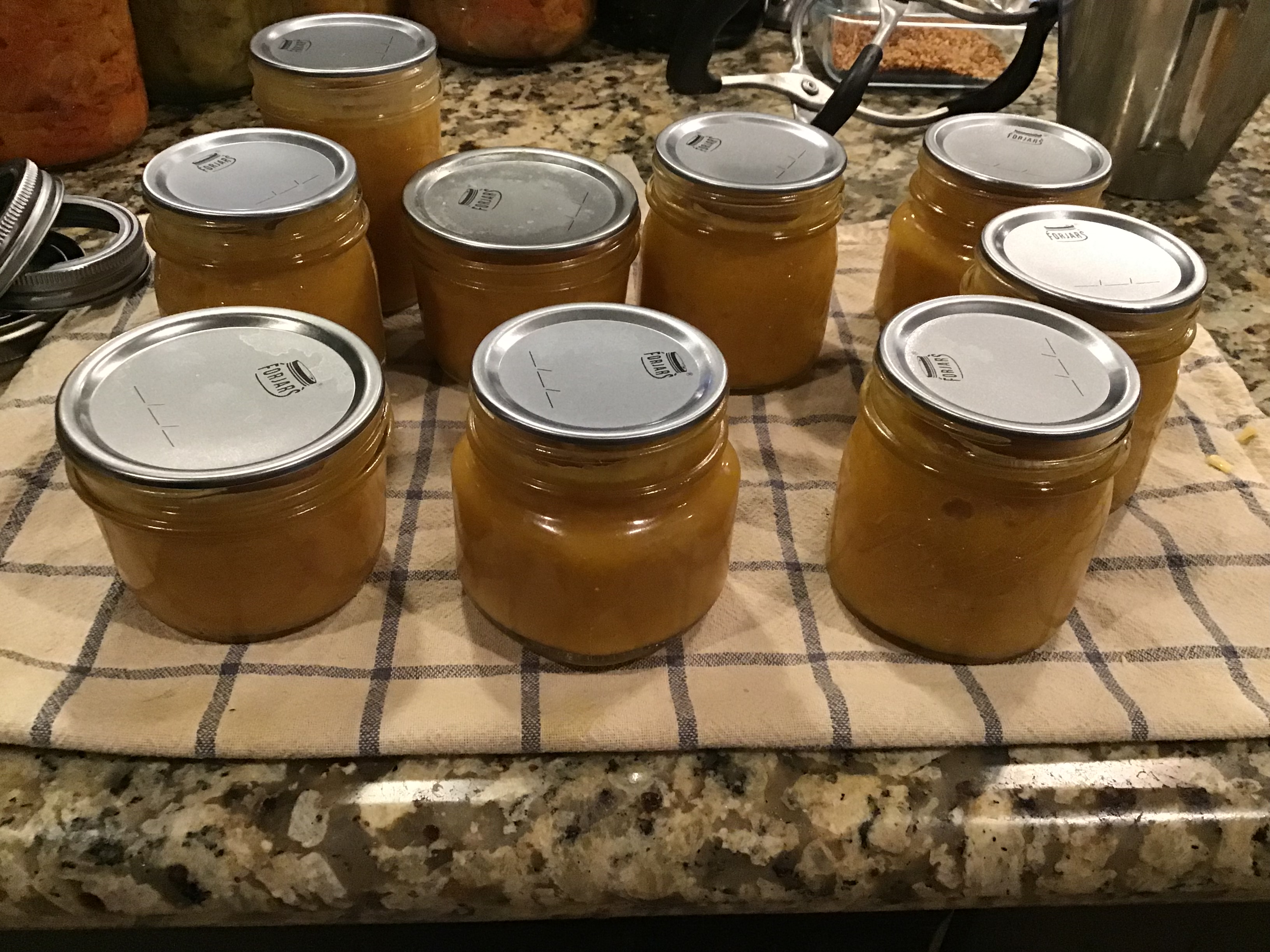
I always end up with some kind of bumper crop. Fall 2024 I grew 800 pounds of winter squash and pumpkins. If it happened now, I would probably use a large part as food for my chickens. At the time I decided to do a variety of things. I made lots of pumpkin soup, some was dried and some canned. I dried or canned a lot in cubes, I shredded a lot and made some into powder. We still have a lot of it in the freezer, so right now I am working hard on using them up. I found an amazing recipe for pumpkin custard, which I have then frozen. I also made lots of pumpkin cookies and muffins. Since I freeze dried a lot too, I probably won’t need to grow any for another year or two. The next time, I will save a lot as chicken feed. The powders I use for baking, in my coffee etc.
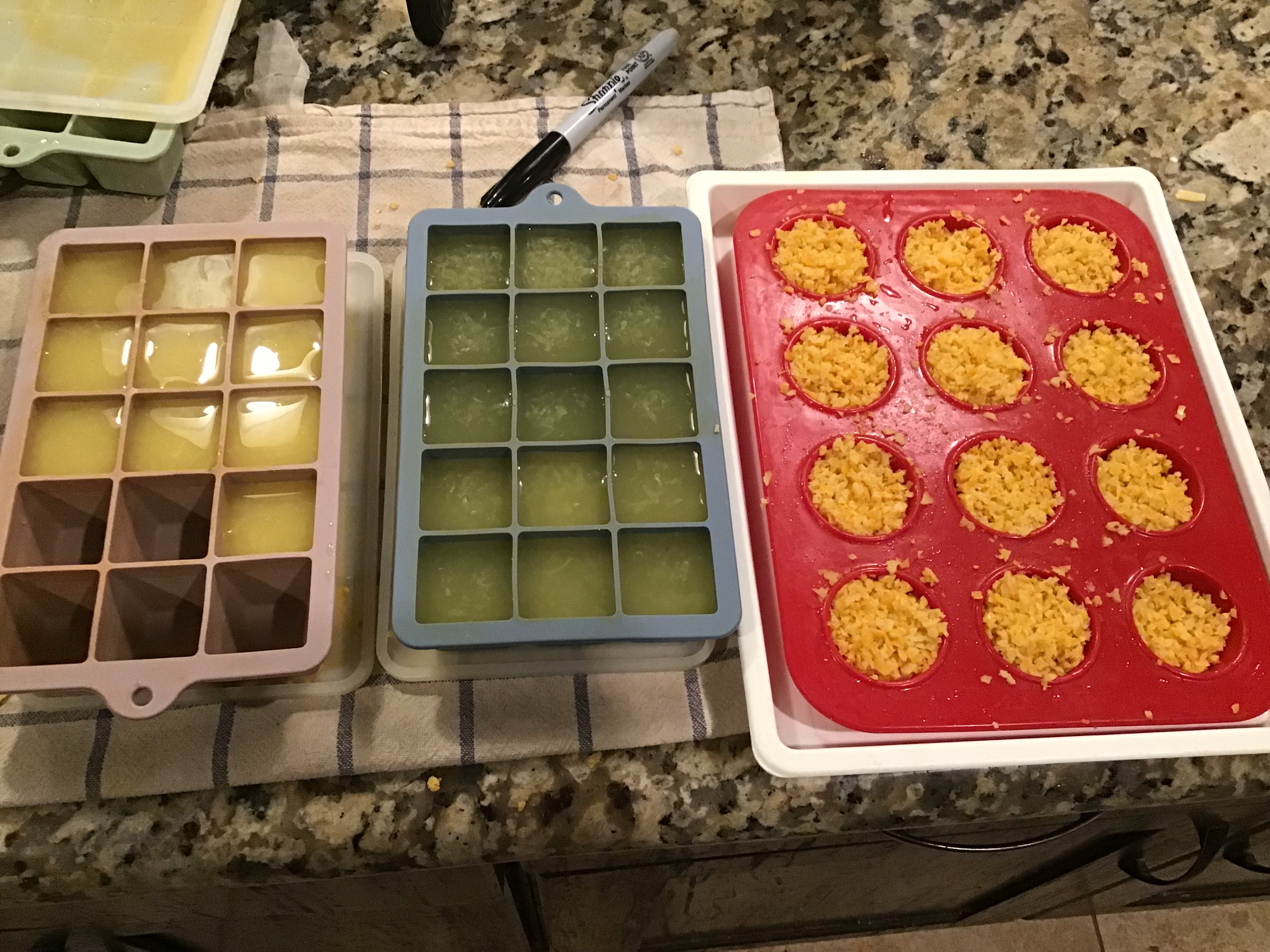
Lemons are also something we get a lot off. We grow Meyer lemons, which have a thinner peel making them ideal for candying, extracts and lemoncello. I also dry a lot for tea, make lemonade concentrate (both canned and dried as powder) plus zest and juice, which are frozen in ice cube trays and stored in the freezer. Extra fruit I usually cut into cubes and freeze for use in smoothies. Kale, collards and other greens are dried and ground into a powder, which I also add to juice and smoothies.
Extra vegetables are dried and made into what I call broth bags. Once it’s time to make broth, I just add carcasses, water and a broth bag. It makes making broth a breeze.
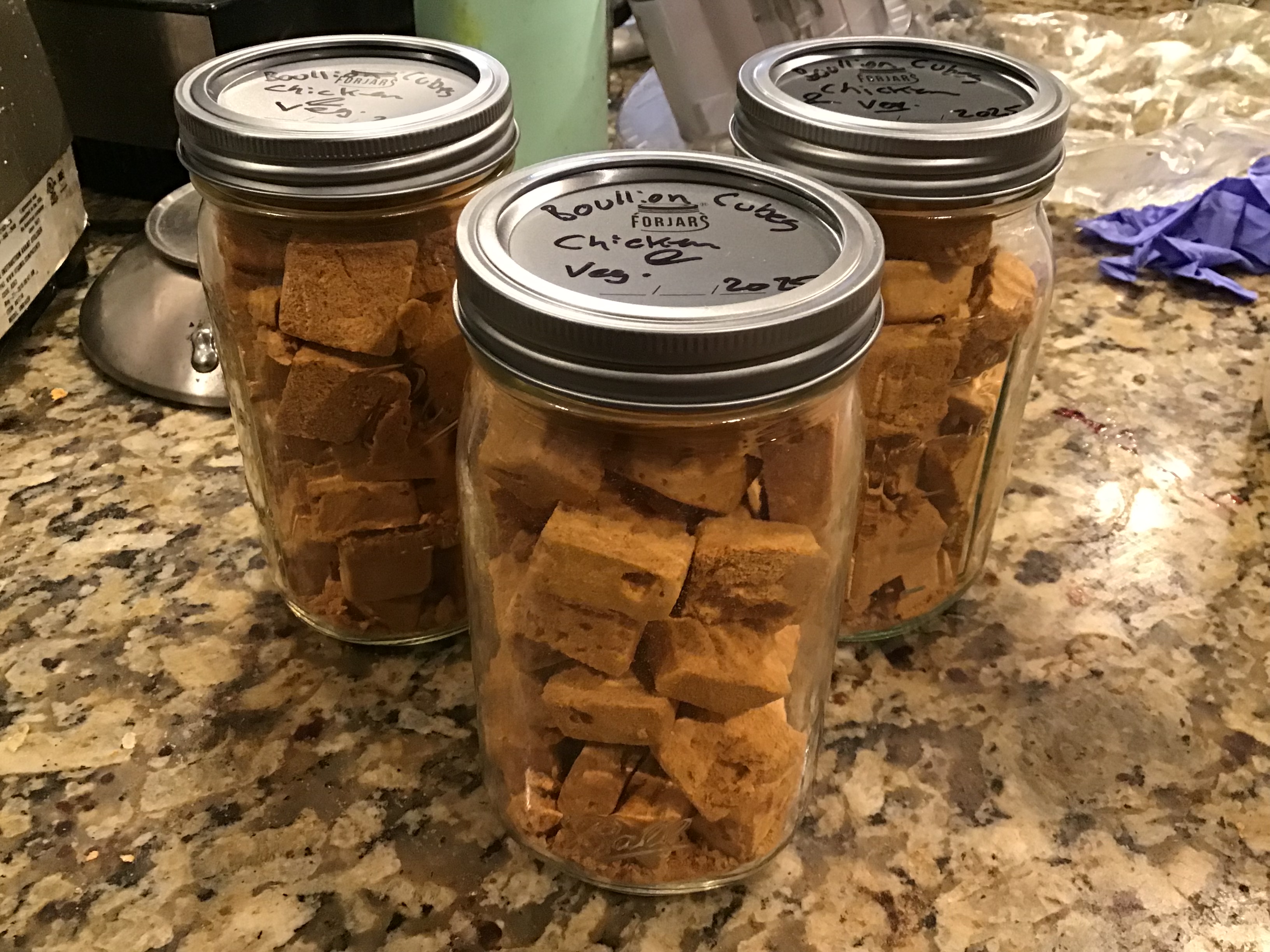
I also use extra vegetables to make bouillon cubes. I add the vegetables, aromatics and optional meat to a pot and cook it. Then I add salt and blend it all. Next I transfer it to ice cube trays and freeze them. They are good frozen, but I like freeze drying them, since I save on freezer space that way, and dried I can also send some to my college kids.
IMG_3265.jpeg
Lemon zest and juice
[Thumbnail for IMG_3265.jpeg]
IMG_3260.jpeg
Pumpkin custard
[Thumbnail for IMG_3260.jpeg]
IMG_3216.jpeg
Bouillon cubes
[Thumbnail for IMG_3216.jpeg]
4
+Pie Number of slices to send: Send
I'm fortunate in having friends and neighbors standing by in case of surplus.

I plan to grow at least enough for all these folks to have a fresh veggie treat during the particular season anyway but it's great to have a network that can disperse an overabundance..

Getting back on topic, an older copy of the Joy of Cooking cookbook is probably the best reference ever for how to deal with something you're cooking from scratch.
Much explanation of why a particular thing does what it does, which is a great base for future innovation once you have the basics down.
5
+Pie Number of slices to send: Send
I will often go to the Allrecipes website, where I can enter single or multiple ingredients, and it will cull through thousands of recipes and pull up those that are relevant.  

Food pantries are always most grateful for fresh produce; I give away to friends, neighbors and the local food pantry if there is more than I can use.  For example, I have forty blueberry bushes that produce A LOT of fruit.  I invite friends over to pick and it provides a very casual way to catch up with friends...and, it saves me a ton of time and labor.  

I am lucky enough to have a wonderful pool, so that is part of the bribe to get people here!  Still, there will always be more than I can use, so I bring some to the food pantry, I freeze-dry, can and dehydrate and I make wine! I grow 50+ kinds of fruit along with a good sized vegetable garden.  Again, all is often shared with friends when they come over.

I have one friend who also grows a lot.  Last year, we traded; I gave her blueberries and she gave me cherries.  Yum!
Every noble work is at first impossible. - Thomas Carlyle / tiny ad
One million tiny ads for $25
https://permies.com/t/94684/million-tiny-ads
Free heat movie Full online Permaculture Design course and Appropriate Technology Course video Rocket Mass Heaters Green Living Book


reply
reply
This thread has been viewed 2093 times.
Similar Threads
Biointensive staples
Grow a Salad in Your City Apartment E-book by Rosemary Hansen
Vera's Food Waste Fight Thread
What are you planting in your zombie apocalypse-herb garden
How to cut the food bill by 80 percent?
permaculture bootcamp - gardening gardeners; grow the food you eat and build your own home
permaculture thorns, A Book About Trying to Build Permaculture Community - draft eBook
Support the Permaculture Bootcamp - Back the BEL
More...

All times above are in ranch (not your local) time.
The current ranch time is
Mar 10, 2026 14:21:30.