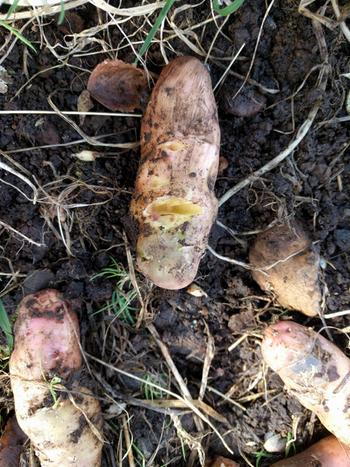
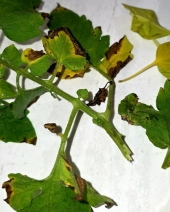
I've had a really good harvest of potatoes this year! However, the season has been cool and damp, and I have rather a lot of spoilt potatoes. Some have blight (even though I cut the tops off in good time) some have slug damage, some have hollow heart, some seem to have tiny thread worms on them and some have now been pecked by birds!
bird damage on potatoes
I can cut the bad bits of some of the potatoes and eat them - The good bits can all be eaten fresh, the 'floury' ones could be mashed and made into cakes and tatty scones, so hopefully I won't waste too much potential food. What I'm concerned about is disease carrying through to next year and the tendency of potatoes to regrow from bits of tuber. I have a very mild climate usually without hard winter frosts, and even on the soil surface I'm worried they may somehow survive and I'll end up with disease ridden volunteer plants everywhere!
What's the best way of killing the tubers and making use of them safely?
I assume you don't maintain a hot compost pile? I'm sure that would fry the pathogens.
What's your volume? Could you bake them in an oven? pile them up and build a fire over them? It's probably too late in the year to solarize them under clear plastic.
I wonder if a red-wiggler bin would contain and destroy the pathogens while you wait for the tubers to run out of energy. Potatoes in my worm bins send up long sprouts, but even when they find their way out one of the air holes, there isn't enough light in the basement for them to go anywhere and they get broken off when I open the bin.
(My potato harvest is the worst ever this year, but at least the only damage to the tubers is caused by digging them with a fork.)
I get slugs in potatoes when the soil condition is too wet. Last year I flooded the garden because it had become dry and then came 9" of rain in about a month and a lot of slugs. It was so wet in the lowest area some of the deeper potatoes rotted in the ground, this is rare here. I use 48" rows and hill very high so the hills can drain well most years. Dry this year and no slugs and a very mediocre potato crop. I used some overwintered potato seed (dark red norland) this year, green sprouted them and that row did well except for some pocket gopher competition. My other 3 rows were planted with seed purchased from a local and long-time potato farmer, same variety but those rows were not as productive, they were not green sprouted, however. I have been using an oat cover crop in the garden the last 2 years and I really like the results. This fall I have seeded some winter rye and will seed oats next spring in the areas too late for rye. I use a soil penetrometer to test for soil hardness and the extra watering in the garden really shows up this year in terms of a much lower psi reading. The one thing that really stood out was how little resistance there was below the topsoil. After the first 8 or so inches the penetrometer went down very easily to the max 36" depth. I can't do this anywhere else on the farm this season. This garden has been managed organically for the last 8 years with soil health given top billing using mulch, cover crops, minimal tillage. I was amazed when I checked the garden with the penetrometer the other day, this is the type of topsoil and subsoil connection we want to replicate with our newly organic farm fields. I have learned this very dry year our fine textured soil gets hard without enough moisture, this will improve when we get our soil organic matter in better shape. The garden is the leading indicator.
Heroic work plunger man. Please allow me to introduce you to this tiny ad:






 6