
• Post Reply Bookmark Topic Watch Topic
  • New Topic
permaculture forums growies critters building homesteading energy monies kitchen purity ungarbage community wilderness fiber arts art permaculture artisans regional education skip experiences global resources cider press projects digital market permies.com pie forums private forums all forums
this forum made possible by our volunteer staff, including ...
master stewards:
  • Carla Burke
  • John F Dean
  • Nancy Reading
  • r ransom
  • Jay Angler
  • Timothy Norton
stewards:
  • paul wheaton
  • Pearl Sutton
  • Anne Miller
master gardeners:
  • Christopher Weeks
  • M Ljin
gardeners:
  • Jim Garlits
  • thomas rubino
  • William Bronson

Uses for Tomato Skins/Seeds from Food Processing?

 
Steward of piddlers
Posts: 7954
Location: Upstate New York, Zone 5b, 43 inch Avg. Rainfall
4584
monies home care dog fungi trees chicken food preservation cooking building composting homestead
  • Likes 8
  • Mark post as helpful
  • send pies
    Number of slices to send:
    Optional 'thank-you' note:
  • Quote
  • Report post to moderator
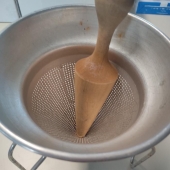
When I process my tomatoes for sauce, I put them through a series of plates on my food mill to remove the skins and seeds from my final product.

Usually, I will chuck this material into my compost and call it a day but maybe I am missing out on something?

Any ideas for better use of this material?

Thank you in advance.
 
gardener
Posts: 6555
Location: Carlton County, Minnesota, USA: 3b; Dfb; sandy loam; in the woods
3970
8
forest garden trees books chicken food preservation cooking fiber arts seed woodworking homestead ungarbage
  • Likes 12
  • Mark post as helpful
  • send pies
    Number of slices to send:
    Optional 'thank-you' note:
  • Quote
  • Report post to moderator
I don't mill that stuff out of my tomatoes, I just leave it in the sauce and eat it -- so I don't have any firsthand suggestions, but it popped into my head that you could put it on a dehydrator rack and make crackers out of that waste.
 
steward
Posts: 19244
Location: USDA Zone 8a
4853
dog hunting food preservation cooking bee greening the desert
  • Likes 15
  • Mark post as helpful
  • send pies
    Number of slices to send:
    Optional 'thank-you' note:
  • Quote
  • Report post to moderator
After dehydrating the skins/seeds grind them into a powder to add flavor to other foods.
 
master steward
Posts: 15842
Location: Pacific Wet Coast
10266
duck books chicken cooking food preservation ungarbage
  • Likes 15
  • Mark post as helpful
  • send pies
    Number of slices to send:
    Optional 'thank-you' note:
  • Quote
  • Report post to moderator
Just to post the obvious... feed them to your chickens!

Sure, using them for Human food may be a higher calling, but the happy chickens lay happy eggs!
 
master steward
Posts: 8729
Location: southern Illinois, USA
3614
goat cat dog chicken composting toilet food preservation pig solar wood heat homestead composting
  • Likes 11
  • Mark post as helpful
  • send pies
    Number of slices to send:
    Optional 'thank-you' note:
  • Quote
  • Report post to moderator
While we own a mill to separate the seeds, it has been decades since we have used it. When canning tomatoes skins and seeds go into the jars.  We couldn’t figure out why we were not using all the tomato that we could….and working so hard at it. That said,if I was to peal the tomatoes, I like Anne’s idea to dehydrate and turn to powder.
 
pollinator
Posts: 222
Location: zone 6a, ish
139
forest garden fungi trees food preservation cooking homestead
  • Likes 18
  • Mark post as helpful
  • send pies
    Number of slices to send:
    Optional 'thank-you' note:
  • Quote
  • Report post to moderator
For the last few years, I've been fermenting off all the tomato guts and saving the seed.  In the spring, I make up little seed packets and give them to the local food bank.  I do between 150-300, depending on the year, and they all end up going to either the food aid recipients or the volunteers.  They usually get over 200 families for every hand-out, so even if only 1% of the people who get seeds plant them, that's still two households that are one very tiny step closer to food security.
 
steward
Posts: 4715
Location: Pacific North West
2278
cattle foraging books chicken cooking food preservation fiber arts writing homestead
  • Likes 13
  • Mark post as helpful
  • send pies
    Number of slices to send:
    Optional 'thank-you' note:
  • Quote
  • Report post to moderator
We give the skins/seeds discard to chickens or just throwing in the compost.

This being said, we do save what we call “tomato water”.

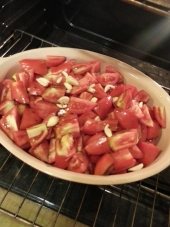
We start by putting tomatoes in big trays, cut up if they’re big, whole if they’re smaller, broil them in the oven till the tops start to blacken a little ( then change trays, the bottom one gets on top).

This breaks the skins and also leaves a lot of water in the trays, which I collect before running the actual tomatoes through a food mill.

I freeze most of this tomato water and use it in minestrone type soups. It gives the soup a very good taste.

Maybe it’s worth saying that I make sauce from all the tomatoes I’m growing, and paste tomatoes is a very small amount most years.

Yes, my tomato sauce is thinner than store bought sauce, even after cooking it down some. And we’re ok with that.☺️
 
Liv Smith
steward
Posts: 4715
Location: Pacific North West
2278
cattle foraging books chicken cooking food preservation fiber arts writing homestead
  • Likes 7
  • Mark post as helpful
  • send pies
    Number of slices to send:
    Optional 'thank-you' note:
  • Quote
  • Report post to moderator

Timothy Norton wrote:When I process my tomatoes for sauce, I put them through a series of plates on my food mill to remove the skins and seeds from my final product.

Usually, I will chuck this material into my compost and call it a day but maybe I am missing out on something?

Any ideas for better use of this material?

Thank you in advance.


Curious as to why do you need to run it through seversl plates to remove skins and seeds?
 
Timothy Norton
Steward of piddlers
Posts: 7954
Location: Upstate New York, Zone 5b, 43 inch Avg. Rainfall
4584
monies home care dog fungi trees chicken food preservation cooking building composting homestead
  • Likes 11
  • Mark post as helpful
  • send pies
    Number of slices to send:
    Optional 'thank-you' note:
  • Quote
  • Report post to moderator

Liv Smith wrote: Curious as to why do you need to run it through seversl plates to remove skins and seeds?


I found that if I run it through the medium plate then the fine plate I can process a batch without overwhelming the mill.

I could very well be using it wrong, I'm kinda winging things in the kitchen at times.
 
Liv Smith
steward
Posts: 4715
Location: Pacific North West
2278
cattle foraging books chicken cooking food preservation fiber arts writing homestead
  • Likes 9
  • Mark post as helpful
  • send pies
    Number of slices to send:
    Optional 'thank-you' note:
  • Quote
  • Report post to moderator

Timothy Norton wrote:

I'm kinda winging things in the kitchen at times.


Aren’t we all😁. Well, maybe some of us. I know there is a lot of winging it at my place. Both in the garden and in the kitchen.

I’m not sure which plate I’m using, maybe the smallest. It does gum up after a while, but by that time the pot I cook the sauce in it’s full and I’m ready to so something else, or take a break and come here on permies to pester people😁. Which is exactly what I’m doing now, while waiting for the sauce to cook down.
 
master pollinator
Posts: 5432
Location: Due to winter mortality, I stubbornly state, zone 7a Tennessee
2401
7
forest garden foraging books food preservation cooking fiber arts bee medical herbs
  • Likes 8
  • Mark post as helpful
  • send pies
    Number of slices to send:
    Optional 'thank-you' note:
  • Quote
  • Report post to moderator
So... It seems I responded to the wrong thread... Here ya go.

I think a Permie dehydrates the skin and seass for later use as tomato paste. Could not find the post. Here's how rural sprout did it.

https://www.ruralsprout.com/make-tomato-paste-from-tomato-skins/
 
Rusticator
Posts: 9870
Location: Missouri Ozarks
5460
7
personal care gear foraging hunting rabbit chicken cooking food preservation fiber arts medical herbs homestead
  • Likes 8
  • Mark post as helpful
  • send pies
    Number of slices to send:
    Optional 'thank-you' note:
  • Quote
  • Report post to moderator

Liv Smith wrote:

Timothy Norton wrote:

I'm kinda winging things in the kitchen at times.


Aren’t we all😁. Well, maybe some of us. I know there is a lot of winging it at my place. Both in the garden and in the kitchen.

I’m not sure which plate I’m using, maybe the smallest. It does gum up after a while, but by that time the pot I cook the sauce in it’s full and I’m ready to so something else, or take a break and come here on permies to pester people😁. Which is exactly what I’m doing now, while waiting for the sauce to cook down.


Handy tip: cook first, then process through the mill, if you want the most out of your tomatoes, AND the easiest, non-gummiest milling. Yup. If you want to save the seeds, you can do that when you cut them up, to cook. The cooking very effectively separates the skin, so that the mill doesn't have to work so hard. But, the mill works better than simply using a sieve or chinois because the skins are moved away, and can't clog the holes in the screen. I don't separate them for all of it - only what I may be serving to those who can't have the seeds or added fiber of the skins. We have 2 married-into-the-family folks who have diverticulosis, that can very easily become a much more painful acute diverticulitis, if they aren't careful about seeds & too much fiber.
 
steward & manure connoisseur
Posts: 5251
Location: South of Capricorn
3226
dog rabbit urban cooking writing homestead ungarbage
  • Likes 10
  • Mark post as helpful
  • send pies
    Number of slices to send:
    Optional 'thank-you' note:
  • Quote
  • Report post to moderator

Carla Burke wrote:
Handy tip: cook first, then process through the mill, if you want the most out of your tomatoes, AND the easiest, non-gummiest milling.  


This is what I do, when I get access to lots of cheap tomatoes: and it was one of my permies colleagues here who taught me.
Wash the tomatoes and cut into pieces that are sized to go into your mill (I use an omega juicer, so they need to be cut at least into halves).
Throw in the crockpot for a few hours (could be 2 on high, 6 on low, whatever)
During cooking, whenever possible ladle out the "tomato water" described above. My kid drinks it, but it's a great cooking ingredient.

When they're cooked, mill up (to remove the seeds/skins and sort out the texture) and voilá, there's your passata. Can be canned, frozen, or whatever.

I found that the rabbits like eating the seeds/skins (who would have guessed). I could also see blending it up and throwing it into pancakes or bread or something- there's plenty of fiber and flavor.
 
pollinator
Posts: 1838
Location: southern Illinois, USA
383
  • Likes 12
  • Mark post as helpful
  • send pies
    Number of slices to send:
    Optional 'thank-you' note:
  • Quote
  • Report post to moderator
Why separate the seeds and skins at all?  I discovered the easy way to tomato sauce, at least, is to first dry the first few harvests, and then store these until the main crop comes in.  With the big harvest I just throw them in the blender whole and puree them, first having cut out the core if there is one and any bad spots.  As this is beginning to simmer in the big pot, I take some of the dried ones and powder these in the same blender, and then stir this into the sauce until it's the right thickness.  Then add spices, bring to a boil, and can away!  A huge sauce project now fits easily into one day since there is no hours and hours boiling it down, stirring the while to keep it from scorching.  And I've replace a bunch of propane with solar energy.
 
Posts: 39
Location: Prairie Coteau South Dakota
18
goat fungi books food preservation woodworking homestead
  • Likes 13
  • Mark post as helpful
  • send pies
    Number of slices to send:
    Optional 'thank-you' note:
  • Quote
  • Report post to moderator
When it comes to my tomato sauce, I usually leave it all in.  Though, I have relatives who really don't like this and I supply quite a few people with seed and skin free sauce batches as well as make some tomato juice and catsup (my recipe is definitely a catsup and not ketchup).  So I end up with a lot of seeds and skins.  My favorite use of them, especially the skins, is to dehydrate all of them (solar dehydrator is helpful) and then I grind it into a powder.  This powder I keep in a spice shaker and I use it to add a little color/fiber/thickener in different dishes similar to how someone might use paprika.  The rest gets mixed in with my "edible garden scraps" who all get a similar treatment and ground finely in a spice grinder or food processor with dried onion, mushroom, carrot, potato, lovage, or other similar garden vegetables all included.  Careful not to overpower the blend with one flavor (lovage can take over).  This powder is my go-to thickener for gravies, soups, even some dips and dressings.  It can also add flavor depth in some cooking and I'll add it to meatballs, bread dough, meatloaf, breading, tomato sauce and alfredo, and more.  I feel good about the fact that I'm incorporating the high nutrient/fiber/antioxidant trimmings and bits back into our diet in different ways and it has become pretty useful without changing what we eat in any meaningful way.
 
pollinator
Posts: 161
Location: Czech Republic; East Bohemia; Latitude 50˚ 12' 34"
41
12
  • Likes 2
  • Mark post as helpful
  • send pies
    Number of slices to send:
    Optional 'thank-you' note:
  • Quote
  • Report post to moderator

Alder Burns wrote:Why separate the seeds and skins at all?  I discovered the easy way to tomato sauce, at least, is to first dry the first few harvests, and then store these until the main crop comes in.  With the big harvest I just throw them in the blender whole and puree them, first having cut out the core if there is one and any bad spots.  As this is beginning to simmer in the big pot, I take some of the dried ones and powder these in the same blender, and then stir this into the sauce until it's the right thickness.  Then add spices, bring to a boil, and can away!  A huge sauce project now fits easily into one day since there is no hours and hours boiling it down, stirring the while to keep it from scorching.  And I've replace a bunch of propane with solar energy.


I’ve made sauce both ways, and I grew San Marzano tomatoes to make the sauce the first time I pealed and seeded them. I found that the pealed and seeded sauce was so much better in taste than anything I had before. And there was a difference between the seeded and deseeded San Marzano sauces. I did not have a mill then so it was way too much work, but the taste was better.
Maybe the difference wouldn’t be that great with another variety, but now that I have a mill…

 
I have gone to look for myself. If I should return before I get back, keep me here with this tiny ad:
Workee-job sucks? Quit and live the permaculture way in Montana
https://wheaton-labs.com/bootcamp
reply
    Bookmark Topic Watch Topic
  • New Topic