

• Post Reply Bookmark Topic Watch Topic
  • New Topic
permaculture forums growies critters building homesteading energy monies kitchen purity ungarbage community wilderness fiber arts art permaculture artisans regional education skip experiences global resources cider press projects digital market permies.com pie forums private forums all forums
this forum made possible by our volunteer staff, including ...
master stewards:
  • Carla Burke
  • Nancy Reading
  • paul wheaton
  • John F Dean
  • r ransom
  • Jay Angler
stewards:
  • Timothy Norton
  • Tereza Okava
  • Pearl Sutton
master gardeners:
  • Christopher Weeks
  • M Ljin
gardeners:
  • Jeremy VanGelder
  • Megan Palmer
  • Thekla McDaniels

Ideas for living history activities for studying Vikings?

 
steward
Posts: 22799
Location: Pacific Northwest
13600
13
homeschooling hugelkultur kids art duck forest garden foraging fiber arts sheep wood heat homestead
  • Likes 9
  • Mark post as helpful
  • send pies
    Number of slices to send:
    Optional 'thank-you' note:
  • Quote
  • Report post to moderator
This year, I'll be teaching  Hands-On Medieval History. I'll have various classes, spanning Kindergarten through 8th grade. My goal is--kind of like with SkIP--to teach as many cool historical skills as possible. I had wanted the kids to carve soapstone molds for me to pour pewter into, so they can cast metal like the Vikings did. But, the more I look into it, the more expensive it is seeming. Most of the kids who signed up for my class really wanted to learn about Vikings, so I'll spend a few months studying the Norse.

So, I need some other ideas for Viking crafts. Something boat related would be cool, but what? Maybe something related to Norse mythology (*note to self: research Norse mythology more*).

Here's what I've got planned for the year thus far:

EraSubjectActivity
Fall of Rome/Early Medieval ~476-800
Beowulf (stories before writing)Write an Alliterative poem
King ArthurQuill & Ink (Medieval European writing)
Eastern Roman EmpireMake a mosaic (hopefully with actual stone!)
Ancient China?Sand casting by having kids make chocolate castings in brown sugar
Islam & Islamic Golden Age???
Charlemagne/Vikings (800-1066)Make a drop spindle
spin wool yarn
dye wool yarn
Carve soapstone welding sticks with runes
High Medieval 1066-1300
Norman Conquest & CrusadesDesign a coat of arms
Robin HoodPaint coat of arms
CrusadesDesign a seal
Magna CartaWrite a medieval document (law, letter, decree)
Color wax and use yarn to make a pendant seal on medieval document
Late Medieval 1300-1492
History of Paper/ParchmentBook Binding: Make Paper
Book Binding: Sew signatures
Book Binding: Make feather paint brushes (finish sewing signatures)
Medieval illuminationBook Binding: Brainstorm/sketch illuminated letter/story
Book Binding: Apply cover
Medieval pigmentsBook Binding: Paint Illuminated Letter with egg tempera
Book Binding: Gild Illuminated letter
Book Binding: Design cover
Book Binding: Decorate Cover
Medieval food & MedicinePlant a medieval garden?
Marco PoloMake a map
Henry the NavigatorNavigating with Mariner's Quadrant
Christopher ColumbusMake a medieval ship from clay
Silk RoadSilk Road Trading Game


(The High Medieval Era still needs organization. I'm going to cover the Genghis Khan, Canterbury Tales, the Black Death, the fall of Constantinople, etc. But, I'm still figuring out how I want to organize that section of the year. I'll probably just do "general medieval life" stuff, followed by historical events. I'm not sure, though.)

Medieval subjects I haven't manage to cover: Warfare, castle building, medieval trades, more I can't think of.

I really want to do something cool and epic for Vikings, and I know making spindles isn't "Viking" enough. Any ideas?
 
steward & author
Posts: 47884
Location: Left Coast Canada
19809
10
art trees books chicken cooking fiber arts
  • Likes 7
  • Mark post as helpful
  • send pies
    Number of slices to send:
    Optional 'thank-you' note:
  • Quote
  • Report post to moderator
Hand manipulated weaving was big with vikings.   Warp weighted loom was common, but the coast salish weaving frames have the same technique but easier to transport and set up.
 
Nicole Alderman
steward
Posts: 22799
Location: Pacific Northwest
13600
13
homeschooling hugelkultur kids art duck forest garden foraging fiber arts sheep wood heat homestead
  • Likes 6
  • Mark post as helpful
  • send pies
    Number of slices to send:
    Optional 'thank-you' note:
  • Quote
  • Report post to moderator
I'm really tempted to teach tablet weaving, but I'm trying to keep a decent balance of skills learned. They'll be doing a big section on spinning wool (make clay whorls, assemble and decorate spindle, spin wool, dye wool), so I worry that more fiber arts might be too much?

The skills the kids learned the year before, in Ancient history, were:

Ancient History wrote:Clay work:

  • Clay pots
  • Clay cuneiform tablets
  • Clay game pieces for Royal Game of Ur,
  • clay toys modeled after the Indus Valley clay toys


Painting:
  • Cave art with raw ochres, chalk, and charcoal
  • Watercoloring Royal Game of Ur
  • Watercolor on plaster for hieroglyphs
  • Watercolor on papyrus to design Egyptian god/goddess bookmark
  • Watercolor frescos


Fiber Arts:
  • Making twine from daylillies and nettles. Nettle stomping fun!
  • Harvesting cotton from cotton bowls when learning about India
  • Watching me spin linen thread for their papyrus Egyptian god/goddess paintings
  • Making leather pouches
  • Tying "bamboo" slats to make bamboo scrolls
  • Wet felting "pot holders" in the style of the nomadic steppe's felting
  • Making quipus--twinning and knotting yarn


Writing:
  • Making clay cuneiform tablets
  • Painting Egyptian hieroglyphs
  • Painting chinese characters


Other:
  • Paper mache Greek masks (never again!)
  • Beading bracelets with lapis, clay, carnelian, agate beads
  • Carving cuneiform seals in crayons


Seeing that list, it was pretty textile heavy...because I love textiles! And, textiles are super important throughout history. I just sneakily want to give the kids a wide range of skills, and appeal to as many different interests as possible.

Maybe I need to think about what skills I haven't taught them? My history classes are currently a 3-year cycle. After this year will be Age of Exploration. Here's the skills they'll learn in that:

Age of Exploration History wrote:Writing:

  • Writing with quill and ink
  • 17 century letter folding
  • Making a botanical journal like Lewis & Clark


Metal working:
  • Metal stamping (making colonial coins)
  • Metal punched tin can candle holders


Clay working:
  • Making clay candlesticks


Fiber Arts:
  • Embroidering a pouch
  • Sewing a pouch
  • Spinning/dying yarn for pouch string
  • Lashing sticks together to form kite frame


Painting:
  • Painting flags
  • Painting kites
  • Making chalkboard paint and painting wood with it.


Botany:
  • Wildcraft to learn about medicinal plants
  • Drinking spruce tea (made from western hemlock needles)
  • Making soap balls
  • Plant ID and drying flowers for Lewis & Clark journal.


Other:
  • Dipping candles
  • Making chalk


What skills are the kids missing? Woodworking is hard to do, because knives+school = not good. They will be sanding their spindles, so that...something. I really wanted to do pewter casting, but the cost is high. Hopefully "sand casting" with chocolate and brown sugar is a good substitute. What traditional skill sets am I missing here?
 
Rusticator
Posts: 9940
Location: Missouri Ozarks
5515
7
personal care gear foraging hunting rabbit chicken cooking food preservation fiber arts medical herbs homestead
  • Likes 7
  • Mark post as helpful
  • send pies
    Number of slices to send:
    Optional 'thank-you' note:
  • Quote
  • Report post to moderator
Simple cooking (doesn't have to include fire - there were a lot of meals eaten cold) &/or food preservation? Period herbalism &/or botany &/or Viking styles of gardening?
 
pollinator
Posts: 1609
Location: Milwaukie Oregon, USA zone 8b
200
  • Likes 11
  • Mark post as helpful
  • send pies
    Number of slices to send:
    Optional 'thank-you' note:
  • Quote
  • Report post to moderator
Making war horns out of cattle horns, you know then you blow into it to call your comrades into battle old school.  We just saw some incredible ones this weekend.

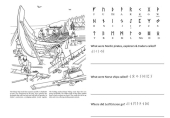
Runic alphabet stuff, write each other notes.  I'd say learn to navigate with a sunstone and twilight board, but that would be hard without going out to sea to test haha.
 
Steward and Man of Many Mushrooms
Posts: 6201
Location: Southern Illinois
1953
transportation cat dog fungi trees building writing rocket stoves woodworking
  • Likes 6
  • Mark post as helpful
  • send pies
    Number of slices to send:
    Optional 'thank-you' note:
  • Quote
  • Report post to moderator
It would be a big project, but how about a longboat?  Maybe 1/0 to 1/4 scale.

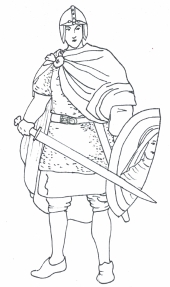
If you thought you could get some scrap metal, maybe a Viking Axe (not functional) or a replica of a Viking shield.


Eric
 
Eric Hanson
Steward and Man of Many Mushrooms
Posts: 6201
Location: Southern Illinois
1953
transportation cat dog fungi trees building writing rocket stoves woodworking
  • Likes 11
  • Mark post as helpful
  • send pies
    Number of slices to send:
    Optional 'thank-you' note:
  • Quote
  • Report post to moderator
Nicole, I just came up with another one that is much easier to build and easier on the wallet.

It’s not exactly Viking, but it’s an old traditional Norwegian food—more like a pastry—called Lefse.  And for pronunciation, it’s Lef-Sa.

It takes potatoes, boils them, double mashes them until they are completely smooth and creamy.  From there they are placed on a Lefse griddle (it’s an actual thing you can get on Amazon.).  If you don’t want to get the Lefse griddle, a large flat surface griddle will probably work.  They are cooked into what is essentially a potato tortilla.  It is thinner and sweeter than a flour tortilla.  Once it is cooked, remove and place on a plate.  One batch will make a lot of Lefse.

When eating, traditionally the Lefse is buttered and then sugar is added.  My personal adaptation was to add cinnamon with the sugar—YUM!  Then roll into a little tube.  And finally EAT!! Yay!  You have yummy Lefse!!


Eric
 
steward and tree herder
Posts: 14072
Location: Isle of Skye, Scotland. Nearly 70 inches rain a year
7745
6
transportation dog forest garden foraging trees books food preservation woodworking wood heat rocket stoves ungarbage
  • Likes 9
  • Mark post as helpful
  • send pies
    Number of slices to send:
    Optional 'thank-you' note:
  • Quote
  • Report post to moderator
One thinks of the Vikings as roaming warriors, but most of them stayed at home! how vikings lived

Nalbinding (another fibre art!)

I think you've done boats with them before. Sail boats are cool though. How about making a compass for navigation? I'm not sure whether they used a magnetic compass? but a solar one might also be fun to make:
https://www.vikingeskibsmuseet.dk/en/professions/education/knowledge-of-sailing/instrument-navigation-in-the-viking-age
 
Eric Hanson
Steward and Man of Many Mushrooms
Posts: 6201
Location: Southern Illinois
1953
transportation cat dog fungi trees building writing rocket stoves woodworking
  • Likes 9
  • Mark post as helpful
  • send pies
    Number of slices to send:
    Optional 'thank-you' note:
  • Quote
  • Report post to moderator
Nancy,

Not a true compass but a magnetic needle!  That’s an excellent suggestion!
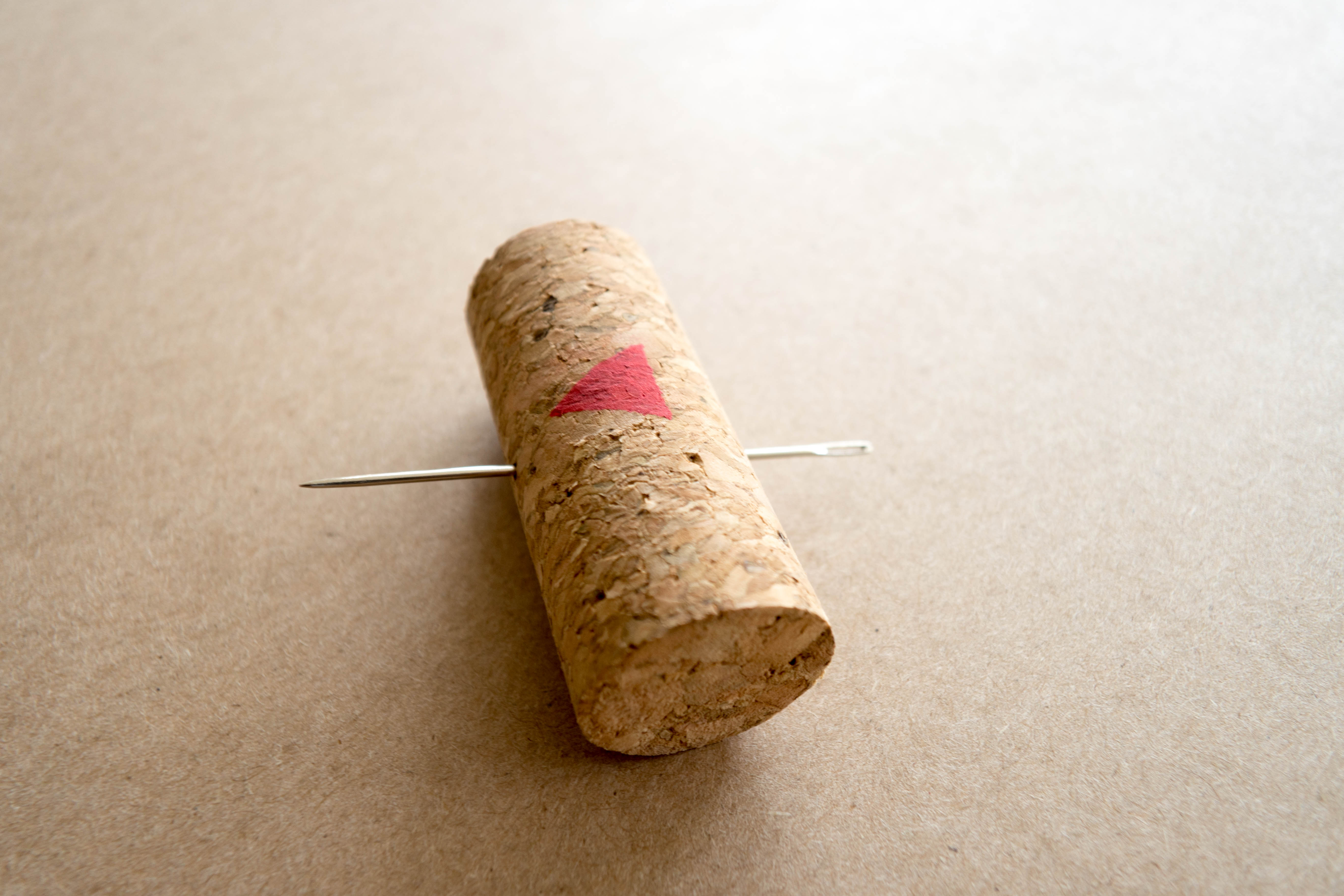
And absolutely correct—no civilization in history ever sent more than about 10% of its population off to war—who else would tend to fields, manage funds, and take care of general day-to-day stuff?

Absolutely correct,  relatively few Vikings went off on raids, but those long boats certainly look pretty fascinating!  And I am a huge fan of Lefse, it’s always a holiday treat!


Little fun fact.  It’s easy for people today to look at Scandinavia and think Norway, Sweden, what’s the difference?

The difference is huge.

Sweden is the more metropolitan.  It maintains significant trade and cultural ties with the rest of Europe.  It was a European superpower until it overextended and was beaten by Russia which took much of its place (about 400 years ago and I am grossly simplifying).  After that defeat, it adopted strategic neutrality which lasted until recently joining NATO.

Norway was (and kinda still is) the Wild West of the North.  This is where Vikings came from.  They had weaker trade routes which isn’t hard to understand if one just looks at a map.  The fjords did something interesting.  You could have one major landowners on one side of the fjord, and another on the other.  Unlike rivers which connect cities, the fjords were too steep.  Essentially you could have one virtually independent rural on one side and another independent ruler on the other.  This impeded the development of a solidified Norway for centuries.  And the Vikings were partly an outgrowth.  Arable land was at a premium and during cold periods, local harvests couldn’t keep up with hungry mouths—so off they went to find better land.

By late 19th century, Sweden had (and still had) a very conservative monarchy).  Norway has a constitution which was considered the second most democratic in the world, falling right behind the United States constitution.  

My point is that Norway and Sweden are very different.  And they have distinct cultural identities, even when they both immigrated to the United States!

My wife’s family is Swedish.  Christmas is fun and filled with Swedish food and traditions,

But I am Nowegian.  Lefse is a Norwegian food.  My wife never heard of it and her family was confused by it.

My mother in law likes to jokingly say that there is something wrong with me because I am Norwegian.  I like to smile back and say “you are right!”


Eric
 
Nancy Reading
steward and tree herder
Posts: 14072
Location: Isle of Skye, Scotland. Nearly 70 inches rain a year
7745
6
transportation dog forest garden foraging trees books food preservation woodworking wood heat rocket stoves ungarbage
  • Likes 8
  • Mark post as helpful
  • send pies
    Number of slices to send:
    Optional 'thank-you' note:
  • Quote
  • Report post to moderator

Eric Hanson wrote:Not a true compass but a magnetic needle!  That’s an excellent suggestion!


Thank you. I think it would be fun too, to make a real floating compass

like this.

I'm not sure whether the vikings used them though?

The fjords did something interesting.  You could have one major landowners on one side of the fjord, and another on the other.  Unlike rivers which connect cities, the fjords were too steep.  Essentially you could have one virtually independent rural on one side and another independent ruler on the other.  This impeded the development of a solidified Norway for centuries.  


A bit like the Scottish highlands too. Navigation round the coast mainly by boat. The area where I live still had most deliveries from outside by boat from Glasgow up until the 1950s I believe.
 
Nicole Alderman
steward
Posts: 22799
Location: Pacific Northwest
13600
13
homeschooling hugelkultur kids art duck forest garden foraging fiber arts sheep wood heat homestead
  • Likes 6
  • Mark post as helpful
  • send pies
    Number of slices to send:
    Optional 'thank-you' note:
  • Quote
  • Report post to moderator
Ooooooh! Cow horns sound super fun to work with. I wonder what all is included turning a cow horn to musical horn--do we just saw and sand, or is there cleaning out of the inside? Will any vegan kiddos be sad? I didn't have anyone worry about the leather, but not everyone realizes leather is animal skin (I did have some "vegan" leather in case anyone was worried, but no one is.)

Eric Hanson wrote:It would be a big project, but how about a longboat?  Maybe 1/0 to 1/4 scale.

If you thought you could get some scrap metal, maybe a Viking Axe (not functional) or a replica of a Viking shield.


This is the sort of stuff I'd love to do...but how? I've got a total of 75 kids, spread over classes that once a week with 12-16 kids. Like, if we all worked on something, maybe we could...but I like for them to leave the classroom with the thing they built. Any ideas on tiny shipbuilding?
 
Nicole Alderman
steward
Posts: 22799
Location: Pacific Northwest
13600
13
homeschooling hugelkultur kids art duck forest garden foraging fiber arts sheep wood heat homestead
  • Likes 5
  • Mark post as helpful
  • send pies
    Number of slices to send:
    Optional 'thank-you' note:
  • Quote
  • Report post to moderator

Eric Hanson wrote:It’s not exactly Viking, but it’s an old traditional Norwegian food—more like a pastry—called Lefse.  And for pronunciation, it’s Lef-Sa.

It takes potatoes, boils them, double mashes them until they are completely smooth and creamy.  From there they are placed on a Lefse griddle (it’s an actual thing you can get on Amazon.).  If you don’t want to get the Lefse griddle, a large flat surface griddle will probably work.  They are cooked into what is essentially a potato tortilla.  It is thinner and sweeter than a flour tortilla.  Once it is cooked, remove and place on a plate.  One batch will make a lot of Lefse.

When eating, traditionally the Lefse is buttered and then sugar is added.  My personal adaptation was to add cinnamon with the sugar—YUM!  Then roll into a little tube.  And finally EAT!! Yay!  You have yummy Lefse!!


Oh, lefse, I need to make that! I've had it once time during a family reunion when I was like 9 years old, and it was SO GOOD. I begged my mom to make it again, and she never did. But, we did eat a lot of Swedish pancakes (I would always sprinkle those with sugar and roll them up. Yum!). My grandfather was 100% Swedish. His grandfather immigrated from Sweden as a small boy. I have a *tiny* little Swedish coin from 1867 that probably came from when he immigrated. Pepparkakor and Springlerlee cookies were things we always ate at Christmas time. It looks like pepparkakor is dated back to the 1300s...and springerlee is actually German! Lefsa (at least as we make it today) can't be medieval, because potatoes come from South America. (Looks like the original lefsa was made with flour and was more of a cracker!)
 
steward & manure connoisseur
Posts: 5322
Location: South of Capricorn
3329
dog rabbit urban cooking writing homestead ungarbage
  • Likes 9
  • Mark post as helpful
  • send pies
    Number of slices to send:
    Optional 'thank-you' note:
  • Quote
  • Report post to moderator

Nicole Alderman wrote:Ooooooh! Cow horns sound super fun to work with. I wonder what all is included turning a cow horn to musical horn--do we just saw and sand, or is there cleaning out of the inside? Will any vegan kiddos be sad?


I have some horn stuff (a drinking horn for yerba mate, most precious among them) and it's really cool for people to realize that horns have various functions (just not the helmet, okay, says the historian....). I would warn that sanding/sawing horn can get stinky. Vegans probably wouldn't want to be involved (cows are not shedding their horns every year like a deer).

All morning i've been thinking about this and I cant find the citation, but I have a degree in viking-era british stuff and i know there are references to how oceangoing viking types kept their swords and axes shiny and sharp -- generally, lard. Or sheep grease. I know somewhere in one of the old english texts there is a reference to fat-smeared weapons that are down below decks (because the swords were fabulous, precious almost beyond belief, and salt air was not their friend). It would be really cool to do some sort of investigation about rust and oil. Even better if you can get kids keeping those cast iron pots rust free!!!
 
Eric Hanson
Steward and Man of Many Mushrooms
Posts: 6201
Location: Southern Illinois
1953
transportation cat dog fungi trees building writing rocket stoves woodworking
  • Likes 7
  • Mark post as helpful
  • send pies
    Number of slices to send:
    Optional 'thank-you' note:
  • Quote
  • Report post to moderator
Nicole,

I am so glad that you can actually recollect Lefse!  It’s not too often that I find people that do.  As I said, we have a Lefse griddle—which is basically just a big, flat, circular electric griddle that has no raised edges—that makes it easier to get those thin slices off.  My family always ate it with sugar, but one day I just thought that cinnamon would go well.  That’s my favorite way.

So funny thing about my wife and I.  I obviously got my father’s height (6’3”) exactly, easily attributable to Scandinavian ancestry.  But my wife must have gotten at the very back of the line when the height genes were being passed out.  She stands at 5’1”.  Swedish or not, I kinda tower over her.  By 14 inches.

And ah, a longboat!  Yeah, that’s one of those “if we only had time” projects.  I run into these issues all the time at school.  I always get hit with the “why don’t you do/build X thing!”  And always the answer is that I simply don’t have time.  It would be great, but then what would I NOT be teaching.

I definitely understand!


I do, however, want to know how this ends up working out.  If you are interested, I can give you some background information about Viking exploration.


Eric
 
gardener
Posts: 3508
Location: Cascades of Oregon
971
  • Likes 9
  • Mark post as helpful
  • send pies
    Number of slices to send:
    Optional 'thank-you' note:
  • Quote
  • Report post to moderator
Someone mentioned runic alphabet, what about runestones? Carving a soapstone Thor's Hammer would be a relatively easy mold. But hot metal and kids could be problematic. Cast them off site and then show how to cast one if you are going to give them to the students.  Zamac is pewter like and a bit cheaper.
 
Nicole Alderman
steward
Posts: 22799
Location: Pacific Northwest
13600
13
homeschooling hugelkultur kids art duck forest garden foraging fiber arts sheep wood heat homestead
  • Likes 6
  • Mark post as helpful
  • send pies
    Number of slices to send:
    Optional 'thank-you' note:
  • Quote
  • Report post to moderator

Robert Ray wrote:Someone mentioned runic alphabet, what about runestones? Carving a soapstone Thor's Hammer would be a relatively easy mold. But hot metal and kids could be problematic. Cast them off site and then show how to cast one if you are going to give them to the students.  Zamac is pewter like and a bit cheaper.


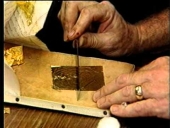
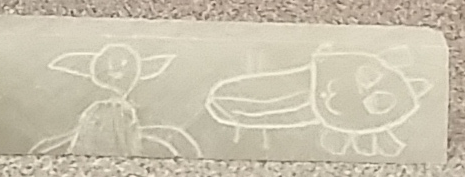
We'll definitely be carving runes into soapstone! Welding soapstone sticks are easy to carve into and really afforable. I used them three years when I last taught medieval history (thread about carving into welding soaptone)


The last time I taught this, I asked a local countertop company for soapstone, and they donated little pieces to us. But, the soapstone was much harder than the welding soapstone, and the kids struggled to carve into it. I'm not sure how to source affordable soapstone that's large enough for the kids to carve into, and that's actually soft. Ordering it online is pricey, and the pewter seems even more costly...especially for 75 kids.

I thought, at first, that I could just pour the pewter into a one-sided mold, but everyone seems to use two-sided molds with a sprue. That makes things even more costly and complicated than I was assuming!
 
Nicole Alderman
steward
Posts: 22799
Location: Pacific Northwest
13600
13
homeschooling hugelkultur kids art duck forest garden foraging fiber arts sheep wood heat homestead
  • Likes 4
  • Mark post as helpful
  • send pies
    Number of slices to send:
    Optional 'thank-you' note:
  • Quote
  • Report post to moderator

Eric Hanson wrote:I do, however, want to know how this ends up working out.  If you are interested, I can give you some background information about Viking exploration.


I'd love that!
 
Nicole Alderman
steward
Posts: 22799
Location: Pacific Northwest
13600
13
homeschooling hugelkultur kids art duck forest garden foraging fiber arts sheep wood heat homestead
  • Likes 6
  • Mark post as helpful
  • send pies
    Number of slices to send:
    Optional 'thank-you' note:
  • Quote
  • Report post to moderator

Riona Abhainn wrote:Runic alphabet stuff, write each other notes.  I'd say learn to navigate with a sunstone and twilight board, but that would be hard without going out to sea to test haha.


It'd be super fun to show them how a sunstone works. It's not hard for us to get cloudy days!

I wonder if the kids could make a twilight board? (They also seem to be called Uunartoq disks)
 
master gardener
Posts: 2805
Location: Zone 5
1625
ancestral skills forest garden foraging composting toilet fiber arts bike medical herbs seed writing ungarbage
  • Likes 7
  • Mark post as helpful
  • send pies
    Number of slices to send:
    Optional 'thank-you' note:
  • Quote
  • Report post to moderator
I’m definitely trying lefse soon with all these new potatoes ready to harvest! It sounds delicious and I’ve been also grating them into oatmeal which has been good.

Maybe making a fishnet or something else to do with fishing?

If you are interested in anything from the Western Hemisphere from that period I recommend 1491 by Charles Mann—it was very interesting and enlightening to hear the precolonial perspective, the different civilizations that formed (and didn’t form) on this side of the ocean.
 
pollinator
Posts: 2967
Location: RRV of da Nort, USA
936
  • Likes 6
  • Mark post as helpful
  • send pies
    Number of slices to send:
    Optional 'thank-you' note:
  • Quote
  • Report post to moderator

Eric Hanson wrote:Nicole,

I am so glad that you can actually recollect Lefse!  It’s not too often that I find people that do.......  


I suppose it is because of my location in the Red River Valley outside of Fargo-Moorhead that I shook my head a bit over this.....lefse is just so common even down to the local convenience store up here.  Every grocery store carries it, although I can't say if places like Sam's Club or Costco do.....do those stores cater to local tastes?

Speaking of Moorhead, Nicole, you may find some useful historical links in the following website:  https://www.moorheadmn.gov/parks-rec/hjemkomst-center/

A good synopsis of the creation of a Viking ship by locals here....-AND- sailing it to Norway!......can be found here on YouTube: https://www.youtube.com/watch?v=Ry6BOE2_laM

The Hjemkommst Center, which still houses that Viking ship and is home to the Hopperstad Stave Church ( https://www.hcscconline.org/stavechurch.html ),  is used for a variety of local events, but also is home to much Norwegian immigrant museum pieces.  More details can be found at the Historical and Cultural Society of Clay County's website:  https://www.hcscconline.org/

Edited to add:  "Giants in the Earth" by O E Rolvaag to accompany other suggestions here.  One review on Amazon.com called it "The greatest book you've never read..."!  I can't agree more....comes off as a children's book when you start it, but finishes like a Greek tragedy, only set among the Norwegian immigrants to Minnesota and the Dakotas in the late 1800s.

Hope this may help in some way!


Carla Burke
Rusticator
Posts: 9940
Location: Missouri Ozarks
5515
7
personal care gear foraging hunting rabbit chicken cooking food preservation fiber arts medical herbs homestead
  • Likes 6
  • Mark post as helpful
  • send pies
    Number of slices to send:
    Optional 'thank-you' note:
  • Quote
  • Report post to moderator
Spoons were also made from horn. It would be a way to cut down on time & the cost of the horns needed, too.
 
gardener
Posts: 1866
Location: Proebstel, Washington, USDA Zone 6B
1250
4
wheelbarrows and trailers kids trees earthworks woodworking
  • Likes 7
  • Mark post as helpful
  • send pies
    Number of slices to send:
    Optional 'thank-you' note:
  • Quote
  • Report post to moderator
I was thinking about how the Vikings rowed their ships. That was one reason that they were so fearsome when they arrived. I was thinking you could lay out a longship with chalk and have the students pretend to row. But it turns out that World Cup fans made that into a big thing this year.

Article about the Viking Row
 
Nicole Alderman
steward
Posts: 22799
Location: Pacific Northwest
13600
13
homeschooling hugelkultur kids art duck forest garden foraging fiber arts sheep wood heat homestead
  • Likes 9
  • Mark post as helpful
  • send pies
    Number of slices to send:
    Optional 'thank-you' note:
  • Quote
  • Report post to moderator

Carla Burke wrote:Spoons were also made from horn. It would be a way to cut down on time & the cost of the horns needed, too.


I'm pretty sure it takes strong heat to mold a spoon. According to the below Townsend's video, horn needs to be 300-350ºF, which is hotter than boiling water. I'm not sure how to do that with the kids. But, I do have horn spoons, combs, and "glass" to show the kids!


Eric Hanson
Steward and Man of Many Mushrooms
Posts: 6201
Location: Southern Illinois
1953
transportation cat dog fungi trees building writing rocket stoves woodworking
  • Likes 4
  • Mark post as helpful
  • send pies
    Number of slices to send:
    Optional 'thank-you' note:
  • Quote
  • Report post to moderator
John,

Yes, I have family in the Fargo-Moorhead area.  And Lefse is very common there, but that is also among the most Scandinavian place on Earth outside of Scandinavia.


Eric
 
gardener
Posts: 4631
796
7
forest garden fungi trees food preservation bike medical herbs
  • Likes 4
  • Mark post as helpful
  • send pies
    Number of slices to send:
    Optional 'thank-you' note:
  • Quote
  • Report post to moderator
Eric,
Tell the Swedish part of your family,
"Ten thousand Swedes ran through the weeds, chased by one Norwegian!"

My grandfather (Norwegian) said that one a lot.  For some reason, no Swedish person I've met ever knew that one.
John S
PDX OR
 
John Suavecito
gardener
Posts: 4631
796
7
forest garden fungi trees food preservation bike medical herbs
  • Likes 8
  • Mark post as helpful
  • send pies
    Number of slices to send:
    Optional 'thank-you' note:
  • Quote
  • Report post to moderator

Nicole Alderman wrote:

EraSubjectActivity
Fall of Rome/Early Medieval ~476-800
Beowulf (stories before writing)Write an Alliterative poem
King ArthurQuill & Ink (Medieval European writing)
Eastern Roman EmpireMake a mosaic (hopefully with actual stone!)
Ancient China?Sand casting by having kids make chocolate castings in brown sugar
Islam & Islamic Golden Age???
Charlemagne/Vikings (800-1066)Make a drop spindle
spin wool yarn
dye wool yarn
Carve soapstone welding sticks with runes
High Medieval 1066-1300
Norman Conquest & CrusadesDesign a coat of arms
Robin HoodPaint coat of arms
CrusadesDesign a seal
Magna CartaWrite a medieval document (law, letter, decree)
Color wax and use yarn to make a pendant seal on medieval document
Late Medieval 1300-1492
History of Paper/ParchmentBook Binding: Make Paper
Book Binding: Sew signatures
Book Binding: Make feather paint brushes (finish sewing signatures)
Medieval illuminationBook Binding: Brainstorm/sketch illuminated letter/story
Book Binding: Apply cover
Medieval pigmentsBook Binding: Paint Illuminated Letter with egg tempera
Book Binding: Gild Illuminated letter
Book Binding: Design cover
Book Binding: Decorate Cover
Medieval food & MedicinePlant a medieval garden?
Marco PoloMake a map
Henry the NavigatorNavigating with Mariner's Quadrant
Christopher ColumbusMake a medieval ship from clay
Silk RoadSilk Road Trading Game

Any ideas?


Hi Nicole,
I've taught elementary-6th grade many times.  Some ideas: Middle Ages: I would have them construct castles out of the inner rolls of paper towels and cardboard.  I would help and give a picture.
The vikings actuall;y had a type of compass that showed they were going directly west, which got them to Iceland, Greenland, and N. Amer.  You put a cone on a piece of cardboard. You look at the shadow and have them go straight west (within certain ranges)>  They can go outside and walk within that range.
Medieval pilgrimmages; You can have them set a goal (forgiveness for a crime, hope for a sick child, go on a short "pligrimmage" To compostela (they get a shell, Rome they get the star of Veronica's veil, etc.
China-Taoist painting.  Giant mountains, wild river, with little tiny view of people, showing how great nature is.
Marco Polo-Make spaghetti-Pasta came from China.
Islamic Golden Age- Painting with arabesques-They don't believe in pictures of people or gods but made these cool designs.
Early printing: Make potato stamp presses use kid paint as ink.
Navigation-Vasco de Gama: Make some Indian food together.
John S
PDX OR
 
Nicole Alderman
steward
Posts: 22799
Location: Pacific Northwest
13600
13
homeschooling hugelkultur kids art duck forest garden foraging fiber arts sheep wood heat homestead
  • Likes 8
  • Mark post as helpful
  • send pies
    Number of slices to send:
    Optional 'thank-you' note:
  • Quote
  • Report post to moderator
I love those ideas, John!

I've taught elementary-6th grade many times.  Some ideas: Middle Ages: I would have them construct castles out of the inner rolls of paper towels and cardboard.  I would help and give a picture.


Last time I taught this, I had only 25 total students, and we made wattle and daub houses as our big project. This time, I've got 75 spread over 5 classes. I have no idea how I'd store that many houses while they're getting built, so I had to think of something else.

BUT! I'm definitely going to offer that as one of their homework choices!

Islamic Golden Age- Painting with arabesques-They don't believe in pictures of people or gods but made these cool designs.


OOooh, I'll be looking into this! I've got a bunch of canvases left over from one of my classes last year, so they could even paint on canvas!

Medieval pilgrimmages; You can have them set a goal (forgiveness for a crime, hope for a sick child, go on a short "pligrimmage" To compostela (they get a shell, Rome they get the star of Veronica's veil, etc.


This sounds fun!

The vikings actuall;y had a type of compass that showed they were going directly west, which got them to Iceland, Greenland, and N. Amer.  You put a cone on a piece of cardboard. You look at the shadow and have them go straight west (within certain ranges)>  They can go outside and walk within that range.


Definitely need to look into this--thank you!
 
John Suavecito
gardener
Posts: 4631
796
7
forest garden fungi trees food preservation bike medical herbs
  • Likes 3
  • Mark post as helpful
  • send pies
    Number of slices to send:
    Optional 'thank-you' note:
  • Quote
  • Report post to moderator
How to make a Viking sun compass:

https://www.instructables.com/How-to-make-a-Viking-Sun-Compass/

John S
PDX OR
 
Robert Ray
gardener
Posts: 3508
Location: Cascades of Oregon
971
  • Likes 7
  • Mark post as helpful
  • send pies
    Number of slices to send:
    Optional 'thank-you' note:
  • Quote
  • Report post to moderator
Jumping without looking back, sorry if it has been mentioned. What about a lucet braiding tool? Makes a very strong square braid. Just a forked branch will work, but the slingshot affair with the hole tightens the work.
https://www.bing.com/videos/riverview/relatedvideo?q=lucet%20origin&mid=AC16C69886848E9E6911AC16C69886848E9E6911&ajaxhist=0
lucet.jpg
[Thumbnail for lucet.jpg]
 
pollinator
Posts: 265
Location: Vermont, annual average precipitation is 39.87 Inches
53
  • Likes 4
  • Mark post as helpful
  • send pies
    Number of slices to send:
    Optional 'thank-you' note:
  • Quote
  • Report post to moderator
My first thought was Viking Wire Weaving, but the lucet idea is a good one too.  I learned Viking Wire Weaving using a thin dowel and some copper wire, so it might fit in your budget too.
 
Nicole Alderman
steward
Posts: 22799
Location: Pacific Northwest
13600
13
homeschooling hugelkultur kids art duck forest garden foraging fiber arts sheep wood heat homestead
  • Likes 5
  • Mark post as helpful
  • send pies
    Number of slices to send:
    Optional 'thank-you' note:
  • Quote
  • Report post to moderator
Oooooh! I like the idea of the wire weaving! I've wanted to do more metalworking, and was really bummed about how hard/expensive pewter casting in soapstone would be. This seems like a lot easier metal working to do!
 
If you settle for what they are giving you, you deserve what you get. Fight for this tiny ad!
earth skills program
https://wheaton-labs.com/bootcamp
reply
    Bookmark Topic Watch Topic
  • New Topic