

• Post Reply Bookmark Topic Watch Topic
  • New Topic
permaculture forums growies critters building homesteading energy monies kitchen purity ungarbage community wilderness fiber arts art permaculture artisans regional education skip experiences global resources cider press projects digital market permies.com pie forums private forums all forums
this forum made possible by our volunteer staff, including ...
master stewards:
  • paul wheaton
  • Anne Miller
  • Carla Burke
  • Nancy Reading
  • John F Dean
  • Timothy Norton
  • Jay Angler
stewards:
  • r ransom
  • Pearl Sutton
  • Tereza Okava
master gardeners:
  • Christopher Weeks
gardeners:
  • M Ljin
  • Megan Palmer
  • Kate Downham

If you could start over...

 
Posts: 9
Location: Kansas City MO metro
6
homeschooling fish urban
  • Likes 11
  • Mark post as helpful
  • send pies
    Number of slices to send:
    Optional 'thank-you' note:
  • Quote
  • Report post to moderator
Hi, everyone.

I'm new to permaculture. Like mega new. Like "I had been unintentionally prepping for this and heard about permaculture a week ago. Now I'm stuck in a rabbit hole, but I really like the rabbit hole" new. I want to do all the projects.

I bought new property in the Kansas City area a year ago. It's 1.6 acres in the suburbs, house from the 30s, no HOA but city laws about lawncare still apply, fair amount of clay in the soil. There are lots of trees. .6 of the land is a forest I'm about to start intentional care for, plus scattered trees throughout the backyard. I had been watching the way the land works since I bought it. Have a good idea of where a garden can go, hugels are going to be placed there next week. The previous owners were already in the process of converting the lawn shed into a chicken coop. We even found a metal coop door laying on the ground inside. They must have started working on it a long time ago, since the door was kind of rusty. We're going to build it during his vacation next week with the hugels.

I bought the SKIP book to use as a sort of project book for myself. I've already used it as a jumping point to help with some home improvement projects, which is pretty cool.

On to a bit of a problemo. Long story short, my husband is about to see a doctor who may or may not say "you need to retire early." We'll need to be able to go for this a lot faster than we expected. We have money set aside, so we'll be fine for a fair bit. If it was just the two of us, that wouldn't be as nerve-wracking, but we have kids as well. It turned things from "lets do a slow build" into "my brain is a labyrinth of information I don't know how to use because there's a minotaur chasing me."

If you were to start over on a suburban permaculture, what would you do first?
 
master gardener
Posts: 6999
Location: Carlton County, Minnesota, USA: 3b; Dfb; sandy loam; in the woods
4431
8
forest garden trees books chicken food preservation cooking fiber arts seed woodworking homestead ungarbage
  • Likes 11
  • Mark post as helpful
  • send pies
    Number of slices to send:
    Optional 'thank-you' note:
  • Quote
  • Report post to moderator
If you're looking for a single what would I do first thing, it's plant fruit (and nut) tree seeds all around the back property line, leaving room to get machines in and out in the future. That one is first because you can assume it'll take ten years for a yield and you want to have started yesterday. If you end up wanting ponds and swales and hugel-mounds, you can always do those when you need them.

ETA: to whatever extent you'll be gardening annuals, keep in mind the Buffalo Seed Company -- given your location! (I use them as a valuable seed source even though I'm 570 miles north of KC with a much more intense winter.)
 
Ryan Simon
Posts: 9
Location: Kansas City MO metro
6
homeschooling fish urban
  • Likes 8
  • Mark post as helpful
  • send pies
    Number of slices to send:
    Optional 'thank-you' note:
  • Quote
  • Report post to moderator
I was about to ask if I would need to remove some trees, but I just thought of a good spot to put them. Our yard is a weird shape. There's a spot I can put them without disturbing the forest or losing the garden. Thanks!

We already have a pathway for machines, too. We use it for the lawn mower that is pretty much just for lugging things to the back.
 
master steward
Posts: 19755
Location: USDA Zone 8a
4958
dog hunting food preservation cooking bee greening the desert
  • Likes 7
  • Mark post as helpful
  • send pies
    Number of slices to send:
    Optional 'thank-you' note:
  • Quote
  • Report post to moderator
I agree with planting fruit or nut trees first as it takes time for them to mature and start producing a harvest.

I would also suggest researching perennial vegetables to see if any of those appeal to you.

Plant what you eat and eat what you plant is a good motto.

I am sorry to hear that you husbands health might cause him to have to retire.

When my husband retired early he found that he liked to grow food.  He tried a lot of plants I never tasted because I was not familiar with them.

Take your time and don't try to do everything today as there is always tomorrow or another day.
 
pollinator
Posts: 497
Location: UK
180
kids urban seed
  • Likes 11
  • Mark post as helpful
  • send pies
    Number of slices to send:
    Optional 'thank-you' note:
  • Quote
  • Report post to moderator
The trees you already have are worth identifying before doing anything else. You might have more going on there than you think. Clay is annoying but not a disaster, just keep off it when it's wet and top dress with mulch, it improves faster than you'd expect.
 
steward and tree herder
Posts: 14640
Location: Isle of Skye, Scotland. Nearly 70 inches rain a year
8324
6
transportation dog forest garden foraging trees books food preservation woodworking wood heat rocket stoves ungarbage
  • Likes 9
  • Mark post as helpful
  • send pies
    Number of slices to send:
    Optional 'thank-you' note:
  • Quote
  • Report post to moderator

Christopher Weeks wrote:If you end up wanting ponds and swales and hugel-mounds, you can always do those when you need them.


Unless you want them where you just planted trees!

Have you already got an idea of how you want the land to look in 10 years time? My suggestion would be to come up with the overall plan before you do too much - look at the relationship between design elements, that is what makes the difference in permaculture I think.
If you are likely to be dealing with health issues then too, you might find the aging homesteader a useful read!
 
Rusticator
Posts: 10112
Location: Missouri Ozarks
5641
7
personal care gear foraging hunting rabbit chicken cooking food preservation fiber arts medical herbs homestead
  • Likes 14
  • Mark post as helpful
  • send pies
    Number of slices to send:
    Optional 'thank-you' note:
  • Quote
  • Report post to moderator
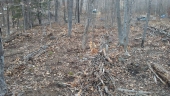
Those trees that must be downed are a gold mine. You can use them for hugelculture, heating, construction, and much more - especially still having kids at home, to help, and a pathway for machinery. Congratulations on being able to make the leap, if you need to!! Hopefully, your husband's health will be great, and you'll still have plenty of time to sort out what you want/ need to do, and how to do it. Permies is definitely the place to get all the information you could possibly want or need - and more.

Take some time, to assess your family's needs, and above all, don't try to do everything at once. That is the number 1 fastest way to burning yourself and your family out. When we bought our place, 8yrs ago (we closed on it 8yrs and 2 days ago, exactly!), I insisted we let everything grow wild, for the first year, so we could observe and see what was growing here, wild. Turns out we have acres of wild blackberries, more medicinal & culinary herbs than I would have dreamed, a peach tree, planted by the previous owners, persimmon trees, black walnut trees, a plethora of wild mushrooms, crabapples, and loads of lespedeza - an antiparasitic herb that the goats LOVE. So, we did that right!

But, we also made some mistakes - we jumped into too much livestock, too fast. We made mistakes with them, simply by not learning enough before we got them. Oh, we learned the very basics, and I had some childhood memories - but not enough. So, my fervent advice to all folks new to it all - go as slow as you can. Try to only add one new skill at a time, and make sure at least two of you are fairly proficient, before moving on to the next thing.
Good luck - and HAVE FUN!!
 
Ryan Simon
Posts: 9
Location: Kansas City MO metro
6
homeschooling fish urban
  • Likes 10
  • Mark post as helpful
  • send pies
    Number of slices to send:
    Optional 'thank-you' note:
  • Quote
  • Report post to moderator

Nancy Reading wrote:

Christopher Weeks wrote:If you end up wanting ponds and swales and hugel-mounds, you can always do those when you need them.


Unless you want them where you just planted trees!

Have you already got an idea of how you want the land to look in 10 years time? My suggestion would be to come up with the overall plan before you do too much - look at the relationship between design elements, that is what makes the difference in permaculture I think.
If you are likely to be dealing with health issues then too, you might find the aging homesteader a useful read!


After reading this one, I grabbed the property line map from my county and drew up a plan on top of it. Thank you.
 
Posts: 337
Location: Payson, Utah, US of A - Zone6B/High Desert/4500' /14" Rainfall
189
hugelkultur forest garden building seed writing greening the desert
  • Likes 9
  • Mark post as helpful
  • send pies
    Number of slices to send:
    Optional 'thank-you' note:
  • Quote
  • Report post to moderator
I'd focus on perennials first before I ever worried about annual vegetable production.

When I first started, it was tomatoes that got me. I hated tomatoes growing up, which is fair because store bought tomatoes are a nonfood, but my dad grew some fantastic heirlooms and when I was 19 he convinced me to give tomatoes another try. I bit into my first bi-color yellow/red tomato and it tasted like pineapple. "WOAH! I didn't know tomatoes could taste like a fruit."

So, I immediately dug in. Discovered permaculture the next year, and I never looked back. That was 20+ years ago.

But, I didn't get serious about perennials for another 10 years. Part of that was my living situation, but part was just an ongoing obsession with my vegetable gardens.

If I were to start today, I'd spend about $10K getting a perennial system installed from the jump, all at once, and then build within and around the system to develop annual production and the soul-soothing beauty of the floral friends over the ensuing years.

Alternatively, I'd spend that money on an education and greenhouse equipped with misting stations and other tools that support effective and efficient propagation, and I'd get a permaculture nursery rolling and then build out my system from my nursery stock.

I'd choose the former approach if I was 40+, and I'd choose the latter approach if I was under 40.
 
Nancy Reading
steward and tree herder
Posts: 14640
Location: Isle of Skye, Scotland. Nearly 70 inches rain a year
8324
6
transportation dog forest garden foraging trees books food preservation woodworking wood heat rocket stoves ungarbage
  • Likes 10
  • Mark post as helpful
  • send pies
    Number of slices to send:
    Optional 'thank-you' note:
  • Quote
  • Report post to moderator
Another thought - One thing that is worth doing sooner rather than later is collecting plants and starting seeds. If you have an idea what you want to grow - particularly pereniial vegetables. It will be far cheaper to grow from seed than to buy a whole load of plants. Even if only one comes up, you're probably quids in! Grow them in pots or a nursery bed and transplant to permanent places as your garden develops.
 
Ryan Simon
Posts: 9
Location: Kansas City MO metro
6
homeschooling fish urban
  • Likes 14
  • Mark post as helpful
  • send pies
    Number of slices to send:
    Optional 'thank-you' note:
  • Quote
  • Report post to moderator

Carla Burke wrote:Those trees that must be downed are a gold mine. You can use them for hugelculture, heating, construction, and much more - especially still having kids at home, to help, and a pathway for machinery.


After following a bit of planning advice from Nancy, I think you'll like to hear I completely forgot about the mini woods on the side of my property where we have a pathway going for machinery already. My kids like to play in it so I wrote it off as their play place, but they're even more excited to turn that into a food forest. This also means we have the even more densely packed woods at the back of the property to provide wood. There's some trees there that need to be downed for safety reasons, which is what we were going to use for the hugels in the first place.

We also have a couple of walnut trees at the front of the property opposite of the driveway from a magnolia. There's a squirrel who puts the green walnuts in front of cars to run over and open up. We call him Phineas. When we moved here, we made magnolia tea. We also have a catalpa tree and we've harvested the worms from that for fish bait.

We have some really cool trees. My kids love pulling out the plant id books and matching them.
 
Chance Lunceford
Posts: 337
Location: Payson, Utah, US of A - Zone6B/High Desert/4500' /14" Rainfall
189
hugelkultur forest garden building seed writing greening the desert
  • Likes 7
  • Mark post as helpful
  • send pies
    Number of slices to send:
    Optional 'thank-you' note:
  • Quote
  • Report post to moderator

Nancy Reading wrote:Another thought - One thing that is worth doing sooner rather than later is collecting plants and starting seeds. If you have an idea what you want to grow - particularly pereniial vegetables. It will be far cheaper to grow from seed than to buy a whole load of plants. Even if only one comes up, you're probably quids in! Grow them in pots or a nursery bed and transplant to permanent places as your garden develops.


This is great advice.
 
Chance Lunceford
Posts: 337
Location: Payson, Utah, US of A - Zone6B/High Desert/4500' /14" Rainfall
189
hugelkultur forest garden building seed writing greening the desert
  • Likes 8
  • Mark post as helpful
  • send pies
    Number of slices to send:
    Optional 'thank-you' note:
  • Quote
  • Report post to moderator

Ryan Simon wrote:

Carla Burke wrote:Those trees that must be downed are a gold mine. You can use them for hugelculture, heating, construction, and much more - especially still having kids at home, to help, and a pathway for machinery.


After following a bit of planning advice from Christopher, I think you'll like to hear I completely forgot about the mini woods on the side of my property where we have a pathway going for machinery already. My kids like to play in it so I wrote it off as their play place, but they're even more excited to turn that into a food forest. This also means we have the even more densely packed woods at the back of the property to provide wood. There's some trees there that need to be downed for safety reasons, which is what we were going to use for the hugels in the first place.

We also have a couple of walnut trees at the front of the property opposite of the driveway from a magnolia. There's a squirrel who puts the green walnuts in front of cars to run over and open up. We call him Phineas. When we moved here, we made magnolia tea. We also have a catalpa tree and we've harvested the worms from that for fish bait.

We have some really cool trees. My kids love pulling out the plant id books and matching them.


Walnuts take a long time to produce. That's a great boon.
 
master steward
Posts: 8950
Location: southern Illinois, USA
3857
goat cat dog chicken composting toilet food preservation pig solar wood heat homestead composting
  • Likes 6
  • Mark post as helpful
  • send pies
    Number of slices to send:
    Optional 'thank-you' note:
  • Quote
  • Report post to moderator
I would not plant dwarf fruit trees. I would go with full sized only.
 
master pollinator
Posts: 3034
Location: RRV of da Nort, USA
1006
  • Likes 8
  • Mark post as helpful
  • send pies
    Number of slices to send:
    Optional 'thank-you' note:
  • Quote
  • Report post to moderator

Ryan Simon wrote:.....no HOA but city laws about lawncare still apply, ....


Not really an equivalent situation since we are very rural, but the notion of "good fences make good neighbors" still applies.  If the city allows for a fence and you don't already have one, I would think about this and plan accordingly.  What I mean with this is that, if you don't plan on the fence keeping *in* animals (pets, chickens, other livestock, etc.), then the fence could be a more decorative 'white picket' type of thing.  The advantage here is that a 'sightly' picket fence will draw a lot less attention to what is growing in your yard such as an 'un-sightly' hugel....or fruit bramble.....or sunchoke stand....or...or....  None of these are unsightly to me, but neighbors....who in a suburban setting can change rapidly in both attitude and physically in moving in and moving out.....can be a real fly in the ointment of such endeavors.  I suspect the city would be less inclined to deliver ordinance notices for situations that are more hidden.  If you are planning for animals, I would go with the most 'city-approved' chain-link fence that you can tolerate looking at....and probably plant things to grow over or on it if it's just too ugly.

Yes....clay....we have thick deep clay.  But rather quickly with compost and water you can begin to develop soil that supports crop plants and other things.  There are worse things to try to grow plants in other than clay and clay holds water better during drought periods.  As an aside with clay, it has been a bit of an impediment to good apple and other fruit tree growth, so best here to consult with locals about tree varieties that grow well in your region and soil  Finally, as you are getting started....plan for where the sun is and where the shade falls...both in mid-summer and winter....since you will want to plant most of your garden annuals in full sun.  

Non garden advice:  We planted so many trees that we are now having trouble locating a good exposure of the house for active or passive solar energy.  If you have not considered how amazingly solar could impact your future, please consider--especially as the price, technology, and the plug-n-play aspect of that technology has improved IMMENSELY in the past 15 -20 years.

Good luck!
 
pioneer
Posts: 543
153
cat trees urban
  • Likes 2
  • Mark post as helpful
  • send pies
    Number of slices to send:
    Optional 'thank-you' note:
  • Quote
  • Report post to moderator
A big advantage of a low, open "picket" fence is, you're not excluding visitors of any species whom you DO want, either, I'd say?
 
Evil is afoot. But this tiny ad is just an ad:
Permaculture Voices 1, 2 and 3 - all 117 hours of video!
https://permies.com/t/voices123
reply
    Bookmark Topic Watch Topic
  • New Topic