
• Post Reply Bookmark Topic Watch Topic
  • New Topic
permaculture forums growies critters building homesteading energy monies kitchen purity ungarbage community wilderness fiber arts art permaculture artisans regional education skip experiences global resources cider press projects digital market permies.com pie forums private forums all forums
this forum made possible by our volunteer staff, including ...
master stewards:
  • Carla Burke
  • John F Dean
  • r ransom
  • Nancy Reading
  • Timothy Norton
  • Jay Angler
stewards:
  • paul wheaton
  • Pearl Sutton
  • Eric Hanson
master gardeners:
  • Christopher Weeks
  • M Ljin
gardeners:
  • thomas rubino
  • Megan Palmer
  • Benjamin Dinkel

How do you dress for the outdoors in winter?

 
Steward of piddlers
Posts: 6972
Location: Upstate New York, Zone 5b, 43 inch Avg. Rainfall
3631
monies home care dog fungi trees chicken food preservation cooking building composting homestead
  • Likes 11
  • Mark post as helpful
  • send pies
    Number of slices to send:
    Optional 'thank-you' note:
  • Quote
  • Report post to moderator
The choices seem endless when looking at options for winter wear but what actually works for you?

Puffy jackets, thermal underwear, ponchos and more are all choices of clothing for people trying to keep warm in the snow. I recently was recommended to start wearing a bib by one friend while another one swears by layering hoodies.

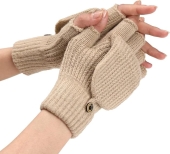
I currently am utilizing a lined carhartt coat paired with a beanie and fingerless gloves. This works for most of the cold weather in my area except for the coldest nights where my fingertips start to turn blue. I can accomplish my chores and if I start to warm up I find taking off the beanie balances out the temperature.

Share how you dress warm in the winter.

 
pollinator
Posts: 441
Location: Oz; Centre South
102
trees books cooking fiber arts writing
  • Likes 11
  • Mark post as helpful
  • send pies
    Number of slices to send:
    Optional 'thank-you' note:
  • Quote
  • Report post to moderator
I just read the Goofy Weather Swings post and can't quite believe what folks in the North have to live with.  We experience quick changes in temperature when a cold front hustles through - but nothing like those really dramatic fluctuations.  We have had Oh S**T it's raining mud, does that count?
Anyway I feel bad now having to confess that I just add an extra layer -
T-shirt/hoodie + padded vest.   Rain jacket maybe the third layer if needed to keep a fierce wind out.
 
master steward
Posts: 8031
Location: southern Illinois, USA
3034
goat cat dog chicken composting toilet food preservation pig solar wood heat homestead composting
  • Likes 8
  • Mark post as helpful
  • send pies
    Number of slices to send:
    Optional 'thank-you' note:
  • Quote
  • Report post to moderator
The older I get, the more important warm socks and gloves are.  Next in importance is a warm flannel shirt.  And, yes, more than once I have run outside to handle a crisis in the above along with my BVDs.   Both my wife and the goats can get pretty judgmental…..baaad!  Assuming my pants are on, I next grab a vest. The temp has to reach simple digits for me to put on a real coat.
 
Posts: 8
Location: Blue River, Oregon
10
  • Likes 17
  • Mark post as helpful
  • send pies
    Number of slices to send:
    Optional 'thank-you' note:
  • Quote
  • Report post to moderator
A few tips/notes on my learned experience with wilderness wear while “doing work things in the woods”. Most of the advice centers around the fact that in winter, you need to have a protective layer of air and be able to stay dry.

Latex or rubber gloves underneath regular working gloves are perfect for waterproof work.

Split cowhide gloves that are a size too large and you are invincible against blackberries and (most) cactus.

Final glove advice is to use two different kinds of gloves. You get your big fat glove that’s waterproof for your non-dominant hand, and then your small fitted working glove for your dominant hand.

Rain boots that are one size too large and double layer socks are better than snow boots any day.

sock liners or just really thin and tight socks underneath big chunky waterproof socks will keep you warm and dry, even if your shoes are not waterproof. Tested down into the 38° water of the McKenzie River for Riverside cleanup all day.

OK, get a nice rain poncho. You can put that shit over everything. Combine it with a tiny plastic foldable bench, and you will be invincible in the woods and do whatever you wanna be able to do, seated!

A couple well placed carabiners on a book bag shoulder strap serve as an umbrella holder so you can have a hands-free umbrella experience.

Do not wash waterproof bibs. I know it’s gross, but just don’t. Just buy them a little bit cheaper and be willing to get rid of them. There is not a product that can adequately waterproof them. We’ve tried them all (scotch guard, technu wash, polyurethane spray, tent waterproofed, deck sealer, plexiglass melted into alcohol and then used as a soak, egg wash,  and they only get weirder from there). We’re always open to trying something new though.

Boot dryer. It’s a necessity if you wanna work outside and wet weather.

Layer your clothing with the understanding that you might have to take that clothing off to go to the bathroom.

Have doubles of everything and maybe even triples.

A handkerchief tucked up near your chin, like a bandanna around the neck for example, that can go a long way with wiping your face or eyes without you having to take your gloves off to do it.

A hat that has been wet with snow or rain can be made dry with about 15 minutes of the car dash defroster while driving to your next destination.

If you can’t get about four hours of use out of any one waterproof thing before it starts to have leaks or if you pull your hand out of a glove and it goes inside out, get rid of it or trade it to somebody who doesn’t go as hard!!

Children’s size snow pants or waterproof boots or even snow boots at the largest size that you can get are very often found in the children’s sections at donation stores and are rarely utilized because by then most children have gone to the adult sizes. They totally fit if a person is lucky enough to be a smaller framed individual. Also, you can purchase them from stores for around half the price as adult sizes. Just make sure that the size actually fits!! There are size conversion charts for those interested. I got a pair of kids waterproof fly fishing bibs for $60 when their adult counterpart was over 300!

And be ready to get nakey and hop in the tub immediately upon return home.

And finally, good moisturizer after can be really helpful at keeping weird finger cracks from happening.

Context: I live in the cascade foothills in Oregon, where it’s very rainy in the winter. Most of my time is spent in the Willamette national Forest hunting mushrooms and making baskets or structures while out and about. Harvesting wild things take some really specific gear. And between my landscaper partner and I, we’ve had years to determine which is best. Thanks for reading! (Photo is of my son falling into a snow drift for fun because this gear was so good
IMG_9361.jpeg
[Thumbnail for IMG_9361.jpeg]
 
steward
Posts: 18190
Location: USDA Zone 8a
4627
dog hunting food preservation cooking bee greening the desert
  • Likes 6
  • Mark post as helpful
  • send pies
    Number of slices to send:
    Optional 'thank-you' note:
  • Quote
  • Report post to moderator
Same as I always dress, a skirt, t-shirt, flip flops and I add a fleece jacket.

The daytime temp might be anywhere from 40 degrees to 60 degrees, most days.
 
master gardener
Posts: 5513
Location: Carlton County, Minnesota, USA: 3b; Dfb; sandy loam; in the woods
3071
7
forest garden trees books chicken food preservation cooking fiber arts seed woodworking homestead ungarbage
  • Likes 9
  • Mark post as helpful
  • send pies
    Number of slices to send:
    Optional 'thank-you' note:
  • Quote
  • Report post to moderator
I mostly don't do much real work in the winter outdoors, so I don't have a lot of the concerns that Elizabeth gives great advice toward. What I do do is walk/hike in weather that most of you will consider cold. In the winter, it might be as warm as 40 or as low as -40. I think my coldest hike was at -30F (-34C). And I custom dress for the temp and wind. I think the key is to just have a huge variety of options. I have baselayers (longjohns) in cotton, wool, and capilene. Then I have jeans or sweats I might wear over that, and super-insulated all synthetic moon-pants that I can wear over that (or over nothing). I also have those unders as uppers, which can have a t-shirt, flannel shirt, synthetic anorak, and/or down parka. I have knitted wool hats from very light to extremely warm, including ski-masks. I have several scarves from medium to heavy weight for when it's really cold. Hat/scarf combo can be over-topped with the parka hood and velcroed shut in front. If it's driving snow, or I'm snow-blowing in the wind, I might wear ski-goggles. And sometimes I want a brim for the sun (or rain) and I'll work my Tilley hat into the day's protocol. I have thick and thin wool socks and saved produce bags for water-proofing my feet. Any combination of those things might go into sneakers, hiking boots, or farm boots. (Or I might go barefoot the 100 feet to the mailbox.) I might tuck my sleeves down around my bare hands or I might wear any of five pairs of gloves or mittens, including thin wool baselayer under others. And if it's not very cold but wet and gloopy, I have a rain coat -- I bought the largest women's size REI had because it had the features I wanted and no men's coat did (remember that's an option), and a rain poncho.
 
Steward and Man of Many Mushrooms
Posts: 5990
Location: Southern Illinois
1830
transportation cat dog fungi trees building writing rocket stoves woodworking
  • Likes 10
  • Mark post as helpful
  • send pies
    Number of slices to send:
    Optional 'thank-you' note:
  • Quote
  • Report post to moderator
Lots of good information here.  I especially like the specifics mentioned by Elizabeth Cramer.  She mentioned a lot of the things I was going to say.

But my version looks like this:

Dress in Layers!!  Specifically, this means a three layer system for the arms, legs, trunk.

1st layer--Keeps you dry.  This is a thin layer that sits right on your skin.  It should be comfortable to your skin--whatever that means to you.  Generally that breaks down to either silky smooth or soft & fuzzy.  Either one can be a winner.  Some examples--

**Silk--sounds strange, but it is an old, cold-weather hack.  It is very thin.  It is definitely comfortable on the skin.  And it does not hold moisture in any meaningful form
**Modern artificial silk alternatives--comfort is similar to silk.  Not as fragile as silk.  Holds less moisture than silk
**Merino Wool--Soft, warm, fuzzy, dry.  Hard to go wrong here.  Might be so warm that one overheats!  It can happen.
**Wool artificial alternative--does for wool what artificial silk does for Silk
**NOTE:  Some types of compression gear might apply here.  Opinions vary

2nd Layer--Keeps you warm--Adds bulk.  Traps air.  This is what most people think of when thinking about cold weather.
**Down--THE classic filler for extreme weather coats and jackets.  When really puffy, it fills around holes *inside* jacket and presses against body--NO AIR MOVMENT!  GOOD!
**Wool--Similar to down buy typically not as bulky.  Really advantageous in wet weather.
**Polar fleece--artificial, true, but extremely warm and positively water resistant!  A great layer under a jacket!

3rd Layer--Blocks winds--This is probably the single most forgotten part of the three-layer system!
****Probably this is built into a Jacket/Coat.  
****To test, put jacket/coat up to mouth, press in close and exhale forcefully.   If you can blow through it, it is NOT windproof and whatever other quality it has, it will fail in wind.  
****You will NOT be able to blow through a wind-proof jacket.  If wind-proof, you can probably handle any cold.  If not, you will get very cold.


You can definitely customize.  Two first layers.  A bulky layer under a down jacket.  I used to wear a down jacket under a very old winter coat.  The down jacket was old--my father's in college.  The coat was new five years ago but the padded insulation gone flat.  But the outer shell was still durable and windproof and without the insulation, it felt huge and empty inside.  The old down and new shell were amazing together!

Take care of feet--good socks and good, insulated, waterproof boots.  

Gloves should also be water and wind proof while having good insulation.  Look at snowmobile gear!  Cabela's catalogue is an excellent source.  

And of course, headwear is important.  Protect the ears, cheeks, nose.  There are numerous variations on the theme and again, layering might be the best option.  A balaclava is a good option.  But my go-to has been a stocking cap that I bought with my employee discount back when I was in college!  The list price was $5.  I got 10% off.  I purchased it in 1994.  It is still going very very strong.  I have used it through blizzards, extreme cold, for classes at school, and all sorts of other cold-weather activities.  Its been great!


Feel free to add to this list!


Eric
 
Posts: 81
Location: Colorado Springs, CO [Zone: 5B/6A]
14
hugelkultur goat fungi gear hunting earthworks building writing woodworking
  • Likes 8
  • Mark post as helpful
  • send pies
    Number of slices to send:
    Optional 'thank-you' note:
  • Quote
  • Report post to moderator
layers, layers, layers...

The weather here changes so often, I make sure I wear layers upon layers so I can remove some if needed. Like today, it's starting out around 38 degrees Fahrenheit (3.3 C) and is supposed to get into the mid-60s (15.5+ C) with lows at night in the 20s. And who knows, we may have some rogue snow storm move in randomly.
 
Posts: 122
Location: Nova Scotia
18
  • Likes 12
  • Mark post as helpful
  • send pies
    Number of slices to send:
    Optional 'thank-you' note:
  • Quote
  • Report post to moderator
I have little 'winter' clothing except overmitts, just layers.

Wicking undershirt, not cotton.
Wicking underpants with pouch; frost bitten bits are a thing.
Polypropylene undersocks and undergloves.
Wool or wool blend long johns and long sleeve t shirt.
Wool blend socks.
Snickers work pants with knee pads; keeps knees warm and dry.
Possibly another top layer
or two.
Windproof shell if risk of wet, or wool jacket.
3 tubular buffs; one like a balaclava tube, one around neck, one on top.
Compressed down jacket, extra mitts & rain pants in pack.
Snickers work gloves and insulated leather overmitts;  mitt linings must remove to dry.
Grisport work boots with Neos overshoes.

I avoid vests b/c my core is warm but my hands are not;  good arm & wrist coverage helps.
My climate ranges +10 to -20C, sometimes -30C.
 
master rocket scientist
Posts: 6947
Location: latitude 47 N.W. montana zone 6A
3947
cat pig rocket stoves
  • Likes 9
  • Mark post as helpful
  • send pies
    Number of slices to send:
    Optional 'thank-you' note:
  • Quote
  • Report post to moderator
Of course, hats, gloves, proper socks, and footwear.
I am a big fan of high-zipper insulated bibs.
If it is truly winter weather, I use an insulated jacket as well.
The bibs are fast and easy to put on and take off, and they dry quickly near the wood stoves.

At home, when using bibs, I do not require (or want) long johns.
When working construction all day, long johns allowed removal of the bibs during the warm portion of the workday.
 
Eric Hanson
Steward and Man of Many Mushrooms
Posts: 5990
Location: Southern Illinois
1830
transportation cat dog fungi trees building writing rocket stoves woodworking
  • Likes 8
  • Mark post as helpful
  • send pies
    Number of slices to send:
    Optional 'thank-you' note:
  • Quote
  • Report post to moderator
Douglass--

I am going to second what you stated about the no-cotton recommendation for the first layer.  I should have included that specification in my post.  Actually, when it comes to *really* dressing for cold, I don't want cotton to be a part of the conversation at all.  I had a little (mostly vicarious) experience with mountain climbing and they swore by the phrase "cotton kills."  Most of those guys (and ladies) would not wear cotton *ANYTHING*!  Cotton goes from being too warm to too wet to too cold too quickly.  Cotton *feels* like a great fabric, and is skin friendly and breathable--as long as one is sitting and not doing anything.  But the moment that one starts moving and exercising, that cotton heats of FAST and leads to a lot of sweat which gets soaked up by the cotton.  This is not good.  The last thing one wants in a cold environment is to have a wet towel draped right next to the skin!  Almost any other fabric is better.  Ideally, a wicking layer next to the skin is preferable.  The exact form of this wicking layer varies from person to person.  As of late, I have had some compression gear (needed for other purposes--Restless Leg Syndrome being among them)--that works very well as the first layer.  I like it, but again, opinions vary.


Eric

 
Posts: 33
11
transportation books earthworks wofati building homestead
  • Likes 9
  • Mark post as helpful
  • send pies
    Number of slices to send:
    Optional 'thank-you' note:
  • Quote
  • Report post to moderator
As a Texan I don't encounter the same extreme low temperatures as y'all in "Da Great White Nort", but because of that I also don't get as much of a chance to acclimate to the cold. The biggest issue for me, is the temperature swing from inside to out, that I encounter many times a day. I can dress for the cold, or I can dress for inside temperatures, but having to go back and forth is where I find the biggest challenge, especially since I'm regularly going in and out working maintenance; if I was changing from mud boots, etc. to slippers then it wouldn't be as big a deal to shed some lower layers, but since I'm normally keeping my shoes on and going in and out of office buildings, its more difficult/inappropriate to shed those layers.

What's worked for me is dressing for the expected outdoor weather below the waist, and adding/subtracting layers above the waist as needed for indoor/outdoor comfort:

Lower layers that are difficult to add/subtract throughout the day normally looks like adding wool/thicker socks over my regular pair, and some combination of flannel lined work pants and long johns (one or the other if it's staying above freezing, or both if going much below). If it's going to be really cold and/or I'm going to be outside for a long time I also add insulated overalls or coveralls that can be removed/added without having to take shoes/boots off.

Upper layers end up being some combination of sweaters, sweatshirts, jacket or heavy coat to suit the outside temperature; that all end up removed down to a T-shirt &/or button-down work shirt if I'm staying inside for any length of time.

Gloves, I haven't yet found a good solution; my fingers get cold easily, and I don't have the dexterity I need with gloves on, so I find myself regularly putting on and taking off gloves once the temperature is maybe 40's and lower.
 
Eric Hanson
Steward and Man of Many Mushrooms
Posts: 5990
Location: Southern Illinois
1830
transportation cat dog fungi trees building writing rocket stoves woodworking
  • Likes 9
  • Mark post as helpful
  • send pies
    Number of slices to send:
    Optional 'thank-you' note:
  • Quote
  • Report post to moderator
One other thought----

For reasons that will always be a mystery to me, when talking about layering, people seem to intuitively understand and implement the idea reasonably well above the waist.  But for me, if I get cold, the first part of me that will get cold will be my legs.  Perhaps it is because of my general body shape--my legs are long and kinda skinny--a perfect radiating surface/shape.  I see many people dress for cold very well, but seemingly forget that they have legs.

Part of this near obsession for me might be due to an experience I had in my first semester at college.  I was a flight major and I had to walk across a rather large campus to get to the shuttle bus that ran to the airport.  

That was in the fall of 1989.

That year a polar blast of cold air poured down from the arctic, across the Canadian Plains and deep into the Midwest.  If anyone cares to look at the map, North America is the only place in the world where a single, relatively flat, mountain-free landmass connects the Arctic to the Tropics (and thus Midwestern tornadoes!!).  It is also why the United States is much colder than the Mediterranean Sea, despite being at a similar latitude (Europe is well north of the United States).  I was going to college in Southern Illinois, a region known for mild winters and barely any snow.  I left for school thinking that a simple wind-breaker would be sufficient.  I was also 18 and my whole senior year at High School, I had such a robust appetite and metabolism that I never got cold, even in the much colder winters of Central Illinois (Northern Illinois is only marginally colder than Central Illinois by comparison).  Therefore I never considered cold-weather gear.

But there was that cold.  The temperatures dropped below zero in December and stayed there till the end of the semester.  I still had to catch that bus, which was always late because of the cold!  I layered with what I had--a T-shirt, a thick sweatshirt, and a windbreaker.  I was freezing-cold miserable standing there waiting for the (hour-late) bus to get there, just to find that the weather prohibited flying and then I came back!  My legs got intensely cold at this point and from then on I have always looked for ways to keep my legs warm as they get so cold so easily.

One of the single most effective techniques I have is simply to put on a waterproof nylon shell pants over my other pants.  These are just a shell--no insulation at all.  I got them from Columbia (the catalogue, not the country).  Even if I am only wearing a pair of jeans, that simple shell does a LOT to keep me warm simply by blocking the wind.

I can hardly say enough about how important it is to keep legs warm, and the best way to do that is to block wind.  Those shell pants are amazing and are a standard part of my cold gear.


Eric
 
Eric Hanson
Steward and Man of Many Mushrooms
Posts: 5990
Location: Southern Illinois
1830
transportation cat dog fungi trees building writing rocket stoves woodworking
  • Likes 7
  • Mark post as helpful
  • send pies
    Number of slices to send:
    Optional 'thank-you' note:
  • Quote
  • Report post to moderator
Andrew--

You pretty much nailed the layering concept, which is pretty good since you don't experience the really deep cold.  But that does not really matter--as you point out--because you can't acclimate to the cold.  Long-johns are a pretty good start.  My suggestion:  Don't go for the standard waffle pattern cotton long-johns for all the reasons mentioned previously.  There are better options.  I purchased these from Amazon:

https://www.amazon.com/Roadbox-Thermal-Underwear-Men-Thermals/dp/B0D8HZSGP3/ref=pd_ybh_a_d_sccl_73/136-6728180-2216168?pd_rd_w=6VsV2&content-id=amzn1.sym.67f8cf21-ade4-4299-b433-69e404eeecf1&pf_rd_p=67f8cf21-ade4-4299-b433-69e404eeecf1&pf_rd_r=2A7RXRM3Q8PJBZFJAYFS&pd_rd_wg=bix8O&pd_rd_r=8ddb264f-a934-40ed-a988-6fc8c13e1ae1&pd_rd_i=B0D8HZSGP3&th=1&psc=1

At $20 for the set, its hard to go wrong.  They were cheap, surprisingly warm for being so thin, feel soft and fuzzy-cozy on the skin and are just about perfect for layering.

If you can find it, I mentioned in the post before yours the pants shell that I found through Columbia.  They are sort of oversized and are very easy on-off.  I regularly put them on-off over my boots & Jeans.

For gloves, consider something from Cabela's.  Especially a thick, insulated glove.  They are huge, but they keep hands & fingers nice & warm.

For the jacket/coat, make certain it is wind-proof.  Never ever go with a denim jacket--denim won't stop anything!


Hope this helps!


Eric

I could go on more about  
 
Andrew Welser
Posts: 33
11
transportation books earthworks wofati building homestead
  • Likes 4
  • Mark post as helpful
  • send pies
    Number of slices to send:
    Optional 'thank-you' note:
  • Quote
  • Report post to moderator

Eric Hanson wrote:Douglass--

I am going to second what you stated about the no-cotton recommendation for the first layer.  I should have included that specification in my post.  Actually, when it comes to *really* dressing for cold, I don't want cotton to be a part of the conversation at all.  I had a little (mostly vicarious) experience with mountain climbing and they swore by the phrase "cotton kills."  Most of those guys (and ladies) would not wear cotton *ANYTHING*!  Cotton goes from being too warm to too wet to too cold too quickly.  Cotton *feels* like a great fabric, and is skin friendly and breathable--as long as one is sitting and not doing anything.  But the moment that one starts moving and exercising, that cotton heats of FAST and leads to a lot of sweat which gets soaked up by the cotton.  This is not good.  The last thing one wants in a cold environment is to have a wet towel draped right next to the skin!  Almost any other fabric is better.


Do y'all have recommendations for non cotton long johns? I much prefer the cotton "waffle knit" ones, but the only other type I've tried have been some kind of thin poly/synthetic that seems to make me more prone to sweat and don't wick it away.
 
Eric Hanson
Steward and Man of Many Mushrooms
Posts: 5990
Location: Southern Illinois
1830
transportation cat dog fungi trees building writing rocket stoves woodworking
  • Likes 6
  • Mark post as helpful
  • send pies
    Number of slices to send:
    Optional 'thank-you' note:
  • Quote
  • Report post to moderator
I know that I am saying a lot about cold weather clothing, I just wanted to give a little bit of background:

Today I live in Southern Illinois--not a cold weather place.  When we do get cold, typically it is called the "wet cold."  Think 35 degree rain.  Yuck!  I will take a blizzard over 35 degree rain any day!

I grew up in Central Illinois--same state, but it certainly feels like it is a world away.  The climate is different, most notable the winter.  Growing up, I can remember that there seemed to be at least one 2-day stretch where the low temp got to -20F.  Or lower.  That's definitely a different cold than the 35 degree rain.  Personally I loved it and that cold never stopped me from going outside for any reason.

The coldest temperatures I have ever felt was -35F.  That was definitely cold.  And the wind HOWLED!!!  But we went out into the cold, windy darkness and we were perfectly warm because we dressed for the weather.

I have always been a cold-weather person.

Southern Illinois is my true home now, but at times I do miss the cold.

Thus, whenever I do feel even a little chill, I break out the winter weather gear, mostly out of nostalgia!


Eric
 
Eric Hanson
Steward and Man of Many Mushrooms
Posts: 5990
Location: Southern Illinois
1830
transportation cat dog fungi trees building writing rocket stoves woodworking
  • Likes 5
  • Mark post as helpful
  • send pies
    Number of slices to send:
    Optional 'thank-you' note:
  • Quote
  • Report post to moderator
Andrew, did you check the link in the post I made above your question?  I made a specific link to a pair of long-johns that I find to be pretty close to ideal.

https://www.amazon.com/Roadbox-Thermal-Underwear-Men-Thermals/dp/B0D8HZSGP3/ref=pd_ybh_a_d_sccl_73/136-6728180-2216168?pd_rd_w=6VsV2&content-id=amzn1.sym.67f8cf21-ade4-4299-b433-69e404eeecf1&pf_rd_p=67f8cf21-ade4-4299-b433-69e404eeecf1&pf_rd_r=2A7RXRM3Q8PJBZFJAYFS&pd_rd_wg=bix8O&pd_rd_r=8ddb264f-a934-40ed-a988-6fc8c13e1ae1&pd_rd_i=B0D8HZSGP3&th=1&psc=1


And if you are referring to those poly-itching waffle type of long johns that seem to be everywhere--yeah, I find those to be next to useless.  The DON'T feel good on the skin.  I don't think that they are especially warm.  I really don't see that they are worth any amount of money.


Eric
 
Christopher Weeks
master gardener
Posts: 5513
Location: Carlton County, Minnesota, USA: 3b; Dfb; sandy loam; in the woods
3071
7
forest garden trees books chicken food preservation cooking fiber arts seed woodworking homestead ungarbage
  • Likes 7
  • Mark post as helpful
  • send pies
    Number of slices to send:
    Optional 'thank-you' note:
  • Quote
  • Report post to moderator

Andrew Welser wrote:Do y'all have recommendations for non cotton long johns? I much prefer the cotton "waffle knit" ones, but the only other type I've tried have been some kind of thin poly/synthetic that seems to make me more prone to sweat and don't wick it away.


These are a good starting place: https://www.smartwool.com/en-us/wool-apparel-and-socks/merino-250
 
Rusticator
Posts: 9436
Location: Missouri Ozarks
5122
7
personal care gear foraging hunting rabbit chicken cooking food preservation fiber arts medical herbs homestead
  • Likes 6
  • Mark post as helpful
  • send pies
    Number of slices to send:
    Optional 'thank-you' note:
  • Quote
  • Report post to moderator
I grew up around the Great Lakes - mostly the Chicago 'burbs, but also in the MI 'mitten', directly across Lake Michigan, from Chicago (not far from South Haven). In fact, I moved from the IL side to the MI side, during the first day of the locally famous blizzard of '77, the day after Thanksgiving - the epitome of 'lake effect' snow, driving around the lake! I was 13, that winter - I grew up farming & playing in layers. Cold & snow were no excuse to stay inside.

If you're struggling with cold legs, one of the first things to put on (right after your 'drawers') is panty hose. Preferably a pair that claims to be indestructible. Take care of those toenails & rough heels, first. Many military personnel who are stationed in cold climates swear by them.
So your layers would be; underwear, panty hose, long underwear, pants, then a wind-breaking shell, like Eric mentioned, and/or snow pants/cover-alls. I do love my carhartt or dickies coveralls.
 
Eric Hanson
Steward and Man of Many Mushrooms
Posts: 5990
Location: Southern Illinois
1830
transportation cat dog fungi trees building writing rocket stoves woodworking
  • Likes 5
  • Mark post as helpful
  • send pies
    Number of slices to send:
    Optional 'thank-you' note:
  • Quote
  • Report post to moderator
Carla,

I have heard about the pantyhose hack more than once from multiple sources.  I have never tried it myself, but I have considered it at times.  Its not that I didn't get up the nerve, but rather that I had other options than in my opinion would have been better.

If I am in extreme cold-weather, my typical cold-weather layering gear goes something like:

Compression gear (long pants and long-sleeved shirt).  This was originally for my Restless Leg Syndrome, but it is comfortable against the skin (somewhat like a silk layer) and it does help wick moisture.  Over that I will put on some type of long underwear.  I have some Under Armor which were/are great.  But recently on a whim I bought the pair that I linked above and they are my new favorite.  They are surprisingly warm for being fairly thin.  Over that I layer Polartec fleece pants.  These are WARM!  In fact, if am walking around or doing even light exercise I might skip these as I can overheat.  But if I am standing still or sitting on my tractor while clearing snow, these are essential.  Over that goes my shell which is not an insulation but does block wind. If I need protection beyond that, I will put on snowmobile bibs (without the previously mentioned shell layer).  Very little cold makes its way through these.  Alternatively, I might put on Carhart's.

My compression layer basically fits the function filled by your pantyhose--something that adds a layer without adding any bulk.  As I said, I have never tried, but certainly, if I needed, I would not hesitate.


Eric
 
Andrew Welser
Posts: 33
11
transportation books earthworks wofati building homestead
  • Likes 5
  • Mark post as helpful
  • send pies
    Number of slices to send:
    Optional 'thank-you' note:
  • Quote
  • Report post to moderator

Eric Hanson wrote:Andrew, did you check the link in the post I made above your question?  I made a specific link to a pair of long-johns that I find to be pretty close to ideal.

https://www.amazon.com/Roadbox-Thermal-Underwear-Men-Thermals/dp/B0D8HZSGP3/ref=pd_ybh_a_d_sccl_73/136-6728180-2216168?pd_rd_w=6VsV2&content-id=amzn1.sym.67f8cf21-ade4-4299-b433-69e404eeecf1&pf_rd_p=67f8cf21-ade4-4299-b433-69e404eeecf1&pf_rd_r=2A7RXRM3Q8PJBZFJAYFS&pd_rd_wg=bix8O&pd_rd_r=8ddb264f-a934-40ed-a988-6fc8c13e1ae1&pd_rd_i=B0D8HZSGP3&th=1&psc=1


And if you are referring to those poly-itching waffle type of long johns that seem to be everywhere--yeah, I find those to be next to useless.  The DON'T feel good on the skin.  I don't think that they are especially warm.  I really don't see that they are worth any amount of money.


Eric


I did see your link after I made my last post, I think we were typing/posting at the same time. You said the linked long johns feel fuzzy; the fabric on what I have that I don't like is more like a T-shirt, but poly, not cotton; only the cotton ones I like are waffley. I'll have to give those a try.

And how could I have forgotten the most important layer: a knit cap!
 
Eric Hanson
Steward and Man of Many Mushrooms
Posts: 5990
Location: Southern Illinois
1830
transportation cat dog fungi trees building writing rocket stoves woodworking
  • Likes 4
  • Mark post as helpful
  • send pies
    Number of slices to send:
    Optional 'thank-you' note:
  • Quote
  • Report post to moderator
Andrew,

Yeah, we probably cross-posted.

The long-johns that I have are not terribly far from a T-shirt.  I think that they have a soft & fuzzy interior.  They are fairly thin, but I am really surprised by how warm they are given that they don't really have much bulk.  This is a really good feature because it allows for more layering.

One note that I thought that I should add:  I tend to like fabrics that are smooth/silky for skin-friendliness, but even more for ease-of-layering.  If I am layering, it is always easier to layer over a silky/smooth layer than a soft & fuzzy layer (SFL).  Both feel good against the skin, but the layers will inevitably rub against each other and if they are the SFL, the tend to bunch up.  They become harder to take off and put back on.  Sometimes I have had layers that are SLF on one side and Silky Smooth (SS) on the other.  My Under Armour long johns from a few years ago are a great example of being SFL on one side and SS on the other--just about perfect for layering.  Truthfully, those old Under Armour long johns were among the best I have ever had.

But back to your preference--were those poly-synthetic long johns that you disliked scratchy and itchy?  Or did they just make you sweat and then not remove the moisture?


Eric
 
pollinator
Posts: 4201
Location: Tennessee 7b
343
  • Likes 9
  • Mark post as helpful
  • send pies
    Number of slices to send:
    Optional 'thank-you' note:
  • Quote
  • Report post to moderator
What is the task?  My shell layer is very different when “nature hiking” versus chores/construction versus hunting.

When I can afford it, I usually buy Scandinavian brands for winter gear—they still make gear that works without plastic.

 
Eric Hanson
Steward and Man of Many Mushrooms
Posts: 5990
Location: Southern Illinois
1830
transportation cat dog fungi trees building writing rocket stoves woodworking
  • Likes 6
  • Mark post as helpful
  • send pies
    Number of slices to send:
    Optional 'thank-you' note:
  • Quote
  • Report post to moderator
R Scott,

Yes!  Task-specific dress is paramount.  I dress differently if I am walking as opposed to if I am sitting.  One of my coldest experiences was duck hunting.  I had layers--they were just terrible layers.  I had long-johns, but they were nothing special.  Over that I had plain old blue-jeans--not at all good.  Over that I had some snowmobile bibs which *should* have been good, but these must have been the cheapest, most pathetic snowmobile bibs I have ever worn.  

I sat out in the blind with two other people.  I was on the end--they had a little propane heater.  I had a wet dog for companionship.  At least I wasn't the dog.


Eric
 
steward & manure connoisseur
Posts: 4722
Location: South of Capricorn
2702
dog rabbit urban cooking writing homestead ungarbage
  • Likes 9
  • Mark post as helpful
  • send pies
    Number of slices to send:
    Optional 'thank-you' note:
  • Quote
  • Report post to moderator
Most of what I know has already been said here, but I want to underscore the idea of pantyhose/tights as a fabulous base layer. I often used opaque "guaranteed not to run" dress tights rather than pantyhose, and more often running tights under my pants when I had to dress for snow (as a former cross country runner, i always had tights around).
Another thing I really can't say enough about is arm gaiters. On the inside, covering your shirt sleeve up to your wrist, a tighter pair of knit gaiters (I often buy used little girls' fleece tights and cut them up for this, but recently I bought a pair of "compression sleeves" that work just as well), or on the outside a pair of waterproof gaiters, if you are going to be doing something wet.

Theoretically I moved to South America to avoid these sort of situations (after spending my first 25 years in very snowy places), but they come in handy even in not-life-threatening cold.
 
Douglas Campbell
Posts: 122
Location: Nova Scotia
18
  • Likes 5
  • Mark post as helpful
  • send pies
    Number of slices to send:
    Optional 'thank-you' note:
  • Quote
  • Report post to moderator
Stanfields in Nova Scotia have a wide range of long johns.
IceBreaker from New Zealand are also good, comparable to SmartWool.

For indoor/outdoor I usually just wear my long johns in the house;  I figure I am still more covered than many of the local students on the streets...
cheers Doug
 
Andrew Welser
Posts: 33
11
transportation books earthworks wofati building homestead
  • Likes 6
  • Mark post as helpful
  • send pies
    Number of slices to send:
    Optional 'thank-you' note:
  • Quote
  • Report post to moderator

Eric Hanson wrote:
The long-johns that I have are not terribly far from a T-shirt.  I think that they have a soft & fuzzy interior.  They are fairly thin, but I am really surprised by how warm they are given that they don't really have much bulk.  This is a really good feature because it allows for more layering.

were those poly-synthetic long johns that you disliked scratchy and itchy?  Or did they just make you sweat and then not remove the moisture?

Eric


They're not scratchy/itchy, if I remember correctly  I would sweat and it didn't seem to be removing it, but that also could have been an issue with the material of my underwear, and/or over dressing for the temperature. I wore a pair for the first time this winter a couple days ago and didn't have any issues, so it may have been user error in the past; plus I sweat easily when I get overheated.

Also, I checked the tags on a few of the waffly ones, and they're at least 50% poly, not mostly cotton like I had been thinking; but even a low percentage of cotton can be bad in winter clothing?

I have a few different brands of poly long johns, but your description above was a good match to the pair I wore the other day; in retrospect I may have not been expecting the same warmth out of them as the waffly ones, so I was probably overdressing then overheating. I'll experiment more with them this winter.
 
R Scott
pollinator
Posts: 4201
Location: Tennessee 7b
343
  • Likes 7
  • Mark post as helpful
  • send pies
    Number of slices to send:
    Optional 'thank-you' note:
  • Quote
  • Report post to moderator
Cotton holds moisture and will chill you quickly if you get caught in the wind, but it’s not the life-threatening danger if you just doing chores and have a warm house to retreat to, not like camping or hunting when you can’t just add external heat to solve the problem.

Hillary topped Everest wearing cotton base layers, the weave of the fabric matters more than the material when it comes to warmth and moisture management.

There are different grades of poly just like wool. Finer gauge fibers are more expensive and fragile, but feel better.  
 
pollinator
Posts: 96
47
2
  • Likes 7
  • Mark post as helpful
  • send pies
    Number of slices to send:
    Optional 'thank-you' note:
  • Quote
  • Report post to moderator
winter wear, hmm i usually run a bit warm since i'm naturally insulated (fat).  For the brisk 5am walks with dog it's usually boxer's & tee shirt (what i roll out of bed in) boots if snow is deep, if snow is low, slip on shoes are sufficient. The dog is only interested in <5 minute walks in the early morning.  For daily outdoor extended chores:  deer skin gloves, wool hat, dry boots, jeans & i choose to light layer the upper half so i can un button waxed cotton jacket and or flannel shirt as i warm up. if it's below 20 deg f  I'll add scarf, flannel lined jeans, and wool liners to oversized leather gloves. The trick for me is keeping feet dry and warm. Head warm but not too warm, and the rest of the body seems to regulate to the temps.
 
Posts: 5
3
  • Likes 5
  • Mark post as helpful
  • send pies
    Number of slices to send:
    Optional 'thank-you' note:
  • Quote
  • Report post to moderator
To enjoy the cold, copy the eskimos, or traditional folks from the far north, they are masters of comfort in the cold. They have designed the perfect hood; use many kinds of furs; snug around the wrists and neck/face where the warmth rises out. Incredible lightweight foot gear.
 
Posts: 42
23
  • Likes 5
  • Mark post as helpful
  • send pies
    Number of slices to send:
    Optional 'thank-you' note:
  • Quote
  • Report post to moderator
Madawasca (Ontario Canada) gets pretty cold: -30 to -40C is not uncommon in the deep winter. (I used to live in Temiskaming, which is much farther north and hits those temps regularly, plus wind off the frozen lake. Brrr.)

Luckily there are recent technological advances. Aerogel jackets are starting to become available: silicon aerogel is hydrophobic and insulates better than anything else we have yet to discover on Earth. A half-centimeter layer should perform better than a big poofy coat. It's also very tough and does not degenerate under any conditions you are likely to encounter. A well-made jacket should last forever (probably comes down to the zippers).

Still doing my product research on that one, though. Lots of companies *say* they use aerogel...

Currently I wear a 20-year-old MEC thinsulate parka over a heavy hoodie. Something like $300 when I bought it for commuting in Ottawa winters, but it is still the warmest coat I have ever owned. Not perfectly waterproof anymore, but it does a reasonable job at keeping the wet off, and I could theoretically retreat it.

I am having success with my new neoprene "Bogs" boots. Bought a size up so I can comfortably wear a second pair of thick socks. Love the big indestructible pull-on loops! Actually the whole construction seems pretty indestructible for all that they are so light.

When I have to walk the kids to their bus on a cold morning, or we are out in the woods for solstice circle (where we don't move around much for a couple of hours) I wear my big double-layer medieval cloak over my regular winter gear. The girls just huddle in under it with me, and we can generally wait it out without too much whining.

Also makes me look like a wizard, so bonus there.

We all generally wear insulated work gloves and/or heavy lined mitts made by our local leatherworker genius.
 
I don't have to be what you want me to be --Muhammad Ali ... this tiny ad is coming for you:
Learn Permaculture through a little hard work
https://wheaton-labs.com/bootcamp
reply
    Bookmark Topic Watch Topic
  • New Topic