• Post Reply Bookmark Topic Watch Topic
  • New Topic
permaculture forums growies critters building homesteading energy monies kitchen purity ungarbage community wilderness fiber arts art permaculture artisans regional education skip experiences global resources cider press projects digital market permies.com pie forums private forums all forums
this forum made possible by our volunteer staff, including ...
master stewards:
  • Carla Burke
  • Nancy Reading
  • John F Dean
  • r ransom
  • Jay Angler
  • Timothy Norton
stewards:
  • paul wheaton
  • Pearl Sutton
  • Tereza Okava
master gardeners:
  • Christopher Weeks
  • M Ljin
gardeners:
  • thomas rubino
  • Jeremy VanGelder
  • Megan Palmer

Arborist Chips

 
Steward of piddlers
Posts: 7633
Location: Upstate New York, Zone 5b, 43 inch Avg. Rainfall
4252
monies home care dog fungi trees chicken food preservation cooking building composting homestead
  • Likes 18
  • Mark post as helpful
  • send pies
    Number of slices to send:
    Optional 'thank-you' note:
  • Quote
  • Report post to moderator
"One man's trash is another man's treasure ." - Unknown

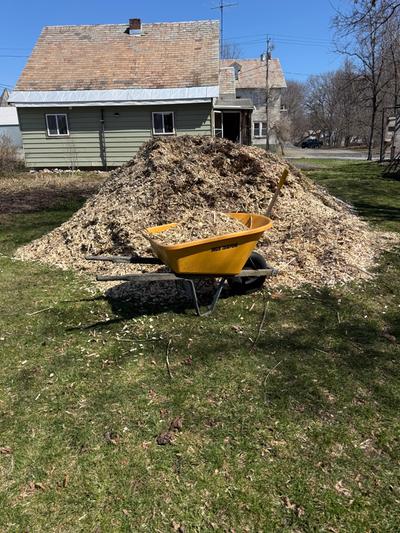
Arborist chips are an organic wood chip substance sourced from the work of tree cutters/arborists. This material is generally made up of trunk, branches, bark and leaves that are removed from a worksite. These chips can be obtained, sometimes, for free through direct communication with arborist companies or through services that connect arborists with drop off sites due to many arborists incur a cost to dispose of the chips otherwise. The chips are varied in size and can be made up of a mixture of species depending on the work the arborist has.

Arborist Chips


Arborist chips provide soil erosion protection, conserves water, suppresses weed germination and provide a slow release of nutrients as it naturally breaks down over time. The chip size being non-homogenous assists the mulch into locking together in place so it stays where it is intended to be. Over time, soils underneath a mulch layer have shown to have reduced impaction, increased permeability and moderated temperature swings.

I find it beneficial to note that softwood chips tend to break down much faster than hardwood chips. Depending on their intended usage and availability, it might be best to fit your chip to your task. In my mind beggar's can't be choosers and I have a history of using whatever I can get my hands on. I like using softwood chips for my chicken run to balance out their manures while using hardwood chip for my perennial spaces to provide longer-term mulch.

Related Threads
All the Great Things About Wood Chips
 
pollinator
Posts: 880
Location: Appalachian Foothills-Zone 7
222
  • Likes 14
  • Mark post as helpful
  • send pies
    Number of slices to send:
    Optional 'thank-you' note:
  • Quote
  • Report post to moderator
Been using chips for years to build dark, rich soil.  Overall a great resource.  Downsides I have noticed are that the resulting soft soil is a vole paradise, also makes it easier for trees to blow down.  I still mulch the veg garden heavily, but trees just get a very light/broad application now.
 
Timothy Norton
Steward of piddlers
Posts: 7633
Location: Upstate New York, Zone 5b, 43 inch Avg. Rainfall
4252
monies home care dog fungi trees chicken food preservation cooking building composting homestead
  • Likes 11
  • Mark post as helpful
  • send pies
    Number of slices to send:
    Optional 'thank-you' note:
  • Quote
  • Report post to moderator
It is generally recommended, at a minimum, to have four inches of arborist chips to gain most of the benefits of their mulching effects. I have found weeds start to pop up when the mulching layer is under four inches thick. Luckily, the soil underneath is so nice that the weeds tend to pop right up when weeded.

To note, fresh wood chips lose size quickly and a person can expect whatever volume of fresh chip that they put down to reduce by around fifty percent in a months time. Personally, I put down around twelve inches of fresh wood chips in newly established areas in anticipation for it to mellow out to four to six inch future depth.
 
Timothy Norton
Steward of piddlers
Posts: 7633
Location: Upstate New York, Zone 5b, 43 inch Avg. Rainfall
4252
monies home care dog fungi trees chicken food preservation cooking building composting homestead
  • Likes 12
  • Mark post as helpful
  • send pies
    Number of slices to send:
    Optional 'thank-you' note:
  • Quote
  • Report post to moderator
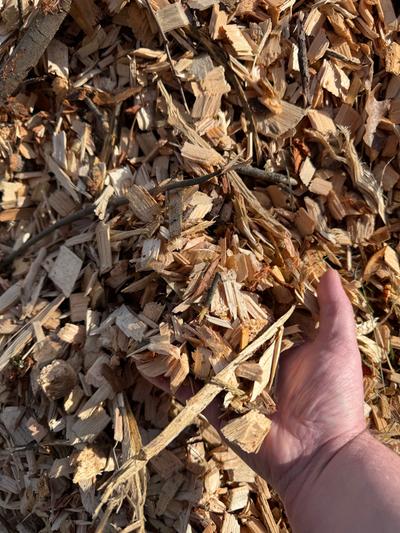
Arborist chip, as previously mentioned, is made up of all of the parts of trees sent through some kind of machinery that turns it into chips. There are two types of implements that chippers utilize known as knives and hammers. The knives of a wood chipper slice wood into chips at a high speed against a stationary anvil. Wood chipper hammers smash materials in a chamber until it can pass through a screen of particular size. This renders a fine semi-consistent mulch material when utilized. Blades require periodic sharpening and hammers may require replacement with use. Depending on how a chipper is maintained, there could be partially intact branches or inconsistent sized mulch in the final product.

Fresh Arborist Chip
 
gardener
Posts: 1752
Location: Zone 9A, 45S 168E, 329m Queenstown, NZ
961
dog fungi foraging chicken food preservation cooking fiber arts
  • Likes 13
  • Mark post as helpful
  • send pies
    Number of slices to send:
    Optional 'thank-you' note:
  • Quote
  • Report post to moderator
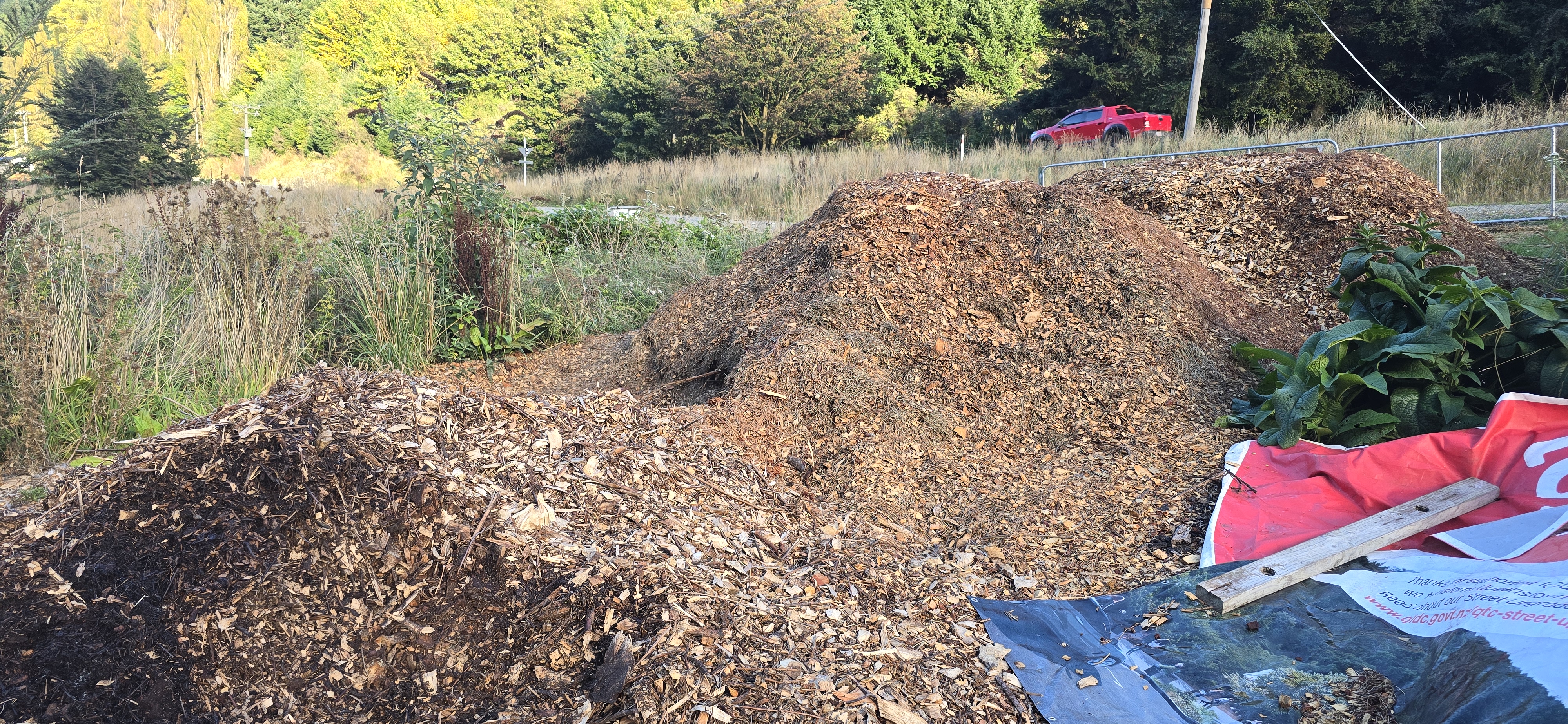
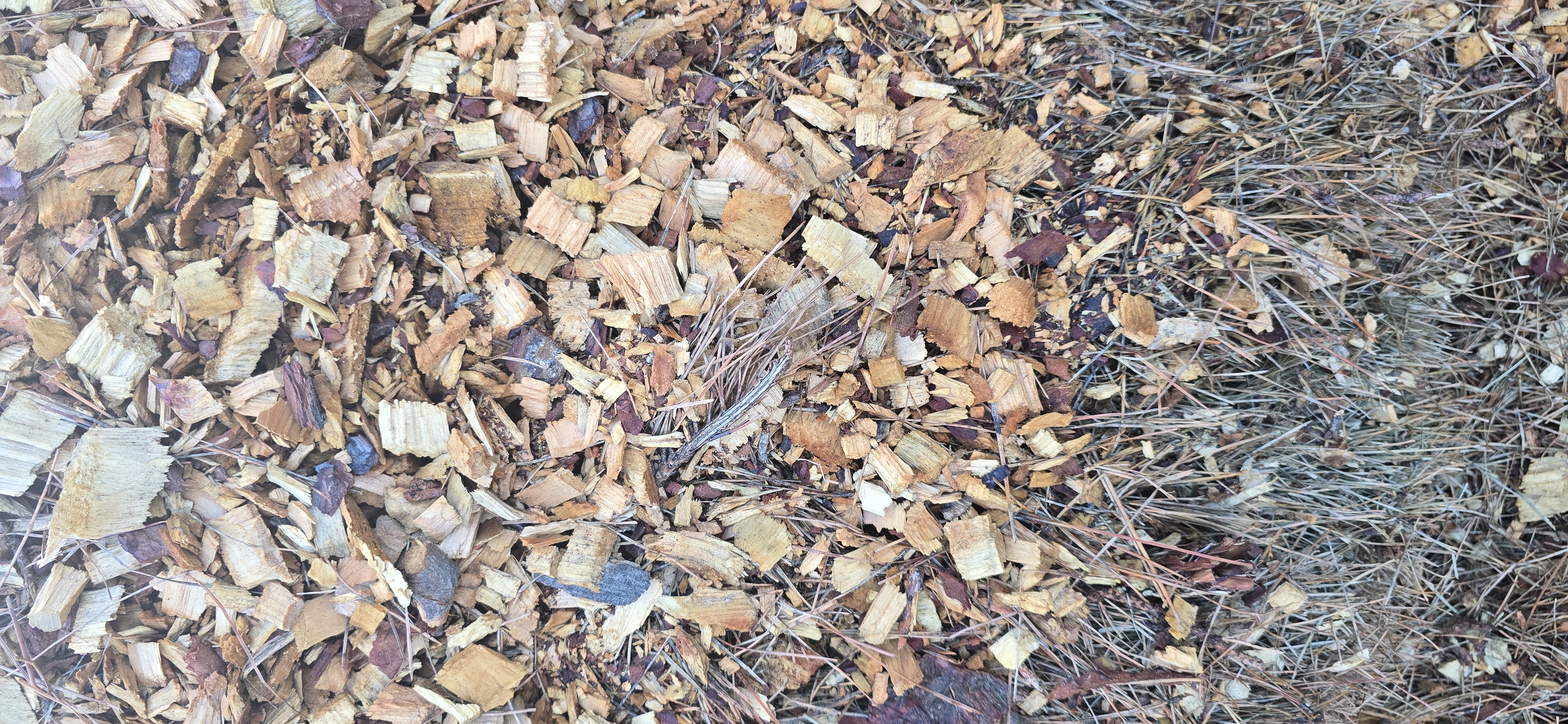
There are a couple of arborists who drop their wood chips at our community garden, they get used up really quickly.
20260413_090559.jpg
Piles of mulch
Piles of mulch
20260413_090618.jpg
Pine chips
Pine chips
 
Timothy Norton
Steward of piddlers
Posts: 7633
Location: Upstate New York, Zone 5b, 43 inch Avg. Rainfall
4252
monies home care dog fungi trees chicken food preservation cooking building composting homestead
  • Likes 11
  • Mark post as helpful
  • send pies
    Number of slices to send:
    Optional 'thank-you' note:
  • Quote
  • Report post to moderator
Did you know that wood chip mulch can hold anywhere between fifty to sixty percent of its total weight in moisture?

I understood the notion that arborist chip mulches assist soil to retain moisture but I didn't appreciate the fact that the material actually holds water itself. This sponge-like function of wood chips could be really beneficial in dry periods. For optimization, I have read that the finer the mulch, the better levels of moisture retention.
 
master pollinator
Posts: 2129
Location: Ashhurst New Zealand (Cfb - oceanic temperate)
733
duck forest garden fungi trees chicken cooking solar sheep wood heat woodworking rocket stoves
  • Likes 11
  • Mark post as helpful
  • send pies
    Number of slices to send:
    Optional 'thank-you' note:
  • Quote
  • Report post to moderator
If you get a really good population of fungi in there, the mycelium also have a tremendous capacity to hold and move water.
 
master gardener
Posts: 6275
Location: Carlton County, Minnesota, USA: 3b; Dfb; sandy loam; in the woods
3746
8
forest garden trees books chicken food preservation cooking fiber arts seed woodworking homestead ungarbage
  • Likes 9
  • Mark post as helpful
  • send pies
    Number of slices to send:
    Optional 'thank-you' note:
  • Quote
  • Report post to moderator
I've read they hold so much water that they prevent water from getting to the soil in certain conditions!
 
pollinator
Posts: 274
Location: Middlebury, Vermont zone 5a
86
forest garden books food preservation fiber arts medical herbs homestead
  • Likes 11
  • Mark post as helpful
  • send pies
    Number of slices to send:
    Optional 'thank-you' note:
  • Quote
  • Report post to moderator
If starting raised beds, I would use them to fill large containers about half way.  Every year, I get a load from arborists working somewhere on the street.  It's a love/hate thing.  Once they're moved to their final resting place, I'm happy, but looking out at that load sitting in the driveway fills me with dread!  I use a snow shovel and cart to move every single chip...and then a 5 gallon bucket to carry out of the cart to more "fussy" places.  Ughh...I'm tired just thinking about it.
 
Posts: 123
Location: central Pennsylvania
15
5
  • Likes 7
  • Mark post as helpful
  • send pies
    Number of slices to send:
    Optional 'thank-you' note:
  • Quote
  • Report post to moderator
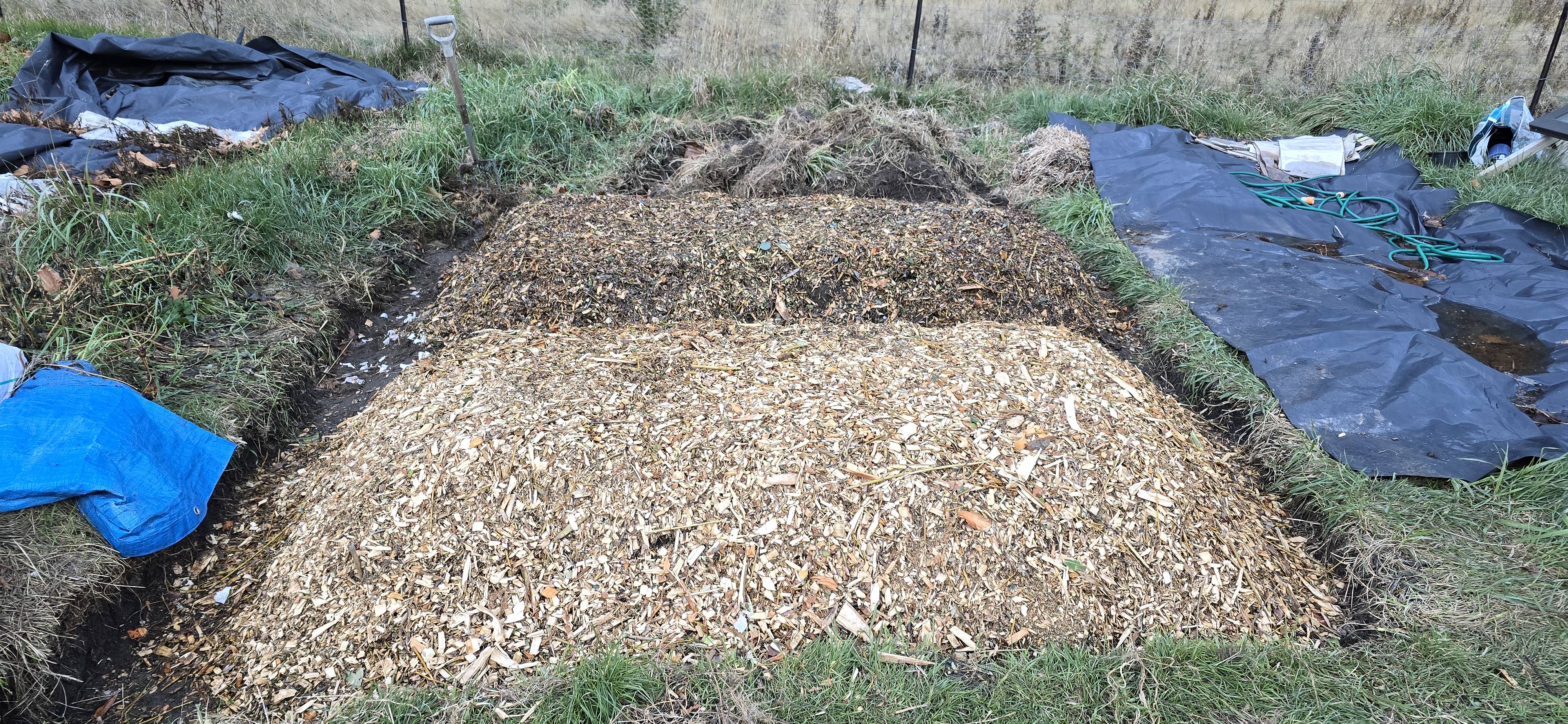
I had always thought wood chips were a great idea for the garden.  In 2022 I managed to secure a chip drop with a local landscaping company, and I shoveled my paths and garden beds 4” thick.

Before the end of the gardening season and into the next (and the next and the next!) I experienced all sorts of problems with diseases, including botytris, anthracnose, rust, fusarium, verticillium, per the county master gardener.  The master gardener explained that the fresh wood chips unbalanced the soil nutrients (used too much nitrogen while breaking down? Can’t quite remember).   The soil became so drained that the diseases got a foothold.  Anyway, it’s been a disaster I am still trying to recover, and learn, from.

The MG said that wood chips need to be aged/dried before adding to the garden and paths.  Was she mistaken and I simply had lousy luck with the fresh wood chips?
 
gardener
Posts: 576
Location: Wabash, Indiana, Zone 6a
282
hugelkultur monies forest garden foraging trees books food preservation bike bee writing rocket stoves
  • Likes 7
  • Mark post as helpful
  • send pies
    Number of slices to send:
    Optional 'thank-you' note:
  • Quote
  • Report post to moderator
This is a great opportunity for me to plug one of my favorite services. It's called "chip drop." Run the words together and add a dot com and you'll find arborists in your area who are willing to dump their chips on your property after they take down a tree or trees. Here are some pro tips to increase the likelihood that you'll get chips sooner rather than later. First, don't be picky...tell them on the form that you'll take chunks of wood mixed in with the chips. I've gotten three loads from them so far, and have never found a single log. It has always been pieces of wrist-sized or smaller partial branches. Second, you can tip them. Yes, they already save money by not having to pay to dump the chips at a commercial facility, but most of the arborists that participate are small businesses, so even $10 or $20 will get the chips dropped at your place instead of your stingy neighbor's.

They don't charge your method of payment until the chips are safely on your property.

The third dump I received was from an arborist who had previously given me chips. He was working in the neighborhood, knocked on my door, and asked if I wanted what he had. It was mostly green ash, and man did it ever smell wonderful. And it was a huge dump. It sat over winter and it's what I'm using in the garden and orchard this spring.

j
 
Christopher Weeks
master gardener
Posts: 6275
Location: Carlton County, Minnesota, USA: 3b; Dfb; sandy loam; in the woods
3746
8
forest garden trees books chicken food preservation cooking fiber arts seed woodworking homestead ungarbage
  • Likes 6
  • Mark post as helpful
  • send pies
    Number of slices to send:
    Optional 'thank-you' note:
  • Quote
  • Report post to moderator
I use them freshly chipped, aged for two years, and everywhere in between. I've never had that issue. But I don't know if that's just a difference in where we live or what. The county master gardeners here say things that are plain wrong in my garden, and I'm willing to say so when I know, but they have so much more training than I do that I'm not really willing to talk smack about them in general.
 
Timothy Norton
Steward of piddlers
Posts: 7633
Location: Upstate New York, Zone 5b, 43 inch Avg. Rainfall
4252
monies home care dog fungi trees chicken food preservation cooking building composting homestead
  • Likes 9
  • Mark post as helpful
  • send pies
    Number of slices to send:
    Optional 'thank-you' note:
  • Quote
  • Report post to moderator
Good Afternoon Emilie,

I utilize wood chips in my pathways, perennial gardens, orchard and near my grapes. The only place I do not use the chips are directly on my annual vegetable beds. I 'harvest' aged/composted chips from the bottom of my pathways and use that as a topdressing on those beds. With this system, I have not run into issues with diseases on my plants.

When I place fresh arborist chips, I layer it deep to levels near 12". The chips collapse down to around four inches with time which I have found loosens the soil and minimizes weed presence.
 
Megan Palmer
gardener
Posts: 1752
Location: Zone 9A, 45S 168E, 329m Queenstown, NZ
961
dog fungi foraging chicken food preservation cooking fiber arts
  • Likes 11
  • Mark post as helpful
  • send pies
    Number of slices to send:
    Optional 'thank-you' note:
  • Quote
  • Report post to moderator

Emilie McVey wrote:I had always thought wood chips were a great idea for the garden.  In 2022 I managed to secure a chip drop with a local landscaping company, and I shoveled my paths and garden beds 4” thick.

Before the end of the gardening season and into the next (and the next and the next!) I experienced all sorts of problems with diseases, including botytris, anthracnose, rust, fusarium, verticillium, per the county master gardener.  The master gardener explained that the fresh wood chips unbalanced the soil nutrients (used too much nitrogen while breaking down? Can’t quite remember).   The soil became so drained that the diseases got a foothold.  Anyway, it’s been a disaster I am still trying to recover, and learn, from.

The MG said that wood chips need to be aged/dried before adding to the garden and paths.  Was she mistaken and I simply had lousy luck with the fresh wood chips?


All the diseases that you mention are also associated with overly wet conditions and/or poorly drained soils.  What are your annual rainfall figures?

I have been using fresh woodchips as a mulch for over ten years and not noticed an increase in diseases.

I don't incorporate the chips into the soil, it stays on the surface but I do incorporate well rotted chicken manure prior to planting.  My beds are raised in ground.

If we happen to get the right type of wood chips, I get a bonus crop of winecaps some years.
20250615_164820-1-.jpg
in ground raised beds mulched with woodchips
 
pollinator
Posts: 252
53
  • Likes 11
  • Mark post as helpful
  • send pies
    Number of slices to send:
    Optional 'thank-you' note:
  • Quote
  • Report post to moderator
Chips are a great resource and very beneficial for most uses. I would not incorporate them into the soil. Also, be aware that poison ivy/oak and others may find their way into your chip delivery. I would strongly suggest a good pair of leather gloves and long sleeve shirt. I learned this the hard way
 
pollinator
Posts: 84
Location: SE France
24
fungi trees food preservation medical herbs wood heat composting
  • Likes 10
  • Mark post as helpful
  • send pies
    Number of slices to send:
    Optional 'thank-you' note:
  • Quote
  • Report post to moderator
Hellooooo
Sun out again after several days of seriously nippy weather.
I had vegetable chips for supper last night, true.

Chips in in garden get generous and regular portions of premium quality nitrogen or at least a precursor or something like that.
To explain the wood chip piles get regular dowsing with urine, cheap, freely available and obviously a quality addition.
I have noticed that the piles which have had the befenit or even the benefit of urine, start showing white strands of mycelium quite quickly.

several years ago, I loaded the veg area with wood chip mulch. The rats moved into this wonderful protected pantry and have basically not moved out far.
They enjoy the cleaner environment provided on the land I steward.
Some of my neighbours are generous with their toxic treatments so here is better than there.
I rued rodents and slugs too.
A field expert explained the presence of slugs, how they improve soil structure. Hmmmmm, ok not, my veg and flowers.
Back to rats and woodchip, a dynamic duo - rats and other tunnelling critters aerate compacted soil and woodchip does its work above ground.
To each  their raison d etre as they say in these parts.

Moments of philosophical reflection and I nearly accept this type of gentle outlook.
At other times I feel like a banshee.
Well there s balance for you.

Moral of the story the mulch with mycelium provides a richer and quieter life, here at least.
Thank you all for valuable contributions
Blessings
M-H


pollinator
Posts: 843
Location: Clemson, SC ("new" Zone 8a)
200
11
  • Likes 6
  • Mark post as helpful
  • send pies
    Number of slices to send:
    Optional 'thank-you' note:
  • Quote
  • Report post to moderator

J Garlits wrote:This is a great opportunity for me to plug one of my favorite services. It's called "chip drop." Run the words together and add a dot com and you'll find arborists in your area who are willing to dump their chips on your property after they take down a tree or trees. Here are some pro tips to increase the likelihood that you'll get chips sooner rather than later. First, don't be picky...tell them on the form that you'll take chunks of wood mixed in with the chips. I've gotten three loads from them so far, and have never found a single log. It has always been pieces of wrist-sized or smaller partial branches. Second, you can tip them. Yes, they already save money by not having to pay to dump the chips at a commercial facility, but most of the arborists that participate are small businesses, so even $10 or $20 will get the chips dropped at your place instead of your stingy neighbor's. ;)

They don't charge your method of payment until the chips are safely on your property.

The third dump I received was from an arborist who had previously given me chips. He was working in the neighborhood, knocked on my door, and asked if I wanted what he had. It was mostly green ash, and man did it ever smell wonderful. And it was a huge dump. It sat over winter and it's what I'm using in the garden and orchard this spring.

j


Yes!  Chip Drop is also active in my little corner of the American South.  I have received three drops via their website over the years and totally intend to keep using them.  I always throw in a $20 tip, especially if I'm in a hurry to refill the mulch pile beside my driveway.  A very convenient and effective service.
 
  • Likes 7
  • Mark post as helpful
  • send pies
    Number of slices to send:
    Optional 'thank-you' note:
  • Quote
  • Report post to moderator
I'm jealous of everyone who is able to get wood chips.  I have filled out for the chip drop, submitted the correct paperwork to the city, county, and utilities to get their chips, and contacted all tree services in my area that how chippers.  So many people out there want chips they are now going for up to $200 a truck load and the waiting list is about 2 months long or the companies don't have a list as they have customers who take all they have constantly.  

I enjoy watching/listening to various trainings that talk about use of wood chips, but my only options in NW Missouri is to either rent one and take down trees on my farm (plenty of trees - it just takes a lot of time to remove the tree, chip it up and then move the chips to where I need them) or to purchase my own chipper.  I am leaning on purchase of a chipper.

Any recommendations would be greatly appriciated.

EDIT
I will add - I have 87 acres.  About 25 tillable and a small lawn where the house is it.  In the past three years we have rented a forestry mulcher and removed thousands of small trees.  I'm looking for enough mulch for just this year to cover about 3/4 acre garden and 2 acres of orchard/berry patches.  Next year I will need about the same.  We have a LOAD of large thorny locust and Osage orange which are both very difficult to chip.  I believe I will need to purchase a chipper as free wood chips are currently a thing of the past.
 
Matthew Nistico
pollinator
Posts: 843
Location: Clemson, SC ("new" Zone 8a)
200
11
  • Likes 8
  • Mark post as helpful
  • send pies
    Number of slices to send:
    Optional 'thank-you' note:
  • Quote
  • Report post to moderator

Jezreel Valley Farm wrote:I enjoy watching/listening to various trainings that talk about use of wood chips, but my only options in NW Missouri is to either rent one and take down trees on my farm (plenty of trees - it just takes a lot of time to remove the tree, chip it up and then move the chips to where I need them) or to purchase my own chipper.  I am leaning on purchase of a chipper.

Any recommendations would be greatly apricated.


Most unfortunate that your local market conditions preclude cheap deliveries of arborist's chips.

My own property, like many permaculture properties, produces enormous volumes of woody debris.  Ideally, one would leave as much as possible of that biomass unchipped.  Slash, drop, pile, mulch, and let it lay and decompose slowly in place, as it does on a forest floor.  Maximum diversity for minimum effort.  Chipping, in contrast, maximizes effort to gain uniformity of the material, which one might consider undesirable in the strictest permaculture view.

However, there are times when you really want to mulch with wood chips.  And then there are special cases, like myself: gardening from a wheelchair, my entire property would quickly become impassible were I to spread woody slash all around.  Or perhaps one is doing permaculture on a suburban property where a more neat and orderly appearance is a major design objective.

So, I used to chip as much of my woody debris as possible.  I have since changed my approach, instead burning nearly all of it in charcoal kilns to make biochar.  I believe this is less total man-hours of work, plus it allows me to utilize all sizes of wood, plus it provides an end product that I could potentially sell locally at a high value.  But I am only newly down this biochar path, so I will reserve final judgement for another few years and then see how it worked out.

Back to chipping.  I don't know what type of operation is happening at Jezreel Valley Farm and, therefore, what volume of material they are trying to process.  Mention of renting a chipper in the past suggests that they are looking for heavy machinery to process large volumes.  If so, purchasing a heavy-duty chipper, perhaps even a commercial grade machine, might well be a good long term investment.  I can well understand the reluctance to keep using rental equipment; generally speaking, that is never a cost-effective long term solution.

I used to own a residential grade gas-powered chipper.  These can be had at LOWES for $450 and up to several thousand $$.  It was great, but as with all internal combustion home appliances, I quickly tired of needing a carburetor cleaning EVERY TIME I wanted to use it.  I don't know why this is the case these days, but it is.  I have been told that it is the low quality of modern gasoline, or all of the additives in it.  I just know that it wasn't always thus - I recall in my childhood starting up the mower every spring after the winter idle and never encountering the same problem.  And I'm sure my father was careless and let it sit full of gasoline, whereas I always run my equipment dry before letting it sit, but to no avail.

If, like me, one wishes to avoid this hassle, there are electric residential grade chippers available.  They max out at 15 amps on a regular 110V circuit - if there are heavier duty machines that use a 220V connection, I am not aware of any.  Electric chippers can only handle smaller branches up to maybe 1.5", but they are affordable and they do work.  Order a bulk set of replacement blades and change them often.  I have owned several along the lines of this: generic Amazon electric chipper.  Name brand is irrelevant.

For my own small property and limited needs, these were sufficient.  But one must adopt a different mindset: instead of making a long term investment in a heavy duty machine, you are essentially buying a disposable appliance.  With any type of serious usage - as is likely to maintain even a smaller permaculture operation - it WILL burn out and you will end up replacing it, perhaps once a year.  This is especially so if operating on an extension cord, even a heavy gauge cord; otherwise, you will need to haul all of the debris to the chipper, rather than bringing the chipper to the debris, an additional labor step.  This added expense of routinely replacing $100 electric chippers was a factor in my decision to abandon chipping in favor of biochar.

Hope these perspectives prove useful.
 
Posts: 23
Location: PNW
18
10
  • Likes 2
  • Mark post as helpful
  • send pies
    Number of slices to send:
    Optional 'thank-you' note:
  • Quote
  • Report post to moderator

Emilie McVey wrote:I had always thought wood chips were a great idea for the garden.  In 2022 I managed to secure a chip drop with a local landscaping company, and I shoveled my paths and garden beds 4” thick.

Before the end of the gardening season and into the next (and the next and the next!) I experienced all sorts of problems with diseases, including botytris, anthracnose, rust, fusarium, verticillium, per the county master gardener.  The master gardener explained that the fresh wood chips unbalanced the soil nutrients (used too much nitrogen while breaking down? Can’t quite remember).   The soil became so drained that the diseases got a foothold.  Anyway, it’s been a disaster I am still trying to recover, and learn, from.

The MG said that wood chips need to be aged/dried before adding to the garden and paths.  Was she mistaken and I simply had lousy luck with the fresh wood chips?


A couple things:
1. Wood chips on paths are not good long term solutions….they will make the soil below stay moist and fluffy….not what you are looking for at for a path that needs to move people, carts, etc.
2. Severe nutrient imbalance and wood chips is usually tied to mixing the chips into the soil instead of sitting on top of the soil like a blanket.
3. Definitely nitrogen, just like composting. Wood chips use nitrogen to break down into compost. Lots of wood chips=lots of nitrogen use but not a big deal if you don’t mix the wood chips and soil together.
4. Make sure wood chips are not right up against the stem of plants to minimize disease
 
Posts: 4
Location: Waco
  • Likes 2
  • Mark post as helpful
  • send pies
    Number of slices to send:
    Optional 'thank-you' note:
  • Quote
  • Report post to moderator
Have you noticed any difference between chips with more leaves mixed in versus mostly trunk wood? In my experience, loads with leaf material settle faster and build better topsoil, especially on compacted ground.
For anyone managing turf areas, a thin ring around trees instead of piling against the trunk also keeps the root zone healthier and cuts string trimmer damage over time.
 
Matthew Nistico
pollinator
Posts: 843
Location: Clemson, SC ("new" Zone 8a)
200
11
  • Mark post as helpful
  • send pies
    Number of slices to send:
    Optional 'thank-you' note:
  • Quote
  • Report post to moderator

Jezreel Valley Farm wrote:I will add - I have 87 acres.  About 25 tillable and a small lawn where the house is it.  In the past three years we have rented a forestry mulcher and removed thousands of small trees.  I'm looking for enough mulch for just this year to cover about 3/4 acre garden and 2 acres of orchard/berry patches.  Next year I will need about the same.  We have a LOAD of large thorny locust and Osage orange which are both very difficult to chip.  I believe I will need to purchase a chipper as free wood chips are currently a thing of the past.


Wow, that must have cost a pretty penny to rent!  Please update us with info about the machine you eventually buy - what capacity, what cost, how it works out for you.  I will be very curious to learn.
 
I agree. Here's the link: http://stoves2.com
reply
    Bookmark Topic Watch Topic
  • New Topic