• Post Reply Bookmark Topic Watch Topic
  • New Topic
permaculture forums growies critters building homesteading energy monies kitchen purity ungarbage community wilderness fiber arts art permaculture artisans regional education skip experiences global resources cider press projects digital market permies.com pie forums private forums all forums
this forum made possible by our volunteer staff, including ...
master stewards:
  • Carla Burke
  • Nancy Reading
  • John F Dean
  • r ransom
  • Jay Angler
  • Timothy Norton
stewards:
  • paul wheaton
  • Pearl Sutton
  • Tereza Okava
master gardeners:
  • Christopher Weeks
  • M Ljin
gardeners:
  • thomas rubino
  • Jeremy VanGelder
  • Megan Palmer

Help Me Design the "Taj Mahal" of Outhouses

 
master pollinator
Posts: 5690
Location: Canadian Prairies - Zone 3b
1617
  • Likes 9
  • Mark post as helpful
  • send pies
    Number of slices to send:
    Optional 'thank-you' note:
  • Quote
  • Report post to moderator
Right, so I plan to install an outhouse this year. The purpose is a Plan B in case our creaky old septic acts up, and a handy loo for visitors on bonfire nights. The goal is occasional use, but when needed it will be heavily used.

Requirements:
-- It must not stink. At all. Ever. The most discerning urban nose must be convinced. (Particularly the female half.)
-- It must be available day and night.
-- It must not be outrageously cold to use, even in winter.

Resources:
-- It will be tucked in on a hill, in proximity to living tree roots. There is no risk to groundwater.
-- Grid power is available via extension cord if necessary.
-- There is plenty of room for multiple chambers, and slope for natural drainage.
-- It could be situated where solar daytime heating is available.

The exterior will probably not resemble the Taj Mahal, excepting a plywood facade for laughs. But there must be a loo in the Taj Mahal somewhere -- maybe one of the outbuildings? Will a few coats of whitewash suffice?

I have a few design ideas already, but I thought I would ask the hive mind. How would you do it?

 
pollinator
Posts: 6050
Location: Bendigo , Australia
561
plumbing earthworks bee building homestead greening the desert
  • Likes 8
  • Mark post as helpful
  • send pies
    Number of slices to send:
    Optional 'thank-you' note:
  • Quote
  • Report post to moderator
I would consider a tall [ 4M ] wall the shape of a snails shell for access with a clear roof for light.
Maybe a tall column chimney with a solar and battery powered fan to continuous draw air and smells downwards and up the column/ chimney.
With a large eye painted high on the wall at the entrance.
 
steward and tree herder
Posts: 13006
Location: Isle of Skye, Scotland. Nearly 70 inches rain a year
6865
6
transportation dog forest garden foraging trees books food preservation woodworking wood heat rocket stoves ungarbage
  • Likes 10
  • Mark post as helpful
  • send pies
    Number of slices to send:
    Optional 'thank-you' note:
  • Quote
  • Report post to moderator

Douglas Alpenstock wrote:-- It must not be outrageously cold to use, even in winter.


And from your location you must get bitterly cold in winter, right? I wonder whether one could harvest some heat from a composting type loo to keep the whole structure warm? Straw bale perhaps for insulation and soak?
 
steward
Posts: 18681
Location: USDA Zone 8a
4731
dog hunting food preservation cooking bee greening the desert
  • Likes 8
  • Mark post as helpful
  • send pies
    Number of slices to send:
    Optional 'thank-you' note:
  • Quote
  • Report post to moderator
Just curious, why would an outhouse need electricity?

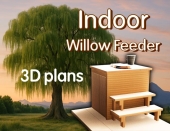
If I were building an outhouse especially the Taj Mahal of outhouses, I would follow the design of the willow feeder:

chateau de poo https://permies.com/t/25481
willow bank https://permies.com/t/47814
willowonka https://permies.com/t/65018

And if other guests were using the Taj Mahal outhouse I would need signs like the one in this thread:

https://permies.com/t/161838/willow-feeder
 
master gardener
Posts: 6235
Location: Carlton County, Minnesota, USA: 3b; Dfb; sandy loam; in the woods
3709
8
forest garden trees books chicken food preservation cooking fiber arts seed woodworking homestead ungarbage
  • Likes 8
  • Mark post as helpful
  • send pies
    Number of slices to send:
    Optional 'thank-you' note:
  • Quote
  • Report post to moderator

Douglas Alpenstock wrote:It must not be outrageously cold to use, even in winter.


This seems like the hardest target to hit. You could build it deep underground to take advantage of thermal inertia, so that it would be cold but not outrageously cold. Or you can heat it. Nancy's suggestion of something like a Jean Pain compost heater seems like it would work with the right design and supply of feedstocks. Or a wood-fired mass heater built in could work, but you'd have to warm it up ahead of time. Or an electric or propane heater for on-demand applications.
 
pollinator
Posts: 551
78
  • Likes 10
  • Mark post as helpful
  • send pies
    Number of slices to send:
    Optional 'thank-you' note:
  • Quote
  • Report post to moderator
As voiced already, i have concerns about frost on humans and their nether regions.  Your winter can be epic, ours is easy, a wak in the park.

If I could walk a mile in your Sorel boots,  this quick napkin sketch might sum up a plan
A cylindrical outhouse, I think cob or block walls. Almost the entire circumference would be compost piles carefully managed.  If a dry leaf and peat pile, compost that's protected and lightweight, maybe banked against the block wall
Two normal doors in a vestibule section, mini mud room perhaps.  Double seal with doors for keeping out the cruel north wind

Just imagine, every deposit in this outhouse could later be reincarnated ......as warm defense against the wrath of January sleet. I would keep it simple, no electric, merely a candle or three in front of a mirror. I think heat would be superfluous,  part of outhouse  allure is Roughing It (also a great Mark Twain travelog).
20260331_120235.jpg
[Thumbnail for 20260331_120235.jpg]
 
master steward
Posts: 15153
Location: Pacific Wet Coast
9496
duck books chicken cooking food preservation ungarbage
  • Likes 11
  • Mark post as helpful
  • send pies
    Number of slices to send:
    Optional 'thank-you' note:
  • Quote
  • Report post to moderator

Douglas Alpenstock wrote:Right, so I plan to install an outhouse this year. The purpose is a Plan B in case our creaky old septic acts up, and a handy loo for visitors on bonfire nights. The goal is occasional use, but when needed it will be heavily used.


Requirements:
-- It must not stink. At all. Ever. The most discerning urban nose must be convinced. (Particularly the female half.)
There are many factors here:
1. Positive air pressure in the "people" part, which keeps all the smells in the "microbe" department.

2. Determining if enough of the "people" are trainable to lower the lid! The seat needs to be flat to the base, and the lid needs to have a sealing surface contacting it.

3. You need easy to use cover material.

4. If I'm assuming correctly, this building will be used for both urine and stool. Keeping those as separate as possible would help considerably.

-- It must be available day and night.
1. The easy solution would be to run power to it. You could likely get away with 12volt DC with the complicated stuff in the house because your 2 uses would be for light and a fan. I have nothing against a small solar panel on the roof, except that during the big dark there's a good chance any batteries would run out if you were really counting on it.

2. There are temporary solutions for bonfire nights, but if this is your back-up for a failing septic tank which I recall from past posts, has frozen on you in the winter, I really do think you need to plan for all weather, all conditions, the worst of the worst.


-- It must not be outrageously cold to use, even in winter.
1. The two things that affect warmth are thermal mass and insulation. Thermal mass is great if your plan is to heat the building year round as efficiently as possible. Thermal mass is a negative for intermittent, short term use. *Lots* of insulation, and that double seal door arrangement Rico suggested, will allow you to heat the space quickly with a relatively small amount of input.

2. Since I'm backing the cold intolerant side of the equation (trust me, I can turn into an icicle faster than anyone I've ever met, and thawing me out requires an external heat source, so I understand this need), and if you follow my advice for getting permanent power out there with a back-up generator, I'd vote for a heated toilet seat. *Nothing* is nastier than having to sit on a frigid seat, and us women have to do it for pee as well.

But there must be a loo in the Taj Mahal somewhere -- maybe one of the outbuildings? Will a few coats of whitewash suffice?
1. Light coloured interior certainly make a place cheerier - no scary dark corners please! However, "pretty" often just takes consideration of the likes/dislikes of your partner, and making the area a) welcoming, b) possibly humorous to make people smile, and c) definitely easy to clean. My one toilet has a glass framed poster opposite it. Not fancy, but better than a blank wall or just the towel rack that's below the poster. My other toilet faces a mirror, which means the picture I hung behind the toilet (planet earth from space taking 40 years ago at least by some astronaut) can be seen in the mirror.

2. Similarly, the outside depends on what appeals to the family. Do you want it to look like a miniature version of a Disney Castle, or are you into rustic wood cabin with a green roof? I would either make a statement, or go for cute but "invisible", myself. Is it a spot you would want it to do double duty, such as garden tools in the entrance?

How would you do it?
I'm still working on it... I absolutely need an outdoor loo, but it will likely be some sort of "bucket system" because it likely will only get rare use unless shit happens (yeah, yeah, couldn't resist). I'm leaning towards small and lightweight so our tractor could actually move it around as needs change, but we don't have your cold weather. I'm also leaning towards more than one because our property is such a weird shape. I'm also in a Municipality which may be "technically" rural, but the bylaws don't reflect that, so having the building do double duty and not "look" like an outhouse has a lot to say for it.

 
pollinator
Posts: 497
Location: Oz; Centre South
147
trees books cooking fiber arts writing
  • Likes 10
  • Mark post as helpful
  • send pies
    Number of slices to send:
    Optional 'thank-you' note:
  • Quote
  • Report post to moderator
Can I suggest that you do a search for "Australia long drop toilets" and get the images... should be plenty of inspiration there.  The absolute best one I've ever visited was at an out of the way tourist spot in the outback - shiny corrugated iron sides, arched roof, steps up to door, regular seating arrangement and fitted with a tall breather pipe with one of those wind-rotating arrangements on the top (sorry don't have the word for the fitting - but it made a very efficient extractor).   Otherwise, most ordinary outhouses have a supply of lime on hand.  All have notices about not using wet wipes or similar as they don't break down.
 
Douglas Alpenstock
master pollinator
Posts: 5690
Location: Canadian Prairies - Zone 3b
1617
  • Likes 10
  • Mark post as helpful
  • send pies
    Number of slices to send:
    Optional 'thank-you' note:
  • Quote
  • Report post to moderator
Wonderful replies so far! I knew I could count on you folks for three-dimensional off-grid thinking.

I appreciate Jay's detailed comments -- very much in line with my thinking about how to engineer solutions to the problem. I'm particularly tickled by the notion of attaching a "potty shed" to a potting shed.
 
Jay Angler
master steward
Posts: 15153
Location: Pacific Wet Coast
9496
duck books chicken cooking food preservation ungarbage
  • Likes 7
  • Mark post as helpful
  • send pies
    Number of slices to send:
    Optional 'thank-you' note:
  • Quote
  • Report post to moderator

Douglas Alpenstock wrote: I'm particularly tickled by the notion of attaching a "potty shed" to a potting shed. :-)


When you live somewhere where old fashioned ideas like having an outhouse are considered ridiculous, thinking of ways to make something look like something else is just good disguise planning. I'm glad it's got you thinking up cool ways to make it super special! (I happen to *really* want a potting shed, so that's my definition of special!)
 
Posts: 381
Location: rural West Virginia
87
  • Likes 7
  • Mark post as helpful
  • send pies
    Number of slices to send:
    Optional 'thank-you' note:
  • Quote
  • Report post to moderator
On smell, the three solutions are: tight lid as someone mentioned; a bucket of sawdust to put a handful on each deposit; and discourage people from using it for pee. We have a separate"pisseria" in the house, and that bucket gets emptied onto compost piles, some in the woods and composed of fallen branches, which can really use the nitrogen boost; The outhouse outside also has a bucket fitted to the toilet seat, and four spare buckets to switch in and cover a full bucket with a lid. When all five buckets are full I dump them in the poo bins farther from the house. On warmth, our outhouse hasn't ever gotten battens and occasionally wind-driven snow intrudes, but it's remarkable how little we mind the cold. Funny thing--an indoor toilet in a sixty degree house feels cold but the outdoor one when it's 15 degrees doesn't bother me. But I live in zone 6, it hardly ever goes below zero here and isn't often windy--your area is maybe quite another matter.
 
master gardener
Posts: 2231
Location: Zone 5
1248
ancestral skills forest garden foraging composting toilet fiber arts bike medical herbs seed writing ungarbage
  • Likes 6
  • Mark post as helpful
  • send pies
    Number of slices to send:
    Optional 'thank-you' note:
  • Quote
  • Report post to moderator
If it is only for occasional emergency use, why not have a squat toilet? I think there are a lot of benefits, including not having to touch any cold surfaces, no need to make a toilet seat, and sanitarily speaking, no one would have to touch any questionable surfaces.

It is easy to make: dig a hole in the ground, take two buckets/receptacles, and embed two flat stones as foot-holds. This acts as an effective urine diverter. I haven’t done the following, but if you have nesting buckets, one could hold the place in the ground while the other can be emptied. Have some sawdust, shavings, etc. at the ready for covering up, and allow for good air circulation.

Urine would want to be emptied much more regularly of course… or maybe have a separate urine toilet/pipe that goes out into a hollyhock, comfrey, rhubarb, or other nitrogen hungry bed?

Maybe food for thought if nothing else!
 
pollinator
Posts: 52
Location: Zone 6a
32
  • Likes 4
  • Mark post as helpful
  • send pies
    Number of slices to send:
    Optional 'thank-you' note:
  • Quote
  • Report post to moderator
It does not meet your cold weather requirement as-is but this family in northern BC uses their outhouse year round. You might be able to add insulation, a door and a small propane Buddy heater for intermittant heat. Even a small electric heater would work in a small space if you run power out there. Gridlessness put up this video of their composting outhouse 8 years ago:

https://www.youtube.com/watch?v=v2ZViclQbc0

There was an update 2 years ago where Jeff explains how their outhouse has saved them around $250,000 based on an initial cost of $100,000 borrowed for 30 years at 8%. Most of the info is in the second video so you can skip the first one, although it has a few humorous moments...

https://www.youtube.com/watch?v=INy12evR-IU

You could also use garbage cans to collect the output (like Paul's willow feeder approach) in a structure like this.
 
Posts: 35
Location: Doylestown, United States
3
  • Likes 6
  • Mark post as helpful
  • send pies
    Number of slices to send:
    Optional 'thank-you' note:
  • Quote
  • Report post to moderator
Years ago, I lived in Southern New Hampshire among folks who started Gap Mountain Mountain Permaculture which is no longer operating. Two of the folks who lived there, Doug Clayton and David Jacke, designed and built what they named the Mouldering Toilet, which they built as an addition to Doug's house, not a separate building. If you look up Gap Mountain Permaculture, Mouldering Toilet, you will be able to find many references to it and praise for the design. David Jacke went on to co-author Edible Forest Gardens with Eric Toensmeier (https://www.edibleforestgardens.com/about-the-authors) which many of you probably have on your bookshelf. They have written other books as well.

This link has a drawing of the plan in the below link. I saw in another post when I googled Gap Mountain Permaculture, Mouldering Toilet and someone was asking about it David replied and said he would pm her. With further exploration, you might be able to find out more.

https://prospectrockpermaculture.wordpress.com/2014/05/23/herbal-labyrinth-sacred-geometry-and-holy-defecation/

Although it's been many years, I remember that it didn't smell, the pee didn't make everything soggy due to the design, they used sawdust or shavings for carbon and it was two chambered in addition to the small room being a pleasant light filled room - windows)  Doug and his wife would use only one chamber until it was full, then let it sit for a few years at which point they would dig out the perfectly decomposed humanure to spread on their fruit trees. It was also built on a slight slope, but I can't remember how much of one. Doug had worked for someone (probably in the 70s)  who had a Clivus Multrum, a commercial composting toilet from the 70s and into today and that was very stinky because that early design didn't deal with the pee properly. A very unpleasant job and a learning experience that helped him and David create a much improved model

The Mouldering Toilet design worked very well and is worth exploring. Like others here, I have no idea how it wouldn't be cold in the winter but good luck!

Dave Jacke, if you see this, I hope I remembered this right and that maybe you can e of more help. I haven't seen you since those times but permaculture has been very important in my life and may thanks to you and Doug for introducing me to it.
 
pollinator
Posts: 396
Location: South of Winona, Minnesota
100
  • Likes 7
  • Mark post as helpful
  • send pies
    Number of slices to send:
    Optional 'thank-you' note:
  • Quote
  • Report post to moderator
When it's cold out why not use a humanure 2 bucket system? The solids bucket can be emptied into the outhouse at your convenience (sunny, not a cold, windy day). The liquids can be used on outdoor compost heaps year round. The outhouse will be available for outdoor use when the weather is most likely warmer and you have a bunch of guests. In not too cold weather a foam toilet seat can be kept indoors and taken out with each use. BTW, the nicest outhouse I ever used was finished to a high degree and had beautiful stained glass windows and an antique etched glass window in a wood door. Memorable but I don't tend to linger in any toilet facility so not personally motivated to construct anything beyond the practical.
 
master pollinator
Posts: 2122
Location: Ashhurst New Zealand (Cfb - oceanic temperate)
728
duck forest garden fungi trees chicken cooking solar sheep wood heat woodworking rocket stoves
  • Likes 5
  • Mark post as helpful
  • send pies
    Number of slices to send:
    Optional 'thank-you' note:
  • Quote
  • Report post to moderator
I also like the two-bucket system, plus if you fill the liquids bucket with biochar you solve the smell issue and end up with fantastically charged biochar when it's time to empty it.
 
pollinator
Posts: 1172
Location: Greybull WY north central WY zone 4 bordering on 3
358
hugelkultur trees solar woodworking composting homestead
  • Likes 5
  • Mark post as helpful
  • send pies
    Number of slices to send:
    Optional 'thank-you' note:
  • Quote
  • Report post to moderator
Grew up using and around about a dozen dry sump outhouses.  Some exposure as an adult to wet sump outhouses.

Lets build a list of problems and what to do to avoid them.

1.  Sides of the hole caving in, being eroded in or being dug in by pets and wildlife.  Always great fun when you have the family of skunks living in the hole under the outhouse.  Would build a bigger base and a bigger roof as first step.  Maybe add some buried chain link to keep animals from digging in.

2.  Water in hole.  One location was a high water table and another was next to a ditch that flood about once a year.  Both stunk to high heaven and had major fly problems.

3.  No place to wash hands.  Had to go back to the house to wash hands

4.  Cold/hot and in a few cases snow drifts inside thru cracks in the wood work.

5.  Stinky and bugs at the best of times

6.  Other?

The best one we ever had was what my mother called a WPA outhouse.  Floor and toilet riser were poured concrete as a single pour.(factory made?)  Riser was funny shaped long skinny hexagon.  Seat at one end and a riser vent pipe (was about 6 inch stove pipe) that was behind your back sitting on the toilet at the other  The concrete was probably 7 or 8 feet square.  Walls standard 2x4 framing with ship lap style siding on the outside and 2 small windows in the front wall up high.  Had some big square cans with a round paint can style lid mounted on one wall for TP storage that kept it dry and  mouse and bug free.  (Other best answer seen was a bunch of Shortening size cans that held one roll each on a set of shelves.  The cans were nearly a snug fit on the shelves so the mouse couldn't get to the plastic lid.)  In a low use outhouse this would be high on my list of design features.  The same big square cans also held the lime for odor control and a scoop.  Never did use anything that used carbon while growing up.  It was all lime here.  One final feature of this concrete slab was both ends were curved up and it had built in tow loops so the concrete base was also the skid.  Since this was intended for the tow the outhouse 6 or 8 feet over a new hole in the ground which is no longer legal anywhere this part doesn't matter.  Now to do this one better I would concentrate on making it so it was easy to hose out.  Concrete was a bit hard to clean so I would paint the riser and floor and possibly lower walls in a really good grade of epoxy paint in a really light color for best lighting.  This riser was sort of in the middle.  If it was moved to the side a bit very little more area would have been needed to bring this up to wheel chair accessible.

Was in a outhouse in south western Wyoming that had a tight sealing metal door that came up from the bottom about 6 inches or a foot down.  The toilet lid up top was connected to it and when you opened the lid up top to the over center vertical position it moved the lower door clear out of the way so nothing could  get to the door to stick to the door.  Close the lid up top and the bottom door was spring loaded to close and seal over the bottom.  Looked commercial design so might go looking for it.

First lets talk heating and cooling options first.  

1.  I live in a passive solar home so I am totally for the standard single slope clerestory design with long over hang to the south for heat control.  Be aware this roof design needs real over hangs at both ends to work properly as well as the south.  On a house this is easy but for an outhouse this will 3 or 4 foot "porch" ends out both sides and 3 or 4 foot overhang to the south for your sun control eve.  The problem here is the building needs to be high thermal mass inside so concrete, rock or rammed earth with lots of insulation outside.  There are permies compatible options here.

2.  Second option would be to convert the south wall to a modified version of a trombe wall using a window screen collector, VIG max glass and a folded path collector design.  Build the vent doors into this so summer operation you just thermal siphon the air thru it keeping the air outside the building.  Change 2 quick vent doors to change from summer operation to winter operation.  2 lessons learned from my current collector.  Vents need flicker, rodent and bug screening as well as a replaceable filters to keep dust out.  You will still need a way to open the glass occasionally and clean it. (say ever 2 to 10 years)

3.  Third option, What about heat pipes down into the ground.  Where you intend to go back in a hill they would be even more effective.  They are completely passive with no moving parts.  Some systems come with a 50 year waranty and life expectancy up into the 100 year range.  Would be pricey to start but if your building was well insulated could probably do all the heating.  Would heat to within 5 or 10 degrees of your soil temperature and are completely passive.  Basically a one way heat diode moving soil heat up.  The online information shows an individual 3/4" heat pipe capable of up to 120 watts.  Modern full size homes well insulated and designed the talk about being able to heat with 1500 watts for a full home.  So an outhouse with 1/10 or less the size with a number of heat fanned out for more ground area would probably heat fine the rest of your life.  Build some into and insulated sink cabinet also and you could probably keep pipes from freezing even if the door was left open.

4.  Earth tube.  the Ceres' greenhouse information stated that 83 feet of 4" drain tile pipe buried 8 feet would bring in air continuous all winter long and never reach freezing at the indoor outlet of such air.  Longer runs yet would come closer to earth temperature.  Where I am that is 56 degrees.  So the building could probably be kept at 45 or 50 degrees with nothing more than power for a small fan.

Now that brings us to odor control, fresh air intakes etc.

Most of the wet sump outhouse use a large diameter steel pipe, mounted on the south side of the building painted dark black as a chimney for odor control from the biological side.  Some put a spinning turbine at the top that runs a fan so it sucks any time the wind blows.  The turbine also keeps birds out too.   Now from other problems I would possibly add 4 functions to the base of it.  Air filter, bug and rodent screen, an antiback draft door for wierd wind conditions and possibly finally a charcoal odor filter.  Now I was around one of that the part down next to the building has a mirrored slightly concave area to increase the heat that reached the lower pipe.

Now the inside system needs to pressure up.  For winter daytime operation this would be easy to do with some solar thermal air.  Or with a PV powered fan on an earth tube.


C. Letellier
pollinator
Posts: 1172
Location: Greybull WY north central WY zone 4 bordering on 3
358
hugelkultur trees solar woodworking composting homestead
  • Likes 1
  • Mark post as helpful
  • send pies
    Number of slices to send:
    Optional 'thank-you' note:
  • Quote
  • Report post to moderator
PS my dream here is to use the septic tank itself as a wet sump for an outhouse.
 
Live ordinary life in an extraordinary way. Details embedded in this tiny ad:
Learn Permaculture through a little hard work
https://wheaton-labs.com/bootcamp
reply
    Bookmark Topic Watch Topic
  • New Topic