• Post Reply Bookmark Topic Watch Topic
  • New Topic
permaculture forums growies critters building homesteading energy monies kitchen purity ungarbage community wilderness fiber arts art permaculture artisans regional education skip experiences global resources cider press projects digital market permies.com pie forums private forums all forums
this forum made possible by our volunteer staff, including ...
master stewards:
  • paul wheaton
  • Anne Miller
  • Carla Burke
  • Nancy Reading
  • John F Dean
  • Timothy Norton
  • Jay Angler
stewards:
  • r ransom
  • Pearl Sutton
  • Tereza Okava
master gardeners:
  • Christopher Weeks
gardeners:
  • M Ljin
  • Megan Palmer
  • Kate Downham

Permies Poll: Do you forage wild mushrooms?

 
Steward of piddlers
Posts: 8488
Location: Upstate New York, Zone 5b, 43 inch Avg. Rainfall
5149
monies home care dog fungi trees chicken food preservation cooking building composting homestead
  • Likes 9
  • Mark post as helpful
  • send pies
    Number of slices to send:
    Optional 'thank-you' note:
  • Quote
  • Report post to moderator


Wild foraged mushrooms are delicious but it is critical to properly identify anything you intend on consuming.


Do you forage wild mushrooms? Would you be interested in foraging wild mushrooms? How did you develop the confidence to learn how to identify the delicious ones?
 
author & pollinator
Posts: 1662
Location: Blue Ridge Mountains
620
food preservation cooking medical herbs writing homestead
  • Likes 12
  • Mark post as helpful
  • send pies
    Number of slices to send:
    Optional 'thank-you' note:
  • Quote
  • Report post to moderator
Well, I'm not sure if I voted yes or not. I clicked something and it said I had one apple vote left, then I clicked something else and it said I had none.  Regardless, Yes, I do.  Mushroom hunting was how I got into all this!
 
Rusticator
Posts: 10149
Location: Missouri Ozarks
5665
7
personal care gear foraging hunting rabbit chicken cooking food preservation fiber arts medical herbs homestead
  • Likes 12
  • Mark post as helpful
  • send pies
    Number of slices to send:
    Optional 'thank-you' note:
  • Quote
  • Report post to moderator
I've found chanterelles & wood ear, but they're fairly easy to identify. I've looked for, but not found chicken of the woods, lions mane, puff balls, and a few others that are very distinctive, and upon a closer look are easy to tell from dangerous 'lookalikes', but I'm not confident enough in my ability to ID most of the others, to even attempt it.
 
gardener
Posts: 3171
Location: Zone 4b/5a
1930
ancestral skills forest garden foraging composting toilet fiber arts bike medical herbs seed writing ungarbage
  • Likes 7
  • Mark post as helpful
  • send pies
    Number of slices to send:
    Optional 'thank-you' note:
  • Quote
  • Report post to moderator

Judson Carroll wrote: Regardless, Yes, I do.  Mushroom hunting was how I got into all this!


Same with me!
 
master steward
Posts: 19889
Location: USDA Zone 8a
4988
dog hunting food preservation cooking bee greening the desert
  • Likes 9
  • Mark post as helpful
  • send pies
    Number of slices to send:
    Optional 'thank-you' note:
  • Quote
  • Report post to moderator
Where I live edible mushrooms are rare.

Actually I have never seen any.
 
gardener
Posts: 2001
Location: Zone 9A, 45S 168E, 329m Queenstown, NZ
1227
dog fungi foraging chicken food preservation cooking fiber arts
  • Likes 17
  • Mark post as helpful
  • send pies
    Number of slices to send:
    Optional 'thank-you' note:
  • Quote
  • Report post to moderator
We lived in the UK for 10 years, spending the last several years in a cottage in West Sussex that had bluebells growing in old woodland that was on our land.

There were morels, oyster mushrooms, blewitts and birch boletes growing in our wood and in the adjoining woods that we walked our dog in.

For several years we took an annual holiday in Wales, staying at a bed and breakfast owned by a woman named Hilary who hosted guided fungus forays led by a mycologist from Aberystwyth University.

The weekends were booked out every year and had a waiting list, we would book the following year after each stay.

We heard about the bed and breakfast by chance, had read about the forays and stayed there when we were went to visit the Centre for Alternative Technology which was nearby.

Hilary was a fantastic cook, kept goats and made cheese with the goat milk. I have her cookbook somewhere with many of the recipes that she used to serve our mushrooms.

Thank you Tim for reminding me of some happy memories of traipsing through the rain through forests and woodlands foraging for mushrooms and the excitement of finding chanterelles or porcini aka ceps aka penny buns - boletus edulis

 
pioneer
Posts: 567
162
cat trees urban
  • Likes 5
  • Mark post as helpful
  • send pies
    Number of slices to send:
    Optional 'thank-you' note:
  • Quote
  • Report post to moderator
I would very much like to go on a course to learn the local "toadstools" e.g. inedible & dangerous fungal fruiting bodies first hand from an expert.  That's the vital first step that I missed because my family couldn't or didn't teach me sadly ..
 
Judson Carroll
author & pollinator
Posts: 1662
Location: Blue Ridge Mountains
620
food preservation cooking medical herbs writing homestead
  • Likes 7
  • Mark post as helpful
  • send pies
    Number of slices to send:
    Optional 'thank-you' note:
  • Quote
  • Report post to moderator
I have considered teaching a mushroom and foraging class specifically on what is poisonous, that you should not eat. It ismore important to knowwhat is toxic than what is tasty.
 
Megan Palmer
gardener
Posts: 2001
Location: Zone 9A, 45S 168E, 329m Queenstown, NZ
1227
dog fungi foraging chicken food preservation cooking fiber arts
  • Likes 5
  • Mark post as helpful
  • send pies
    Number of slices to send:
    Optional 'thank-you' note:
  • Quote
  • Report post to moderator

Judson Carroll wrote: It ismore important to knowwhat is toxic than what is tasty.


I have attended forays in NZ organised by the Fungal Network of NZ where the focus is on collecting, identifying and data basing NZ specimens, however, if one’s interest is in edible species, I found it much more useful to learn to be confident in identifying the edibles by learning the environment that they grow in, the trees that they are most likely associated with etc.

There are very few truely poisonous fungi, many that are edible but not worth eating so personally, learning the edible species has been much more useful to me.

On the forays that we attended in Wales, we carried two baskets, one for the definitely edible species and another for ones that we would identify when we went back to the b&b.

We would sort and clean the edibles so that they could cooked for our evening meal then go through the other basket identifying them.

Aminita phalloides are the most notorious of the poisonous fungi, however the classic aminita muscaria although hallucinogenic is commonly consumed in Eastern Europe after boiling to remove the toxins.

Some people cannot consume stropharia rugosoannulata (wine caps) or Coprinopsis atramentaria (ink caps) with alcohol as they can make them very ill.

For me, learning to confidently identify edible species of fungi has been most useful, rather than worrying about what could kill me.

If in doubt, I keep the specimens separate for later identification but wouldn’t consume them.


pollinator
Posts: 1310
Location: Chicago
463
dog forest garden fish foraging urban cooking food preservation bike
  • Likes 6
  • Mark post as helpful
  • send pies
    Number of slices to send:
    Optional 'thank-you' note:
  • Quote
  • Report post to moderator
Back when I had oyster mushrooms in my backyard, I foraged them. They are gone now; I guess they consumed the best of the tree stumps and now other fungus predominate.

I enjoy spotting other mushrooms in local parks and forest preserves, but it’s not allowed to forage there. Which I agree with, because the wild areas are quite small compared to the population visiting them, so it would not be sustainable.
 
Posts: 107
Location: Millersburg, MI
17
  • Likes 11
  • Mark post as helpful
  • send pies
    Number of slices to send:
    Optional 'thank-you' note:
  • Quote
  • Report post to moderator
Indeed, I'm certified by the State of Michigan to sell wild mushrooms. I made a living for several years as a full time forager, mainly chaga mushrooms(Inonotus obliquus). I've been letting the woods rest for the past 5 or 6 years, but I'm starting to get back into chaga selling presently.

I've also foraged for personal use for many, many years: morels, chanterells, hedgehogs, honey mushrooms, boletes, lobsters... just to name a few. I was lucky to have several good teachers over the years. Learning from books is fine, but going into the woods with someone experienced is a much better way to go in my opinion.
 
Posts: 27
Location: Beautiful Ozarks of Missouri
20
cat trees woodworking
  • Likes 9
  • Mark post as helpful
  • send pies
    Number of slices to send:
    Optional 'thank-you' note:
  • Quote
  • Report post to moderator
There are only a few wild mushrooms that I personally know to be edible, and morels are the only ones that I’ll eat…for now.
I’ve recently purchased the mushroom identification book (by DK Publishing) to ID the different varieties growing on the property.
 
master pollinator
Posts: 6080
Location: Canadian Prairies - Zone 3b
1868
  • Likes 9
  • Mark post as helpful
  • send pies
    Number of slices to send:
    Optional 'thank-you' note:
  • Quote
  • Report post to moderator
I don't know what I'm doing, so I leave them alone. This is not the place to "fake it 'til you make it." I wouldn't mind taking a hands-on course someday though.
 
pollinator
Posts: 551
Location: UK
192
kids urban seed
  • Likes 10
  • Mark post as helpful
  • send pies
    Number of slices to send:
    Optional 'thank-you' note:
  • Quote
  • Report post to moderator
Went out with someone once who really knew their chanterelles, and that changed everything for me. Read all the books beforehand and still wouldn't have trusted myself going solo. Finding a local foray group is the move if you can, made the difference between actually knowing and just thinking I knew.
 
pollinator
Posts: 137
Location: Zone 9a
70
  • Likes 10
  • Mark post as helpful
  • send pies
    Number of slices to send:
    Optional 'thank-you' note:
  • Quote
  • Report post to moderator
Around here there are abundant mushrooms.  Now that I know most of the abundant edible ones, where they grow and when they appear, it's very easy to go gather hundreds of pounds each year.  Each year some mushrooms will be very abundant and others less so.  Last year was a big year for black trumpets and hedgehogs.  Mushrooms are out in the fall/winter here, and I'll often go for an hour or two hike up the mountain and come back with 20-30lb of mushrooms.

These I gather in very large amounts:

White Chanterelle
Golden Chanterelle
Black Trumpets
Yellowfoot or "Winter Chanterelle"
Hedgehogs
Matsutake
Queen Bolete
Manzanita Bolete
Amanita Muscaria (caution: must boil it thoroughly twice first to make it non-toxic, and toss the water, then it tastes very good)
Lobster
Coccora (Amanita Calyptroderma)
Yellow Coral (Ramaria Rubiginosa)
Oyster
Chicken of the woods (caution: needs to be thoroughly cooked and only eat the young tender parts)
Turkey Tail (tea/tincture only)
Red belted polypore (tea/tincture only)

And these in smaller amounts or less often:

Goats foot (Scutiger Pes-caprae)  (most delicious mushroom ever)
Candy Cap
Lactarius Deliciosus
Puffball
King Bolete / Porcini
Shrimp Russula
Some other California Russulas
The Prince (Agaricus Augustus)
Lion's Mane
Bear's tooth
Reishi
Witches Butter
Grisette (Amanita)
Blewit
Cauliflower
Jelly hogs / cat's tongue
Morels

And a couple that are very abundant but don't taste great, I still eat them if they're the only fresh mushroom around, I figure they're still nutritious:
Pig's Ears
Slippery jack (Suillus spp.)

There are a bunch of others that I've tried once or twice but aren't tasty or abundant enough to eat regularly.

Btw, the "crimini", "button", and "portobello" mushrooms are all the same species, and are normally cultivated although there is a wild version that grows in some places.  I wouldn't buy these - they are grown at industrial scale on manure that I believe mostly comes from industrial animal ag, i.e. factory farms.  Some mushrooms can be accumulators of toxins and factory farm manure likely has a lot of toxins.  I also don't buy mushrooms ever because they are so easy to get for free.  But if I was going to, the local mushroom growers I know focus on oyster/shiitake/lionsmane which are tastier anyway.

A tip for preserving mushrooms:
If I have a huge amount and don't have the space to dry them all or they are wet and likely to rot before drying, I can cook them down in a pot till the water boils off, let them start to caramelize a little, and then dry them.  This way they are already cooked and can be used as a dry crunchy snack, or they can be thrown in a soup and don't need to be cooked again, and often have a firmer or crunchier texture than if I threw them fresh into a soup.  You could add salt if you're going for the crunchy snack, but be aware that salt attracts moisture so if they have salt they need to be stored in a sealed glass jar.

I also pressure can them sometimes.  For this I'll also simmer them a bit in a giant pot to start with, so they shrink a little and I can fit more per jar.  I'll can them in quart jars, 14qt at a time in a big canner, for 90 minutes at pressure to play it safe.  It's a good way to preserve a large amount of mushrooms all at once if I don't have time or space to dry them.  And much more convenient for eating later than dried mushrooms.  Black trumpets in particular come out surprisingly good after canning.  

I also sell them at farm stands when I have a lot, and gift/trade them in large amounts.  
 
Ac Baker
pioneer
Posts: 567
162
cat trees urban
  • Likes 4
  • Mark post as helpful
  • send pies
    Number of slices to send:
    Optional 'thank-you' note:
  • Quote
  • Report post to moderator
There are well-documented cases of experience mushroom foragers making a mistake and making people very ill or worse with toadstools.

Studing in-person with a local toadstool (harmful if eaten) fungi expert is an absolutely vital step before feeding anyone foraged fungi.

I'm defining expert as someone who really knows the fungi locally, not based on paper qualification.

It's irresponsible at best to fail to do this.
 
Posts: 80
Location: Central Kansas. Zone: 6b
35
kids cat foraging trees urban cooking
  • Likes 7
  • Mark post as helpful
  • send pies
    Number of slices to send:
    Optional 'thank-you' note:
  • Quote
  • Report post to moderator
This is actually an activity I'd be very very interested in but I am afraid of poisoning myself and my family. I don't know how you find an expert to show you everything.  I've kind of gathered that most people who forge a lot of mushrooms don't really want to show their best spots off.
 
pollinator
Posts: 1884
Location: southern Illinois, USA
430
fungi foraging composting toilet food preservation wood heat homestead
  • Likes 9
  • Mark post as helpful
  • send pies
    Number of slices to send:
    Optional 'thank-you' note:
  • Quote
  • Report post to moderator
I've been foraging mushrooms for 30 years now, and before then, studied them with multiple field guide type books. I did not meet any more experienced pickers till I had already started to eat some of my finds.  My one line about them is that I studied mushrooms for ten years before I dared to put one in my mouth.  Since then the adventure has deepened.  Mushrooms are excellent teachers of ecology with all their subtle niches of habitat, associations with trees, and pickiness as to weather....when I've been lucky enough to have ongoing access to forest land I've been able to pretty much predict when and where there would be flushes of the common edibles like chanterelles, black trumpets, or milk caps.  The modern world is a big challenge for the new forager....there is SO much misinformation and inadequate information out there....I've seen "apps" and websites that can kill!!  I do like mushroomexpert.com and the little app "shroomify", but if I'm looking to ID and unfamiliar species to me I will use at least three resources to confirm it, one of which MUST be a printed book published before 2000.
 
Posts: 13
Location: Florida, USA
1
  • Likes 13
  • Mark post as helpful
  • send pies
    Number of slices to send:
    Optional 'thank-you' note:
  • Quote
  • Report post to moderator
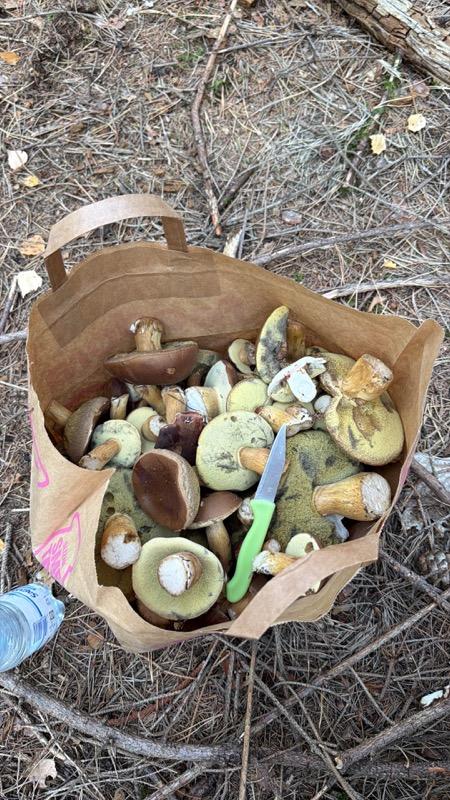
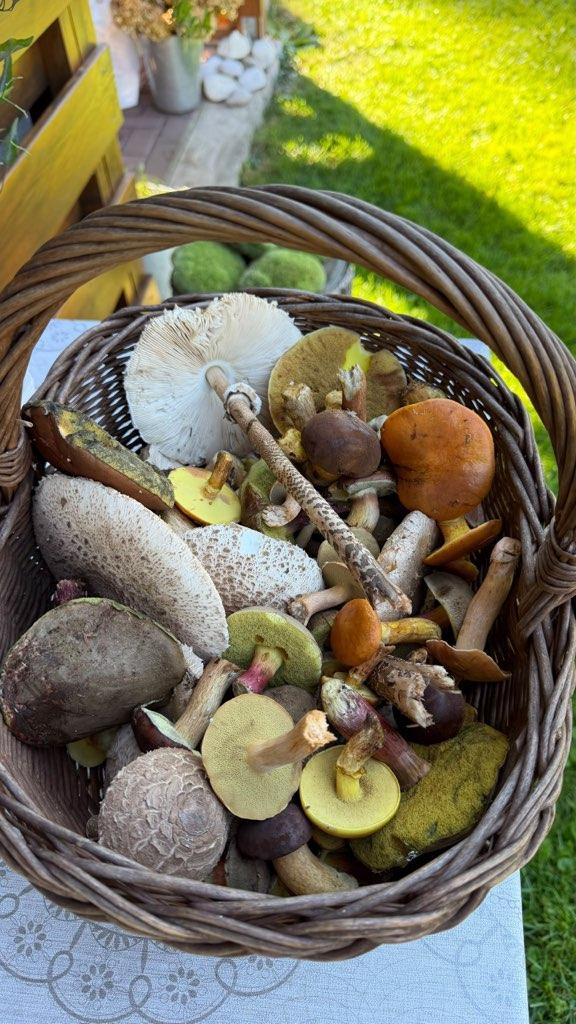
I don't know if these pictures will come through, but my friends husband foraged these in the Czech Republic last week.  
061cc188-.jpg
[Thumbnail for 061cc188-.jpg]
a7a9212b-.jpg
[Thumbnail for a7a9212b-.jpg]
 
Posts: 37
Location: Doylestown, United States
5
  • Likes 6
  • Mark post as helpful
  • send pies
    Number of slices to send:
    Optional 'thank-you' note:
  • Quote
  • Report post to moderator
I love foraging wild mushrooms and other things too - I even picked up a fresh road killed deer and butchered it myself. No one in my family hunts so it was all new to me. Now that's local! Here where I live in eastern Pennsylvania, where the deer have lots of great stuff to eat, at least in my experience, they don't taste gamey at all which deer from the mountains a fwe hours away certainly do.

I only gather wild mushrooms like maitaki (hen of the woods), chicken of the woods, chanterelles and puffballs that are easy to identify and have no poisonous look-a-likes. That makes it much easier! You can be brave with these mushrooms after carefully identifying them.

This week, I found about 10 pounds of maitaki in my own woods so ate some then sautéed and froze the rest in freezer jars. There are still more at the base of the large oak tree so that tells me that this beautiful tree is dying. I also found lots and lots of chicken of the woods in my own yard and in that same woods but didn't discover them in time, sad to say.

Puffballs are delicious but must be firm to be any good.

It's been a great year for all of these species so go looking!
 
software bot
Posts: 2180701
1672
cooking pig
  • Mark post as helpful
  • send pies
    Number of slices to send:
    Optional 'thank-you' note:
  • Quote
  • Report post to moderator
Last vote in apple poll was on October 21, 2026
 
Posts: 1000
Location: Sierra Nevada foothills, 350 m, USDA 8b, sunset zone 7
282
  • Likes 6
  • Mark post as helpful
  • send pies
    Number of slices to send:
    Optional 'thank-you' note:
  • Quote
  • Report post to moderator
I wish I did, but my climate does not support the growth of mushrooms known by Western civilization. I have downloaded images (few thousand) of all mushrooms known in California and I was still finding species that I could not identify  The  only edible mushroom I found was Collybia sordida (purple), but I still was not 100% sure so I did not want to risk - one specimen would not feed me but could hurt. If I found tens I would feel more pressed to identify with safe certainity.
Most popular edible mushrooms grow when it's warm and wet - combination that does not exist in my place, bacause warm means arid and wet means cool with night freezes.
 
Douglas Alpenstock
master pollinator
Posts: 6080
Location: Canadian Prairies - Zone 3b
1868
  • Likes 3
  • Mark post as helpful
  • send pies
    Number of slices to send:
    Optional 'thank-you' note:
  • Quote
  • Report post to moderator
While I don't harvest wild mushrooms, one of my hounds seeks them out and chews 'em up. Naturally we are worried about a vet bill but she seems to know what she can eat. First dog I've ever had that did this. So, does her talented nose know something I should know?
 
You guys haven't done this much, have ya? I suggest you study this tiny ad:
A rocket mass heater is the most sustainable way to heat a conventional home
http://woodheat.net
reply
    Bookmark Topic Watch Topic
  • New Topic