• Post Reply Bookmark Topic Watch Topic
  • New Topic
permaculture forums growies critters building homesteading energy monies kitchen purity ungarbage community wilderness fiber arts art permaculture artisans regional education skip experiences global resources cider press projects digital market permies.com pie forums private forums all forums
this forum made possible by our volunteer staff, including ...
master stewards:
  • Carla Burke
  • Anne Miller
  • Nancy Reading
  • John F Dean
  • r ransom
  • paul wheaton
  • Timothy Norton
stewards:
  • Jay Angler
  • Pearl Sutton
  • Andrés Bernal
master gardeners:
  • Christopher Weeks
gardeners:
  • M Ljin
  • Thekla McDaniels
  • May Lotito

Emergency rations

 
master steward
Posts: 9036
Location: southern Illinois, USA
3967
goat cat dog chicken composting toilet food preservation pig solar wood heat homestead composting
  • Likes 20
  • Mark post as helpful
  • send pies
    Number of slices to send:
    Optional 'thank-you' note:
  • Quote
  • Report post to moderator
Last Friday an old friend contacted me, so we set up a time to meet in a restaurant about 30 miles away.  Over a couple of cups of coffee we caught up on old times.  He knew I had been into homesteading. His mind linked that with Prepping , and as a city dweller, he asked me what he should have in a three day survival kit.  I thought for a few minutes and cautioned him I was limiting  my thoughts to food.  I also reminded him I saw myself as a homesteader.  His train of thought was beans and rice.  My administrative mind went with the following logic:

1. For three days one can survive on water alone.  Get three gallons of water and call the project done.

2.  Ok, he wants food.  Get food that doesn’t need cooking.  Add a few energy bars, a few cans of speghetti, etc. …maybe extra.   Maybe water to flush the toilet.   I reminded him his water heater probably already had at least 30 gallons of water.

3.  Oh, he wants hot food.  Add a three day supply of Mountain House or similar, some matches, an lp burner, and a few cans of lp gas.   Maybe toss in a jar of instant coffee and some tea.

4.  Combined the above is 6 days.  Now if he wanted longer term without busting the budget, get the beans and rice…and lots more water and lp.  If he needed more variety … add lentils and split peas….maybe a can of dehydrated onions….maybe dehydrated carrots….maybe a few cans of spam.

Obviously, the list could go on, but the above takes him well past 3 days.  I never could understand the three day thing.  I have had snow storms and tornados keep me in longer than that.

 
master pollinator
Posts: 1190
Location: Illinois
302
  • Likes 9
  • Mark post as helpful
  • send pies
    Number of slices to send:
    Optional 'thank-you' note:
  • Quote
  • Report post to moderator
If you are not a serious prepper, just buy one extra can of whatever every time you hit the super. Over a few weeks or months you have a good stock, and hardly notice it in the budget.

My wife cooks and also follows the sales. At any given time we might have 20 pounds of flour and 10 of sugar and oatmeal, boxes of breakfast cereal and whatever. Plus whatever I have saved from my garden from the prior year. Might as well call us preppers.
 
master pollinator
Posts: 6133
Location: Canadian Prairies - Zone 3b
1907
  • Likes 13
  • Mark post as helpful
  • send pies
    Number of slices to send:
    Optional 'thank-you' note:
  • Quote
  • Report post to moderator

Thom Bri wrote:If you are not a serious prepper, just buy one extra can of whatever every time you hit the super. Over a few weeks or months you have a good stock, and hardly notice it in the budget.

My wife cooks and also follows the sales. At any given time we might have 20 pounds of flour and 10 of sugar and oatmeal, boxes of breakfast cereal and whatever. Plus whatever I have saved from my garden from the prior year. Might as well call us preppers.


Right on. So like me you're a tightwad with a bit of extra cash to stock up and the space to store good deals when they come along. This used to be called "economy" and "prudence" and "foresight." Camo clothing seems less important than saving gas.

 
master pollinator
Posts: 5553
Location: Due to winter mortality, I stubbornly state, zone 7a Tennessee
2563
7
forest garden foraging books food preservation cooking fiber arts bee medical herbs
  • Likes 6
  • Mark post as helpful
  • send pies
    Number of slices to send:
    Optional 'thank-you' note:
  • Quote
  • Report post to moderator
Something folk seem to forget... In an emergency situation, beans don't HAVE to be cooked to be eaten. They only need that soak. But only short term. See this thread for toxicity issues.
 
out to pasture
Posts: 13538
Location: Portugal
4831
goat dog duck forest garden foraging wofati composting toilet bee solar rocket stoves greening the desert
  • Likes 13
  • Mark post as helpful
  • send pies
    Number of slices to send:
    Optional 'thank-you' note:
  • Quote
  • Report post to moderator

Joylynn Hardesty wrote:Something folk seem to forget... In an emergency situation, beans don't HAVE to be cooked to be eaten. They only need that soak. But only short term. See this thread for toxicity issues.


Oh my goodness I never want to go through the three days of hell I went through a couple of years ago when I failed to cook some white beans properly.

Some beans are ok just soaked. Some can kill you!

You can eat them sure. But you won't do it twice if you choose the wrong sort!

I found a link, some of which is quoted below - What beans are safe to eat uncooked?

Beans You Should Never Eat Raw

This list includes the majority of common dried beans, which contain high levels of dangerous lectins that must be destroyed through cooking.

Kidney Beans: Red kidney beans, in particular, have one of the highest concentrations of phytohaemagglutinin, and eating as few as four or five raw beans can cause severe food poisoning.
Lima Beans: These contain linamarin, a chemical that breaks down into toxic cyanide during digestion.
Pinto Beans: Like many other common varieties, pinto beans are toxic when uncooked due to their lectin content.
Black Beans: Similar to pinto beans, black beans contain significant levels of lectins in their raw state.
Navy Beans and Great Northern Beans: These white bean varieties are also high in lectins and must be cooked properly.
Broad Beans: Uncooked broad beans, also known as fava beans once mature, contain toxic compounds.
Chickpeas and Soybeans: As mentioned, these are indigestible in their raw, non-sprouted state.

 
master steward
Posts: 20006
Location: USDA Zone 8a
5010
dog hunting food preservation cooking bee greening the desert
  • Likes 9
  • Mark post as helpful
  • send pies
    Number of slices to send:
    Optional 'thank-you' note:
  • Quote
  • Report post to moderator
I did not see mention of toilet paper or fruit.

I know permies use family wipes though most city dweller do not so a mention of toilet paper or family wipes would be advisable.

Folks need vitamin C so the addition of so fruit would be good.

Canned pumpkin, mandarin oranges, and pineapple are a good choice.

Also Vegetable juice such as V8 would be good.

I would also mention flour and sugar as thiese might make life a little easier.
 
gardener
Posts: 5836
Location: Cincinnati, Ohio,Price Hill 45205
1472
forest garden trees urban
  • Likes 15
  • Mark post as helpful
  • send pies
    Number of slices to send:
    Optional 'thank-you' note:
  • Quote
  • Report post to moderator

I am 0 percent prepper or homesteader but I am the closest to that world in my family, so they have asked me about this.
Not the 3 day thing, but about growing food when food is not available.
I steer them towards having food, over growing food.
If you have a years supply of food when shtf you can grow food during that time.
If you have an active garden but no food stored up, you are in trouble.

They all have deep pantries, so I don't address short term supplies.
We all eat beans as staples in our diets.
I encourage a large rotating stockpile of that and a large quantity of shelf stable fat, which means coconut oil for my family.
That's it, just more of one shelf stable pantry staple.


Next up, a grill, running on propane.
Propane can run out, but that is a medium to long term problem.
Using a propane grill to burn wood is pretty simple.
My mom doesn't trust propane so I have acquired a charcoal grill for her household.
A grill is hardly idea for boiling beans, but it is easy to acquire and use.
Using and maintaining a grill is associated with good times in my family, and that makes it less of a mental burden than the alternatives.
A "haybox" cooker is easy to improvise when needed.

Water is a harder nut to crack, but we all have gardens, and we live in a place with heavy annual rain fall.
55 gallons of stored rainwater isn't a lot for a garden.
But it is a lot for drinking.
Put one under every down spout and top it up from the tap if you use it to garden and they should be full when shtf.
This is another example of a prep built into a joyful activity.
It will need to be filtered for drinking and that is kind of impossible to cloak in joy.
Boiling the water then feeding it through a Berkey style filter should make it safe.


A priority in all of this is to be prepared for something that might happen without hiking up anxiety about that thing.
Anxiety haunts my family enough as it is.


pollinator
Posts: 147
89
3
art ancestral skills hunting earthworks
  • Likes 17
  • Mark post as helpful
  • send pies
    Number of slices to send:
    Optional 'thank-you' note:
  • Quote
  • Report post to moderator
Emergency Priorities:

3 minutes without breathable air
3 hours without shelter in harsh weather conditions
3 days without water
3 weeks without food

keep car, truck or horse in good running order encase you have to leave in a hurry (forest fire, hurricane or the like) do you have a bell or metal triangle hung outside the house you can ring to signal to spouse who might be wandering in the forest, that it's time to come home quick...

shelter, can you heat the place in winter without having to leave the property for supplies?

water: at least 1 gallon per day per person. if you have a well, can you operate it with no electricity? have a lake, or river can you filter & treat the water before drinking? if you store it refresh/rotate stock monthly.

food 2,000- 2500 calories per person per day. (you'll be more active in grid down time doing manual labor) Meal Ready Eat (MRE's) have a long shelf life they do taste pretty good, they are not the cheapest option, and can cause constipation/digestive issues for some. I prefer to build up the pantry, & root cellar.  when stuff is on sale buy a couple more cans of food. when the garden has more than you expect freeze, or can the extras. stock what you eat eat what you stock. i write on my cans with marker the expire date in large letters because, ya know old eyes can't see tiny letters in dim light...

medications, do you take vitamins? prescriptions? stock up a month or two in advance.

tools good quality hand tools, well maintained tractor for big stuff

communications: friends and family set times to check in battery operated radios FM, CB, VHF, short wave, Ham.

security, know your neighbors know who needs help, and who is helpful. This keeps people from getting desperate. We get together for picnics or evening beverages a few times a year. something about eating together builds better bonds.

and please don't panic, just build supplies up slowly. most of the folks in my neighborhood can go months off grid, and this gives me great peace.

 
John F Dean
master steward
Posts: 9036
Location: southern Illinois, USA
3967
goat cat dog chicken composting toilet food preservation pig solar wood heat homestead composting
  • Likes 10
  • Mark post as helpful
  • send pies
    Number of slices to send:
    Optional 'thank-you' note:
  • Quote
  • Report post to moderator
Hi William,

Your first paragraph led me down a rabbit hole.   Assuming the person looking for advice is a newby … probably the only person who would ask the question…then there seem to be numerous traps along the way. I agree, in the case of a newby, food first …then garden.   Most disasters would be better addressed by an on hand food supply than a garden.  The problem for my brain is that if the disaster is bad enough that a garden is needed, then a newby is being turned loose to, on first try, produce a garden that maintains them for at least a year AND produces seed for the next garden.   To me, that sort of says the newby had better have a two year supply of food on hand as well as a two year supply of seed if a garden is seen as a necessity for a newby with no gardening experience.  Of course I haven’t even gotten into the nature of the disaster and those connected problems.

I am glad my friend just grabbed  onto the 3 day focus.
 
Thom Bri
master pollinator
Posts: 1190
Location: Illinois
302
  • Likes 11
  • Mark post as helpful
  • send pies
    Number of slices to send:
    Optional 'thank-you' note:
  • Quote
  • Report post to moderator

John F Dean wrote:Hi William,

Your first paragraph led me down a rabbit hole.   Assuming the person looking for advice is a newby … probably the only person who would ask the question…then there seem to be numerous traps along the way. I agree, in the case of a newby, food first …then garden.   Most disasters would be better addressed by an on hand food supply than a garden.  The problem for my brain is that if the disaster is bad enough that a garden is needed, then a newby is being turned loose to, on first try, produce a garden that maintains them for at least a year AND produces seed for the next garden.   To me, that sort of says the newby had better have a two year supply of food on hand as well as a two year supply of seed if a garden is seen as a necessity for a newby with no gardening experience.  Of course I haven’t even gotten into the nature of the disaster and those connected problems.

I am glad my friend just grabbed  onto the 3 day focus.


A garden is great, if the disaster isn't a hurricane or other weather-related. Then the garden is just a useless mudhole. Even if you garden, most people grow snacks, green leafies and tomatoes, what-have-you, that don't add calories. No reason not to garden, but it isn't particularly useful in a SHTF.
 
gardener
Posts: 3655
Location: Cascades of Oregon
1106
  • Likes 12
  • Mark post as helpful
  • send pies
    Number of slices to send:
    Optional 'thank-you' note:
  • Quote
  • Report post to moderator
Protein Powders could be part of that three day plan. FEMA has distributed protein powders in some cases. But not without issues. I wouldn't rely on protein powders for an entire three-day event. The one thing you need for them is water so that would be a consideration. Peanut butter and tortillas a portable nutrient dense no cook option. Tortillas are very forgiving if in a backpack unlike bread or crackers and since peanut butter is almost always in a plastic jar anymore it is forgiving as well.
 
pollinator
Posts: 433
Location: New Hampshire
264
hugelkultur forest garden chicken food preservation bee
  • Likes 9
  • Mark post as helpful
  • send pies
    Number of slices to send:
    Optional 'thank-you' note:
  • Quote
  • Report post to moderator
Food is as simple as anything that you regularly eat that requires minimal inputs to cook and stores on a shelf. Most people in the US don't really cook anymore so they may have this stuff in the cupboards already.  Just get more and rotate  every few months.

Here are some things to go along with the food.  These are  things I have used have during 3 to 10 day outages power or municipal tap water.  If you go camping you may have much of this list already.

-Water.  I fill all my giant stock pots with lids along with any clean jugs, bottles, and large jars.  I also fill the bathtub as the storm started. This wound up being our supply washing water and finished out as flushing water.  This was on top of whatever bottled beverages we had on hand.  
-Camp shower. The kind that is a bag style and has a nozzle out of the bottom.  These are great to fill with water and hang near a sink or in your shower/tub so you have a way to easily wash your hands and rinse your dishes.
-Camping cook stove and fuel for it for cooking.  I used it near an open window with no issues.
-Coffee beans,  French press and manual coffee grinder will make dealing with everything else easier if you live with someone who needs there morning cup of coffee.
-Some thin walled pots, frying pan and a stainless steel tea kettle can reduce you fuel needs to heat stuff up or quickly cook some eggs.
-large chunks of ice in the freezer.  They get moved to the fridge or cooler when the power goes out to keep everything cooler longer.
-Disposable cups, dishes, and flatware are great when water and fuel to heat the water are at a premium.  
-Invertor that hooks up to the car battery.  We have used this to keep a fridge and chest freezer cold, charge small things, and run a nebulizer.  This only works is you can park near your door and safely let the car idol while you run the invertor.
-Coolers are great if you lose power in a cold winter.  You can move everything out of the fridge or freezer and store it out side assuming you have a secure spot for it.  You can move some ice and foods that need to get eaten into the cooler so people are not constantly opening the fridge.  It is a great way to slowly defrost frozen leftovers so you have easy meals a few days later into the outage.
-The microwave is an insulted box. I would use it like a hay box to cook stuff like pasta, or rice.  Heat up whatever you are cooking to a boil while using a pot lid. Instead of letting it simmer on the camp stove I would pull it off the heat and tuck the covered pot into the microwave to finish cooking.  It takes a little more patients but it conserves fuel.  


steward & author
Posts: 49129
Location: Left Coast Canada
20867
10
art trees books chicken cooking fiber arts
  • Likes 10
  • Mark post as helpful
  • send pies
    Number of slices to send:
    Optional 'thank-you' note:
  • Quote
  • Report post to moderator
Dealing with different levels of emergency, I find food is actually one of the lowest priorities in the first three days.  The body usually goes into fasting mode automatically, the same way a drowning man doesn't digest food because the body turns off non essential organs while the emergency is going on.

If it is a kind of emergancy where food prep is possible, then I find the most important thing is to have food as close to my everyday food as possible so I don't throw my body into shock.  If I suddenly started eating lentils, in large amounts, and I'm not used to eating lentils several times a week, then I'll be spending way too much time in agony on the toilet.  It's not much fun during an emergency.  If, on the other hand, I eat chickpeas, which I eat about four times a week, my gut is happy to eat these and knows what to do about it.  


Much better, I find, to stock up on the food we already eat and just have more of it to hand.  
 
pollinator
Posts: 806
Location: SE Indiana
479
dog fish trees writing
  • Likes 12
  • Mark post as helpful
  • send pies
    Number of slices to send:
    Optional 'thank-you' note:
  • Quote
  • Report post to moderator

John F Dean wrote: I never could understand the three day thing.  I have had snow storms and tornados keep me in longer than that.


I don't either. Assuming I don't still have or work or something, three days is just a vacation. Lots of people might remember about fifteen years ago when a hurricane rolled up the Mississippi and Ohio River valleys. I remember the remnants of it were all he way to Chicago way up north, but the sky here was beautiful blue. Then the wind started blowing, no clouds, no thunder, still blue sky. It lasted six or seven hours and then just stopped. By then the power was out in large areas across several states.  

That evening I went out and built a fire in the outdoor fireplace that didn't go out for six or seven days.  I built a wood fired stove burner out of a column of bricks so that it acted like a chimney, the top of which just fit a couple of skillets to fry or boil things. On the last day we had folks over for steak and chicken and crab and fish and everything else that was in the until then unopened freezer. Refrigerator stuff was already gone and so was some garden produce that might otherwise have been canned. Water didn't go off but we had plenty for that amount of time if it had. We hadn't eaten a big lot but some, of the dry and canned stuff from the pantry.

After dinner that last night I opened a couple bottles of wine. Overall, we had a great time, the whole time. Just as it was getting dark on the last night, sitting on the porch with the windows open we started hearing all these little clicks and whirs. Electricity was back; the mood was ruined. My first feeling was disappointment even though a hint of dread had been creeping in as we ate all that stuff that night. I didn't say or admit it, but I was glad to hear those little noises. We could have gone another couple of weeks on much less enjoyable meals but after that it would have become a serious problem.

 
r ransom
steward & author
Posts: 49129
Location: Left Coast Canada
20867
10
art trees books chicken cooking fiber arts
  • Likes 8
  • Mark post as helpful
  • send pies
    Number of slices to send:
    Optional 'thank-you' note:
  • Quote
  • Report post to moderator
They worry about food security a lot on this island.  It used to be the average urban center has 3 days of food for a population in the shops. Add to that three days in the homes, and it's a nice buffer of food to reduce panic buying.

I don't know what other cities are like, but they said recently, 3 weeks supply of food in our area for supermarket and warehouse, farms, etc, is what the expectation is, but emergencies like 2021 blocking all land based travel showed we have far more food than that.  

The current recommendation since 2020 is to have 2 weeks supply of food in the house.

But they stress to just have more, non perishable, regular food, not special emergencies food.  
 
pollinator
Posts: 2214
Location: Big Island, Hawaii (2300' elevation, 60" avg. annual rainfall, temp range 55-80 degrees F)
1155
forest garden rabbit tiny house books solar woodworking
  • Likes 17
  • Mark post as helpful
  • send pies
    Number of slices to send:
    Optional 'thank-you' note:
  • Quote
  • Report post to moderator
I just lived through a natural disaster in my area — 24 inches of rain, hurricane winds, and incredible flash floods. Personally, we had many downed trees blocking our long driveway (600’) which took us 2 days to clear enough to get out, only to discover that our road (1 mile long) had been blocked by more than a dozen downed trees and close to a dozen downed telephone poles, which our neighbors worked to cut and drag off enough to clear things so that one vehicle could get by at a time. Then…. On day #3 we discovered that the highway was blocked, so we all were stuck at home anyway.

So how did we handle food?  No problem, but then again, we are all rural folks and do not rely upon visiting the corner grocery store every day.  We all cook using propane, so again, no problem.

In town, the story was different. The town, in fact the whole area, lost access to electric, water, and sewer. It’s been 2 1/2 months since the disaster struck and there are areas still without water and sewer. Electric had been out for weeks, but it’s restored now.

How did the town folks do?  Poorly if they had been entirely on their own. Luckily for them we have three things going for us here —#1- we have a strong culturally based concept of sharing,  #2 we have a Hub system designed to respond to a disaster, and #3 we have local non-profit community oriented groups that immediately leapt into action.

Our community learned a lot from this disaster. Among the long list of lessons learned, here’s a few items for thought….
….food. Keep on hand two weeks of easy food. Eat out of the frig for the first couple of days after a disaster then switch to canned spaghetti, canned soups, canned chili,  ramen noodles and cup o noodles, canned tuna fish, canned chicken, peanut butter & jelly, crackers, that sort of thing. Although this stuff doesn’t appeal now, when you get really hungry they look a lot more appetizing. All this could be eaten without heating up if need be.
….Keep a propane bottle to use with a grill or cooker of some sort. For town folk, a small bbq grill works great. The day looks better when you can sip a cup of hot coffee or tea before tackling another depressing day.
….Drinking water. When the town water system got destroyed, people quickly were in trouble. Drinking water became a VERY big problem. So storing a case or two of bottled drinking water, stored in the dark (a black trash bag) is a good idea.
….When towns lost water, they lost the sewer systems. Couldn’t flush a toilet. Luckily one of our non-profits immediately brought in dozens of portapottis. But in the meantime people resorted to pooping into plastic bags (or outside at night). So a roll of kitchen bags might be a good idea to keep on hand.
….Personal hygiene. No water = no bathing. Not even a camp shower. Until a hot shower truck arrived (2 weeks after the disaster) people couldn’t even take a bucket bath. A person in our community made a trip to Kona and brought back cases and cases of "Dude Wipes" and handed them out for personal cleaning. So a couple packs of something in the order of Dude Wipes is a good idea.
… Medications . This was difficult. Our towns were completely cut off from medical/pharmacy locations. I didn’t hear of anyone going without their medicines, but I guess we were just lucky that people happened to have enough in hand. It took a week to get the road opened to the hospital and pharmacy.  Naalehu and Waiohinu lost ALL their medical facilities, so our Hub brought in a first aid facility. After a couple of weeks they got a mobile medical van to set up in town. So, keeping a medical kit in your home is something to consider doing.
… Gasoline. One of the flash floods engulfed our only local gas station. Flooded. And no electricity = no gas pumps. But since the roads were pretty much blocked, there wasn’t much need of gasoline for the first week …..except for running generators. Within a few days, most generators went silent.
….Charging mobile devices. A problem until the Hub addressed it. The area had only a few personally owned, small, solar charging units. People quickly realized that running one’s car in order to charge the cellphone ate up the limited amount of gasoline quickly. So sone sort of small camping charger is a good idea.

Soooooo, getting back to food. Experience has ahown me that food is just one part of the overall picture.
 
William Bronson
gardener
Posts: 5836
Location: Cincinnati, Ohio,Price Hill 45205
1472
forest garden trees urban
  • Likes 12
  • Mark post as helpful
  • send pies
    Number of slices to send:
    Optional 'thank-you' note:
  • Quote
  • Report post to moderator
Every possible prep will be easier as an organized group.
The Cincinnati Permaculture Institute just bought an old corner bar/cafe near me.
The CPI board is interested in building this property into a community resilience hub.

I was able to equip my next door neighbor with propane burners and bottles so he could start a pop up restaurant there, so the basics of an outdoor kitchen are already in place.

Back to the food.
Beans are seed, and they last a long time and seem resistant to rodents.
Wheat berries are also seed, and they last a really long time.
I'm not sure about the costs.
Whole oats, might be good as well.
I have been growing out a flour corn, trying to increase my seeds stock.
Popcorn of all things, could be a good thing to buy in bulk.
It can be ground for cornmeal, and it's available in quantity even at a Sam's or Costco.
I already prowl around the ethnic grocery stores looking for seeds, but a lot of their whole grains come from warmer dryer places.
I did just stumble across a  Uzbek food mart, but was too overwhelmed with the hot fresh take home food to explore the dry goods.


This whole subject reminds me of the little house on the praries books.
One in particular, a harsh hungry winter where Paw Engles figured out his bachelor brother neighbors had wheat seed hidden away in their tiny homestead behind a false wall.

I'm not interested in challenging my moral compass with hunger, and I would like to avoid that for everyone.

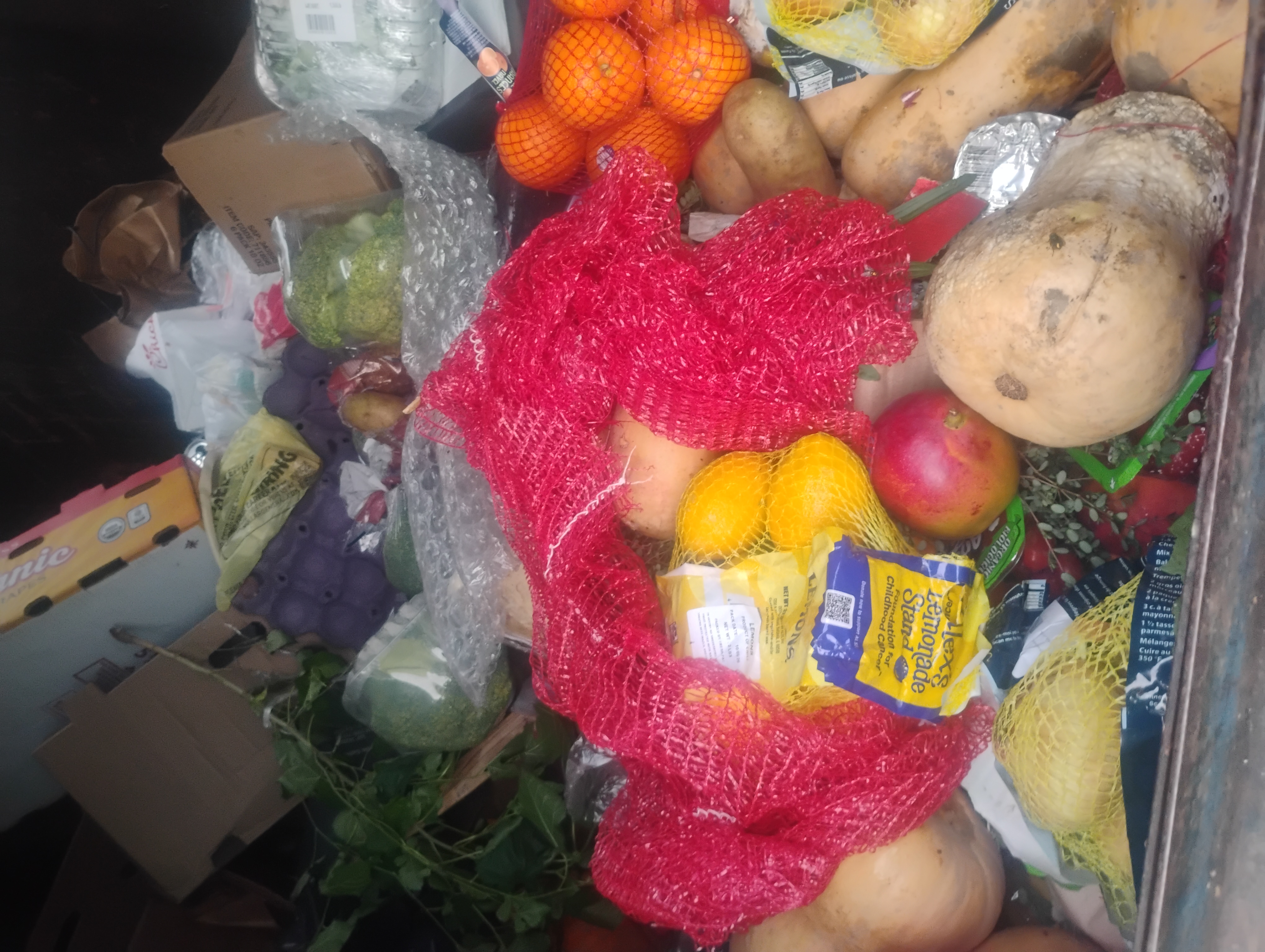
The crazy shame is the fresh food that goes to waste, everyday, but one little hiccup in this system and most people will go hungry.


IMG_20261014_182616183.jpg
Just another day at the Aldi dumpster...
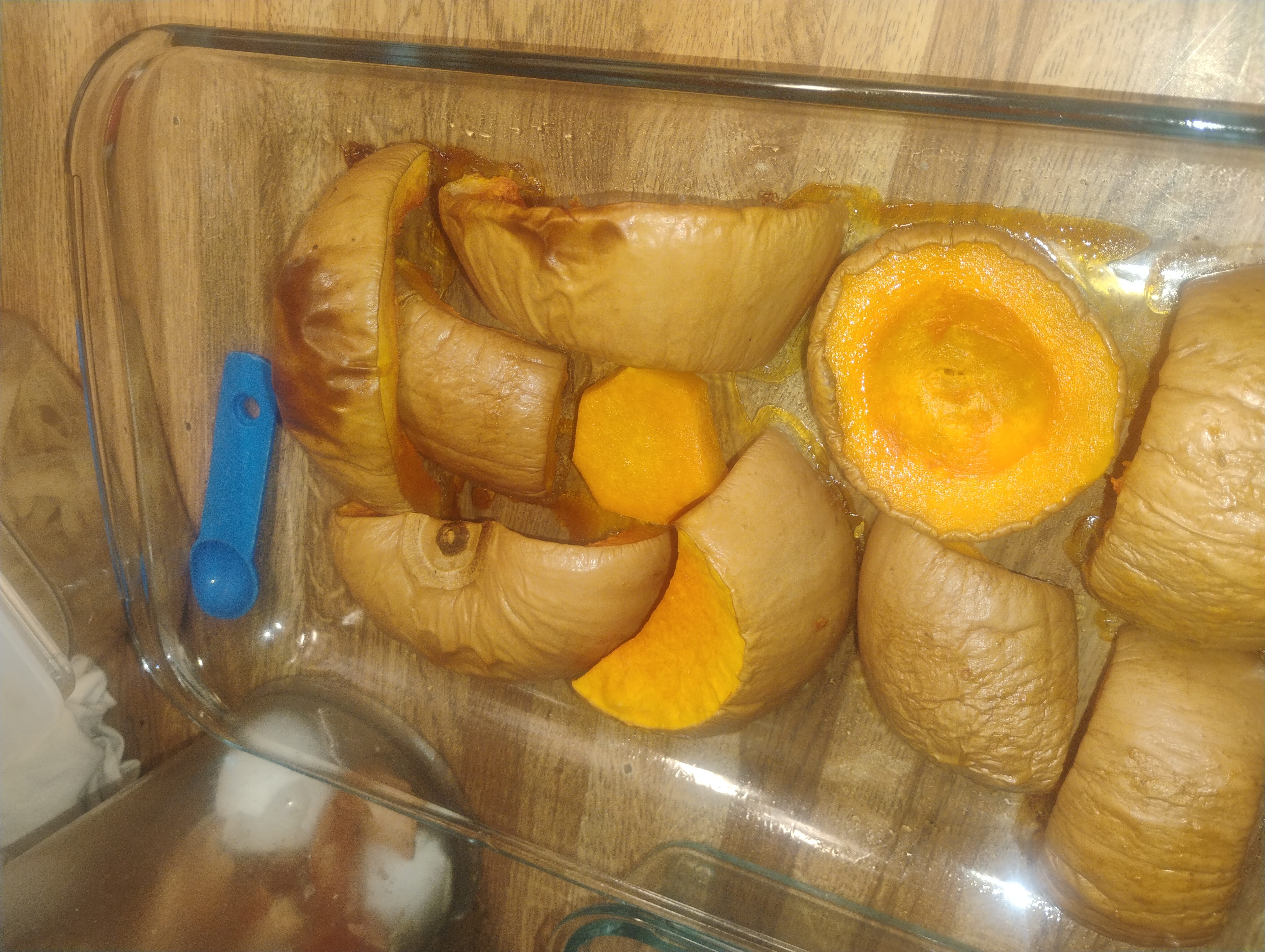
IMG_20261031_191433231.jpg
Waste not want not.Hmm.Winters squash lasts a long time, with no refrigeration.
 
Douglas Alpenstock
master pollinator
Posts: 6133
Location: Canadian Prairies - Zone 3b
1907
  • Likes 11
  • Mark post as helpful
  • send pies
    Number of slices to send:
    Optional 'thank-you' note:
  • Quote
  • Report post to moderator

Su Ba wrote:I just lived through a natural disaster in my area — 24 inches of rain, hurricane winds, and incredible flash floods.


Su Ba, how did the communications systems fare in this crisis? Cell service, text/SMS, Internet ... ? Ham radio operators? If you have comms with your neighbours, it's easier to help people.

- - - - - - - - -
EDIT: Can't resist. You could possibly manage International Morse code at a Technician level ... if you have the lung capacity. :
Alpenhorn-I-want-one.png
If you have a horn section, life is good!
 
Su Ba
pollinator
Posts: 2214
Location: Big Island, Hawaii (2300' elevation, 60" avg. annual rainfall, temp range 55-80 degrees F)
1155
forest garden rabbit tiny house books solar woodworking
  • Likes 14
  • Mark post as helpful
  • send pies
    Number of slices to send:
    Optional 'thank-you' note:
  • Quote
  • Report post to moderator
Doug… loved the long trumpets!  How fun!  

Communications—-  all systems went down except Starlink. And I mean ALL. No cellphones, no cable, no landlines, no fiber optics, no internet, no text messages, no civil defense messages. 6 miles from me is a nice CB radio community, but there was no system to spread communications beyond their immediate location. With the roadway blocked, there was no way for the CBers to spread any information along. Plus,  without electricity, I would guess that only those with generators & gasoline would have been able to function. As a side note, my neighbor has Starlink. So we were able to use it to get news about what was going on and to notify my insurance company that my new truck had been smashed by a tree. Ouch!  Lost my new truck. It hadn’t even gotten its second oil change yet.

When we made it into town on day #4, the local Hub had set up Starlink for anybody to use. I don’t know how quickly they got that done, but those folks running the Hub were right onto addressing most of the problems.

5 days into the disaster, AT&T was broadcasting a DR signal (disaster relief signal) for texting. I don’t know if it did voice calls, because I normally just use texting. But it did not support internet. At least people had communications again and could let friends and relatives know about the situation.

It was really eerie being without communication of any sort. One doesn’t know what’s going on. One doesn’t know what to expect next. You are aware that you cannot even call for outside help, and pray that nobody gets a heart attack or stroke. And with the roads blocked, you couldn’t even go out for help. The only incident I heard about was that a lady had an accident of some sort and was airlifted out via a helicopter.

Speaking of helicopters, many roads got washed out, stranding dozens of families for several weeks. The County used helicopters to airlift food, water, and medical supplies to those families. At 9 weeks post disaster, there are still roads that are not fully repaired, though a 4 wheel drive truck can get through most of them now. Yeah, it was quite the disaster.
 
Douglas Alpenstock
master pollinator
Posts: 6133
Location: Canadian Prairies - Zone 3b
1907
  • Likes 12
  • Mark post as helpful
  • send pies
    Number of slices to send:
    Optional 'thank-you' note:
  • Quote
  • Report post to moderator
Were any AM / FM stations operational? It's old school, but AM especially has a long range. I keep old school receivers around for that reason -- you can grab them free from local recycling stations because people don't understand their value.

FM receivers are built into most cell phones. Even if the cell tower is offline, you can pull in a signal if available. Could be useful.
 
Su Ba
pollinator
Posts: 2214
Location: Big Island, Hawaii (2300' elevation, 60" avg. annual rainfall, temp range 55-80 degrees F)
1155
forest garden rabbit tiny house books solar woodworking
  • Likes 13
  • Mark post as helpful
  • send pies
    Number of slices to send:
    Optional 'thank-you' note:
  • Quote
  • Report post to moderator
Doug, good suggestion, but…….  There is only one FM station that services most of my area, though it doesn’t reach as far as my house. And 6+ miles away there is a smaller radio station that only broadcasts in the Oceanview area, just a small section of the Ka’u district. With no functioning back up generator, the stations were down.   Yup, there were a LOT of lessons to be learned from this event.  
 
pioneer
Posts: 620
178
cat trees urban
  • Likes 14
  • Mark post as helpful
  • send pies
    Number of slices to send:
    Optional 'thank-you' note:
  • Quote
  • Report post to moderator
In a way, we've been in an ongoing emergency since the global crisis of 2007-8 (following the sub-prime mortgage scandal in the USA) around my way.  The Trussell Trust Foodbank network had started a few years before. The common narrative is that the Trussell network ballooned during the 2007-8 financial & food crisis,and has continued to grow including since the start of COVID-19. (Of course, reality is more complex: https://rgs-ibg.onlinelibrary.wiley.com/doi/full/10.1111/tran.12535).

Anyhow, the crisis is here, just unevenly distributed. (And yes, toilet paper is also an important consideration ..).

I've been pro-actively involved in community Mutual Aid since 2018.

Because food is a perishable universal daily need, there are a lot of benefits to a 'circulating' rather than 'stockpiling' model in any crisis that extends beyond one winter.

We have been circulating the food needs of up to 60 people each week in our community since the start of COVID-19. We've linked local shops, allotment gardens, supermarket redistribution, communal kitchens and residents to keep food moving for free (or low cost, in the case of the supermarkets).  All this work has its roots 20+ years earlier in seperate, smaller schemes

I think it is Robin Wall Kimmerer (Braiding Sweetgrass, Gathering Moss, The Serviceberry, Bud Finds Her Gift: https://robinwallkimmerer.com/books/) that I read & hear sharing Potawatomi wisdom advising "storing" food by sharing with your communities.
 
Robert Ray
gardener
Posts: 3655
Location: Cascades of Oregon
1106
  • Likes 10
  • Mark post as helpful
  • send pies
    Number of slices to send:
    Optional 'thank-you' note:
  • Quote
  • Report post to moderator
Olive oil, one ounce carries 240 calories. A drizzle of olive oil over a dish or used for dipping is a simple way to bump up the calories on sometimes bland dishes.
 
steward and tree herder
Posts: 15183
Location: Isle of Skye, Scotland. Nearly 70 inches rain a year
8786
6
transportation dog forest garden foraging trees books food preservation woodworking wood heat rocket stoves ungarbage
  • Likes 8
  • Mark post as helpful
  • send pies
    Number of slices to send:
    Optional 'thank-you' note:
  • Quote
  • Report post to moderator

Su Ba wrote:I just lived through a natural disaster in my area .......
How did the town folks do?  Poorly if they had been entirely on their own. Luckily for them we have three things going for us here —#1- we have a strong culturally based concept of sharing,  #2 we have a Hub system designed to respond to a disaster, and #3 we have local non-profit community oriented groups that immediately leapt into action.  


Su Ba - thanks so much for sharing your experience. The importance of community building before a disaster is evident!
As is the interdependency of modern systems - power outages have so many knock on effects from the obvious lack of utility (electricity) to mains water, fuel, shops and communications.
Good point about eating from the fridge. Cheese would probably last a while, but cooked food like sliced meats would need using up quickly.
I'm a big fan of having some staples in tins ready for emergencies; baked beans, soups, tinned meat and fish are all ready to eat possibilities good to have on hand.
 
Posts: 264
Location: Rural Pacific Northwest, Zone 8
59
transportation forest garden writing
  • Likes 11
  • Mark post as helpful
  • send pies
    Number of slices to send:
    Optional 'thank-you' note:
  • Quote
  • Report post to moderator

My regular pantry would never get to the point where it wouldn’t get us by for a few days. I always tell people to just have water, and a little extra of anything they use regularly that is shelf stable and ideally doesn’t need cooking or added water. I wish I could say we’re all self sufficient and eating local, but at this point we’re not, so we have things like tuna and canned beans.

John F Dean wrote:Last Friday an old friend
contacted me, so we set up a time to meet in a restaurant about 30 miles away.  Over a couple of cups of coffee we caught up on old times.  He knew I had been into homesteading. His mind linked that with Prepping , and as a city dweller, he asked me what he should have in a three day survival kit.  I thought for a few minutes and cautioned him I was limiting  my thoughts to food.  I also reminded him I saw myself as a homesteader.  His train of thought was beans and rice.  My administrative mind went with the following logic:

1. For three days one can survive on water alone.  Get three gallons of water and call the project done.

2.  Ok, he wants food.  Get food that doesn’t need cooking.  Add a few energy bars, a few cans of speghetti, etc. …maybe extra.   Maybe water to flush the toilet.   I reminded him his water heater probably already had at least 30 gallons of water.

3.  Oh, he wants hot food.  Add a three day supply of Mountain House or similar, some matches, an lp burner, and a few cans of lp gas.   Maybe toss in a jar of instant coffee and some tea.

4.  Combined the above is 6 days.  Now if he wanted longer term without busting the budget, get the beans and rice…and lots more water and lp.  If he needed more variety … add lentils and split peas….maybe a can of dehydrated onions….maybe dehydrated carrots….maybe a few cans of spam.

Obviously, the list could go on, but the above takes him well past 3 days.  I never could understand the three day thing.  I have had snow storms and tornados keep me in longer than that.
 
Douglas Alpenstock
master pollinator
Posts: 6133
Location: Canadian Prairies - Zone 3b
1907
  • Likes 10
  • Mark post as helpful
  • send pies
    Number of slices to send:
    Optional 'thank-you' note:
  • Quote
  • Report post to moderator

John F Dean wrote:Obviously, the list could go on, but the above takes him well past 3 days.  I never could understand the three day thing.  I have had snow storms and tornados keep me in longer than that.


Yeah, three days is sort of ridiculous. Although from an urban perspective, in a high-rise condo that is dependent on every grid system all the time, it might seem alarmist or even radical. How many of these highly exposed people could provide three days of every service they need?

For me, 3 days off-grid would be a tolerable nuisance (fridges, freezers, Internet). 7 days would be a giant pain in the butt. 10 days would have me scanning for zombies and trading for beer. Through this we would be working with our multi-skilled neighbours in an accidental "medieval village" as humans have done since forever. It's a far cry from a high-rise condo.
 
Please all, and you will please none --Aesop ... displeased tiny ad:
Rocket Mass Heater Manual - now FREE for a while
https://permies.com/t/138802/Rocket-Mass-Heater-Manual-FREE
reply
    Bookmark Topic Watch Topic
  • New Topic