

|
|

|

|

|

|
|
|
|
|
|
|
|

|
.jpeg)
|

|

|

|
 8
8


--
"Whitewashed Hope: A Message from 10+ Indigenous Leaders and Organizations"
https://www.culturalsurvival.org/news/whitewashed-hope-message-10-indigenous-leaders-and-organizations
2
Gordon Blair wrote:That's quite a story, Cécile! Lends anecdotal credence to the idea that sunchokes can provide serious human-available calories without breaking up the inulin into sugar first.
I have tried to acclimate to them, but perhaps it would need to be done more consistently and built up gradually.
$10.00 is a donation. $1,000 is an investment, $1,000,000 is a purchase.
14


 9
9
Ac Baker wrote:Has anyone got a source where this has been tested by measuring the insulin content through the winter & spring of sunchoke storage tubers?
How Permies works: https://permies.com/wiki/34193/permies-works-links-threads
My projects on Skye: The tree field, Growing and landracing, perennial polycultures, "Don't dream it - be it! "
9
--
"Whitewashed Hope: A Message from 10+ Indigenous Leaders and Organizations"
https://www.culturalsurvival.org/news/whitewashed-hope-message-10-indigenous-leaders-and-organizations
9
Lina
https://catsandcardamom.com
8
Lina Joana wrote:Om, so… my family has had sunchokes ever since I can remember. We eat them raw in salads, and I like the flavor.
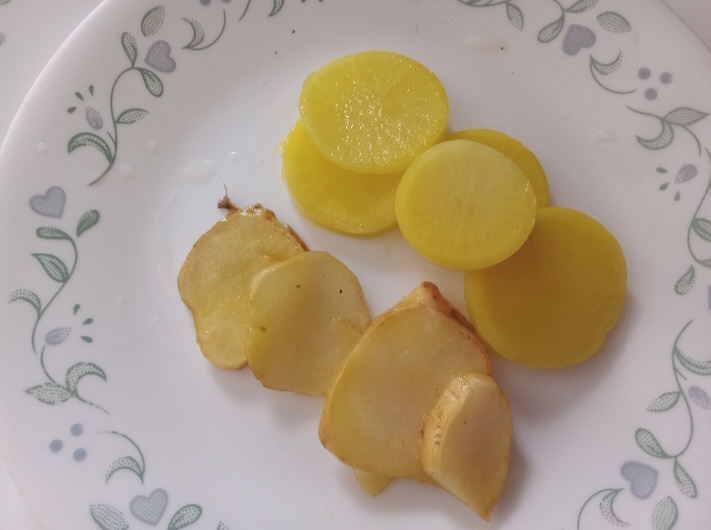
However, any time we cook them, (baked, mashed, or in soup), they taste watery to me, with a “sharp” flavor that I don’t like at all.
What I am wondering is, is this a varietal thing? I have only ever eaten from the family patch. We nearly always dig them after frost, though we did try early to see if that improved cooking texture.
Had anyone had experience with different strains? Some being good cooked and some less so?
$10.00 is a donation. $1,000 is an investment, $1,000,000 is a purchase.
15
 11
9
11
9
Joseph Lofthouse wrote:
To me, describing a cooked sunroot as "sharp" implies that cooking really brings out the flavor/aroma of sunflower resin. I don't much care for that flavor, so I prefer to eat them raw, lacto-fermented, or added in small amounts to roasts, stews, or stir-fries.
$10.00 is a donation. $1,000 is an investment, $1,000,000 is a purchase.


 8
8


 7
8
7
8
Joseph Lofthouse wrote:When I dig sunroots, I immediately wash them and store in plastic. Due to that, the skin stays soft and tender when I eat them, so I don't peel.
$10.00 is a donation. $1,000 is an investment, $1,000,000 is a purchase.
13
Zone 6, 45 inches precipitation, hard clay soil
 10
10
 9
9


Every Man Dies... Not Every Man Really Lives.
6
 13
13
Ac Baker wrote:Interesting.
So, in my climate, sunchokes overwinter well in the ground.
Then we get to decide the harvest date based upon the properties we want in our crop.
I've not been able to find inulin measurements based upon harvesting at the start of the new season of budding/sprouting growth.
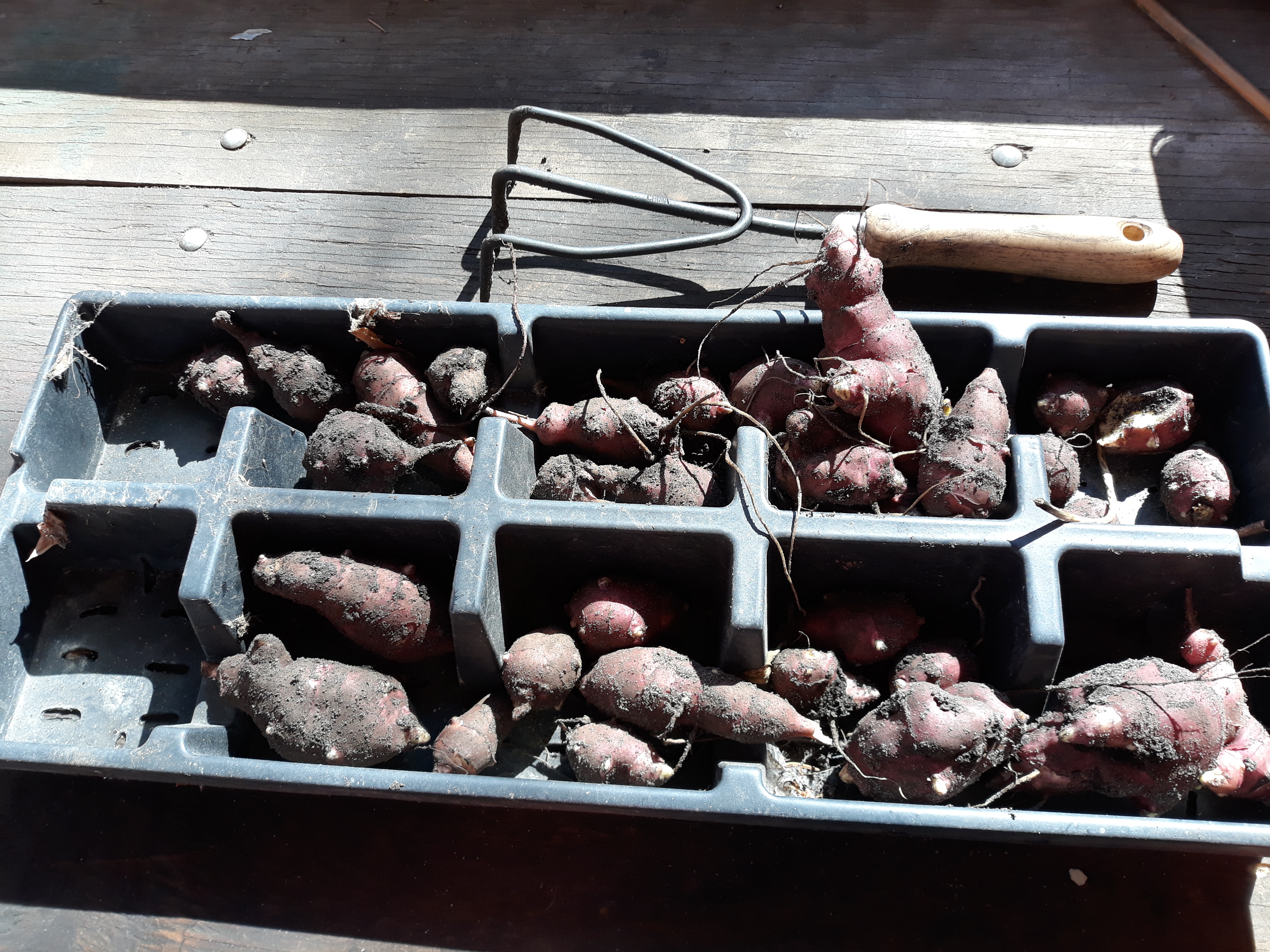
But the consensus seems to be that, for a given variety and year, the inulin content will rise once the leaves are established, peaking around the first hard frost when the leaves are killed off. This is likely to be up to 85% of dry weight.
Then the inulin content will start to fall significantly when the budding process begins in late winter or early spring, as enzymes convert the inulin to simple sugars e.g. fructose, for new plant growth, reaching a minimum just as the new leaves start to usefully photosynthesize. This could be as low as 60% of dry weight.
But I can't find a temperate climate study that tests these two figures, as yet.
Weeds are just plants with enough surplus will to live to withstand normal levels of gardening!--Alexandra Petri


 11
11
One can never be too kind to oneself or others.
Never our fault, always our responsibility
12
Try Linux on your computer, free, stable and maintenance free. Distributions I recommend are Linux-Mint and Debian. Better than throwing your PC away when Windows rejects you.
6
9
How Permies works: https://permies.com/wiki/34193/permies-works-links-threads
My projects on Skye: The tree field, Growing and landracing, perennial polycultures, "Don't dream it - be it! "
8

|
I brought this back from the farm where they grow the tiny ads:
the next generation of humanure
https://www.richsoil.com/willow
|


.jpg)


