
• Post Reply Bookmark Topic Watch Topic
  • New Topic
permaculture forums growies critters building homesteading energy monies kitchen purity ungarbage community wilderness fiber arts art permaculture artisans regional education skip experiences global resources cider press projects digital market permies.com pie forums private forums all forums
this forum made possible by our volunteer staff, including ...
master stewards:
  • Carla Burke
  • Anne Miller
  • Nancy Reading
  • John F Dean
  • r ransom
  • paul wheaton
  • Timothy Norton
stewards:
  • Jay Angler
  • Pearl Sutton
  • Andrés Bernal
master gardeners:
  • Christopher Weeks
gardeners:
  • M Ljin
  • Thekla McDaniels
  • May Lotito

Choosing or designing clothes that last a long time?

 
master steward
Posts: 20000
Location: USDA Zone 8a
5010
dog hunting food preservation cooking bee greening the desert
  • Likes 6
  • Mark post as helpful
  • send pies
    Number of slices to send:
    Optional 'thank-you' note:
  • Quote
  • Report post to moderator
How often clothes are washed tends to shorten the life of garments.

I have heard that soap residue in garments also shortens the life of garments.
 
gardener
Posts: 1605
Location: Washington State
1023
8
forest garden trees rabbit earthworks composting toilet fiber arts sheep wood heat woodworking rocket stoves homestead
  • Likes 10
  • Mark post as helpful
  • send pies
    Number of slices to send:
    Optional 'thank-you' note:
  • Quote
  • Report post to moderator

Kate Downham wrote:The linen skirt that I made with an elastic waist got holes quite quickly where the elastic was, but a linen wrap skirt I have is still looking great after two years. The wrap skirt is made from a heavier weight linen, but I suspect that the elastic on the other skirt may have irritated the linen fibres somehow, which could also explain it.

Does mixing up different fibres this way cause the natural one to wear out more quickly?


Blending cotton or linen with plastic (polyester, for example) fibers definitely causes more wear on the individual fibers and therefore the fabric when compared to a fabric of a single natural ingredient.

I did a study on fiber content when I was making rugs.  The "stronger" polyester fibers tend to cut the cotton fibers and decrease longevity.  I'm guessing/extrapolating that pilling and other signs of wear could also be caused by the blending of fiber contents.  

I know that the benefits (and longevity) of linen plummet quickly when blended with polyester.

And. I've started stitching down my elastic waistband to reduce the free-floating elastic in the hopes that it reduces the wear you mentioned.
 
gardener
Posts: 2305
1106
14
homeschooling hugelkultur trees medical herbs sheep horse homestead
  • Likes 8
  • Mark post as helpful
  • send pies
    Number of slices to send:
    Optional 'thank-you' note:
  • Quote
  • Report post to moderator

Nancy Reading wrote:

Do you think the fibres are better when handspun (longer or otherwise superior) or that the machine made yarn is damaged in some way? Handspun and handmade is obviously more precious, but I'd have thought that inconsistencies would be detrimental to longevity not ending up superior.


Hello Nancy!


I am sure it would depend on the yarn.   I cant really say for the sweaters I did not produce myself.  They just look like regular yarn but the tag says hand spun and hand knitted.  They seem to be ageless.  I don't know why.

I have made knitted garments with good store bought yarn too.  It seems like they end up needing repair.  Two of my favorite skirts need to be repaired right now because a yarn has broken and the knitting is coming undone.  


For the yarn I produce from my sheep, I was having some inconsistencies in thickness and tensile strength.  Now I run it through about 5 lbs of tension so the weak spots will break and then I twine it to 2 ply before I knit.  That ends up with a pretty strong product.  

I am new at this though.  I only have one outfit I have made this way and it is on its second winter.  I still have a lot to learn but now I am warm and cozy when I go out to do chores!
 
Posts: 845
205
  • Likes 9
  • Mark post as helpful
  • send pies
    Number of slices to send:
    Optional 'thank-you' note:
  • Quote
  • Report post to moderator
I have recently radically changed how I dress and from it I found I get a lot longevity out of my clothing as an additional bonus.

Myself, I wear the same set of clothes.

I have two clothing choices. Work clothing and dress clothing, but it is the same black pants, and gray shirt, just differing in type and construction of the clothes. I do this so I minimize the clothes I have (3 dress outfits/5 work outfits), and everyday I know what I am going to wear without thought.

But here comes the longevity. I think they will last longer because I chose dark colors that do not stain. No longer ring around the collar with white dress shirts that must be thrown out after wearing it twice. But they also last longer because I wash them much more often (I have limited outfits). Using a modern, gentle washer/dryer combo unit the fabric is not abused as much in the washer/dryer. Some outfits get worn a lot and often, such as worn that day, washed that night, and reworn the next day, while other outfits remain in the closet unused. This will cause some outfits to wear prematurely, but the other outfits will be much older before they are worn out making the two average out.

We shall see!
 
gardener
Posts: 4072
Location: Western Slope Colorado.
1202
5
goat dog food preservation medical herbs solar greening the desert
  • Likes 4
  • Mark post as helpful
  • send pies
    Number of slices to send:
    Optional 'thank-you' note:
  • Quote
  • Report post to moderator
About the question of whether “plastic” fibers such as polyester cause more wear on the natural ones in a commercially produced blended fabric, there is also the question of the quality of natural fibers included.  It can be a short fiber or low quality natural fiber to begin with.  Wool is recycled, which breaks and abrades the fibers.  Both wool and cotton vary in quality, weak and or short because of the variables involved in all agricultural products.

If it doesn’t SAY 100 % virgin wool it probably isn’t! I’m not as familiar with ELS, extra long staple cotton varieties, but Pima cotton and Egyptian cotton are extremely long staple.

Now this is just my bias, but I believe that high quality all natural fabric is going to be more expensive, and there will be labels to attempt to communicate that to the consumer.  The others are going to spend as little as possible on production, and deflect the attention of the buyer onto something else, making unsubstantiated claims that have no meaning.

And when you make your own, you have a better chance to be aware of the variables.
 
pollinator
Posts: 3639
Location: Meppel (Drenthe, the Netherlands)
1301
dog forest garden urban cooking bike fiber arts
  • Likes 8
  • Mark post as helpful
  • send pies
    Number of slices to send:
    Optional 'thank-you' note:
  • Quote
  • Report post to moderator

Nancy Reading wrote:

Samantha Lewis wrote:Now I am spinning the yarn from my own sheep too.  I think this a great way to create long lasting garments.  

I make cotton and linen stuff too.  It does not have to be all wool.   Everything seems to last longer if it is homemade


Do you think the fibres are better when handspun (longer or otherwise superior) or that the machine made yarn is damaged in some way? Handspun and handmade is obviously more precious, but I'd have thought that inconsistencies would be detremental to longevity not ending up superior.


I think the handspun is better because of some reasons:
Handspinners use the best quality fibers, they don't want to waste their time on low quality fibers.
Handspinners prepare the fibers in the best way. Machines do it fast, but often that isn't the best way.
Handspinners are aware of the end-product they want to make. They have different ways of spinning, depending on what they're spinning the yarn for: a warm sweater, hard-wearing socks or maybe a woven shawl ...

Of course this is not always the case. But I think of experienced spinnners.
 
gardener
Posts: 3324
Location: Zone 4b/5a
2084
ancestral skills forest garden foraging composting toilet fiber arts bike medical herbs seed writing ungarbage
  • Likes 9
  • Mark post as helpful
  • send pies
    Number of slices to send:
    Optional 'thank-you' note:
  • Quote
  • Report post to moderator
A lot of good outdoor clothing or gear, although much of it is synthetic these days, is made with a lovely invention called rip-stop fabric. This means the cloth is woven in such a way that after X normal threads, warp or weft, there is one stronger thread. If one were to use only the stronger thread it might make a more uncomfortable garment, but the finer threads provide softness while the coarser ones give structure. I think it would be easy enough for a hand weaver to do this, as well. Perhaps the stronger thread could be a tight two ply (with slightly thinner strands) and the rest are singles?

My rip-stop nylon pants seem to last forever—despite little tears here and there from a blackberry or a rosebush, they never seem to spread because of this design.
 
M Ljin
gardener
Posts: 3324
Location: Zone 4b/5a
2084
ancestral skills forest garden foraging composting toilet fiber arts bike medical herbs seed writing ungarbage
  • Likes 8
  • Mark post as helpful
  • send pies
    Number of slices to send:
    Optional 'thank-you' note:
  • Quote
  • Report post to moderator
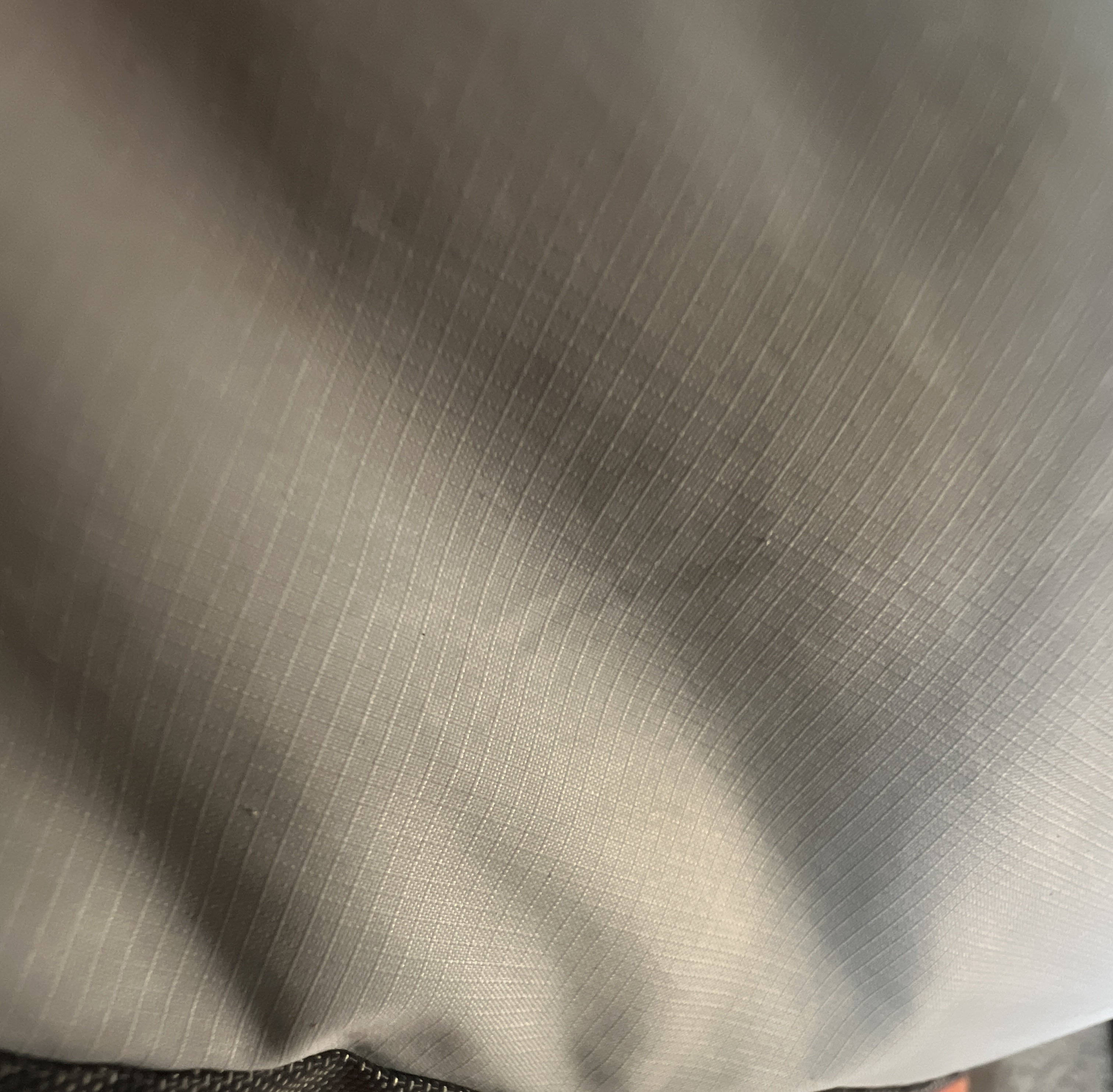
Picture of rip stop synthetic fabric in a sleeping bag:
IMG_0625.jpeg
Notice the pronounced thread grid pattern.
 
steward
Posts: 16573
Location: Pacific Wet Coast
11143
duck books chicken cooking food preservation ungarbage
  • Likes 8
  • Mark post as helpful
  • send pies
    Number of slices to send:
    Optional 'thank-you' note:
  • Quote
  • Report post to moderator
I don't think I've ever spotted rip-stop fabric that was all natural. Has anyone else seen it?

That said, I'm finding it harder and harder to find 100% natural fiber fabric in the few sewing shops that remain. Hopefully there will be a resurgence.
 
M Ljin
gardener
Posts: 3324
Location: Zone 4b/5a
2084
ancestral skills forest garden foraging composting toilet fiber arts bike medical herbs seed writing ungarbage
  • Likes 4
  • Mark post as helpful
  • send pies
    Number of slices to send:
    Optional 'thank-you' note:
  • Quote
  • Report post to moderator
A quick search gives this: https://ripstopfabric.com/cotton-ripstop/

100% cotton ripstop fabric!
 
Jay Angler
steward
Posts: 16573
Location: Pacific Wet Coast
11143
duck books chicken cooking food preservation ungarbage
  • Likes 8
  • Mark post as helpful
  • send pies
    Number of slices to send:
    Optional 'thank-you' note:
  • Quote
  • Report post to moderator

M Ljin wrote:A quick search gives this: https://ripstopfabric.com/cotton-ripstop/  100% cotton ripstop fabric!


If you read the Industry standards part of the link, it sounds like it's easier to source in Australia and other hotter countries. That may be why I haven't seen it in my very much cooler/wetter ecosystem.

The southern USA might also import it?
 
Thekla McDaniels
gardener
Posts: 4072
Location: Western Slope Colorado.
1202
5
goat dog food preservation medical herbs solar greening the desert
  • Likes 8
  • Mark post as helpful
  • send pies
    Number of slices to send:
    Optional 'thank-you' note:
  • Quote
  • Report post to moderator
Here’s a company that sells fabric by fiber content

https://www.dharmatrading.com/collections/wool-wool-blend-fabrics

I accidentally copied the link when the screen was showing wool and wool blend fabrics.  They have similar categories for cotton, linen, hemp, silk.  The blends are more likely to be with other natural fibers (plus rayon, the intermediate category) than synthetics.

The really nice thing about this company is that their origins are as fiber arts suppliers.  They sell clothing blanks as well as fabrics.  And dyes…. Commercial chemical textile dyes…. And because that’s their main focus (dyes and things to dye) they are SCRUPULOUS about listing fiber content with great accuracy.  They sell garments, and they will even tell you the fiber content of thread the garments are sewn with !  Because a cotton tee shirt sewn with white polyester thread won’t look very good once it’s been dyed if the seams are bright white disrupting the art work…

They’ve been in business since the 60s supplying tie dye artists.  I first bought from them in the 80s.  They’ve always been great to deal with.

Their website is worth a look.
 
Steve Zoma
Posts: 845
205
  • Likes 6
  • Mark post as helpful
  • send pies
    Number of slices to send:
    Optional 'thank-you' note:
  • Quote
  • Report post to moderator

M Ljin wrote:A lot of good outdoor clothing or gear, although much of it is synthetic these days, is made with a lovely invention called rip-stop fabric. This means the cloth is woven in such a way that after X normal threads, warp or weft, there is one stronger thread. If one were to use only the stronger thread it might make a more uncomfortable garment, but the finer threads provide softness while the coarser ones give structure. I think it would be easy enough for a hand weaver to do this, as well. Perhaps the stronger thread could be a tight two ply (with slightly thinner strands) and the rest are singles?

My rip-stop nylon pants seem to last forever—despite little tears here and there from a blackberry or a rosebush, they never seem to spread because of this design.


That sounds nice. I think the hiking pants I buy (yes, mens leggings) have what is called "four way stretchable fabric". It does stretch for sure which it needs to do because it has to contact skin in order to keep away sweat and stop chaffing.

I do sew up rips and tears, but what I seem to find is I sew up a tear or two, then suddenly the pants are riddled with holes. I am not sure if the fabric just breaks down at some point? They are pretty thin. Not sure of the denier but it is nearly see-thru. Another issue I have had with them is tick spray. I try not to use any, but the few times I did, it literally ate through the material.

One small change I made is carrying a small circle of foil insulation in my backpack. Not only does this protect me from rough granite rocks, but also rough picnic tables. It also allows me to sit on dew riddles chairs. Since I live on the coast everything is ocean-spray riddled. It helps but after awhile the material just plain breaks down.

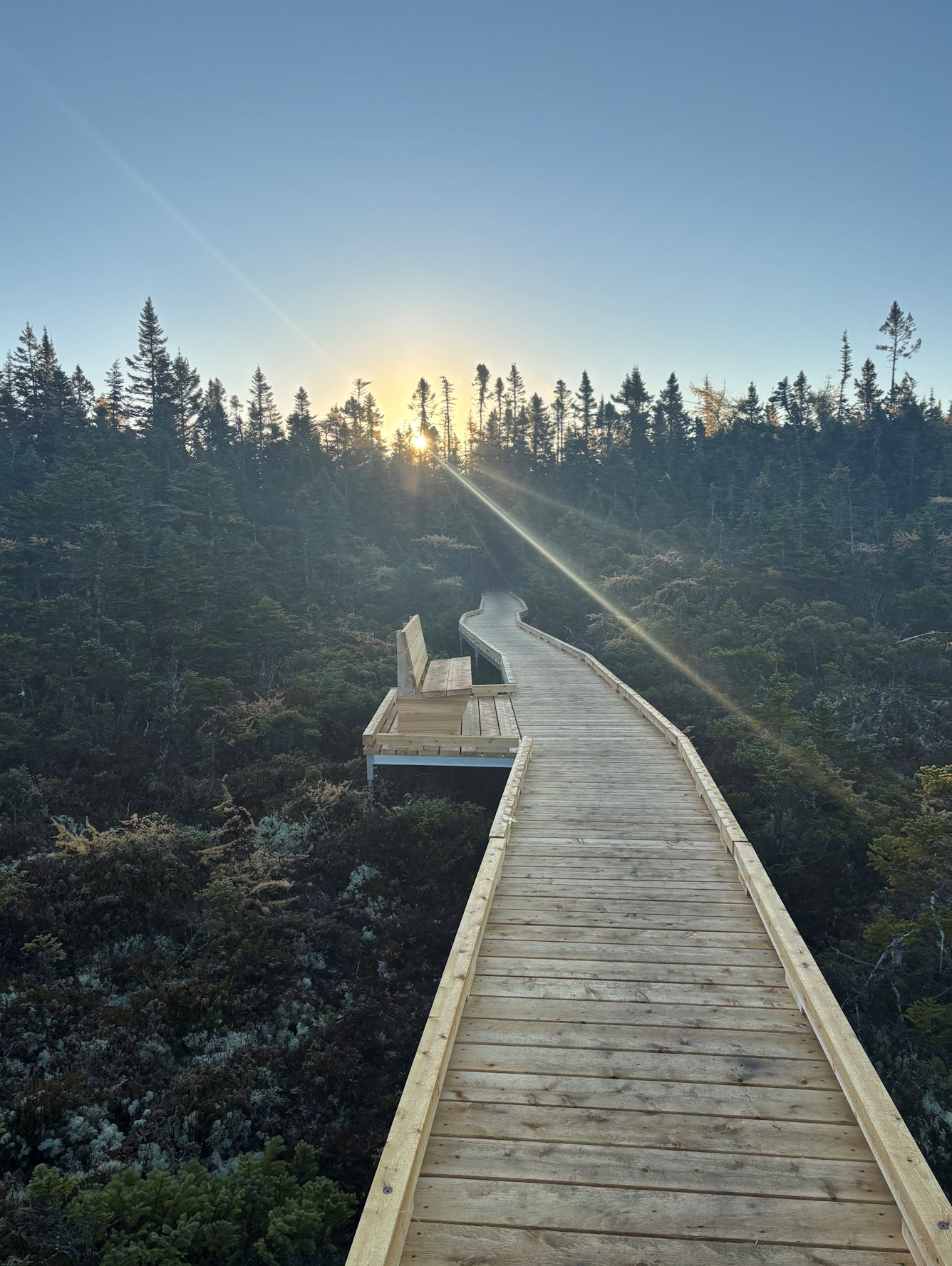
Here is an example of a dew-laden seat. Here, some preserves are well-built like this one that takes the trail out over a peat bog or what they call "heaths" here, while other preserves are far more primitive for hiking trails. Both have their place.

Peat-Bog.jpg
[Thumbnail for Peat-Bog.jpg]
 
gardener & author
Posts: 3741
Location: Tasmania
2398
9
homeschooling goat forest garden fungi foraging trees cooking food preservation pig wood heat homestead
  • Likes 8
  • Mark post as helpful
  • send pies
    Number of slices to send:
    Optional 'thank-you' note:
  • Quote
  • Report post to moderator
I learned a little more about wool this year and thought I’d share it here:

(All of this probably depends on the way it is spun to some extent, so if any hand-spinners want to correct me, please feel free to. The information below is what I gathered for commercially spun wool.)

There’s been a lot of fuss made in recent years about high micron count wool (very fine wool like merino, lambswool, and cashmere) being “better”. When this fuss is made about it being “better”, I think they just mean “softer” or “thinner”, it does not mean that it is more durable.

I did some research, and generally the thicker the fibre (lower micron count), the more durable it will be, so this year when I needed a new cardigan, rather than just picking the first 100% natural option in my size that fitted my budget (which seems to always be either merino or lambswool), I found a nice Norwegian wool one. British heritage breeds of sheep are also good.

I wonder also if the length of the fibre before it is spun makes a difference? Do the long wool breeds like the Border Leicester make more durable wool than a sheep with shorter wool?
 
Rusticator
Posts: 10203
Location: Missouri Ozarks
5738
7
personal care gear foraging hunting rabbit chicken cooking food preservation fiber arts medical herbs homestead
  • Likes 10
  • Mark post as helpful
  • send pies
    Number of slices to send:
    Optional 'thank-you' note:
  • Quote
  • Report post to moderator
It does depend on the spinning. The shorter the fiber length/ staple length, the more twist it needs, in general, to stabilize & strengthen it. I'm not usually a big fan of merino, either, but the content percentages also make a difference. Fibers like cashmere, with their shorter staple length and lower microns do incredible well blended with a fiber with a longer staple length and higher microns, bringing warmth from their loft, a well as softness, while the longer fibers bring more stability/ durability. Angora (notoriously short-stapled) blended with silk (with the longest staple length of all) make an incredibly luxurious, durable, soft blend worth paying for, if one can afford it. But, on its own, Angora would fall apart, quickly - I lift up the infamous Angora sweaters of the mid/late 80s, as a prime example. They we're warm, incredibly soft and thick, but shed horribly, too. Some fibers are more 'grippy' than others though, and don't necessarily need to be blended, to achieve the same strength as a blend.

 
Creativity is allowing yourself to make mistakes; art is knowing which ones to keep. Keep this tiny ad:
grow your own garden and build your own home in the gardening gardeners program
https://wheaton-labs.com/bootcamp
reply
    Bookmark Topic Watch Topic
  • New Topic