• Post Reply Bookmark Topic Watch Topic
  • New Topic
permaculture forums growies critters building homesteading energy monies kitchen purity ungarbage community wilderness fiber arts art permaculture artisans regional education skip experiences global resources cider press projects digital market permies.com pie forums private forums all forums
this forum made possible by our volunteer staff, including ...
master stewards:
  • Carla Burke
  • John F Dean
  • r ransom
  • Nancy Reading
  • Timothy Norton
  • Jay Angler
stewards:
  • paul wheaton
  • Pearl Sutton
  • Eric Hanson
master gardeners:
  • Christopher Weeks
  • M Ljin
gardeners:
  • thomas rubino
  • Megan Palmer
  • Benjamin Dinkel

Help with non plastic raised bed liner

 
gardener
Posts: 1932
Location: N. California
930
2
hugelkultur kids cat dog fungi trees books chicken cooking medical herbs ungarbage
  • Likes 15
  • Mark post as helpful
  • send pies
    Number of slices to send:
    Optional 'thank-you' note:
  • Quote
  • Report post to moderator
I enjoy making raised beds. Pallet wood is what makes it affordable for me to make them. I use heat treated pallets only. I have watched the video's claiming they are not safe because you don't know what they were used to transport (after I had built several) I will admit I didn't think of this and it really upset me. Finally I decided I don't live in a perfect world, I hope sanding, and discarding wood that looks questionable (saturated, off color etc.) is good enough.
I also didn't realize weed cloth contains plastic. building with pallet wood means a lot of imperfections, so I always line my beds with weed cloth to keep the soil from falling out of the gaps, cracks, and knot holes. I'm a realist who strives for perfection. I have not eliminated plastic from my daily life. I would like to eliminate it as much as possible. I'm not going to remake all of my raised beds. I don't want to use it in the future.
I have thought of 4 alternatives. 1 Try to find cheap 100% cotton sheets/material. 2 Burlap. 3 Coco core. 4 Wood. Wood is the cheapest option (pallet wood) but it requires a lot more wood, almost double, and adds a lot of time because I will have to build it bored and batten style. Cotton is the next cheapest if I'm shopping thrift store sales, or yard sales. Burlap is supposed to be slow to break down.
I haven't found a lot of info about alternative bed liners. It seems most people use weed cloth. I'm quite interested in hearing if anyone has alternate ideas, or information on my ideas.
I'm far down on the Permies scale, but strive to inch my way up, as I learn and grow.  Thanks
 
Posts: 78
Location: Colorado Springs, CO [Zone: 5B/6A]
14
hugelkultur goat fungi gear hunting earthworks building writing woodworking
  • Likes 9
  • Mark post as helpful
  • send pies
    Number of slices to send:
    Optional 'thank-you' note:
  • Quote
  • Report post to moderator
I don't use raised beds but if it were me, I'd just lay wood (limbs or pallet pieces) on the inside of the bed walls to plug the cracks and make sure they are in place as you add soil, the pressure of the soil should keep them in place. If you use limbs, make sure they are fully dead so they don't leech nitrogen.

The easiest option would be to use cotton sheets like you said.
 
master gardener
Posts: 5501
Location: Carlton County, Minnesota, USA: 3b; Dfb; sandy loam; in the woods
3066
7
forest garden trees books chicken food preservation cooking fiber arts seed woodworking homestead ungarbage
  • Likes 7
  • Mark post as helpful
  • send pies
    Number of slices to send:
    Optional 'thank-you' note:
  • Quote
  • Report post to moderator
In my experience, burlap breaks down even faster than cardboard.
 
Steward of piddlers
Posts: 6949
Location: Upstate New York, Zone 5b, 43 inch Avg. Rainfall
3616
monies home care dog fungi trees chicken food preservation cooking building composting homestead
  • Likes 10
  • Mark post as helpful
  • send pies
    Number of slices to send:
    Optional 'thank-you' note:
  • Quote
  • Report post to moderator
I'm trying to think outside of the box so bear with me as I spitball.

Are we talking raised beds as in raised completely off the ground or raised beds as in some walls to hold a heap of dirt ontop of existing soil?

If it is the former, you wouldn't happen to have a bunch of scrap hardware cloth would you? I wonder if the soil aggregation would keep the soil material in the bed and not pass through the wire mesh.

If it is the latter and we are only worrying about the exterior walls, I think there may be some more options like old roofing slate or tile butted up on the inside.
 
gardener
Posts: 5529
Location: Cincinnati, Ohio,Price Hill 45205
1174
forest garden trees urban
  • Likes 10
  • Mark post as helpful
  • send pies
    Number of slices to send:
    Optional 'thank-you' note:
  • Quote
  • Report post to moderator
I generally don't line my pallet wood beds at all.
My soil settles in and doesn't spill out from the openings enough to worry about.

That said, I have built a few lined with surplus tile and I plan on doing this more in the future.
I've settled on using metal roofing washers and short drywall screws as the best way to affix them to the wood.
The tile I use is ~12"x 24", so it fits the dimensions of a pallet rather well.


For you I would suggest aluminum gutter guard.
It come in rolls 6" wide, and it shows up in surplus shops all the time.
It will go on easily with a staple gun.
If the holes in that are too small for your needs, 6" rolls of aluminum flashing might serve.
I would use sheet metal screws to affix that.

If you want to use burlap and make it last, a coat of cement to create "petrified hessian" /burlap concrete might do the trick, but a soak in a boran solution might work just as well.
 
gardener
Posts: 3082
Location: Central Maine (Zone 5a)
1618
homeschooling kids trees chicken food preservation building woodworking homestead
  • Likes 9
  • Mark post as helpful
  • send pies
    Number of slices to send:
    Optional 'thank-you' note:
  • Quote
  • Report post to moderator
I suspect any organic material will break down before you want it to.

I know there is uncoated aluminum flashing, and there may be a similar uncoated roofing material. Perhaps recycling some tin roofing from an old building being torn down?

I also like Timothy's suggestions of tile or slate.
 
Posts: 45
Location: Missouri
11
  • Likes 10
  • Mark post as helpful
  • send pies
    Number of slices to send:
    Optional 'thank-you' note:
  • Quote
  • Report post to moderator

Timothy Norton wrote:
you wouldn't happen to have a bunch of scrap hardware cloth would you?


I don't think it would really be a problem, but i wonder about zinc buildup from the galvanized metal, especially if you replace it much
 
steward and tree herder
Posts: 11826
Location: Isle of Skye, Scotland. Nearly 70 inches rain a year
5941
5
transportation dog forest garden foraging trees books food preservation woodworking wood heat rocket stoves ungarbage
  • Likes 11
  • Mark post as helpful
  • send pies
    Number of slices to send:
    Optional 'thank-you' note:
  • Quote
  • Report post to moderator
Liners can be added for lots of reasons. I was thinking about keeping the soil away from the wooden sides so they don't rot, but your reason is much easier to accomodate with other materials:

Jen Fulkerson wrote:building with pallet wood means a lot of imperfections, so I always line my beds with weed cloth to keep the soil from falling out of the gaps, cracks, and knot holes.


So anything that would caulk the holes (suitably non toxic and durable) would do. For me what springs to mind is dag end fleeces - mostly because I find those very easy to find locally. I'm planning on lining my raised wicking bed in my polytunnel with my fleece. You might find woolen sweaters or cotton T shirts would be easier to find locally. They ought to last a season or few.
 
steward
Posts: 3535
Location: Maine, zone 5
2134
8
hugelkultur dog forest garden trees foraging food preservation cooking solar seed wood heat homestead
  • Likes 13
  • Mark post as helpful
  • send pies
    Number of slices to send:
    Optional 'thank-you' note:
  • Quote
  • Report post to moderator
I don't make raised beds, but if I did I would probably try burning the wood's faces for a shou sugi ban style wall.  As a bonus it can be really beautiful.
There is a a thread here on Permies about doing this.  Several people mentioned it taking a lot of time and fuel to burn the wood faces.  I'd move the wood over a camp fire as I wouldn't want to use fuel.  There is also a method where 3 boards are wired together to make a sort of chimney and that is placed over a small fire to get the internal wood faces to char nicely, though seems a bit smoky!
 
gardener
Posts: 795
Location: 5,000' 35.24N zone 7b Albuquerque, NM
554
hugelkultur forest garden fungi foraging trees cooking food preservation building solar greening the desert homestead
  • Likes 11
  • Mark post as helpful
  • send pies
    Number of slices to send:
    Optional 'thank-you' note:
  • Quote
  • Report post to moderator
I'm so happy that you brought this topic up, Jen! The extensive use of plastic in "organic" gardening is really heartbreaking to me. I too am experimenting with other approaches.
The posts here have given me an idea....
In addition to needing a liner, I cannot seem to get most of the burned wood trimmings tiny enough to be useful in compost. I have a lot of burnt wood that is too difficult and time consuming for me to smash with a heavy sledge hammer or a tamper. The wood is not beautiful as in the video Greg linked in. But this scrappy pile of burnt branches and roots could be perfect for a liner or base layer to my new strawberry bed. Critters and ants seem to avoid burnt wood. With respect to lining raised beds, I will use permaculture's "the problem is the solution" approach to repurpose overly chunky biochar. Thanks for all the great ideas here!
 
Posts: 133
13
  • Likes 7
  • Mark post as helpful
  • send pies
    Number of slices to send:
    Optional 'thank-you' note:
  • Quote
  • Report post to moderator
If you start at the bottom, you can use leaves, straw, paper bags, newspaper, reeds, wood chips, ect. And build up the sides as you fill in the beds. I used hardware cloth lined with cardboard in mine along with reeds near the top.
 
Matt McSpadden
gardener
Posts: 3082
Location: Central Maine (Zone 5a)
1618
homeschooling kids trees chicken food preservation building woodworking homestead
  • Likes 6
  • Mark post as helpful
  • send pies
    Number of slices to send:
    Optional 'thank-you' note:
  • Quote
  • Report post to moderator

Nick Mick wrote:If you start at the bottom, you can use leaves, straw, paper bags, newspaper, reeds, wood chips, ect. And build up the sides as you fill in the beds. I used hardware cloth lined with cardboard in mine along with reeds near the top.


Your idea of reeds got me thinking. Why not use corn stalks, sunflower stalks, cat tails... and things like that. If you lined the sides with them, it would keep the soil in. They would break down... but I suspect the structure of the soil at that point would not come out of the beds too much.
 
master gardener
Posts: 1488
Location: Zone 5
782
ancestral skills forest garden foraging composting toilet fiber arts bike medical herbs seed writing ungarbage
  • Likes 8
  • Mark post as helpful
  • send pies
    Number of slices to send:
    Optional 'thank-you' note:
  • Quote
  • Report post to moderator
Do you have birch bark where you live? That is particularly resistant to rot, though it does rot eventually.
 
William Bronson
gardener
Posts: 5529
Location: Cincinnati, Ohio,Price Hill 45205
1174
forest garden trees urban
  • Likes 4
  • Mark post as helpful
  • send pies
    Number of slices to send:
    Optional 'thank-you' note:
  • Quote
  • Report post to moderator
If you are willing to use cardboard, that is the easy route.
The forever chemicals found in cardboard would probably stop me from going that route.
Hardboard is a wood based sheet good that is created without glues.
It's the same material pegboard is made of.
I have used in direct contact with soil, where it lasts for years of use.
As a liner for a bed, it should last a long time.
 
Jen Fulkerson
gardener
Posts: 1932
Location: N. California
930
2
hugelkultur kids cat dog fungi trees books chicken cooking medical herbs ungarbage
  • Likes 13
  • Mark post as helpful
  • send pies
    Number of slices to send:
    Optional 'thank-you' note:
  • Quote
  • Report post to moderator
WOW this is why I love Permies! So many amazing ideas, Thank you very much.
First I will answer the questions. I have so many gophers it's pointless to plant in the ground unfortunately. To compromise my favorite way is to make a raised bed with hardware cloth on the bottom of the bed. I dig a two foot hole under the bed and filled it hugel beet style. The research I've done, and the good people of Permies have assured me galvanized steel is relatively safe to use.
Some of the beds are tall, and don't have contact with the native soil. I'm about to build a shadow tall bed for my brother-in-law. The answer to what kind of beds I make is all of the above.
I love the tile suggestion, but I don't have any, and for the most part I try not to buy any more than I have to. It's a good thing. I wanted the bed I'm building for my brother-in-law to be nice, so I bought the wood, and even using fence pickets, and 2x4s cost about 30.00. the next time I'm dismantling a pallet and asking myself if it's worth the trouble, I know it is.
For the one I'm giving away I think I will use flashing, or aluminum tape, or wood strips, because I want it to last a long time. For myself I think I will try stuffing the cracks with branches, or sunflower stalks, I have a bunch of those. I will find out how long they hold up, and if the soil will stay in place once they break down. I don't know why it never occurred to me, but I love it.
Than you are for the wonderful suggestions, I really appreciate your help!
 
gardener
Posts: 1627
Location: Zone 9A, 45S 168E, 329m Queenstown, NZ
822
dog fungi foraging chicken food preservation cooking fiber arts
  • Likes 9
  • Mark post as helpful
  • send pies
    Number of slices to send:
    Optional 'thank-you' note:
  • Quote
  • Report post to moderator
If NZ flax grows in your climate, perhaps you could plant a clump for future use.

The leaves used to be processed for rope making and are still used for basket weaving.

I tear the leaves into fine strips and use instead of string in the garden.

The leaves could be loosely woven in a simple lattice and used as linings for the sides of your beds to help prevent the soil falling out the gaps.

They will break down eventually but would last longer than cotton sheets and/or burlap.

Let me know if you'd like me to send you some seeds after they flower this season - happy to post them to you.

I collect them to feed to our chickens!
20250819_092308.jpg
Beau standing in front of a clump of phormium tenax
 
William Bronson
gardener
Posts: 5529
Location: Cincinnati, Ohio,Price Hill 45205
1174
forest garden trees urban
  • Likes 6
  • Mark post as helpful
  • send pies
    Number of slices to send:
    Optional 'thank-you' note:
  • Quote
  • Report post to moderator
I totally understand using nice new materials for other people's raised beds!
I use cedar dogeared pickets measuring 6'x5.5"x 0.5" , as the boards for these projects.
It's hard to join two 1/2" boards neatly and securely without involving  a 2x2 or 2x4 .
I haven't found any cheap, durable non-toxic 2x materials.
I have ripped cedar boards in thirds and then sistered the results together, but I suck at carpentry and safely ripping  narrow strips of wood is difficult for me.
Going forward I will be trying steel framing brackets for joining these thin boards at corners and mending plates for joining them end to end.
 
pollinator
Posts: 219
Location: SE USA, southern Piedmont Uplands, zone 8b
175
home care tiny house cooking fiber arts seed writing composting
  • Likes 6
  • Mark post as helpful
  • send pies
    Number of slices to send:
    Optional 'thank-you' note:
  • Quote
  • Report post to moderator
It sounds like your pallets are the kind with gaps in between each slat - am I picturing that right?

(This idea addresses the planning stage versus already-built beds.)
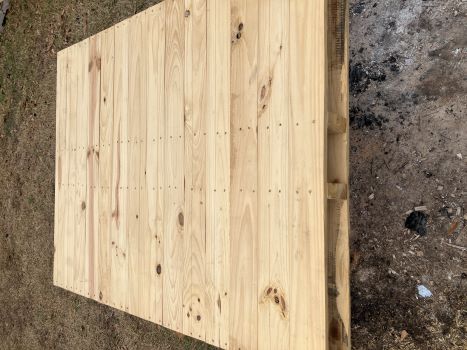
We have a nearby flooring company whose owner lets my husband get their empty pallets. They're heat-treated, and most of them have solid tops.
By "solid", I mean the top slats butt up to each other and there are no significant gaps.
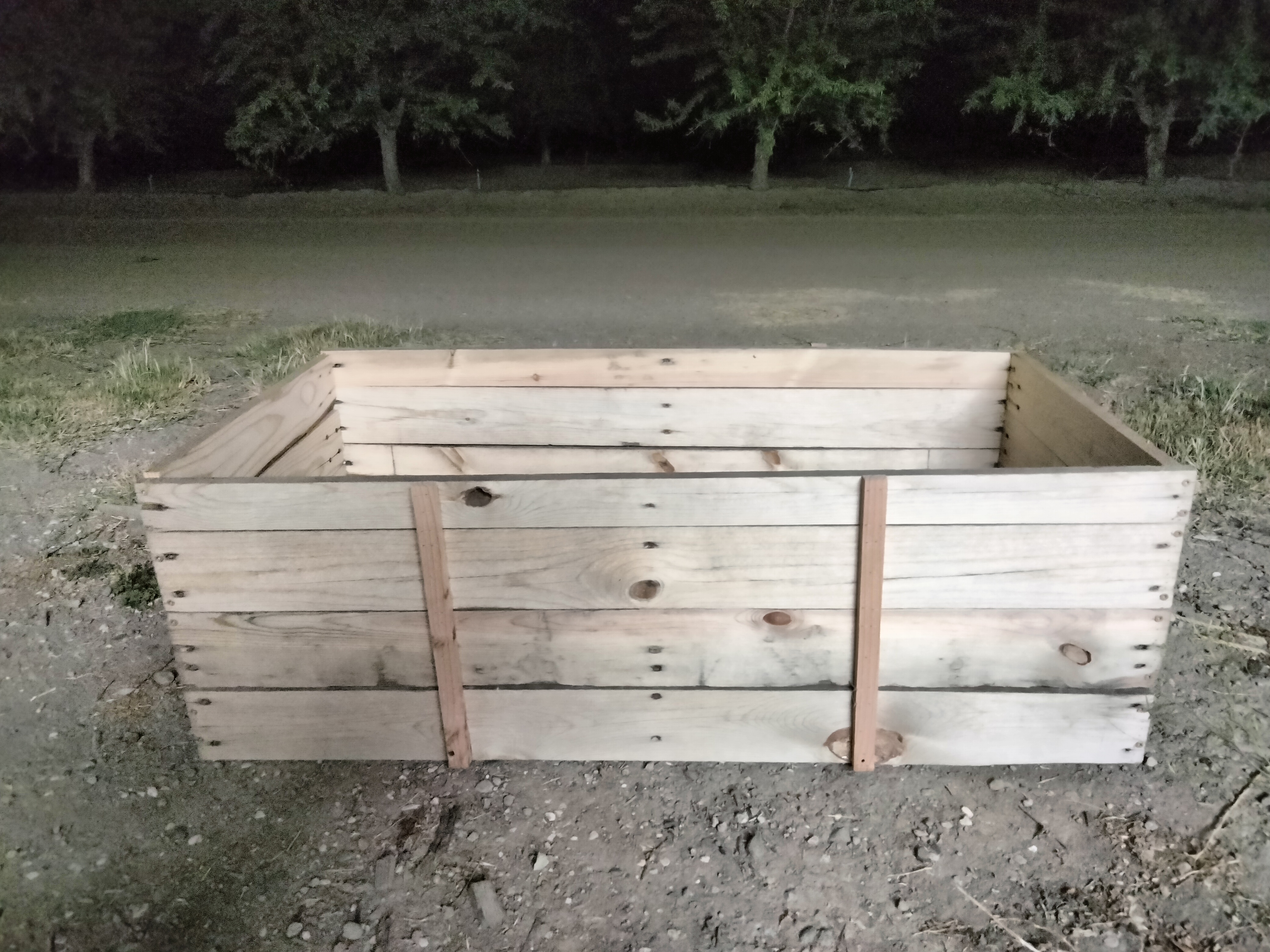
He's used these for several projects, including a privacy fence and raised garden beds.

Here's a typical solid-top heat-treated pallet:


And here are the simple garden beds my husband built using these pallets:

Hopefully that shows how the soil is contained, and how relatively little dismantling is needed - mostly cutting.

The further bed is about a year old - more weathered.
The closer bed is newly built and hasn't been exposed to much weather yet.

I don't know how common these are, or what other businesses might require pallets without gaps. But they are out there, and you just might be able to find a local source for them.
 
pollinator
Posts: 2173
Location: Big Island, Hawaii (2300' elevation, 60" avg. annual rainfall, temp range 55-80 degrees F)
1100
forest garden rabbit tiny house books solar woodworking
  • Likes 3
  • Mark post as helpful
  • send pies
    Number of slices to send:
    Optional 'thank-you' note:
  • Quote
  • Report post to moderator
I use raised beds—-actually container boxes since they are not up on legs. I make them out of pallets. I find that they last about 3 to 5 years in my environment. Lining them makes them last longest, but I’ve never really recorded how long each individual container lasts. I just replace them as they start to crumble. Eventually the pallet woods rots and the sides start falling apart. Just to give you an idea, each box is 1/2 pallet high, and the width is one pallet long. So each box uses two pallets, and since I line the box, I don’t go to the hassle of filling in the gaps in the pallets.

Although I initially used discarded commercial grade weedblock material to line the sides of the boxes (the box sits upon the dirt, so no need to line the bottom), I switched to metal. I intercept broken clothes washers and dryers heading to the dump. I remove the outer casing/skin and use that. The rest of the machine goes to another person who salvages the drums and whatever else, before the leftovers go to metal recycling.

Using a circular saw with the blade mounted backwards (or I’ll use a metal cutting blade if I have one) I’ll cut the metal to the height I need before removing the skin from the machine. I find it generally easier that way. I’ll also make cuts for the lengths if the metal skin is stable enough to make the cuts. Usually it is. Then I remove the metal skin from the machine. The pieces with bends in the wrong place I will flatten by running over them with the ATV or truck. They don’t flatten perfectly but that doesn’t really matter.

I usually just set the metal liner in place without bothering the nail or screw them in place. The soil holds them in place. Without them being attached to the pallet, I can replace the pallet with little hassle when it eventually rots. Replacing the deteriorated pallet side needs to be done before the soil starts pushing the sides out. I let things go too long once and had to end up shoveling dirt out in order to rebuild the box.

Of course the trick is not to cut oneself on the metal when you’re working in the garden. I solved this in two ways….. 1- by putting the cut edge down. And 2 , if that isn’t an option, by folding a length of cardboard or a doubled stripe of old blue jeans overtop the top edge of the metal. Plus I don’t mount the metal to the very top of the box. The top edge of the metal is an inch lower than the pallet, helping to keep the sharp edge from contacting my hands (because I always find myself leaning on the top edges of the boxes). Suuurrre I could grind down the sharp edges so they don’t pose a danger, but then I’d have to go buy a grinder, a face shield, leather gloves, and take the time to do it. For me, using cardboard and old blue jeans works just fine.

Hope this gives you some ideas.
 
Jen Fulkerson
gardener
Posts: 1932
Location: N. California
930
2
hugelkultur kids cat dog fungi trees books chicken cooking medical herbs ungarbage
  • Likes 4
  • Mark post as helpful
  • send pies
    Number of slices to send:
    Optional 'thank-you' note:
  • Quote
  • Report post to moderator
Megan great idea, I've always wanted to make my own baskets, I'm definitely putting it on my seed list.
William that's the exact wood I bought. I ripped the rounded sides off the  2x4 and cut the board in half. Then as I was building it I decided the 1 3/4 X1 3/4 were to wimpy to use for the legs. I ended up using pallet 2x4s for the legs. it's not the look I was going for, but I think it looks fine, and will be strong. I'm definitely not a carpenter, but I enjoy making wood projects, and for myself I'm fine with wonky corners and such. I'm trying to do better for this project. I will post a picture when I'm done.
Sara that's the best pallet I have ever seen. I would say at least where I live it's a very rare palette. It's wonderful you have access to them.  I work for a co-op, and will put my name on a good one when I see it. Also one of my coworkers will let me know if there's a good one.
Su that's a good idea.  I have an old washer I can use. It's so hot here in the summer I have had bad luck with metal. I also had a terrible time with grow bags, but I have discovered if I put the grow bag in the metal container I get good results. Now I'm wondering if grow bags have plastic in them. 😔 I really wish plastic wasn't in everything. I guess I will reserve them for flowers.
Thanks everyone, I have really enjoyed all your thoughts and ideas.
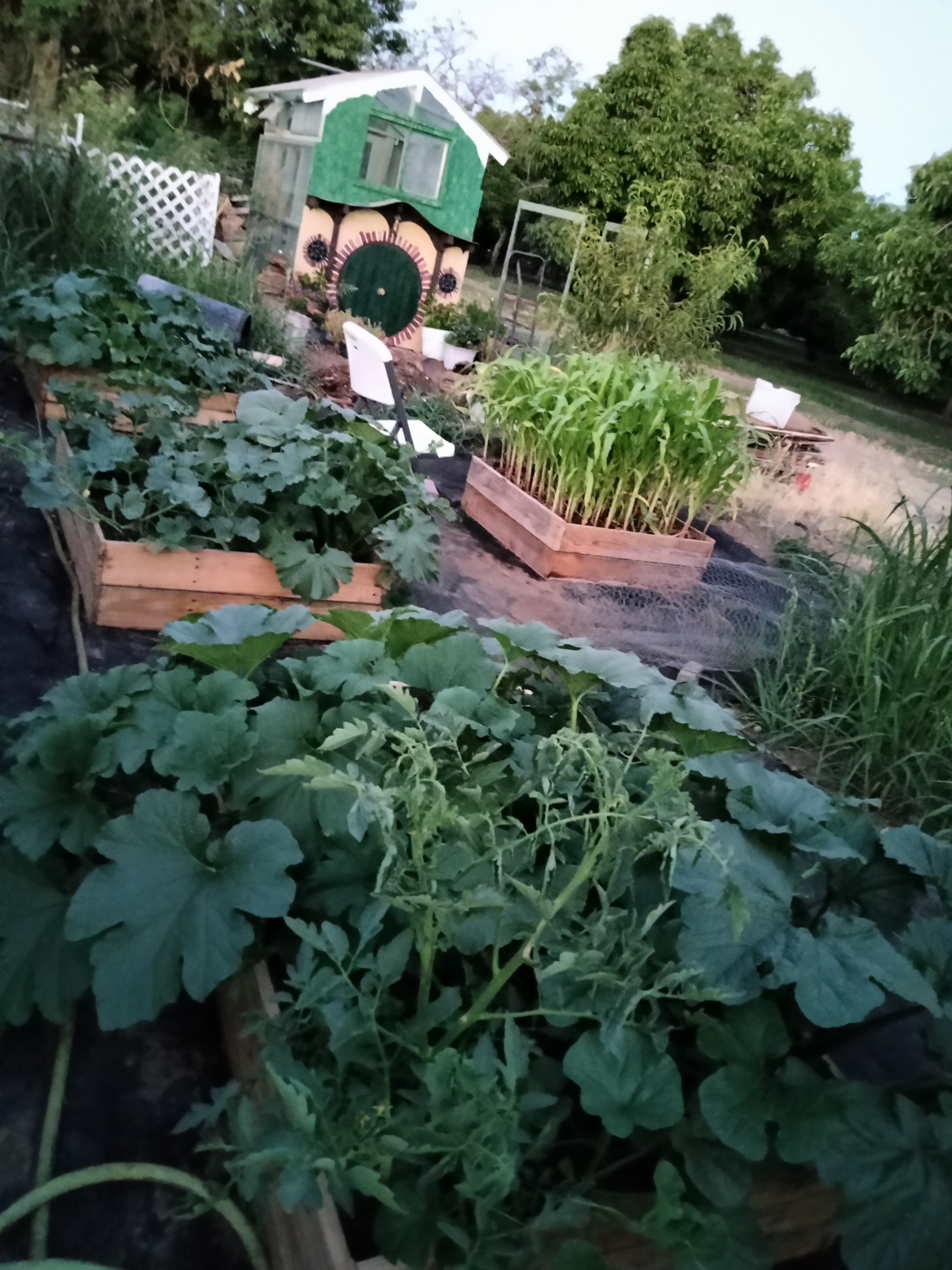
IMG20250915210825.jpg
the most recent bed I made for myself
IMG20250411200605.jpg
[Thumbnail for IMG20250411200605.jpg]
IMG20240627205436.jpg
the short version with hugel beet under them.
 
Maybe he went home and went to bed. And took this tiny ad with him:
Learn Permaculture through a little hard work
https://wheaton-labs.com/bootcamp
reply
    Bookmark Topic Watch Topic
  • New Topic