• Post Reply Bookmark Topic Watch Topic
  • New Topic
permaculture forums growies critters building homesteading energy monies kitchen purity ungarbage community wilderness fiber arts art permaculture artisans regional education skip experiences global resources cider press projects digital market permies.com pie forums private forums all forums
this forum made possible by our volunteer staff, including ...
master stewards:
  • Nancy Reading
  • Carla Burke
  • John F Dean
  • Timothy Norton
  • r ransom
  • Jay Angler
  • Pearl Sutton
stewards:
  • Devaka Cooray
  • Leigh Tate
  • paul wheaton
master gardeners:
  • Christopher Weeks
gardeners:
  • M Ljin
  • thomas rubino
  • Megan Palmer

How do I learn to read music?

 
steward & author
Posts: 44694
Location: Left Coast Canada
17331
9
art trees books chicken cooking fiber arts
  • Likes 9
  • Mark post as helpful
  • send pies
    Number of slices to send:
    Optional 'thank-you' note:
  • Quote
  • Report post to moderator
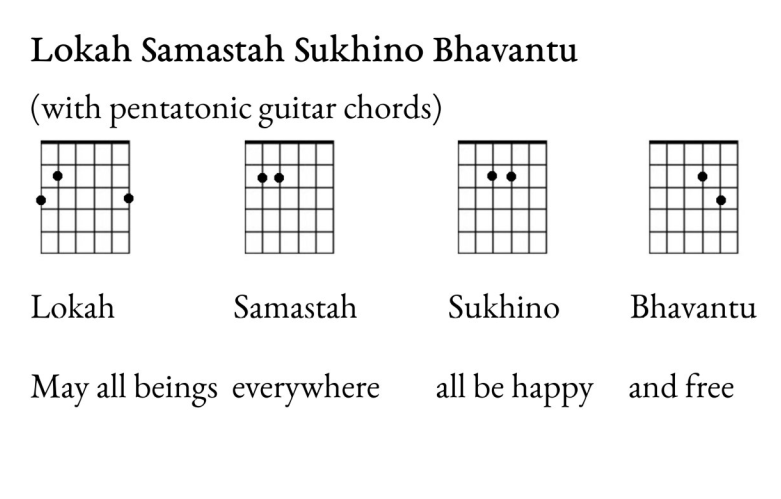
I thought perhaps I could learn to read music by learning to play an instrument.   Makes sense, right?  Well, it turns out, it's extremely easy to learn ukulele without reading music.  Many books from the library discouraged it, in favour of ukulele short hand.

Without investing in a new instrument, is there some way for my dyslexic brain (that is resistant to all languages)  to learn to read music?

My theory is, if I can find out the normal way to learn to read music, I might be able to adjust it to work around the defects in my brain.
 
author & pollinator
Posts: 1512
Location: Blue Ridge Mountains
524
food preservation cooking medical herbs writing homestead
  • Likes 8
  • Mark post as helpful
  • send pies
    Number of slices to send:
    Optional 'thank-you' note:
  • Quote
  • Report post to moderator

r ransom wrote:I thought perhaps I could learn to read music by learning to play an instrument.   Makes sense, right?  Well, it turns out, it's extremely easy to learn ukulele without reading music.  Many books from the library discouraged it, in favour of ukulele short hand.

Without investing in a new instrument, is there some way for my dyslexic brain (that is resistant to all languages)  to learn to read music?

My theory is, if I can find out the normal way to learn to read music, I might be able to adjust it to work around the defects in my brain.


Yep, I taught myself as I had basically no music education in school.  I had been playing guitar and mandolin for 20 years by ear and using tablature, but I wanted to learn the way they played it in the 1920s-30s, and that meant old books and having to read music.  It isn't hard - just takes practice.  Music is a 7  letter alphabet.  Get some staff paper and letter all the lines and spaces.  Each day, put a few dots on a blank staff and write the notes under each one.  Do this at random - no tune in mind.  Also write random letters like C, E, B, etc, and then put the dots on the staff accordingly.  Then, get some very simple music, maybe familiar folk tunes, written in standard notation, and write the letters of each note below the scale.  Then, play the tune and be sure to hum each note to train your ear.  Stay in the key of C for a while since it has no sharp or flat notes.  If you spend 5 min a day practicing reading music, it will be just as natural as reading this sentence by the end of the year.
 
gardener
Posts: 1677
Location: Zone 5
869
ancestral skills forest garden foraging composting toilet fiber arts bike medical herbs seed writing ungarbage
  • Likes 3
  • Mark post as helpful
  • send pies
    Number of slices to send:
    Optional 'thank-you' note:
  • Quote
  • Report post to moderator
One small tip is to write the note names underneath the notes to help bridge the two languages.
 
steward and tree herder
Posts: 12196
Location: Isle of Skye, Scotland. Nearly 70 inches rain a year
6219
5
transportation dog forest garden foraging trees books food preservation woodworking wood heat rocket stoves ungarbage
  • Likes 6
  • Mark post as helpful
  • send pies
    Number of slices to send:
    Optional 'thank-you' note:
  • Quote
  • Report post to moderator
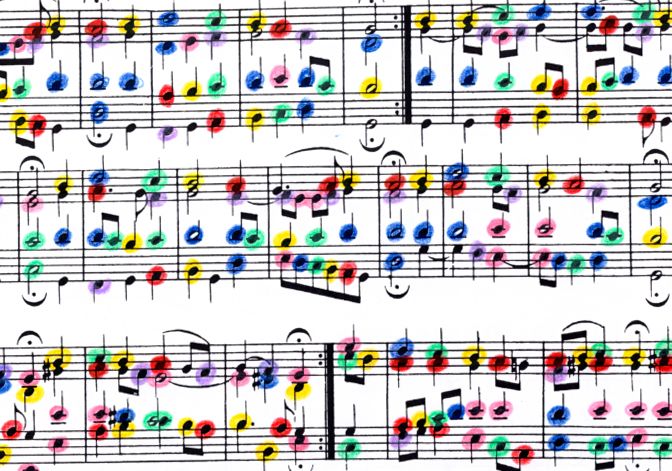
When I learnt to play piano as a child I had a simple tune book that started off with the different notes in different colours. Gradually as you went through the book they turned black and (hey presto) I was reading music. I don't know whether colours might help with the dyslexia. If so you could probably get music already coloured in....
Ah ha! I wasn't alone thinking this and apparently it can help:

this instructables suggests chosing the colours that work for you and just colouring the notes - all the As one colour, Bs another colour etc. Apparently making a copy of music for dyslexic individuals is fine in the UK. There is more advice on the British Dyslexia Association page on music. Not one approach suits all.

I suspect that there are probably on line sites to help read music, although other instruments might be more tricky to visualise than keyboards.
 
Judson Carroll
author & pollinator
Posts: 1512
Location: Blue Ridge Mountains
524
food preservation cooking medical herbs writing homestead
  • Likes 3
  • Mark post as helpful
  • send pies
    Number of slices to send:
    Optional 'thank-you' note:
  • Quote
  • Report post to moderator
Oh yeah, I'm dyslexic too, BTW. If I had to bet I figure a lot of us on here are.
 
pollinator
Posts: 410
Location: Hamburg, Germany
130
  • Likes 4
  • Mark post as helpful
  • send pies
    Number of slices to send:
    Optional 'thank-you' note:
  • Quote
  • Report post to moderator
Ooh, the notes with colors are fascinating! And really distracting for me.

Duolingo has a “Music” lesson plan that is kind of fun and interactive.  If you’re paying for DL anyway it might be helpful.
 
pollinator
Posts: 459
Location: Oz; Centre South
116
trees books cooking fiber arts writing
  • Likes 7
  • Mark post as helpful
  • send pies
    Number of slices to send:
    Optional 'thank-you' note:
  • Quote
  • Report post to moderator
First lesson in school was with a recorder - drove my folks nuts, as I paired it with a tea cosy and pretended it was bagpipes... punching well above my weight 🤣
We learned that the spaces were the notes F A C E going from bottom to top and the lines were E G B D F bottom to top again.  Below the line E was D and an imaginary line below that was "Middle" C, the starting point for the key of C.   So we have "Face"  and Every Good Boy Deserves Favour  (love a good mnemonic)    Good Luck.
 
M Ljin
gardener
Posts: 1677
Location: Zone 5
869
ancestral skills forest garden foraging composting toilet fiber arts bike medical herbs seed writing ungarbage
  • Likes 3
  • Mark post as helpful
  • send pies
    Number of slices to send:
    Optional 'thank-you' note:
  • Quote
  • Report post to moderator
For us it was Every Good Boy Deserves Fudge!
 
r ransom
steward & author
Posts: 44694
Location: Left Coast Canada
17331
9
art trees books chicken cooking fiber arts
  • Likes 6
  • Mark post as helpful
  • send pies
    Number of slices to send:
    Optional 'thank-you' note:
  • Quote
  • Report post to moderator
Mmmmmm, fudge.

I am a bit nervous to admit, but I don't know enough yet to understand many of the words and phrases used here.  I feel this is an area I definitely need to work on.

Why do some notes not have sharps or flats?  Is this only European music tradition?  And how do we know which?  Is it always the same ltters or is there a logic?
 
Judson Carroll
author & pollinator
Posts: 1512
Location: Blue Ridge Mountains
524
food preservation cooking medical herbs writing homestead
  • Likes 4
  • Mark post as helpful
  • send pies
    Number of slices to send:
    Optional 'thank-you' note:
  • Quote
  • Report post to moderator

r ransom wrote:Mmmmmm, fudge.

I am a bit nervous to admit, but I don't know enough yet to understand many of the words and phrases used here.  I feel this is an area I definitely need to work on.

Why do some notes not have sharps or flats?  Is this only European music tradition?  And how do we know which?  Is it always the same ltters or is there a logic?


In regard to a musical staff, it is just lines and spaces... 5 lines and 4 spaces, if memory serves, stacked.  The first line is E, the next is G and the space between is F......
                              G
                            F
                         E
                      D
                   C
                B
            A
        G
     F
  E
D

Some notes fall on lines, some in spaces.  If you see a sharp, like D#, play the D up one fret.  If you see a flat, like Eb, play the E back one fret.  The Chromatic scale is  (in the key of C) C, C#, D, D#, E, F, F#, G, G#, A, A#, B,   The natural scale is C, D, E, F, G, A B.  Sharps are those in between notes that you don't play n the major scale. Flats are the very same notes if you play down the scale instead of up.  So, Bb is A#..... it is harder to explain than to play - the same note has two names, depending on its relationship to the next note.  That is the case with most every musical concept... it is easy to play and hard to explain.  But, if you think of a measuring cup, 3/4 cup of water could be either a bit more than a half or a bit less than a whole cup, depending on how you look at it.  So, a sharp note could be a bit above the natural note, or a bit below the next note.
 
Judson Carroll
author & pollinator
Posts: 1512
Location: Blue Ridge Mountains
524
food preservation cooking medical herbs writing homestead
  • Likes 3
  • Mark post as helpful
  • send pies
    Number of slices to send:
    Optional 'thank-you' note:
  • Quote
  • Report post to moderator
                                                                         E
                                                     ___D____
                                                C
                                __B____
                             A
              ___G___
          F
__E___
D
 
r ransom
steward & author
Posts: 44694
Location: Left Coast Canada
17331
9
art trees books chicken cooking fiber arts
  • Likes 3
  • Mark post as helpful
  • send pies
    Number of slices to send:
    Optional 'thank-you' note:
  • Quote
  • Report post to moderator
Why is there no E-sharp?
Was he a bad little letter and didn't eat all his vegetables?

Why are there so many sounds missing kn European music?
 
Judson Carroll
author & pollinator
Posts: 1512
Location: Blue Ridge Mountains
524
food preservation cooking medical herbs writing homestead
  • Likes 2
  • Mark post as helpful
  • send pies
    Number of slices to send:
    Optional 'thank-you' note:
  • Quote
  • Report post to moderator

r ransom wrote:Why is there no E-sharp?
Was he a bad little letter and didn't eat all his vegetables?

Why are there so many sounds missing kn European music?


Play it on your uke.  The next fret from E is F.  That is just how music works.  There is no E# or B#.  Of course, you could call C B# or B Cb..... George Van Eps said there was a lot to be learned in thinking about scales that way. But, 9.99% of musicians don't.  F and C are very prominent tones and it is better to hear other notes in relation to them.
 
out to pasture
Posts: 13057
Location: Portugal
4092
goat dog duck forest garden books wofati bee solar rocket stoves greening the desert
  • Likes 4
  • Mark post as helpful
  • send pies
    Number of slices to send:
    Optional 'thank-you' note:
  • Quote
  • Report post to moderator

r ransom wrote:Why is there no E-sharp?
Was he a bad little letter and didn't eat all his vegetables?

Why are there so many sounds missing in European music?


Disclaimer - I'm tone deaf, can't read music, and for the most part can't even listen to it as it overwhelms me and I seem to interpret it differently to most people. But I too have occasionally attempted to understand how it works and how to read it.

This is how I visualise it...

Imagine you are walking along - right, left, right, left, right...

Where each right foot hits there's a note. The sharps and flats are 'extras' where the left foot hits. Except whoever decided how to write the notes down is as bad at math and logic as I am at music, and he wasn't consistent.

In fact, he made the notes go something more like  - right, right, right, left, left, left, left, right

I actually asked my other half for help constructing that. He says it starts at middle C and goes up a whole octave.

So the first right is C, the second is D, the third is E. Then he counts the next note on the step made by the left foot. So there's no E sharp as that step has been declared to be F.

The sounds aren't missing, just mis-named.

And then of course other cultures have different stride lengths so their notes fall in different places. And there are all the other places along the path that don't line up with where the feet landed when the path was first laid out.

Hope that helps!

Also, you guys have no idea how hard that was to write as someone who is not only tone deaf and can't read music, but also can't tell left from right...
 
Our first order of business must be this tiny ad:
Learn Permaculture through a little hard work
https://wheaton-labs.com/bootcamp
reply
    Bookmark Topic Watch Topic
  • New Topic