• Post Reply Bookmark Topic Watch Topic
  • New Topic
permaculture forums growies critters building homesteading energy monies kitchen purity ungarbage community wilderness fiber arts art permaculture artisans regional education skip experiences global resources cider press projects digital market permies.com pie forums private forums all forums
this forum made possible by our volunteer staff, including ...
master stewards:
  • paul wheaton
  • Anne Miller
  • Carla Burke
  • Nancy Reading
  • John F Dean
  • Timothy Norton
  • Jay Angler
stewards:
  • r ransom
  • Pearl Sutton
  • Tereza Okava
master gardeners:
  • Christopher Weeks
gardeners:
  • M Ljin
  • Megan Palmer
  • Kate Downham

The great big thread of sunchoke info - growing, storing, eating/recipes, science facts

 
gardener
Posts: 449
Location: Southern Ontario, 6b
358
cat forest garden food preservation cooking writing ungarbage
  • Likes 11
  • Mark post as helpful
  • send pies
    Number of slices to send:
    Optional 'thank-you' note:
  • Quote
  • Report post to moderator
I've been very happy with how easy and productive the sunchokes have been but I was surprised to be shown just how vigorous they are.
Last fall, I dug out the ckokes from my GAMCOD plot. Then scrubbed and sorted them before weighing it all.
There were a few little chunks that had been cut or broken from the digging or in ground vole damage.
I just tossed them on the grass, along with the washed off dirt.
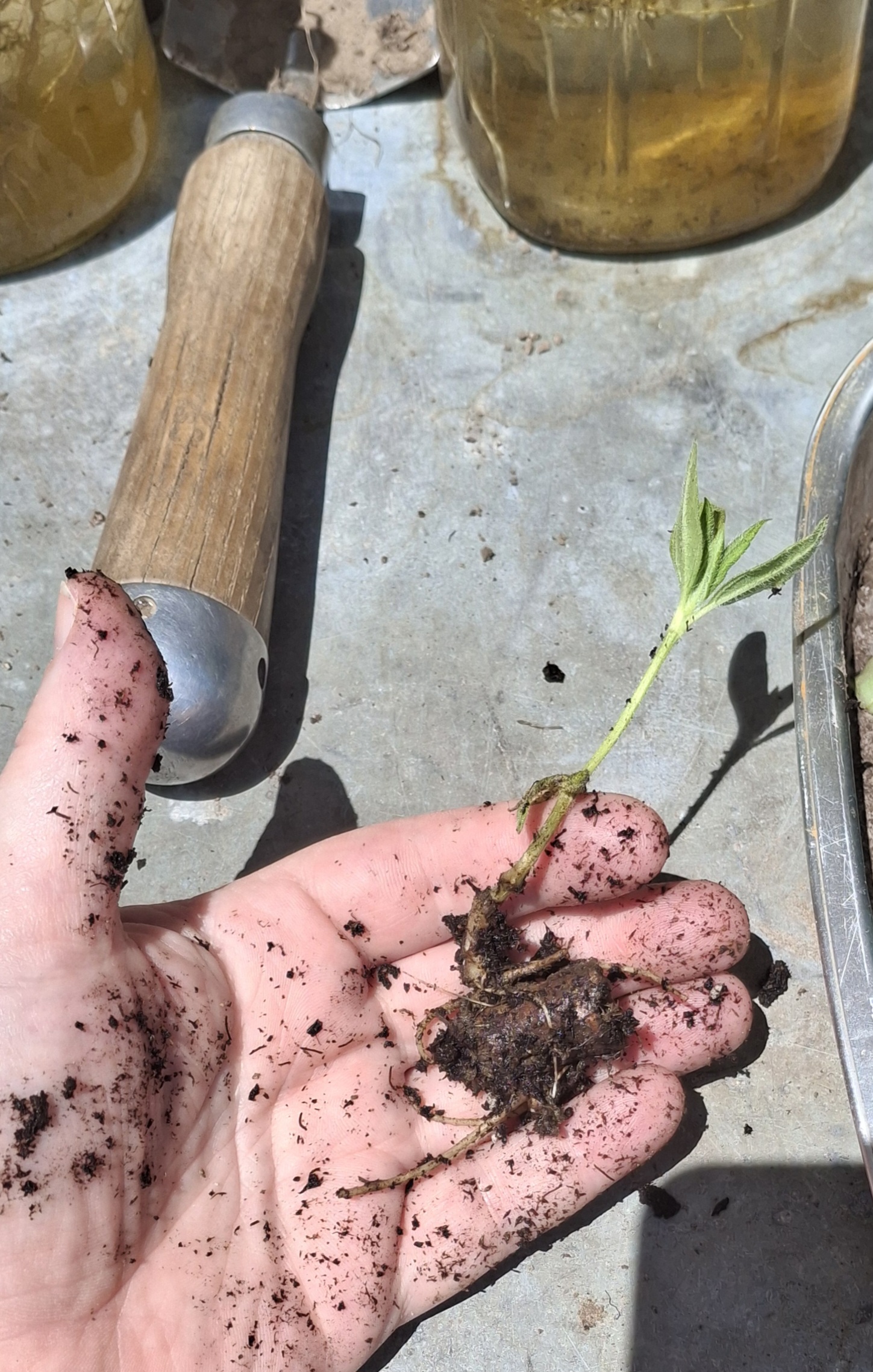
Just the other day, I noticed a few small sprouts in that bit of lawn. They are a pretty easily recognizable plant so I dug them out and they still had the tiny scraps of tubers attached!
Ive potted them up, labeled them and put out at our local post office.  ( they have a donated plant starts spot that converts to a free produce section later in the season)
20260602_132909.jpg
tiny sunchoke sprout
 
pollinator
Posts: 549
Location: UK
192
kids urban seed
  • Likes 8
  • Mark post as helpful
  • send pies
    Number of slices to send:
    Optional 'thank-you' note:
  • Quote
  • Report post to moderator
The vole reframing from Michael made me laugh — genuinely useful way to look at it. Mine spread into an adjacent bed the same way and now I've just accepted they live where they want to live.
 
steward
Posts: 9383
Location: Colombia - Tropical dry forest
3540
6
forest garden fish fungi trees tiny house earthworks bee solar woodworking greening the desert homestead
  • Likes 5
  • Mark post as helpful
  • send pies
    Number of slices to send:
    Optional 'thank-you' note:
  • Quote
  • Report post to moderator
 
Posts: 129
Location: West-central Pennsylvania
70
  • Likes 11
  • Mark post as helpful
  • send pies
    Number of slices to send:
    Optional 'thank-you' note:
  • Quote
  • Report post to moderator
I have two varieties, both collected locally in west-central PA. USA. One, a white/tan skinned knobby tuber, possibly either a Stampede or Supernova type, behaves well. After about 1/2 hour cooking, cooking with an acid, fermenting or freezing loses its Inulin and gas production. The other, a reddish skinned smooth tuber, possibly a Fuseau variety, doesn't play nice. After a long zone 5 winter freeze, long cooking, etc. still has the power to blow your bloomers off!
We keep the red ones because they taste even better than the white ones and my wife and I take a daily Inulin supplement for gut health. We're pretty tolerant of the Inulin. We just make sure not to serve the red ones to anyone else. The white ones we harvest in the fall for pickles and relishes and we can eat them raw. We then harvest in early spring for eating raw and for dehydrating and blender-grinding for flour. The fall harvest is for cooking, dehydrating for soups, stews, roasts, instant mashed 'chokes etc. We don't worry about sabotaging others who eat the depleted Inulin. Like radioactive isotopes, it seems that 'choke tuber varieties have a different type of Inulin with different fart-lives, I mean half-lives!
I'll repeat, we keep the red ones for ourselves and only serve or give away the white ones after a winter freeze or after canning.
It's the first week of October and the white one's tops, about 5' to 6', have died and have nearly turned brown. I'll be digging some in a week or so. The red ones, about 8' to 9', are still blooming and on warm days, the Honeybees hit them hard. They have a longer maturing time. I'm not sure if it's the longer maturing time or the variety that makes the more powerful Inulin. I also harvest them like potatoes, I always wait until the tops have died and fully browned. That's when all the nutrients in the greens have drained into the tubers, making them their biggest and best tasting. It could also be the nutrients from the larger greens that make the stouter Inulin?
We've had quite a bit of rain this summer and I'm hoping they aren't going to be pithy from too much water. That's happened a couple other wet summers. Other pithy root veggies are due to too much water too.
One advantage of being intolerant to Inulin is Bedtime Football.  ??  What's Bedtime Football you ask? That's the two of you, side by side, ripping off the longest and loudest farts you can. You'll know it's halftime, time to switch sides, when one of you soils the sheets.
I'll bet none of you ever thought you could cringe, shudder, laugh and go eeewww at the same time. Eh?
 
Blaine Clark
Posts: 129
Location: West-central Pennsylvania
70
  • Likes 14
  • Mark post as helpful
  • send pies
    Number of slices to send:
    Optional 'thank-you' note:
  • Quote
  • Report post to moderator
This afternoon I pulled some stalks of the Stampede or Supernova(?) in a spot about 1' x 2', didn't dig, just pulled the tubers that came up with the stalks. I got 2 1/2 gallons. I'm sure I could have doubled that if I'd-a dug. Brought them in and covered with water for overnight. That coaxes the critters out or drowns them, plus it makes the dirt sticking to the tubers mud and much easier to brush off/out. Sometimes I toss some salt in, that brine cures the slugs. They seem to get all wizzled and leathery though, probably tough.
I cut one medium sized one about the size of a tennis ball, and my worries about all the rain were only a bit warranted. Just the stem end was pithy, about 1/2". The rest of the tuber was crispy crunchy and go-o-od!
One of the biggest from this sample weighed 9.3 oz. or 263 grams. And of course the others went down to thumb sized. The tiny ones went back into the dirt.
Thinking about some roasted 'choke country fries for breakfast! BTW, we never peel 'em.
 
Posts: 27
6
  • Likes 14
  • Mark post as helpful
  • send pies
    Number of slices to send:
    Optional 'thank-you' note:
  • Quote
  • Report post to moderator
I wanted to come back and report, especially to Paul, that I am now a full convert.

My wife and I grew a load of sunchokes and had them stored in the freezer for a long, long time because we could eat so little at a time--they were mostly forgotten. I was mulling over what Paul had been saying about building up a tolerance, and I eventually resolved to try it out properly.

For both of us, it took far less time than I expected. Over about a week or two, I went from only tolerating a small amount (and even that still produced a lot of gas) to being able to eat sunchokes like a potato substitute with no significant gas. It didn't even entail eating them every day, just most days.

If other growers can solve the problem as easily as that, I'd say it's well worthwhile! But I think the word needs put out there--in very explicit terms--because most people will try them once, get horrendous gas or worse, and never try them again? Your first experience is likely to validate the horror stories for you.
 
master gardener
Posts: 7093
Location: Carlton County, Minnesota, USA: 3b; Dfb; sandy loam; in the woods
4530
8
forest garden trees books chicken food preservation cooking fiber arts seed woodworking homestead ungarbage
  • Likes 13
  • Mark post as helpful
  • send pies
    Number of slices to send:
    Optional 'thank-you' note:
  • Quote
  • Report post to moderator
I've had a thing happen to me over the last year or so. I think I've developed a food-aversion to cooked sunchokes. Just the idea of eating them as the primary thing in a stew or mash is triggering my gag reflex. But pulling them out of the ground, washing them off, and eating them raw is delicious. I wonder if anyone else has ever faced this and whether there's anything I can do about it.
 
Gordon Blair
Posts: 27
6
  • Likes 14
  • Mark post as helpful
  • send pies
    Number of slices to send:
    Optional 'thank-you' note:
  • Quote
  • Report post to moderator
You probably don't eat them raw in huge quantities? And maybe you were eating them a lot before when you were still cooking them?

If it's important to you to get back to eating cooked sunchokes, you could try graded exposure..?

Christopher Weeks wrote:I've had a thing happen to me over the last year or so. I think I've developed a food-aversion to cook sunchokes. Just the idea of eating them as the primary thing in a stew or mash is triggering my gag reflex. But pulling them out of the ground, washing them off, and eating them raw is delicious. I wonder if anyone else has ever faced this and whether there's anything I can do about it.
 
Posts: 35
Location: Zone 4b Northwest Wisconsin
17
dog fungi foraging trees bike woodworking
  • Likes 11
  • Mark post as helpful
  • send pies
    Number of slices to send:
    Optional 'thank-you' note:
  • Quote
  • Report post to moderator

Christopher Weeks wrote:I've had a thing happen to me over the last year or so. I think I've developed a food-aversion to cooked sunchokes. Just the idea of eating them as the primary thing in a stew or mash is triggering my gag reflex. But pulling them out of the ground, washing them off, and eating them raw is delicious. I wonder if anyone else has ever faced this and whether there's anything I can do about it.


I just tried them cooked for the first time. I oven roasted them with a load of carrot, potato, and a couple of peppers. They were acceptable but my least favorite in the mix. It was the overly mushy texture I didn't care much for. I think next cooking I will try 50/50 mashed potato/sunroots with lots of roasted garlic. I'll try chips too but that is lots of work for winter time.

My favorite has been sliced raw into a container of water and kept in the fridge for snack as needed.

I will be starting some to ferment as soon as I get around to it.

Someone out there must have some better ways for cooking them.
 
Gordon Blair
Posts: 27
6
  • Likes 13
  • Mark post as helpful
  • send pies
    Number of slices to send:
    Optional 'thank-you' note:
  • Quote
  • Report post to moderator
Sliced thinly on a pizza is great. Fermenting worked great for me. Pickled too. Good addition to stews and curries.
 
author and steward
Posts: 110051
Location: missoula, montana (zone 4)
∞
hugelkultur trees chicken wofati bee woodworking
  • Likes 27
  • Mark post as helpful
  • send pies
    Number of slices to send:
    Optional 'thank-you' note:
  • Quote
  • Report post to moderator
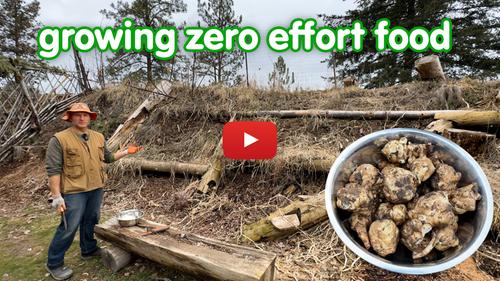
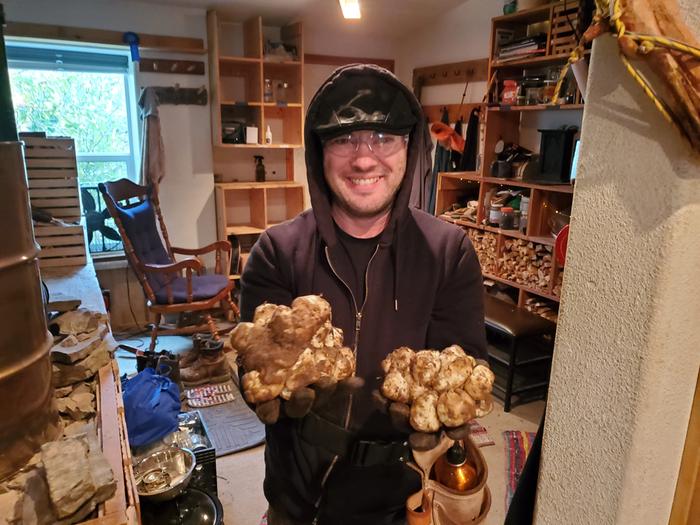
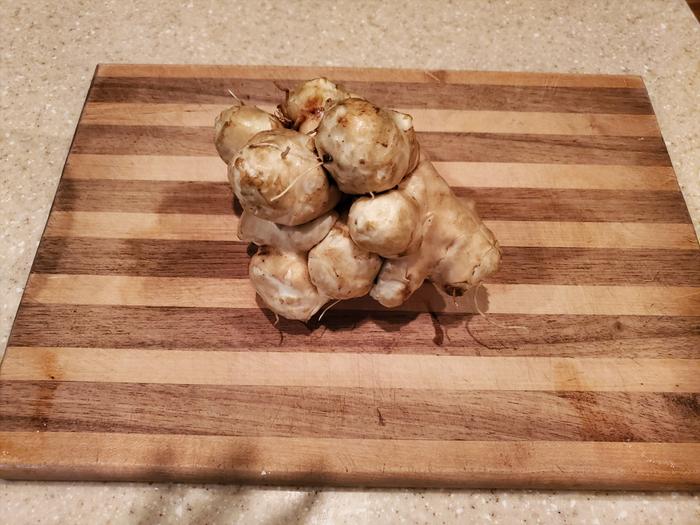
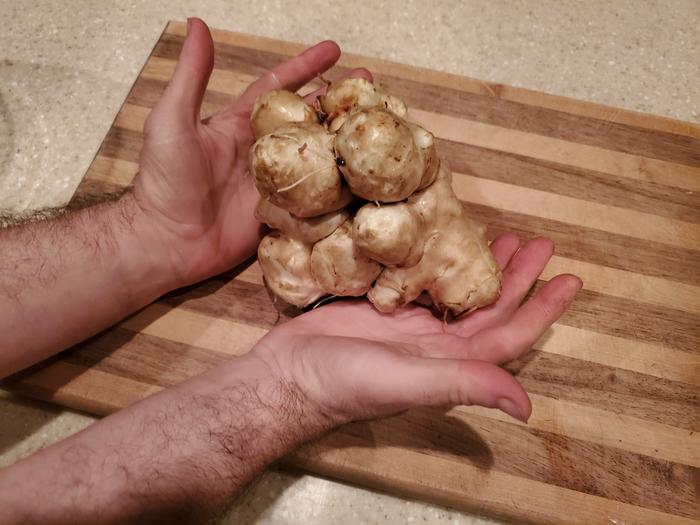
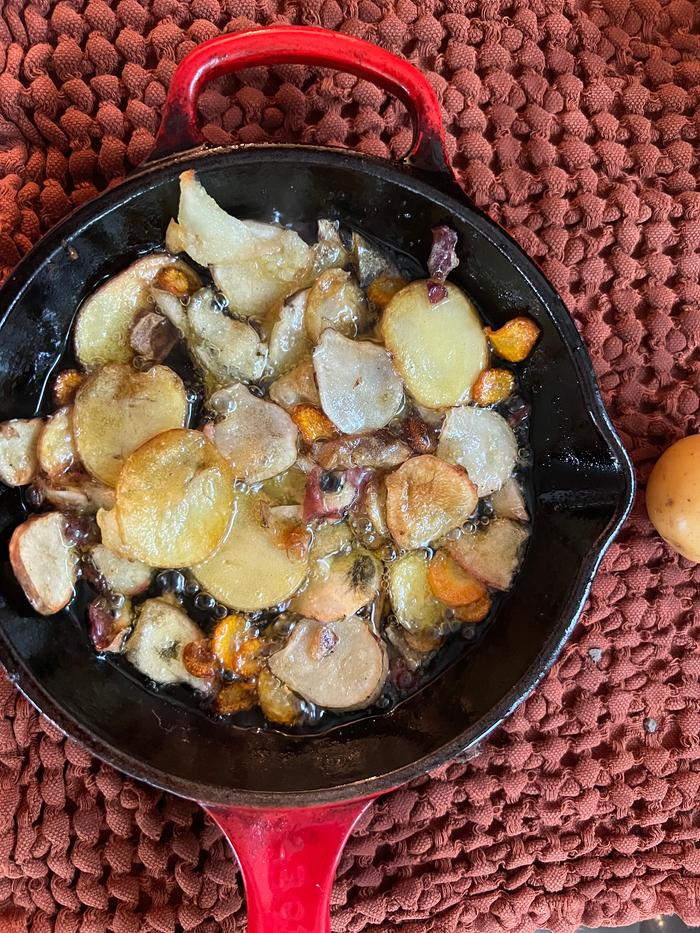
these are the biggest sunchokes i have ever seen.  Plucked from a hugelkultur here where we are working to build the soil.

Jules holding two ....   yes, this is just two sunchokes.  One sunchoke filled two huge skillets of fry-up.  

And then one sunchoke on a huge cutting board.  Hands for scale.


Gordon Blair
Posts: 27
6
  • Likes 6
  • Mark post as helpful
  • send pies
    Number of slices to send:
    Optional 'thank-you' note:
  • Quote
  • Report post to moderator
Holy moley...
 
Posts: 66
18
  • Likes 16
  • Mark post as helpful
  • send pies
    Number of slices to send:
    Optional 'thank-you' note:
  • Quote
  • Report post to moderator
I have letting wild sunflowers grow in my backyard to feed the birds. My wife calls it "the birds garden" because birds plant it, fertilize it, and then harvest and eat it.

According to what I have read, I could be planting sunchokes which would feed the birds, and feed me.
 
gardener
Posts: 3166
Location: Zone 4b/5a
1917
ancestral skills forest garden foraging composting toilet fiber arts bike medical herbs seed writing ungarbage
  • Likes 15
  • Mark post as helpful
  • send pies
    Number of slices to send:
    Optional 'thank-you' note:
  • Quote
  • Report post to moderator

Christopher Weeks wrote:I've had a thing happen to me over the last year or so. I think I've developed a food-aversion to cooked sunchokes. Just the idea of eating them as the primary thing in a stew or mash is triggering my gag reflex. But pulling them out of the ground, washing them off, and eating them raw is delicious. I wonder if anyone else has ever faced this and whether there's anything I can do about it.


Have you seen my cooking thread? I usually fry them. Maybe that would help. https://permies.com/t/389748/root-stir-fry-parsnip-sunchoke


I likely wouldn’t mash sunchokes either. And they are delicious raw.
 
Posts: 10878
Location: a temperate, clay/loam spot on planet earth, the universe
4091
4
  • Likes 17
  • Mark post as helpful
  • send pies
    Number of slices to send:
    Optional 'thank-you' note:
  • Quote
  • Report post to moderator

Christopher Weeks wrote:I've had a thing happen to me over the last year or so. I think I've developed a food-aversion to cooked sunchokes. Just the idea of eating them as the primary thing in a stew or mash is triggering my gag reflex. But pulling them out of the ground, washing them off, and eating them raw is delicious. I wonder if anyone else has ever faced this and whether there's anything I can do about it.


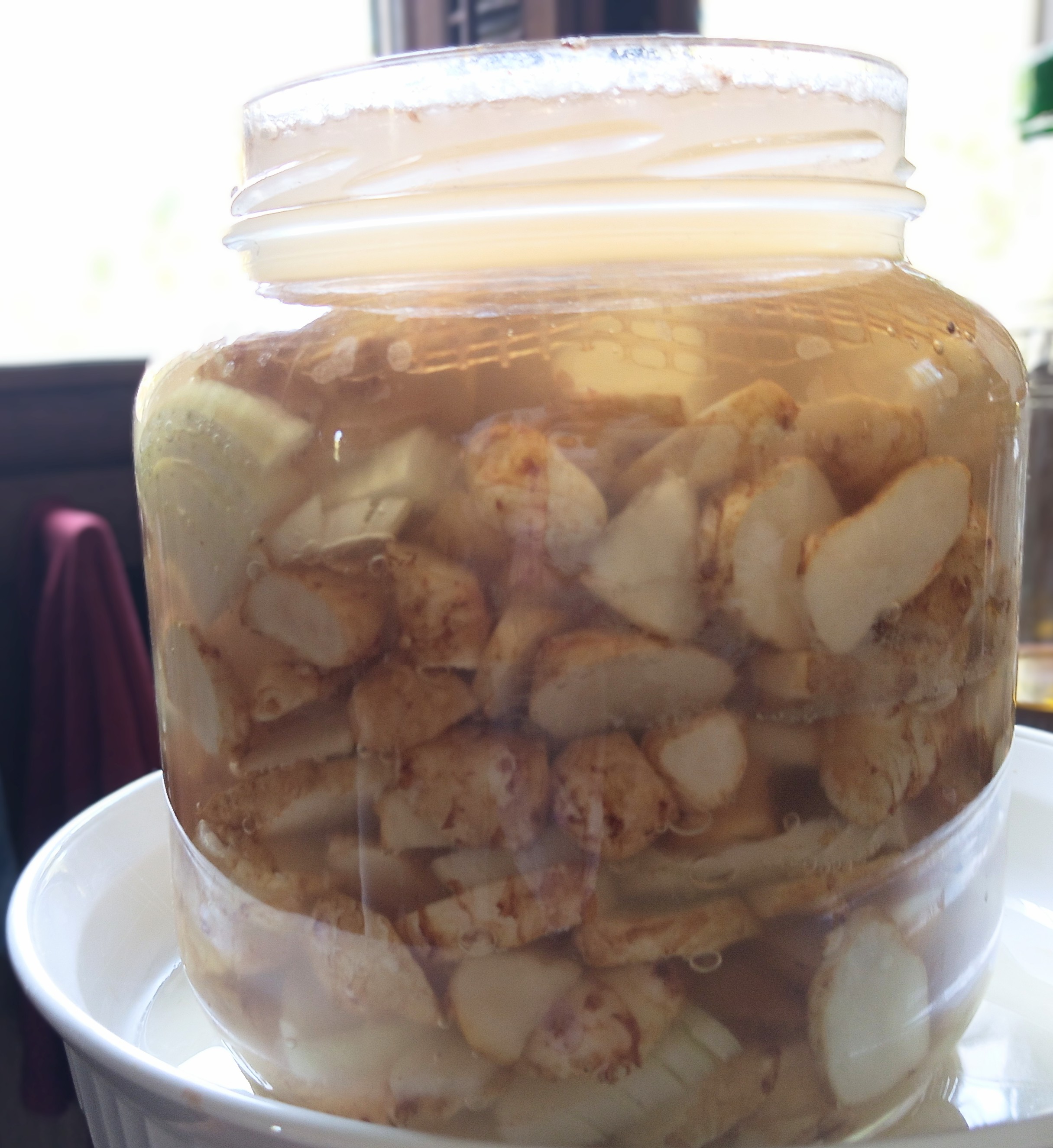
Mine isn't quite a gag reflex but definitely an aversion to cooked sunchokes  and the flavor that develops.  I always thought it was becauses we ate so many back in the day and tried to eat them like potatoes boiled and fried.
Now, we love them sliced and fermented...no gas, and they stay nice and crispy just like fresh.

I have never seen any as large as those Paul posted...amazing!
Ours get smaller the longer they stay in one spot so will find new locations and this years areas will be weeds...easy to pull young and lay down for mulch.
IMG_20261024_140717_515-2.jpg
sliced sunchoke ferment
 
Gordon Blair
Posts: 27
6
  • Likes 8
  • Mark post as helpful
  • send pies
    Number of slices to send:
    Optional 'thank-you' note:
  • Quote
  • Report post to moderator
I fermented a bunch, and it was great until they got a mould on the surface... Rescued most of them and transferred them to a jar of vinegar. If I were to do that again, I would water the vinegar down a bit.

Judith Browning wrote:

Christopher Weeks wrote:I've had a thing happen to me over the last year or so. I think I've developed a food-aversion to cooked sunchokes. Just the idea of eating them as the primary thing in a stew or mash is triggering my gag reflex. But pulling them out of the ground, washing them off, and eating them raw is delicious. I wonder if anyone else has ever faced this and whether there's anything I can do about it.


Mine isn't quite a gag reflex but definitely an aversion to cooked sunchokes  and the flavor that develops.  I always thought it was becauses we ate so many back in the day and tried to eat them like potatoes boiled and fried.
Now, we love them sliced and fermented...no gas, and they stay nice and crispy just like fresh.

I have never seen any as large as those Paul posted...amazing!
Ours get smaller the longer they stay in one spot so will find new locations and this years areas will be weeds...easy to pull young and lay down for mulch.

 
Judith Browning
Posts: 10878
Location: a temperate, clay/loam spot on planet earth, the universe
4091
4
  • Likes 7
  • Mark post as helpful
  • send pies
    Number of slices to send:
    Optional 'thank-you' note:
  • Quote
  • Report post to moderator
Gordon, Mine seem to take forever to ferment but as long as I keep them below the brine there is no mold just a bit of scum to remove occasionally and they are about as crispy as fresh.

We just finished last years a month or so ago...refrigerated after I called them done enough and they kept well😊

Yours might have been good still if the surface mold (scum?) was removed and the brine topped up?
 
Gordon Blair
Posts: 27
6
  • Likes 7
  • Mark post as helpful
  • send pies
    Number of slices to send:
    Optional 'thank-you' note:
  • Quote
  • Report post to moderator
Hmm, I can't recall what it looked like now, Judith--whether there were any funky colours appearing, etc.

Judith Browning wrote:Gordon, Mine seem to take forever to ferment but as long as I keep them below the brine there is no mold just a bit of scum to remove occasionally and they are about as crispy as fresh.

We just finished last years a month or so ago...refrigerated after I called them done enough and they kept well😊

Yours might have been good still if the surface mold (scum?) was removed and the brine topped up?

 
Dian Green
gardener
Posts: 449
Location: Southern Ontario, 6b
358
cat forest garden food preservation cooking writing ungarbage
  • Likes 12
  • Mark post as helpful
  • send pies
    Number of slices to send:
    Optional 'thank-you' note:
  • Quote
  • Report post to moderator
There must be something about this years weather.
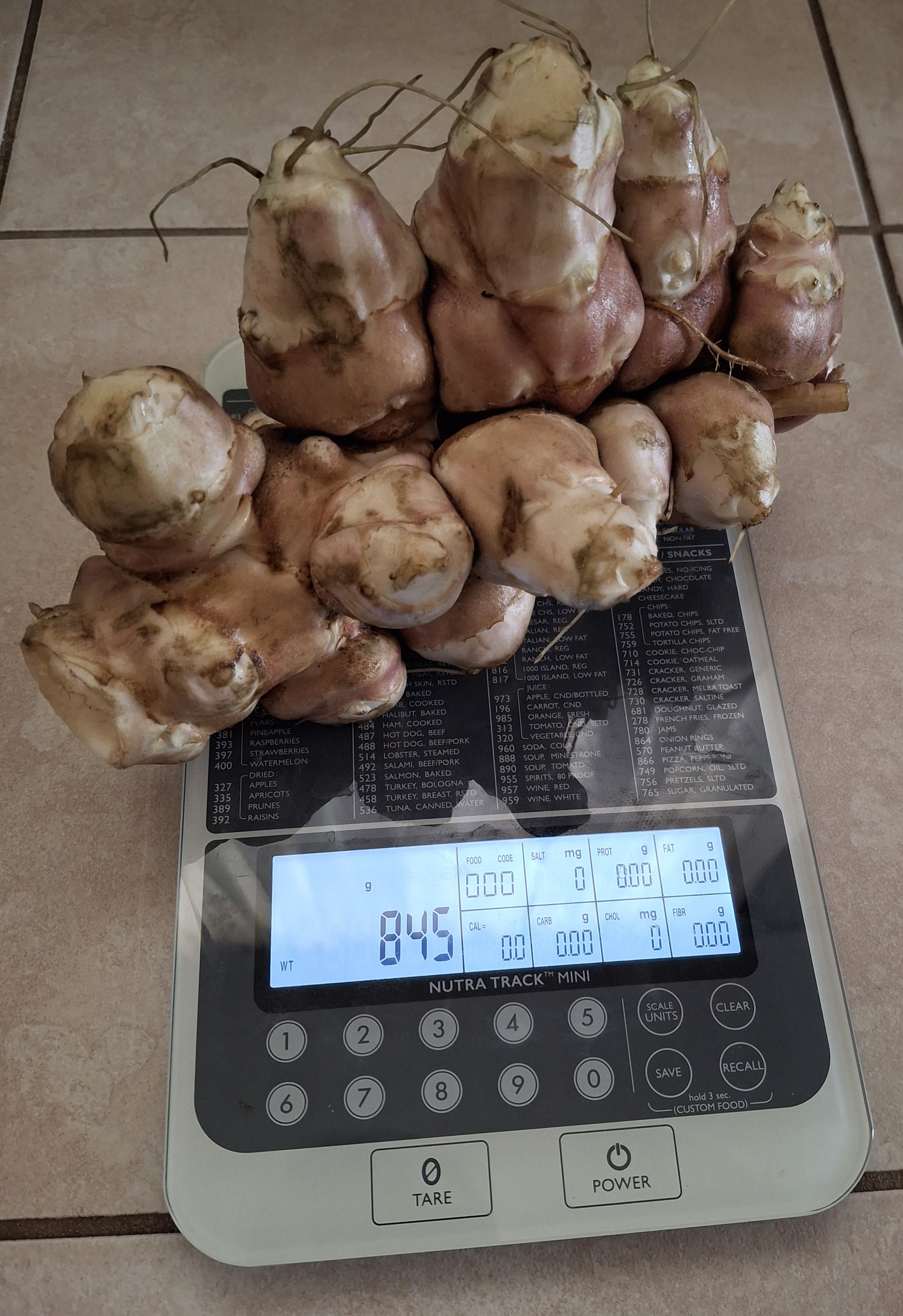
I was out digging for roasting veggies tonight and pulled up this giant 'choke!
It was in my 2nd year gamcod plot and all of those sunchoked grew really big stalks this year and almost all flowered,  which they don't always do here.
Parts of it are roasting right now but it was lovely and crisp and unmarked when we cut it up.
20261026_134214.jpg
huge sunchoke tuber on digital scale
 
gardener
Posts: 5815
Location: Cincinnati, Ohio,Price Hill 45205
1437
forest garden trees urban
  • Likes 13
  • Mark post as helpful
  • send pies
    Number of slices to send:
    Optional 'thank-you' note:
  • Quote
  • Report post to moderator
The side of these things!
I clearly need a better strain of sunchokes!
What strains get that big?
What have y'all been feeding them?
 
William Bronson
gardener
Posts: 5815
Location: Cincinnati, Ohio,Price Hill 45205
1437
forest garden trees urban
  • Likes 6
  • Mark post as helpful
  • send pies
    Number of slices to send:
    Optional 'thank-you' note:
  • Quote
  • Report post to moderator

Judith Browning wrote:Gordon, Mine seem to take forever to ferment but as long as I keep them below the brine there is no mold just a bit of scum to remove occasionally and they are about as crispy as fresh.

We just finished last years a month or so ago...refrigerated after I called them done enough and they kept well😊

Yours might have been good still if the surface mold (scum?) was removed and the brine topped up?


This makes me curious, have you ever juiced them?
Could make a great fermented drink, or maybe they could ferment in their own juice?
 
paul wheaton
author and steward
Posts: 110051
Location: missoula, montana (zone 4)
∞
hugelkultur trees chicken wofati bee woodworking
  • Likes 8
  • Mark post as helpful
  • send pies
    Number of slices to send:
    Optional 'thank-you' note:
  • Quote
  • Report post to moderator

William Bronson wrote: What have y'all been feeding them?


I think that is the key.

Hugelkultur.  Mulch.  Polyculture. Chop and drop certain neighbors (like snowberry).

 
William Bronson
gardener
Posts: 5815
Location: Cincinnati, Ohio,Price Hill 45205
1437
forest garden trees urban
  • Likes 6
  • Mark post as helpful
  • send pies
    Number of slices to send:
    Optional 'thank-you' note:
  • Quote
  • Report post to moderator

paul wheaton wrote:

William Bronson wrote: What have y'all been feeding them?


I think that is the key.

Hugelkultur.  Mulch.  Polyculture. Chop and drop certain neighbors (like snowberry).


Notably, not heavy nitrogen but heavy carbon/lots of organic matter.
 
This tiny ad never wears a bra
Heat your home with the twigs that naturally fall of the trees in your yard
http://woodheat.net
reply
    Bookmark Topic Watch Topic
  • New Topic