• Post Reply Bookmark Topic Watch Topic
  • New Topic
permaculture forums growies critters building homesteading energy monies kitchen purity ungarbage community wilderness fiber arts art permaculture artisans regional education skip experiences global resources cider press projects digital market permies.com pie forums private forums all forums
this forum made possible by our volunteer staff, including ...
master stewards:
  • Carla Burke
  • Nancy Reading
  • John F Dean
  • r ransom
  • Jay Angler
  • Timothy Norton
stewards:
  • paul wheaton
  • Tereza Okava
  • Nicole Alderman
master gardeners:
  • M Ljin
  • Christopher Weeks
gardeners:
  • Jeremy VanGelder
  • thomas rubino
  • Megan Palmer

!!!!!!!!!!!!!!!!! what if the cost of food goes up 10x?

 
master steward
Posts: 15309
Location: Pacific Wet Coast
9660
duck books chicken cooking food preservation ungarbage
  • Likes 7
  • Mark post as helpful
  • send pies
    Number of slices to send:
    Optional 'thank-you' note:
  • Quote
  • Report post to moderator

Jerry Brown wrote:"Bread prices will be getting high"...
the machine bakes only one loaf at a time -- takes ~4 hours. About 10 minutes of my time to load the ingredients in the machine.


I admit that my homemade machine bread tends to have extra ingredients. To make it easier, I put all the shelf stable ingredients, pre-measured, in a set of jars in a drawer used for just that purpose. I make up 9 to 12 mixes at a time. Then I just pour the dry ingredients into the bowl, add the yeast and the wet ingredients, and push the button.

I do a simpler system with sourdough starter I've had for years and a Dutch oven in our regular oven. I've been told that the bread is more digestible because it sits to rise for 8 to 12 hours before baking. In the winter, the heat from the oven warms up the area on cold mornings. If we get hot weather, the bread machine will be used, and I've been known to move it outside if the weather's exceptionally hot.
 
gardener
Posts: 3675
Location: Western Slope Colorado.
861
5
goat dog food preservation medical herbs solar greening the desert
  • Likes 8
  • Mark post as helpful
  • send pies
    Number of slices to send:
    Optional 'thank-you' note:
  • Quote
  • Report post to moderator
It’s nice to have the option of moving heat sources outside during hot weather, isn’t it?

I wanted a bread machine, myself 30 or 35 years ago. I found one in a thrift shop as well. It worked well and it made good bread but after a while, the bread seemed extremely boring. Identical texture, identical flavor. After six months, the bread machine went back to the thrift shop. My daughter was about eight at the time. I taught her how to make bread and she became very good at it.
 
Posts: 60
Location: Devon, UK
5
  • Likes 15
  • Mark post as helpful
  • send pies
    Number of slices to send:
    Optional 'thank-you' note:
  • Quote
  • Report post to moderator
I know the matriarch of a local farming family. Generations of experience farming in our area, and one of a minority of traditional farms (they have cows, sheep, grow some crops for feeding livestock including a flock of hens). I've heard her tell stories of her childhood of bringing the things like butter (made by her mother) to town on market day. Their motto for difficult times is to keep farming through.
I think that's probably the best idea for those of us already farming or growing. Find ways to keep producing food. Some farmers are talking about skipping whole crops this year due to input prices. We don't have that problem because we know how to care for our soil without such inputs.

Personally one of the things that I am doing is starting more tomato and cucumber plants than I will need. The extras are going to be gifted to friends who don't grow but could take care of a plant or two. I know it doesn't seem like much but it means there'll be more food growing than otherwise. I'm making things as easy for them as I can. These crops aren't much for calories but they're food that people eat and like. And I am putting as much effort into my allotment as I can. I don't have sunchokes but I do grow potatoes easily enough. I do have walking onions. I grow a little kale and not more because my partner hates kale and avoids eating it. I grow a bunch of different things, including about 8 different kinds of beans and peas. I have focused on beans and peas that can be dried. Which reminds me, I need to start the carlin peas off soon.
 
Posts: 37
9
  • Likes 8
  • Mark post as helpful
  • send pies
    Number of slices to send:
    Optional 'thank-you' note:
  • Quote
  • Report post to moderator

paul wheaton wrote:
    https://gardenmastercourse.com
    https://pdcvid.com
    https://earthworksmovie.com
    https://permies.com/pump - automatic backyard food pump
    https://permies.com/hug - hugelkultur
What if the price of food goes up 10x?
….grow enough food to feed 20 people.  Most of it can be harvested through the winter.
….  I feel like I have been trying to persuade people to grow their own food for decades…
…. I do feel the best stuff is my most recent "automatic backyard food pump."


All that!!  
Seems so many freakin’out about (like, ..everything right now..)
Maybe most disturbing, is so many stuck spinning on “the horribles”, but relative few share viable solutions to whatever hyped horribles they’re spun-up about.  Then there’s so much AI slop mixing facts & fictions.
Have that many forgotten how to be proactive??

We solve problems by identifying problems, then, discuss viable solutions, & include what could work for all levels of folks.
SIMPLIFY! Avoid getting hooked into commercialised opinions of what you need or should do!  
We’ve all been extremely Social & Consumer Engineered by industries, to “buy what They’re selling”; most of that is NOT what anyone really needs.

Some can grow food/medicine yards, some balcony containers, or closet container gardens.  
Some can’t garden…but maybe they could follow plans like Optimum Health Institute offers (a sprouting regimen) that actually heals/restores even some very ill bodies—they recently posted to website (after several decades of only on-person), they will be offering an online course, which will be able to help far more folks than can go in-person.  
With that plan, one can literally put 6 months of seeds & sprouting equipment to feed a person, into a large briefcase!  
Just about anyone can do sprouting, as long as they have fresh water; & pantrying seeds can mean healthy survival for a few years at least. If there’s garden space to grow those plants to produce more seeds, it can be indefinitely survival.

It’s great to make “food forests” in our yards, burgeoning verdant w/food/medicine plants that also restore natural plantscapes….& for the benefit of overbearing HOAs, make them just look like interesting landscaping.  
Even better, is having plants that offer food year around—maybe some ways society has forgotten (like picking fruit tree leaves, slightly fermenting them, & using those for tea daily), & knowing what & how to find, pick & eat simple edible weeds…year around.
I’ve harvested small amounts of fresh dandelion leaves, & other weeds, from under a couple inches of snow, w/temps at about 26F., enuf to make salads for 2 for a couple days, easy.
Learn to appreciate wider flavors, including “bitter”.n
Maybe kibitz to form a template of how best to get HOAs to change garden rules to allow for natural & food landscaping, windgens, solar panels.
Learn & practice Intermittent Fasting; it’s good for health, & reduces amount of food one eats, lowering the need for food supplies during worst of times, while maintaining & maybe improving health.

Traumas, & privations happen…but it’s not the thing that happens, it’s what we choose to do because of it, that matters most.
Think: what can be done for the highest good?
Focus on viable choices, & Joy & Gratitude for that—even when things seem to look like not the best choices.
There can be joy in Surviving in-spite of adversity; Grace under pressure; perspicacity in creative problem solving. Focus on those, to help keep a cool head under pressure. .
Find purpose that drives you to keep on keepin’ on, & share ideas, & produce!
 
Apprentice Rocket Scientist
Posts: 1333
Location: 4a, high mountain dessert
660
5
kids foraging rabbit fiber arts medical herbs bee
  • Likes 5
  • Mark post as helpful
  • send pies
    Number of slices to send:
    Optional 'thank-you' note:
  • Quote
  • Report post to moderator

Sarah Joubert wrote: I'm willing to change my diet to build a better world, but I can't see a nutritional reason to force someone to eat sunchokes every day!


HAH! Sarah! Thats hilarious! And I totally agree with you. They aren't bad on a salad. I could eat a little one every day on the side somehow. But they aren't a delicious way to fill a plate.
 
pollinator
Posts: 212
Location: More D'Ebre, Tarragona, Spain Mediterranean zone
99
8
hugelkultur forest garden solar
  • Likes 5
  • Mark post as helpful
  • send pies
    Number of slices to send:
    Optional 'thank-you' note:
  • Quote
  • Report post to moderator

Rebekah Harmon wrote:

Sarah Joubert wrote: I'm willing to change my diet to build a better world, but I can't see a nutritional reason to force someone to eat sunchokes every day!


HAH! Sarah! Thats hilarious! And I totally agree with you. They aren't bad on a salad. I could eat a little one every day on the side somehow. But they aren't a delicious way to fill a plate.


Thank you, I'm glad someone saw the funny side of it! These are serious times but we need to laugh at ourselves occasionally.
 
Posts: 8
9
  • Likes 14
  • Mark post as helpful
  • send pies
    Number of slices to send:
    Optional 'thank-you' note:
  • Quote
  • Report post to moderator
Thanks for all the thoughtul and heartfelt input on food stability and life skills in this thread. Food is indeed getting more expensive, and I often wonder how people without gardens and with limited income are managing.
     People like my grandparents grew up in subsistence farming families in the US Midwest in the early 1900s. They and others in their generation managed to not only raise families and feed others during the Great Depression but also promote engineering, compose world-changing music, persist through WW2, and contribute to many other impressive accomplishments of humankind during their era. Many of them worked day jobs and then procured impressive amounts of food in their "free time." How did they do it?
    Nowadays, many of us do our best to provide some token amount of self-produced food while still relying on the mainstream food supply system for most of our needs. We may struggle with the trade-off between working for pay and paying for things we can't do because we are working. How expensive would food and other things need to be before we would stay home more to cultivate food? What crops and techniquies could help make that easier? Paul and others have been promoting answers, and for that I am thankful.
    In my limited attempts at permaculture homesteading in the Smoky Mountains area of the US, I have seen that nature sometimes shows us what to do. For example, we thought a perennial asparagus plot would improve our quality of life and reduce imports from distant places. We planted aspraragus crowns in raised beds and watched the young plants grow. But as the plants developed, chipmunks and who-knows-what-else ate our our precious asparagus before we could get to it. I devoted an embarrassing amount of time and effort trying to protect the plants from predation, but working a full-time job put me at a major disadvantage. I was no match for the other asparagus lovers.
    After several years of minimal asparagus harvests, we noticed that the raspberries from the bed next door were steadily marching uphill. The rasperries have since taken over all the asparagus beds, and our raspberry harvest has increased significantly without much added input on our part. This unplanned crop transition took years, and things may change again as weather and biology shift. But we now have plentiful amounts of a delicious, preservable, volunteer fruit that that costs frightening amounts in our local store. We buy asparagus sparingly (spearingly? ha ha) and miss our fresh garden spears, but I no longer feel as hostile towards chipmunks, and I think my serum cortisol levels have improved. But even as I type this, one side of my upper lip is snarling... ;^)
    We also tried growing tomatoes, then corn, and then sweet potatoes in a damp bed near a small creek. None of those plants did well under my care in that location. Then we rescued some multicolored potatoes that had become soft and grown eyes in the back of someone's refrigerator. I stuck them in that "cursed" bed 3 years ago, and ever since we have harvested buckets of tasty potatoes without doing much extra work. There also seems to be a squash volunteer that pops up there every spring. We train the vines away from the parking spot next to the bed, and in the fall we usually get 2-3 big keeper squash.
    Apparently I am slowly reinventing the wheel that my grandparents had already internalized and mastered. Trial and error takes time. Do we have enough time?
Cheers!
 
Posts: 325
18
9
  • Likes 6
  • Mark post as helpful
  • send pies
    Number of slices to send:
    Optional 'thank-you' note:
  • Quote
  • Report post to moderator

J Bentley wrote:      We also tried growing tomatoes, then corn, and then sweet potatoes in a damp bed near a small creek. None of those plants did well under my care in that location.


Every happy food garden is the same.
  Every unhappy food garden is unhappy in it's own way.

I have the same experience.

I live in the suburbs surrounded on three sides by neighbours who do not like
my plants touching "their fence".

While honing my skill and learning to read nature, I just collected - over decades -
tons of grass clippings from the grass farmers (yes I am being sarcastic) along the road
and corrugated cardboard (don't sigh, Paul) for the earthworms..

Then I learnt of compacted soil from the late Sensei Elaine Ingham (RIP 16Feb2026).
That explained the weeds in my garden. I have a lot of digging to do before planting.

My initial success at planting popcorn kernels spurred me to plant sweet corn - but
despite planting them in a ring and they grew gigantic, sometimes with 8 ears in a
single plant, I only found a couple of kernels in each ear, WTF. Excuse my French.

One tomato fruit per plant was a success!

But despite being in the suburbs, there are birds, bats, civet cats, squirrels and the
occasional monkey.

Enough about failures.

My soil had become rich - dare I say the richest among my neighbours.

Here is a list i compiled about plants that have no trouble thriving in
my garden with or without neglect.

Bananas.
Sugar cane.
Custard apple.
Passion fruit.
Mulberry.
Curry leaf.
Moringa.
Neem.
Papaya.
Birds eye chilli.
Jalapeno.
Chinese lantern.
Red spinach.
Ladyfingers.
Pennyworth.
Mother-in-law's tongue.
Ficus.
Indonesian bay leaf.
Ginger.
Pandan leaf.
Lime.
Yam.
Sweet potato.
Dill
Turmeric.
Beans.

It is hardly a life sustaining basket.

I gave up food garden envy.
 
master gardener
Posts: 2379
Location: Zone 5
1363
ancestral skills forest garden foraging composting toilet fiber arts bike medical herbs seed writing ungarbage
  • Likes 9
  • Mark post as helpful
  • send pies
    Number of slices to send:
    Optional 'thank-you' note:
  • Quote
  • Report post to moderator
J,

Your experience matches mine perfectly. Originally I had visions of beans, corn, oats, wheat, etc. growing in terraces to meet all my caloric needs, but mice, deer, rabbits would get to them even as they flowered. Over time I realized that whatever my intentions, whatever the books said, things would go in their own direction, especially since I was well versed in the philosophy of Masanobu Fukuoka. Some good friends keep a very neat organic garden, well fenced, well weeded, and they work to kill or keep out any pests or predators. This works for them. But for me, I don’t feel like I could ever make nature my enemy even to that extent, so I work with the land and belong to it instead of trying to claim a piece of it for my own. It turned out that, with that grain I desperately wanted but could never get to ripen, I would later fall ill and find that I had to forsake all grains entirely as a way of coming back to my health.

These days I am willing to let anything go, no matter how precious it seems. I checked in the garden today and it seemed as if my one chinese yam had been eaten. Maybe some more will pop up from the bulblets, or maybe not. But for me, something is only precious if they will grow without being forced to, like all kinds of love—Paul Wheaton has the saying “obligation is poison” that I like.

Masanobu Fukuoka likens the human’s place in nature to a marriage. The beginner in “Hinayana” or lesser natural gardening is like a person proposing, not fully steady but humbly committed to learning the ways of nature, but the adept of “Mahayana” or greater natural gardening is to be comfortably married with nature. In human relationships, giving space seems to me to be paramount—both to oneself and to the other—so too with natural gardening. Nature needs the space to have its own agency just as we do, and when we give that space to both, there can be thriving. Trying to control everything can be exhausting and a dead end, like an unhappy marriage; allowing what happens to happen and working with that, is a relief and a blessing.

I’m thinking about garlic, a plant which turned out to be wonderful for my climate. I started by planting them everywhere, and where they did well, I planted more. Earlier today I replanted more garlic to different spots where I think they’ll thrive. Camass is spreading, too—my neighbor’s ordinary sort is doing much better than the kind I ordered, which, strangely enough, turned out variegated. Parsnips were already here in great abundance, and orpine too, a good survival food (starchy root vegetable that can be harvested all times, though bitter). Earthworks and humanure have been very helpful techniques in increasing the fertility and life-giving capacity of the land, along with adding woody debris either by burying or just by laying it on the ground. Black raspberries sprout up all on their own, and die out in old patches just as quickly as they started. I took cuttings of native black currants from a patch a ways away, which I never was there to see if they fruited or not, and when I brought them home they grew lots of delicious berries. You never quite know what will take or where—they decide for themselves where to grow!
 
Jay Angler
master steward
Posts: 15309
Location: Pacific Wet Coast
9660
duck books chicken cooking food preservation ungarbage
  • Likes 6
  • Mark post as helpful
  • send pies
    Number of slices to send:
    Optional 'thank-you' note:
  • Quote
  • Report post to moderator

Edward Lye wrote: It is hardly a life sustaining basket.


Judging by what does grow well, would Breadfruit (Artocarpus altilis) grow in your ecosystem?  

https://en.wikipedia.org/wiki/Breadfruit

https://dab.hawaii.gov/add/files/2014/05/Breadfruit-Nutrition-Fact-Sheet.pdf

It does seem like quite a large tree, so maybe not an option if you have close neighbors.
 
M Ljin
master gardener
Posts: 2379
Location: Zone 5
1363
ancestral skills forest garden foraging composting toilet fiber arts bike medical herbs seed writing ungarbage
  • Likes 8
  • Mark post as helpful
  • send pies
    Number of slices to send:
    Optional 'thank-you' note:
  • Quote
  • Report post to moderator

Edward Lye wrote: It is hardly a life sustaining basket.


I get that too!

One of the things I have noticed is that we often have more of certain plants than we need, but others may have more of ones we need but don’t have. I may not have peaches (yet) but my neighbor up the hill has too many. Some plants that grow bitter in other places, are sweet here because of the better soil and moisture, but some plants I need to go up into the hills to find (huckleberries for instance, or wintergreen). Currently I need to go elsewhere to get acorns, but my garden would likely support healthy happy oaks, and I have a number of seedlings well established. I’d also like to get the sunchokes growing better, maybe by transplanting further up the hill—they are currently a bit choked out by goutweed.

Bananas and papayas—can’t they be eaten unripe as a staple starch, too?

My thought is keep at building soil and over time maybe it’ll support more diversity and food than before. That seems to be what my experience has been. Along with giving plants enough space so they can sprawl and fruit without competing too much—making sure there’s a balance between life and death in the ecosystem (too much living matter -  nutrients are locked up; too much dead and there is no stability or life!)
 
pollinator
Posts: 1636
Location: NW California, 1500-1800ft,
522
2
hugelkultur dog forest garden solar wood heat homestead
  • Likes 12
  • Mark post as helpful
  • send pies
    Number of slices to send:
    Optional 'thank-you' note:
  • Quote
  • Report post to moderator
In Samoa, where I studied anthropology and native agriculture, they grew breadfruit, taro and plantains as their primary staple starches. This was always supplemented by palusami, a coconut cream with wild onion sauce. Bananas, mangos, papaya and other fruits were common as well. Fish was caught in the lagoons and by seafaring canoes. Pigs were kept mostly for special occasions, but feral ones were a nuisance to the garden and a danger to people, and would be shared with the extended family and local community when culled. Chickens outnumbered people in the country, and in my host town Lotofaga, where I did my month of field research, roosters outnumbered people and this was particularly notable when I got a double ear infection free diving in sea caves just as the nation’s doctors went on strike. Each town had a bone setter and a medicine woman. The one in Lotofaga, Salome, likely saved my life massaging voluminous amounts of gunk out of my head when antibiotics were unavailable. It was the worst pain of my life but she helped more than any painkiller.

I think a lot of this experience in Samoa, and later in Fiji, has informed my permaculture approach. More than their incredible farming knowledge and green thumbs, I learned from going around the village sharing the harvest after a day’s work planting taro or harvesting coconuts and whatnot. I have never had better tropical fruit, but few things are sweeter than a “Malo” (“greetings and good health”) and heartfelt hugs from Samoan auntie. The ongoing strong traditional faasamoa network of extended family and community made this the most resilient town on the island to hurricanes, tsunamis, and predatory international logging companies. I have never met richer people, even though their per capita income would not pay rent in even a small impoverished American town like mine.
 
Posts: 373
Location: Brendansport, Sagitta IV
51
  • Likes 7
  • Mark post as helpful
  • send pies
    Number of slices to send:
    Optional 'thank-you' note:
  • Quote
  • Report post to moderator
A little perspective: the historical price of eggs, used to be far higher than today:

https://www.cheapism.com/how-much-dozen-eggs-cost-year-you-were-born/

I can't find it again offhand but a while back I came across historical prices of eggs back to about 1910... adjusted for inflation, the price was then around $25/dozen. If you didn't have a place for chickens, eggs were a conspicuous luxury item.

 
J Bentley
Posts: 8
9
  • Likes 12
  • Mark post as helpful
  • send pies
    Number of slices to send:
    Optional 'thank-you' note:
  • Quote
  • Report post to moderator
Thank you for sharing thoughts about harvesting plentiful resources (lawn clippings, cardboard, etc.) and being able to flex and let go of plans that don't seem to bear fruit. And as you also remind us, community connections are another important cultivar that can help us thrive.
     Our mountainous Zone 4 area has a lot of oaks -- not too much Phytophthora blight here yet... :^/ Our house and garden spots are tucked into a little keyhole in the tree canopy. The trees thrive to the extent that every few years we have to hire a crew to remove large limbs or sometimes completely remove trees around the house. The cost for the tree work seems to double every time, but we use the wood to heat our house, cook food, mulch beds, build structures, and grow shiitake. The added sunlight helps gardens grow and provides solar PV and thermal input. Some of our neighbors are skilled hunters, and with the ongoing surge in our local deer population, they have been giving us a couple of whole deer every year. We take shiitake and berries over to them, and so it's like the oaks are also providing us with a super delicious, locally sourced, organic, free-range protein source that might otherwise be eating our garden.
     Multiple mention of acorns in this thread have made me wonder about those too. On one hand, it seems like a lot of precious time would be needed for gathering acorns, shelling and soaking them, and then figuring out how to prepare them. But maybe that is part of what we are trying to learn - investing time and effort now so that we can be healthier members of healthier communities. This fall the squirrels may have even more opportunities to bark and throw things at me from the limbs overhead. I just did a family survey about eating acorns, and the consensus reply was, "I would try one..." :^)

PS: The historical egg price info was fascinating.

"And you, of tender years,
Can't know the fears
that your elders grew by"
 
pollinator
Posts: 2885
Location: RRV of da Nort, USA
886
  • Likes 4
  • Mark post as helpful
  • send pies
    Number of slices to send:
    Optional 'thank-you' note:
  • Quote
  • Report post to moderator

J Bentley wrote:.......

PS: The historical egg price info was fascinating.

"And you, of tender years,
Can't know the fears
that your elders grew by"


“The past is never dead. It's not even past.”
--William Faulkner, 'Requiem for a Nun'

 
J Bentley
Posts: 8
9
  • Likes 2
  • Mark post as helpful
  • send pies
    Number of slices to send:
    Optional 'thank-you' note:
  • Quote
  • Report post to moderator
Hello - I looked through the forums and did not find much information about raising trout. (Should this be in a different thread?) My family rarely eats fish, even though we enjoy it. Local farmed trout is now selling for $15/lb, and it tends to be fed with fish meal pellets made from depleted ocean stock. Our local wild fish populations are under pressure like their counterparts in the ocean, especially since local hatcheries were damaged by Hurricane Helene in 2024. And those hatchery-raised rainbow trout in the rivers were fed with.... ocean stock.

So what about small-scale farming? Neighbors have done this with some success. They used cat food or commercial trout feed, and one of them raised enough to sell fish at a local farmer's market. He eventually burned out from the ATM (aggravation, time, and money) associated with raising and processing trout for sale, and he let his ponds go. "Throwing chum in a bucket -- that's what I did every Friday night for 2 years." The other neighbor had a water line failure that killed his trout years ago, and he has not restarted the pond. My goal would be raising enough for 1 trout meal a week, hopefully with some extra to share.

There is an existing excavation for a pond and a dependable water source on our property. I would need to clean out the depression (no pun intended), place a drain, put in underlayment and EPDM liner, and add a relatively short water inlet from existing spring overflow. The cost would be maybe US $600 plus a lot of time and effort, plus buying fingerlings. One question that remains is what to feed trout. There are plant-based feeds, soldier fly larvae, and other options. Those feeds are likely more expensive, but my thought is it would still be cheaper than paying $10-15/lb at the store. And more importantly, we could be contributing to our local food supply and supporting sustainable feed producers. We acknowledge that eating meat/fish generally represents a higher resource footprint than plant-based foods, and we recognize it requires killing things, but we personally tend to function better if we eat some meat.

So maybe this could be a way to stay fed even if food prices continued to go up. And not feel so much like a planet wrecker. And still be able to have some fun on Friday nights.

Maybe?
 
pollinator
Posts: 1500
Location: Zone 10a, Australia
28
  • Likes 6 Likes 2
  • Mark post as helpful
  • send pies
    Number of slices to send:
    Optional 'thank-you' note:
  • Quote
  • Report post to moderator
I was thinking of that lately, so much so that I even wrote a blog post about the topic: 17 ideas to beat the upcoming food shortage.
The question will be price AND availability.
Don't dream that your garden saves you; living on vegetables is starvation. You may be able to grow enough starches (potato, sweet potato, corn grain, canna edulis, taro, banana), and if you raise rabbits, you will have plenty of protein. However, the biggest problem is fat.
I am 100% a person who prefers playing around with plants. I even leave the chooks to my husband, but I know that without animals, you're starving. We live close to the ocean but our main fish here contains as much fat as a rabbit.
For fat, there is either pig, lamb, goose, or any milking animal.
After checking out everything, I came to the conclusion that it would have to be a hand-fed cow (how would we grow and haul all that feed?), either Dexter or jersey or best a cross between them. Apparently, they can eat a lot of alternative crops like banana leaves or arrowroot leaves. This exercise would be super time-intensive and would probably be a 20 hrs week job at minimum.
On top of that, we would have to grow the food for our chooks.
If you are in a cold country, geese might be an option too.
I am old, and my grandma told me about the bad times and also my old aunts. None of them told me that people missed vegetables, but everyone mentioned butter. And people raised rabbits on balconies, not salads. Also I knwe a funny guy from Cuba, and they raised a pig in an apartment block. He wanted to do the same back in Germany, and all he got was laughter - back then.
You have to think starch, protein, fat, and everything else is nice to have.
One very important thing to prepare is fencing gear. Fences need to be sturdy and high enough so that no deer or kangaroo can jump in. If you're in Australia you probably need a fully netted orchard, which makes everything more difficult.

 
out to pasture
Posts: 13224
Location: Portugal
4356
goat dog duck forest garden books wofati bee solar rocket stoves greening the desert
  • Likes 11
  • Mark post as helpful
  • send pies
    Number of slices to send:
    Optional 'thank-you' note:
  • Quote
  • Report post to moderator

Nicola Bludau wrote:Don't dream that your garden saves you; living on vegetables is starvation. You may be able to grow enough starches (potato, sweet potato, corn grain, canna edulis, taro, banana), and if you raise rabbits, you will have plenty of protein. However, the biggest problem is fat.


Some quick ideas for things that could be grown that supply fat...

peanuts
flax/linseed
olives
avocado
sunflowers
pumpkins
peanuts
hazelnuts
sesame seeds
almond
walnuts
hickory
grapeseed
macademia

It's not actually necessary to extract the oil either. I make muffins using ground linseed (flaxseed) without any eggs or added oil. Linseed is around 67% fat and 13% protein. Also a ton of fibre. I generally mix it half and half with wheat flour to make muffins or bread rolls.

Is there a good thread on permies for home-grown fats and how to use them? Maybe someone could make one?
 
Nicola Bludau
pollinator
Posts: 1500
Location: Zone 10a, Australia
28
  • Likes 2 Likes 1
  • Mark post as helpful
  • send pies
    Number of slices to send:
    Optional 'thank-you' note:
  • Quote
  • Report post to moderator
I did grow peanuts for the first time, and we have some avocados that are still not bearing the macadamias, likewise. For most dishes, you need some sort of oil, butter or lard, which means nuts as such won't do it. Also the space required for these crops is not really feasible for most people. The extraction of oils is difficult. And the amount is not huge, especially in the case of grapeseeds.
I told true stories from during and after WW1+2 and that is what people did. Living on nuts and seeds as your fat source is not feasible, it would take way too much space. This is why people in the past didn't do it. If I would live a bit closer to the equator, I would grow coconuts. Coconuts and fish are perfect together with taro or bananas.
 
Burra Maluca
out to pasture
Posts: 13224
Location: Portugal
4356
goat dog duck forest garden books wofati bee solar rocket stoves greening the desert
  • Likes 9
  • Mark post as helpful
  • send pies
    Number of slices to send:
    Optional 'thank-you' note:
  • Quote
  • Report post to moderator

Nicola Bludau wrote:For most dishes, you need some sort of oil, butter or lard, which means nuts as such won't do it.


So cook different dishes.

It sure as hell beats starving!
 
Burra Maluca
out to pasture
Posts: 13224
Location: Portugal
4356
goat dog duck forest garden books wofati bee solar rocket stoves greening the desert
  • Likes 11
  • Mark post as helpful
  • send pies
    Number of slices to send:
    Optional 'thank-you' note:
  • Quote
  • Report post to moderator

Nicola Bludau wrote:the space required for these crops is not really feasible for most people. The extraction of oils is difficult. And the amount is not huge, especially in the case of grapeseeds.


Where I live pretty much everyone has a few olive trees. Most villages have a press. My neighbour has a press too but he says the work involved is so great that he only makes a few litres and the rest of the crop goes to the village press. Many olive trees, including most of our own, simply don't get harvested as the work is too great for the return and there aren't enough hungry people around to do it.

If the cost of food goes up 10x that will change!

Grapeseeds here are simply a by-product of pressing grapes for wine. I doubt many people would grow them specifically. But again, if food prices rise the balance will shift in favour of collecting those seeds instead of dumping them.

Living on nuts and seeds as your fat source is not feasible, it would take way too much space. This is why people in the past didn't do it.


Looks around at a landscape dotted with ancient olive trees and almonds and walnuts. Um, OK. Maybe the old folk here didn't rely on nuts and seeds and olives exclusively for their oil needs, but they sure made a difference. And I think that's what will be important if food prices rise significantly - that anyone who can contribute does so.

Here are some of my neighbours, tidying up their olive grove which has no doubt been in their family for generations.
oliveiras-velhas.jpg
[Thumbnail for oliveiras-velhas.jpg]
 
steward & manure connoisseur
Posts: 5085
Location: South of Capricorn
3051
dog rabbit urban cooking writing homestead ungarbage
  • Likes 11
  • Mark post as helpful
  • send pies
    Number of slices to send:
    Optional 'thank-you' note:
  • Quote
  • Report post to moderator

Burra Maluca wrote:the work is too great for the return and there aren't enough hungry people around to do it.

If the cost of food goes up 10x that will change!


We are at a time right now (and also considering, in this thought experiment) a situation where the calculations of whether something is worth our time or not may be shifting.
I make a point of growing only things that aren't dirt cheap to buy, but as things change that cost/benefit shifts. This year when the price of olive oil went sky-high we started using a lot more home-rendered lard and schmalz from the meat we buy. We don't get buckets of it, but we have enough to cook with.

Even if olives aren't an option climate wise, I have seen videos of people pressing sunflowers to get oil, or making oil from peanuts or coconuts.

But the most permie option, I think, is community. Trading a rabbit for some lard, trading some oil for some potatoes. Whenever people talk about self sufficiency there's always concern about not being able to get everything off one's own land. You truly can't grow everything, or make everything, or do everything. But knowing who does/has/knows, and having something to offer in return, fills in the holes.
 
Burra Maluca
out to pasture
Posts: 13224
Location: Portugal
4356
goat dog duck forest garden books wofati bee solar rocket stoves greening the desert
  • Likes 5
  • Mark post as helpful
  • send pies
    Number of slices to send:
    Optional 'thank-you' note:
  • Quote
  • Report post to moderator

Tereza Okava wrote:
We are at a time right now (and also considering, in this thought experiment) a situation where the calculations of whether something is worth our time or not may be shifting.
I make a point of growing only things that aren't dirt cheap to buy, but as things change that cost/benefit shifts. This year when the price of olive oil went sky-high we started using a lot more home-rendered lard and schmalz from the meat we buy. We don't get buckets of it, but we have enough to cook with.


I've been doing something similar. My energy levels aren't quite as bad as they have been, so maybe I'll manage to pick more olives this time around if I continue to improve. For the last few years I've basically just picked olives for the table rather than for oil. But at the moment we can pick up free bags of fatty pork scraps which I sort out and render lard out of. It's a lot less effort for me than hauling my butt up to the top terrace and picking olives!

But if food prices do go up drastically, living off the crumbs from the rich man's table will be less of an option as there will be far more people wanting cheap cuts of meat and demand for the free stuff will no doubt increase to the point that it won't be free, or available, any more. Also there will be less work for the boys to do, so less money, and less fuel to go to the shops so often. At the moment my son picks up bags for me when he passes the shop, but as people run out of money he's likely to not be driving around the place so much. I'll have to switch from tightwad to something more self-sufficient.

I think staying flexible is important!
 
Nicola Bludau
pollinator
Posts: 1500
Location: Zone 10a, Australia
28
  • Likes 6
  • Mark post as helpful
  • send pies
    Number of slices to send:
    Optional 'thank-you' note:
  • Quote
  • Report post to moderator
The problem is that most places don't have an olive oil press and some sort of a home implement would be great or a little community press.
Avocados are also great for those who can grow it.
Pigs need food leftovers, but there will be none.
Chicken and ducks need grain.
All four-legged animals need pasture, but you could agist a cow. or hand feed her, but that is a ton of work.
Food prices have already gone up and we are paying $8+ for the cheapest half kilo of butter.

No matter what I do to calculate land vs what a human needs vs harvest, I always end up with animals!

Bartering and community are good, but what do you have for barter when virtually no one is interested in your salads - everyone can and will grow salad. There's one thing which would work like say dentistry or repairing stuff or building small machinery that is a barter item.
 
Thekla McDaniels
gardener
Posts: 3675
Location: Western Slope Colorado.
861
5
goat dog food preservation medical herbs solar greening the desert
  • Likes 6
  • Mark post as helpful
  • send pies
    Number of slices to send:
    Optional 'thank-you' note:
  • Quote
  • Report post to moderator
Dietary fat is a factor in satiety for sure.  Another thought I had today, when we people gain weight, and we’re not body builders focused on muscle development, and we’re not juveniles growing, it’s because it’s as fat, the only way we have to store extra calories.  We don’t need to eat fat to get fat.  How that would affect our abilities to absorb fat soluble vitamins, I don’t know, but our bodies do transform carbohydrates to lipids.

No idea how this relates to periods of unaffordable food.

 
pollinator
Posts: 5730
Location: Canadian Prairies - Zone 3b
1639
  • Likes 5
  • Mark post as helpful
  • send pies
    Number of slices to send:
    Optional 'thank-you' note:
  • Quote
  • Report post to moderator
Interesting discussions above. This thread seems to have shifted a bit from "increase of cost / loss of buying power" (which I think assumes goods are still available) to more of a survival scenario. Both interesting, but different topics.

The question of fats gets me thinking. One challenge at my particular lattitude (and this increases greatly as you go north) is that options to produce/harvest plant fats are increasingly scarce, and animal fats take on greater importance. In an extreme hypothetical example, in a closed system, I'm not sure I could ingest enough home-grown carbs to produce more home-grown carbs as well as plant fats -- I wouldn't have enough energy. Other animals have the digestive capacity to do this from plants we cannot eat, which is why we hunted some and domesticated others.

Returning to the 10x scenario, as Tereza wisely notes above we are not in a closed system. Community and local trade open doors. Anyone up for a pig club, c.1940's wartime Britain?
 
Burra Maluca
out to pasture
Posts: 13224
Location: Portugal
4356
goat dog duck forest garden books wofati bee solar rocket stoves greening the desert
  • Likes 12
  • Mark post as helpful
  • send pies
    Number of slices to send:
    Optional 'thank-you' note:
  • Quote
  • Report post to moderator

Douglas Alpenstock wrote: we are not in a closed system. Community and local trade open doors.


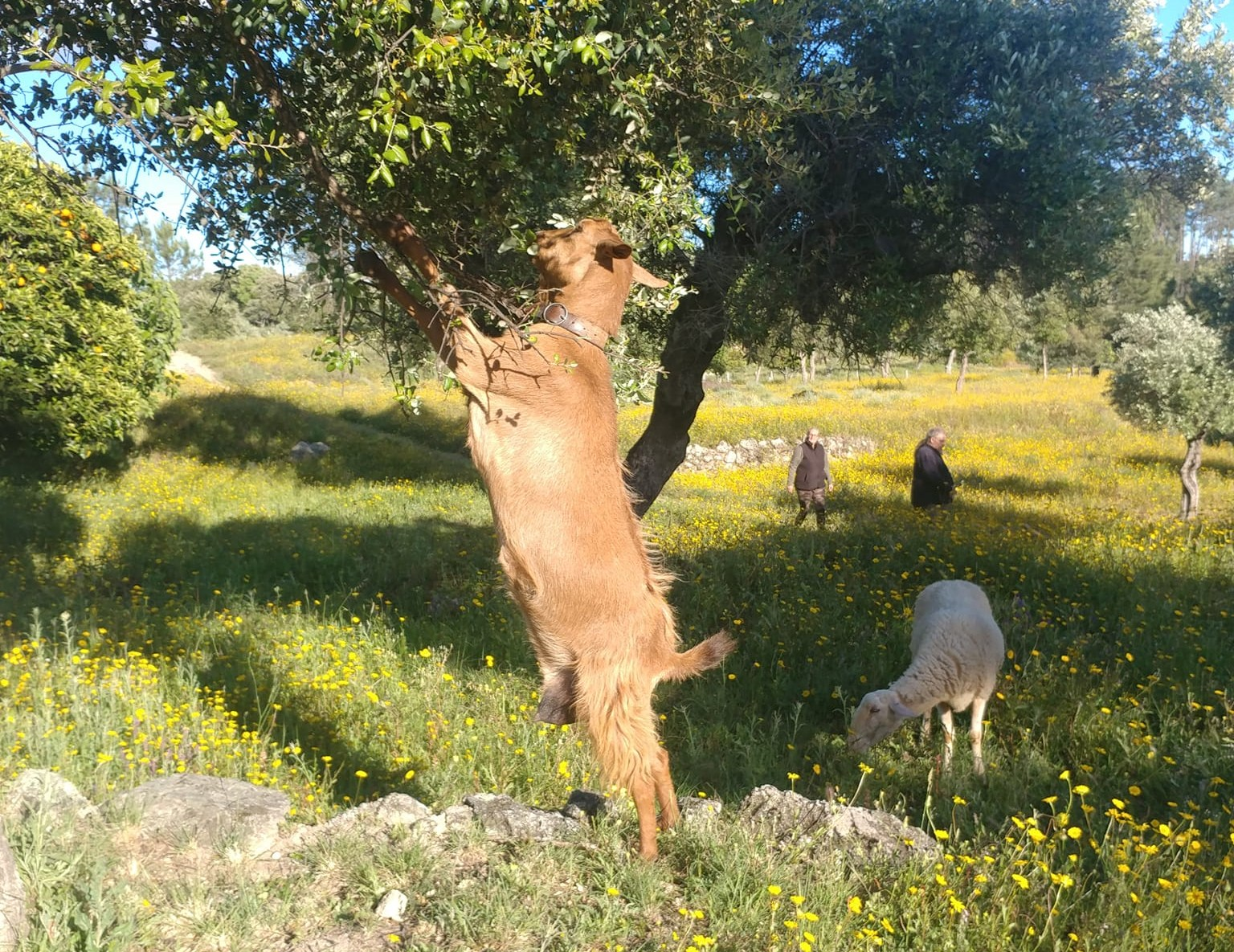
This is a goat belonging to a friend of mine who lives about a mile away. I had the honour of milking her for a few weeks while my friend was in hospital a couple of years ago so I know exactly how they are looked after. He loves goats, he hates gardening, he lives very hand-to-mouth.

The goats are fed exclusively by grazing and browsing. They have quite a lot of room to graze, far more than most people would want to give them. There are trees such as olive, orange and cork oak growing on the same land, giving shade to the goats, a harvest, some browse for the goats, prunings to feed the fire, etc. At the time this photo was taken, this goat hadn't kidded for over a year and was giving just over a litre of milk a day. That's nearly two pints. That's enough for a couple of people. More goats give more, maybe even a yield of kids for meat too. No grain. Ever.


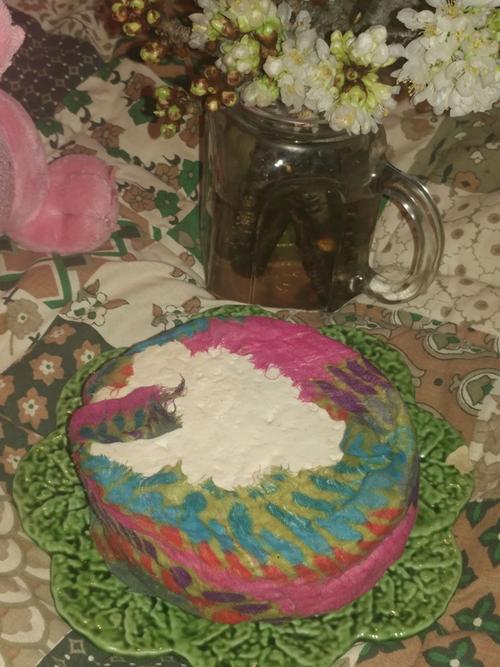
Once a month we take our friend shopping with us as he has no transport. He pays us in cheese! I'm not sure how much fat there is in the milk but it tastes creamier to me than most of the other goat milk I've drunk, except Anglo Nubian milk. So I'm guessing around 4% fat. That cheese took around 5 litres of milk to make so likely contains around 200 grams of fat, or around 7 ounces.


Which seems like an awesome trade for a lift to town, from our point of view!

He does like it if I wash out the cloth and give it back to him for next time though...
 
Nicola Bludau
pollinator
Posts: 1500
Location: Zone 10a, Australia
28
  • Likes 6
  • Mark post as helpful
  • send pies
    Number of slices to send:
    Optional 'thank-you' note:
  • Quote
  • Report post to moderator
Making good cheese is quite an art! That's it it's not only about raising animals and growing food there are a lt of processing and kitchen skills.
I believe guerilla gardening is a good idea. Say, plant every nut and avocado seed somewhere or even citrus or other things. Most of the apples at roadsides here grew from apple leftovers people threw out of their cars.
Or every pumpkin seed. Or even sunflowers.
There is a potato variety purple congo that grows like a weed.
 
Rez Zircon
Posts: 373
Location: Brendansport, Sagitta IV
51
  • Likes 4
  • Mark post as helpful
  • send pies
    Number of slices to send:
    Optional 'thank-you' note:
  • Quote
  • Report post to moderator
Absolutely agree, the limiting factors are protein and fat, followed by caloric density. If you have kids, animal protein and fat are not optional in their diet, and animal fats have a better balance than plant fats, with way fewer ride-alongs:

Burra Maluca wrote:
I make muffins using ground linseed (flaxseed)


Be cautious of flaxseed. It contains four times as much phytoestroten as soy, and flaxseed is more digestible so the phytoestrogen is much more available and more readily absorbed. You can make yourself seriously hypothyroid in a hurry, and it can cause deformities in the fetus, especially males.

This is why I don't feed Diamond-manufactured dog food in my kennel (or any other containing flaxseed, but those are all rebadged Diamond). When I was using Diamond, fertility dropped from the canine norm of 87% to less than 50%, and there were always at least one or two deformed puppies in every litter, usually males. (Most spectacularly open skulls and open midlines, but also abnormal limb, mouth, and genital structure.) Stopped feeding Diamond, and the problem went away overnight.

Sesame seed is also high in phytoestrogens, but at only about 1/4th the level of soy.

Want to raise red meat that will eat pretty much anything, doesn't take up much space, and produces enough fat? Mice, or rats. Trouble is keeping the little buggers contained, and the amount of processing per pound. Chickens are easier, don't escape as easily, and can be kept in a smaller space. (I've eaten roast field mouse. Tastes like fine beef, and you can eat the bones, but what I could catch wasn't really worth the trouble. Kinda like crawdads that way. Needs to be thoroughly cooked, because of the parasite load.) Livetraps may be worth the effort, tho.

If I needed milk in a constricted environment, I'd consider goats. You can tie up a goat. (Remember you don't need just the milkers, you also occasionally need a billy or bull. Bulls are a lot of trouble.) I knew a wildlife biologist who spent a lot of years in Saudi Arabia and Egypt, and he reported that there were feral goats out in the desert, in areas with zero plant life, that apparently subsisted entirely on newspaper that blew out of the cities.

There was an interesting study in Africa, where malnourished kids are a dime a dozen and tend to be pretty uniform in a given area. The study tested IQ, then provided 3 years of calorie supplements through the schools, then retested IQ. The kids who got their added calories as carbohydrates showed no improvement. The kids who got them as fat showed an improvement of 3 points. But the kids who got the same added calories as protein showed an improvement of 10 points, which is significant. (This was a large study, IIRC about 40,000 kids.)
 
Ben Zumeta
pollinator
Posts: 1636
Location: NW California, 1500-1800ft,
522
2
hugelkultur dog forest garden solar wood heat homestead
  • Likes 3
  • Mark post as helpful
  • send pies
    Number of slices to send:
    Optional 'thank-you' note:
  • Quote
  • Report post to moderator
A Clallam man taught us at my 5th grade outdoor school in the Olympic rainforest that eating slugs would keep us alive more efficiently if lost (as unskilled kids) than catching rabbits etc. Of course that is not compared to domesticated animals, but still brings a problem is the solution to mind. Most gardeners know how to propagate slugs and snails. I feed them to my chickens currently, and prefer that way of obtaining their fat to direct consumption;).
 
pollinator
Posts: 1081
Location: Inter Michigan-Superior Woodland Forest
214
7
transportation gear foraging trees food preservation bike building solar writing woodworking wood heat
  • Likes 3
  • Mark post as helpful
  • send pies
    Number of slices to send:
    Optional 'thank-you' note:
  • Quote
  • Report post to moderator

Burra Maluca wrote:But at the moment we can pick up free bags of fatty pork scraps which I sort out and render lard out of. It's a lot less effort for me than hauling my butt up to the top terrace and picking olives!

But if food prices do go up drastically, living off the crumbs from the rich man's table will be less of an option as there will be far more people wanting cheap cuts of meat and demand for the free stuff will no doubt increase to the point that it won't be free, or available, any more. Also there will be less work for the boys to do, so less money, and less fuel to go to the shops so often. At the moment my son picks up bags for me when he passes the shop, but as people run out of money he's likely to not be driving around the place so much. I'll have to switch from tightwad to something more self-sufficient.

I think staying flexible is important!


This comment on 'side economy' practices experiencing a ripple effect inspired my to create a parallel thread...
 
Douglas Alpenstock
pollinator
Posts: 5730
Location: Canadian Prairies - Zone 3b
1639
  • Likes 5
  • Mark post as helpful
  • send pies
    Number of slices to send:
    Optional 'thank-you' note:
  • Quote
  • Report post to moderator

Rez Zircon wrote:Want to raise red meat that will eat pretty much anything, doesn't take up much space, and produces enough fat? Mice, or rats. Trouble is keeping the little buggers contained, and the amount of processing per pound. Chickens are easier, don't escape as easily, and can be kept in a smaller space. (I've eaten roast field mouse. Tastes like fine beef, and you can eat the bones, but what I could catch wasn't really worth the trouble. Kinda like crawdads that way. Needs to be thoroughly cooked, because of the parasite load.) Livetraps may be worth the effort, tho.


Good points. The underlying principle that the most caloric value in a landscape is available at the simplest end of the food chain has always held true -- for wild animals and humans living on a subsistence level.

I recall that the mighty Arctic wolf does not subsist on caribou alone, but gorges on lemmings in season because of the fat they carry on the inside of their skins.

I also recall a David Attenborough piece where grizzly bears were gorging on hibernating moths for their high fat and protein content.

With both insects and rodents, there is of course the "ick - eww" factor to get over. Irrational of course, but many would be literally starving to death before considering these options that have been proven timelessly effective in the natural world.
 
J Bentley
Posts: 8
9
  • Likes 7
  • Mark post as helpful
  • send pies
    Number of slices to send:
    Optional 'thank-you' note:
  • Quote
  • Report post to moderator
Hello!
Moths and rodents both seem to be enthusiastic "volunteers" in our area, and maybe I have already eaten some of them by accident. :^o

But I am wondering if peanuts would be a more approachable source of fat and protein. I enjoy store-bought peanuts as a staple food, but I have never tried to grow or process them. They are currently affordable and easy to find here, but what if that changed? Peanuts apparently need a longer growing season and loose, well-drained soil. They tolerate drought and heat, and they apparently add nitrogen to the soil. Our neighboring state of Georgia is the leading producer of peanuts in the US, so in theory we could grow peanuts here too. But the elevation where we live is about 500m higher. A friend with years of gardening experience tried growing peanuts in our area, but they did not produce well.

AI suggests that Tennessee Red Valencia or Schronce’s Deep Black could be good options in this zone.

Any thoughts on growing peanuts in Zone 4 at 800m elevation?

Thanks!
 
Nicola Bludau
pollinator
Posts: 1500
Location: Zone 10a, Australia
28
  • Likes 5
  • Mark post as helpful
  • send pies
    Number of slices to send:
    Optional 'thank-you' note:
  • Quote
  • Report post to moderator
I did grow peanuts for the first time this year, and they did well, and the harvest was very good. I will repeat that. I believe peanuts are not very good as a staple fat because of the type of oil.
Goats are super destructive if they jump a fence, and you need several of them, which makes me think that maybe a small Dexter cow would be much better.
There is an advantage of herbivores because they don't really need grain or very little if they get other sources of carbs like canna edulis for example.
 
pollinator
Posts: 3465
Location: Meppel (Drenthe, the Netherlands)
1178
dog forest garden urban cooking bike fiber arts
  • Likes 5
  • Mark post as helpful
  • send pies
    Number of slices to send:
    Optional 'thank-you' note:
  • Quote
  • Report post to moderator
Not so long ago I read that there's now a cultivar of peanuts for growing in my climate (in the Netherlands). If I can find out where to buy these 'seed peanuts' (organic), I'd like to try them.
Then I can make peanut butter and 'peanut sauce' (from a Surinam or Indonesian recipe) from my own peanuts! <3

 
J Bentley
Posts: 8
9
  • Likes 6
  • Mark post as helpful
  • send pies
    Number of slices to send:
    Optional 'thank-you' note:
  • Quote
  • Report post to moderator
"I did grow peanuts for the first time this year, and they did well, and the harvest was very good. I will repeat that. I believe peanuts are not very good as a staple fat because of the type of oil. "

Excellent to learn of your peanut success! Do you get frost in your area?
The peanut strain developed for Netherlands climate would also be great to learn about.
Peanuts apparently grow well in many parts of the world, but they are native to South America. Portuguese explorers brought them from Brazil to Africa in the 16th century.

A friend and his family recently returned from doing medical volunteer work in Malawi in Africa. One of the encouraging things in their work there has been a "rescue food" for starving kids. One brand name of the food is called Plumpy'Nut. It's a powder that is easy to store/transport, and it's reconstituted with water prior to eating. The main ingredient is peanut power, followed by whole milk powder, soybean oil, and some vitamins. Once kids have malnutrition for too long, it can be hard for them to survive even if they get food. In years past they were given powdered milk, but their gut could not digest it sufficiently, and a lot of them still didn't recover. Survival rates with the peanut blend have increased to the 75-95% range. Some of the kids in Malawi have been surviving on only the Plumpy'Nut powder for years.

In dry weight, peanuts contain 4-5x the protein as beans, and the ratio of unsaturated to saturated fat is about 6:1, which is good from a cardiac standpoint. For years I have been eating a few handfuls of low-salt peanuts and an apple or whole grain muffin as my lunch, often 4-5 days per week. For me that kind of quick lunch is convenient and satisfying. Eating enough beans to provide that amount of protein would not be practical for any number of reasons.

We are looking for seed peanuts now - even if just as an experiment.

Thanks again!
 
Inge Leonora-den Ouden
pollinator
Posts: 3465
Location: Meppel (Drenthe, the Netherlands)
1178
dog forest garden urban cooking bike fiber arts
  • Likes 3
  • Mark post as helpful
  • send pies
    Number of slices to send:
    Optional 'thank-you' note:
  • Quote
  • Report post to moderator

...
The peanut strain developed for Netherlands climate would also be great to learn about.


What I found so far is disappointing. Some seed webshops sell peanuts for planting, but the info tells to grow them in pots, so you can put them indoors when it's cold. So those aren't special peanuts for this climate at all.
Then there are some reports on one farmer who is/was growing peanuts (next to potatoes and onions) in the south of the Netherlands. They are very proud to have harvested peanuts last year ... for 10 jars of peanutbutter :-o
I can't find anymore what I thought I saw before.
 
My, my, aren't you a big fella. Here, have a tiny ad:
Willow Feeder Bundle: Movie, eBook and Plans
https://permies.com/wiki/359686/Willow-Feeder-Bundle-Movie-eBook
reply
    Bookmark Topic Watch Topic
  • New Topic