|

|
|

|

|

|
|
|
|
|
|
|
|
|
|
|

|

|
 7
7


Mandrake...takes on and holds the influence
of the devil more than other herbs because of its similarity
to a human. Whence, also, a person’s desires, whether good
or evil, are stirred up through it...
-Hildegard of Bingen, Physica
6
John Daley Bendigo, Australia The Enemy of progress is the hope of a perfect plan
Benefits of rainfall collection https://permies.com/t/88043/benefits-rainfall-collection
GOOD DEBT/ BAD DEBT https://permies.com/t/179218/mortgages-good-debt-bad-debt
11
Weeds are just plants with enough surplus will to live to withstand normal levels of gardening!--Alexandra Petri


 3
3
Mk Neal wrote:Are you looking for rope or twine? Jute and hemp twine are pretty common. Where I live, jute will hold up for a year if left outdoors, rarely two. If you take it down and store it for the winter it can last several years though.
Here you can see examples of people making twine from many different plants :PEP make twine.
For rope, I just learned how to make rag ropes by hand (bedsheets work well). Here is YouTube video showing technique:
Mandrake...takes on and holds the influence
of the devil more than other herbs because of its similarity
to a human. Whence, also, a person’s desires, whether good
or evil, are stirred up through it...
-Hildegard of Bingen, Physica
7

 source

Invasive plants are Earth's way of insisting we notice her medicines. Stephen Herrod Buhner
Everyone learns what works by learning what doesn't work. Stephen Herrod Buhner
8
Visit Redhawk's soil series: https://permies.com/wiki/redhawk-soil
How permies.com works: https://permies.com/wiki/34193/permies-works-links-threads


 6
8
6
8
"When the whole world is running towards a cliff, he who is running in the opposite direction appears to have lost his mind." C.S. Lewis
Visit https://themaineingredient.com for organic, premium dried culinary herbs that are grown, processed, and packaged in the USA.
5
Visit Redhawk's soil series: https://permies.com/wiki/redhawk-soil
How permies.com works: https://permies.com/wiki/34193/permies-works-links-threads
2
"The only thing...more expensive than education is ignorance."~Ben Franklin. "We can easily forgive a child who is afraid of the dark; the real tragedy of life is when men are afraid of the light." ~ Plato


 6
6
There is nothing so bad that politics cannot make it worse. - Thomas Sowell
Everything that is really great and inspiring is created by the individual who can labor in freedom. - Albert Einstein
5
6
11
5
Best luck: satisfaction
Greatest curse, greed
7
4

 3
3


 6
6

Zone 6, 45 inches precipitation, hard clay soil


 3
3
Country oriented nerd with primary interests in alternate energy in particular solar. Dabble in gardening, trees, cob, soil building and a host of others.
5
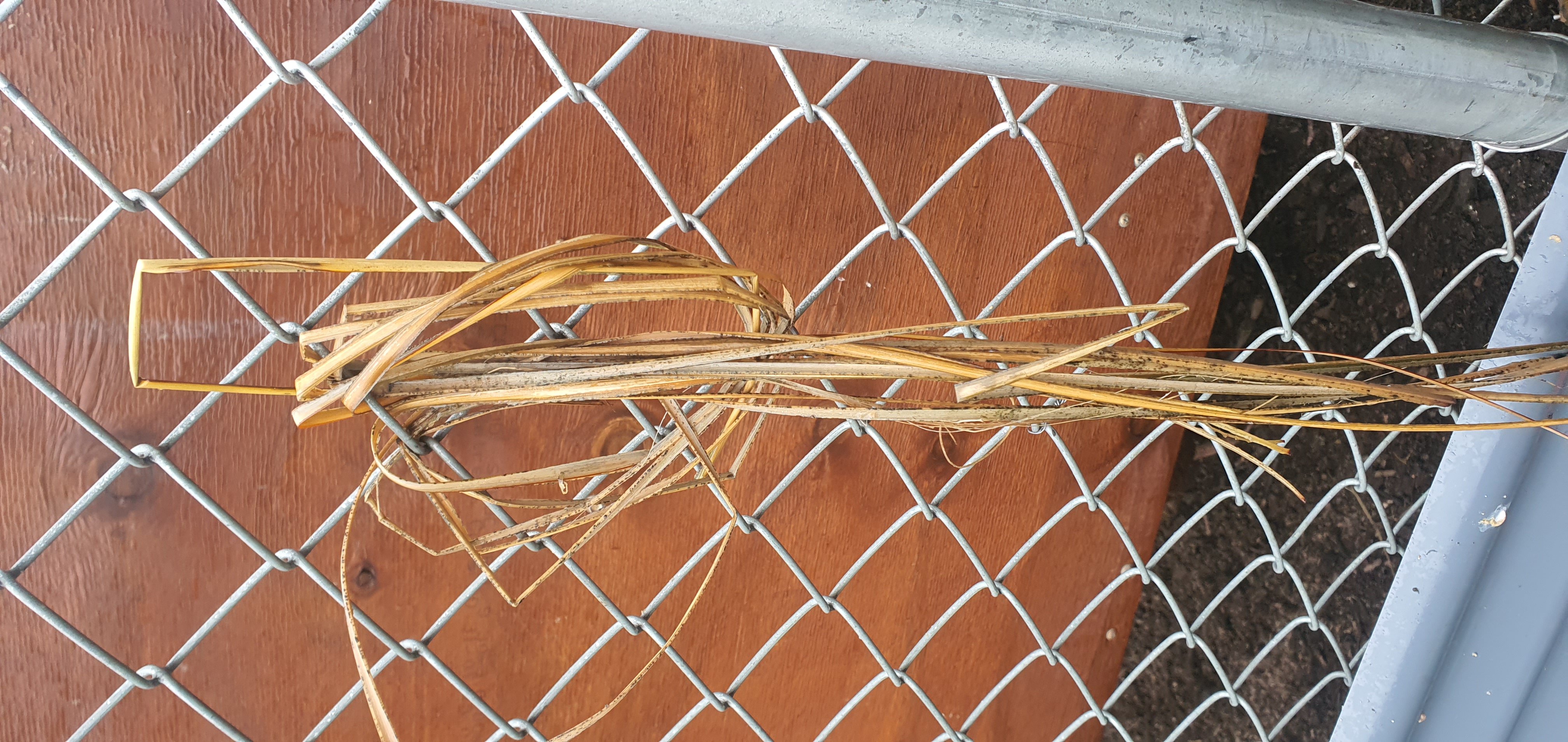
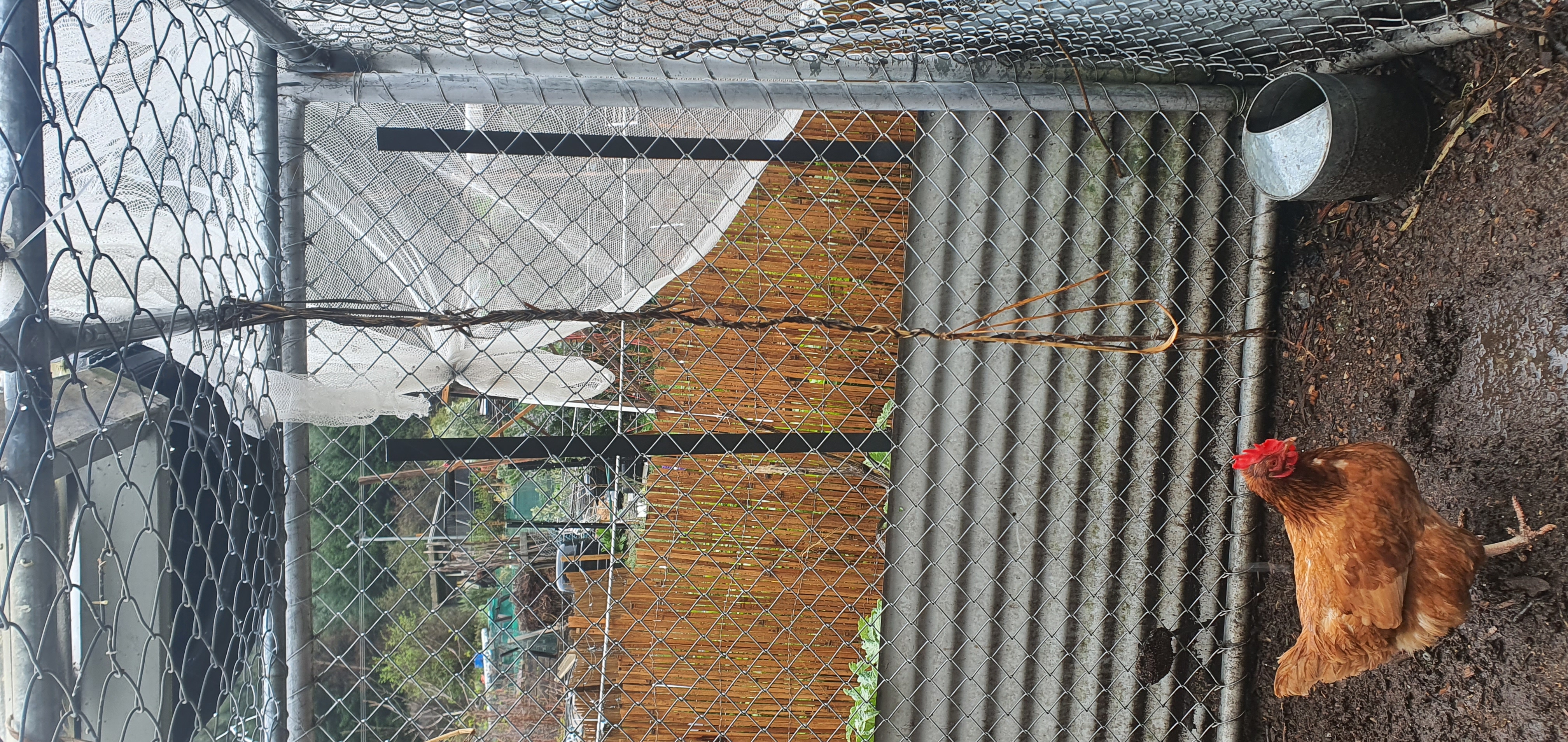
Megan Palmer wrote:If you are able to grow flax in your climate, I'd plant a few clumps. They were traditionally grown for rope making and are still used for basket weaving in NZ.
https://teara.govt.nz/en/flax-and-flax-working#:~:text=How%20M%C4%81ori%20used%20flax,nets%20and%20many%20other%20things.
I collect the seed pods and feed them to our chickens as a treat
The leaves can be split into thin strips and are used a ties around the garden. If I need them to be stronger, I plait the strips into the desired length.
They do become brittle as they dry off but a quick soak in water makes them pliable again.
There are always a few lengths looped outside the chicken coop ready to tie up bunches of greens for the chickens and when I run out, I harvest a few more leaves and tear them into strips.
6
There is nothing so bad that politics cannot make it worse. - Thomas Sowell
Everything that is really great and inspiring is created by the individual who can labor in freedom. - Albert Einstein


 7
7
- Tim's Homestead Journal - Purchase a copy of Building a Better World in Your Backyard - Purchase 6 Decks of Permaculture Cards -
- Purchase 12x Decks of Permaculture Cards - Purchase a copy of the SKIP Book - Purchase 12x copies of Building a Better World in your Backyard


 9
9
Timothy Norton wrote:A future project added to the long, long, long, long, long list of things I want to try.
If you can move it an inch, you can move it a mile. Just expect it to take a little longer.
4
Jay Angler wrote:Although I do occasionally use twine, I mostly use bamboo stakes from my own plants. They'll frequently last 4-5 years in my climate.
Mandrake...takes on and holds the influence
of the devil more than other herbs because of its similarity
to a human. Whence, also, a person’s desires, whether good
or evil, are stirred up through it...
-Hildegard of Bingen, Physica
5
Ra Kenworth wrote:I buy an all natural jute and similar cord at a Canadian store like Harbour Freight because it is the cheapest place to buy 100' or longer.
I have been doing this for years because whether it is jute that tied up tomatos designated for composting in a bucket, or something stronger to hold up prickly canes that will be burned, it is much less trouble as well as less landfill of plastic if the cordage I buy is biodegradable.
I also buy bamboo all natural q tips which get used a lot in animal husbandry, so I dont have to go out of my way to the garbage bin.
Mandrake...takes on and holds the influence
of the devil more than other herbs because of its similarity
to a human. Whence, also, a person’s desires, whether good
or evil, are stirred up through it...
-Hildegard of Bingen, Physica


Jamie Chevalier wrote:As noted above, there is a spectrum of options depending on the strength, longevity, softness, and length needed for the job in hand.
Speaking as a former commercial fisher and lifelong gardener, here is my arsenal of cordage and their uses:
If I just have to secure a stem or two for a couple of months I use a couple of long grass blades or a fibrous stem, twisted lightly to make it more flexible. These improvised garden ties won't stand tying in a knot where the cordage has to double back on itself, but they will hold a clove hitch very nicely because the cord continues int he same direction through the whole knot. I get any old stick for a stake and use a clove hitch to hold the stem or vine to it.
Next in strength and durability comes sisal twine, sold cheaply at every lumberyard.
Jute and cotton are stronger, and spun into a smoother, less less fragile twine that will last two or three seasons rather than just one. Both are hard to find in hardware stores but readily available by mail order. Cotton ranges from kite string up to 12-ply or even 24-ply twine with a fairly hard finish and strength ratings up to about 60 lb https://www.uline.com/BL_3757/Cotton-Twine?keywords=Cotton+Twine&SearchKeyword=cotton%20twine
Jute is the stronger of the two and the twine is also softer, so it doesn't cut into plant stems either when tying or when there is a lot of chafe, as in windy situations. https://www.uline.com/BL_3933/Jute-Twine Jute represents the best balance of price and strength and is readily available. I would use it for trellising if I didn't use metal.
Hemp is stronger yet, as well as soft and durable, but the price is very high. It's also harder to find.
If the object is to make a single tie an the item will be under a fair amount of strain, but cannot stand gouging or chafing, i.e. tying a tree to a stake, the best thing I've found is a strip of bedsheet. for applications where extreme softness is needed--no bark yet on a seedling--use flannel sheets. Small squares of flannel sheet are also ideal for transfering pollen in hand-pollination.
It's easy to assume that wire is stronger than vegetable fibers because it's metal and so hard. However, it loses it's flexibility after an initial bend or two and becomes quite brittle. This is called metal fatigue or work hardening. I find that regular mild steel fence wire (rebar wire, baling wire) is lucky to last the season some years if there is much wind or heavy vines. And of course it is subject to rust, which is pretty fatal in something so thin.. . Copper or stainless wire is cost-prohibitive.
If you want to use metal for trellising, pre-made wire mesh is much more durable than stringing wire yourself. I use and love concrete-reinforcing wire. It's a 6" x 6" mesh that comes in a roll 7' wide. Even large hands can reach through it for picking. Get it at the lumberyard. (anything for construction is cheaper than the same item for the specialty garden market) It makes great tomato cages (recommended by Carol Deppe--it's what she uses) and terrific trellis panels. Ours have lasted about 10 years so far.
Also, it's regular mild steel so it rusts but it's heavy wire so it has a lot of life to it. The coating of rust makes it invisible in the garden, and you avoid the heavy metals that leach out of galvanized wire.
Some folks use hog panels. They are heavier mesh yet, heavy enough to be rigid. And they are galvanized. Expensive, but sold by the panel instead of a 200' roll.
if you are doing some fencing to keep animals out, and want a lighter, more easily bent or cut wire mesh that is also durable, a roll of orchard wire is the usual fencing option, and a piece of it could be used as trellis as well. It is lighter wire but galvanized for long life. The mesh varies from top to bottom. All of the vertical wires are 6" apart, but the horizontal wires are close together at the bottom, medium a couple of feet up, and wide from the middle to the top. The idea is that it keeps out rabbits and other small animals at ground level and larger animals up to it's 6' height. We use it for deer fence, with extra height from bamboo sticks that go up 2 additional feet. (Deer don't realize there's no mesh in between.) I have used scrap pieces to make trellis for peas, which need horizontal supports for their tendrils to grasp--unlike beans which can spiral up a pole.
At this point you get to rope. The natural-fiber rope on the market today is lacking quality because commercial users have all gone to synthetics. There are several levels of strength and flexiblity. Again, sisal is coarsest and cheapest, then jute, then hemp. A high grade of hemp has always been Manila, but I don't know if that term has been corrupted at this point. The best hemp cordage in the days of sail came from Riga in modern-day Latvia.
If you need greater strength and longevity than these natural fibers can give, it's worth knowing the properties of the various synthetics. Technically, only natural fiber cordage is called "rope." Synthetics are called "line". If you go into a marine store, you will get more respect if you remember that, as mariners still generally adhere to the name.
Nylon is quite strong and flexible. But it will stretch under load. It should never be used for towing for that reason--if the thing you tied to should give way for any reason, your towrope turns into a slingshot aimed at you. Nylon braid that's only 1/4 or less thick is capable of holding several 100 lbs, so it's a great choice in the emergency go-bag.
Polypropylene doesn't stretch, and is quite strong, but not as flexible or soft. It also decays faster from exposure to UV in outdoor situations. Here in California I would only give it a season or two before it starts shedding strands and particles.
Dacron is the most expensive and has the best mix of strength, durability and flex. It's used by climbers, and boats that can afford it.
Become extra-civilized!


|
I got this tall by not having enough crisco in my diet as a kid. This ad looks like it had plenty of shortening:
better than composting toilets
https://www.richsoil.com/willow
|