gift
Solar Station Construction Plans by Ben Peterson -- ebook
will be released to subscribers in: soon!
  • Post Reply Bookmark Topic Watch Topic
  • New Topic
permaculture forums growies critters building homesteading energy monies kitchen purity ungarbage community wilderness fiber arts art permaculture artisans regional education skip experiences global resources cider press projects digital market permies.com pie forums private forums all forums
this forum made possible by our volunteer staff, including ...
master stewards:
  • paul wheaton
  • Anne Miller
  • Carla Burke
  • Nancy Reading
  • John F Dean
  • Timothy Norton
  • Jay Angler
stewards:
  • r ransom
  • Pearl Sutton
  • Tereza Okava
master gardeners:
  • Christopher Weeks
gardeners:
  • M Ljin
  • Megan Palmer
  • Kate Downham

2/3rd of land unsuitable for crops?

 
Posts: 50
7
  • Likes 10
  • Mark post as helpful
  • send pies
    Number of slices to send:
    Optional 'thank-you' note:
  • Quote
  • Report post to moderator
I have read this in a few places. But I am skeptical. I suspect that, when they say land is unsuitable for crops, what they really mean is: land is unsuitable for industrial scale agriculture.

I suspect that, by using permaculture techniques, a lot of "unusable" land could be used.

I am not expert, I would be interested in what others think.

FWIW:

Google AI Overview:
About two-thirds (60% to 77%) of global agricultural land is marginal land unsuitable for growing crops, meaning it can only be used to raise livestock.

Why Some Land Only Supports Livestock
- Marginal lands: Poor soil quality, steep hills, and a lack of reliable water make it impossible to farm staple crops like wheat or vegetables.
- Fibrous plants: These difficult terrains grow tough grasses and fibrous plants filled with cellulose that human digestive systems cannot break down

 
Steward of piddlers
Posts: 8339
Location: Upstate New York, Zone 5b, 43 inch Avg. Rainfall
5004
monies home care dog fungi trees chicken food preservation cooking building composting homestead
  • Likes 11
  • Mark post as helpful
  • send pies
    Number of slices to send:
    Optional 'thank-you' note:
  • Quote
  • Report post to moderator
I agree with you Walter, a lot of the worry about land that can grow crops is through a lens of conventional farming. The easiest example I could give is all the work that Paul Wheaton and the Boots have done to create Hugels full of food at Wheaton Labs. There are certain spaces on that property that is mostly rock, with little soil, and over time has now created fertile patches to grow on.

Personally, it seems like some people have a crop in mind and try to make the land fit the crop. Instead, I think we should look at what the land can provide and pick crops to fit the land.
 
steward and tree herder
Posts: 14597
Location: Isle of Skye, Scotland. Nearly 70 inches rain a year
8276
6
transportation dog forest garden foraging trees books food preservation woodworking wood heat rocket stoves ungarbage
  • Likes 17
  • Mark post as helpful
  • send pies
    Number of slices to send:
    Optional 'thank-you' note:
  • Quote
  • Report post to moderator

Timothy Norton wrote:Personally, it seems like some people have a crop in mind and try to make the land fit the crop. Instead, I think we should look at what the land can provide and pick crops to fit the land.


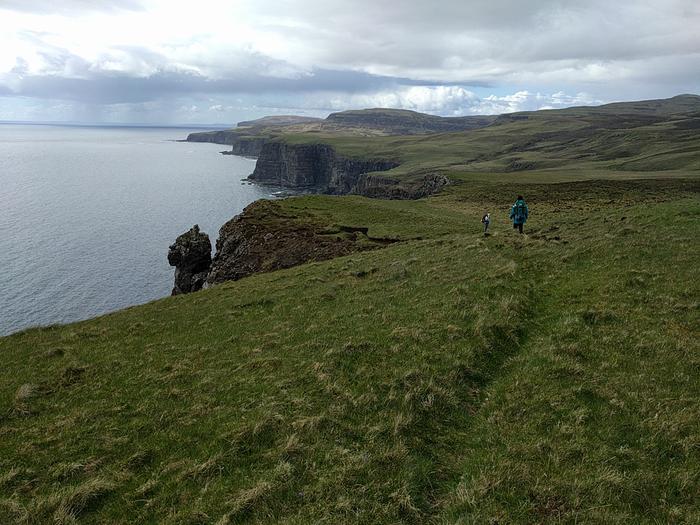
Sometimes the best crop is animals. It is very hard work to grow food plants in a climate like Montana, or the Scottish highlands.

growing food in the scottish highlands and islands
grows sheep


Although I agree the line is not clear.
 
Nancy Reading
steward and tree herder
Posts: 14597
Location: Isle of Skye, Scotland. Nearly 70 inches rain a year
8276
6
transportation dog forest garden foraging trees books food preservation woodworking wood heat rocket stoves ungarbage
  • Likes 11
  • Mark post as helpful
  • send pies
    Number of slices to send:
    Optional 'thank-you' note:
  • Quote
  • Report post to moderator

Timothy Norton wrote:Personally, it seems like some people have a crop in mind and try to make the land fit the crop. Instead, I think we should look at what the land can provide and pick crops to fit the land.


Sorry, my previous post was a bit down....

I've been thinking about this recently and how unsuccessful my growing has been this year. I can grow crops after a lot of hard work and other inputs. I am really blessed with enough rain, but also compacted very acidic soil. Even where I have made my minihugels, virtually none of my seeds I sowed took - so they're mostly growing grass again...
However I think I could grow oats and bere barley, potatoes, Neeps (Swede/rutabaga), possibly carrots, kale, raspberries, brambles and blueberries reasonably easily. Looking at native food plants (of substance) there are also hazels and silverweed. Skirret I think prefers slightly less acidic soil, but does OK after a while other perennial vegetables also can struggle to get established. I'm still trying to work out a low imports land improvement scheme.....
 
out to pasture
Posts: 13433
Location: Portugal
4664
goat dog duck forest garden books wofati bee solar rocket stoves greening the desert
  • Likes 18
  • Mark post as helpful
  • send pies
    Number of slices to send:
    Optional 'thank-you' note:
  • Quote
  • Report post to moderator
I think a lot of it comes down to economics. It's harder work to get crops from more marginal land, so if there isn't the demand for the extra food then it won't be used to grow crops. Most land can be grazed by animals though.

Here in Portugal there are old olive trees growing on some amazingly 'unsuitable for crops' land. They are very low care - just prune them every few years and harvest them if you want to. In good olive years, most of the trees growing on the more out-of-the-way land are left unharvested. In leaner years, nearly all of them are harvested. Even I do it, and I only have a couple of acres these days. The trees on the very top terrace tend to get left unpicked because I run out energy and motivation to harvest them when I have enough for our own use. If times were different, I'd prioritise harvesting them all a lot more, or offer them to anyone else that needed them if they want to go and harvest them.

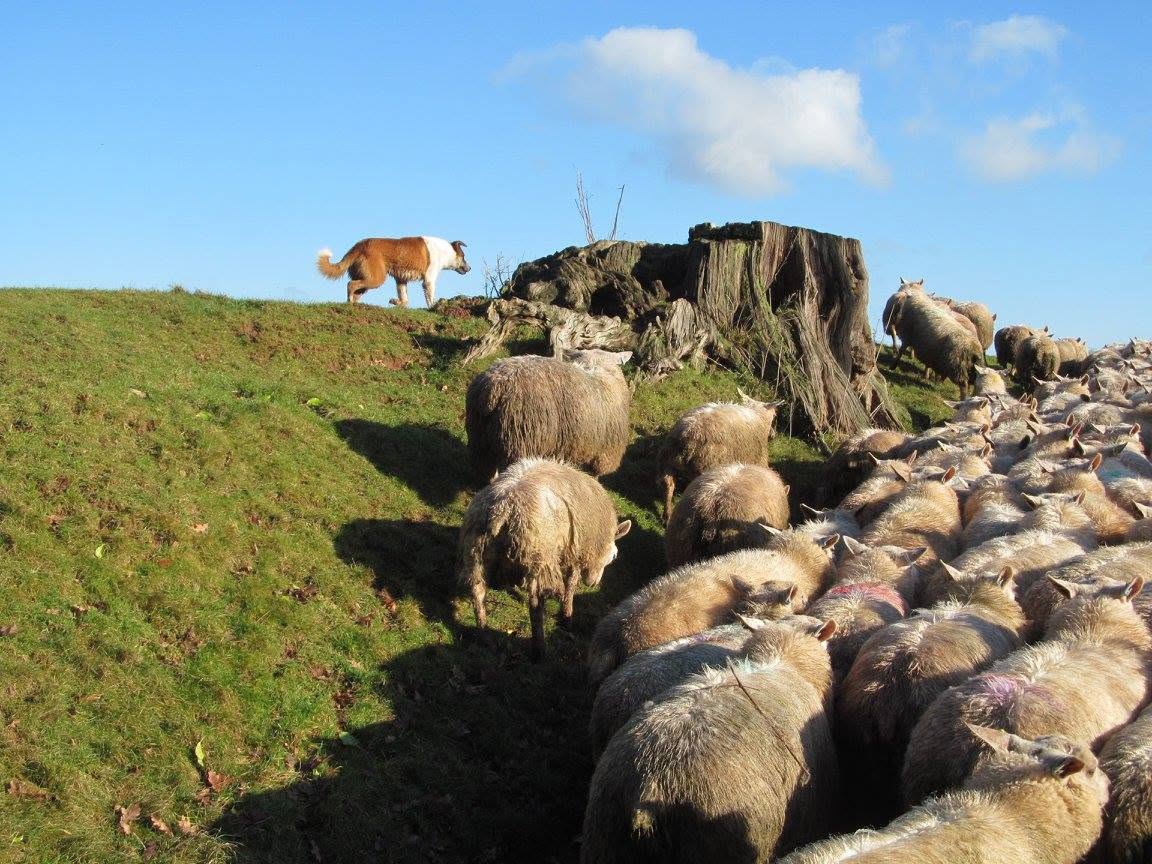
Sheep are easier to 'harvest' - a good dog will soon gather the lot for you!


rock-s-flock.jpg
collie dog gathering sheep
 
gardener
Posts: 5799
Location: Cincinnati, Ohio,Price Hill 45205
1409
forest garden trees urban
  • Likes 8
  • Mark post as helpful
  • send pies
    Number of slices to send:
    Optional 'thank-you' note:
  • Quote
  • Report post to moderator
Where I live, Cincinnati, we once had vineyards that were profitable, and grew cut flowers for export.
These are not viable businesses anymore, but clearly the land can grow food.

Roughly 50 percent of the calories consumed world wide come from grains.
The criteria for judging viable farm land probably focuses on the needs of these crops.

Which is a legitimate priority to have, in my opinion.
Few crops are as naturally storable compared to grains.
They can provide for man and beast alike.
They allow the accumulation of a multi-year surplus.
Of course that last characteristic could be said to be the source of many of our social maladies.
At this point that's just water under the bridge over the Rubicon that we burned after we crossed.
 
master pollinator
Posts: 6012
Location: Canadian Prairies - Zone 3b
1812
  • Likes 7
  • Mark post as helpful
  • send pies
    Number of slices to send:
    Optional 'thank-you' note:
  • Quote
  • Report post to moderator

Burra Maluca wrote:I think a lot of it comes down to economics. It's harder work to get crops from more marginal land, so if there isn't the demand for the extra food then it won't be used to grow crops. Most land can be grazed by animals though.


I agree. It also takes a lot more labour to grow crops in places where normal farming equipment can't operate. Grazing animals provide the labour.
 
master steward
Posts: 19708
Location: USDA Zone 8a
4949
dog hunting food preservation cooking bee greening the desert
  • Likes 7
  • Mark post as helpful
  • send pies
    Number of slices to send:
    Optional 'thank-you' note:
  • Quote
  • Report post to moderator
Unsuitable for crops sounds like something from a real estate add.

My land is unsuitable for crops because it is so rocky, the soil is poor, etc.

Or maybe the land is unsuitable for crops because it floods.

A lot of reason why a piece of land is unsuitable for crops.

Even though my land is unsuitable for crops we plant a food plot for deer.  Unfortunately it doesn't rain and no plants come up.

I believe with some work and organic material most any piece of land can be made suitable.
 
Posts: 993
Location: Sierra Nevada foothills, 350 m, USDA 8b, sunset zone 7
273
  • Likes 4
  • Mark post as helpful
  • send pies
    Number of slices to send:
    Optional 'thank-you' note:
  • Quote
  • Report post to moderator
I think every land can be made suitable, but with an investment that exceeds the gain, otherwise people would be farming these lands for millennia, but they do not. The mighty force to find/produce food is also mother of inventions, but it did not help. It's a different thing to grow something that grows at all - some greens, herbs, fruits versus growing staples that actually can feed a family/nation: tubers, grains, legumes. There are countries that just can not grow their own food and food security is always a priority. If they did not find a way to do it, it means something (despite the incompetence of most governments, foreign lobbying, etc). Maybe the numbers are different, but most of lands in my opinion are unsuitable. There are a lot of mountains, deserts, tundras, taigas, ice caps, various bad lands on the planet.
 
pollinator
Posts: 478
Location: UK
175
kids urban seed
  • Likes 8
  • Mark post as helpful
  • send pies
    Number of slices to send:
    Optional 'thank-you' note:
  • Quote
  • Report post to moderator
The olive trees on marginal land point is a good one. You see that a lot in the Mediterranean where commercial farms would never bother but the trees just exist and produce. Economics is probably the real filter, not capability. Most 'unsuitable' land just means unsuitable for profitably growing wheat at scale, which is a pretty specific bar.
 
master steward
Posts: 16307
Location: Pacific Wet Coast
10799
duck books chicken cooking food preservation ungarbage
  • Likes 14
  • Mark post as helpful
  • send pies
    Number of slices to send:
    Optional 'thank-you' note:
  • Quote
  • Report post to moderator

Walter Byrd wrote:I have read this in a few places. But I am skeptical. I suspect that, when they say land is unsuitable for crops, what they really mean is: land is unsuitable for industrial scale agriculture.


I've heard the word "marginal land" bandied about, but a quick search turned up several quite different definitions:

1. "Generally, marginal land refers to that which is unsuited for sustained agricultural production. Approximately 10% of all agricultural land is classified as ‘marginal.’ It is the sustained technicality in that definition that separates marginal from unproductive: marginal lands can be improved to be productive but its limited productivity can also be worsened."
https://saifood.ca/amb5-marginal-land/#:~:text=Generally

2. "Marginal land is land that is of little agricultural or developmental value because crops produced from the area would be worth less than any rent paid for access to the area."
https://en.wikipedia.org/wiki/Marginal_land

3. "Land that is marginal for conventional row-crop production is often well-suited to perennial crops,[10] including low-input crops grown as bioenergy or bioproduct feedstocks such as switchgrass (Panicum virgatum), shrub willow (Salix spp.), and giant miscanthus (Miscanthus x giganteus), allowing production of these crops without inducing competition for prime farmlands."
https://en.wikipedia.org/wiki/Marginal_land

Some of what we consider "industrial agriculture" involves large tractors and combines etc, and there's plenty of land that is too steep or irregular for that, but which might still be perfectly fine for small scale, small plot farming. However, other land, the huge danger is that any farming that disturbs the soil will result in damage, erosion, and other risks such as land-slides.

I think a big part of the issue is that people used to produce a good chunk of their own food in a "kitchen garden" but that went out of style, and now with "densification" of cities, people are lucky to have a balcony, let alone a yard large enough to produce a meaningful amount of food. However, since Covid first, followed by inflation rising, the interest in city gardening has gone up in my region, even if it feels like a drop in the bucket.

To me the big issue is that we have plenty of historical evidence of "bad shit happening" causing starvation. Sometimes that is human caused, but many times it has been caused by large volcanic eruptions and humans cannot control those! As William Bronson wrote, "Few crops are as naturally storable compared to grains." However, several countries have been using up those reserves already, and seem to hope that they can rebuild them. Weather weirding and soil depletion is not helping there!
 
pollinator
Posts: 1109
Location: Illinois
261
  • Likes 9
  • Mark post as helpful
  • send pies
    Number of slices to send:
    Optional 'thank-you' note:
  • Quote
  • Report post to moderator
Other than as a personal challenge, or dire necessity, what's the point?

'Marginal' lands are considered marginal for reasons. Often they are dry, or naturally infertile, or infertile due to past mis-use. Trying to cultivate them leads to more damage.

If you want to try to recover them to a higher state, or just enjoy farming, I am fine with that. That guy here who is attempting to reforest the Greek highlands is a case in point. I wish him the best of success. Perhaps my grandchildren can visit a Greece covered with oak, pine, and olive forests, like they were 3000 years ago.
 
Douglas Alpenstock
master pollinator
Posts: 6012
Location: Canadian Prairies - Zone 3b
1812
  • Likes 16
  • Mark post as helpful
  • send pies
    Number of slices to send:
    Optional 'thank-you' note:
  • Quote
  • Report post to moderator

Thom Bri wrote:Other than as a personal challenge, or dire necessity, what's the point?

'Marginal' lands are considered marginal for reasons. Often they are dry, or naturally infertile, or infertile due to past mis-use. Trying to cultivate them leads to more damage.


One consideration is that this land can be purchased cheap, cheap, cheap. Smallholders can do wonders in places that are useless to commercial farm operations. But it's a lot of labour, a lot of sweat equity invested.
 
gardener
Posts: 1286
Location: France, Burgundy, parc naturel Morvan
665
forest garden trees food preservation medical herbs building woodworking
  • Likes 13
  • Mark post as helpful
  • send pies
    Number of slices to send:
    Optional 'thank-you' note:
  • Quote
  • Report post to moderator
Industrial scale agriculture is unsustainable, causing top soil microbiome loss leading to erosion leading to drought, it is the main driver of bio diversity loss, it is subsidized by an oil driven system  on top of that, the  industrial scale agriculture outputs are inferior products laced with pesticides, fungicides killing people's gut microbiomes.
Luckily for humanity,people are looking at alternatives. Plenty of examples of food forests that have been built in places where everybody said it was impossible to grow anything. But it took financial investment, effort and years to create , and very determined, knowledgeable and financially free kind of person to obtain these self-sustaining systems. They deserve grand scale copying in similar climate.. Willie Smits, Sepp Holzer, Geoff Lawton spring to mind,but people less known created these systems as well, just going out every day and planting trees, building forests, building soils, attracting rain.. Better wonder why they are not celebrated as heros of life in our dominant culture?
Google simply looks through the lense of financial investment and judges land based on if returns are better invested elsewhere for quicker returns and higher profit margins. But that's not what sustains life, that sustains buying power and real life power, but that is a scorched earth tactic, not viable long term. It's a discouraging answer by an algorithm developed by the powers that be designed to always discourage and kill fantasy and curiosity where at every corner. AI systems are psychopathic, use them for their encyclopedic fast knowledge, but check and don't trust them on fundamentals.
 
Thom Bri
pollinator
Posts: 1109
Location: Illinois
261
  • Likes 9
  • Mark post as helpful
  • send pies
    Number of slices to send:
    Optional 'thank-you' note:
  • Quote
  • Report post to moderator

Douglas Alpenstock wrote:

Thom Bri wrote:Other than as a personal challenge, or dire necessity, what's the point?

'Marginal' lands are considered marginal for reasons. Often they are dry, or naturally infertile, or infertile due to past mis-use. Trying to cultivate them leads to more damage.


One consideration is that this land can be purchased cheap, cheap, cheap. Smallholders can do wonders in places that are useless to commercial farm operations. But it's a lot of labour, a lot of sweat equity invested.


A very good point!
 
Nancy Reading
steward and tree herder
Posts: 14597
Location: Isle of Skye, Scotland. Nearly 70 inches rain a year
8276
6
transportation dog forest garden foraging trees books food preservation woodworking wood heat rocket stoves ungarbage
  • Likes 9
  • Mark post as helpful
  • send pies
    Number of slices to send:
    Optional 'thank-you' note:
  • Quote
  • Report post to moderator

Douglas Alpenstock wrote:One consideration is that this land can be purchased cheap, cheap, cheap. Smallholders can do wonders in places that are useless to commercial farm operations. But it's a lot of labour, a lot of sweat equity invested.


All things are relative, but it is probably the main reason we are here, rather than in an easier growing spot elsewhere in the UK.

Maybe, as mentioned elsewhere, part of the definition of marginal land is how easy it is to farm the land without damaging it badly. In an arid area irrigation comes as a cost, and can lead to problems like salt build up. In a sloped area you get erosion. In a high rainfall area compaction and acidification. Many areas considered marginal now have been prime farmlands in the past. People have lived in them for milennia, but only in the last couple of hundred years have they been considered unfit for growing in.

I like to think we can reverse some of this with permaculture techiniques.
 
master gardener
Posts: 6960
Location: Carlton County, Minnesota, USA: 3b; Dfb; sandy loam; in the woods
4391
8
forest garden trees books chicken food preservation cooking fiber arts seed woodworking homestead ungarbage
  • Likes 9
  • Mark post as helpful
  • send pies
    Number of slices to send:
    Optional 'thank-you' note:
  • Quote
  • Report post to moderator

Thom Bri wrote:Other than as a personal challenge, or dire necessity, what's the point?


One point, I think, is getting ahead of looming "dire necessity".
 
William Bronson
gardener
Posts: 5799
Location: Cincinnati, Ohio,Price Hill 45205
1409
forest garden trees urban
  • Likes 11
  • Mark post as helpful
  • send pies
    Number of slices to send:
    Optional 'thank-you' note:
  • Quote
  • Report post to moderator
Blockbusters could have bought Netflix for peanuts, but compared to what they were making with their stores, it did not seem worth it.
Mail order movies were not worth it, even though it took less overhead, and streaming wasn't worth it either.
We know how that turned out.
The marginal land that was streaming is now pretty  much the way to get a yield in this sector.
Physical media is relegated to libraries, for now, as long as that lasts...

It's not a perfect analogy, but the high inputs that makes it possible to grow lots of food in places like California, are not going to last forever.
Once the fossil fertilizer and fossil water run out, land that have a lot of water and better natural fertility will become more important, even if they are in zone 6.
When my dad was a kid, oranges and bananas were treats you might get at Christmas, because they had to come from far way, like Florida.
Then came highways.
When I was a kid, oranges came from Florida and they were in every lunchbox.
Today, they often come from Brazil.
We are liable to see all of this reverse course as the vast resources it takes to live this way get used up.
If that happens, grapes grown in the clay slopes of Cincinnati might be the sweetest thing my descendents can get their hands on.
That won't be the end of the world, but if they decide they can't farm the slopes of Cincinnati because they are marginal land, they will be poorer for it.

Looked at another way, many unusual industrial choices were made during WW2 "for reasons if production economy".
This might mean one part on a gun was made of brass, to save steel for where it was really needed.
It also spurred wider adoption of new foods that people were not familiar with, like peanut butter.
There was a search for new materials, like rubber made from milkweed sap.
The shortages came from great need , but also because many  of the normal sources of rubber, steel, and food were in the hands of the enemy or otherwise inaccessible.
One source of food for the civilians that took pressure off the food needed for the military was Victory Gardens, which were grown on land previously not thought to be worth growing on.
Marginal land.

Marginal land is the best land, when it's the only land you have to grow needed food on.
Growing on it now gets us ready for when it's the only option for food.
It's a prep, like learning to shoot or how to tend to wounds.
It's like skinning your first rabbit before your starving, but less stressful, in my opinion.

It's also like trying to fix something you found in the trash.
Even if you fail to fix it, little harm is done.
If you start with rocks and clay and end up with clay and rocks, nothing is lost and lessons can be learned.
If you start with a rich loamy soil and end up with a dessicated crust, you have ruined decades or more of work.

For people who live on land where they farm, the marginal parts are liable to be their source for firewood, round wood deer meat, tree sap syrups and blackberries.
For people living in cities a bucket garden might mean a tomato to go with their beans and rice.
Growing up my father sometimes ate green beans for three meals in a day.
Grandma grew them and canned them.
He won't touch them now.
That was a hard way to come up, but it's part of how my grandparents sent all 4 of their boys to college.
The land was marginal, but it grew enough to make a difference generational difference.
Back in Alabama, some of the family had owned some good farmland.
Others worked as sharecroppers.
The political climate of that time and place made all of them sell,leave and never return.
You can have the best land and crops, but if you live somewhere where people burn down your childrens school, what kind of future is there for you?


Walter Byrd
Posts: 50
7
  • Mark post as helpful
  • send pies
    Number of slices to send:
    Optional 'thank-you' note:
  • Quote
  • Report post to moderator

When I was a kid, oranges came from Florida and they were in every lunchbox.
Today, they often come from Brazil.


FWIW:

AI Overview
Florida's orange and citrus production has collapsed by roughly 95% from its historic peak, dropping from a high of 242 million boxes in the early 2000s to a projected forecast of just 12 million boxes. This represents the worst harvesting era for the state in nearly a century.
The primary driver of this agricultural disaster is citrus greening disease (also known as Huanglongbing or HLB), a fatal bacterial infection spread by an invasive insect vector called the Asian citrus psyllid.

 
Burra Maluca
out to pasture
Posts: 13433
Location: Portugal
4664
goat dog duck forest garden books wofati bee solar rocket stoves greening the desert
  • Likes 10
  • Mark post as helpful
  • send pies
    Number of slices to send:
    Optional 'thank-you' note:
  • Quote
  • Report post to moderator

Florida's orange and citrus production has collapsed by roughly 95% from its historic peak, dropping from a high of 242 million boxes in the early 2000s to a projected forecast of just 12 million boxes. This represents the worst harvesting era for the state in nearly a century.


All my land is marginal. All of it is terraced. The lower terraces are the least marginal.

We have a lovely orange tree in front of the house. It needs a bit of extra love in the form of water during August, and it appreciates me emptying the pee bucket under its branches occasionally. I usually give it a dose of wood-ash in the spring when it's finished fruiting and it's time to clean the rocket mass heater out too. In return, it gives us more oranges than we could ever eat, for around five months of the year.

Newcomers to the area are often amazed at how productive the orange trees are and decide to help people by picking them and bagging them up and putting them on makeshift tables for passers by to take. Not many are taken because everyone here has an orange tree in their marginal back-yard and we all have more oranges than we can eat.

Just remember to only empty the pee bucket under it when it's not dropping endless fruit for you. Save it for the other half of the year...
 
Jay Angler
master steward
Posts: 16307
Location: Pacific Wet Coast
10799
duck books chicken cooking food preservation ungarbage
  • Likes 9
  • Mark post as helpful
  • send pies
    Number of slices to send:
    Optional 'thank-you' note:
  • Quote
  • Report post to moderator

Walter Byrd wrote: The primary driver of this agricultural disaster is citrus greening disease (also known as Huanglongbing or HLB), a fatal bacterial infection spread by an invasive insect vector called the Asian citrus psyllid.


This is another example of why current farming practices need to change. There are some great farmers who have been demonstrating better options, like Mark Shepard's Restoration Agriculture, with lines of a variety of trees and support plants on contour using swales for water management, and room for annual crops/animal grazing in between (including at times wheat if I'm not mistaken.)

Canada planted monoculture evergreen tree farms and the Pine Beetle invaded. 40 years later, I keep hearing about all the Doug Fir trees being planted in Europe as monocultures and thinking, we have better tools in our tool boxes, and lots of better traditions to draw on, such as coppicing on a human scale.

The best thing we can do as permies is to keep demonstrating and promoting those better ways!

That said, there are some very pointy mountains in BC, Canada, that are definitely *not* farmland! The Canadian Shield as a whole isn't a good candidate, but that doesn't mean there aren't pockets of it where soil has collected. I am on Glacial Till with lots of large and small rocks. A low area that gets soggy in the winter has far more green grass halfway through our drought period, with no water added, than it did 20 years ago. Big Paul at Wheaton Labs is using Hugels to build awesome soil out of dirt and rocks - it does take time, and access to some irrigation during the development stage is very helpful.
 
Walter Byrd
Posts: 50
7
  • Likes 2
  • Mark post as helpful
  • send pies
    Number of slices to send:
    Optional 'thank-you' note:
  • Quote
  • Report post to moderator

Canada planted monoculture evergreen tree farms and the Pine Beetle invaded. 40 years later,


I can see where permaculture could help eliminate such monoculture.

A bit OT: Maybe permaculture could also help eliminate some of the importing that brings the invasive species here in the first.

The damage done by invasive species is enormous. It is easily one of the most environmental destructive forces in the world today. It has been going on for a long time. It is now believed that the dodo went extinct because of the pigs set loose on the island. The dodos nest on the ground, the eggs were eaten by pigs.

BTW: the term "invasive species" is not really fair. The species did not invade, humans brought them over.
 
Jay Angler
master steward
Posts: 16307
Location: Pacific Wet Coast
10799
duck books chicken cooking food preservation ungarbage
  • Likes 4
  • Mark post as helpful
  • send pies
    Number of slices to send:
    Optional 'thank-you' note:
  • Quote
  • Report post to moderator

Walter Byrd wrote: BTW: the term "invasive species" is not really fair. The species did not invade, humans brought them over.


Yes, sloppy word usage on my part - the Mountain Pine Beetle is a native of Canada. We provided it with a buffet, and it took advantage of that fact.

Most species which move to an area with or without human help, take advantage of whatever buffet humans have arranged. The Zebra Muscle took advantage of the polluted Great Lakes which had most of their top predator fish reduced or eliminated. The eco-systems are re-balancing, but it's taken 50 years or so?

There are several predators that have learned how to safely eat Boa Constrictors in Florida (or at least their eggs, which also helps reduce the problem.)

Humans tend to only identify something as "invasive" if they can't capitalize and make money off it. Which is raised up-thread as one part of identifying whether a piece of land is "marginal" or not. At some point, I hope that humans will choose something other than getting a lot of money, as their yardstick for the value of something.

The Orange trees were brought to Florida by humans and even though they've wrecked ecosystems, and have taken over huge tracts of land, we don't accuse them of being invasive! But we call the insect that spreads the bacteria, "invasive".
 
gardener
Posts: 838
Location: Semi-nomadic, main place coastal mid-Norway, latitude 64 north
576
  • Likes 6
  • Mark post as helpful
  • send pies
    Number of slices to send:
    Optional 'thank-you' note:
  • Quote
  • Report post to moderator
Lots of good points here. I also think the definition of land suitable for crops has to be very narrow indeed if it just includes a third of the available land. What's a "crop"? Any plant that we can eat? If so, is two-thirds of the land on Earth simultaneously unsuitable for nut pines, chestnut trees, cloudberries, apples, cattails, wapato, prickly-pear cactus, potatoes, yams, coconuts, and all the other thousands of species that could potentially be part of a human's diet? I don't think two-thirds of the Earth consists of utterly lifeless, barren wasteland. So yes, the definition of "suitable for crops" in this context must be "suitable for industrial-scale agriculture, growing wheat, corn, potatoes or rice".

Our land is "unsuitable" for mostly everything, or at least everything industrial: no soil that would work for industrial agriculture, too remote for commercial housing development, too steep to affordably build a road on, and as a result of that last point, unviable for industrial forestry. For us, this land is just perfect, for a lot of reasons. One of them being that we would never, ever, have been able to afford a similar-sized piece of land that anyone had any kind of economic interest in. Another is that it has all the things we really need to get started. Water, timber for construction, some soil (even if it is rather shallow in a lot of places). Also, it's close to the sea, meaning that we can get free seaweed for fertilizer.

Of course, there is a lot of work involved, and we're still in the very early stages. For instance, most of the places on the land that have any kind of soil on them are both wet and shaded, since the soil has built up in the lowest parts of the landscape, and obviously has lots of trees growing on it. Conversely, the places with any kind of sun exposure and drainage have no soil whatsoever. In order to garden on the parts of the land that have soil, we'd have to clearcut quite a lot of forest, and probably drain the land. We've instead opted for digging ponds in the wet places, and bringing the soil dug out of them to the sunny places. So yeah, lots of work, but we do grow standard garden crops on very "unsuitable" land, and we'll grow steadily more over the years to come.

It would definitely have been easier to start with "suitable" land, but that would have meant either working for years to save money before we could buy a place (which would probably have been smaller than the land we now have), or going into debt and likely having to keep working for money for the rest of our lives. As it is now, we have no debt, and can get by very well on seasonal work. As I see it, the extra work on the land has replaced the paid work we would've had to do in order to pay for "better" land. It's all a trade-off, but I think the work we do on the land is more satisfying and fun than any paying job I ever had.
 
Jay Angler
master steward
Posts: 16307
Location: Pacific Wet Coast
10799
duck books chicken cooking food preservation ungarbage
  • Likes 10
  • Mark post as helpful
  • send pies
    Number of slices to send:
    Optional 'thank-you' note:
  • Quote
  • Report post to moderator
Eino Kenttä wrote:  

it's close to the sea, meaning that we can get free seaweed for fertilizer. ...In order to garden on the parts of the land that have soil, we'd have to clearcut quite a lot of forest, and probably drain the land. We've instead opted for digging ponds in the wet places, and bringing the soil dug out of them to the sunny places.


I read years ago of a couple on a forested island in my region. Those were the days when bales of newspapers were easy to get for virtually free. They used the bales as building blocks to edge a sunny garden on solid rock, then filled the whole space inside with seaweed. It grew veggies for them. I can't remember what they grew, and I'm sure they had to refill the area for many years, but they at least had some fresh veg they didn't have to travel to get.

Nowadays, I'd suggest they look for some punky deciduous wood in their forest and layer that in also!

Big point is that as much as it is work, we can build soil from much of what is around us if we think of what resources can be had cheaply and nearby. Yes, there's risk from some of the chemicals in the newspaper - but there's risk of chemicals in much of the food we buy at stores! So if we engage our microbe and fungi friends and don't use anything really high risk, there's a lot we can do to improve soil in improbable spots.
 
Cristobal Cristo
Posts: 993
Location: Sierra Nevada foothills, 350 m, USDA 8b, sunset zone 7
273
  • Likes 1
  • Mark post as helpful
  • send pies
    Number of slices to send:
    Optional 'thank-you' note:
  • Quote
  • Report post to moderator
I have checked some estimates to determine the percentages of land areas that would definitely not support vegetation (without great effort):
Tundra: 9%
Alpine climates: 3%
Deserts with less than 100 mm precipitation: 10%
Ice capped land: 10%
So it's 32% of land where growing anything would be pure misery - if possible at all: maybe some cactus on the desert, some berries in tundra and Alpine climates, but it would not feed anybody in significant numbers.
There are more land types (than those listed) where attempting to grow would be probably waste of time or resources. It would be deserts with precipitation between 100-200 mm (another 9%) and it's too low to support anything meaningful without irrigation, harsh cold steppe climates with very short growing seasons, etc. There are also tropical forests that we want to protect due to biodiversity - another 12%.
 
Walter Byrd
Posts: 50
7
  • Mark post as helpful
  • send pies
    Number of slices to send:
    Optional 'thank-you' note:
  • Quote
  • Report post to moderator

Yes, sloppy word usage on my part - the Mountain Pine Beetle is a native of Canada. We provided it with a buffet, and it took advantage of that fact.


You are using the correct term. Such critters are called "invasive species." I just don't think the term is fair.
 
pollinator
Posts: 1653
Location: Zone 6b
246
goat forest garden foraging chicken writing wood heat
  • Likes 1
  • Mark post as helpful
  • send pies
    Number of slices to send:
    Optional 'thank-you' note:
  • Quote
  • Report post to moderator
Because my handicapped youngest daughter and I are mostly only eating meat (to deal with chronic severe health problems), I was curious. I'd heard people say, the carnivore diet isn't 'sustainable' because 'the whole world can't eat that way!' So I did some research. I don't have the figures in front of me (handicapped daughter took that notebook and ripped all the pages out of it just for something to do), but it would be possible to feed every human being on earth a diet of just animal proteins, combining all the land presently used for crop agriculture with all the land presently used as pasture. That wasn't even including forested land (much of which would benefit from being managed as silvopasture) or seafood, which is a plentiful source of animal proteins. Given that animal proteins are much better source of nutrients than any plants in existence, it seems to me that that would be a net benefit to the world! And there would still be room around the edges (and through the middles, if you grow food plants in the silvopastures) for plenty of fruits and vegetables. All you'd end up missing is the stuff that seems to not really be all that healthy for a lot of us anyway. (Also, I didn't figure in dairy products or eggs, just meat, at least two pounds per person per day. Add dairy and eggs to the total, and there is an abundance of nutritious food for everyone. And I was mostly looking at grazing livestock, not the ones that need row-cropped grains and legumes, like commercial chickens and pigs.) There is also a lot of potentially-usable land that isn't being fully or properly managed for grazing right now. Much of the far-north, for example - cattle and sheep can be raised clear up to Fairbanks and reindeer even further north. A good chunk of the land would need to be used for growing hay, but that's entirely possible. That land didn't get figured into my equations, either.

I know that wasn't what the original question was about - just something that I thought was really interesting.
 
I remember because of the snow. Do you remember tiny ad?
a new overhaul of the freeheat page - need feedbacks for world domination
https://permies.com/t/389799/overhaul-freeheat-page-feedbacks-world
reply
    Bookmark Topic Watch Topic
  • New Topic