

|

|

|

|

|

|
|
|
|
|
|
|
|

|
|

|

|

|
 1
1


 6
6
“There are no words to express the abyss between isolation and having one ally. It may be conceded to the mathematician that four is twice two. But two is not twice one; two is two thousand times one.”
― G. K. Chesterton


 2
2
Malek Beitinjan wrote:
Direct seeding methods will reduce the labor and costs on your end. If you take the approach that you'll just plant and then forget it completely, then any fruits you get from them will just be an added bonus, rather than something you rely on. With guerilla gardening, you can never be certain when they'll decide to clearcut the area, so I prefer high volume low effort methods. You don't want a yield on someone else's land to be a crop you depend on.
1
Douglas Alpenstock wrote:My random thoughts:
If you create a black bear problem on an adjacent 250 acre plot, then you will have a black bear problem. Bears never forget a food source, and once they start hanging around they will check for additional easy pickings in the area. And they will teach their young to do the same.
If you start from seedlings it will take many years before you see substantial production. I guess it depends on what varieties you plant, and what time frames you are thinking about. Without tending, they will grow slowly, and will focus on foliage rather than fruit. Perhaps these trees will be more of a gift for the next generation (which is not all bad).
1
Derek Dendro wrote:If it's a plus for you, you will also likely draw in the elk, deer, and most with fruit trees But that also means you might have to fence them for the first 5 years until they are strong and established.
3
Visit Redhawk's soil series: https://permies.com/wiki/redhawk-soil
How permies.com works: https://permies.com/wiki/34193/permies-works-links-threads


 12
1
12
1
Jay Angler wrote:Personally, I vote in favor, although I admit I don't live in black bear country. 5. I do protect young trees with fencing due to deer. If I didn't have the fencing already, I would have used bamboo to fashion a cage around them.
Apples aren't a substitute for quality veggies, as they are not as nutritious as blackberries, blueberries, Saskatoon berries, or currents, but they are easy to pick, easy to dry, and have all sorts of culinary uses.
2
 2
2
But we do have black bears and cougars, though the food available for them is slim and so they are spread out more than in other areas. I've caught both on trail cameras on my property, even right up next to my lower deck. I also found bear prints in fresh dirt I had piled up when digging the hole for the dugout.
I love the idea of stomping apple cores into the ground and having them grow. Apple trees in my harsh climate take a lot more work. Just keep in mind that no good deed goes unpunished.
Visit Redhawk's soil series: https://permies.com/wiki/redhawk-soil
How permies.com works: https://permies.com/wiki/34193/permies-works-links-threads


 5
5
How Permies works: https://permies.com/wiki/34193/permies-works-links-threads
My projects on Skye: The tree field, Growing and landracing, perennial polycultures, "Don't dream it - be it! "
2
Jay Angler wrote:
I agree there are risks involved in everything - the risk of no food, the risk of feeding bears, the risk of having no pollinators, because bears are an important support for bees and their ecosystems are shrinking.
1
Douglas Alpenstock wrote:
That's a fair comment. I am always concerned about keeping bears truly wild, though. Habituation and conflicts usually happen through human actions, and the bears always lose, so it's reasonable to consider "what if" on a new project.
7
Isaac Hunter wrote:...tract of private timber land...
IH
A build too cool to miss:Mike's GreenhouseA great example:Joseph's Garden
All the soil info you'll ever need:
Redhawk's excellent soil-building series

 2
2
I read in a book about west coast forests (can't remember which one) that one of the benefits of bears marking trees with their claws, is that the tree exudes sap in response and it is an important source of bee forage in forested areas at certain times of the year. Apparently, timber harvesters don't want bears marking the trees, so they tend to kill the bears and therefore indirectly kill their pollinators. (so maybe it was a book about bears - I don't think so - if you want more info, try google, as I really just don't remember where I read it and don't want to send you the wrong way)I'm a bit confused by "because bears are an important support for bees.". What does that mean?
Visit Redhawk's soil series: https://permies.com/wiki/redhawk-soil
How permies.com works: https://permies.com/wiki/34193/permies-works-links-threads
5
Trace Oswald wrote:
Isaac Hunter wrote:...tract of private timber land...
IH
My thoughts are, do what you like on your own land, and leave other people's land alone. You don't even have any business being on the land, let alone planting something on it, unless of course you have the permission of the owner, in which case, it isn't "guerilla gardening". I don't understand why people think they have the right to go on someone else's land and plant something, because it is "unused". Maybe it is being used for exactly what the owner wants to use it for, even if that is just leaving it alone. I have 80 acres, and much of it is "unused". That's just the way I want it. If I wanted it to be used, I would use it. Maybe the owner of that land feels the same.
3
Jay Angler wrote: I read in a book about west coast forests (can't remember which one) that one of the benefits of bears marking trees with their claws, is that the tree exudes sap in response and it is an important source of bee forage in forested areas at certain times of the year.
2
Douglas Alpenstock wrote:
Jay Angler wrote: I read in a book about west coast forests (can't remember which one) that one of the benefits of bears marking trees with their claws, is that the tree exudes sap in response and it is an important source of bee forage in forested areas at certain times of the year.
Interesting! I'll try to track it down.
Visit Redhawk's soil series: https://permies.com/wiki/redhawk-soil
How permies.com works: https://permies.com/wiki/34193/permies-works-links-threads
3
3
Jenny Wright wrote:We've been growing apples from seed for about 12 years but only in the last six years have we lived in one place long enough to see fruit, literally. Since living here we've plants a dozen trees from seed and the ones that survive utter neglect, grow really well and survive being eaten by deer, elk, rabbits and voles. We've had only one tree actually bear fruit so far. It was about 3-4 years old when it finally blossomed profusely and ended up with buckets of sweet crab apples. It is also multi-stemmed and the most vigorous of all the trees we have. The other trees that haven't bloomed yet also are very healthy and offer us an opportunity to easily graft named varieties of we want some fruit fast. So as long as someone is not determined to grow honey crisp or some other persnickety named variety, apples can be very low/no maintenance (in the right climate, of course).
Jenny Wright wrote:My opinion about planting in a no-man's abandoned land is that is want to make sure it's not a critically sensitive environment and I'd try be mindful of the native flora and fauna. If there is a ton of invasive growth that is crowding out native species, I think it would be good to go in there and pull that junk out and replace it with plants that more closely mimic the original native growth....But if the environment was a healthy native grassland/prairie that was doing well, I think it would not be a good idea to start adding trees. My first impulse when reading the original post was, "Sure, go ahead! Why not!" thinking mostly of whether someone should plant things on a corporation's unused land. But thinking it over more, it isn't an easy yes/no question, since the environmental impact should be considered.
3
Isaac Hunter wrote:
Hey Jenny. Thanks for the reply. My first question would be for you is: do you live in bear country, specifically black bears? All the other critters you mentioned would not be an issue for me at this location. But, even though bears are not currently a problem in this area (meaning they do not do damage or show up when I'm on my property) they can quickly become a problem. Less than 100 miles away people get cited for feeding the bears off their back porch because they think they're pets. It has caused a tremendous problem for everyone else who tries to go out in public spaces.
Personally, I was looking at the feasibility of the question based on overall ROI. It's virtually free to plant (minus the initial cost of the trees - or grow from seed so essentially free) and with no maintenance I was looking for a possible future return of fruit that would cost me just the time of going out and picking it. But, the risk of drawing in the bears is more than I'm willing to venture for the possible outcome. Apples are not essential to my diet and there are possibly alternatives that I can grow on my own property in a way that would not attract bears that I would like to try instead. I'm not personally picky when it comes to what kind of apple. Edible and maybe even a little tasty would be my benchmarks.
Isaac Hunter wrote: This is an interesting consideration. It is a peculiar piece of land in question, given that it is private property so there is no frequent public use (or the public chooses not to use it because of natural access restriction - i.e. no roads, difficult to get to), the immediate environment is rather "healthy" depending on your definition. Of course, since the foresters came through 100 years ago and clear cutter the entire valley from stem to stern and then replanted a mono tree crop in place of the natural forest diversity, planting trees so close that it blocks out nearly 100% of the sun and kills everything on the group (except for the trees) reducing literally the entire tract of land to a "tree farm," the actual health would be in question. So I'm not certain the introduction of a half dozen non-native apple trees would really make a difference on land that no one uses or cares about and that will essentially never be used for anything but maybe as a tax right off on a ledger somewhere back east. ...
There are tradeoffs. The issue really boiled down to: do I need apple trees to survive or would I just like to have apple trees?
IH
10
 9
9
Nothing ruins a neighborhood like paved roads and water lines.
3
Mark Reed wrote:Some show no damage at all, odd since the seeds came from some of those same named varieties
Mark Reed wrote:I plant apple, pear and peach seeds all over the place, but my biggest guerilla gardening plantings are grapes and pecans.
1
Isaac Hunter wrote:
As I understand it (and I could be terribly wrong here), the fruits (especially apples) from the grocery store are often hybrids or genetically modified and so they are either sterile or you never really know what you'll actually get if you plant their seeds. I used to think all the fruit "seeds" from the grocery store were sterile, but I've heard several people over the years have successfully planted from them.
Lots of discussion on https://permies.com/t/998/growing-apples-seeds-cloning about growing apples from seed.
1
Nothing ruins a neighborhood like paved roads and water lines.
1
Mark Reed wrote:We don't have bears or other such large critters so no issues there. We do have bobcats; I wish I knew a way to encourage them in my neighborhood to help counter the rabbits but a lot of people around here trap or shoot them, I don't know why.
1
Isaac Hunter wrote:
Mark Reed wrote:We don't have bears or other such large critters so no issues there. We do have bobcats; I wish I knew a way to encourage them in my neighborhood to help counter the rabbits but a lot of people around here trap or shoot them, I don't know why.
Well I can tell you from experience that predator cats are trouble. When I was a kid, I would run around all day and night on this same ridge with my dog (my parents had a cabin about a mile from where my camp is now). I was 10 or 11 when I started and did this every summer until I went into the military. There was never a discussion about cougars or bears or anything like that. Now, there is talk about it all the time. Signs are posted at trailheads to watch out for them. People all over the PNW are being killed and stalked by them (cougars, not bobcats). Farm animals are slaughtered by them and their bodies just left in the field.
I always wondered if my parents were just ignorant of the risk I took going into the woods like that all the time. But then I did some research and found out at that time (when I was 10-11) the population of cougars in this region was around 250. Today it's well over 5000. This is all because hunters are no longer allowed to use dogs to hunt cougar. Laws like this were put in up and down the west coast and now populations have soared, resulting in overpopulation and pressure for these predators to venture into "human" habitat. They are also reintroducing wolves and there is even talk of Grizzlies.
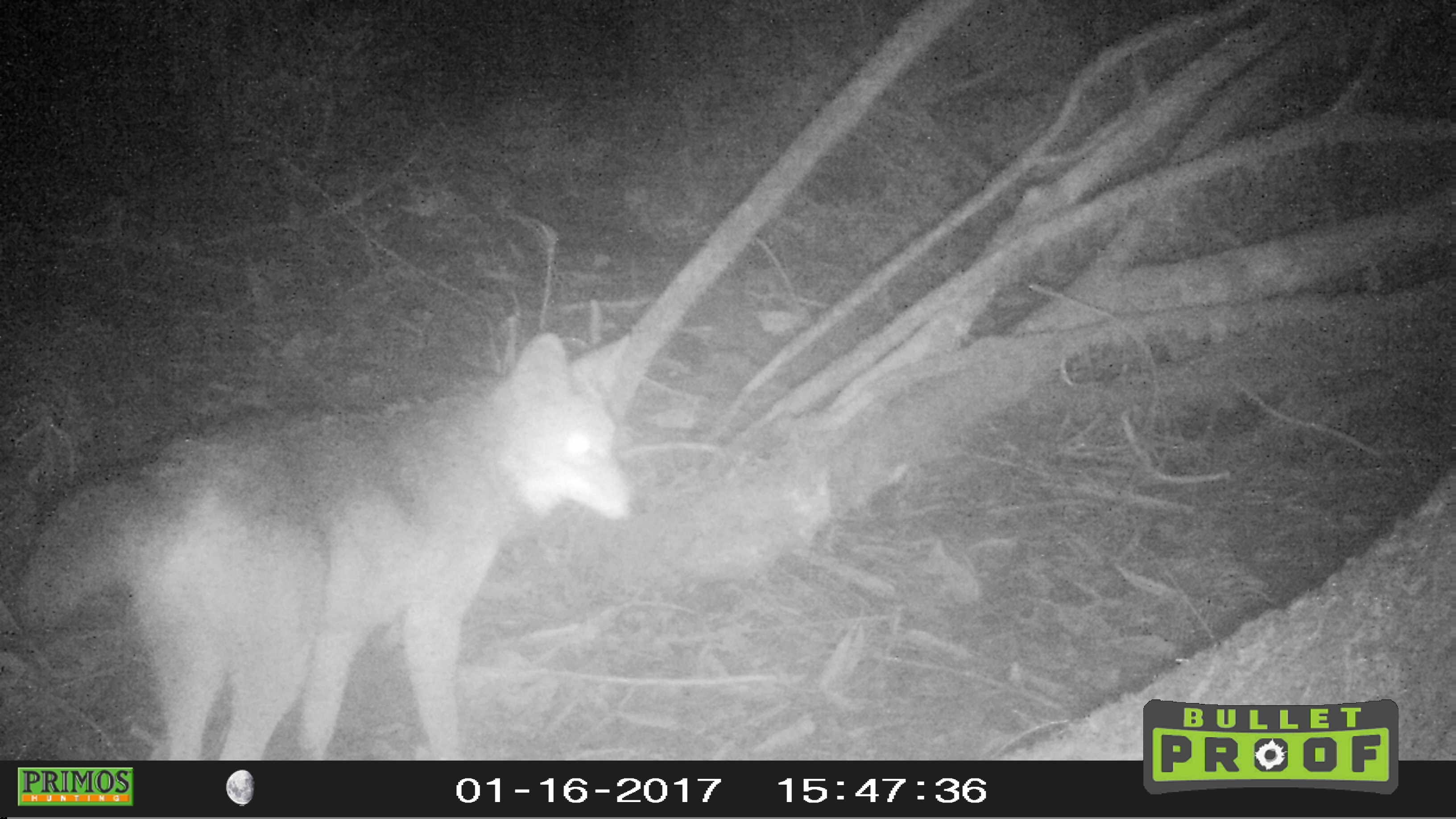
I personally think there should be less people. I'm lucky that in this area (so far) because of the terrain (limiting the number of predators within this area to only a few) and the abundance of natural food (elk and deer), the cougars have not been an issue (I've never seen one face to face on my property or out on a walk but I do have pics from a trail camera of cougars and bobcats hunting while I was away - I also heard a bobcat or cougar kill "something" one night just after sundown after I had just climbed into bed in the previous shelter. It was down by the water's edge and the creature it got made some really strange sounds just before the cat attacked and then the cat mades one godawful sounds as it killed it's dinner - I will never forget that experience), but I do know with certainty that these cats hunt on my property, and do so when I'm there. I can only imagine what's crept by me on the deck at night when I'm hanging in my hammock fast asleep!
It's a bizarre experience walking through the woods and knowing there's a good chance something is out there looking back at you. It's not as bad as in Alaska or Montana where there are Grizzlies and wolves. I'm still at the top of the food chain in this area, but my woods have four footed ghosts and I personally hope I never actually see them in person.
IH
1
Jenny Wright wrote:
We always have a pretty good idea when a predator cat is in the neighborhood. The missing pet posters go up in a flurry!
Seriously, I noticed a lot more predators (and less deer and elk) when we had chickens, geese, and turkeys. They really drew in the predators.
Jenny Wright wrote: A trail of feathers and no body meant an eagle or owl. A trail of feathers and mangled body parts meant coyotes. No signs of a struggle and a perfectly intact body with a neat little slit minus the "goodies" (heart and liver) meant a bobcat. And a completely missing animal with no signs that I could see... not sure. I hope there's never been a cougar! I'm in the PNW and I agree with Issac cougars are scary.
1
Isaac Hunter wrote: They say, "Oh you need a little dog to go with you!" Nope. I'm not interested in raising a snack for wild animals.
Isaac Hunter wrote: .
If your kill identification categories are accurate I surprisingly came across the remains of an eagle or owl kill one day on the trail. There was a scattering of blue feathers but no body or pieces anywhere. I thought it was a bobcat, but there are tons of owls and hawks in the area and a few bald eagles as well. The owls typically hoot me to sleep in the summers. They hoot back and forth at each other from across the cove. That and the frog choruses that seem to form out of nowhere. First they croak in the immediate area of my shelter, then up into the bowl (southward), then off into the valley (eastward). It's quite impressive.
1
4
Jenny Wright wrote:A little more detail if you are interested...
The eagles use their beaks to pull off the feathers on the belly and then rip it open, thus feathers everywhere. The bobcat (which is similar to a house cat only so much more skilled) there is usually a bite wound in the neck to kill it quickly and a clean cut up the belly, like with a knife, so they can get to the organs. My chickens that were gotten by a bobcat were so clean that I had to look up close to see why they were dead. And the coyotes chew up their prey like a dog with a dog toy. And they do not kill quickly. I've had to kill some birds that were partly eaten by coyotes but still alive and flopping around when I came out in the morning (the coyotes got scared of by a neighbor's dog before they were done eating.)
 7
7
This is all just my opinion based on a flawed memory

|
I can't take it! You are too smart for me! Here is the tiny ad:
Which seed, what year, from where. Offline Android homestead app.
https://graith.app
|


.jpg)