• Post Reply Bookmark Topic Watch Topic
  • New Topic
permaculture forums growies critters building homesteading energy monies kitchen purity ungarbage community wilderness fiber arts art permaculture artisans regional education skip experiences global resources cider press projects digital market permies.com pie forums private forums all forums
this forum made possible by our volunteer staff, including ...
master stewards:
  • Carla Burke
  • John F Dean
  • Nancy Reading
  • r ransom
  • Jay Angler
  • Timothy Norton
stewards:
  • paul wheaton
  • Pearl Sutton
  • Anne Miller
master gardeners:
  • Christopher Weeks
  • M Ljin
gardeners:
  • Jim Garlits
  • thomas rubino
  • William Bronson

Mints and other mints

 
Posts: 25
3
  • Likes 6
  • Mark post as helpful
  • send pies
    Number of slices to send:
    Optional 'thank-you' note:
  • Quote
  • Report post to moderator
Mints clearly have a lot of benefits. They taste good, they may repel some pests and attract some friends, and they can be a good mid-high ground cover. But they also do earn their reputation for spreading uncontrollably in many settings!

How well do you find that mints fit into a permaculture forest garden, perhaps under fruit trees, without becoming too much of a nuisance? Thoughts on best placements, where they tend to be both useful and manageable? Favorite varieties? (I'm aware that it's best to mostly keep to one variety within a planted area, since unplanned hybrids don't always taste so good.) I'm also very mindful of the long-term goal of minimal maintenance!
 
master gardener
Posts: 2655
Location: Zone 5
1540
ancestral skills forest garden foraging composting toilet fiber arts bike medical herbs seed writing ungarbage
  • Likes 5
  • Mark post as helpful
  • send pies
    Number of slices to send:
    Optional 'thank-you' note:
  • Quote
  • Report post to moderator
I haven’t found mint to be bothersome in a permaculture jungle garden setting. They grow as a ground cover, and I love eating them as greens raw or cooked.

I grow a wild species, water mint, which I love. On land, they are milder tasting than by the water. There are three species of mint nearby—corn mint, water mint, and apple mint. Apple mint is the highly invasive kind that grows four or five feet tall and makes a monoculture. The leaves are very hairy, but good in tea. The other two are well behaved. Corn mint has some incredible, rich, diverse flavors too. They are all quite variable based on conditions. The strongest tasting one I know was some water mint growing in an old beaver marsh.
 
steward
Posts: 19115
Location: USDA Zone 8a
4823
dog hunting food preservation cooking bee greening the desert
  • Likes 5
  • Mark post as helpful
  • send pies
    Number of slices to send:
    Optional 'thank-you' note:
  • Quote
  • Report post to moderator
Growing up, my mother always had mints growing by the outside water faucet.

I was surprised when folks talked about it being a problem and spreading so I assume this has to do with which variety folks grow.

I grew lemon balm in a pot without any problem.
 
steward and tree herder
Posts: 13577
Location: Isle of Skye, Scotland. Nearly 70 inches rain a year
7367
6
transportation dog forest garden foraging trees books food preservation woodworking wood heat rocket stoves ungarbage
  • Likes 5
  • Mark post as helpful
  • send pies
    Number of slices to send:
    Optional 'thank-you' note:
  • Quote
  • Report post to moderator
I have several varieties planted and like Maieshe, wild water mint. Mine only grows in the damper areas though, although maybe the patch is still spreading.... I love apple mint for mint sauce and mine is left to grow wild. Mints will spread wherever they are happy, so I guess the trick is to limit the are they are happy in - drier, wetter, shadier, sunnier...
I'd love to grow Moroccan mint (good for teas), but that seems to have died - I think it wants it sunnier. I'm thinking of underplanting some of my raspberries with peppermint for tea instead, as it has a similar growth habit to nettles which have colonised one of my raspberry patches, and is less likely to sting me when harvesting the berries!
 
M Ljin
master gardener
Posts: 2655
Location: Zone 5
1540
ancestral skills forest garden foraging composting toilet fiber arts bike medical herbs seed writing ungarbage
  • Likes 5
  • Mark post as helpful
  • send pies
    Number of slices to send:
    Optional 'thank-you' note:
  • Quote
  • Report post to moderator
Oh, I forgot! Mountain mint! They are delicious in teas, very strong taste. A little tough for fresh eating but they aren’t excessively enthusiastic either, and appreciate drier soils.
 
Posts: 69
Location: Belgium, alkaline clay along the Escaut river. Becoming USDA 8b.
44
forest garden foraging cooking
  • Likes 5
  • Mark post as helpful
  • send pies
    Number of slices to send:
    Optional 'thank-you' note:
  • Quote
  • Report post to moderator
Hello,
Wherevever I want mint, I have to dig a pond and plant it inside ; it is just too dry for it to spread around here.
In the veggie garden, two related species are growing wild, lemon balm and black horehound ; both are medicinal and loved by bees, though black horehound is rather unpleasant at first contact.
I let them spread along the midline of my growing alleys, which are 'perennial lines' including patience dock, fennel, fruit and redbud trees.
They make the garden even more soothing.

Have a nice evening,
Oliver
 
Syd Smith
Posts: 25
3
  • Likes 2
  • Mark post as helpful
  • send pies
    Number of slices to send:
    Optional 'thank-you' note:
  • Quote
  • Report post to moderator

M Ljin wrote:I haven’t found mint to be bothersome in a permaculture jungle garden setting. They grow as a ground cover, and I love eating them as greens raw or cooked.

I grow a wild species, water mint, which I love. On land, they are milder tasting than by the water. There are three species of mint nearby—corn mint, water mint, and apple mint. Apple mint is the highly invasive kind that grows four or five feet tall and makes a monoculture. The leaves are very hairy, but good in tea. The other two are well behaved. Corn mint has some incredible, rich, diverse flavors too. They are all quite variable based on conditions. The strongest tasting one I know was some water mint growing in an old beaver marsh.


I've never even heard of corn mint! Are you in Europe?
 
Syd Smith
Posts: 25
3
  • Likes 3
  • Mark post as helpful
  • send pies
    Number of slices to send:
    Optional 'thank-you' note:
  • Quote
  • Report post to moderator

M Ljin wrote:Oh, I forgot! Mountain mint! They are delicious in teas, very strong taste. A little tough for fresh eating but they aren’t excessively enthusiastic either, and appreciate drier soils.


I've started researching these! It sounds like narrow-leaved mountain mint is especially tasty, but yeah, pretty leathery in texture, and Virginia mountain mint tastes a bit more savory but isn't quite as tough to chew.
 
Posts: 14
Location: Bavarian Alps / Northern Alps / Europe - equal to zone 7a
5
hugelkultur medical herbs homestead
  • Likes 4
  • Mark post as helpful
  • send pies
    Number of slices to send:
    Optional 'thank-you' note:
  • Quote
  • Report post to moderator
Ah mint, you gotta love it.
Especially mountain mint, or as it is known here in my parts as swiss mint. Then there is the alpine mint which is much smaller in growth but also tasty. Mojito mint and so many others.

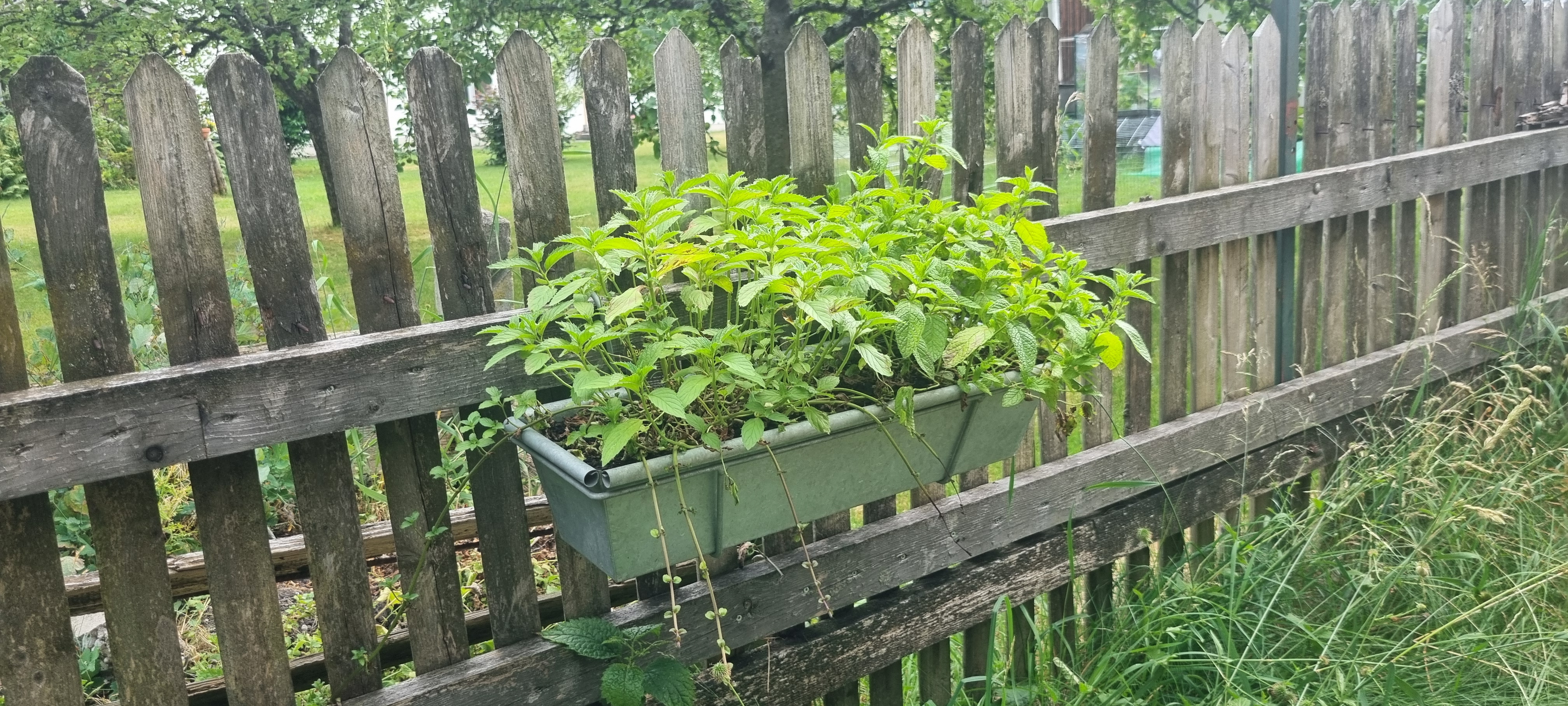
But to answer your question. Even in a perma culture system setting, i find it sometimes usefull to put the dominant types in some containment. Well in between everything else, so that friend and foe of the plant and its surrounding are in a good balance (or at lesat have the chance for it) .
But I can avoid loosing entire patches of earth to one spreading plant type - like mint.

However with mint it really depends on the climate. We are, here in the european alps, in the situation that we get loads of rainfall and thunderstorms, with high temperatures - so that mint stuff is easily spreading like crazy. I guess this is not so much the case with hotter or more arid climates. To give you an idea how I do it :

1000113329.jpg
Swiss Mint
Swiss Mint
 
M Ljin
master gardener
Posts: 2655
Location: Zone 5
1540
ancestral skills forest garden foraging composting toilet fiber arts bike medical herbs seed writing ungarbage
  • Likes 2
  • Mark post as helpful
  • send pies
    Number of slices to send:
    Optional 'thank-you' note:
  • Quote
  • Report post to moderator
I’m in New England so not in Europe. My mountain mint is the broad-leafed sort—less tough but still better as tea. Pycnanthemum muticum I think? I got them as a cutting from a native edible planting.

Corn mint, wild mint, Mentha arvensis, Mentha canadensis—I’m treating them casually as one though they are different (but closely related). They are sometimes considered the same species. I have had some amazing and unusual flavored mint of that kind show up!
 
A smooth sea never made a skillful sailor. But it did make this tiny ad:
try homesteading without the stress and anxieties of buying a homestead
https://wheaton-labs.com/bootcamp
reply
    Bookmark Topic Watch Topic
  • New Topic