• Post Reply Bookmark Topic Watch Topic
  • New Topic
permaculture forums growies critters building homesteading energy monies kitchen purity ungarbage community wilderness fiber arts art permaculture artisans regional education skip experiences global resources cider press projects digital market permies.com pie forums private forums all forums
this forum made possible by our volunteer staff, including ...
master stewards:
  • Carla Burke
  • Nancy Reading
  • r ransom
  • John F Dean
  • paul wheaton
  • Jay Angler
stewards:
  • Timothy Norton
  • Pearl Sutton
  • Tereza Okava
master gardeners:
  • Christopher Weeks
  • M Ljin
gardeners:
  • Jeremy VanGelder
  • Matt McSpadden
  • thomas rubino

Is anything in nature random?

 
author & steward
Posts: 5884
Location: Southeastern United States - Zone 7b
3638
7
goat cat forest garden foraging food preservation fiber arts medical herbs writing solar wood heat homestead
  • Likes 11
  • Mark post as helpful
  • send pies
    Number of slices to send:
    Optional 'thank-you' note:
  • Quote
  • Report post to moderator
In permaculture design, we speak of patterns:  waves, spirals, lobes, branches, nets, scatters, cloud forms, tessellations, Fibonacci sequences, etc. But does everything in nature fit a pattern? Is anything what we'd call random? I've tended to think not as I study permaculture, but I find myself asking the question. I'm interested in other Permies' opinions about this.
 
steward
Posts: 18468
Location: USDA Zone 8a
4688
dog hunting food preservation cooking bee greening the desert
  • Likes 8
  • Mark post as helpful
  • send pies
    Number of slices to send:
    Optional 'thank-you' note:
  • Quote
  • Report post to moderator
I feel that everything in nature is random.

There is never two of the same.

All my trees are random.

All of my grass is random.

All the rocks and cactus are randomly place here and there.
 
pollinator
Posts: 1175
320
5
tiny house food preservation cooking rocket stoves homestead
  • Likes 11
  • Mark post as helpful
  • send pies
    Number of slices to send:
    Optional 'thank-you' note:
  • Quote
  • Report post to moderator

Leigh Tate wrote:In permaculture design, we speak of patterns:  waves, spirals, lobes, branches, nets, scatters, cloud forms, tessellations, Fibonacci sequences, etc. But does everything in nature fit a pattern? Is anything what we'd call random? I've tended to think not as I study permaculture, but I find myself asking the question. I'm interested in other Permies' opinions about this.


Myself coming from a Christian world view don't believe anything is random.        

Einstein once said,  "God does not play dice with the universe"..     I tend to agree with him.
 
pollinator
Posts: 657
Location: Zone 8A
141
homeschooling kids rabbit tiny house books chicken composting toilet medical herbs composting homestead
  • Likes 4
  • Mark post as helpful
  • send pies
    Number of slices to send:
    Optional 'thank-you' note:
  • Quote
  • Report post to moderator
From websters 1828 dictionary:

RAN'DOM, noun

1. A roving motion or course without direction; hence, want of direction, rule or method; hazard; chance; used in the phrase, at random that is, without a settled point of direction; at hazard.

From Black's law dictionary:

RANDOM
Events or data that acts of its own accord. It will show no recognized pattern or direction that can be plotted for the anticipation of future actions. A random event or action

No, nothing is random.


pollinator
Posts: 601
Location: Mid-Atlantic, USDA zone 7
467
3
forest garden trees books building
  • Likes 5
  • Mark post as helpful
  • send pies
    Number of slices to send:
    Optional 'thank-you' note:
  • Quote
  • Report post to moderator
My best guess would have to be the ingredients in an American hot dog. They're "all natural" right?

I jest.

I'm of the "not random" camp. The implications and design opportunities are both tremendous and exciting.

Zoom in really close to a single celled bacteria. Its flagellum mechanism has all the complexity and brilliance of an electric motor, complete with rotor and stator, battery system, pressure hull like a submarine, sensors...


Zoom out really far, looking at the moon and stars. At first glance they seem chaotic, and changing every day. But look long enough and you begin to see the patterns of constellations. Even longer still and there is enough clock-like precision in their arrangement and motion that ancient and modern skilled mariners (and yes, even current military ballistic missiles) use them for jam-proof precision navigation.
 
master pollinator
Posts: 5617
Location: Canadian Prairies - Zone 3b
1584
  • Likes 6
  • Mark post as helpful
  • send pies
    Number of slices to send:
    Optional 'thank-you' note:
  • Quote
  • Report post to moderator
"Random" is a loaded word, suggesting all things lack meaning. I think "Creative Destruction" is the actual working principle in this universe.
 
out to pasture
Posts: 13096
Location: Portugal
4166
goat dog duck forest garden books wofati bee solar rocket stoves greening the desert
  • Likes 12
  • Mark post as helpful
  • send pies
    Number of slices to send:
    Optional 'thank-you' note:
  • Quote
  • Report post to moderator
My feeling is that whilst nothing is random, everything is so unimaginably complex that our relatively feeble minds perceive it to be so...
 
Anne Miller
steward
Posts: 18468
Location: USDA Zone 8a
4688
dog hunting food preservation cooking bee greening the desert
  • Likes 4
  • Mark post as helpful
  • send pies
    Number of slices to send:
    Optional 'thank-you' note:
  • Quote
  • Report post to moderator
This has some thing to do with the way the word is used,

Leigh, how are you using the word? A verb, adverb, noun?r what?
 
steward and tree herder
Posts: 12628
Location: Isle of Skye, Scotland. Nearly 70 inches rain a year
6542
6
transportation dog forest garden foraging trees books food preservation woodworking wood heat rocket stoves ungarbage
  • Likes 6
  • Mark post as helpful
  • send pies
    Number of slices to send:
    Optional 'thank-you' note:
  • Quote
  • Report post to moderator
I tend to agree with Burra here.

Burra Maluca wrote:everything is so unimaginably complex that our relatively feeble minds perceive it to be so...


Although we believe we understand some processes there is probably more going on that we don't understand, and those we think are random maybe one day we will understand the rules governing those too.
 
Leigh Tate
author & steward
Posts: 5884
Location: Southeastern United States - Zone 7b
3638
7
goat cat forest garden foraging food preservation fiber arts medical herbs writing solar wood heat homestead
  • Likes 10
  • Mark post as helpful
  • send pies
    Number of slices to send:
    Optional 'thank-you' note:
  • Quote
  • Report post to moderator

Anne Miller wrote:This has some thing to do with the way the word is used,

Leigh, how are you using the word? A verb, adverb, noun?r what?


Anne, I'm meaning non-pattern. In permaculture design we identify patterns (like I listed in my opening post) but I'm not sure about non-pattern. What I'm trying to ask is, does anything in nature develop in a non-patterned way? Or maybe another way to put it is in a non-ordered way.

In Bill Mollison's Permaculture Design Manual, he mentions irregular patterns called fractals. Examples he gives are things like snowflakes, but also scatter patterns like lightning strikes. Lightning looks disorderly and random, but is actually a fractal. So like Burra says, it's so complex that our brains may not recognize it as a pattern.

I'm asking because I'm delving into permaculture weaving and trying to figure out how to apply natural patterns to weaving design. In thinking about this, I ended up with the question, is anything in nature not a pattern (random)?

Nancy Reading wrote:Although we believe we understand some processes there is probably more going on that we don't understand, and those we think are random maybe one day we will understand the rules governing those too.


That's what I'm wondering. I'm asking because perhaps another Permie has a better understanding and more insight than I have. Does that make sense?

 
Anne Miller
steward
Posts: 18468
Location: USDA Zone 8a
4688
dog hunting food preservation cooking bee greening the desert
  • Likes 1
  • Mark post as helpful
  • send pies
    Number of slices to send:
    Optional 'thank-you' note:
  • Quote
  • Report post to moderator

Leigh Tate wrote:

Anne Miller wrote:This has some thing to do with the way the word is used,

Leigh, how are you using the word? A verb, adverb, noun?r what?


Anne, I'm meaning non-pattern.

Wouldn't my examples be non-pattern?  If not, what would they be called?

 
Leigh Tate
author & steward
Posts: 5884
Location: Southeastern United States - Zone 7b
3638
7
goat cat forest garden foraging food preservation fiber arts medical herbs writing solar wood heat homestead
  • Likes 2
  • Mark post as helpful
  • send pies
    Number of slices to send:
    Optional 'thank-you' note:
  • Quote
  • Report post to moderator

Anne Miller wrote:Wouldn't my examples be non-pattern?  If not, what would they be called?


Anne Miller wrote:All my trees are random.

All of my grass is random.

All the rocks and cactus are randomly place here and there.


Anne, I have to say I think they are. So tree branches are said to be a branching pattern, but there is no pattern to where the trees grow, how grass grows, or where rocks and cactus appear.

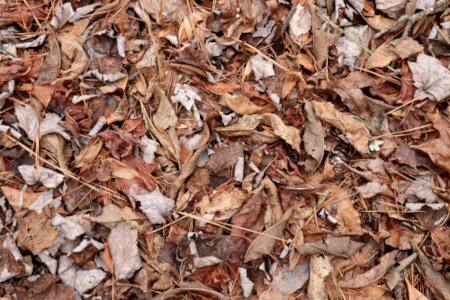
I've been thinking about this and here's an example I've come up with.


I see no pattern in these fallen leaves, either in how they fell or where, nor in their colors other than they are all shades of brown. They fell from the trees randomly and lie on the ground randomly.

Pattern definitely exists in nature, and that's what we imitate and use in permaculture design. For design purposes, I suppose we tend to ignore the rest.
 
Posts: 254
52
  • Likes 7
  • Mark post as helpful
  • send pies
    Number of slices to send:
    Optional 'thank-you' note:
  • Quote
  • Report post to moderator
I think the leaves falling off the trees and probably doing so each year around the same time fits one of the definitions of a pattern. I think that just because I can't see it doesn't mean it's not there. I suspect there is very little if anything that is totally random in nature. Either that or it is all random and we find patterns for our own purposes.
 
Leigh Tate
author & steward
Posts: 5884
Location: Southeastern United States - Zone 7b
3638
7
goat cat forest garden foraging food preservation fiber arts medical herbs writing solar wood heat homestead
  • Likes 6
  • Mark post as helpful
  • send pies
    Number of slices to send:
    Optional 'thank-you' note:
  • Quote
  • Report post to moderator
Les, I've been thinking about this. The pattern may be the seasonal rhythm, i.e. the seasonal cycle. Deciduous trees, for example display a pattern of growth and dormancy, with new leaves and later falling dead leaves making a seasonal pattern.

That's my first thoughts trying to make sense of what I see and how it answers my question.
 
Posts: 162
22
  • Likes 8
  • Mark post as helpful
  • send pies
    Number of slices to send:
    Optional 'thank-you' note:
  • Quote
  • Report post to moderator
Nothing in nature is random because nature is an active system that never stops. If a piece of land is destroyed or abandoned then left to the devises of nature it always follows a pattern as time goes on. Same goes for water habitats and all other ecosystems. Randomness seems to me to be a human construct.
 
Posts: 9
Location: south dakota
2
food preservation cooking homestead
  • Likes 6
  • Mark post as helpful
  • send pies
    Number of slices to send:
    Optional 'thank-you' note:
  • Quote
  • Report post to moderator
As a designer I can attest that when I create a design, I follow certain rules, it could be size, texture, purpose, etc. Look around and you will find the same environments being replicated again and again. Everything is harmonious and that’s because nothing is random. Everything follows an established order from up above to serve humans down below. See Ps 8 and 19
 
Les Frijo
Posts: 254
52
  • Likes 6
  • Mark post as helpful
  • send pies
    Number of slices to send:
    Optional 'thank-you' note:
  • Quote
  • Report post to moderator

Leigh Tate wrote:Les, I've been thinking about this. The pattern may be the seasonal rhythm, i.e. the seasonal cycle. Deciduous trees, for example display a pattern of growth and dormancy, with new leaves and later falling dead leaves making a seasonal pattern.

That's my first thoughts trying to make sense of what I see and how it answers my question.


Leigh, You've brought up an interesting question that brings me to another thought or question.

In nature are there any static patterns or is change maybe the main pattern of all in nature? No patterns last that I can think of. Many come back on a regular basis some change into other patterns or go away within nanoseconds of forming.

Maybe human made patterns are the most random of all. At least ones that remain static.
 
Les Frijo
Posts: 254
52
  • Likes 6
  • Mark post as helpful
  • send pies
    Number of slices to send:
    Optional 'thank-you' note:
  • Quote
  • Report post to moderator

Nick Mick wrote:Nothing in nature is random because nature is an active system that never stops. If a piece of land is destroyed or abandoned then left to the devises of nature it always follows a pattern as time goes on. Same goes for water habitats and all other ecosystems. Randomness seems to me to be a human construct.


This reminds me of this observation. There were some swamp white oak growing on my abused farm land when I bought it. I've noticed over the years when squirrels plant acorns and new trees come up that they seem to be perfectly placed and spaced. I could not have decided better where they should grow. I can't see the pattern that the squirrels are using but I can't say that there is no pattern either. Randomness seems a human construct to me too.
 
pollinator
Posts: 413
Location: Hamburg, Germany
132
  • Likes 12
  • Mark post as helpful
  • send pies
    Number of slices to send:
    Optional 'thank-you' note:
  • Quote
  • Report post to moderator
I think that many things are random, but the larger effect follows a pattern.  For the fallen-leaf example, a leaf falls randomly (subject to wind, etc.) but fallen leaves will accumulate, and thus be noticed by us, based on patterns like: a depression in the ground, or an obstacle making the wind suddenly drop.

Another example: evolution is caused by random mutations.  The mutations that are passed on are largely passed on because they make the owner more likely to have viable offspring.  Those advantages follow patterns - brighter plumage->more mates, or malaria resistance->more surviving children.
 
Leigh Tate
author & steward
Posts: 5884
Location: Southeastern United States - Zone 7b
3638
7
goat cat forest garden foraging food preservation fiber arts medical herbs writing solar wood heat homestead
  • Likes 5
  • Mark post as helpful
  • send pies
    Number of slices to send:
    Optional 'thank-you' note:
  • Quote
  • Report post to moderator
When we speak of permaculture design, we're usually looking at designing acreage, a front yard, or a garden. So we look at visible patterns to imitate in our design. When I began to think about permaculture weaving, I wasn't sure what that would look like, so I've been trying to figure that out. I can say it means using natural fibers and colors, but what does it mean in terms of designing a weaving draft? I'm not sure, but as I explore, these are the kinds of questions that pop up.

In another forum, I'm doing a study in stripes - Inspiration from Nature: Stripes. I'm applying a human method to get color stripes from photos. The result is a set of random stripes. But when I duplicate them to make a larger design, a pattern always emerges.

Perhaps "random" is what we see when we focus on details instead of the big picture.
 
master steward
Posts: 14904
Location: Pacific Wet Coast
9239
duck books chicken cooking food preservation ungarbage
  • Likes 8
  • Mark post as helpful
  • send pies
    Number of slices to send:
    Optional 'thank-you' note:
  • Quote
  • Report post to moderator

Morfydd St. Clair wrote:I think that many things are random, but the larger effect follows a pattern.  For the fallen-leaf example, a leaf falls randomly (subject to wind, etc.) but fallen leaves will accumulate, and thus be noticed by us, based on patterns like: a depression in the ground, or an obstacle making the wind suddenly drop.


I do think the existence of fall leaves is a good one for considering this issue. If we have a dry spring (which may or may not be part of a very long over arcing weather pattern - is it just that humans don't know enough to predict weather, or is it random? Or more likely, a mix of random and patterns?) the tree by the road will have a bunch of leaves turn brown and drop during the summer drought. If they do so, and it's a calm week, they will drop on our grass. If they drop on a windy day, they will land in the neighbor's ditch. So is where they land "random" or based on a weather pattern humans can't see?

The Big Leaf Maple leaves have their own pattern based on the wind. No wind, they drop straight down. Light wind, and the spread all over the lawn. Strong wind and they land on our roof and have to be dealt with so they don't block the downspouts! But inside that pattern, each individual leaf seems to follow a random path to its resting spot, even if there are some probabilities influencing the distribution.
 
master gardener
Posts: 1928
Location: Zone 5
1044
ancestral skills forest garden foraging composting toilet fiber arts bike medical herbs seed writing ungarbage
  • Likes 7
  • Mark post as helpful
  • send pies
    Number of slices to send:
    Optional 'thank-you' note:
  • Quote
  • Report post to moderator
I agree with Morfydd too: there are random processes but the further out you look, the less random they seem. An enormous amount of random apparently random events, in an interconnected world, eventually results in some form of orderedness.

A video which came to mind. I don't think it explains the assertion too well, but is thought provoking. I try to work with and allow for randomness as much as possible.


As for destiny and fate--isn't that where randomness comes in? In the cracks between the knowable, it's possible that something is at work influencing things. I suppose the one word we have right now for that is "magic". Getting too far down into that realm of unknowing can lead to a special sort of madness, which unfortunately is something I've experienced. But when we allow for both worlds, our experience of reality deepens significantly.
 
gardener
Posts: 791
Location: Semi-nomadic, main place coastal mid-Norway, latitude 64 north
494
  • Likes 11
  • Mark post as helpful
  • send pies
    Number of slices to send:
    Optional 'thank-you' note:
  • Quote
  • Report post to moderator

Morfydd St. Clair wrote:I think that many things are random, but the larger effect follows a pattern.  For the fallen-leaf example, a leaf falls randomly (subject to wind, etc.) but fallen leaves will accumulate, and thus be noticed by us, based on patterns like: a depression in the ground, or an obstacle making the wind suddenly drop.

Another example: evolution is caused by random mutations.  The mutations that are passed on are largely passed on because they make the owner more likely to have viable offspring.  Those advantages follow patterns - brighter plumage->more mates, or malaria resistance->more surviving children.


I think this is very close to it. Order or patterns are an "emergent" feature of the world: all the little chaotic, random, basic events add up, over long time scales, to organised patterns. There's a tendency towards increased complexity.

Quantum mechanics tell us that the smallest-scale events of the universe are random in the truest sense of the word, not just unknown to us because of our limited understanding, but unknowable, to anyone. Try as you might, you can never know exactly both the position and the momentum of the same particle, however fancy your equipment. The more precisely you measure one, the less accurately it's possible to know the other. You can never be certain what a given particle will do in the future, you can just work out the probability that it will be found at such-and-such location at a specified time. And yet, all the little interlinked random events create patterns of incredible complexity.

We can to some extent trace the chain of causality: the wind blew like it did because the contours and albedo of the land were exactly as they were, and because the exact pattern of solar radiation heated the atmosphere in precisely this way. Trace it back farther, though, and you end up on the truly random events: where did this precise pattern of solar radiation come from? Why did precisely this many photons of precisely these frequencies end up exactly there? Here we end up back at the quantum unknowables. Trace the chain the other direction, and the wind that blows the way it does partially because of the contours of the land, will also change those same contours. The leaves will end up in the places they do because of the wind, shifting future winds ever so slightly. Mountains will erode in patterns determined by past weather, and the wind will build massive dunes from the liberated sand, which will in turn affect future weather. Everything affects everything, all things build patterns, and yet, all these patterns are built on an enormous number of truly random events.

Pattern and randomness are not opposites, I think, but two sides of the same thing, the heart of the universe.
 
Posts: 2
  • Likes 5
  • Mark post as helpful
  • send pies
    Number of slices to send:
    Optional 'thank-you' note:
  • Quote
  • Report post to moderator
I don’t think it’s possible for anything to be actually random because everything is expressing the complexity between itself and the conditions. Therefore not random.
 
gardener
Posts: 522
Location: Poland, zone 6, CfB
301
14
forest garden fish trees books writing homestead
  • Likes 8
  • Mark post as helpful
  • send pies
    Number of slices to send:
    Optional 'thank-you' note:
  • Quote
  • Report post to moderator
Patterns are few, but each expresses itself in endless variations.
To simplify, we say that in many cases those variations are random, but the closer we look, the more order we see in them.
For instance, the fallen leaves mentioned before create an imperfect tesselation, as well as they stack (two patterns). Tree size, shape of the leaves, plant species, drynes, wind, slope, season, and many other factors influence the way they cover the ground. Change one factor, and they will look different.
 
Steward and Man of Many Mushrooms
Posts: 6055
Location: Southern Illinois
1866
transportation cat dog fungi trees building writing rocket stoves woodworking
  • Likes 8
  • Mark post as helpful
  • send pies
    Number of slices to send:
    Optional 'thank-you' note:
  • Quote
  • Report post to moderator
The basic concept of determinism says “No” as everything that happens, happens because something caused it to happen.

Our understanding is limited so that the appearance of random events seems very real.


But if we get to the quantum world, then we have some hard limits on knowledge and thus the majority of specific random events are evidently random.  But even there, those random events take place in a broader framework that has definable boundaries.


Eric
 
pollinator
Posts: 197
Location: Schofields, NSW. Australia. Zone 9-11 Temperate to Sub Tropical
104
forest garden fungi books medical herbs bee seed
  • Likes 6
  • Mark post as helpful
  • send pies
    Number of slices to send:
    Optional 'thank-you' note:
  • Quote
  • Report post to moderator
I wouldn't use the word 'random' rather I'd use different or unique.

Of all the billions of people, living things, inert things, each one has something unique about it.

Cloned things, identical looking things rolled off a manufacturing line have minute differences, flaws, scratches. etc and are deliberately made not random, even twins have differences depending on what they are exposed to in life. I could go on with more examples.

For me, everything created is unique and different not random, even if appearing random or out of the blue to the naked eye or human mind.
 
I agree. Here's the link: http://stoves2.com
reply
    Bookmark Topic Watch Topic
  • New Topic