|
|

|
.png)
|

|

|
|
|
|
|
|
|
|

|

|
.png)
|

|

|


 12
12


- Tim's Homestead Journal - Purchase a copy of Building a Better World in Your Backyard - Purchase 6 Decks of Permaculture Cards -
- Purchase 12x Decks of Permaculture Cards - Purchase a copy of the SKIP Book - Purchase 12x copies of Building a Better World in your Backyard


 20
20
And I urge you to please notice when you are happy, and exclaim or murmur or think at some point, 'If this isn't nice, I don't know what is.'
-Kurt Vonnegut


 11
11
'What we do now echoes in eternity.' Marcus Aurelius
How Permies Works Dr. Redhawk's Epic Soil Series
12
One can never be too kind to oneself or others.
Never our fault, always our responsibility
 14
14
One can never be too kind to oneself or others.
Never our fault, always our responsibility
11
Invasive plants are Earth's way of insisting we notice her medicines. Stephen Herrod Buhner
Everyone learns what works by learning what doesn't work. Stephen Herrod Buhner
14
All true wealth is biological.
Lois McMaster Bujold
14
14
Blazing trails in disabled homesteading
13
14


 8
8
Dian Green wrote: For us, doing a turmeric/ginger paste has been our first major medicinal herb for regular use. It has worked really well for reducing my mothers inflammation.
Changing one thing, no matter how tiny, is still change
13


 13
13
Tradition is not the worship of ashes, but the preservation of fire.
13
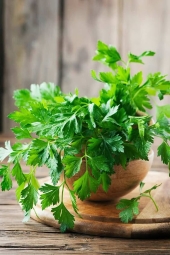
r ransom wrote:If I was starting again, the medicinal herbs I would start with are the same culinary herbs we already use in the kitchen.
Mostly because our body is used to these plants. Herbs can be powerful stuff and take a while to acclimatize to them. Starting with what our body already knows, but stronger, reduces the shock of a new substance.
It also helps us see how powerful culinary herbs can be for healing. And if we already have them in the kitchen or garden, it's a smaller expense to get started with medicinal herbology.
From there, I would move to weeds that grow locally, because free.
One can never be too kind to oneself or others.
Never our fault, always our responsibility
10

 12
12
"Also, just as you want men to do to you, do the same way to them" (Luke 6:31)


 11
6
11
6
K Carpenter wrote: Here's what I started with: Tulsi (Holy Basil),...
7
10
Recommended reading material: Romans 10:9
10
![[Thumbnail for 0612242108b_HDR.jpg]](/t/370143/a/286469/0612242108b_HDR.jpg "Filename: 0612242108b_HDR.jpg
Description:")
Recommended reading material: Romans 10:9
6
Leaftide - garden planner w/ 1228 plant types. Need permaculture testers for fruit trees & perennials. Free Pro month for detailed feedback, even just suggesting plants
7
S Windlass wrote:Start your natural medicine quest with homeopathic medicines.
Homeopathy is nano-dose medicine made from highly diluted natural substances.
With homeopathy, there's no concern about the quality of the herb or potential for toxic overdose.
It's a system of medicine with 250 years of history and a truly amazing track record.
...
"Also, just as you want men to do to you, do the same way to them" (Luke 6:31)
9
Elanor Gardner wrote:I'd start with ... calendula because its pretty and it is good for wound healing ...
"Also, just as you want men to do to you, do the same way to them" (Luke 6:31)
3
One can never be too kind to oneself or others.
Never our fault, always our responsibility
6
Sarah Joubert wrote:
Dian Green wrote: For us, doing a turmeric/ginger paste has been our first major medicinal herb for regular use. It has worked really well for reducing my mothers inflammation.
I'm interested in how you prepared your paste and how you used it as my mother suffers terribly from arthritis and old post operative wound sensitivity.
All true wealth is biological.
Lois McMaster Bujold
7
M Ljin wrote:Inge, I think it is possible. If you take a very tiny amount and use a lot of water for the infusion, that can be a simple homeopathic dilution, especially by only taking a small sip. I think maybe the only reason it seems so inaccessible may be the tedium of preparing it the traditional way.
Usually, I try new herbs this way, but especially powerful herbs still get made this way, like burning bush.
"Also, just as you want men to do to you, do the same way to them" (Luke 6:31)
9
"The only thing...more expensive than education is ignorance."~Ben Franklin. "We can easily forgive a child who is afraid of the dark; the real tragedy of life is when men are afraid of the light." ~ Plato


 11
11

“Not everyone can be a truffle. Most of us are potatoes. And a potato is a very good thing to be.” Massimo Bottura, Never Trust A Skinny Italian Chef
8
Creating edible biodiversity and embracing everlasting abundance.
6
9
EBo --
Master Gardener (Prince George's County, MD, USA)
6
EBo --
Master Gardener (Prince George's County, MD, USA)
8
K Carpenter wrote:
Patience is not my virtue.
![[Thumbnail for SnailMushroomBerry.jpg]](/t/370143/a/286947/SnailMushroomBerry.jpg "Filename: SnailMushroomBerry.jpg
Description:")
“Not everyone can be a truffle. Most of us are potatoes. And a potato is a very good thing to be.” Massimo Bottura, Never Trust A Skinny Italian Chef

|
Would anybody like some fudge? I made it an hour ago. And it goes well with a tiny ad ...
Permaculture Voices 1, 2 and 3 - all 117 hours of video!
https://permies.com/t/voices123
|