• Post Reply Bookmark Topic Watch Topic
  • New Topic
permaculture forums growies critters building homesteading energy monies kitchen purity ungarbage community wilderness fiber arts art permaculture artisans regional education skip experiences global resources cider press projects digital market permies.com pie forums private forums all forums
this forum made possible by our volunteer staff, including ...
master stewards:
  • Carla Burke
  • Nancy Reading
  • John F Dean
  • r ransom
  • Jay Angler
  • Timothy Norton
stewards:
  • paul wheaton
  • Pearl Sutton
  • Tereza Okava
master gardeners:
  • Christopher Weeks
  • M Ljin
gardeners:
  • thomas rubino
  • Jeremy VanGelder
  • Megan Palmer

!!!!!!!!!!!!!!!!!!!!! what if the cost of food goes up 10x?

 
pollinator
Posts: 353
Location: 6a Alpine Southwest USA
179
cat hunting cooking building woodworking
  • Likes 6
  • Mark post as helpful
  • send pies
    Number of slices to send:
    Optional 'thank-you' note:
  • Quote
  • Report post to moderator
I saw this post this morning and immediately became depressed by the mere thought of food prices rising 10X.
But I couldn't take the time to post this morning, as today was our day to make the hour drive to what passes for the nearest "city" (pop. 20,000) for several errands, including a stop at the grocery store for a few things.
As always, we try to go to the grocery store on a Wednesday, because that is when the new ads come out and if we wait until later in the week, most of the sale items are gone.
Today, most of the sale item bins in the meat department were already empty by noon. Several other shelves were minimally stocked.
That depressed feeling came back.
We made the drive back home, put all of our purchases away and took care of some chores and minor repairs I had on my list.
I finished reading everyone's' posts and I'm still feeling depressed about the idea that food prices actually could rise 10x.

Now, you may be wondering why I feel this way.
After all, there are all these wonderful stories about all these Permies Goofballs who have gotten their acts together and either have a plan or are living well by practicing some self-reliance.
I have been growing food for about a decade, and every year has been a challenge with ample rewards.
Just this week I attended a "Strategic Planning" meeting in our local community (HOA) and when the conversation about "opportunities" in social trends that we can take advantage of, I immediately brought up the homesteading movement, the permaculture movement, and the self-reliance movement. Suddenly people wanted the Association to start a community garden project. Well, that's a start anyway. Being that every lot in this HOA is a minimum of 5 acres, I was hoping for more self-motivated responses. I guess even out here in the hinterlands, people are much the same as elsewhere.

Think about something and do the online search to confirm, if that's your thing.
Are we talking about a drastic increase in food cost locally, nationally, or globally?

Here in the USA, about 86% of our population lives in metropolitan areas. Probably 60% of them don't have the 200 sq. ft. for a GAMCOD. Most of them probably don't have a little balcony to grow a couple of plants.
How many of the ones that have the dirt do you think have enough food stored to last the couple of months for germination, growth, and eventual harvest? Not many is my guess.

Globally, about 46% of the world's population lives in metropolitan areas and has similar circumstances. That's 4 billion people who largely rely on the mass-agricultural food chain.

So, what happens if food prices increase dramatically? We are not talking "cultural shift". We are talking massive civil unrest. Possibly mass starvation, crime waves (others have mentioned this), and economic collapse.
Not a pretty thought.
Downright depressing really.
 
Apprentice Rocket Scientist
Posts: 1327
Location: 4a, high mountain dessert
653
5
kids foraging rabbit fiber arts medical herbs bee
  • Likes 6
  • Mark post as helpful
  • send pies
    Number of slices to send:
    Optional 'thank-you' note:
  • Quote
  • Report post to moderator

Jason Tuller wrote: is there somewhere in here that talks about cooking what we can grow in a way that is palatable to picky eaters?  


I hear you, Jason! My family eschew sunchokes, but they would eat them if they were hungry! In the mean time, I try to grow what they WILL eat.

I have two threads about what I grow/raise and feed my family. Check them out :)

Homestead Nutrition and

Preserving 1 million calories at the harmon house.
 
master gardener
Posts: 2217
Location: Zone 5
1235
ancestral skills forest garden foraging composting toilet fiber arts bike medical herbs seed writing ungarbage
  • Likes 6
  • Mark post as helpful
  • send pies
    Number of slices to send:
    Optional 'thank-you' note:
  • Quote
  • Report post to moderator
I will second black raspberries. They grow very easily, spread prolifically, and are delicious. They seem to be more reliable than (wild) blackberries or red raspberries with their fruiting.
 
Rebekah Harmon
Apprentice Rocket Scientist
Posts: 1327
Location: 4a, high mountain dessert
653
5
kids foraging rabbit fiber arts medical herbs bee
  • Likes 6
  • Mark post as helpful
  • send pies
    Number of slices to send:
    Optional 'thank-you' note:
  • Quote
  • Report post to moderator

Joe Gill wrote:

My next question is what are you top quicks for your food forest for those of us who live up north in Zone 4 or lower. ;-)


Hey Joe! I live in zone 4, USDA. Are you in Canadian zone 4, or US?

I planted these and they've done really well:
Apples,
Pears,
Apricots,
Currants,
Gooseberries,
Cane fruits,
Strawberries,
River grapes,
Crabapple,
Bush cherries,
Seaberries,
Autumn berries (or silver berries)
June berries (aka service berries)
Black walnuts,
Shagbark hickory

A few others I have to "baby" by putting in a sheltered space microclimate, giving extra water, etc:
Contender peaches,
Sweet cherries,
Arctic kiwis
Hazelnuts,
Dwarf almonds
 
pollinator
Posts: 1197
330
5
tiny house food preservation cooking rocket stoves homestead
  • Likes 9
  • Mark post as helpful
  • send pies
    Number of slices to send:
    Optional 'thank-you' note:
  • Quote
  • Report post to moderator
Before creating a garden,    I would suggest putting food on the shelf now while the price is low.      Choose long term food like canned items and learn how to vacuum seal..      Why before gardening?      

Gardening is like gambling...     you pull the lever and it may come up with bugs, drought,     floods   etc.          Food on the shelf =    more time to garden and more options.      

Then after you have food on the shelf also look for your food sources.        Rice now is cheap compared to what it may be with fuel costs exploding.
 
pollinator
Posts: 1172
Location: Greybull WY north central WY zone 4 bordering on 3
358
hugelkultur trees solar woodworking composting homestead
  • Likes 3
  • Mark post as helpful
  • send pies
    Number of slices to send:
    Optional 'thank-you' note:
  • Quote
  • Report post to moderator
Everyone is missing a key point.  Anything others know is edible will likely be stolen in such a situation.   What matters is what is edible in your area that most people do not know is edible?
 
Rebekah Harmon
Apprentice Rocket Scientist
Posts: 1327
Location: 4a, high mountain dessert
653
5
kids foraging rabbit fiber arts medical herbs bee
  • Likes 10
  • Mark post as helpful
  • send pies
    Number of slices to send:
    Optional 'thank-you' note:
  • Quote
  • Report post to moderator
If food prices went up times 10, my family literally couldn't afford food from the store. I would stock up on these staples that help me preserve food:
Sugar,
Salt,
Glass jars and lids (lids can be reused, but they do get bent/scratched sometimes)
Spices I cant grow, like black pepper, that make a big difference in taste,
Butcher paper,
Oil and cooking fat.

I would get more scrappy, harvesting and using food thats inconvenient, like wormy fruit and milkweed I have to hike to.

I have a feeling my kids would be more open to eating fish and rabbit and squash and nettles!

I would grow more oil crops.

Other than this, my food systems already in place, along with all the preseeving tools and gadgets I've gathered, would cause me great peace of mind. I have no doubt we could do it.

The seed library I made, the herbalism classes,  and all the community around me would figure out a way to take care of ourselves again.  I have friends with stockpiles of freeze dried meals they protect with boobie traps. Thats not my jam. If its gets so bad that you've got food-or-pharmaceutical-deprived zombies in your city, leave and come be a part of my community. We are ready.
 
M Ljin
master gardener
Posts: 2217
Location: Zone 5
1235
ancestral skills forest garden foraging composting toilet fiber arts bike medical herbs seed writing ungarbage
  • Likes 4
  • Mark post as helpful
  • send pies
    Number of slices to send:
    Optional 'thank-you' note:
  • Quote
  • Report post to moderator
Mart,

That’s all true. Also that is why diversity is so important. Knowing how to forage a large number of perennial & annual plants, animals & fungi, growing just as many species, and not leaning too heavily on any one, seems essential.

However, parsnips are a constant. So are black raspberries. Perennial roots like yams should be quite beneficial for these times, as food sources we can lean back upon when other, less consistent ones become scarce.

It seems to me when the soil and the ecosystem are healthy, they almost always provide more generally speaking: even if it may be a flop year for peaches, cherries might thrive, or plums, or you may be swimming in currants.

I should also mention wild carrots or queen anne’s lace as a food source. They are smaller than parsnips, but a similar vegetable.

I think we have been so long disconnected from our ecosystems that they are no longer capable of taking care of us when we need them. By caring for them, we can help return a greater overall abundance.

There is a statistic somewhere that hunter gatherer societies are more food secure than agrarian ones, because they make use of a much more diverse set of foods. Maybe this is a priority?
 
Mart Hale
pollinator
Posts: 1197
330
5
tiny house food preservation cooking rocket stoves homestead
  • Likes 5
  • Mark post as helpful
  • send pies
    Number of slices to send:
    Optional 'thank-you' note:
  • Quote
  • Report post to moderator

M Ljin wrote:Mart,

That’s all true. Also that is why diversity is so important. Knowing how to forage a large number of perennial & annual plants, animals & fungi, growing just as many species, and not leaning too heavily on any one, seems essential.

However, parsnips are a constant. So are black raspberries. Perennial roots like yams should be quite beneficial for these times, as food sources we can lean back upon when other, less consistent ones become scarce.

It seems to me when the soil and the ecosystem are healthy, they almost always provide more generally speaking: even if it may be a flop year for peaches, cherries might thrive, or plums, or you may be swimming in currants.

I should also mention wild carrots or queen anne’s lace as a food source. They are smaller than parsnips, but a similar vegetable.

I think we have been so long disconnected from our ecosystems that they are no longer capable of taking care of us when we need them. By caring for them, we can help return a greater overall abundance.

There is a statistic somewhere that hunter gatherer societies are more food secure than agrarian ones, because they make use of a much more diverse set of foods. Maybe this is a priority?


A friend of mine said that they are just going to forage for what they need.      

I asked them to do that for 3 days to make sure that would work for them with no grocery store inputs.

They have not done that yet.

Yes there are many here that can forage, and are already skilled at gardening.       But many have not tested their plans...         At the time of the power outage is not the time to test to see if the generator works, is what I am saying.        Many don't have the skills they think they have.
 
steward and tree herder
Posts: 12984
Location: Isle of Skye, Scotland. Nearly 70 inches rain a year
6847
6
transportation dog forest garden foraging trees books food preservation woodworking wood heat rocket stoves ungarbage
  • Likes 10
  • Mark post as helpful
  • send pies
    Number of slices to send:
    Optional 'thank-you' note:
  • Quote
  • Report post to moderator

Ra Kenworth wrote:I love parsnips but I eat carrot tops a lot, and have been worried about parsnips cross polinating and causing toxic leaves but don't know if my concerns are valid. I've settled for German rooted parsley but although good, I will snap up parsnips from the discount rack at a store if I can.

Do you have any advice about cross polination?
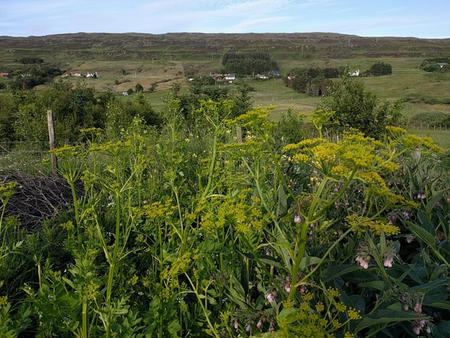


Carrots and parsnips are not closely related enough to cross pollinate each other - it would be like trying to cross peas and beans. You can safely save seed from them both - preferably from a good cross section of roots. Parsnip may cross with german rooted parsley, I'm not sure.
Saving seed will mean you and all your neighbours get to grow those next year - they flower profusely!

parsnip flowers
 
Posts: 826
195
  • Likes 6
  • Mark post as helpful
  • send pies
    Number of slices to send:
    Optional 'thank-you' note:
  • Quote
  • Report post to moderator
Myself, I don’t see the price of food increasing by ten times in the near future. On principal, and historically, at least here in the United States, it is extremely doubtful the government would let that happen.

I say this because I am well versed in agriculture. My family has both teeny-tiny dairy farms, and yet also into big agriculture where everyone reading this has food in the pantry from a food company my Great Grandfather many times removes started. Last year that company, which own over a hundred food brands, made 4 billion in profit. Billion was not a misspelling.

On the small side of things, the government tells my grandfather 6 months in advance what the price of milk will be. They cannot tell what prices will be on many things, but on some food staples they dictate the price. They historically have not cared if millions of small farmers have gone out of business because of low food prices, they will let small farms fail just to keep staple food prices low. Milk is one such commodity.

On the bigger side of agriculture, our stock has always split during a recession. Why? Because during boom years of the economy, stock prices look putrid compared to high-yield stock prices, but in recessions, when those high-yield stock prices are down, food companies stock price suddenly looks good. It is simple phycology. To investors, 8% looks putrid when high yield is making 12%, but when high-yield tanks and is making 3%, then suddenly 8% looks really good. That is when they pour money into our company and we have to split the stock price. So what I am noting is, the price of food does NOT fluctuate that much historically. It does some during high inflation periods, (1970’s/2020’s) but as we saw in eggs last year, if the price gets too high the US Gov steps immediately in to drop the price.

Ultimately, we are a country governed by supply and demand. Should the food supply get bad, and it will get REALLY bad for 3-1/2 years, but that is a longs ways out, as a country we would simply recoil back and stop feeding the world and focus on ourselves.

This too was historically done. It is why so many farmers went out of business in the 1980’s. Ronald Regan knew the USSR did not have enough food to feed itself and so it used food to cause its collapse. It had two choices, feed itself by buying US food, or pay for weapons. The America Farmers won the Cold War, but unfortunately many paid for that win by losing their farms because of flooded markets and low food prices. Many taking their own lives because of it.

Rest in Peace my fellow farmers. Its been 40 years but some of us still have not forgotten the price you paid for cheap food prices.
 
M Ljin
master gardener
Posts: 2217
Location: Zone 5
1235
ancestral skills forest garden foraging composting toilet fiber arts bike medical herbs seed writing ungarbage
  • Likes 5
  • Mark post as helpful
  • send pies
    Number of slices to send:
    Optional 'thank-you' note:
  • Quote
  • Report post to moderator
Mart,

Again I agree that most of the year, foraging all your food is quite difficult. There are a few important autumn crops, specifically acorns and apples are the ones I have found, that give enough calories and nourishment to sustain a person, but one needs to drop everything and go harvest them if they want enough, especially if they are far away. I live in a part of the valley where neither are abundant, so it is a bit of a journey to get to the right groves. Unfortunately, last fall I was not in a state which allowed extensive picking of either, but I got some acorns nevertheless and was able to have a week or two with acorns as a staple. There were also some blunders by others which lead to the remainder of my harvest being wasted because it was placed somewhere chipmunks could get to (and I didn’t know where they were until it was too late), which was a horrible feeling.

If everyone is onboard with the harvest, it is likely to turn out better than it did for me. One also needs to drop most things and focus on gathering such staples for a certain time frame, like the harvest of wild rice in other parts of the continent—having healthy, nourishing food for the year is the most important task. Acorns have mast years and so it is a good idea to save more than you need for one year, as not every year will grant a sizeable harvest. But fortunately they can be stored dry for a while.

I’m planting more oak trees—it may not help in this crisis, but it’s always good to sustain what sustains you.
 
M Ljin
master gardener
Posts: 2217
Location: Zone 5
1235
ancestral skills forest garden foraging composting toilet fiber arts bike medical herbs seed writing ungarbage
  • Likes 3
  • Mark post as helpful
  • send pies
    Number of slices to send:
    Optional 'thank-you' note:
  • Quote
  • Report post to moderator
(In other words your friend’s plan is a good one…if they started saving plenty of acorns last fall!)

The major idea that is coming to me here is that much-in-advance preparedness is the best protection from these stressors.
 
Mart Hale
pollinator
Posts: 1197
330
5
tiny house food preservation cooking rocket stoves homestead
  • Likes 4
  • Mark post as helpful
  • send pies
    Number of slices to send:
    Optional 'thank-you' note:
  • Quote
  • Report post to moderator

C. Letellier wrote:Everyone is missing a key point.  Anything others know is edible will likely be stolen in such a situation.   What matters is what is edible in your area that most people do not know is edible?


And thus the need to have food on the shelf.        You may need to bug in and rely on the food on the shelf as people will act badly.      Or you can load the food and move to a safer location.      It is  important to build community to have a group that you trust for times like these, but that is best done before  the event.
 
M Ljin
master gardener
Posts: 2217
Location: Zone 5
1235
ancestral skills forest garden foraging composting toilet fiber arts bike medical herbs seed writing ungarbage
  • Likes 9
  • Mark post as helpful
  • send pies
    Number of slices to send:
    Optional 'thank-you' note:
  • Quote
  • Report post to moderator
As for stealing food… I think region might play a part.

My town’s food pantry is overflowing with homegrown produce, high quality grassfed milk and eggs and vegetables, and so on. Volunteers have to take this sort of food home because it’ll go bad otherwise. I could be wrong, but I think we would see less of it here, where a system is in place to prevent this sort of thing, than in places where the community is less strong. I can’t say anything for the sorts of people who think it’s more dignified to steal than to accept charity, because I’m sure there are some of them out there, but hopefully they are the exception.

Maybe these foods will become more scarce, but in my part of the world organic farming and gardening is part of the culture. It may be that such a situation will force other regions to switch over as well.
 
Nancy Reading
steward and tree herder
Posts: 12984
Location: Isle of Skye, Scotland. Nearly 70 inches rain a year
6847
6
transportation dog forest garden foraging trees books food preservation woodworking wood heat rocket stoves ungarbage
  • Likes 14
  • Mark post as helpful
  • send pies
    Number of slices to send:
    Optional 'thank-you' note:
  • Quote
  • Report post to moderator

paul wheaton wrote:What if the price of food goes up 10x?


Locally permaculturely produced food suddenly gets a whole load more competitive.
 
steward & author
Posts: 45925
Location: Left Coast Canada
18418
10
art trees books chicken cooking fiber arts
  • Likes 17
  • Mark post as helpful
  • send pies
    Number of slices to send:
    Optional 'thank-you' note:
  • Quote
  • Report post to moderator
There are people alive who have lived through starvation situations, I live with some who survived ww2 and rationing that followed (which was even stronger in England after the war). I also like to listen to recent immigrants who came to canada from rough situations.  It's amazing how alike the story is when starvation hits a region.

Theft happens, but not like in the movies.  

Poching from a rich landowner who has pheasants that often eat the seeds the farmer sows was considered fair game.  He had thosuands and he wasn't eating them.  

Farmers often planted extra rows of tasty sweed next to the hedge row as they knew some of the local kids didn't have breakfast and would often pinch livestock food from the fields.  It was considered a kind of charity as farmers had enough to get by and wanted to help the local community.

Theft from working class individuals is less common. Once you steel, you still have to live in the community as movement of people is usualy limited in true starvation situations (if movement was easy, starvation wouldn't be so bad).  Being a known theif in a community makes life much harder.

No.

People trade. People garden.  People raise rabbits.  Maybe someone fixes the fence and gets a rabbit.  Or someone has extra butter one week and trades it for leafy greens.

Then again, most places in the world have been through fammin in living memory.  Knowing how to deal with it is part of the cultural memory.  I worry about places that have never known real starvation situations...maybe things will be different there.
 
Posts: 54
Location: PNWish
12
2
kids food preservation cooking fiber arts composting homestead
  • Likes 8
  • Mark post as helpful
  • send pies
    Number of slices to send:
    Optional 'thank-you' note:
  • Quote
  • Report post to moderator
What If?
What if humanity decoupled from high entropy systems of scarcity and extraction and reconnected with the living giving earth under our feet and all around us!  What if we walked away from the multigenerational mind control programing that has cast the shadows on the walls of our collective minds for too long?  What if our world is literally shaped by our active participation in it and we call in what we experience?  What if?

Crazy shit may be happening all over the world at any given time but we are not meant to take on the weight of it all, that, I think is the point of the information overload.  It acts as a paralytic that works in tandem with the "great poisoning" for more efficient harvesting of our energy and attention, but i repeat myself.  If something comes our way then it will be dealt with but I will not give away my life energy to address the what if's. Especially those presented to us via our reality mediating devices. Reconnecting to the earth negates the effects of the perceived what if's anyhow.  Live small, grow big!    
 
  • Likes 8
  • Mark post as helpful
  • send pies
    Number of slices to send:
    Optional 'thank-you' note:
  • Quote
  • Report post to moderator
Time… 1st question to large University on Montana Sociology class many years ago… What would happen to society in a systemic reduction food and energy of 20%. Spoiler,  Farming is the only long term answer.  I’ve taken it further going to Mid evil farming with modern biology process.  Not news to anyone, here.  Materials, water, energy, and closed loop recycling for living (Bioshperesque) on open land.  Food will become unaffordable soon, and socio-monitory curve suggests parallel water scarcity curve increasing food loss further. But no water is lethal, yes. And that’s what I think is going on here.  What do you think?  
 “Vision of the future is still just sight.  You have a spine, use it.  Get up, walk and talk to each other, figure out how to change. Humans excel at this”… me.
“Serious est quam cogitas”. Always.
 
Posts: 46
Location: 10a
26
dog cooking woodworking
  • Likes 8
  • Mark post as helpful
  • send pies
    Number of slices to send:
    Optional 'thank-you' note:
  • Quote
  • Report post to moderator

Mart Hale wrote:Before creating a garden,    I would suggest putting food on the shelf now while the price is low..... and learn how to vacuum seal..


a) and Invest in a Freeze Dryer. SO-much can be Saved / Put-back - from your Own Growing - which is Win-Win-Win, in my opin

b) Why not do Both, same time? As was posted earlier in this thread - It's Really Easy to Just Start Something - a Small 'Kitchen-Herbs Garden' / get a tiny little - but Productive - Plot from even just 'Store-bought scraps'. It Truly doesn't have to be 'All or Nothing'.  

Nonetheless, indeed, as you encourage - Now (well, Yesterday, really.. is The Time to 'Stack / Pack - and Get Growing' As there will never be a Better time to Start - than Right Now.

'Perfect is the Enemy of Good Enough'
 
Mart Hale
pollinator
Posts: 1197
330
5
tiny house food preservation cooking rocket stoves homestead
  • Likes 2
  • Mark post as helpful
  • send pies
    Number of slices to send:
    Optional 'thank-you' note:
  • Quote
  • Report post to moderator

jd hutton wrote:

Mart Hale wrote:Before creating a garden,    I would suggest putting food on the shelf now while the price is low..... and learn how to vacuum seal..


a) and Invest in a Freeze Dryer. SO-much can be Saved / Put-back - from your Own Growing - which is Win-Win-Win, in my opin :)

b) Why not do Both, same time? As was posted earlier in this thread - It's Really Easy to Just Start Something - a Small 'Kitchen-Herbs Garden' / get a tiny little - but Productive - Plot from even just 'Store-bought scraps'. It Truly doesn't have to be 'All or Nothing'.  

Nonetheless, indeed, as you encourage - Now (well, Yesterday, really.. ;) is The Time to 'Stack / Pack - and Get Growing' As there will never be a Better time to Start - than Right Now.

'Perfect is the Enemy of Good Enough' :)


a.   Freeze dryers are a wonderful tool.       Still for me I would have 6 months of food on the shelf before I would buy one, much depends on what our cash flow is many don't have as much.     A food dehydrator less expensive option can work as well..

b.   Why not do both?      Yes you can, I guess much depends on how much it costs you to put in a garden, doing that in the city would be expensive.       But also to be factored in is how much extra time you have.

It will take some time for fuel production to kick  into gear to the levels they were before even if the war was to end tomorrow.      Fertilizer production is also curtailed with things as they are.      And yes we are on the same page we see the trouble ahead and we can get ready in our own way.
 
pollinator
Posts: 903
Location: Illinois
203
  • Likes 4
  • Mark post as helpful
  • send pies
    Number of slices to send:
    Optional 'thank-you' note:
  • Quote
  • Report post to moderator
I already grow about 1/3 my calories. I could pretty easily expand to 100%, especially if I had any machine to help. Currently no machines, but a roto-tiller would make it easy.
I'd sure miss my coffee though.
 
jd hutton
Posts: 46
Location: 10a
26
dog cooking woodworking
  • Likes 3
  • Mark post as helpful
  • send pies
    Number of slices to send:
    Optional 'thank-you' note:
  • Quote
  • Report post to moderator


Fine points, all. Couple small additional 'kernels for thought' (for the benefit of Other 'just starting outs', that might see this, if nothing else...)

Mart Hale wrote:
a.   Freeze dryers are a wonderful tool.   Still for me I would have 6 months of food on the shelf before I would buy one.... many don't have as much.  A food dehydrator less expensive option can work as well..


Sure, but I would simply counter that those same people that don't "have as much" - I would rhetorically ask: How much are they spending, say, on 'Cigs' or 'Booze'.. or 'Netflix' etc - Things that are Clearly not "necessities" (like Water - or 6 months of 'Basics', as you say.. It's all about Priorities. And to Me, making progressive progress towards Food / Water Self-Sufficiency (even Partially..) beats 'Creature Comforts' all day long.

b.   Why not do both?   ...much depends on how much it costs you to put in a garden, doing that in the city would be expensive.  But also to be factored in is how much extra time you have.


Ehh, again - Think like.. 'Bucket Potatoes'.. or even Used (Food Grade Poly Barrels.. ie: Inexpensive Poly-Barrel Patio Garden - Lots of 'cheap' ideas / methods out there...

Point Being:  'Where theres a Will - There's a Way' -  Grandma    

we are on the same page we see the trouble ahead and we can get ready in our own way.


Indeed, and Kudos to You for Prioritizing your Family, in preparing.
 
Mart Hale
pollinator
Posts: 1197
330
5
tiny house food preservation cooking rocket stoves homestead
  • Likes 2
  • Mark post as helpful
  • send pies
    Number of slices to send:
    Optional 'thank-you' note:
  • Quote
  • Report post to moderator
Ok, Harvest right Freeze dryer now  $1,595.00 USD .....     with tax, shipping   about $2000.00     ( much lower than I remember them )


Dehydrator new $170.00   including shipping..

( found on ebay )

so for 1800 difference     I still go with the dehydrator  combined with a vacuum sealer for about $150 more..        


Then I could buy alot of freeze dried food for   about $1600  for the savings...


Just looking at the options.


out to pasture
Posts: 13170
Location: Portugal
4274
goat dog duck forest garden books wofati bee solar rocket stoves greening the desert
  • Likes 9
  • Mark post as helpful
  • send pies
    Number of slices to send:
    Optional 'thank-you' note:
  • Quote
  • Report post to moderator

Mart Hale wrote:Ok, Harvest right Freeze dryer now  $1,595.00 USD .....     with tax, shipping   about $2000.00     ( much lower than I remember them )
Dehydrator new $170.00   including shipping..


Or how about building a solar dehydrator...


There are plans available here
 
gardener
Posts: 3656
Location: Western Slope Colorado.
845
5
goat dog food preservation medical herbs solar greening the desert
  • Likes 5
  • Mark post as helpful
  • send pies
    Number of slices to send:
    Optional 'thank-you' note:
  • Quote
  • Report post to moderator

Thom Bri wrote:I already grow about 1/3 my calories. I could pretty easily expand to 100%, especially if I had any machine to help. Currently no machines, but a roto-tiller would make it easy.
I'd sure miss my coffee though.


Have you tried roasted chicory root?  The flavor is bitter and dark roast.  You can flavor it if you like, as the brand “teeccino chicory herbal coffee” has done.  But it’s really expensive.

Chicory is easy to grow in most places.

You would have a few days of caffeine withdrawal, but that would be temporary.

Added incentive for the chicory root:  it’s rich in inulin.  (I don’t know if roasting destroys the inulin, maybe someone else does?)
 
Thom Bri
pollinator
Posts: 903
Location: Illinois
203
  • Likes 3
  • Mark post as helpful
  • send pies
    Number of slices to send:
    Optional 'thank-you' note:
  • Quote
  • Report post to moderator

Thekla McDaniels wrote:

Thom Bri wrote:I already grow about 1/3 my calories. I could pretty easily expand to 100%, especially if I had any machine to help. Currently no machines, but a roto-tiller would make it easy.
I'd sure miss my coffee though.


Have you tried roasted chicory root?  The flavor is bitter and dark roast.  You can flavor it if you like, as the brand “teeccino chicory herbal coffee” has done.  But it’s really expensive.

Chicory is easy to grow in most places.

You would have a few days of caffeine withdrawal, but that would be temporary.

Added incentive for the chicory root:  it’s rich in inulin.  (I don’t know if roasting destroys the inulin, maybe someone else does?)


Love chicory coffee! I grow it too, but have not yet harvested any. Grow it for the pretty flowers.
 
pollinator
Posts: 112
Location: Seattle, WA
63
kids personal care foraging urban food preservation fiber arts medical herbs ungarbage
  • Likes 3
  • Mark post as helpful
  • send pies
    Number of slices to send:
    Optional 'thank-you' note:
  • Quote
  • Report post to moderator

Thekla McDaniels wrote:
Added incentive for the chicory root:  it’s rich in inulin.  (I don’t know if roasting destroys the inulin, maybe someone else does?)


Inulin isn't a bonus. It's indigestible and what makes sunchokes infamously disruptive to the digestive system. It's why sunchokes and camas root were traditionally cooked for a very long time by indigenous cultures, 24-48 hours: to break the inulin down into fructose so that our bodies could actually use it for energy. Fermentation or canning works to remove the inulin too, if you discard the soaking liquid which contains the inulin. Roasting and normal cooking times don't break down inulin.
 
pollinator
Posts: 69
Location: Zone 7b, 600', Sandy-Loam, Cascadian Maritime Temperate
54
  • Likes 3
  • Mark post as helpful
  • send pies
    Number of slices to send:
    Optional 'thank-you' note:
  • Quote
  • Report post to moderator
Inulin might be not directly digestible by the human body, and those unaccustomed to eating foods rich in inulin can certainly experience stomach/digestive upset.
However, there are many studies that show inulin can be a good prebiotic fiber - encouraging healthy intestinal flora in the body, among other potential benefits.
A person might wish to add it to their diet slowly to avoid discomfort.
Using the traditional methods of preparing these foods, as the above post mentions, is probably still a wise path.
 
Posts: 8
4
  • Likes 3
  • Mark post as helpful
  • send pies
    Number of slices to send:
    Optional 'thank-you' note:
  • Quote
  • Report post to moderator
I am not worried for us, though I do worry for others.

The one thing I am glad we have done is to TRY it. I thought, "I will grow a 1/4 acre of corn!" and it was WAY more work than I thought it would be. Tried it for years, this way and that way. I don't do it now, but in the process I learned that I don't like gardening as much as I like the idea of gardening, and that wheel hoes are an AMAZING tool if you are doing row gardening/dust mulching, and that amendment is ESSENTIAL. You don't have to do a garden that is that high labor model, but if you don't try what you think you will do, you end up missing important things. It doesn't have to be hard, but it will be much harder if you don't actually try it first.

(I do still garden even though I don't love it like I thought, but I have tweaked it to be more fun for me)
 
gardener
Posts: 677
Location: Grow zone 10b. Southern California,close to the Mexican border
551
5
home care duck books urban chicken food preservation cooking medical herbs solar homestead greening the desert
  • Likes 3
  • Mark post as helpful
  • send pies
    Number of slices to send:
    Optional 'thank-you' note:
  • Quote
  • Report post to moderator
We live in a warmer climate than Montana, but here we are also seeing so many people not being able to pay for their food. It has become extremely expensive here.
My focus has been on perennials and self seeding plants, with some annuals added in.
In our food forest garden, the focus has been to make the ground layer, a place to forage. Each year, I collect seeds from our raised bed garden, and toss them out in the food forest garden. We are at the stage now, where I am able to convert raised beds from annuals to perennial plants. I don’t need to grow tomatoes, collards, summer squash, winter squash, pumpkins, arugula, broccoli, mint, onions, mustard greens, fennel, dill, radishes including diakon radishes, sunflowers and so much more. They simply keep showing up in the forest garden, without me seeding or planting them.
I have also noticed, that a lot of what’s coming up now, isn’t from the seeds I spread around, or from self seeding plants. I am always surprised when I see something new growing. This year I am seeing grains like sorghum coming up too. Part of it, is because of the squirrels. I know most people hate them, but I love them. They make stashes of seeds all over, while the birds pick and drop seeds too.
We are at the stage now, where we grow way too much food for us to eat alone. Especially since the kids have or are preparing to move out. I am also learning to toss out the gardening manuals, since they are too restrictive. I keep hearing that you can only grow brassicas and root vegetables during the cold season. That’s not true. I have a broccoli plant, that’s well into its second year. We don’t harvest our sweet potatoes all at once. We leave them in the ground and only harvest when we need them. This way they just keep growing and producing more sweet potatoes, without the need to make slips and start them every year.
I love this type of gardening. It’s a lot less work, and we will be able to do it into our senior years, since the gardens mostly take care of itself. I actually spend more time on food preservation than I do gardening.
To spread out harvesting and food preservation, I also made sure to pick fruit trees that are ready for harvest at different times of the year. This not only spreads out the work, but also gives us fresh fruit and berries all year round.
Another consideration I have done, is to grow the things we spend the most money on. For us those are fruit, berries, herbs, spices, tea, coffee and avocado. The herbs are where we save a lot of money. We also save money, by growing what we feed the chickens, ducks and rabbits, with the bonus of their food being a lot better and healthier than standard feed is. Pigeon peas, pumpkins, squash, corn, sorghum, herbs, collard greens grass etc saves us money that way. I also often trade with others, for the things we don’t grow. Like with my neighbor, I get their pomegranates and they get pomegranate wine and produce in return.
 
Thekla McDaniels
gardener
Posts: 3656
Location: Western Slope Colorado.
845
5
goat dog food preservation medical herbs solar greening the desert
  • Mark post as helpful
  • send pies
    Number of slices to send:
    Optional 'thank-you' note:
  • Quote
  • Report post to moderator
There seem to be various views on inulin.  I think it feeds the gut biome.  You would need to have the organisms present that break it down… otherwise unwelcome GI symptoms.

It’s complicated.  I just read part of wikipedia’s article on inulin.  I think people need to do their own research on this one.  There are reliable resources and unreliable “resources”, good research and garbage “research”.

What’s certain is that inulin is used as an additive in highly processed foods to increase the fiber, which 🤣 seems like kind of a dirty trick to me.  

It’s not toxic, and if you have the microbes that want it, good, if not then you might be temporarily very uncomfortable and or embarrassed.

How would a person change their gut biome composition?  My guess is to begin a new food gently.  The microbe population today reflects a person’s habitual past diet.  Add something new and gradually increase, and the organisms that can utilize it will multiply.

It’s a slow process though.  I had to take a course of heavy duty antibiotics a year ago and I still have to be careful or I get diarrhea….  Still can’t eat spicy food or too much high fiber vegetables.
 
There is no "i" in denial. Tiny ad:
Learn Permaculture through a little hard work
https://wheaton-labs.com/bootcamp
reply
    Bookmark Topic Watch Topic
  • New Topic