• Post Reply Bookmark Topic Watch Topic
  • New Topic
permaculture forums growies critters building homesteading energy monies kitchen purity ungarbage community wilderness fiber arts art permaculture artisans regional education skip experiences global resources cider press projects digital market permies.com pie forums private forums all forums
this forum made possible by our volunteer staff, including ...
master stewards:
  • Carla Burke
  • John F Dean
  • Nancy Reading
  • r ransom
  • Jay Angler
  • Timothy Norton
stewards:
  • paul wheaton
  • Pearl Sutton
  • Anne Miller
master gardeners:
  • Christopher Weeks
  • M Ljin
gardeners:
  • Jim Garlits
  • thomas rubino
  • William Bronson

a rhubarb harvest technique to get more rhubarb per year

 
steward
Posts: 8109
Location: Colombia - Tropical dry forest
3099
6
forest garden fish fungi trees tiny house earthworks bee solar woodworking greening the desert homestead
  • Likes 12
  • Mark post as helpful
  • send pies
    Number of slices to send:
    Optional 'thank-you' note:
  • Quote
  • Report post to moderator
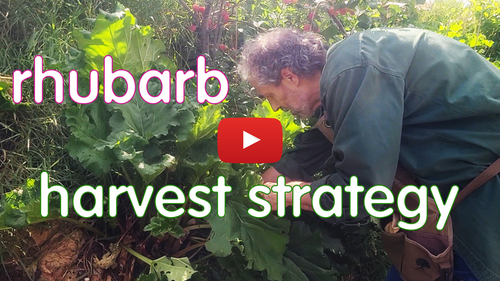
Paul shares his rhubarb harvesting technique:

 
gardener
Posts: 1818
Location: Proebstel, Washington, USDA Zone 6B
1205
4
wheelbarrows and trailers kids trees earthworks woodworking
  • Likes 7
  • Mark post as helpful
  • send pies
    Number of slices to send:
    Optional 'thank-you' note:
  • Quote
  • Report post to moderator
Harvesting all of the leaves that are shaded by another leaf. That is really aggressive harvesting. But ya'll are constantly making more rhubarb candy in the solar dehydrators at the lab. So the results speak for themselves.
 
master steward
Posts: 15475
Location: Pacific Wet Coast
9859
duck books chicken cooking food preservation ungarbage
  • Likes 9
  • Mark post as helpful
  • send pies
    Number of slices to send:
    Optional 'thank-you' note:
  • Quote
  • Report post to moderator

Jeremy VanGelder wrote:... But ya'll are constantly making more rhubarb candy in the solar dehydrators at the lab...


Do they soak the rhubarb before drying it? I understand that the oxalic acid is water soluble and was wondering if soaking chopped stems would reduce its level?

I also realize that some people are more sensitive to oxalic acid than others, and that I'm one of those more sensitive people - love the flavor, but not the side effects!
 
pollinator
Posts: 398
Location: South of Winona, Minnesota
107
  • Likes 15
  • Mark post as helpful
  • send pies
    Number of slices to send:
    Optional 'thank-you' note:
  • Quote
  • Report post to moderator
For many years we had sheep and they enjoyed being fed apple tree prunings to browse upon. But the last several years we have been sheepless and wondered what to do with the prunings, and I thought why not give the native, fenced-out rabbits a treat in late winter. So we threw the prunings onto the rhubarb patch that was outside of the fenced gardens and orchards, where the bunnies ate off most all of the bark and buds, all the while pooping onto the rhubarb plants. So for many years now we have had the biggest rhubarb ever with the biggest stalks approaching baseball bat size, leaves like umbrellas (they made good mulch around the plants when cut off during harvest). The only thing we have to do is remove the branches when the patch starts to come up in the spring.  Since we don't eat that much rhubarb because of the oxalic acid, this spring we dug out half of the plants and gave them to a neighbor for her CSA.  BTW rhubarb roots also make a fantastic dye for wool and other animal fibers.
 
pollinator
Posts: 1532
Location: Wheaton Labs, Montana, USA
3057
11
home care trees books wofati food preservation bike bee building writing seed
  • Likes 11
  • Mark post as helpful
  • send pies
    Number of slices to send:
    Optional 'thank-you' note:
  • Quote
  • Report post to moderator
I can only speak for the Boots at Wheaton Labs, and what we have in our pantry.

We rinse and clean off the rhubarb before drying, but I don't think we do much in the way of soaking. Same would go if we were to make jam or pie or something like that.

We might want to dunk and swirl it in some simple syrup for a minute or two to attain a sweeter candy from the dehydrator, but in general, for us there is no long-term soaking involved.
 
pollinator
Posts: 3501
Location: Meppel (Drenthe, the Netherlands)
1189
dog forest garden urban cooking bike fiber arts
  • Likes 7
  • Mark post as helpful
  • send pies
    Number of slices to send:
    Optional 'thank-you' note:
  • Quote
  • Report post to moderator

Jay Angler wrote:...
Do they soak the rhubarb before drying it? I understand that the oxalic acid is water soluble and was wondering if soaking chopped stems would reduce its level?

I also realize that some people are more sensitive to oxalic acid than others, and that I'm one of those more sensitive people - love the flavor, but not the side effects!


Hi Jay. Surely I am not sensitive. I don't even know what the side-effects of rhubarb/oxalic acid are. Can you please tell me?
 
steward & author
Posts: 46559
Location: Left Coast Canada
18999
10
art trees books chicken cooking fiber arts
  • Likes 11
  • Mark post as helpful
  • send pies
    Number of slices to send:
    Optional 'thank-you' note:
  • Quote
  • Report post to moderator

Inge Leonora-den Ouden wrote:

Jay Angler wrote:...
Do they soak the rhubarb before drying it? I understand that the oxalic acid is water soluble and was wondering if soaking chopped stems would reduce its level?

I also realize that some people are more sensitive to oxalic acid than others, and that I'm one of those more sensitive people - love the flavor, but not the side effects!


Hi Jay. Surely I am not sensitive. I don't even know what the side-effects of rhubarb/oxalic acid are. Can you please tell me?


Too much in the diet can increase gout and block other nutrients from being absorbed.  It can also trigger kidney stones if eaten in excess and the individual has a history of this. High fibre can bother guts if we aren't used to it.  It very much depends on the individual as some are more sensitive to it than others.

In other news, i just found out why my nosebleed goes away this time of year.  Apparently, it's high in vitamin K.  Good for me, not great for people on blood thinners.

I do want to stress, that I've never discovered what "too much" is for rhubarb.   I have a big bowl of stewed rhubarb most days of the week this time of year and never had anything stronger than a more regular movement due to increased fiber.
 
pollinator
Posts: 88
Location: SE France
27
fungi trees food preservation medical herbs wood heat composting
  • Likes 8
  • Mark post as helpful
  • send pies
    Number of slices to send:
    Optional 'thank-you' note:
  • Quote
  • Report post to moderator
H  ello dear readers,
Shortly going off to a plant fair to socialize, learn, be surprised and to get leek plants,
   
Before planting the baby leeks, they get a soak in rhubarb leaf maceration, it seems to avoid the pin like worms that chomp on the roots,

Some leaves go on the privet or box to deter the beautiful moths that have been decimating hedges etc in recent times,

the rhubarb stalks, chopped before prep, are given a bicarb bath to lower acidity and so need less sweetening.

And I will see if I can get more rhubarb following our good advice, whilst picking wild strawberries that proliferate around the rhubarb.

We ve had hail, more monsoon like rainstorms and drought is still being mentioned.

Right, coffee and then off wishing us good Sundays all round

Fruity blessings
MH
 
pollinator
Posts: 283
Location: Middlebury, Vermont zone 5a
94
forest garden books food preservation fiber arts medical herbs homestead
  • Likes 7 Likes 1
  • Mark post as helpful
  • send pies
    Number of slices to send:
    Optional 'thank-you' note:
  • Quote
  • Report post to moderator
I thought that cooking gets rid of the oxalic acid.  Better to cook things like sorrel than to eat them raw. Just used AI to ask, for what that's worth.  Here is what it said:
Cooking significantly reduces the oxalic acid in rhubarb stalks, but it does not make rhubarb leaves safe to eat. While cooking can reduce the total oxalate content of the edible stalks by roughly 50% to 75%, the leaves contain such extreme concentrations (roughly 10 times more than the stalks) that no amount of cooking can render them edible.

Cooking Stalks vs. Leaves: Stalks (Petioles): These are naturally lower in oxalates and are considered safe for most people, especially when cooked. Boiling them and discarding the water is the most effective way to lower oxalate levels by leaching.Leaves: Cooking does not break down oxalic acid; it only moves it. Even if you boil the leaves, the remaining oxalate levels are high enough to cause symptoms like nausea, vomiting, or even kidney damage.

Effective Reduction Methods for Rhubarb Stalks: Boiling and Discarding Water: This can reduce total oxalates by nearly half. However, popular methods like making compotes or jams (where the liquid is kept) retain the full oxalate content.

Adding Dairy: Cooking or serving rhubarb with calcium-rich foods like milk, custard, or cream is highly effective. The calcium binds to the soluble oxalates in the gut, forming insoluble crystals that pass through your body without being absorbed into your bloodstream.

Peeling: Since the highest concentration of oxalates in the stalk is often in the skin, peeling can further reduce the total load.
Soaking: Soaking cut stalks in water for 24–48 hours before cooking can help dissolve some of the water-soluble acid.
 
Inge Leonora-den Ouden
pollinator
Posts: 3501
Location: Meppel (Drenthe, the Netherlands)
1189
dog forest garden urban cooking bike fiber arts
  • Likes 6
  • Mark post as helpful
  • send pies
    Number of slices to send:
    Optional 'thank-you' note:
  • Quote
  • Report post to moderator

Barbara Simoes wrote:...

...

Effective Reduction Methods for Rhubarb Stalks: Boiling and Discarding Water: This can reduce total oxalates by nearly half. However, popular methods like making compotes or jams (where the liquid is kept) retain the full oxalate content.

...
Soaking: Soaking cut stalks in water for 24–48 hours before cooking can help dissolve some of the water-soluble acid.


I understand: If you cook rhubarb stems in water and then discard the water, 50-75% of the oxalic acid goes away with the water ....
But I never do that. I cook small pieces of rhubarb stems with only a very tiny amount of water, until that water has all evaporated. So the oxalic acid all stays in my rhubarb 'mush' (Dutch 'moes').
Cooking in a large amount of water and throwing that water out, would result in loosing a lot of the flavour, and probably some of the rhubarb too!

When I make this rhubarb mush (or jam, but I add less sugar than in jam) I add a pinch of chalk powder. And when I eat my breakfast muesli with rhubarb there's yoghurt (a dairy product) in it too.  
 
Barbara Simoes
pollinator
Posts: 283
Location: Middlebury, Vermont zone 5a
94
forest garden books food preservation fiber arts medical herbs homestead
  • Likes 8
  • Mark post as helpful
  • send pies
    Number of slices to send:
    Optional 'thank-you' note:
  • Quote
  • Report post to moderator
I haven't done this either!  I don't know that you have to use a huge amount of water or boil it for very long.  Probably, I would do it like I do asparagus; just cover, bring to boil and continue a simmer for about three minutes and then drain and (with asparagus) I then rinse with cold water to stop the cooking process and so it doesn't get all wrinkly.  It still is very hot, so I don't have to worry that it will be cold when served.
I personally don't seem to have  enough to be badly affected by oxalates, but then again, I've heard that kidney stones are no fun, so it might be good for me to be proactive!
 
Jeremy VanGelder
gardener
Posts: 1818
Location: Proebstel, Washington, USDA Zone 6B
1205
4
wheelbarrows and trailers kids trees earthworks woodworking
  • Likes 9
  • Mark post as helpful
  • send pies
    Number of slices to send:
    Optional 'thank-you' note:
  • Quote
  • Report post to moderator
Seth made a video of another batch of rhubarb candy in the solar dehydrator at Wheaton Labs.

 
Posts: 46
7
fungi foraging medical herbs seed
  • Likes 4
  • Mark post as helpful
  • send pies
    Number of slices to send:
    Optional 'thank-you' note:
  • Quote
  • Report post to moderator
Hi, My biggest rhubarb has put out flowering spikes- should I leave them or cut them out? I really don't need any rhubarb seeds but there are pollinators on the flowers.
 
author and steward
Posts: 60631
Location: missoula, montana (zone 4)
hugelkultur trees chicken wofati bee woodworking
  • Likes 6
  • Mark post as helpful
  • send pies
    Number of slices to send:
    Optional 'thank-you' note:
  • Quote
  • Report post to moderator

j flynn wrote:Hi, My biggest rhubarb has put out flowering spikes- should I leave them or cut them out? I really don't need any rhubarb seeds but there are pollinators on the flowers.


We let our rhubarbs go to see one year.  The result was a single new baby rhubarb!

BUT!  The tradeoff is that you get about 8x more rhubarb harvest if you cut the seed heads.
 
Inge Leonora-den Ouden
pollinator
Posts: 3501
Location: Meppel (Drenthe, the Netherlands)
1189
dog forest garden urban cooking bike fiber arts
  • Likes 6
  • Mark post as helpful
  • send pies
    Number of slices to send:
    Optional 'thank-you' note:
  • Quote
  • Report post to moderator

paul wheaton wrote:...

BUT!  The tradeoff is that you get about 8x more rhubarb harvest if you cut the seed heads.


Are you sure about that 8x more? Last year my rhubarb had a flower stem. I didn't cut it off (I harvested seeds and wanted to give those to other people, but nobody wanted them). The harvest last year was a little less than usual, but not such a big difference.
 
paul wheaton
author and steward
Posts: 60631
Location: missoula, montana (zone 4)
hugelkultur trees chicken wofati bee woodworking
  • Likes 5
  • Mark post as helpful
  • send pies
    Number of slices to send:
    Optional 'thank-you' note:
  • Quote
  • Report post to moderator

Inge Leonora-den Ouden wrote:Are you sure about that 8x more?


I would say "more than 5x. less than 10x. Closer to 10x than 5x."  

With the seed heads, there were so few leaves that I felt like it would damage the plant to harvest anything!
 
Jay Angler
master steward
Posts: 15475
Location: Pacific Wet Coast
9859
duck books chicken cooking food preservation ungarbage
  • Likes 7
  • Mark post as helpful
  • send pies
    Number of slices to send:
    Optional 'thank-you' note:
  • Quote
  • Report post to moderator

paul wheaton wrote: With the seed heads, there were so few leaves that I felt like it would damage the plant to harvest anything!


I think the size/age of the plant and one's ecosystem are big factors with this. It takes a *lot* of energy for plants to make seeds. If you wanted seeds for some reason, I would make sure I gave it good mulch and Fertilizer P during the fall/winter to make sure it had lots of strength going into the spring growing season.
 
Posts: 188
55
kids urban seed
  • Likes 7
  • Mark post as helpful
  • send pies
    Number of slices to send:
    Optional 'thank-you' note:
  • Quote
  • Report post to moderator
Cut them out. The plant puts so much energy into the seed head that you lose most of the harvest for that year. I left one go to seed once out of curiosity and barely got anything worth picking from it the rest of the season.
 
master gardener
Posts: 6435
Location: Carlton County, Minnesota, USA: 3b; Dfb; sandy loam; in the woods
3883
8
forest garden trees books chicken food preservation cooking fiber arts seed woodworking homestead ungarbage
  • Likes 6
  • Mark post as helpful
  • send pies
    Number of slices to send:
    Optional 'thank-you' note:
  • Quote
  • Report post to moderator
That's fascinating. I have always just let the seeds grow, so I don't have any personal first-hand experience to call on -- but the extension trials seem to indicate that it loses less than 50% of the annual harvest (some of which isn't actually fewer/lighter stalks, it's just more fibrous and yucky).
 
Inge Leonora-den Ouden
pollinator
Posts: 3501
Location: Meppel (Drenthe, the Netherlands)
1189
dog forest garden urban cooking bike fiber arts
  • Likes 8
  • Mark post as helpful
  • send pies
    Number of slices to send:
    Optional 'thank-you' note:
  • Quote
  • Report post to moderator
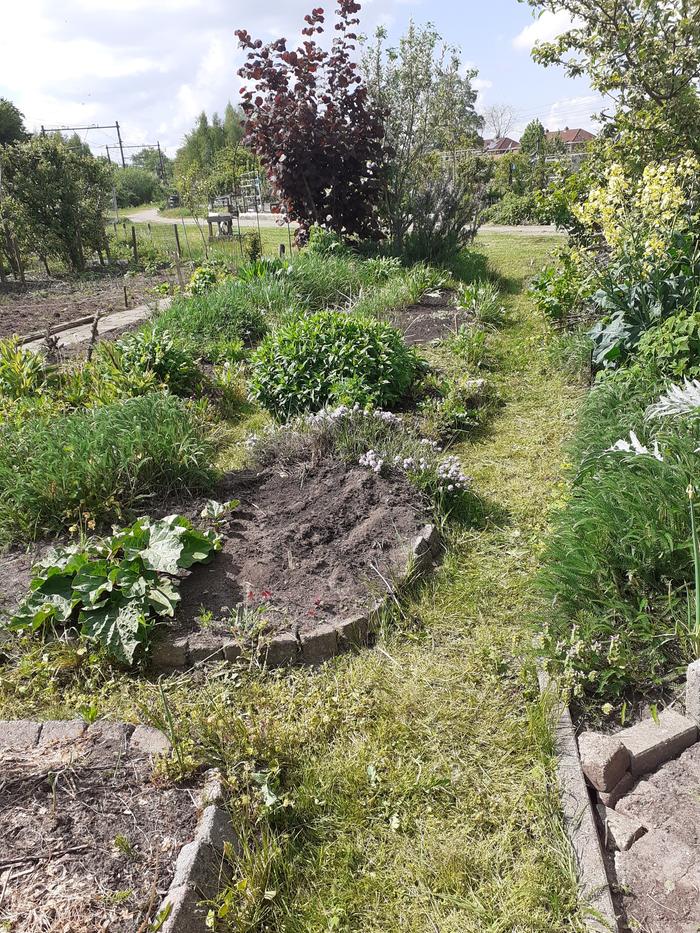
Maybe it's the way I see my rhubarb. I consider it one plant, but in fact it's a bunch of plants together.
Only one flower stalk means: only one of those plants produces less edible stems. But in the total bunch or rhubarb it isn't obvious.

Photo: not the flowering large rhubarb, but a different rhubarb at the allotment.

 
It's a pleasure to see superheros taking such an interest in science. And this tiny ad:
grow your own garden and build your own home in the gardening gardeners program
https://wheaton-labs.com/bootcamp
reply
    Bookmark Topic Watch Topic
  • New Topic