
• Post Reply Bookmark Topic Watch Topic
  • New Topic
permaculture forums growies critters building homesteading energy monies kitchen purity ungarbage community wilderness fiber arts art permaculture artisans regional education skip experiences global resources cider press projects digital market permies.com pie forums private forums all forums
this forum made possible by our volunteer staff, including ...
master stewards:
  • Carla Burke
  • John F Dean
  • Nancy Reading
  • r ransom
  • Jay Angler
  • Timothy Norton
stewards:
  • paul wheaton
  • Pearl Sutton
  • Anne Miller
master gardeners:
  • Christopher Weeks
  • M Ljin
gardeners:
  • Jim Garlits
  • thomas rubino
  • William Bronson

Geoff Lawton says grain is not really worth the while - what are your thoughts?

 
Rusticator
Posts: 9787
Location: Missouri Ozarks
5398
7
personal care gear foraging hunting rabbit chicken cooking food preservation fiber arts medical herbs homestead
  • Likes 6
  • Mark post as helpful
  • send pies
    Number of slices to send:
    Optional 'thank-you' note:
  • Quote
  • Report post to moderator

Ulla Bisgaard wrote:Why can’t you grow sweet potatoes in the same spot? We are in grow zone 10b, and treat the sweet potatoes as a self seeding crop.
I have grown mine in the same two raised beds for 6 years. I do a 2 year cycle for harvests. Let’s call my beds an and b.
The first year I only harvest from bed A,  but leave the smaller sweet potatoes in the soil. Then I plant beets, parsnips and leeks to grow during the cold season. Once springs come around, the small sweet potatoes I left, starts sprouting and puts out leaves. At this point I harvest the beets, but leave the leeks, as they deters the wildlife from eating the sweet potatoes.
The first year, I don’t harvest bed B. I just leave it alone until fall of the second year. The second year I harvest, but again leave the smallest of the sweet potatoes in the soil. The sweet potatoes have grown huge at this point, with many tubers at 5 pounds each. After the harvest, I grow  beets, diakon radishes and leeks for the cold season, until spring, when the small sweet potatoes set out leaves.
Using this method produces a lot of large sweet potatoes and other crops, without me having to deal with starting sweet potato slips every year. It also gives us access to sweet potato leaves all year round, though I never harvest more than 20%, since anything more will stunt the growth of the sweet potatoes.
I do top off the beds after harvesting, with compost, rabbit pellets, phosphorus and potassium.


This is brilliant, Ulla! Now, I'm wondering if there's a way I could do something similar, though in 6b, I'd have to do a very heavy layer of compost, to keep it warm enough, I think...
 
pollinator
Posts: 972
Location: Illinois
229
  • Likes 5
  • Mark post as helpful
  • send pies
    Number of slices to send:
    Optional 'thank-you' note:
  • Quote
  • Report post to moderator

Nancy Reading wrote:

Thom Bri wrote:I am getting 50-60 bushel/acre using open-pollinated seed with no added fertilizer. Northern Illinois. Conventional ag can produce 200 bushel/acre of corn here.


Am I right thinking you get other crops from the same space though Thom, you have a three (plus) sisters plot going on?


Yes, I could intensify my corn plot and probably get a bunch more corn. But still nowhere near what modern hybrids produce.
 
out to pasture
Posts: 13250
Location: Portugal
4393
goat dog duck forest garden books wofati bee solar rocket stoves greening the desert
  • Likes 14
  • Mark post as helpful
  • send pies
    Number of slices to send:
    Optional 'thank-you' note:
  • Quote
  • Report post to moderator

Josh Warfield wrote:Saying flat out that grains aren't worth it is a little intense, compared to what Mr. Lawton actually said in the video. .


I went to watch the video, and you are absolutely right!


In the blurb under the video, it says this...

Key Takeaways

Grains easily fit in places like the deserts and cold climates where there is dormancy and time to process everything. Outside of these climates, grain is inefficient. There are a lot of easier foods to grow in terms of nutrition for the labor required. Grains are a high-quality food that stores, which was good for military needs and aided in the rise of grains agriculturally speaking.  However, usually, the amount of work necessary for the food gained just isn’t worth it. But, mass agriculture has thrived in the grain game because its production is easily industrialized: machine harvested, processed, stored, and shipped.


So somewhere that there is a dormant period, grains are good because you have the time to process the grain, and food to eat until dormancy is over.

Which isn't quite the same as saying that grain is not worth while.
 
pollinator
Posts: 1513
Location: Zone 10a, Australia
29
  • Mark post as helpful
  • send pies
    Number of slices to send:
    Optional 'thank-you' note:
  • Quote
  • Report post to moderator

Josh Warfield wrote:Saying flat out that grains aren't worth it is a little intense, compared to what Mr. Lawton actually said in the video. I thought he seemed quite careful to clarify that he wasn't making a universal statement, only one based on his specific context, and suggesting that most small-scale producers would find their context to be similar to his.

Of course, he did say something more nuanced. But I liked the punch of the video.

I tried to grow oats back in the colder climate, and the rats ate it. The same with the corn.
But I had a huge success with amaranth but the processing was a bit difficult.
I think that the main problem with grains is the processing and not the growing, but I will see how my trials go this year (rats, birds, kangaroos, deer)
I use seeds from the supermarket or the Indian grocery store., they germinate just fine.

With the sweet potatoes, I found there is a decline in yield after a while. I planted them in our sandy garden.

 
Nicola Bludau
pollinator
Posts: 1513
Location: Zone 10a, Australia
29
  • Likes 4
  • Mark post as helpful
  • send pies
    Number of slices to send:
    Optional 'thank-you' note:
  • Quote
  • Report post to moderator

Joseph Lofthouse wrote:Grains!? What a huge topic.

The grain called corn produces huge yields with minimal labor. A simple, hand cranked, hundred year old sheller can process hundreds of pounds per hour.

The grain rye grows wild in my community without irrigation, without weeding, without planting. It self-grows as a feral food. Harvest goes quickly.

A 13 foot long row of wheat provides 5 pounds of grain for me, which could feed me bread for a week. It takes me an hour to harvest and clean with simple tools like a stick, tarp, and a couple of buckets. So in 50 hour week, I could harvest and clean enough wheat to feed myself for a year.

I grow oats, but haven't fallen in love with productivity or processing.

Barley seems hard for me.

I can't grow rice.

I might could grow sorghum, millet, amaranth, or kinwa grains, but I didn't grow up with them as part of my social indoctrination.


.


That sounds good, I simply try everything. I can't grow rice either. We have a tiny house garden there is no space all planted already and our bigger garden has no water - that means no rice. Amaranth has an insane yield but I wasn't good wth processing and the chooks didn't like it. Quinoa is more of an altitude thing and we're at sea level. But there is nothing bad with wheat only wheat and rye make good sourdough breads (and all the older wheat varieties like spelt).
 
master pollinator
Posts: 2156
Location: Ashhurst New Zealand (Cfb - oceanic temperate)
750
duck forest garden fungi trees chicken cooking solar sheep wood heat woodworking rocket stoves
  • Likes 14
  • Mark post as helpful
  • send pies
    Number of slices to send:
    Optional 'thank-you' note:
  • Quote
  • Report post to moderator
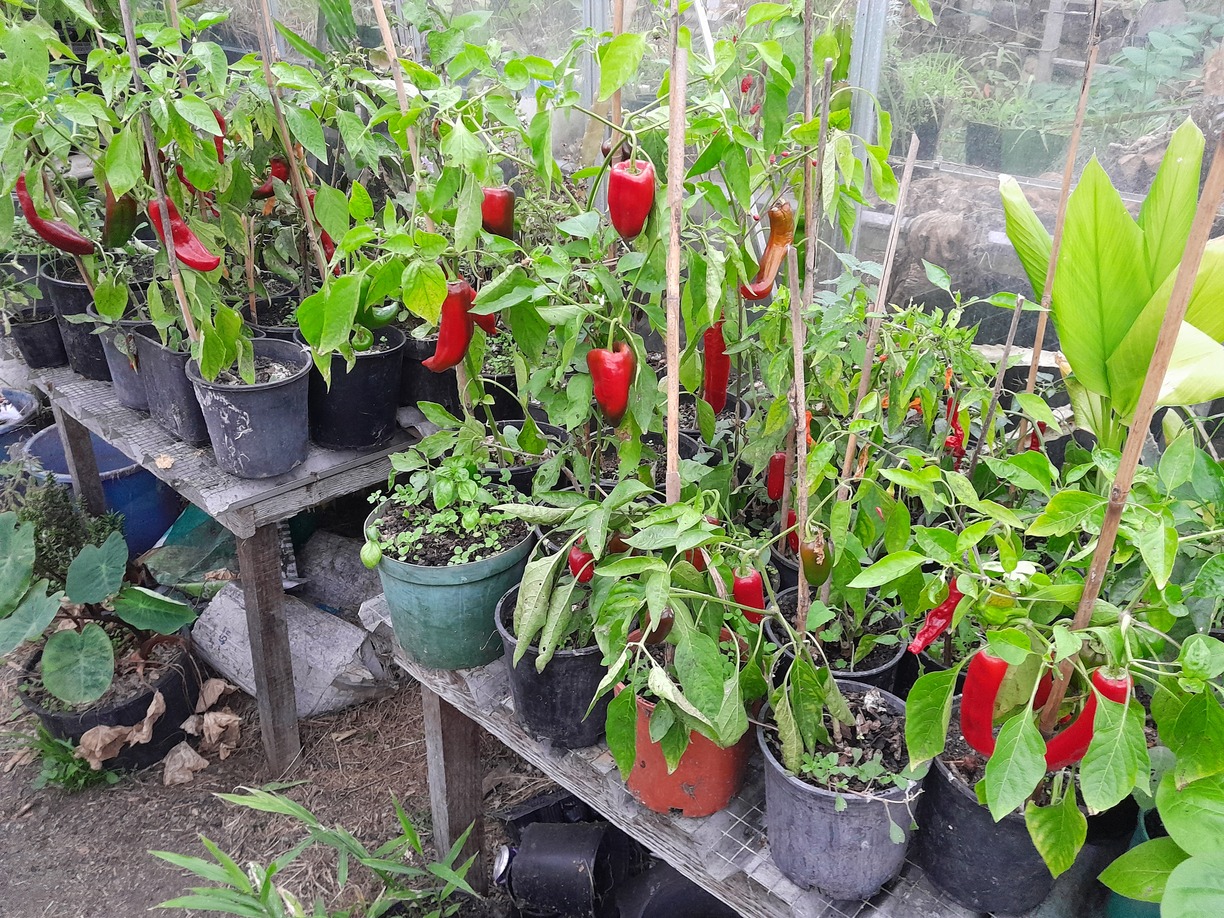
Flint corn and pinto beans produce well for me here, and all the better because they give me a tie back to the foodways of the place I came from. We're just getting into the cool part of the year, with two light frosts earlier this week, so it's officially soup season and I think I'll cook up a big pot of posole this weekend. I can just about live on that stuff. Complete protein, nixtamalised corn so no niacin problems, and I can just let a pot of it simmer on the wood fire all day. A good crop of chiles ripening in the glasshouse, too, so I can get the heat levels right.
anaheims.jpg
red chilli peppers ripening in pots on greenhouse staging
 
pollinator
Posts: 784
Location: SE Indiana
463
dog fish trees writing
  • Likes 12
  • Mark post as helpful
  • send pies
    Number of slices to send:
    Optional 'thank-you' note:
  • Quote
  • Report post to moderator

Burra Maluca wrote:

Josh Warfield wrote:Saying flat out that grains aren't worth it is a little intense, compared to what Mr. Lawton actually said in the video. .


I went to watch the video, and you are absolutely right!


In the blurb under the video, it says this...

Key Takeaways

Grains easily fit in places like the deserts and cold climates where there is dormancy and time to process everything. Outside of these climates, grain is inefficient. There are a lot of easier foods to grow in terms of nutrition for the labor required. Grains are a high-quality food that stores, which was good for military needs and aided in the rise of grains agriculturally speaking.  However, usually, the amount of work necessary for the food gained just isn’t worth it. But, mass agriculture has thrived in the grain game because its production is easily industrialized: machine harvested, processed, stored, and shipped.


So somewhere that there is a dormant period, grains are good because you have the time to process the grain, and food to eat until dormancy is over.

Which isn't quite the same as saying that grain is not worth while.


That sounds sensible to me except I don't know what processing oats and barley means. I suppose it is turning it into flour or smashing it flat like the oats you buy which I do actually like. With my little patches I don't process it at all other than removing the husks. Whatever is involved into turning it into something other than just the seeds, I don't know how or really even care to do.

I grow the so called hulless kinds of oats and barley but find they aren't really hulless just maybe less so than others. When I do manage to get a pretty good harvest, which for me is maybe a quart jar full I rub it between my hands in the wind or in front of a fan. Then I spend an evening or ten in front of the TV picking out individual seeds that really did completely shed the husk. By the time I'm done my quart has been reduced to, if I'm lucky a pint. The clean whole grain is all I want. It seems to me that it is easy cook without pre-soaking or anything but maybe that is because it is so fresh. A pint is enough for my seed the next year and to have it for a treat once or twice. I throw the rest out for the birds and chipmunks.

I don't know what to add about corn. I've grown it all of my life and maybe that experience along with my climate is apparently good for it is why it is easy for me. I grow sweet corn, flint-ish corn and popcorn but not always all in the same year. With my flint-ish corn I make a dry, crumbly, gritty corn bread which I love and am experimenting with something that passes for a corn chip.  I grind it up with an old hand crank grinder. I really like hominy but so far have only tried one time to make it myself. I used ash from my wood stove for the nixtamalization, and it worked surprisingly well. I have a larger than normal patch of my flint-ish corn this year for that purpose.
 
master gardener
Posts: 6435
Location: Carlton County, Minnesota, USA: 3b; Dfb; sandy loam; in the woods
3883
8
forest garden trees books chicken food preservation cooking fiber arts seed woodworking homestead ungarbage
  • Likes 12
  • Mark post as helpful
  • send pies
    Number of slices to send:
    Optional 'thank-you' note:
  • Quote
  • Report post to moderator

Josh Warfield wrote:Does [corn] have less micronutrients than broccoli or carrots or something? I dunno, probably.


My impression is that there are something like 10,000 phytonutrients and we know a little about how 130 of them work in the body. This is probably genuinely unknown. But if you're into corn and into micronutrients, start your journey by selecting for a mix of deep colors.
 
Thom Bri
pollinator
Posts: 972
Location: Illinois
229
  • Likes 15
  • Mark post as helpful
  • send pies
    Number of slices to send:
    Optional 'thank-you' note:
  • Quote
  • Report post to moderator

Christopher Weeks wrote:

Josh Warfield wrote:Does [corn] have less micronutrients than broccoli or carrots or something? I dunno, probably.


My impression is that there are something like 10,000 phytonutrients and we know a little about how 130 of them work in the body. This is probably genuinely unknown. But if you're into corn and into micronutrients, start your journey by selecting for a mix of deep colors.


My corn
PXL_20250823_165224307.jpg
Corn
Corn
 
Posts: 101
Location: Egnar, CO -- zone 5ish, semi-arid, high elevation
37
ancestral skills tiny house composting toilet cooking seed solar wood heat rocket stoves greening the desert homestead composting
  • Likes 11
  • Mark post as helpful
  • send pies
    Number of slices to send:
    Optional 'thank-you' note:
  • Quote
  • Report post to moderator

Christopher Weeks wrote:

Josh Warfield wrote:Does [corn] have less micronutrients than broccoli or carrots or something? I dunno, probably.


My impression is that there are something like 10,000 phytonutrients and we know a little about how 130 of them work in the body. This is probably genuinely unknown. But if you're into corn and into micronutrients, start your journey by selecting for a mix of deep colors.
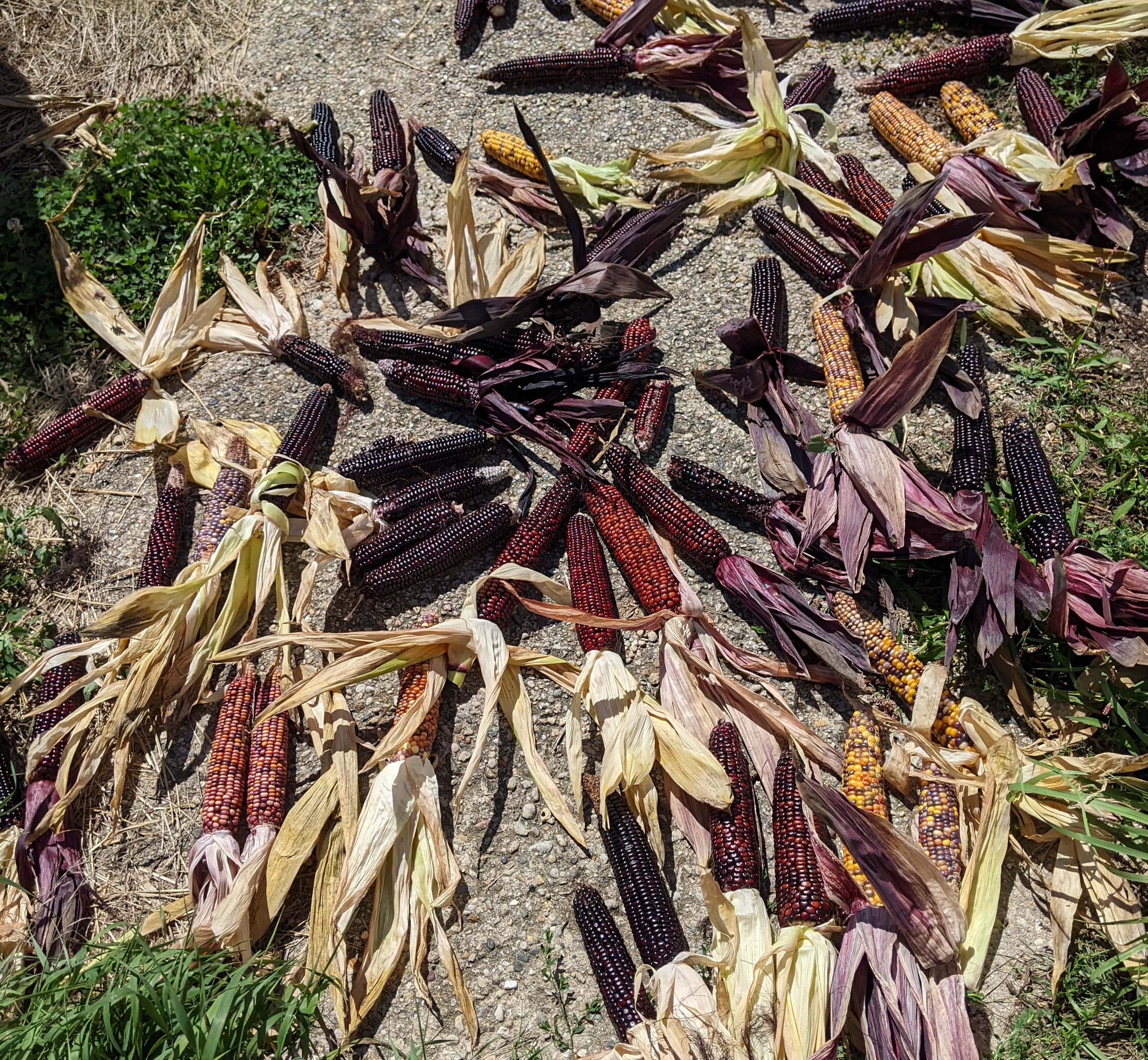


Yep, varied colors is one of the few selection criteria I have, if I ever have the opportunity to select for anything other than "does it survive and produce seed." It kind of pains me how un-scientific it sounds, but I don't have the tools (or, let's be honest, the attention span) to actually scientifically evaluate the nutritional content of a given fruit or seed. But from what I've read, it does seem that there is a legit correlation between varied colors and varied micronutrients. And even if that turns out to not be true for whatever specific plant I'm growing, who doesn't like colorful food? At worst, varied colors are a pretty strong indicator of genetic diversity.
 
Josh Warfield
Posts: 101
Location: Egnar, CO -- zone 5ish, semi-arid, high elevation
37
ancestral skills tiny house composting toilet cooking seed solar wood heat rocket stoves greening the desert homestead composting
  • Likes 11
  • Mark post as helpful
  • send pies
    Number of slices to send:
    Optional 'thank-you' note:
  • Quote
  • Report post to moderator

Mark Reed wrote:That sounds sensible to me except I don't know what processing oats and barley means.


I think what people are referring to with this is that there are several steps, some of which are potentially finicky, to turn grass seeds into food. Versus a squash or a potato which you can just cook and eat immediately after harvesting the plant. And the degree of finicky-ness scales up with the size of your harvest. In my current stage of experimentation, I don't mind spending 20 minutes separating seed from chaff just to get seeds to plant for next year. If I were actually trying to survive off of this for multiple years, it wouldn't be a matter of hours, it would be a matter of days or weeks, or maybe even months in the extreme case. So if I had a choice, in the context of my climate, between growing a million calories of potatoes and a million calories of oats or barley, then the potatoes would hands-down take less total work.
 
gardener
Posts: 501
Location: The Old Northwest, South of Superior
296
books building wood heat
  • Likes 13
  • Mark post as helpful
  • send pies
    Number of slices to send:
    Optional 'thank-you' note:
  • Quote
  • Report post to moderator
Has anyone had success with the Marc Bonfils method of growing wheat?

Similar methods were used historically for rye also, in the traditional swidden (small scale slash and burn) agriculture of Scandinavia, in fire-adapted landscapes (i.e. boreal forest).

I have had no success yet with my little pilot project, but I'll keep trying.  So far, my Banatka wheat, obtained from a seed saver, has either failed to germinate, or some critter other than me has "harvested" it early.

Bonfils, a permaculturist from the French Pyrenees, claimed very high yields (but on small plots) - 15-ish metric tonnes per hectare, if I correctly understood his slightly archaic units.  If correct, this is not far off the mark for intensive mechanical broad acre wheat farming; at last check, the world record was 17 tommes per hectare for a Kiwi farmer.

In brief, the Bonfils method uses a permanent cover crop of white clover, into which the long-straw wheat is sparsely (30"/0.8 meter grid) planted around the summer solstice - very early, for a winter wheat.  I think I've given a more extensive description of his method elsewhere on these forums, as best as my schoolboy French permits me to understand.

The Forest Finn rye swidden method commonly used interplanting of turnips and field peas, according to my research.

These methods may not be appropriate for all climates and conditions, of course.

I'll try wheat again this year, but I'm going to do a germination check with my Banatka wheat.  If it's truly not viable, I'll get some new seed.

Dry land rice - Duborskian is commonly available in North America - may be an option for some circumstances.

I did pick up a hand-cranked corn (maize) box sheller in serviceable condition a couple of years ago, but I haven't yet gone through it to tune it up, nor have I yet built a box mount for it.  This is a nice one, with the separate conical sheller to rub off the nubbins on the end of the ear (to grind for flour or feed to the chickens) before the remainder with the larger seed-worthy grains are sent through the main sheller; not all box shellers had this extra feature to first shell the end of the ear, however.  At least in my neck of the woods, box shellers still show up pretty regularly at good prices for user-grade examples.  I plan to make a mount that will drop onto the rim of a 5-gallon bucket.

In reply to the original question, I suspect the value of grains depends on the local climate, circumstances and objectives.  Long term stable storage is one of the chief benefits of cereals (viz the Joseph story).  Up through at least the Iron Age, and probably well into the Middle Ages in Europe, cereal grains would have served most of the functions we associate with money in modern times - a medium of exchange, a store of value and a unit of account.  For my circumstances, I've decided winter cereals are worth pursuing.  If you live somewhere lushly tropical, the calculus might be very different.
 
Posts: 22
Location: 3a
3
food preservation cooking homestead
  • Likes 5
  • Mark post as helpful
  • send pies
    Number of slices to send:
    Optional 'thank-you' note:
  • Quote
  • Report post to moderator

Nicola Bludau wrote:[
What do you think?
How do you go about the processing procedure of grains, which is the biggest hurdle?
What are your yields per m2? Is it really more efficient to grow starchy root crops in terms of starch output?


Disclaimer, I do not raise any animals but knowing how to do something like growing grain crops is a valuable skill. It may not be for the grain itself to make bread or anything, but a high starch grain could also be utilized as a thickening agent, whereas a potato or other root crop may not be so easily processed.
 
Posts: 89
Location: West central Minnesota
34
  • Likes 9
  • Mark post as helpful
  • send pies
    Number of slices to send:
    Optional 'thank-you' note:
  • Quote
  • Report post to moderator
Kevin Olson,

Your post on winter wheat productivity is quite noteworthy. My neighbors in western MN planted winter wheat the fall of 2024. The stand was very good and they harvested a large crop in 2025. They did an incorporation of the wheat stubble and got a nice volunteer crop in the fall of 2025, made a great winter cover. Now this spring they are working in the green winter wheat to plant corn. They essentially had 4 soil building crops from just one seeding and they also took some straw from the 2025 harvest. Not much winter wheat planted around here and I am not sure why. Will likely plant some on this farm in the fall, I like what my neighbors did.

Hard red winter wheat is much different than hard red spring wheat in terms of straw production. Spring wheat has become very short and does not produce much straw. In the total equation one must include the straw (brown carbon) as part of the yield. Winter wheat is much like winter rye in terms of soil building and biomass. A winner I believe if you are looking to raise your soil organic matter.
 
gardener
Posts: 705
Location: Wabash, Indiana, Zone 6a
349
hugelkultur monies forest garden foraging trees books food preservation bike bee writing rocket stoves
  • Likes 8
  • Mark post as helpful
  • send pies
    Number of slices to send:
    Optional 'thank-you' note:
  • Quote
  • Report post to moderator
I think if you're wanting to make your own barley pop, it makes economic sense. And I have an all grain mash tun, so it is definitely something I have been thinking about.

Jim
 
pollinator
Posts: 1295
Location: Chicago
444
dog forest garden fish foraging urban cooking food preservation bike
  • Likes 11
  • Mark post as helpful
  • send pies
    Number of slices to send:
    Optional 'thank-you' note:
  • Quote
  • Report post to moderator

Mark Reed wrote:

I like rice a lot, especially wild rice and although I doubt I could ever grow it in serious quantity, I'd like to give it a try in my little garden pond but not sure where to find seeds.


There is actually a variety of wild rice that is native to the river ways of Indiana, but had almost died out. Some of the Myaamia folks in Ft Wayne area had found some a few years back and were working to reintroduce it in that area. I heard about this from Dani Tippmann at a Miami Heritage Days event in Ft Wayne some years ago.

It’s not a garden plant, though. Needs to grow in flowing water and needs seasonal fluctuations in depth, is what I heard.

 
Jim Garlits
gardener
Posts: 705
Location: Wabash, Indiana, Zone 6a
349
hugelkultur monies forest garden foraging trees books food preservation bike bee writing rocket stoves
  • Likes 4
  • Mark post as helpful
  • send pies
    Number of slices to send:
    Optional 'thank-you' note:
  • Quote
  • Report post to moderator
I’m interested in Permies in Indiana. I’m SW of Fort Wayne.

Check out my signature line.

Jim

Mk Neal wrote:

Mark Reed wrote:

I like rice a lot, especially wild rice and although I doubt I could ever grow it in serious quantity, I'd like to give it a try in my little garden pond but not sure where to find seeds.


There is actually a variety of wild rice that is native to the river ways of Indiana, but had almost died out. Some of the Myaamia folks in Ft Wayne area had found some a few years back and were working to reintroduce it in that area. I heard about this from Dani Tippmann at a Miami Heritage Days event in Ft Wayne some years ago.

It’s not a garden plant, though. Needs to grow in flowing water and needs seasonal fluctuations in depth, is what I heard.

 
Kevin Olson
gardener
Posts: 501
Location: The Old Northwest, South of Superior
296
books building wood heat
  • Likes 7
  • Mark post as helpful
  • send pies
    Number of slices to send:
    Optional 'thank-you' note:
  • Quote
  • Report post to moderator

Jim Garlits wrote:I’m interested in Permies in Indiana. I’m SW of Fort Wayne.

Check out my signature line.

Jim

Mk Neal wrote:

Mark Reed wrote:

I like rice a lot, especially wild rice and although I doubt I could ever grow it in serious quantity, I'd like to give it a try in my little garden pond but not sure where to find seeds.


There is actually a variety of wild rice that is native to the river ways of Indiana, but had almost died out. Some of the Myaamia folks in Ft Wayne area had found some a few years back and were working to reintroduce it in that area. I heard about this from Dani Tippmann at a Miami Heritage Days event in Ft Wayne some years ago.

It’s not a garden plant, though. Needs to grow in flowing water and needs seasonal fluctuations in depth, is what I heard.


GLIFWC (the Great Lakes Indian Fish and Wildlife Commission)  is working to re-establish wild rice within its historic range.  They may have some resources available, though I don't know if they have any ongoing efforts in Indiana, specifically.  Wild rice must either be seeded with fresh seed in the autumn, or in the spring with seed that has been kept wet all winter.  A number of waterfowl conservation organizations have also encouraged planting wild rice in appropriate locations.
 
Kevin Olson
gardener
Posts: 501
Location: The Old Northwest, South of Superior
296
books building wood heat
  • Likes 13
  • Mark post as helpful
  • send pies
    Number of slices to send:
    Optional 'thank-you' note:
  • Quote
  • Report post to moderator

Doug McEvers wrote:Kevin Olson,

Your post on winter wheat productivity is quite noteworthy. My neighbors in western MN planted winter wheat the fall of 2024. The stand was very good and they harvested a large crop in 2025. They did an incorporation of the wheat stubble and got a nice volunteer crop in the fall of 2025, made a great winter cover. Now this spring they are working in the green winter wheat to plant corn. They essentially had 4 soil building crops from just one seeding and they also took some straw from the 2025 harvest. Not much winter wheat planted around here and I am not sure why. Will likely plant some on this farm in the fall, I like what my neighbors did.

Hard red winter wheat is much different than hard red spring wheat in terms of straw production. Spring wheat has become very short and does not produce much straw. In the total equation one must include the straw (brown carbon) as part of the yield. Winter wheat is much like winter rye in terms of soil building and biomass. A winner I believe if you are looking to raise your soil organic matter.


Most modern wheat varieties have some short straw African genes, valued not least for the reduced tendency to lodge (fall down in inclement weather) and for easier mechanical harvesting, but Bonfils relied on heritage long straw varieties from before the African genetics were bred in.  The Marc Bonfils approach for wheat is akin to the Fukuoka philosophy with rice, but adapted to wheat in temperate climates.  In favorable circumstances, Bonfils reported root depths of up to 3 meters.  Between the nitrogen fixing cover crop, and the extensive root mass of the wheat deep into the soil profile, this should quickly build top soil.  But, I can't directly confirm this result, since my efforts are, as noted, as yet unsuccessful.  Running poultry through the harvested plot would help to "clean up" any seeds from which volunteers might spring up, since the method relies on the minimal competition of the very sparse planting for the high yields.  Traditionally, the heritage long straw wheat varieties, to which the Bonfils method is well-suited, were valued for the straw as well as the grain, straw being used for animal bedding, thatching, rough cordage, basket making and so forth.  Eventually, most of the straw would probably have ended up back on the fields, after a sojourn or two in other places.

In Sepp Holzer's winter rye method, it is repeatedly grazed before eventually permitting seed heads to form, which also vigorously builds soil.  But, as far as I am aware, wheat isn't grazed in this way.  If I can get some to germinate, I might try mowing (with a scythe) a small part of the plot to see if the wheat will come back.
 
Doug McEvers
Posts: 89
Location: West central Minnesota
34
  • Likes 12
  • Mark post as helpful
  • send pies
    Number of slices to send:
    Optional 'thank-you' note:
  • Quote
  • Report post to moderator
As I understand it oats when hayed or grazed will not make grain. Would be interested in spring seeding winter rye as a cover before planting row crops, not a lot of information on this. I am told this is done quite often in the northeast US. Building organic matter is paramount in gardens or on farms. I have oats planted in my garden and will let them grow until they start shading out garden plants and then only cut back what is needed. Hard to preserve the oats in the rows of potatoes as I hill quite extensively. What I do is bury any and all vegetation between the rows when the potatoes are dug, leveling the area.
 
Nicola Bludau
pollinator
Posts: 1513
Location: Zone 10a, Australia
29
  • Likes 7
  • Mark post as helpful
  • send pies
    Number of slices to send:
    Optional 'thank-you' note:
  • Quote
  • Report post to moderator
There is a huge difference in the seeds we can get in Australia and the huge variety available in America. I never old-fashioned wheat that is on a long stalk.

Josh, your corn harvest looks amazing! I grew something white, and it looks way more boring. How about usability and taste? Does the red corn taste more interesting? Corn has a huge advantage: the birds are less likely to get into it, but rats like it, though. This should be a cornerstone of home-grain production.
Has anyone done the nixtamal so far? How much work is it?
 
Posts: 20
14
  • Likes 8
  • Mark post as helpful
  • send pies
    Number of slices to send:
    Optional 'thank-you' note:
  • Quote
  • Report post to moderator

Nicola Bludau wrote:
Has anyone done the nixtamal so far? How much work is it?


Yep, I grow rainbow corn and nixtamalize it. It is not at all difficult:

I just take whatever amount of my dried corn that I want to use (usually for making tortilla chips/corn tortillas) and bring it just to boil in enough water to cover it well then add 1% calcium hydroxide (e.g. if you have 300g corn, dry weight, you add 3g) to the water, turn it to simmer, and stir as you watch the pretty colour change. Then you can let it simmer while you do something else until you can bite easily through a kernel but still have a little chalkyness in the very centre. Then I make sure it still has enough water to cover it well and leave it with the fire off and lid on overnight.

In the morning you are ready to use it, I usually just whirr mine with the cooking water in the blender, maybe add a bit more water, to make a smooth batter which I can pour directly in a greased skillet to make tortillas.
 
Christopher Weeks
master gardener
Posts: 6435
Location: Carlton County, Minnesota, USA: 3b; Dfb; sandy loam; in the woods
3883
8
forest garden trees books chicken food preservation cooking fiber arts seed woodworking homestead ungarbage
  • Likes 10
  • Mark post as helpful
  • send pies
    Number of slices to send:
    Optional 'thank-you' note:
  • Quote
  • Report post to moderator
We also make nixtamal (though we have all the gadgets) -- almost weekly. We regularly make tortillas, sopes, chochoyotes, and tamales. I've done it with Cal and with wood ash. It's an extra step, for sure, but it's light work.
 
Thom Bri
pollinator
Posts: 972
Location: Illinois
229
  • Likes 9
  • Mark post as helpful
  • send pies
    Number of slices to send:
    Optional 'thank-you' note:
  • Quote
  • Report post to moderator

Nicola Bludau wrote:
Josh, your corn harvest looks amazing! I grew something white, and it looks way more boring. How about usability and taste? Does the red corn taste more interesting? Corn has a huge advantage: the birds are less likely to get into it, but rats like it, though. This should be a cornerstone of home-grain production.
Has anyone done the nixtamal so far? How much work is it?


My colored corn tasted distinctly different from commercial corn meal.

Birds are the main seed predator in my area, raccoons and deer less a problem, rodents hardly at all. If I leave the corn ears uncovered, birds will destroy at least half. They peck the husks open and eat the grain in the milk to dough stage. Then insects and mold get in and the whole ear is wasted. I either wrap the ears with large leaves, or put plastic drink bottles over them once pollination is done.
 
Christopher Weeks
master gardener
Posts: 6435
Location: Carlton County, Minnesota, USA: 3b; Dfb; sandy loam; in the woods
3883
8
forest garden trees books chicken food preservation cooking fiber arts seed woodworking homestead ungarbage
  • Likes 10
  • Mark post as helpful
  • send pies
    Number of slices to send:
    Optional 'thank-you' note:
  • Quote
  • Report post to moderator

Thom Bri wrote:Birds are the main seed predator in my area, raccoons and deer less a problem, rodents hardly at all. If I leave the corn ears uncovered, birds will destroy at least half. They peck the husks open and eat the grain in the milk to dough stage. Then insects and mold get in and the whole ear is wasted. I either wrap the ears with large leaves, or put plastic drink bottles over them once pollination is done.


Crows started doing this to my corn five years ago so I started feeding peanuts to bluejays and cultivated their presence at my place. They don't let the crows hang around anymore and they don't bother the corn (yet).
 
Posts: 33
Location: Siuslaw Territory, coastal Oregon, USA
5
  • Likes 6
  • Mark post as helpful
  • send pies
    Number of slices to send:
    Optional 'thank-you' note:
  • Quote
  • Report post to moderator
Mr. Lawton is a bit late to the party. John Jeavons researched this as much as 40-50 years ago in the Ecology Action research gardens. His focus was of course on temperate climate annual crops, grown French Intensive/Biointensive style. Different options in other contexts - context is everything. In the temperate-climate intensive horticulture context, Jeavons claims, for the labor required vs. calories and nutrition gained, as well as space required (outputs per area of input), grains are not very efficient, a relatively poor choice. Beans (dry) are not so great either, in terms of output per area of input. By his findings, potatoes win hands down in that context.  Especially in that they provide both significant calories and significant nutrition in less space than most other crops, not a very common trait in human food crops.

If you're subtropical or tropical (ST/T), yes there are paddy-rice-based cultures aplenty. But there are also multiple tuber/corm based cultures, Kalo (taro) being a primary example in parts of SE Asia and Polynesia, definitely Hawai'i (where it is a crucial element of the human origin story). Sweet potatoes, as someone mentioned, are another efficient ST/T staple (and yams). And in other parts of Polynesia the tree crop of 'Ulu (breadfruit) is the dominant staple. Cassava also comes to mind, mostly for ruggedness and ease of cultivation, and primarily for calories, as it's not all that nutritious. And lest we forget, potatoes originated in the Andes...

The question of grain, storage, & surplus is an interesting one...given that some systemic analyses of human history common in permaculture contexts suggest that it was our shift since ~10K years ago to increasingly large scale, sedentary, reduced-diversity grain agriculture, with its accumulation & storage of surplus, that increased our ability to overshoot population-wise, and also enabled emergence of warring nation-states. Allegedly the oldest written human records anyone has found to date were all accounting - military accounting, and grain agriculture accounting.
 
Burra Maluca
out to pasture
Posts: 13250
Location: Portugal
4393
goat dog duck forest garden books wofati bee solar rocket stoves greening the desert
  • Likes 8
  • Mark post as helpful
  • send pies
    Number of slices to send:
    Optional 'thank-you' note:
  • Quote
  • Report post to moderator
This video about traditional grain growing and harvesting in Spain was published a few days ago and I think it's worth a watch.


The soundtrack is available auto-dubbed into English, but it's full of errors and I'd recommend also putting the English subtitles on to make it less confusing. To a very large extent the images speak for themselves though. It shows various techniques for harvesting, from sickles and scythes through animal powered harvesters right up to combines. The threshing scenes were faschinating too. Locally they used similar methods and many old rural properties had smaller, circular threshing floors which in more recent times would be put to use by driving the tractor round and round on, but this video shows mule-powered devices in action.
 
Nicola Bludau
pollinator
Posts: 1513
Location: Zone 10a, Australia
29
  • Likes 8
  • Mark post as helpful
  • send pies
    Number of slices to send:
    Optional 'thank-you' note:
  • Quote
  • Report post to moderator
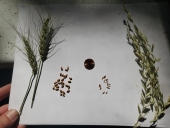
OK, I'll post a follow-up. I did one trial of some fancy ancient wheat in our little house garden (I think it's KHORASAN), came up so-so, but then something snipped it at the bottom. I would like to know what that something is. In our big garden, that didn't happen, and I planted the other bed with barley out of the chicken food and that bloody deer seems to like it!! (Yes, we do have deer in Australia).
IMG_4947.JPG
barley and khorosan (left)
 
pollinator
Posts: 856
Location: Clemson, SC ("new" Zone 8a)
207
11
  • Likes 9
  • Mark post as helpful
  • send pies
    Number of slices to send:
    Optional 'thank-you' note:
  • Quote
  • Report post to moderator
In general, I would agree with Mr. Lawton.  In my context - small scale amateur homesteader - growing most grains seems like way too much trouble compared to growing root vegetables.  Or rather, it's not growing them that poses the difficulty, but harvesting and processing.

Posters above have noted the superior storage quality of grains: years instead of months.  Very true, and indeed this was invaluable historically to provide for food security, creating the basis for sedentary, complex civilizations, etc., as has been discussed.

That is all well and good, but unless one is shooting for self-sufficiency way, way off the grid - like homesteading alone in the deep Alaskan bush - or else one is prepp'ing for the apocalypse, I don't see how storing grain for years is truly that important.  Many of us permies are not much more than hobby farmers, if we're honest.  By that, I mean that we may delight in money saved and nutrition enhanced in our gardens, but it isn't our livelihood and we still have the continental food distribution system to rely on.  I for one place a higher premium on low maintenance, easy to grow, easy to harvest crops vs crops that would "see me through the winter."

Similarly, while I do practice some food preservation, I am just as inclined to sell excess crops while they are fresh and skip the extra steps, knowing that I can buy food as necessary in the off season.  I am lucky enough to have access to a local, online farmers market that has proven very convenient to both buy and sell.  Federal reserve notes offer a far less labor-intensive form in which to "preserve the surplus."

Having said all that, I am still toying with the idea of growing one cereal, a dwarf variety of grain sorghum.  My readings suggest that it is the easiest and most practical cereal for home-scale producers in moderate climates (not too hot, not too cold, not too dry).  But I haven't yet put this theory to the test, so don't quote me on that.
 
pioneer
Posts: 254
Location: Temperate hardwood forest (NW Michigan) - zone 5b, 38" precip/yr
46
8
trees tiny house solar
  • Likes 3
  • Mark post as helpful
  • send pies
    Number of slices to send:
    Optional 'thank-you' note:
  • Quote
  • Report post to moderator

Doug McEvers wrote:The soil building properties of small grains must be part of the equation.


Where is this Doug? What climate and growing zone? As Geoff pointed out, it depends on your location and the weather you have.
 
Matthew Nistico
pollinator
Posts: 856
Location: Clemson, SC ("new" Zone 8a)
207
11
  • Likes 6
  • Mark post as helpful
  • send pies
    Number of slices to send:
    Optional 'thank-you' note:
  • Quote
  • Report post to moderator
One more important point that I forgot to mention.  Above, I wrote...

Matthew Nistico wrote:...unless one is shooting for self-sufficiency way, way off the grid - like homesteading alone in the deep Alaskan bush - or else one is prepp'ing for the apocalypse, I don't see how storing grain for years is truly that important.  Many of us permies are not much more than hobby farmers, if we're honest.  By that, I mean that we may delight in money saved and nutrition enhanced in our gardens, but it isn't our livelihood and we still have the continental food distribution system to rely on.  I for one place a higher premium on low maintenance, easy to grow, easy to harvest crops vs crops that would "see me through the winter."


I should have noted that I also place a higher premium on high value crops.  By that do I mean high caloric value per acre cultivated?  No.  I mean high dollar value.  I grow lots of herbs, which have minimal caloric value.  But I like to cook with lots of fresh herbs and they command a high price at the grocery store.  So, in a relatively small garden bed area I can keep myself in plenty of herbs and save a disproportionate amount off of my grocery bill.  By that same logic, especially with perennial herbs - rosemary, sage, mint, oregano, lemon balm, etc. - I can command a high price at the farmers market for minimal space and, especially, effort invested.

Grains and grain products - and even root crops, for that matter - are not particularly high value.  They are available year round at affordable prices via the mainstream system and usually at a quality comparable to homegrown.  So why not rely on that supply of calories while it is available and dedicate most of my limited space and effort to crops with specific virtues other than storable bulk calories?

Such other specific virtues would include 1) minimal inputs/maintenance required for ongoing harvests (fruit trees and berry bushes); 2) high dollar value (herbs and the odd rarity one just can't find at the store); or 3) homegrown quality that can't be matched by commercially available options (summer tomatoes, yum!).

 
Posts: 204
73
  • Likes 4
  • Mark post as helpful
  • send pies
    Number of slices to send:
    Optional 'thank-you' note:
  • Quote
  • Report post to moderator

George Ingles wrote:

Disasters like Floods, Fires, Volcano, etc. have the potential to wipe out perennial tree crops or make crop-growing difficult for an extended time.  Having a surplus of grains in storage that last for several years may have kept human settlements alive during multi-year bad weather episodes in the past.  On the other hand, during extreme times, stored grains are more vulnerable to desperate thieves than in-ground potatoes/roots or tree crops…


If a disaster wipes out one’s trees, crops and property, one’s grain stores will also get wiped out..
 
tuffy monteverdi
Posts: 204
73
  • Likes 4
  • Mark post as helpful
  • send pies
    Number of slices to send:
    Optional 'thank-you' note:
  • Quote
  • Report post to moderator

Jerry McIntire wrote:

Doug McEvers wrote:The soil building properties of small grains must be part of the equation.


Where is this Doug? What climate and growing zone? As Geoff pointed out, it depends on your location and the weather you have.


Grains are just grasses. Most of our cultivated grains are hybridized annual grasses, some are perennial.
But regular pasture grasses will do exactly the same thing. Perennials especially.
No need to grow grains for that purpose.
 
Posts: 49
Location: Half acre on a hill in Central Alabama, Zone 8a and 8b
38
hugelkultur fungi foraging
  • Likes 2
  • Mark post as helpful
  • send pies
    Number of slices to send:
    Optional 'thank-you' note:
  • Quote
  • Report post to moderator
Coming in from way over here in a tiny little portion of left field... Last year we were surprised with a volunteer crop of millet from the birdseed we sprinkle on our yard art stump, the part the birds sprinkle onto the ground. Just a dozen heads or so, but enough to satisfy our curiosity about adding extra flavor and texture to our breakfast oats and making an interesting bowl of miniature popcorn. Since the random castoff seeds did so well, I decided to scoop up the mess from all around the stump and spread it out in a hugelkultur terrace caught in mid-fill. I expected a bumper crop of millet to act as my winter cover, and maybe provide a nice spring grain.

A little research in the meantime learned me a couple of things: 1) Millet doesn't grow in winter. 2) The cheap birdseed (that I buy even cheaper on sale) is loaded with wheat and barley that act as filler, but do a lousy job feeding birds. This explained why I had a terrace full of wheat and barley that has just matured, after having spread a wonderful web of roots between my otherwise barren patch of logs and leaves. Not enough for a meal on its own, but plenty to teach me how easy it is to thresh and winnow small quantities. I'll grind up the berries and add it to the big jar of plantain and curly dock flour, my go-to for recipes calling for extra whole grain.
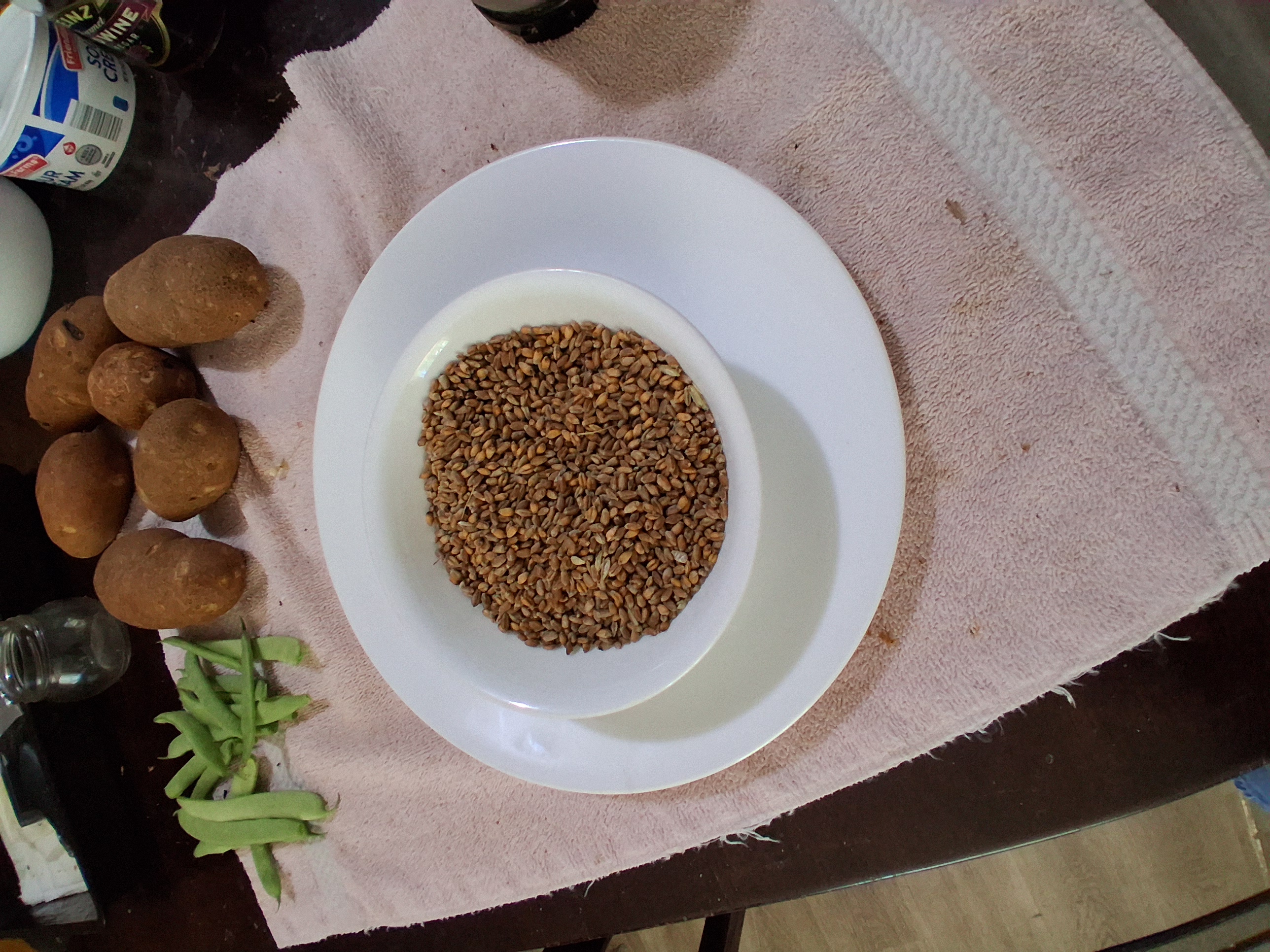
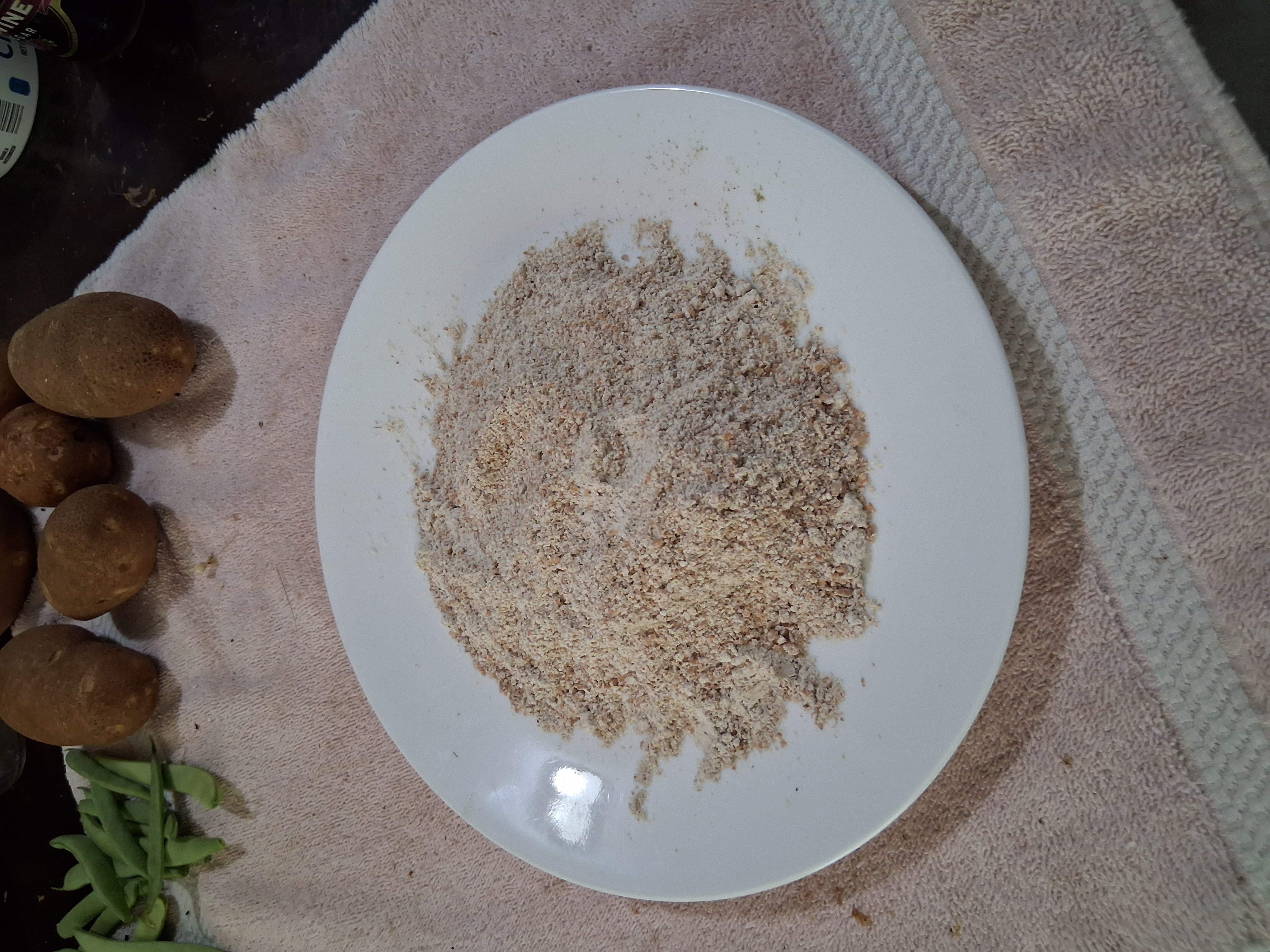
And now that the temperature is back in the 80s, I already know where I'll be planting this summer's crop of millet.
 
Yeardly Arthur
Posts: 49
Location: Half acre on a hill in Central Alabama, Zone 8a and 8b
38
hugelkultur fungi foraging
  • Likes 3
  • Mark post as helpful
  • send pies
    Number of slices to send:
    Optional 'thank-you' note:
  • Quote
  • Report post to moderator

William Bronson wrote: I think grain has the advantage when it comes to storage duration.
How many roots can be stored for years and still be edible?
.


We have been very successful growing sweet potatoes in our semi-rural yard gardens. The soil here produces hundreds of pounds for us without really trying, just set the slips in spring and come back in September with a BIG digging fork. If needed we could produce enough to satisfy the caloric needs of two people for the year, and then some, but we will have to get creative with storage to hold onto that much food. Our best bet seems to be dehydrating the roots and grinding them into flour, then storing the powder in mason jars. We've only done a few test runs on the process, but we're confident it could be scaled up easily to handle a big part of a big crop, and give us a little more caloric insurance in uncertain times.
 
I would challenge you to a battle of wits, but I see you are unarmed - shakespear. Unarmed tiny ad:
grow your own garden and build your own home in the gardening gardeners program
https://wheaton-labs.com/bootcamp
reply
    Bookmark Topic Watch Topic
  • New Topic