
It's always a good time to plant a garden. Lately seems like a better time than usual, for a variety of reasons.
Many people I know (myself included) are worried about money and food security.
I live in a city, and have a small space (about 7 meters by 7 meters) I use to grow food and save money.
Obviously, where you live, your weather, and what you eat will be important in choosing what you grow. Also important is the prices of other things (for example, I don't grow tomatoes or cucumbers in summer: they're cheap everywhere).
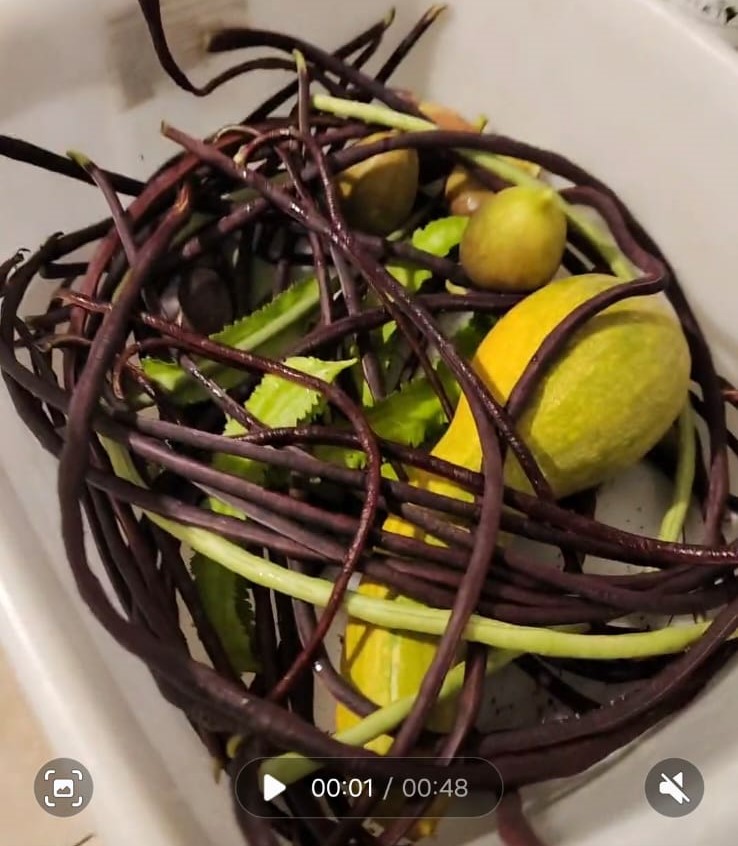
This summer, we had hotter and wetter weather than usual and so I decided to focus most on green beans, winter squash and sweet potatoes. I grew long beans and Okinawan winged beans (instead of normal pole beans) because they are more resistant to mold and pests than normal green beans. Sweet potatoes, we eat the greens too. I probably have gotten 20kg of beans, the sweet potatoes are looking great (I planted purple/purple and normal Japanese white flesh/purple skin versions). The squash are all harvested now and I've probably gotten 50kg. Some rotted already, others have been distributed and we're eating our way through the rest. The picture shows a typical daily midsummer haul with a few figs.
I just put in my fall garden this weekend (started seeds in trays and direct planted starts and seeds)- we are supposed to get extraordinary cold this winter here in my corner of the Southern Hemisphere, and the signs in my garden indicate it's right around the corner. I started some tomatoes (we grow in winter, under cover) but the vast majority is leafies-- cabbage, kale, napa, and also perennial lima beans (what we call Christmas bean, a variegated bean that is great for cooking and likes the cold).
We have many threads about starting gardens, including a recent Victory Garden thread that started right at the beginning of the pandemic.
Are you planting anything specifically in response to current events? Have you made any changes in what you usually grow (this summer, which was indeed extra rainy as forecasted, I didn't even try growing things that are affected by mildew, for example)?
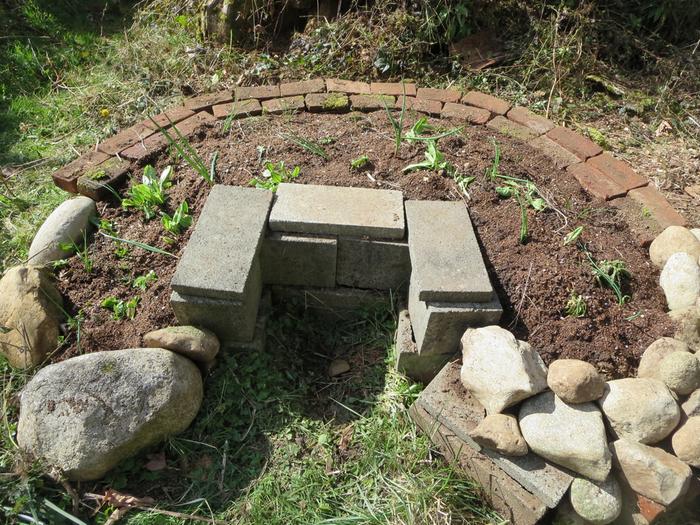
Are you new to gardening and have questions about what you're doing? (it just so happens, if you're new to Permies, we have a bunch of good folks who are generous with what they know and ready to help you build a better world in your own backyard).
Are you planting anything specifically in response to current events?
I have noticed that fruits and vegetables have either not been available or the prices have steadily increased at my local supermarket over the past fall/winter. Planning for this years garden involves looking towards my frequently used veggies in the kitchen that I can store.
Have you made any changes in what you usually grow?
I have realized that I use a lot carrots and onions in the kitchen but haven't tried to grow a bulk of them before. This year, I'm going to try my best to see if I can grow a fair amount to store for the upcoming year among other veggies that I already have decent success with.
Are you new to gardening and have questions about what you're doing?
Timothy Norton wrote:Why are carrots so finicky? :(
Hahaha! I grew carrots for the first time last year, they're generally so cheap but I had an unoccupied bed that needed something new and thought why not (I also have rabbits who like greens). They actually grew really well, I was shocked. I broadcasted seed and decided to just thin (the rabbits may have influenced this decision)... By the time they started bolting they were still quite small, unfortunately..... I did get a lot and it was fun. I don't think it saved me much money, but we had a few really fancy meals with tiny whole roasted carrots. They definitely did not reach the size I would normally buy, but they did leave the soil well prepared for my next crop (the beans). I'll probably grow them again this year-- in May I'll put in my 'cold winter' crops (daikon, snow peas) and probably add some carrots.
We will expand our annual gardening area this year. That was the plan anyway, but it feels a bit more urgent because of current events. The idea is to grow mainly staples: a lot of potatoes, sunroots, some carrots, peas, etc. We're also trying for scarlet runner beans, which might not be such a safe bet in our climate, but it would be brilliant if we could grow our own dry beans.
I'm focusing in more on my annual garden this year, rather than my wish which is more fruit/nut trees. Fingers crossed, but I think I MIGHT get a few apples/pears off my existing trees this year. I'd also love a peach or two. If any fruit form, I may bag them. I don't feel like I have enough to share with coddling moths!
For my annual garden it's infrastructure.
More t posts for supporting trellises for beans, cucumbers and tomatoes. Probably some insect netting so I can actually grow brassicas. More heavy duty seed starting trays to replace the flimsy cheap ones that insist on breaking. Hopefully more bags of leaves from the local town.
I'm continuing my experiments with gluten free grains this year, and likely trying a new flour corn variety. I am hoping blocks of grain also serve as a cover crop to push back weeds. Sorghum was my most successful by far.
I also want to try growing some oilseed crops . If I can manage trellising, I plan to increase my dry bean crop again this year.
I am theoretically growing fewer nightshades this year, after discovering they disagree with me, which has resulted in an explosion of my brassica starting. I will enjoy brussel sprouts or die trying!. I'll probably also increase beets. I'm trying celeriac again, and looking forward to pea shoots again.
Sigh, and I've promised myself to do better at freezing veggies for myself! I saw someone online prefreeze portioned veggies for soup, which seems clever.
I probably will grow fewer squash. I love the colours and shapes of the fruit, and the size of the vines, but found myself giving it away en-masse last year. I mostly like it as puree in various dishes. Best way I have found is to cook it whole in the oven, then scoop seeds and flesh after it has cooled, then puree. Honestly, my dog eats more squash than I do.
Before current events, I had begun a ton of native plant seeds. I guess I need to figure out where I am planting those, too.
I'm also planting stuff with an eye to my donations to the food bank this year - more cherry tomatoes, and smaller squash, and more bell peppers, and more baby cucumbers, focusing on what I'd like to receive, that's expensive in stores and lasts the few days between when they accept and distribute the food. I was disappointed with the quality of some of the produce I saw some people donated last year - 2 ft hardening zucchini, really?!
My final resolution is to be more proactive with watering this year.
In 2026, besides doing what I always do, to obtain what I have always obtained (mostly fruit), I will, as in other years, try something new: Tree leaves!
Even in a temperate climate like my own, there are multiple trees with edible leaves. Edible tree leaves are in general very nutricious and supposedly some are very tasty. I have tried a young Linden leave and it was tasty indeed. I have made tea of young dried fig leaves and it tasted like coconut! But for some reason, maybe because it is so unusual and there is only a small window of opportunity for foraging them, I forget about it next year. But this year I happen to have some extra time in on my hands, right now in spring time, when tree leaves are best.
Therefore, I solemny swear, here on permies, that in 2026, I will learn more on edible tree leaves, taste more edible tree leaves, make the dietary change to include more edible tree leaves in my meals, plant some more trees with edible leaves in my garden.
I already have: mulberry; grape; fig. So I will start including those in my meals.
I intend to plant: linden and beach in hedges, because I have the right spot for them.
I will experiment with beech, because it grows nearby in a public space.
I am curious what else I can learn... taste.... and experiment with.
My plans mostly involve taking a deep breath and concentrating my energies on tried-and-true food plants rather than on experimental ones. And also establishing things like a chive bed, which will give me green onions to use for many years to come with no extra effort.
I have several seed-grown young trees like almond and quince that can be planted up on the terrace behind the house where with a bit of luck I can give them just enough care to keep them alive, then they can produce fruit and nuts long-term for me for virtually no effort. Also goji berries and strawberry trees from cuttings, which grow like weeds given half a chance. I have a load of mulberry cuttings which look like they might have all taken, so they can be planted in less-dry areas in the autumn.
A lot of my garden beds got overgrown with weeds last year as my health wasn't up to keeping them clear, so I'll be concentrating most of my energy on planting up the GAMCOD bed and any beds that are easily salvageable, then any extra energy can go towards de-brambling the others. Any brambles that fail to get cleared can be harvested for blackberries. Veggies to plant will include perennial galega cabbage, sweet potatoes, giant radish, leeks, sweetcorn, green beans, chard and various pumpkins.
We gave the fig tree a severe pruning because last year the first crop was mostly wasted because I couldn't reach them to harvest them all. And then I failed to get enough water to it to supply its needs to support the bumper second crop it was attempting to produce and the whole crop failed. I figured that a heavy prune would mean less waste and more figs to eat overall. Then the emphasis is going to be to harvest everything and waste nothing, designing our diet around what we have available. Which might involve a lot of olives!
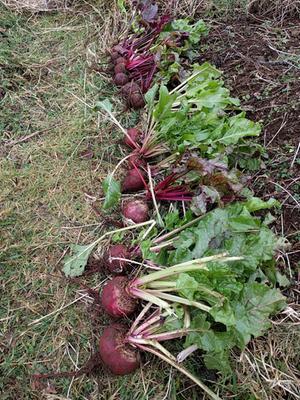
I'm also starting a new kitchen garden this year - I'm not expecting much this first year as I haven't even started preparing the site - I need a low fence to keep the dogs out, but it's already in a deer fenced area so that will help. Some currant and perennial kale cuttings will help provide a windbreak in future years. My beetroot and chard did so well that I'm going to grow more of those and more green, fresh young vegetables (peas and carrots...) for picking "now for dinner". I'm also going to grow salad potatoes, True Potato Seed and grow out some eyes to try and reduce the virus load on my maincrop potatoes (I don't know how much it will help, but worth a try).
an unexpected success!
My new polytunnel should be up and running too - so I'm hoping for tomatoes, courgettes, salad leaves which are so expensive to buy here, due to our location and they never taste so good as home grown. I'll fill in any spaces outside with grains, beans and potatoes, and plan for next year....
Catie George wrote: I saw someone online prefreeze portioned veggies for soup, which seems clever.
I think I might try more drying vegetables - now I've got my tunnel I can do more drying in there. Then some food storage is less dependent on electricity too.
that's super interesting! I recently read about using fig leaves to make a syrup to replace vanilla, which seems like a good local solution.
you might find this article about the various uses of fig leaves interesting....
Thank you Tereza!
This site is full of helpful information on the subject. If you search for "edible tree leaves", you will find multiple topics. Of course it was permies.com that inspired me in the first place.
Catie George wrote:I will enjoy brussel sprouts or die trying!
You and me both, lady. I went through my seed stash and found several packs of brussels sprout seeds i have bought with great hopes, only to be disappointed with a warm winter. This might be the year though, so I put in some seeds and here's hoping. My daughter and I can put away sprouts like no tomorrow, our first year here (20 years ago!) we grew them successfully so I know it's possible.....
I also have three fruit trees that have been warned but still are producing nothing. Considering how well the citrus is doing, I wonder if it's not time to get these trees outta here and replace them with something that will actually give me some fruit.
I also have a moringa, which I thought would be so amazing to have, but in fact I dry the leaves and make tea and it lasts all year and then the rest of the time the tree just puts out flowers (no drumsticks, alas) and takes up space. I think this winter I'll prune it way down low, the way I do my fig, and see if we can get it to bush out, then I can actually use the greens in cooking.
Are you planting anything specifically in response to current events?
I suppose this is part of the reason we are doing what we are doing no matter the political environment. War, inflation, energy costs driving up the cost of everything else and this does seem to be ongoing no matter who is in what office. The direction I planned to take things in spring was developed over winter but the current events are confirming that it is a good direction.
Currently, raising chickens, quail and meat rabbits and hunting deer provides 70%+ of our meat and 100% of our eggs. However, besides the deer, feed comes into the equation. I have been foraging almost daily for the meat rabbits. Berry canes, pine cones, grasses, clover and "weeds". I can see a path to providing everything they need from foraging and growing. I divided a good portion of my bocking 14 comfrey and have around 100 plants currently. I am really focusing on dividing more in the coming month. The regular comfrey just does it's thing and over a couple of years is turning into some nice patches. The bamboo is also picking up speed and that helps for the occasional chew treat for them and I use as much as I can get for stakes, etc.
The chickens and quail are more of a challenge. I do not free range for a few reasons. I do tractor the broilers. The main reason is that the deep bedding is my #1 material for amending and mixing into new raised beds along with aging the bedding and mixing potting soil for starts. I bag grass clippings and put the entirety in with the chickens. Part of the comfrey is going to them as well. I think the vitamin A is why I am seeing some beautiful yolks now. Nice before but really outstanding now. I have been considering tractoring some hens after the broilers are out of the tractors and see how that impacts the feed amount. I am hesitant because I am using 100% of the deep bedding for gardening.
Have you made any changes in what you usually grow
We have our annual vegetables narrowed down to what grows well here and what our family likes. We tried a bunch of different things initially, including different varieties.
Are you new to gardening and have questions about what you're doing?
I have about 3 acres of cleared land. I mow and bag some to go to the chickens. I seed clover in the areas that I tractor the broilers. Once the grass starts growing, it overtakes the clover. I am experimenting to find something that'll grow faster than the grass that I can cut and feed to the rabbits and chickens, along with the grass or instead of. This is done by hand everyday. I am experimenting with sunchokes. I think I can only cut them down 1x a year though. Comfrey is ongoing and if I leave some of the plant, the leaves smother the grass after a year of letting the leaves fall where they are. Any other ideas to try?
We've had similar conversations here about sunchokes and whether they're worth it or not. So far, we think not and that they'll take over the small space I have available-- too risky. My bunnies also really like bamboo leaves, I didn't quite expect that!
As for comfrey, I grow it just for fertilizer, and need to keep up on pulling it/cutting it or, like you said, it smothers itself (or maybe needs dividing? i am the angel of death for dividing plants, everything i divide dies, so i haven't tried). I pull the biggest leaves off my comfrey to use for either smothering weeds or for making comfrey tea. the rabbits aren't thrilled with it, even wilted a day or two, so I don't feed it.
Thanks for sharing your info about the chickens. I would really like to have them but a detailed post like this makes it clear I don't have the space, and also it entails a significant amount of work, much more than a few rabbits.
edited to add-- i see you're in zone 8a. something that grows faster than the grass seems tricky, but i wonder if you might like to try sorgum. i don't think i've heard of an animal that doesn't like it, it is generally pretty hardy and drought tolerant, and if i'm feeding it for leaves, i can cut-and-come-again to get a second round out of it. you could conceivably cut part and leave part for grains for your animals.
Tereza Okava wrote: the rabbits aren't thrilled with it, even wilted a day or two, so I don't feed it.
Thanks for sharing your info about the chickens. I would really like to have them but a detailed post like this makes it clear I don't have the space, and also it entails a significant amount of work, much more than a few rabbits.
edited to add-- i see you're in zone 8a. something that grows faster than the grass seems tricky, but i wonder if you might like to try sorgum. i don't think i've heard of an animal that doesn't like it, it is generally pretty hardy and drought tolerant, and if i'm feeding it for leaves, i can cut-and-come-again to get a second round out of it. you could conceivably cut part and leave part for grains for your animals.
I have the regular and bocking 14 and there is a preference for the 14. It also makes larger leaves than the regular. All around wonderful plant. I have been selecting breeders part on size and part on them going for the things we have around here to feed them! I am sort of surprised that it varies from one to the other somewhat.
I do grow some sunflowers but they get absolutely covered with leaf footed stink bugs. To the point where you can hardly see the plant sometimes.
I will look into the sorgum, thank you.
Have you ever considered quail? I really like them. They don't take up much space, easy to care for and I prefer the eggs over chicken eggs.
ah yes the stink bugs, i hear you. the good thing about sorgum is that at least in my corner of the woods, no bugs love it. sunflowers seem to be everyone's favorite....
I may consider quail, we've had a member here who had them on her balcony in an urban setting (in Spain, maybe?), they seem to take up next to no space and not need too much. We go through a lot of eggs so we might need approximately a hundred to keep up with our needs, but maybe I'm putting the cart before the horse.... I do understand they're tasty and really easy to process.
Burra Maluca wrote:And also establishing things like a chive bed, which will give me green onions to use for many years to come with no extra effort.
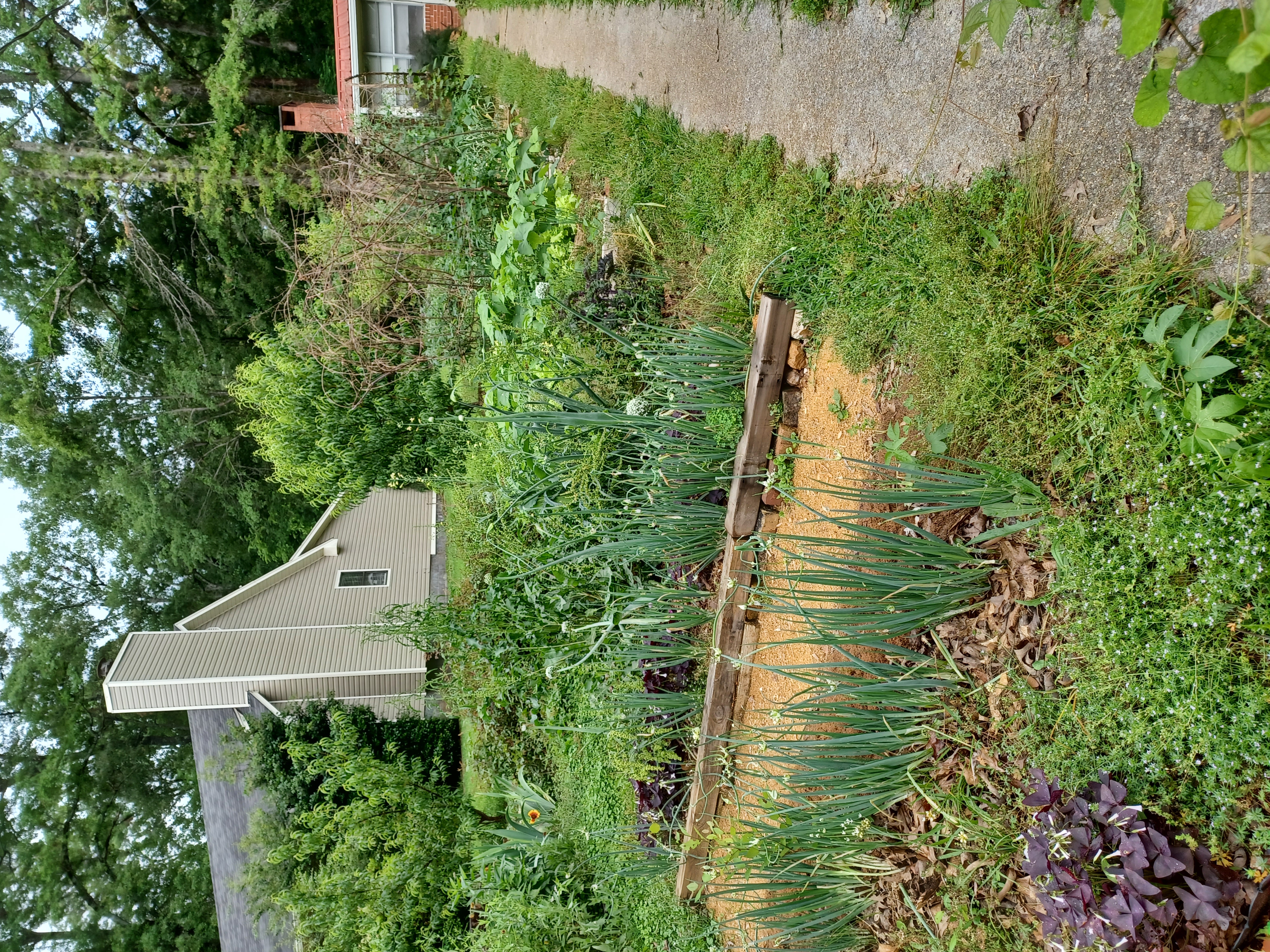
I want to give a call out for perennial scallions, sometimes called "welsh onions" or Japanese negi. They are perennial, and in my experience high producing, and they're much more like green onions than chives are. I mean, I grow and use both.
Rebecca Norman wrote:perennial scallions, sometimes called "welsh onions" or Japanese negi. They are perennial, and in my experience high producing, and they're much more like green onions than chives are. I mean, I grow and use both.
And nira (garlic chives, maybe?)! All are great cut-and-come again plants, I set up a few beds around the garden and cut them til they start looking a bit ratty (in 9b, it takes usually 2 years or so). And every quarter I start new ones from seed, because a drought will bring the black aphids in and they do a number. But I can't tell you how often the scallion bed has gotten me through times when onions are really expensive. Growing onions takes me something like 9 months, and they don't love my soil, so that doesn't work well, but sometimes you just need An Allium of some type and the scallions are great for this.
Rebecca Norman wrote:I want to give a call out for perennial scallions, sometimes called "welsh onions" or Japanese negi. They are perennial, and in my experience high producing, and they're much more like green onions than chives are. I mean, I grow and use both.
I've been trying for years to grow Welsh onions here - I currently have about five individual plants in a pot, the only survivors from hundreds of seedlings as most of them don't tolerate the heat here. I'm very, very hopeful that the teeny handful I have will produce seed for me this year and I can start growing a more heat-tolerant strain of them. It's quite a long-term project though and I can pick up pots of growing chives at any supermarket, split them into a dozen or so plugs and they grow on beautifully.~
I also want to experiment crossing welsh onion with leek to see if I can create my own version of walking onions, but again that's a long-term experimental project. In the meantime a chive bed would be a very useful addition and I planted out two dozen plugs last week in the hope that they establish nicely.
Burra Maluca wrote:My plans mostly involve taking a deep breath and concentrating my energies on tried-and-true food plants rather than on experimental ones.
Me too, more of less is my rule from now on. More of the things I know will produce and less of the finicky and experimental things.
Are you planting anything specifically in response to current events? Focusing in on more storage crops and improving my preservation techniques. Prices of food are already going up and even if the various political problems get sorted out soon, I've yet to see a time when prices go back down in response. My "I've got a dream" is to turn a corner of our basement into a proper root cellar that's walled off from the rest, insulated and ventilated.
Have you made any changes in what you usually grow (this summer, which was indeed extra rainy as forecasted, I didn't even try growing things that are affected by mildew, for example)? We have a small chest freezer and might want to try growing things like broccoli and cauliflower that can be blanched and frozen. These are the kind of fresh veggies I'd buy in winter for variety that would be shipped from warmer climes. Love me some winter squash, cabbage of all kinds, and storage roots, so will continue to have those. But will try expanding for changing up the daily meals.
Are you new to gardening and have questions about what you're doing? (it just so happens, if you're new to Permies, we have a bunch of good folks who are generous with what they know and ready to help you build a better world in your own backyard). Haven't gone beyond the basics with winter harvesting. Even though we're much milder that Elliot Coleman's Maine garden, I've always been intrigued by his methods but never followed through with the planning. This might be a good year to give it a go. Anyone proficient at that who has advice?
The perennial scallion suggestion is a good one, those things basically look after themselves once they get going. Garlic chives too, completely indestructible in my experience and you can cut them back over and over.
Post by:autobot
I child proofed my house but they still get in. Distract them with this tiny ad:
Your suggestions have been mashed into the PIE page - wuddyathink?