
• Post Reply Bookmark Topic Watch Topic
  • New Topic
permaculture forums growies critters building homesteading energy monies kitchen purity ungarbage community wilderness fiber arts art permaculture artisans regional education skip experiences global resources cider press projects digital market permies.com pie forums private forums all forums
this forum made possible by our volunteer staff, including ...
master stewards:
  • Carla Burke
  • Nancy Reading
  • John F Dean
  • r ransom
  • Jay Angler
  • Timothy Norton
stewards:
  • paul wheaton
  • Pearl Sutton
  • Tereza Okava
master gardeners:
  • Christopher Weeks
  • M Ljin
gardeners:
  • thomas rubino
  • Jeremy VanGelder
  • Megan Palmer

How to save fuel when driving?

 
steward & author
Posts: 45685
Location: Left Coast Canada
18237
10
art trees books chicken cooking fiber arts
  • Likes 17
  • Mark post as helpful
  • send pies
    Number of slices to send:
    Optional 'thank-you' note:
  • Quote
  • Report post to moderator
Some tricks I use to save money and improve fuel efficiency while driving.

Not everything will work for everyone, so the first tip is learn how to calculate fuel efficiency.   Some cars will tell you with each trip, so put that screen on.  For older vehicles, each time we fill up with fuel, reset the trip counter thingy. Keep the recipe, and do the mileage math (or kilometer-age math).  It doesn't matter which math, just keep it consistent and useit to evaluate how changes in driving style influence fuel efficiency.

If you live somewhere flat and are going a long distance, try cruise control.

If the trip is in town, or hilly, avoid cruise control.  I find it especially useful to use the hills to slow and speed up, and with practice, can keep the speed within 5km range without touching the breaks and hardly touching the accelerator.

Avoid fast acceleration and breaking.   Try to drive several cars ahead, so they say.  And with this comes the avoiding distractions so to increase reaction time and decrease fuel needs.

Unless conditions or law requires it, avoid coming to a full stop.  For example, crawling traffic - instead of speed up and stop, try going slower and creeping along.  Starting from a full stop costs a lot more fuel than starting from slow.

Right turns are your friend.  (Or left if you live where they drive on the left side).  I've seen lots of studies where they show planing a path with as few left turns as possible can save 20% or more fuel over the same path with left turns as idling while waiting for a gap, then accelerating quickly to do the turn uses a lot of fuel.

Planing multiple stops per outing.

Working from home isn't always possible, but nice.  Instead, see if you can avoid rush hour.  Either by changing work hours, or maybe driving into town an hour early and spend time doing something enjoyable like people watching or a packec breakfast.

Carpooling of course

And bikes!


What are your gas saving tips?
 
gardener
Posts: 576
Location: Southern Manitoba...bald(ish) prairie, zone 3ish
296
3
transportation hugelkultur monies forest garden urban books food preservation cooking writing woodworking
  • Likes 13
  • Mark post as helpful
  • send pies
    Number of slices to send:
    Optional 'thank-you' note:
  • Quote
  • Report post to moderator
Awesome stuff.  It's nice to see some thoughts that are rarely noted.

First, on fuel economy - it's also a level of preventive maintenance / early warnings.  If a tank shows a significant change (assuming similar driving conditions), it may be indicative of something like a bearing starting to go and increasing friction or a dragging brake pad.

Three rights make a left.  If you don't understand, draw it out.

Keep in mind on newer vehicles (in North America at least) that using Imperial units will use the smaller US gallons.  If you want to use Imperial gallons (4.54609 litres), you'll need to change the math.  Online Conversion fuel economy is useful.

I'm old enough to have started Canadian life in miles and gallons.  The measure of miles per gallon is relatively intuitive to me - if I put X amount of fuel in the tank, it's an easy multiplication to estimate how far that takes me.  The metric version of litres per 100 km makes me think a lot harder.  Harder thinking takes more brain energy and time.  Of course, for others who are younger or may have only ever used that measure, it may be more intuitive.

Your mileage may vary.  
 
r ransom
steward & author
Posts: 45685
Location: Left Coast Canada
18237
10
art trees books chicken cooking fiber arts
  • Likes 9
  • Mark post as helpful
  • send pies
    Number of slices to send:
    Optional 'thank-you' note:
  • Quote
  • Report post to moderator
Tires/tyres have something to do with it, but I never really understood the details.  I know it is a big amount like 10% fuel efficiency overall.  

Pressure correct for the conditions or season.  Where i live, full pressure in the summer when the roads are dry.  During the rain and mud season, letting the tire pressure slack very slightly, improves traction so better breaking and acceleration, which makes better fuel efficiency.

But this seems to be a very local view.  There is probably some overall logic to tire pressure and seasons.


New vs old tires.  Tires correct for the conditions.

For complicated reasons beyond our control, we have all season plus snow tires right now.  These are massively less efficient for fuel consumption.   Our regular tires are all season rain, mud, and snow, and when we have these on the vehicle, uses significantly less fuel and have better stopping and starting power.

Part of this is we don't live somewhere where people change tiess during the year.  Part of it is the roads often have a lot of detritus as it's either stormy so stuff blows off the tree onto the road, or zero rain so stuff gathers on the roads and doesn't wash off.

My conclusion
A. Measure your personal fuel use and observe how things change
B. Right tires for conditions where you live.
 
Derek Thille
gardener
Posts: 576
Location: Southern Manitoba...bald(ish) prairie, zone 3ish
296
3
transportation hugelkultur monies forest garden urban books food preservation cooking writing woodworking
  • Likes 11
  • Mark post as helpful
  • send pies
    Number of slices to send:
    Optional 'thank-you' note:
  • Quote
  • Report post to moderator
Indeed.  In the range of $250/tire for my truck (last I bought some years back for a different truck), I stick with the OEM tires until they are ready for replacement and switch to snow-rated all season tires.  They may not be ideal for anything, but even with today's prices, $1000 CAD buys a fair bit of diesel fuel and I don't drive enough to justify the added costs of additional rims and tires and switching twice per year.

Sadly, I've lost some of my better habits from when the vehicles didn't have the fancy doo-dads like tire pressure monitoring systems, like checking more regularly.

There's also value in a walk-around the vehicle before departure simply to note if there's a tire that is obviously low...better to take the time and confirm than to ruin a tire and possibly rim by driving on it.
 
master steward
Posts: 15066
Location: Pacific Wet Coast
9404
duck books chicken cooking food preservation ungarbage
  • Likes 13
  • Mark post as helpful
  • send pies
    Number of slices to send:
    Optional 'thank-you' note:
  • Quote
  • Report post to moderator
Not just tires! (but if you're checking yours, don't forget the spare... if your car's old enough to have one)

Hubby believes that changing your oil on the best schedule for your car, helps the engine stay healthy, which helps the mileage not suffer with age.

This too takes some thinking and involves knowing something about the type of oil you use and whether you drive a lot, thus changing based on mileage may be best, or like me, only drive twice a week and usually not more than 30 km, so our oil "times out" before I would ever hit the "change after ~10,000 km". I drive so little, that the "every 6 months" option seems excessive to hubby, but he knows cars, and uses an oil in my car that can last more like 9 months.

As Derek suggested, keeping an eye and ear out for car trouble and dealing with it early can save a lot of gas.
Staff note :

There's a SkIP PEPBadge bit for vehicle maintenance:
https://permies.com/wiki/128083/BB-tool-service

 
steward
Posts: 18617
Location: USDA Zone 8a
4719
dog hunting food preservation cooking bee greening the desert
  • Likes 14
  • Mark post as helpful
  • send pies
    Number of slices to send:
    Optional 'thank-you' note:
  • Quote
  • Report post to moderator
My dad used to take his foot off the gas pedal when going down hills.  He said that was free power ... I don't know.
 
steward & manure connoisseur
Posts: 4989
Location: South of Capricorn
2965
dog rabbit urban cooking writing homestead ungarbage
  • Likes 16
  • Mark post as helpful
  • send pies
    Number of slices to send:
    Optional 'thank-you' note:
  • Quote
  • Report post to moderator
One thing  we hear in the mechanic shop every day is "my car is such a gas hog". Most of the time the person in question came screaming in and goes screaming out. Drive the limit- take it easy. If you're coming up on a stop sign or light there's no need to accelerate-- you have to stop soon anyway! I was super lucky to learn to drive on a tractor hauling heavy loads. Drive calm and you'll accelerate less and get better mileage.
 
gardener
Posts: 948
Location: Ontario - Zone 6a or 4b, depending on the day
655
dog foraging trees tiny house books bike bee
  • Likes 14
  • Mark post as helpful
  • send pies
    Number of slices to send:
    Optional 'thank-you' note:
  • Quote
  • Report post to moderator
Learning to anticipate lights while driving is one big way I save gas. In the city, most lights have a helpful count down timer for pedestrians, but you might also get used to the timings of your local lights. I try to judge from at least 500m away if I am going to 'make it' and let my foot off the gas long before the light changes to yellow. Accelerating or maintainjng speed to a red light is a waste of gas that gets you home 0% faster. If I time it right, I never have to come to a complete stop at all, and sometimes don't even need to brake. I'm still rolling when the light turns green.

I also play that game when in heavy traffic on a freeway like Ontario's 401 - I try to average our the car in front of me's stop/go into a slow crawl by leaving some space and preventing a lot of gas use. Any time you come to a complete stop, you need to overcome static friction to restart, using more gas.

(Bonus! My brakes (and on this vehicle, clutch) last significantly longer than average!)

On big hills, I allow some variance of speed, especially if there is no one behind me. I let my speed drop up the hill, and don't brake going down. I'll also take my foot off the gas long before a sharp bend in the highway, rather than braking like I see lots of people do.

If I'm turning off a rural highway, I'll start signalling and take my foot off the gas long before my actual turn.

I used to share a truck with a work colleague. He'd keep it for 2 weeks, I'd keep it for 2 weeks...  It averaged fuel efficiency over the last 100 km, and 1000 km.  I made a game out of seeing how much lower I could get it than he left It (he liked to idle, so I could usually cut the L/100km in half, in the winter, I got it down to about 1/3!).  I definitely have the most success with lowering gas consumption when I treat it like a game, and regret my current car doesn't have the fuel efficiency calculator built in!
 
master pollinator
Posts: 2108
Location: Ashhurst New Zealand (Cfb - oceanic temperate)
711
duck forest garden fungi trees chicken cooking solar sheep wood heat woodworking rocket stoves
  • Likes 13
  • Mark post as helpful
  • send pies
    Number of slices to send:
    Optional 'thank-you' note:
  • Quote
  • Report post to moderator
Reducing speed is a big factor. Once you get above 80 km/hr (50 mph) the penalty imposed by wind resistance really kicks in, and it goes up exponentially. So going turtle mode will beat the bunny every time when it comes to getting the most out of what's in the tank...or battery, as anyone who has driven an older EV with a limited range can attest.

Of course, keeping tyres inflated and bearings greased is important as well, and so is avoiding rambunctious acceleration. Anticipating stops and coasting whenever possible helps a lot, because turning your forward motion into heat by braking is a net loss of useful energy.

 
master steward
Posts: 8409
Location: southern Illinois, USA
3322
goat cat dog chicken composting toilet food preservation pig solar wood heat homestead composting
  • Likes 11
  • Mark post as helpful
  • send pies
    Number of slices to send:
    Optional 'thank-you' note:
  • Quote
  • Report post to moderator
I used to squeeze over 40 mpg out if my 3Series BMW and manage to get 30+ mpg out of my truck.  I pretty much stick with much of what has been mentioned here.

I try to think ahead in planning what route I will take. I look for minimum traffic, stops, and distance.

I do not exceed the speed limit and try to stay 5 mph under it.

I slow down in advance of a stop sign.

I keep tires inflated.

I try not to haul around extra weight in my vehicles.  A filled tool box, filled gas tank, and an extra tire or feed bag can cost several mpg.

I plan trips so that multiple tasks can be handled … with a minimum of city driving.
 
master gardener
Posts: 2098
Location: Zone 5
1135
ancestral skills forest garden foraging composting toilet fiber arts bike medical herbs seed writing ungarbage
  • Likes 16
  • Mark post as helpful
  • send pies
    Number of slices to send:
    Optional 'thank-you' note:
  • Quote
  • Report post to moderator
I mostly bike, but much of the above is applicable for biking as well.

Something I have learned from this is that I can get by fine going out much less than is usual, by making the best use of foods that I can store or harvest from the immediate surroundings, and being gentle on myself emotionally so that I feel less need for stimulation or movement—which a lot of the time people aren’t and end up feeling worn out and stressed and need to let it out somehow by, say, driving around, getting out, etc. Many of these things people think they need, like moving quickly and going places a lot, not to mention all the toys and gadgets and thingamabobs that people crave so, are to balance out the fact that we have forgotten how to be gentle to ourselves and engage in nourishing activities.
 
steward
Posts: 22480
Location: Pacific Northwest
13169
13
homeschooling hugelkultur kids art duck forest garden foraging fiber arts sheep wood heat homestead
  • Likes 16
  • Mark post as helpful
  • send pies
    Number of slices to send:
    Optional 'thank-you' note:
  • Quote
  • Report post to moderator

Anne Miller wrote:My dad used to take his foot off the gas pedal when going down hills.  He said that was free power ... I don't know.


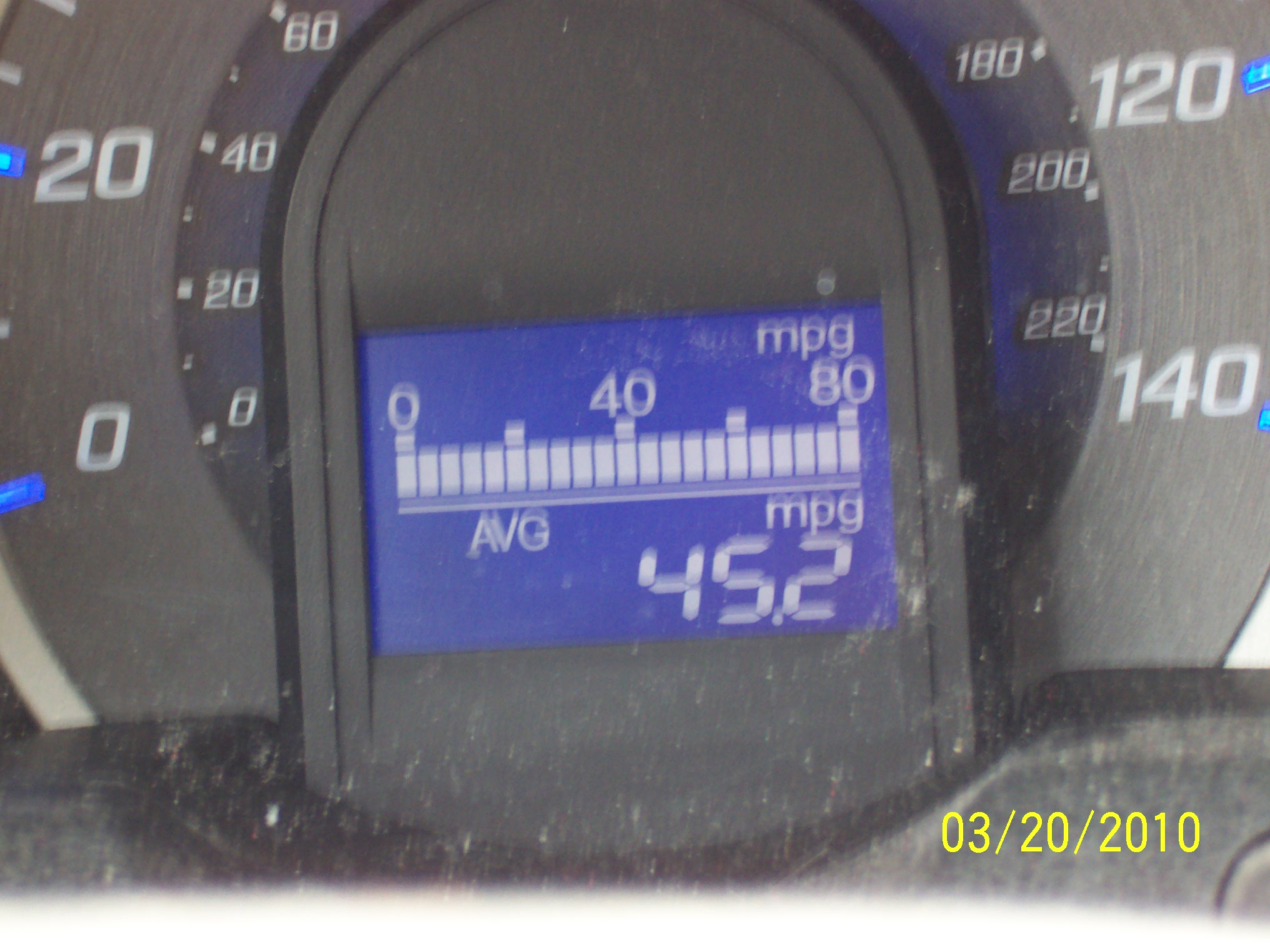
I drive a stick shift that shows me what my current miles per gallon is at that given moment. When don't use gas, my MPG (miles per gallon) goes WAY up. On steep enough hills, I don't need to use any gas and I'll roll down via the power of gravity.

On shallower hills, though, the resistance from the gears is enough to slow my car down. But, if I push in my clutch (or put my car in neutral), I can roll down those shallower hills without any gas.

I live in a hilly area, so I try to use the hills to my advantage. Kind of like a rollercoaster, I'll let gravity speed my car up and I'll let that momentum carry me up the next small hill (I keep my clutch pushed in while I go up the hill, so as to glide up the hill a little easier). Depending on the hills, sometimes this roller coaster action will carry me all the way up the next hill. Other times, I have to use enough gas to keep myself at the speed limit.

If I'm coming up to a corner (I live on a curvy road), I let off on the gas to let my car slow down naturally. This helps save on wear and tear on the breaks, too!

Below is a really old picture of our speedometer. We were driving down from the mountains. The big number shows the average MPG for that trip, and the graph above it shows the current MPG without using any gas. At this moment, it's getting more than 80MPG! (We usually average around 38 MPG in our little Honda Fit. It was super high during that trip because my husband reset the trip before we headed down the mountain, hahaha!)
100_3795.JPG
We took this picture when we were driving down from the mountains. No gas needed. Really high mileage!
 
Phil Stevens
master pollinator
Posts: 2108
Location: Ashhurst New Zealand (Cfb - oceanic temperate)
711
duck forest garden fungi trees chicken cooking solar sheep wood heat woodworking rocket stoves
  • Likes 11
  • Mark post as helpful
  • send pies
    Number of slices to send:
    Optional 'thank-you' note:
  • Quote
  • Report post to moderator
Pro tip for people with manual gearboxes: When you're coasting, it's better to put it in neutral than to ride the clutch. This saves wear and tear on the throwout bearing.
 
Nicole Alderman
steward
Posts: 22480
Location: Pacific Northwest
13169
13
homeschooling hugelkultur kids art duck forest garden foraging fiber arts sheep wood heat homestead
  • Likes 13
  • Mark post as helpful
  • send pies
    Number of slices to send:
    Optional 'thank-you' note:
  • Quote
  • Report post to moderator
That's good to know! I always wondered if it was bad to just use the clutch. My husband usually puts it in neutral, but I always worry about not being in a gear if something comes up and I need to suddenly use the gas or have more traction.
 
pollinator
Posts: 1619
Location: NW California, 1500-1800ft,
509
2
hugelkultur dog forest garden solar wood heat homestead
  • Likes 12
  • Mark post as helpful
  • send pies
    Number of slices to send:
    Optional 'thank-you' note:
  • Quote
  • Report post to moderator

Jay Angler wrote:Not just tires! (but if you're checking yours, don't forget the spare... if your car's old enough to have one)

Hubby believes that changing your oil on the best schedule for your car, helps the engine stay healthy, which helps the mileage not suffer with age.

This too takes some thinking and involves knowing something about the type of oil you use and whether you drive a lot, thus changing based on mileage may be best, or like me, only drive twice a week and usually not more than 30 km, so our oil "times out" before I would ever hit the "change after ~10,000 km". I drive so little, that the "every 6 months" option seems excessive to hubby, but he knows cars, and uses an oil in my car that can last more like 9 months.

As Derek suggested, keeping an eye and ear out for car trouble and dealing with it early can save a lot of gas.


Thanks for the useful post! I drive 4000-6000mi (6-9km) per year with my truck. They are generally hard miles in the mountains moving heavy stuff, but I have always wondered how to balance this for maintenance. Obviously, erring towards caution and longevity seems wise. Any further insifhts would be welcome.
 
steward and tree herder
Posts: 12856
Location: Isle of Skye, Scotland. Nearly 70 inches rain a year
6726
6
transportation dog forest garden foraging trees books food preservation woodworking wood heat rocket stoves ungarbage
  • Likes 16
  • Mark post as helpful
  • send pies
    Number of slices to send:
    Optional 'thank-you' note:
  • Quote
  • Report post to moderator
On a related note, lift sharing is a great way to save fuel - it can more than halve your fuel consumption! When I worked at Jaguar in Coventry I used to lift share with three colleagues who also commuted from the Birmingham connurbation (about 30 miles). By taking it in turns, there was no exchange of money but we all saved the stress of driving, wear and tear on the vehicles and the cost of fuel. Everyone else benefitted too by having fewer vehicles making the commute...so reducing traffic on the road.
 
pollinator
Posts: 1792
Location: Victoria BC
324
  • Likes 14
  • Mark post as helpful
  • send pies
    Number of slices to send:
    Optional 'thank-you' note:
  • Quote
  • Report post to moderator

Tereza Okava wrote:One thing  we hear in the mechanic shop every day is "my car is such a gas hog". Most of the time the person in question came screaming in and goes screaming out. Drive the limit- take it easy. If you're coming up on a stop sign or light there's no need to accelerate-- you have to stop soon anyway! I was super lucky to learn to drive on a tractor hauling heavy loads. Drive calm and you'll accelerate less and get better mileage.


Exactly. I drive the limitish on smaller/slower roads, and around 90-95k on the big highway with 110k limit. It's 2 lanes with minimal traffic, lots of room for everyone else to zip past at around 120.. the difference in fuel consumption in my big boxy truck is noticeable on thoese rare occasions that I am hurried enough to break this rule..
 
pollinator
Posts: 953
Location: 10 miles NW of Helena Montana
552
hugelkultur chicken seed homestead
  • Likes 8
  • Mark post as helpful
  • send pies
    Number of slices to send:
    Optional 'thank-you' note:
  • Quote
  • Report post to moderator
Many years ago I had a Ford F150 two wheel drive pickup.  I traveled 30K a year, or more, for work.
I saw an advertisement for magnets you put on the fuel line, coolant line and air intake.   $100, so I tried it.  Did as said, oil change, coolant flush and new air filter.
Went from 18 mpg to 29 mpg.
Saw a show, Myth Busters, they said it was hogwash.  lol
I got in touch with the company and asked about magnets for motorcycles.  They sent me one to try if I kept records for them.  I have a large touring bike and my mileage went up about 8 mpg.   That is helpful, but I found it ran so much better I rode faster so mileage was about the same as before.
 
Derek Thille
gardener
Posts: 576
Location: Southern Manitoba...bald(ish) prairie, zone 3ish
296
3
transportation hugelkultur monies forest garden urban books food preservation cooking writing woodworking
  • Likes 16
  • Mark post as helpful
  • send pies
    Number of slices to send:
    Optional 'thank-you' note:
  • Quote
  • Report post to moderator

Phil Stevens wrote:Reducing speed is a big factor. Once you get above 80 km/hr (50 mph) the penalty imposed by wind resistance really kicks in, and it goes up exponentially. So going turtle mode will beat the bunny every time when it comes to getting the most out of what's in the tank...or battery, as anyone who has driven an older EV with a limited range can attest.

Of course, keeping tyres inflated and bearings greased is important as well, and so is avoiding rambunctious acceleration. Anticipating stops and coasting whenever possible helps a lot, because turning your forward motion into heat by braking is a net loss of useful energy.


The coefficient of drag (which is a factor in fuel economy related to wind resistance) increases with the cube of velocity.  So driving at 100 km/hr increases the Cd by a bit more than 1.37 compared to 90 km/hr (100*100*100/(90*90*90)).

With the computer calculations on my pickup truck, I can see a dramatic difference some days driving to the acreage compared with driving back when one direction is approximately with the wind and the other against.
 
John F Dean
master steward
Posts: 8409
Location: southern Illinois, USA
3322
goat cat dog chicken composting toilet food preservation pig solar wood heat homestead composting
  • Likes 9
  • Mark post as helpful
  • send pies
    Number of slices to send:
    Optional 'thank-you' note:
  • Quote
  • Report post to moderator
Hi Derek,

Speaking of drag in a truck, keeping the tailgate down/ removed helps me as well.
 
Derek Thille
gardener
Posts: 576
Location: Southern Manitoba...bald(ish) prairie, zone 3ish
296
3
transportation hugelkultur monies forest garden urban books food preservation cooking writing woodworking
  • Likes 12
  • Mark post as helpful
  • send pies
    Number of slices to send:
    Optional 'thank-you' note:
  • Quote
  • Report post to moderator

John F Dean wrote:Hi Derek,

Speaking of drag in a truck, keeping the tailgate down/ removed helps me as well.


In a first year engineering drafting course, we worked on options regarding tailgates.  My group spent some time discussing it with a technician in the mechanical engineering department.  He cautioned that some of the options (such as a mesh tailgate) may not have an impact - the flow around the metal may interfere with each other effectively making it like a solid tailgate at speed.  That project is where I learned about the coefficient of drag.  The caution is that these things are designed with various factors in mind.

Our group designed sort of an inner tailgate that could be latched to make a solid tailgate or folded down forward so that it was always available as needed, but if there was no load in the bed it wouldn't provide the air resistance.

Somewhere along the way I also learned a bit about air turbulence behind a vehicle being a significant factor.  That is why you see some of the tractor trailer units with fold-out attachments that will make the back of the trailer a bit more of a boattail than a squared-off box.  Fuel economy is also the reason you see some of them with skirts.
 
Nancy Reading
steward and tree herder
Posts: 12856
Location: Isle of Skye, Scotland. Nearly 70 inches rain a year
6726
6
transportation dog forest garden foraging trees books food preservation woodworking wood heat rocket stoves ungarbage
  • Likes 11
  • Mark post as helpful
  • send pies
    Number of slices to send:
    Optional 'thank-you' note:
  • Quote
  • Report post to moderator

Derek Thille wrote:Somewhere along the way I also learned a bit about air turbulence behind a vehicle being a significant factor.  That is why you see some of the tractor trailer units with fold-out attachments that will make the back of the trailer a bit more of a boattail than a squared-off box.  Fuel economy is also the reason you see some of them with skirts.


Funny story, the best fuel economy I had on my (classsic) Range Rover was whilst towing a LWB Land Rover on a trailer. I suspect that the more gentle acceleration and braking had something to do with it, but also the trailer possibly improved the drag of the boxy Range Rover. 'Your mileage may vary'; I don't recommend towing a LR as a way to improve fuel economy!!
 
Jay Angler
master steward
Posts: 15066
Location: Pacific Wet Coast
9404
duck books chicken cooking food preservation ungarbage
  • Likes 10
  • Mark post as helpful
  • send pies
    Number of slices to send:
    Optional 'thank-you' note:
  • Quote
  • Report post to moderator
Derek Thille wrote:

That is why you see some of the tractor trailer units with fold-out attachments that will make the back of the trailer a bit more of a boattail than a squared-off box.


I haven't seen those, but I also don't do much highway driving.

However, when I was younger, I was pretty amazed at how quickly the "over the cab" deflectors gained popularity after being introduced. Simple tech that made enough of a difference that many truckers got on board within a few years.
 
pollinator
Posts: 1191
329
5
tiny house food preservation cooking rocket stoves homestead
  • Likes 20
  • Mark post as helpful
  • send pies
    Number of slices to send:
    Optional 'thank-you' note:
  • Quote
  • Report post to moderator
The best fuel economy is no driving at all...

I have stopped many trips to the store by buying food in bulk,  and learning how to store it long term.      

I have learned how to goto the grocery store every 2 weeks instead of twice a week, making a list on my fridge of the things  I need.

I still do trips but making my home the place where I eat in  instead of eating out,  really has saved me $, and gives me time back.
 
John F Dean
master steward
Posts: 8409
Location: southern Illinois, USA
3322
goat cat dog chicken composting toilet food preservation pig solar wood heat homestead composting
  • Likes 11
  • Mark post as helpful
  • send pies
    Number of slices to send:
    Optional 'thank-you' note:
  • Quote
  • Report post to moderator
Back in the early 70s Fiat used to have something they called the Manx Rear Chop that was supposed to significantly reduce drag. The claimed mileage for these vehicles was 40+ mpg.  Of course, even if the mileage was accurate, I am sure the 850 cc  engines didn’t hurt.
 
Posts: 24
7
  • Likes 13
  • Mark post as helpful
  • send pies
    Number of slices to send:
    Optional 'thank-you' note:
  • Quote
  • Report post to moderator
Highly recommend buying an EV, and as small a one as you can get. (Car dealers love to upsize more than McDonald’s!) Bought my Chevy Bolt last year, have driven it long distances & through a Canadian winter. Different handling but boy am I glad to not be tied to the gas companies anymore. Sometimes I charge at home, where it’s free (I’m off grid); mostly in town. Eventually I’ll charge at home most of the year but I’ve got to get a few more panels first— I only have 3.
 
M Ljin
master gardener
Posts: 2098
Location: Zone 5
1135
ancestral skills forest garden foraging composting toilet fiber arts bike medical herbs seed writing ungarbage
  • Likes 14
  • Mark post as helpful
  • send pies
    Number of slices to send:
    Optional 'thank-you' note:
  • Quote
  • Report post to moderator
There is a very interesting blog that just got shared with me and I’ve been reading through it. It is by someone who recommends strongly that we need to slow down and he drives around by donkey cart and uses mostly hand tools—lots of inspiration there!!

Says donkeys are slow, but very friendly and very efficient with their food as compared with horses.

He also talks about how driving fast is incredibly inefficient, and how it used to be we could get all we needed within the village—nowadays things are set up to drain the life from these villages and make people consume more gas. Of course, we can turn this around ourselves…

https://mcfaddenj.substack.com/archive?sort=new
 
M Ljin
master gardener
Posts: 2098
Location: Zone 5
1135
ancestral skills forest garden foraging composting toilet fiber arts bike medical herbs seed writing ungarbage
  • Likes 10
  • Mark post as helpful
  • send pies
    Number of slices to send:
    Optional 'thank-you' note:
  • Quote
  • Report post to moderator
Another part of physics is the energy of acceleration and deceleration. Velocity is relative to other things and takes no energy in and of itself (unless friction is present), but acceleration inherently requires energy, and so does deceleration.
 
master pollinator
Posts: 5656
Location: Canadian Prairies - Zone 3b
1606
  • Likes 13
  • Mark post as helpful
  • send pies
    Number of slices to send:
    Optional 'thank-you' note:
  • Quote
  • Report post to moderator
Well mostly I do everything with my little 2.0L 5-speed manual transmission Kia Soul. It's a fine little workhorse, and workman's truck, with the back seats taken out.

I strongly agree with the practical measures above -- especially having a "trapline of errands" saved up when I venture off the yard and go into full combat with idiot city drivers.

With that in mind, the other factor is choosing your time of day, if you have the luxury. I can pop into a client's office mid-morning to mid-afternoon, at my pleasure (don't hate me!). Traffic is mild, I can set an easy pace, and I keep rolling through at 3 pm when I would be gridlocked at 4:30. Big fuel savings, and much less stress.

And on the subject of "picking your time of day" I have to mention that I have access to a giant honking truck, big 3/4 ton double cab Chev with a monster V8. At the right time, for the right job, it's the right tool. But if I need to haul a 1000 water tank from the local filling station, I can hop in at 7 am Sunday morning and tick along the secondary highway at 60 kph with a coffee in hand. Not a soul in sight. A tiny amount of gas is consumed, relatively.
 
r ransom
steward & author
Posts: 45685
Location: Left Coast Canada
18237
10
art trees books chicken cooking fiber arts
  • Likes 11
  • Mark post as helpful
  • send pies
    Number of slices to send:
    Optional 'thank-you' note:
  • Quote
  • Report post to moderator
Looks like saving fuel is getting more attention these days.

bbc article on ways to save fuel

my nearest local paper on how to deal with pain at the (gas) pumps

Working from home seems a popular possibility.  Most places have things set up for this post 2020.  Even if it's one day a week, it can save a lot.  

The bbc also goes into details of places where legislation has been introduced to promote fuel savings.

The IEA's other suggestions for governments, businesses and individuals include:

Promoting use of public transport
Giving private cars access to city centres on alternate days
Encouraging car sharing and efficient driving habits
...


The artical written in Calgary, shows the problem with blanket solutions.   For example, cruise control is probably awesome in those roads, but nasty on our hilly twisty roads in our city.


I didn't know the acceleration rate made such a difference.  

Kristine D'Arbelles, managing director for public affairs at the Canadian Automobile Association, says the way you drive can influence how quickly your vehicle guzzles up fuel.

"You're using most of your fuel when you're accelerating your vehicle," she says.

Slamming on the gas with a "jackrabbit start" will be less fuel efficient than speeding up more gradually. CAA recommends taking five seconds to accelerate up to 20 kilometres per hour from a stop. Ditto for braking; a light touch to coast through traffic will burn less fuel than hard stops and starts.

"The way that CAA tries to encourage folks to drive also happens to be a safer way to drive," says D'Arbelles.

 
r ransom
steward & author
Posts: 45685
Location: Left Coast Canada
18237
10
art trees books chicken cooking fiber arts
  • Likes 7
  • Mark post as helpful
  • send pies
    Number of slices to send:
    Optional 'thank-you' note:
  • Quote
  • Report post to moderator
I remember, the 1980s, every suburban town and satellite city to the metropolis had massive parking lots in the middle of nowhere.  We are talking a thosand or more, cars worth of free parking on discarded or old industrial land.  Absolutely middle of nowhere land.  Some of them were even paved.  

These were called Park and Ride.  And given the commute to Vancouver was over an hour each way on a good day, and most days over 2 hours each way, these park and ride lots were packed full of cars every week day.

You park there for free and carpool.  If four or more adults are in the car, you could use special lanes...ones with massively high fines for people with too few adults ingthe car.  In a place that thinks $2,000 for littering is an acceptable fine.  These would cut the trip down to less than 45min on a good day.

Anyway, I haven't seen one of those for ages.  But carpooling did a lot of good for fuel conservation back in the day.
 
r ransom
steward & author
Posts: 45685
Location: Left Coast Canada
18237
10
art trees books chicken cooking fiber arts
  • Likes 5
  • Mark post as helpful
  • send pies
    Number of slices to send:
    Optional 'thank-you' note:
  • Quote
  • Report post to moderator
An interesting article on gas rationing in canada

Rationing throughout history is very interesting to me. Cand places that manage to avoid rationing like canada using the carrot approach of easy carpooling, increasing public transport, etc, to reduce fuel use.

Although the news article focuses on the problem, and ignores the fuel sales rationing in British Columbia, Canada in 2021...anyway, what the artical fails fo point out is that the actions of individuals, especially ones that like saving money by saving fuel, can impact how much rationing, if any, is needed during tough times.  

 
Derek Thille
gardener
Posts: 576
Location: Southern Manitoba...bald(ish) prairie, zone 3ish
296
3
transportation hugelkultur monies forest garden urban books food preservation cooking writing woodworking
  • Likes 6
  • Mark post as helpful
  • send pies
    Number of slices to send:
    Optional 'thank-you' note:
  • Quote
  • Report post to moderator
I regularly see HOV (High Occupancy Vehicle...I think) lanes in large cities in my travels.  The challenge is always to strike a reasonable balance between encouraging behaviour with the stick of negative experience for those who won't or can't comply.
 
pollinator
Posts: 837
Location: Clemson, SC ("new" Zone 8a)
198
11
  • Likes 7
  • Mark post as helpful
  • send pies
    Number of slices to send:
    Optional 'thank-you' note:
  • Quote
  • Report post to moderator

r ransom wrote:I remember, the 1980s, every suburban town and satellite city to the metropolis had massive parking lots in the middle of nowhere.  We are talking a thosand or more, cars worth of free parking on discarded or old industrial land.  Absolutely middle of nowhere land.  Some of them were even paved.  

These were called Park and Ride.  And given the commute to Vancouver was over an hour each way on a good day, and most days over 2 hours each way, these park and ride lots were packed full of cars every week day.

You park there for free and carpool.  If four or more adults are in the car, you could use special lanes...ones with massively high fines for people with too few adults ingthe car.  In a place that thinks $2,000 for littering is an acceptable fine.  These would cut the trip down to less than 45min on a good day.

Anyway, I haven't seen one of those for ages.  But carpooling did a lot of good for fuel conservation back in the day.


Yes!  When I was a child about that same period I recall that my father used a carpool out of just such a park-and-ride lot.  I had forgotten, it has been so long.  By the time he retired after the millenium - actually, by the time I was in high school in the 90s - he no longer did so.  And from what I can tell, far fewer people did so in general.

I wonder why those went out of style?  Obviously it is something that must be coordinated, so it's a little bit of work and commitment.  But it seems such a self-evidently good idea: put four or five people into a van or large car and you 1) save gas; 2) reduce traffic volumes, so less highway slow-down, so everyone gets into the city faster; and 3) all but one of the passengers can relax and think/talk/work on other things than driving, so less stress.

And from city government's point of view, it is a win-win.  Paving a parking lot on some low-value land somewhere, setting up an HOV lane, providing some advertising to encourage the concept of carpooling - all of these measure cost pennies in comparison to operating a mass transit system with trains or even buses.

I would bet that today some Uber-style app exists to help people coordinate carpools.  Does anyone use such an app?  How does it work?
 
gardener & hugelmaster
Posts: 3891
Location: Texas
2196
cattle hugelkultur cat dog trees hunting chicken bee woodworking homestead ungarbage
  • Likes 7
  • Mark post as helpful
  • send pies
    Number of slices to send:
    Optional 'thank-you' note:
  • Quote
  • Report post to moderator
One thing not mentioned above is to buy fuel at the coolest time of day rather than the hottest. Since liquids contract a little as temps cool you get more for the same price.
 
Matthew Nistico
pollinator
Posts: 837
Location: Clemson, SC ("new" Zone 8a)
198
11
  • Likes 7
  • Mark post as helpful
  • send pies
    Number of slices to send:
    Optional 'thank-you' note:
  • Quote
  • Report post to moderator

Lawren Richards wrote:Highly recommend buying an EV, and as small a one as you can get. (Car dealers love to upsize more than McDonald’s!) Bought my Chevy Bolt last year, have driven it long distances & through a Canadian winter. Different handling but boy am I glad to not be tied to the gas companies anymore. Sometimes I charge at home, where it’s free (I’m off grid); mostly in town. Eventually I’ll charge at home most of the year but I’ve got to get a few more panels first— I only have 3.


Absolutely!  Five years ago, I bought a small EV - a used 2015 BMW i3 with a range extender - and it was the best decision I ever made.  Unlike Lawren, I never charge anywhere but home, and it has saved me so much money.  Buying someone else's electricity is expensive.  Home electrical rates are cheap, particularly where I live.  And since I installed photovoltaics three years ago - not completely off-grid yet, but that is coming - driving has become SUPER cheap.  I love riding around town thinking to myself "this is literally costing pennies."  Lawren, when you reach that same point, you will appreciate what a truly liberating experience it is!

As Lawren stated, buying an electric pickup truck or SUV makes little sense.  And don't even get me started on Cybertrucks (WTF?!)  Get as small an EV as you can.  With current technology, at least, that really is where the optimum balance between price and performance is located.

And if at all possible, get one with a range extender.  There aren't as many such models to choose from right now, but hopefully the market will offer more choices soon.  My old car's battery is tiny by modern standards, yet I have zero range anxiety, and all for the cost of only a small amount of gasoline purchased each year.  It really is true what the statistics tell us: the large majority of trips that most people make are within the range of even a smaller EV battery.  Without a range extender, your options are pretty much 1) maintain a second, internal combustion vehicle to use for longer trips; 2) pay $$$ for a modern EV with a 300+ mile battery; or 3) live with range anxiety.  None of these options are attractive to me, considering that when my car was originally manufactured the range extender was only a $4K upgrade.

So, yes, the best way to save on gasoline is not to burn gasoline in the first place.  But keep in mind that some of the good advice others have posted above, particularly about driving slower and accelerating slower, are rooted in basic physics and apply to any vehicle, regardless of its powertrain.  Remember: back in the 1970s when the USA implemented a national 55mph maximum speed limit, that wasn't a safety measure; it was meant to improve efficiency.
 
pollinator
Posts: 300
Location: Wichita, Kansas, United States
85
2
  • Likes 11
  • Mark post as helpful
  • send pies
    Number of slices to send:
    Optional 'thank-you' note:
  • Quote
  • Report post to moderator

Phil Stevens wrote:Reducing speed is a big factor. Once you get above 80 km/hr (50 mph) the penalty imposed by wind resistance really kicks in, and it goes up exponentially.              


Absolutely correct.  That exponent varies from vehicle to vehicle.  But, 10% faster results in more than a 10% increase in wind resistance.
Plus there's the safety factor.  The faster you drive, the less reaction time you have.  And kinetic energy is an exponential function.  In an accident that increased kinetic energy has to go somewhere, like you and your vehicle.  So if you are driving faster, you are more likely to get in an accident.  And, the accident is more likely to cause bodily harm.
 
pollinator
Posts: 249
53
  • Likes 12
  • Mark post as helpful
  • send pies
    Number of slices to send:
    Optional 'thank-you' note:
  • Quote
  • Report post to moderator
If your vehicle is equipped with a tachometer,"train" your accelerator foot to try to keep the RPM's below 2500...My younger daughter WAS  very heavy-footed and, she always whined about her MPG... Since I showed her this simple hack, her mileage went up on 10%...It also saves a lot of wear and tear on your drive train...Now we like to 'compete' over who is getting better mileage
 
pollinator
Posts: 295
Location: North FL, in the high sandhills
119
  • Likes 8
  • Mark post as helpful
  • send pies
    Number of slices to send:
    Optional 'thank-you' note:
  • Quote
  • Report post to moderator
For traditional gas cars/trucks, if you can find it near where you live, non alcohol gasoline will get you better fuel mileage (1 -2 mpg), minimize repairs, and make your vehicle run better.
Marine gas is the same, no alcohol.

I could write paragraphs on why alcohol is terrible for your vehicle.

https://www.pure-gas.org

Next best is premium gas from a certified top tier station.
Not for the octane rating(unless you need that for anti-knock) but for the extra detergent in the gas.

https://stationfinder.toptiergas.com

What you're looking for by doing this is get away from the alcohol or at least getting fuel with enough detergent in it to keep engine internals and fuel system from carboning/gumming up, requiring repair.
The top tier rating is mostly about having enough detergent in it. Detergent is the first corner that gets cut to make inexpensive fuel.
Detergent cuts down premature engine repair expenses and mileage loss from clogged fuel system components.

Were I to consider an electric vehicle today, it would be a hybrid so I didn't get stuck somewhere with a low battery.
The charging grid and battery tech is not there yet.


Posts: 182
Location: NW England
44
  • Likes 9
  • Mark post as helpful
  • send pies
    Number of slices to send:
    Optional 'thank-you' note:
  • Quote
  • Report post to moderator
A ton of tin to shift a hundredweight of human (approx). So most of your fuel goes in shifting the vehicle, so whatever the claimed efficiency, it's out!
Looking at the calorific value of veg oil, a litre has enough energy to satisfy 4 adults for a day. Or do 10 miles in an IC car.
We each have a vehicle that is a compromise, to satisfy many needs: speed, hills, safety, seating the family, luggage, weather. If we live on an estate, there could be a vehicle pool: borrow the vehicle appropriate to the job. And while we're going, does anyone want a lift?
We have a website in the UK for lift-sharing (https://liftshare.com/uk). Enter your trip and whether you're offering or asking or both.
Carlos Castaneda in 'The Teachings of Don Juan' taught you should take what comes your way, and the Rocky Mountain Institute say 'the best way to get where you're going is to be there already'. Local is best, learn and appreciate what's in easy reach.
A car has numerous screws, wires, cogs and drives - a failure in one and you're stalled. A motorway has many vehicles, all relying on those machines in front not failing. One breakdown and we're all late for work. A bike has fewer bits, but can be walked. Shoes are tried and tested!
 
He's giving us the slip! Quick! Grab this tiny ad!
Learn Permaculture through a little hard work
https://wheaton-labs.com/bootcamp
reply
    Bookmark Topic Watch Topic
  • New Topic