• Post Reply Bookmark Topic Watch Topic
  • New Topic
permaculture forums growies critters building homesteading energy monies kitchen purity ungarbage community wilderness fiber arts art permaculture artisans regional education skip experiences global resources cider press projects digital market permies.com pie forums private forums all forums
this forum made possible by our volunteer staff, including ...
master stewards:
  • Carla Burke
  • Nancy Reading
  • John F Dean
  • r ransom
  • Jay Angler
  • Timothy Norton
stewards:
  • paul wheaton
  • Tereza Okava
  • Nicole Alderman
master gardeners:
  • M Ljin
  • Christopher Weeks
gardeners:
  • Jeremy VanGelder
  • thomas rubino
  • Megan Palmer

Single best book that helped you with gardening?

 
Posts: 4
Location: Alabama
3
  • Likes 11
  • Mark post as helpful
  • send pies
    Number of slices to send:
    Optional 'thank-you' note:
  • Quote
  • Report post to moderator
Very open ended question here. As someone who loves reading and is also pretty new to gardening I would love to hear your favorites that helped you.
 
pollinator
Posts: 675
Location: Zone 8A
152
homeschooling kids rabbit tiny house books chicken composting toilet medical herbs composting homestead
  • Likes 15
  • Mark post as helpful
  • send pies
    Number of slices to send:
    Optional 'thank-you' note:
  • Quote
  • Report post to moderator
2 resources stand out the most for us. They both have some practical info in them but we found them to be most helpful with our overall gardening philosophy, so to speak.

The first is "Landrace Gardening" by Joseph Lofthouse. https://permies.com/wiki/162247/Landrace-Gardening-Joseph-Lofthouse

The second is a video and not a book. Back to Eden Gardening. A search on permies will reveal a lot of threads about it. https://www.backtoedenfilm.com/#/
 
pollinator
Posts: 2199
Location: Big Island, Hawaii (2300' elevation, 60" avg. annual rainfall, temp range 55-80 degrees F)
1121
forest garden rabbit tiny house books solar woodworking
  • Likes 16
  • Mark post as helpful
  • send pies
    Number of slices to send:
    Optional 'thank-you' note:
  • Quote
  • Report post to moderator
Frankly, there’s not one single best book for me. Over the decades I bought lots of gardening books of all sorts, including old time  farming and food production, old time skills….in addition to more modern stuff. There was no way of googling something or searching YouTube. So I read everything that pertained to food production, picking out and applying the "gems" to my own efforts.
 
pollinator
Posts: 121
Location: South Zone 7/8 - Formerly Deep South, Zone 9
17
home care forest garden fungi
  • Likes 14
  • Mark post as helpful
  • send pies
    Number of slices to send:
    Optional 'thank-you' note:
  • Quote
  • Report post to moderator
For me, Gaia's Garden has been most helpful. Although I agree with Su Ba. I wish that there were lots more before and after photos in Gaia's Garden but it has been a wonderful reference and helped me to push through with confidence when it really doesn't look like the garden will come together (can I even grow anything?! = me lamenting in early stages). The can-do attitude in Ten Acres Enough is really inspiring and I tend to revisit that book every few years. Gardening books are so wonderful. It's my two favorite things all rolled into one!
 
Steward of piddlers
Posts: 7658
Location: Upstate New York, Zone 5b, 43 inch Avg. Rainfall
4272
monies home care dog fungi trees chicken food preservation cooking building composting homestead
  • Likes 12
  • Mark post as helpful
  • send pies
    Number of slices to send:
    Optional 'thank-you' note:
  • Quote
  • Report post to moderator
From a no-till perspective, I got a LOT of value out of The Living Soil Handbook.

It contains a fair amount of information that I had not gleaned from other books that I have read so far. The author, Jesse Frost, has a youtube channel/podcast where he frequently is educating folks on how to improve their gardening skills.
 
master gardener
Posts: 6315
Location: Carlton County, Minnesota, USA: 3b; Dfb; sandy loam; in the woods
3773
8
forest garden trees books chicken food preservation cooking fiber arts seed woodworking homestead ungarbage
  • Likes 14
  • Mark post as helpful
  • send pies
    Number of slices to send:
    Optional 'thank-you' note:
  • Quote
  • Report post to moderator
I find myself wanting to boost Joseph's book. Or maybe one of Carol Deppe's. Or maybe one of the old Ruth Stout reprints. No, wait, Masanobu Fukuoka! Aaaaah.

OK, you're asking for a single book. I'm going with this one: https://permies.com/wiki/53454/Essential-Guide-Radical-Reliant-Gardening

I'm due to reread it because I want to see if I was just in the right place at the right time or if it's genuinely brilliant. And I want to get it on the book review grid if it isn't already. But that book most got me jazzed about gardening.
 
steward & manure connoisseur
Posts: 5067
Location: South of Capricorn
3043
dog rabbit urban cooking writing homestead ungarbage
  • Likes 13
  • Mark post as helpful
  • send pies
    Number of slices to send:
    Optional 'thank-you' note:
  • Quote
  • Report post to moderator
The book that set a fire under me to start, when I was living in an apartment and starting to feel a stirring to "do something different", was A Nation of Farmers.
https://civileats.com/2009/10/21/a-nation-of-farmers-a-handbook-for-revolutionaries/
The link has a good review of it. From there I went towards gardening specific handbooks, and soil books, but this was the one that got me thinking about different ways to do things.
 
steward
Posts: 18750
Location: USDA Zone 8a
4740
dog hunting food preservation cooking bee greening the desert
  • Likes 13
  • Mark post as helpful
  • send pies
    Number of slices to send:
    Optional 'thank-you' note:
  • Quote
  • Report post to moderator
A lot of great books have been mentioned so I will add:

The Sustainable Vegetable Garden by John Jeavons

More on John Jeavons:

https://permies.com/t/16349/John-Jeavons-Method

https://permies.com/wiki/20295/grow-vegetables-John-Jeavons
 
pollinator
Posts: 101
Location: Atlanta, Ga
44
forest garden foraging trees medical herbs wood heat woodworking
  • Likes 11
  • Mark post as helpful
  • send pies
    Number of slices to send:
    Optional 'thank-you' note:
  • Quote
  • Report post to moderator
I got a huge amount out of Steve Solomon's Gardening When it Counts early in my journey.
 
Posts: 111
25
  • Likes 11
  • Mark post as helpful
  • send pies
    Number of slices to send:
    Optional 'thank-you' note:
  • Quote
  • Report post to moderator
The RHS Encyclopedia of Gardening has been my go-to for years, it covers practically everything and I still find myself flipping through it when I'm unsure about something.
 
pollinator
Posts: 5718
Location: Canadian Prairies - Zone 3b
1629
  • Likes 15
  • Mark post as helpful
  • send pies
    Number of slices to send:
    Optional 'thank-you' note:
  • Quote
  • Report post to moderator
In practical terms, I would say a newspaper rather than a book. Not for reading though -- the newspaper kept my knees clean and dry while I was planting and weeding.

I suppose the only book I can think of might have been Thoreau's Walden. Not because it held particularly useful advice -- I grew up on a farm and helped with our large gardens, learning many lessons. But rather, it fomented the big idea that growing food for oneself was a philosophical and social statement rather than a menial chore. I think that still fits.
 
Timothy Norton
Steward of piddlers
Posts: 7658
Location: Upstate New York, Zone 5b, 43 inch Avg. Rainfall
4272
monies home care dog fungi trees chicken food preservation cooking building composting homestead
  • Likes 7
  • Mark post as helpful
  • send pies
    Number of slices to send:
    Optional 'thank-you' note:
  • Quote
  • Report post to moderator
Semi-related, I wanted to shamelessly plug the Permies Book Review Grid.

If you are looking for something new to read that is permie-related, there are a BUNCH of books listed with reviews made by permie people like you.

Check it out!
 
gardener
Posts: 653
Location: Boudamasa, Chad
265
2
forest garden
  • Likes 12
  • Mark post as helpful
  • send pies
    Number of slices to send:
    Optional 'thank-you' note:
  • Quote
  • Report post to moderator
When I was a kid I read the "Square Foot Gardening" book and it showed me that I could be a gardener. It also taught me the basics of building healthy soil.

As an adult, I garden in such a harsh climate that my own experimentation has been most important, but this year Ruth Stout's "No Work Garden Book" really resonated with me--and I successfully grew potatoes in a desert climate with her method!
 
Posts: 77
22
  • Likes 8
  • Mark post as helpful
  • send pies
    Number of slices to send:
    Optional 'thank-you' note:
  • Quote
  • Report post to moderator
If you can only have one book on how all things growing works, it is Eco-farm by Charles Walters. Found this book 30 plus years ago and it has guided me well in my biological farming and gardening. I have given copies to those working with me on our organic transition and have said we are doing what we are doing because of this book.

https://bookstore.acresusa.com/products/eco-farm?_pos=1&_sid=f2fcd3411&_ss=r

Took a crop residue sample (soybeans with many weeds) last fall and had it tested. The results were much like a plant tissue test taken on volunteer oats the fall previous except the ppm for iron was quite high, 550 ppm vs about 100 as normal. In Eco-farm on iron, "plants ashed out will have as little as 10 ppm or as much as 1,000 or 2,000 ppm". So my 550 ppm on iron is in the somewhat normal range, much better to have an adequate iron uptake than not enough. Gives me a hint my soils are now starting to function biologically after years of chemical farming.
 
pollinator
Posts: 144
Location: Memphis (zone 7b/8a)
59
  • Likes 8
  • Mark post as helpful
  • send pies
    Number of slices to send:
    Optional 'thank-you' note:
  • Quote
  • Report post to moderator
Perennial Vegetables by Eric Toensmeier. Opened my eyes to a hundred new possibilities.

Tree Crops by Russell Smith for big picture planning.
 
master gardener
Posts: 2337
Location: Zone 5
1323
ancestral skills forest garden foraging composting toilet fiber arts bike medical herbs seed writing ungarbage
  • Likes 10
  • Mark post as helpful
  • send pies
    Number of slices to send:
    Optional 'thank-you' note:
  • Quote
  • Report post to moderator
I think Masanobu Fukuoka's books indelibly messed uphelped me a lot, not just with gardening but with everything else...I find his philosophy perpetually relevant through whatever challenges my life provides.

The One Straw Revolution is short and poetic, but I think I learned the most from The Natural Way of Farming.

I think he is the reason why instead of struggling to garden against predator pressure and logistical difficulties, I am okay with letting go of certain crops and projects, and adjusting my diet to the landscape rather than the other way around. He always said, eat what is available at each time of year because that is the healthiest and tastiest for one who has regained their natural taste, and that's what I have found. I have found so many wild plants that are excellent as food, and a few cultivated ones too that like the soil well, especially potatoes, garlic, and other root vegetables including perennial camassias.
 
pioneer
Posts: 478
Location: WV- up in the hills above Huntington Mall
125
4
hugelkultur personal care foraging rabbit books chicken food preservation cooking fiber arts medical herbs homestead
  • Likes 8
  • Mark post as helpful
  • send pies
    Number of slices to send:
    Optional 'thank-you' note:
  • Quote
  • Report post to moderator
Well, i can't list just 1 book.
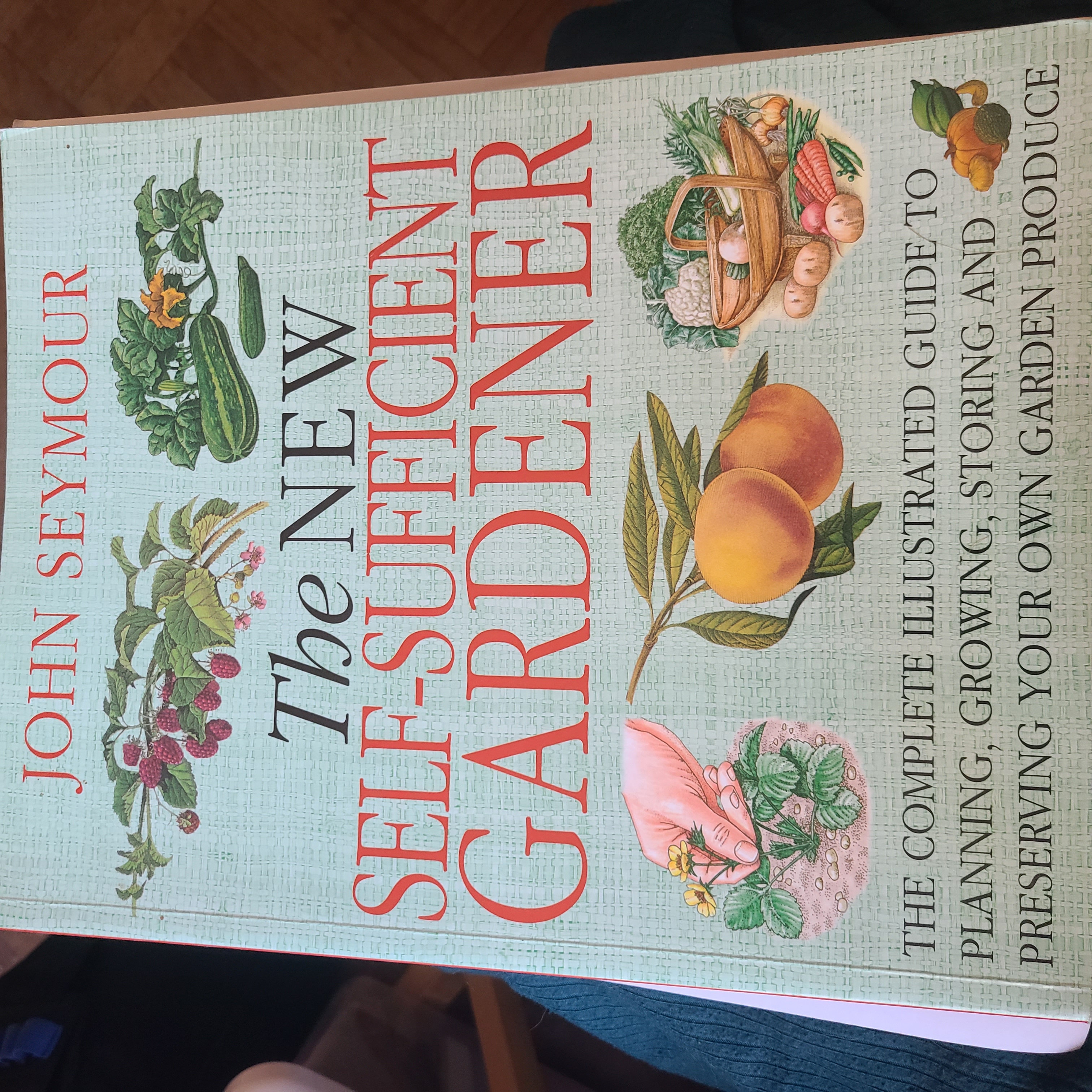
As a young gardener, back in my 20s, i was gifted a great resource of a book titled "The Self Sufficient Gardener- the compleat illustrated guide to planning, growing,  storing and preserving your own garden produce " by John Seymour. It was, and still is, my #1 for the growing requirements of many food plants, as it lists each type with headings like soil and climate, soil treatment,  propagation, pests and diseases...I now have and use "The NEW Self Sufficient Gardener "...The book begins with an introduction chapter covering organic gardening, small animals (rabbits and chickens  for meat, eggs and manure), and how nature's cycles effect growing. And I love the Illustrated Index of Vegetables,  Fruits and Herbs.
I have done alot of notations in this book to help keep vital information in one book. The table of contents lists plants according to family and that confuses me,  so I added what I'd understand.  For example, fabaceae is the legumes, and brassicaceae is the cabbage/broccoli family. This book is not listed in the above mentioned list of great resource books.

My 2nd most referenced book is Carrots Love Tomatoes by Louise Riotte. This is my companion plants resource. I've taken the vitals from this volume and copied them into the inside covers of my copy of Self Sufficient Gardener, listing companions,  allies and enemies for my preferred crops.

And because one cannot be self-sufficient in raising your own food year after year without saving seed, another gifted resource book is Suzanne Ashworth's Seed to Seed. Before this book i didn't realize the level of cross pollination between crops in the same family groups.  I learned the hard way.
I'd saved seed from a zucchini and shared some with a Facebook friend. When hers fruited, those zucchini were the right shape but wrong color; they were white! I was grateful that I had kept a map of what was planted where. Referring to it, I saw that I'd put a white patty pan squash beside the zucchini. I looked up the 2 squash in Seed to Seed and discovered both are pepo types and that in the squash tribe, any 2 in the same sub-tribe can and will cross. So 2 pepo, 2 maxima, 2 moschata, etc. will cross pollinate and the seed saved will often show the effects of this.
I now don't buy squash seed if that sub-tribe information isn't present. And if I plan to save seed with the idea of continuing the variety,  I'll only plant 1 variety.  1 pepo, usually a  zucchini; 1 moschata,  often butternut, etc.

Of course I have other gardening books. My personal library of physical books is far more extensive than I have room for since our cross country move, but these are the volumes I made sure to have available after settling in.
 
Posts: 1053
Location: In the woods, West Coast USA
220
  • Likes 13
  • Mark post as helpful
  • send pies
    Number of slices to send:
    Optional 'thank-you' note:
  • Quote
  • Report post to moderator
Bill Mollison's Permaculture, a Practical Guide for a Sustainable Future because it has the bigger picture.  It talks about how everything interacts, how to build a self-maintaining system, make observations about how Nature/Forests/Prairies do it, how to build soil, hugels (although I do hugel trenches in my Mediterranean climate,) biodiversity, storing water, plants that help each other, nitrogen fixing plants, water purification designs.  It just goes on and on.  

 
Deedee Dezso
pioneer
Posts: 478
Location: WV- up in the hills above Huntington Mall
125
4
hugelkultur personal care foraging rabbit books chicken food preservation cooking fiber arts medical herbs homestead
  • Likes 6
  • Mark post as helpful
  • send pies
    Number of slices to send:
    Optional 'thank-you' note:
  • Quote
  • Report post to moderator

Deedee Dezso wrote:Well, i can't list just 1 book.
As a young gardener, back in my 20s, i was gifted a great resource of a book titled "The Self Sufficient Gardener- the compleat illustrated guide to planning, growing,  storing and preserving your own garden produce " by John Seymour. It was, and still is, my #1 for the growing requirements of many food plants, as it lists each type with headings like soil and climate, soil treatment,  propagation, pests and diseases...I now have and use "The NEW Self Sufficient Gardener "...The book begins with an introduction chapter covering organic gardening, small animals (rabbits and chickens  for meat, eggs and manure), and how nature's cycles effect growing. And I love the Illustrated Index of Vegetables,  Fruits and Herbs.
I have done alot of notations in this book to help keep vital information in one book. The table of contents lists plants according to family and that confuses me,  so I added what I'd understand.  For example, fabaceae is the legumes, and brassicaceae is the cabbage/broccoli family. This book is not listed in the above mentioned list of great resource books.

My 2nd most referenced book is Carrots Love Tomatoes by Louise Riotte. This is my companion plants resource. I've taken the vitals from this volume and copied them into the inside covers of my copy of Self Sufficient Gardener, listing companions,  allies and enemies for my preferred crops.

And because one cannot be self-sufficient in raising your own food year after year without saving seed, another gifted resource book is Suzanne Ashworth's Seed to Seed. Before this book i didn't realize the level of cross pollination between crops in the same family groups.  I learned the hard way.
I'd saved seed from a zucchini and shared some with a Facebook friend. When hers fruited, those zucchini were the right shape but wrong color; they were white! I was grateful that I had kept a map of what was planted where. Referring to it, I saw that I'd put a white patty pan squash beside the zucchini. I looked up the 2 squash in Seed to Seed and discovered both are pepo types and that in the squash tribe, any 2 in the same sub-tribe can and will cross. So 2 pepo, 2 maxima, 2 moschata, etc. will cross pollinate and the seed saved will often show the effects of this.
I now don't buy squash seed if that sub-tribe information isn't present. And if I plan to save seed with the idea of continuing the variety,  I'll only plant 1 variety.  1 pepo, usually a  zucchini; 1 moschata,  often butternut, etc.

Of course I have other gardening books. My personal library of physical books is far more extensive than I have room for since our cross country move, but these are the volumes I made sure to have available after settling in.

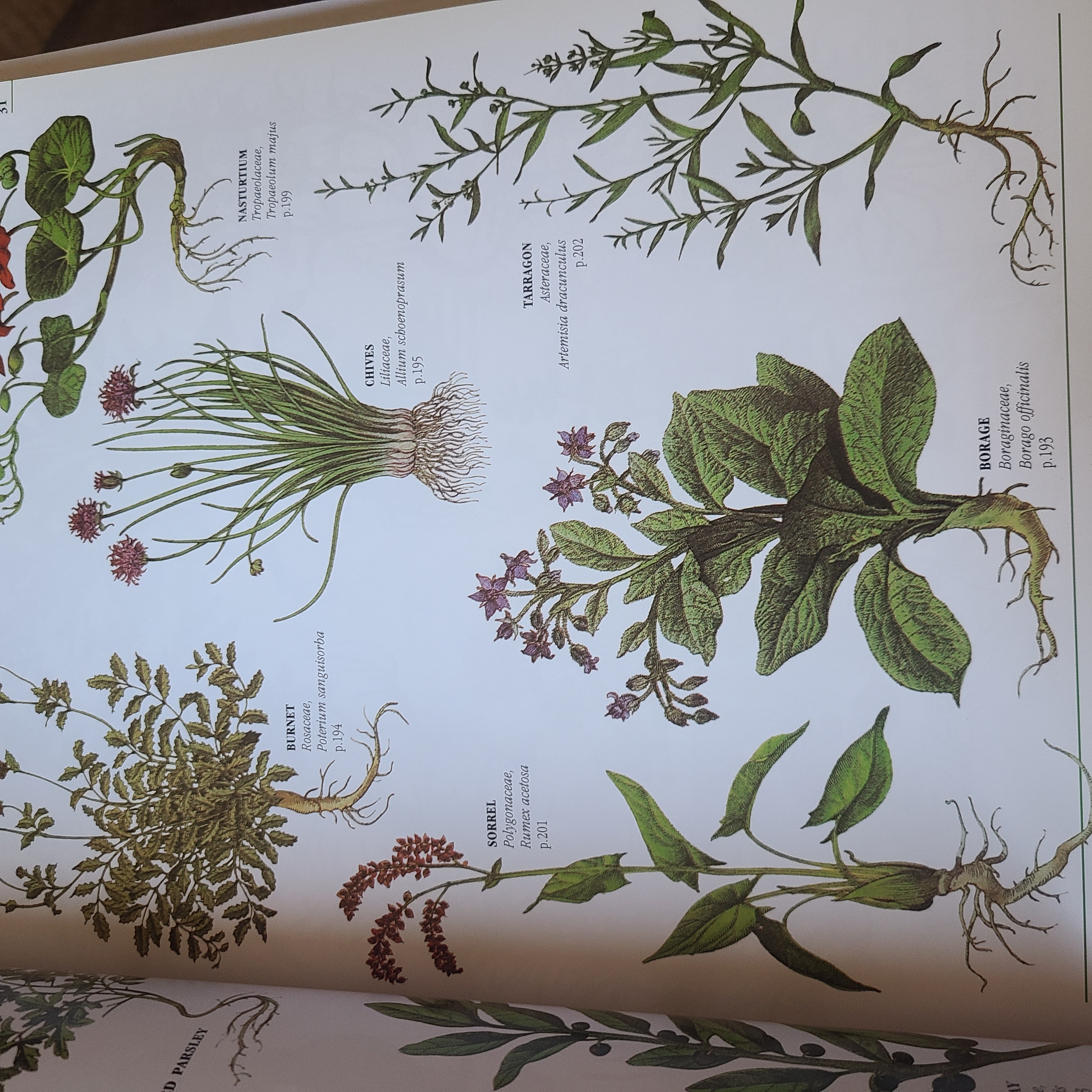
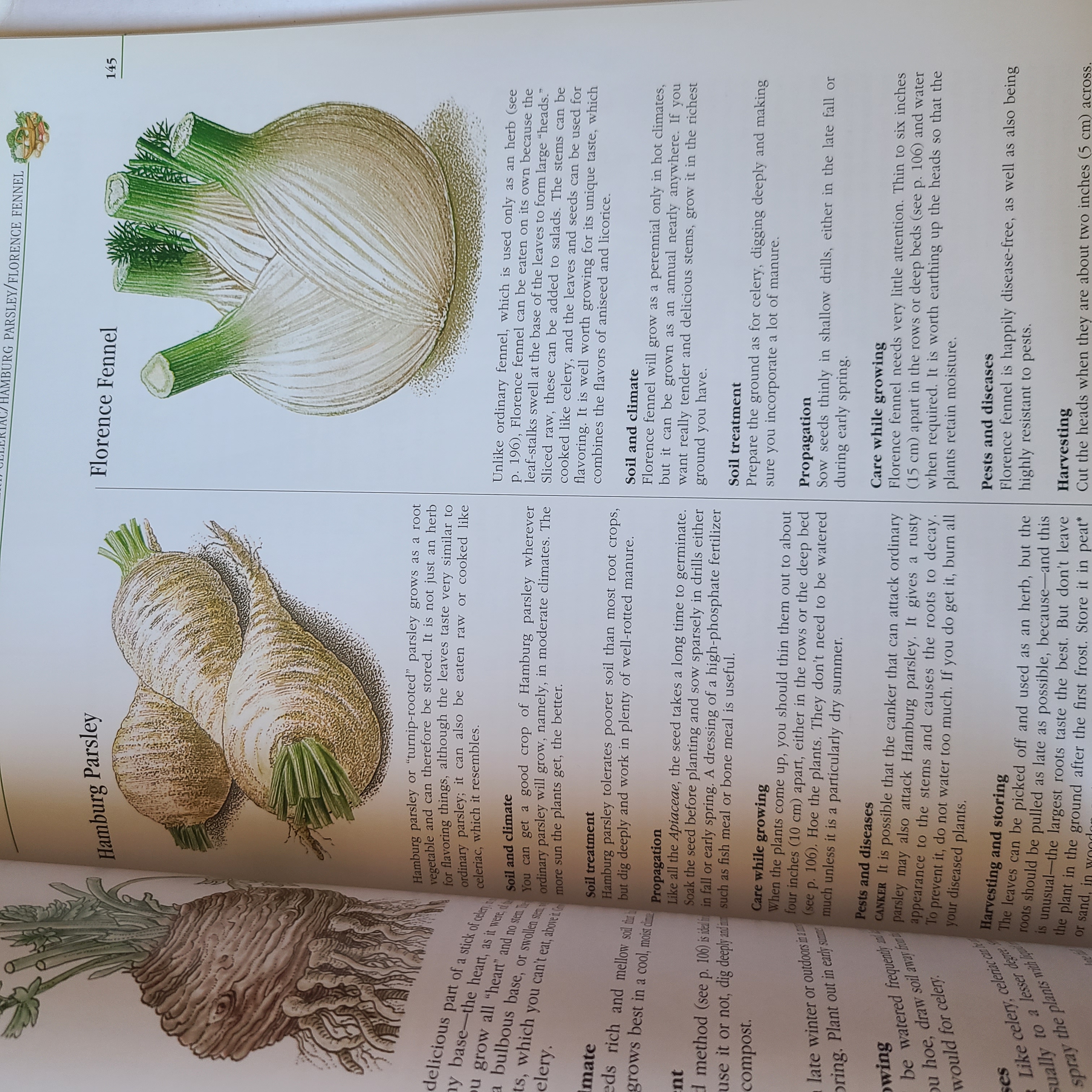
I meant to post photos weeks ago. Life happens.
20260328_114051.jpg
Self Sufficient Gardener cover
20260328_114134.jpg
Illustrated veggies
Illustrated veggies
20260328_114207.jpg
Example of information covered
 
pollinator
Posts: 81
Location: Haarlem, The Netherlands
61
forest garden fungi trees urban writing ungarbage
  • Likes 13
  • Mark post as helpful
  • send pies
    Number of slices to send:
    Optional 'thank-you' note:
  • Quote
  • Report post to moderator
My single best book, is the book that introduced me to permaculture. It is a very thin dutch book by Fransje de Waal, written in 1996, named "tuinen van overvloed" which translates as "guardens of abundance". As far as I can tell it is not translated in any other language.

I remember the book explaines kindly how our ways are not sustainable but nowbody knows how to change it. It suggested that (Dutch) farmers are too busy feeding people, that they lack time to figure it out. The author invited us all to find out how it should be done in our own backyards.

What I remember as particularly inspiring , was the several types of resources that were listed. We are all familiar with limited resources and renewable resources, but the list was much longer. What really intrigued me, were 'resources that multiply when you use them and share them'. The Author meant knowledge, especially old knowledge, that might be lost within the time span of the next generation.

For me, reading this book was a life changing experience. I wish you all could read it.
 
Posts: 8
2
  • Likes 6
  • Mark post as helpful
  • send pies
    Number of slices to send:
    Optional 'thank-you' note:
  • Quote
  • Report post to moderator
Rodale's "Companion Planting" was the first best book and I still refer back to it. Now I refer most to "The Organic Gardener's Home Reference" by Tanya Denckla.  I think it was republished as "The gardener's A-Z guide for Growing Organic"
 
pollinator
Posts: 1608
Location: Zone 6b
232
goat forest garden foraging chicken writing wood heat
  • Likes 8
  • Mark post as helpful
  • send pies
    Number of slices to send:
    Optional 'thank-you' note:
  • Quote
  • Report post to moderator
I've been gardening all my life, literally - Mom had us kids out in the garden before we could walk. But if I was giving a book to someone who had never gardened before, it would probably be Square Foot Gardening. With one of David the Good's books in second place, followed by Huw Richards, but both of them are rather climate-specific for a beginner (once you have a little experience, it's pretty easy to translate their general principles to most other climates, but I think Square Food Gardening is better for a rank beginner).
 
Posts: 28
Location: Prairie Coteau South Dakota
11
goat fungi books food preservation woodworking homestead
  • Likes 8
  • Mark post as helpful
  • send pies
    Number of slices to send:
    Optional 'thank-you' note:
  • Quote
  • Report post to moderator
Avid reader myself and have read a few of these mentioned.  To be a little contrarian, my favorite book that helped me is the one that inspired me onto the path where I eventually found permaculture and it's gardening mania.  I've now read Walden Pond a dozen or so times and it inspires me every time.  I needed the why before I went down my path of how to achieve it.  Not a lot of gardening know how in this one.  It's a philosophy around naturalism and the Transcendental movement.  

One-Straw Revolution helped me bring Thoreau's words to the world of Permaculture and Sepp Holzer's Permaculture fully indoctrinated me.
 
Posts: 16
8
  • Likes 6
  • Mark post as helpful
  • send pies
    Number of slices to send:
    Optional 'thank-you' note:
  • Quote
  • Report post to moderator
Two that got me going when i got started are:

Jerry Baker’s Old Time Gardening Wisdom which i think is out of print but you can usually pick up used very cheap.  The style of writing drew me in and made me feel confident to get start and I still use his grandma putt’s recipes in my veg now.  It’s honestly very detailed for a starter book and talks about all the permie things, just back when they were considered old-fashioned know-how.

The second is a good regional book of trees, shrubs and flowers with pictures, ideally in color.  Internet is great, but a good picture book is invaluable for planning.  It will give you an idea of the size, shape and general charactistics of plants that grow in your area.  It’s helpful when you are trying to figure out if a plant you are thinking of is a small bush or a 30ft tree in a one gallon pot.   The one I started with is The American Horticultural Society’s Encyclopedia of Garden Plants.    We also have Michael Dirr’s books which are wonderful, but may be too detailed for starting with unless you like learning about plant identification.

Keep in mind if you get an older book the planting zones will have changed so just be sure to look at updated maps or use a range like i do.  (For example, I’m zone 6-8 depending on where on my land I plant something.)

The permaculture books are all awesome and a great thing too.  They are also online for free in many places if you look.
 
Posts: 320
18
9
  • Likes 6
  • Mark post as helpful
  • send pies
    Number of slices to send:
    Optional 'thank-you' note:
  • Quote
  • Report post to moderator
One Straw Revolution by Masanobu Fukuoka.

It came from some collection in Tasmania. That was decades ago so
I can't remember the name/site. He would collect digital copies and
these were available as long as it was no longer in print.

So I have mine with a watermark of my ID embedded.

That kicked things off until DR Elaine Ingham (RIP 16Feb2026)

How the entire planet dodged the KLEBSIELLA Planticola bullet.
 
Posts: 47
Location: U.S.A.
2
2
  • Likes 3
  • Mark post as helpful
  • send pies
    Number of slices to send:
    Optional 'thank-you' note:
  • Quote
  • Report post to moderator
This is too hard! Grow More Vegetables by Jeavons, The why and how of home Horitculture (https://www.amazon.com/Why-How-Home-Horticulture/dp/0716723530/ref=sr_1_1?crid=1WL58Q4HZDP91&dib=eyJ2IjoiMSJ9.orN1z90c6Pbm4Nk2AmbgpWYjbP95hv10fiPVs4LvjbnGjHj071QN20LucGBJIEps.64LcsfPyjPqSwxnSpxB_I_0sDzalPt9T15mw1beQyVY&dib_tag=se&keywords=the+why+and+how+of+home+horticulture+beinz&nsdOptOutParam=true&qid=1776991521&sprefix=the+why+and+how+of+home+horticulture+beinz%2Caps%2C222&sr=8-1, Gaia's Garden, 10,000 Garden Questions, Square Foot Gardening and anything by Eliot Coleman but I also rely heavily on my propagation books. . I also have loved Market Gardening Magazine.
 
Douglas Alpenstock
pollinator
Posts: 5718
Location: Canadian Prairies - Zone 3b
1629
  • Likes 7
  • Mark post as helpful
  • send pies
    Number of slices to send:
    Optional 'thank-you' note:
  • Quote
  • Report post to moderator

Mac Johnson wrote: I've now read Walden Pond a dozen or so times and it inspires me every time.  I needed the why before I went down my path of how to achieve it.  


I think we would get along famously (bold mine).

BTW, One Straw Revolution is available online. https://archive.org/stream/TheOne-strawRevolution/onestraw_djvu.txt
 
pollinator
Posts: 301
Location: North FL, in the high sandhills
122
  • Likes 4
  • Mark post as helpful
  • send pies
    Number of slices to send:
    Optional 'thank-you' note:
  • Quote
  • Report post to moderator
Steve Solomon's Gardening When it Counts.

 
Posts: 1
  • Likes 5
  • Mark post as helpful
  • send pies
    Number of slices to send:
    Optional 'thank-you' note:
  • Quote
  • Report post to moderator
Square Foot Gardening
By Mel Bartholomew
 
Edward Lye
Posts: 320
18
9
  • Likes 2
  • Mark post as helpful
  • send pies
    Number of slices to send:
    Optional 'thank-you' note:
  • Quote
  • Report post to moderator

Douglas Alpenstock wrote:
BTW, One Straw Revolution is available online. https://archive.org/stream/TheOne-strawRevolution/onestraw_djvu.txt


My personalized copy comes with pictures.
 
Posts: 2
1
  • Likes 5
  • Mark post as helpful
  • send pies
    Number of slices to send:
    Optional 'thank-you' note:
  • Quote
  • Report post to moderator
It looks like I will have some reading to do!

I would say the book that inspired me the most, like two other people on here, is Walden by Henry David Thoreau.  It inspired in me my curiosity in the natural world when I was 15.  I have interests in the natural sciences because of it.

But if I had any other books to mention it would definitely be Samuel Thayer's four books.  Especially his essay Eco Culture: Tending to Wildness in Incredible Wild Edibles and his Field Guide to Central and Eastern North America Wild Plants.  That book contains many plants that most people don't talk about that would make great plants in a permaculture setting like 3 of my favorites: Glade Mallow, Bitternut Hickory, and False Mermaid.
 
Joao Winckler
Posts: 111
25
  • Likes 4
  • Mark post as helpful
  • send pies
    Number of slices to send:
    Optional 'thank-you' note:
  • Quote
  • Report post to moderator
Steve Solomon's Gardening When it Counts was the one that changed how I think about soil fertility. The whole premise that you can grow decent food without buying inputs if you understand what your soil actually needs just clicked for me. Went back to it a few times.
gift
 
3D Plans - Pebble Style Rocket Mass Heater
will be released to subscribers in: soon!
reply
    Bookmark Topic Watch Topic
  • New Topic