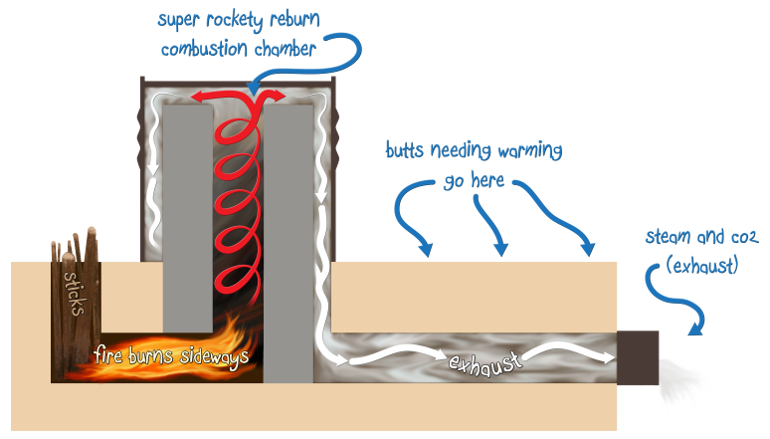
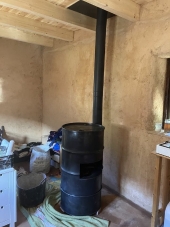
● rocketheater.com Site for the Liberator, a UHL-certified, code-ready, pre-manufacture rocket stove.
● dragonheaters.com The Dragon Heaters company in Houston TX produces kits for 6" and 8" RMH from Peter Van Den Berg's Refractory J Tube design to masonry heater code standards.
● dragontechrmh.com Thomas Rubino's web site for rocket heater parts
● rocketheatergamera.wordpress.com the Gamera, a European manufactured rocket stove from Bulgaria.
The Dragon Heaters company in Houston TX produces kits for 6" and 8" RMH from Peter Van Den Berg's Refractory J Tube design to masonry heater code standards. https://www.dragonheaters.com/
Kevin Harbin wrote:I love it. I would recommend arranging the information in some headings such as:
What Is It?
Where to Start
Inspirational Installations
Advanced Topics
Inside of those, group by media type (e.g. audio, video, article, book)
Kevin, I believe you're right!
It'll take a while for me to get to that level of detail - if you'd be up for reorganizing a bit, I'd be happy to implement your suggestions! If not, no worries, we'll get there as we're able!
Hi! I hope I'm not "crashing" the party, as I am only barely beginning to read about Rocket Mass Heaters. The problem I have, is I'd love to use Rocket Stove type efficiency as a retrofit for an existing house - one with a foundation that cannot support RMH. My husband bought me the book without understanding that we cannot utilize any of the designs in our current home.
Is there a "small" rocket stove design that can be used to efficiently dump a lot of heat, rapidly, into a "typical" living area, for those of us trying to move from 3 to 4 on the Permies Scale? =)
Briana Great wrote:Is there a "small" rocket stove design that can be used to efficiently dump a lot of heat, rapidly, into a "typical" living area, for those of us trying to move from 3 to 4 on the Permies Scale? =)
Yes, there are lighter ones that you can build. Keep looking at the resources in the top post. Your other option is to reinforce the floor support under the location where you would build a RMH. That is not very difficult or costly, though you will want to stay with a smaller/lighter stove.
Well, I don't have as detailed an order on my version of the list, but it may be of some help. I wanted a version for Ukrainian newbies, so I added in a couple of beginning-to-end videos that are heavy on imagery, light on words since most of my audience understands little or no English.
Here's a link to the page I created. There's also a PDF version to download:
It's been time-consuming and I'm sure it still needs polishing. If anyone has edit suggestions orother good links for my audience, I'd appreciate the help.
Briana Great wrote:Hi! I hope I'm not "crashing" the party, as I am only barely beginning to read about Rocket Mass Heaters. The problem I have, is I'd love to use Rocket Stove type efficiency as a retrofit for an existing house - one with a foundation that cannot support RMH. My husband bought me the book without understanding that we cannot utilize any of the designs in our current home.
Is there a "small" rocket stove design that can be used to efficiently dump a lot of heat, rapidly, into a "typical" living area, for those of us trying to move from 3 to 4 on the Permies Scale? =)
The "pebble style" RMH is promoted by Paul as a lighter, variable version, done for his double wide (with reinforcement) and an option for something like a second floor install.
Uncle Mud's cottage rocket is also a variant that would be lighter and meant for quick heating of an area using minimal mass. He has used one for his own place and I think there's currently one in the Love Shack, but the one they had in the shop at WL had a few issues, so I suggest going to Mud's site and poking around to see where his progress is on the design...
I appreciate info on the pebble style. Thanks. I'd like to run more info about it for the Ukrainians. It looks like a technique that could be especially adaptable for their situation.
Beau Davidson wrote:
Kevin, I believe you're right!
It'll take a while for me to get to that level of detail - if you'd be up for reorganizing a bit, I'd be happy to implement your suggestions! If not, no worries, we'll get there as we're able!
I've taken a first pass. What's the best way to get it to you? DM? Shared google doc?
Beau Davidson wrote:
Kevin, I believe you're right!
It'll take a while for me to get to that level of detail - if you'd be up for reorganizing a bit, I'd be happy to implement your suggestions! If not, no worries, we'll get there as we're able!
I've taken a first pass. What's the best way to get it to you? DM? Shared google doc?
Cool, thank you! I'd say just post it here, and we can crowdsource the editorial process.
dragonheaters.com The Dragon Heaters company in Houston TX produces kits for 6" and 8" RMH from Peter Van Den Berg's Refractory J Tube design to masonry heater code standards.
I found out about this hybrid (regular stove with an added heat riser) which helped these people to get more heat AND stop cold air getting in when it is off.
I'd like to add this to my regular recent suposedly energy efficient stove and compare. Seems like something I could try out and experiment with. I am a noob in rmh. I am wondering if I can make the heat riser smaller? I haven't measured the height, but I don't think I can fit a big barrel. Maybe I can make the chimney go lower and back up behind the stove?
I believe this little experiement could help building simple addon to a regular stove.
Hi Jordan;
You might like checking out Matt Walkers RMH it uses a riserless design that can fit in any room. It uses no barrel at all.
Here is his site https://walkerstoves.com/index.html
thomas rubino wrote:Hi Jordan;
You might like checking out Matt Walkers RMH it uses a riserless design that can fit in any room. It uses no barrel at all.
Here is his site https://walkerstoves.com/index.html
Interesting!
Why it doesn't need a riser? Is it because of the air intake that is being heated instead of releasing colder air? And since it is a heated air intake, would using colder air make it less efficient (on the contrary to other kind of stove)?
___
As for the collection of resources on RMH, I believe putting all the files together (videos and text) and sorting them into some simple categories (this shouldn't be too elaborated, just something that make sens for now with what we have) would be the a good start instead of going straight to writing pages on a wiki website to explain everything in detail. The reason is that it is going to take time to have people writing these pages. So by putting files together and sorting them in a way that is useful would be easier and it would be helpful to then create a wiki with it.
Hey Jordan;
Matt's design can be seen on his website. The gasses make a 180 degree turn and then pass thru a port similar to a batch box port before starting to rise.
When built using CFB and utilizing an RA330 liner his stoves take right off.
If built using heavy firebrick they take longer to start drafting properly but then will hold heat longer.
His stove uses the same primary air intake and a secondary air tube the same as a Peter Berg batch box.
thomas rubino wrote:Hey Jordan;
Matt's design can be seen on his website. The gasses make a 180 degree turn and then pass thru a port similar to a batch box port before starting to rise.
When built using CFB and utilizing an RA330 liner his stoves take right off.
If built using heavy firebrick they take longer to start drafting properly but then will hold heat longer.
His stove uses the same primary air intake and a secondary air tube the same as a Peter Berg batch box.
Interesting, I don't know enough about RMH to understand exactly everything you've mentioned. I need to check out the ressources here.
paul wheaton wrote:I think i have this page now set up with this shortcut
permies.com/rmh
Awesome! The url is going to make this super easy to remember and share.
I actually meant like a downloadable folder with category folder, but I didn't notice there's also paid content in there, so it doesn't make as much sens.
HELP! I am interested in making an RMH, however I can't find where to get the firebrick. No matter how I frame the question, I literally get EVERY brick under the sun.
Where oh where can I source Firebrick??
Thank you for any help that may find its way to me.
Tamarlane Ivey wrote:HELP! I am interested in making an RMH, however I can't find where to get the firebrick. No matter how I frame the question, I literally get EVERY brick under the sun.
Where oh where can I source Firebrick??
Thank you for any help that may find its way to me.
Tamarlane Ivey wrote:HELP! I am interested in making an RMH, however I can't find where to get the firebrick. No matter how I frame the question, I literally get EVERY brick under the sun.
Where oh where can I source Firebrick??
Thank you for any help that may find its way to me.
Normally i give Amazon cred for having the most comprehensive consumer review system out there, but i don't think it is trustworthy for this item. The vast majority of purchasers are going to be homeowners following directions on how to repair their wood stove, who have never seen a firebrick before in their life. I bought a six pack like that from a big box home store last summer when on sale for $18. They are chintzy compared to the ones i got from a landscape store that was selling off of a pallet of them, or anything I've seen at Wheaton labs. They feel light and had chips out of the edges coming out of an undamaged box. Do we know of any permies that have bought those particular bricks and can vouch for them?
Firebrick is not all created equal.
I noticed these are rated to 2200F
They are a vermiculite product.
Last but not least, they are splits not full bricks.
thomas rubino wrote:Firebrick is not all created equal.
I noticed these are rated to 2200F
They are a vermiculite product.
Last but not least, they are splits not full bricks.
Anyway, if anyone knows where to find properly rated bricks in Canada, please reply here. I sure haven't made extensive research but I can say they are not easy to find around here.
Tamarlane Ivey wrote:HELP! I am interested in making an RMH, however I can't find where to get the firebrick. No matter how I frame the question, I literally get EVERY brick under the sun.
Where oh where can I source Firebrick??
Thank you for any help that may find its way to me.
I believe it's a company that sells plans for a pizza oven or something, but they have put together a list of sources based on location where one can get firebricks. In general landscape supply companies and masonry suppliers often sell them for the lowest cost per brick. Refractory supply companies will tend to cost more for the same thing, but probably also have some higher grade/temp options.
When I built my RMH I got the hard firebrick from a brick supplier at about half the cost of the same thing from the refractory dealer. However, I did need to go to the refractory place to get the soft, insulating firebricks I used as well as the ceramic fiberboard.
Anyway, if you try the link above you can type in your location and how far you are willing to travel and it should give you names and links to various suppliers. This doesn't mean all suppliers can help you though. I was excited to see there was a landscape supply company about 5 miles away that had firebrick. Yay! Then looking further I discovered this company won't sell retail only wholesale to those certified as landscapers. Boo.
Jordan Beaupré wrote:
Anyway, if anyone knows where to find properly rated bricks in Canada, please reply here. I sure haven't made extensive research but I can say they are not easy to find around here.
Jordan, it looks like the link I gave in the above post works for identifying Canadian suppliers too!
Jordan, finding good quality fire brick can be difficult.
Pottery Supply stores will stock insulating fire brick. Many foundry suppliers will stock hard hi temp bricks. Sometimes farrier supply stores also stock firebrick. I suggest that you do an internet search for these businesses near you.
Hey everyone!
This is a good bunch of info.
What I'm really after though, is examples or discussion of RMHs used for infloor heating. I don't mean heating water to circulate in a conventional infloor tubing system. I mean running the hot gasses directly through an earth floor of some form. I've so far managed to find one post here mentioning various ancient methods from the Romans to the Koreans. BUT there is not much mention of modern interpretations. I would think making use of arguably the most massive part of a house to store heat would be something people would be talking about and at least experimenting. If you know who's doing, talking, or experimenting with this method please point me in the right direction. Thanks permies!!
Post by:autobot
Wow! It's so clean! Did you do this tiny ad?
The new permaculture playing cards kickstarter is now live!